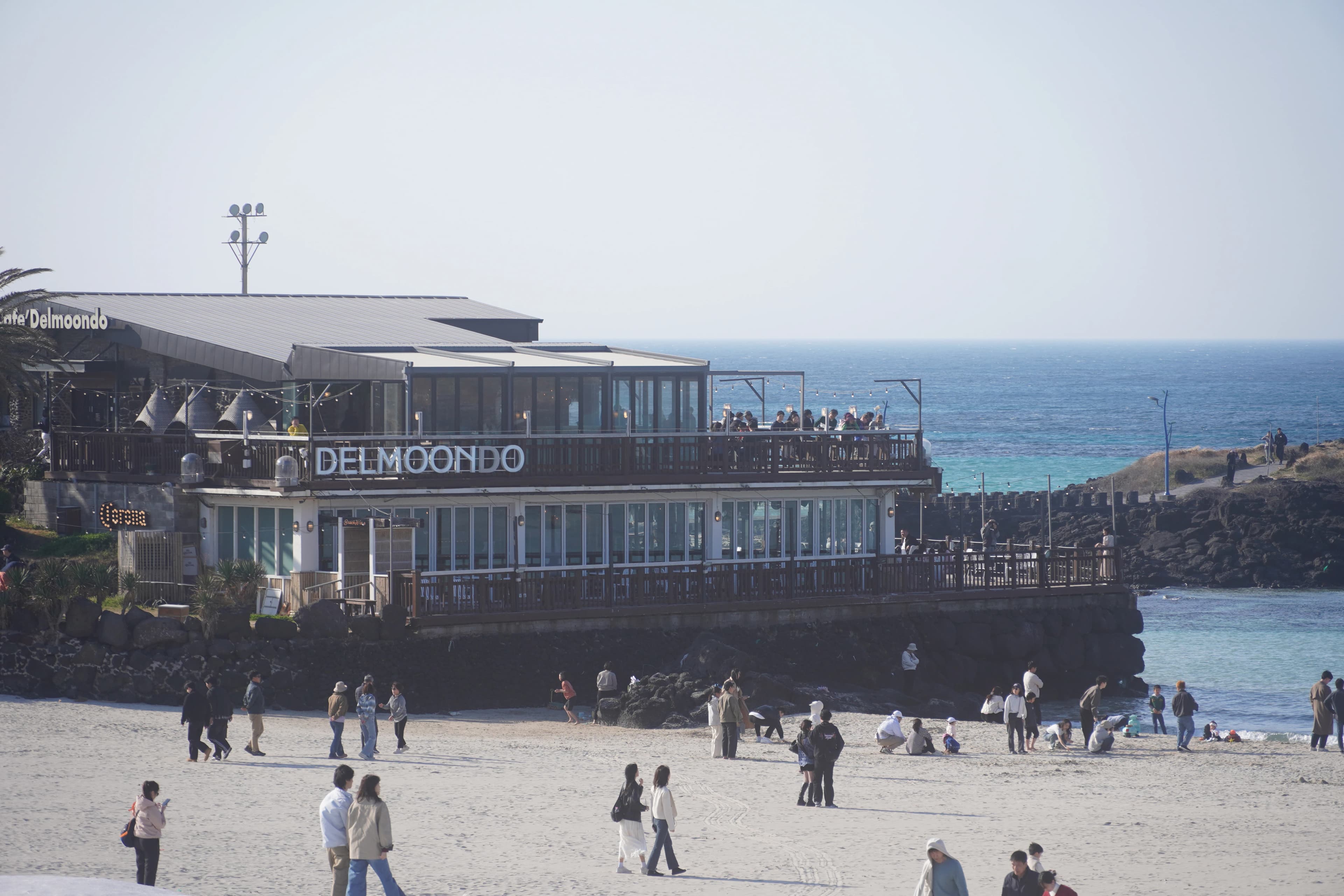
Holiday apartment in Jeju-do
Find the perfect holiday apartment or ideal holiday house in Jeju-do (South Korea) – with more space, a private kitchen, and full privacy.
Where can I find a good holiday rental in Jeju-do?
Our partner FeWo-direkt lists apartments, villas and holiday homes in Jeju-do with photos, guest reviews and live availability.
Holiday apartments in Jeju-do
Browse thousands of holiday apartments and holiday homes on FeWo-direkt – with guest reviews, photos, and flexible cancellation policies.
* Redirecting to FeWo-direkt. The terms of use there apply.
When is the best time to visit Jeju-do?
The best time to visit Jeju-do is April to June for spring blossoms and mild weather. September to November for clear autumn colors. Summer is rainy season.. In summer: 25-33°C, humid with typhoon risk July-September. In winter: 3-8°C, mild for Korea, occasional snow on Hallasan.
Best travel time
April to June for spring blossoms and mild weather. September to November for clear autumn colors. Summer is rainy season.
Summer
25-33°C, humid with typhoon risk July-September
Winter
3-8°C, mild for Korea, occasional snow on Hallasan
Highlights
Dreamy beaches, Impressive nature
Is a holiday rental in Jeju-do worth it?
A holiday apartment in Jeju-do offers you the perfect combination of independence and comfort. Enjoy Dreamy beaches, Impressive nature, Fascinating culture, Excellent cuisine, Family-friendly environment and experience Jeju-do like a local – with your own retreat after an action-packed day.
Jeju-do, South Korea's largest island, is a volcanic natural paradise of UNESCO-protected beauty and the country's most popular holiday destination. The 'Island of the Gods' lies in the Korea Strait south of the peninsula and impresses with a landscape that is hard to surpass in its diversity: extinct volcanic craters, subtropical forests, black lava beaches, and emerald green tea plantations.
Hallasan, a 1,950-meter-high shield volcano, forms the majestic center of the island and is South Korea's highest mountain. The ascent to the crater lake at the summit is one of the most popular hikes in the country and offers a spectacular 360-degree view over the island to the mainland and Japan on clear days.
Jeju's lava caves are geological wonders. The Manjanggul Cave, one of the longest lava tunnels in the world, stretches over 13 kilometers and impresses with massive lava columns and a 7.6-meter-high lava column — the largest known in the world. The entire volcanic system is part of the UNESCO World Natural Heritage.
The island's coast is characterized by the Jusangjeolli cliffs, geometrically perfect basalt columns that appear to be shaped by human hands, and Seongsan Ilchulbong, a dramatic tuff crater that rises directly from the sea. The sunrise from the summit of this 'Sunrise Peak' is one of Korea's most famous sights.
Culturally, Jeju is famous for its Hänyeo — the legendary female divers who have been diving for sea urchins, abalone, and shellfish for generations without breathing apparatus. This tradition is UNESCO Intangible Cultural Heritage, and the Hänyeo, many of whom are over 70 years old, are a symbol of female strength and independence.
The island also surprises with its thriving art scene. The Bonte Museum, the Arario galleries, and numerous quirky theme museums (from the Teddy Bear Museum to the Trick Art Museum) make Jeju an unusual cultural holiday destination. The O'Sulloc tea plantations offer Korean green tea amidst picturesque plantations, and the tangerine farms invite visitors to harvest the famous Hallabong mandarins.
What are the highlights of Jeju-do?
Hike on South Korea's highest mountain with a crater lake and panoramic views — UNESCO World Natural Heritage
Dramatic volcanic crater by the sea — the most famous sunrise spot in Korea
One of the longest lava tunnels in the world with the largest known lava column (7.6 m)
Legendary free divers — UNESCO Intangible Cultural Heritage and symbol of female strength
Emerald green tea fields with tasting and museum — Korea's most beautiful tea landscape
What should I look out for when renting in Jeju-do?
The best time to visit Jeju-do is April to June for spring blossoms and mild weather. September to November for clear autumn colors. Summer is rainy season.. For the cheapest holiday apartments, we recommend booking early – especially in peak season, popular accommodations get booked up quickly. Pay attention to reviews from previous guests and check if final cleaning and bed linen are included in the price.
Is a holiday rental worth it for a longer stay?
Holiday apartments are particularly suitable for longer stays: From a week onwards, the price per night often drops significantly. Use the private kitchen to save money, and enjoy the freedom to shape your day at your own pace – without fixed meal times or hotel rules.
Which tools help you plan your Jeju-do holiday?
4 free tools help you plan your trip to Jeju-do: Holiday finder, Budget calculator, Packing list and CO₂ calculator. They work directly in your browser.
