a group of buildings with trees and rocks in front of them
🇰🇷

South Korea holiday

Travel tips, best time to visit & highlights for your South Korea holiday in Asia

South Korea is the country where high-tech meets ancient tradition: Seoul pulses with K-Pop culture, futuristic architecture, and street food markets, while centuries-old temples and palaces touch the soul. The volcanic island of Jeju offers natural wonders, the DMZ is a unique time document, and Korean cuisine – from Korean BBQ to Bibimbap – is part of the UNESCO World Heritage.

Capital

Seoul

Language

Korean

Currency

Won (KRW)

Time zone

UTC+9

Flight time from DE

approx. 11 hours

Entry requirements

Passport (visa-free for 90 days)

Top hotels & accommodations in South Korea

Selected hotels and holiday accommodations in South Korea — with images, reviews, and direct booking links with our partners.

Top 5 highlights in South Korea

The places you absolutely must not miss.

1

Seoul

Megacity of contrasts: Gyeongbokgung Palace, Gangnam, Bukchon Hanok Village, and Myeongdong street food.

2

Jeju Island

Volcanic island with Hallasan peak, lava tubes, Haenyeo divers, and dramatic coastal landscapes.

3

DMZ

The demilitarized zone between North and South Korea – one of the most exciting and surreal places in the world.

4

Gyeongju

The 'museum without walls': Former capital of the Silla kingdom with royal tombs and the Bulguksa Temple.

5

Busan

Korea's port city: Haeundae Beach, colorful Gamcheon Culture Village, and the largest fish market in the country.

Hotels in South Korea

Vergleiche tausende Hotels, Apartments und Resorts auf Expedia – mit Bestpreis-Garantie, kostenloser Stornierung und Bonuspunkten.

Über 700.000 Hotels
Kostenlose Stornierung
Bestpreis-Garantie
Hotels in South Korea vergleichen

* Weiterleitung zu Expedia.de. Es gelten die dortigen Nutzungsbedingungen.

Reise-SIM für South Korea

Prepaid-SIM mit Datenvolumen für South Korea. Einfach einlegen und sofort lossurfen – keine Roaming-Gebühren.

Sofort einsatzbereit
200+ Länder
Kein Roaming
SIM-Karte für South Korea bestellen

* Weiterleitung zu travSIM.de. Es gelten die dortigen Nutzungsbedingungen.

Reiseversicherung abschließen

Rundum-Schutz ab 9,90 € auf TravelSecure.de

Pauschalreisen & Rundreisen

Berge & Meer – 170 Tage Cookie

Best time to visit South Korea

Recommended travel time

April–May (cherry blossom) or September–November (autumn foliage)

Summer

25–33°C

Winter

-6–3°C

How much does a holiday in South Korea cost?

Average cost per person per day (excluding flight)

🎒

Budget

40–65€

Hostel, street food, public transport

🏨

Mid-range

65–130€

Hotel, restaurant, excursions

🌟

Luxury

130–280€

Boutique hotel, fine dining

5 travel tips for South Korea

Insider knowledge to make your holiday better.

Buy a T-Money card at the airport – valid for public transport, taxis, and even convenience stores

Always eat Korean BBQ with the side dishes (Banchan) – they are refilled for free

The best cherry blossoms are in early April in Jinhae and Gyeongju

Wi-Fi is freely available everywhere – one of the best-connected countries in the world

Jimjilbang (Korean bathhouses) offer affordable overnight accommodations

Food & drink in South Korea

These dishes you must try!

Korean BBQ (Bulgogi)
Bibimbap
Kimchi
Tteokbokki
Samgyeopsal
Japchae

Discover South Korea

11 regions, cities and highlights in South Korea

Cities

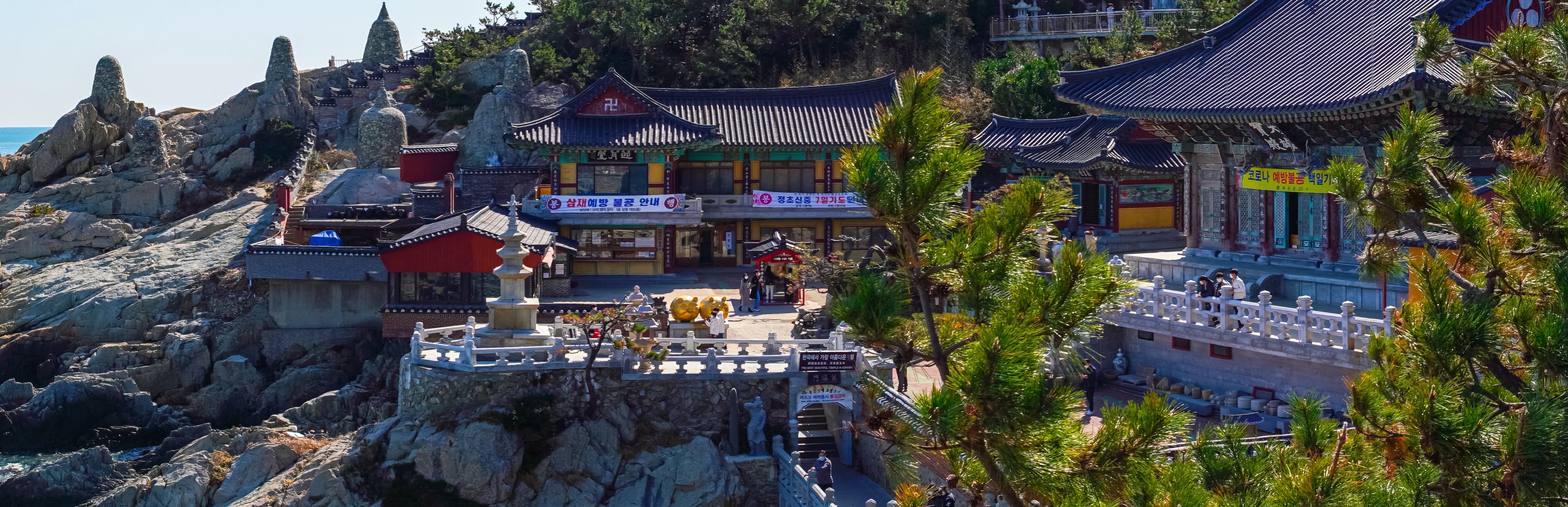
a group of buildings with trees and rocks in front of them

Busan

Busan, South Korea's second-largest city, is the counterpoint to hyper-modern Seoul: rural, maritime, relaxed, and with an energy fueled by the waves of the Pacific. The port city at the southeastern tip of the Korean Peninsula combines top-notch beaches with a vibrant culinary scene, colorful mountain villages with futuristic architecture. Haeundae Beach is Korea's most famous beach — a wide, curved sandy beach that is populated by Korean families and international visitors in the summer. But the real insider tip is Gwangalli Beach, from where you can see the spectacularly illuminated Gwangan Bridge over the bay in the evening. Gamcheon Culture Village is Busan's Instagram favorite, and rightly so: A former refugee neighborhood from the Korean War has been transformed into a colorful art village, where colorful houses climb the hills like a Korean Santorini. Street art, galleries, and cafés make the neighborhood a place where you can wander for hours. The Jagalchi Fish Market is the largest fish market in South Korea and a feast for all the senses. Huge halls full of live seafood — from abalone to octopus to sea urchins — where you can have your catch prepared fresh on the upper floor. The atmosphere is loud, lively, and one hundred percent authentic. The Haedong Yonggungsa Temple, one of the few coastal temples in Korea, dramatically perches on rocks above the crashing waves of the Sea of Japan. At sunrise, the temple offers a truly spiritual sight. The Beomeosa Temple in the mountains on the outskirts, on the other hand, offers a templestay experience where you can meditate and live with the monks. Busan's culinary scene is legendary. The city is considered Korea's foodie capital: Dwaji Gukbap (pork rice soup), Milmyeon (cold noodles), and Ssiat Hotteok (pancakes filled with nuts and seeds) at BIFF Square are taste experiences that can only be found here.

BeachStreet FoodTemple

Daegu

Daegu is the fourth largest city in South Korea and is located in the southeastern interior, surrounded by mountains and known for its hot summers, which have earned it the nickname 'Däfrica'. The city has a centuries-old history as a center of the textile industry and Korean medicine. Seomun Market, one of the oldest and largest traditional markets in Korea, has been in existence for over 350 years. Textiles, street food, herbs, and household goods are sold across three floors. The adjacent night market is a paradise for food lovers with dozens of stalls. The Yangnyeongsi district is Korea's oldest center for traditional medicine: since the 17th century, healing herbs, ginseng, and medicinal preparations have been traded here. The Museum of Korean Medicine explains traditional healing methods interactively. Apsan Park offers hiking trails on the mountain of the same name (660 m) with panoramic views over the entire city. A cable car leads to the summit, where a memorial commemorates the Korean War. The nearby Palgongsan Mountain with the famous Gatbawi — a stone Buddha wearing a flat hat — is a popular pilgrimage site. The modern side of Daegu is showcased in the Dongseongno district, a lively shopping street with fashion, cafes, and K-beauty shops. The Kim Gwangseok Street Mural is an artistically designed alley dedicated to the legendary Korean folk singer.

MedicineTextileMarket
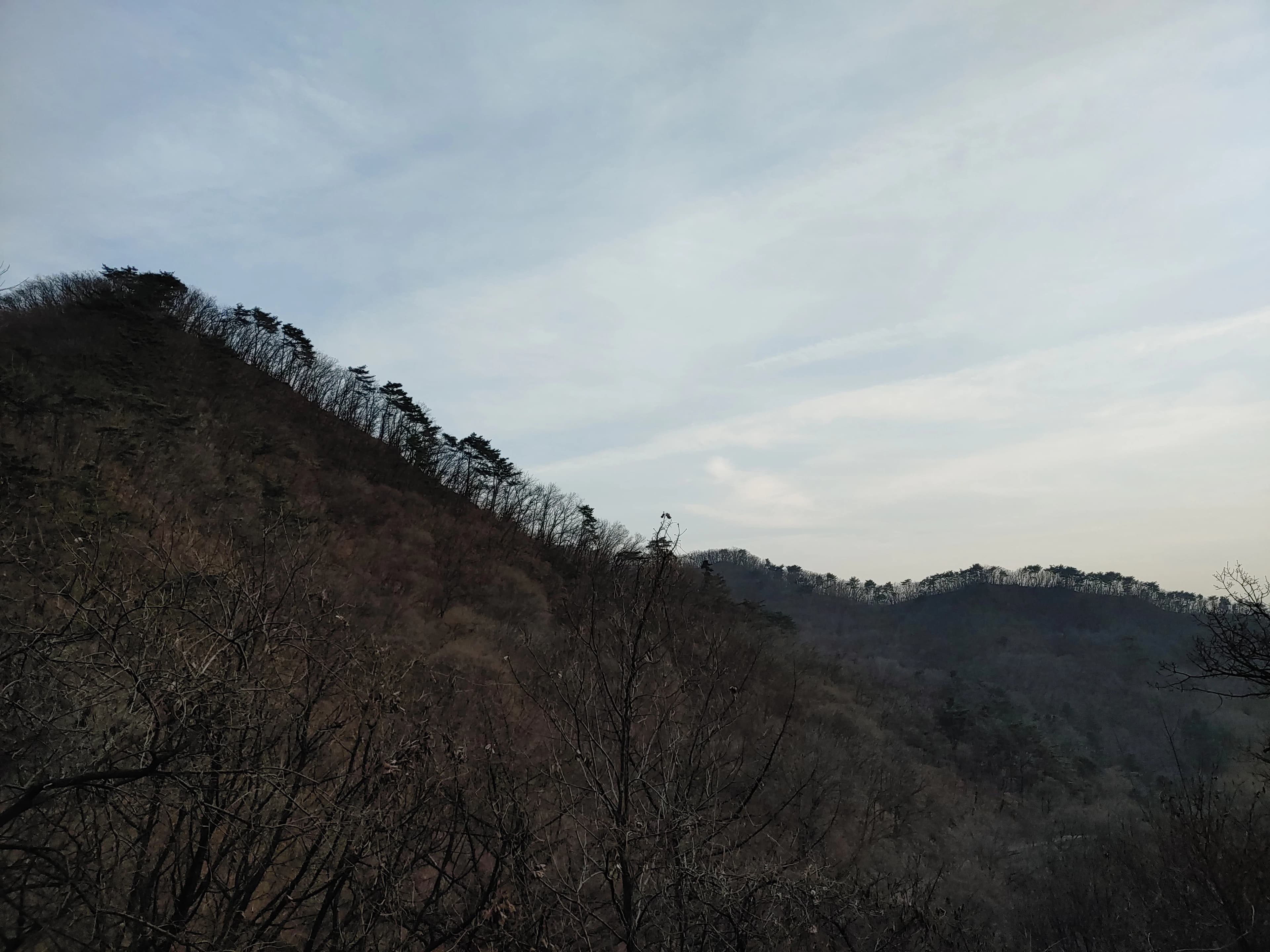
green trees in the mountain under a calm blue sky

Daejeon

Daejeon is South Korea's fifth-largest city and the scientific heart of the country. Known as the "Silicon Valley of Korea," the city is home to over 60 research institutes, including the renowned KAIST (Korea Advanced Institute of Science and Technology) and the Daedeok Innopolis, one of the largest science and technology parks in Asia. At the same time, Daejeon surprises with hot springs, green mountains, and a vibrant street food scene. The Expo Science Park commemorates the World Expo of 1993, which marked Daejeon's transformation from a sleepy provincial town to a science city. The Hanbit Tower, the park's landmark, offers an observation deck with panoramic views. The National Science Museum next door is one of the largest science museums in Asia, featuring interactive exhibits and a planetarium. Yuseong, a neighborhood in the west, has been known for its hot springs for over 1,600 years. Natural thermal water with temperatures ranging from 27-56 °C feeds public bathhouses and luxurious spa hotels. The Yuseong Hot Springs are the perfect place to relax after a day of exploration. Ppuri Park (Root Park) is unique in the world: it honors the origins of all Korean family names and clans. Over 200 family name sculptures, a genealogy museum, and an observation deck make the park a cultural highlight — particularly interesting as family history holds great importance in Korea. Gyejoksan Mountain offers hiking trails close to the city through dense forests. The Jangdong Forest Trail is especially popular: a barefoot path through pine forests and over streams, designed as a therapeutic hike. Daejeon's central location makes the city a perfect transportation hub — the KTX high-speed train reaches Seoul in just 50 minutes.

ScienceHot SpringsHiking

Gwangju

Gwangju is the cultural capital of South Korea and a city that stands out for democracy, art, and culinary excellence. The sixth-largest city in the country is located in the southwest of the Korean Peninsula in the province of Jeollanam-do, which has been regarded for centuries as Korea's granary and gourmet region. The Gwangju Uprising of May 1980 (5.18 Democracy Movement) is the defining historical event of the city: citizens rose up against the military dictatorship of Chun Doo-hwan, and the brutal suppression, resulting in hundreds of deaths, became a turning point in the South Korean democracy movement. The 5.18 National Cemetery and the 5.18 Memorial Cultural Center document this painful yet crucial episode. The May 18th Memorial Park in the city center is a place of remembrance and reflection. The Gwangju Biennale, founded in 1995, is the oldest and most significant biennale for contemporary art in Asia. Every two years, the biennale grounds and numerous galleries in the city transform into an international art platform that attracts artists and visitors from around the world. The Asia Culture Center (ACC) is an architecturally impressive cultural center that opened in 2015 at the former site of the provincial government — exactly where the decisive events took place in 1980. The partially underground building houses exhibitions, theaters, libraries, and artist studios. The cuisine of the Jeolla province is considered the best in Korea: a typical Gwangju meal includes up to 20 Banchan (side dishes) alongside the main dish — pickled vegetables, fermented soybean paste, fish cakes, and seasonal specialties. Yangnim Chicken Street is famous for fried chicken with sweet and spicy sauce.

Democracy MovementArt BiennaleGourmet

Gyeongju

Gyeongju in the southeast of South Korea is often referred to as the 'museum without walls' — and this is no exaggeration. The former capital of the Silla Kingdom (57 BC – 935 AD) preserves traces of a thousand-year civilization at every turn: burial mounds in the city center, temple ruins among forests, gilded Buddha statues in rock niches, and pagodas that have withstood the test of time since the 7th century. The heart of the city is Tumuli Park, a field of over 20 large burial mounds that rise like green hemispheres from the flat plain. Inside the opened Cheonmachong tomb, the golden grave goods of the Silla kings can be admired — a splendor reminiscent of Egyptian pharaohs. The nearby Gyeongju National Museum houses the famous golden crown of the Silla dynasty, a masterpiece of ancient goldsmithing. The Bulguksa Temple and the Seokguram Grotto, both UNESCO World Heritage Sites, are the spiritual highlights: The temple impresses with its harmonious architecture and the famous stone bridge Cheongungyo, while the rock-hewn Seokguram Grotto contains a majestic seated Buddha statue overlooking the Sea of Japan — one of the greatest Buddhist masterpieces in Asia. But Gyeongju is more than an open-air museum: In spring, the fields around the burial mounds transform into a sea of cherry blossoms, and Bomun Lake becomes a romantic picnic paradise. In autumn, the forests around Namsan Mountain bathe the hundreds of Buddha reliefs and pagodas scattered there in golden foliage. And in the evening, the charming city center with its traditional restaurants and cozy Hanok cafés invites you to linger.

UNESCOSilla KingdomArchaeology

Incheon

Incheon is the third largest city in South Korea with over 3 million inhabitants and is located on the west coast, just 28 km west of Seoul. The port city is much more than just the site of South Korea's largest international airport — it has a rich history, a vibrant Chinatown, and modern neighborhoods that combine tradition and innovation. Incheon was the site of one of the most daring military operations of the 20th century: General Douglas MacArthur's amphibious landing on September 15, 1950, during the Korean War, turned the tide of the war. The Incheon Landing Memorial Hall and the Freedom Park commemorate this event. Incheon's Chinatown is the only official Chinatown in South Korea: Established in the 19th century by Chinese merchants, it features colorful gates, murals, and the famous Jajangmyeon — black bean noodles that are considered the Korean version of Chinese cuisine and began their triumphant journey through Korea from here. The Songdo International Business District is a completely newly built smart city: futuristic architecture, the Central Park with water channels (navigable by kayak), and one of the most technologically advanced neighborhoods in the world. The Tri-Bowl, a UFO-shaped cultural center, is architecturally unique. The Incheon Bridge (21 km) connects the city to the airport on Yeongjong Island. The offshore islands (Muuido, Yeongjongdo) offer surprisingly beautiful beaches and hiking trails. The Wolmido amusement complex with a Ferris wheel and fish restaurants at the harbor is a popular weekend destination.

AirportChinatownSmart City
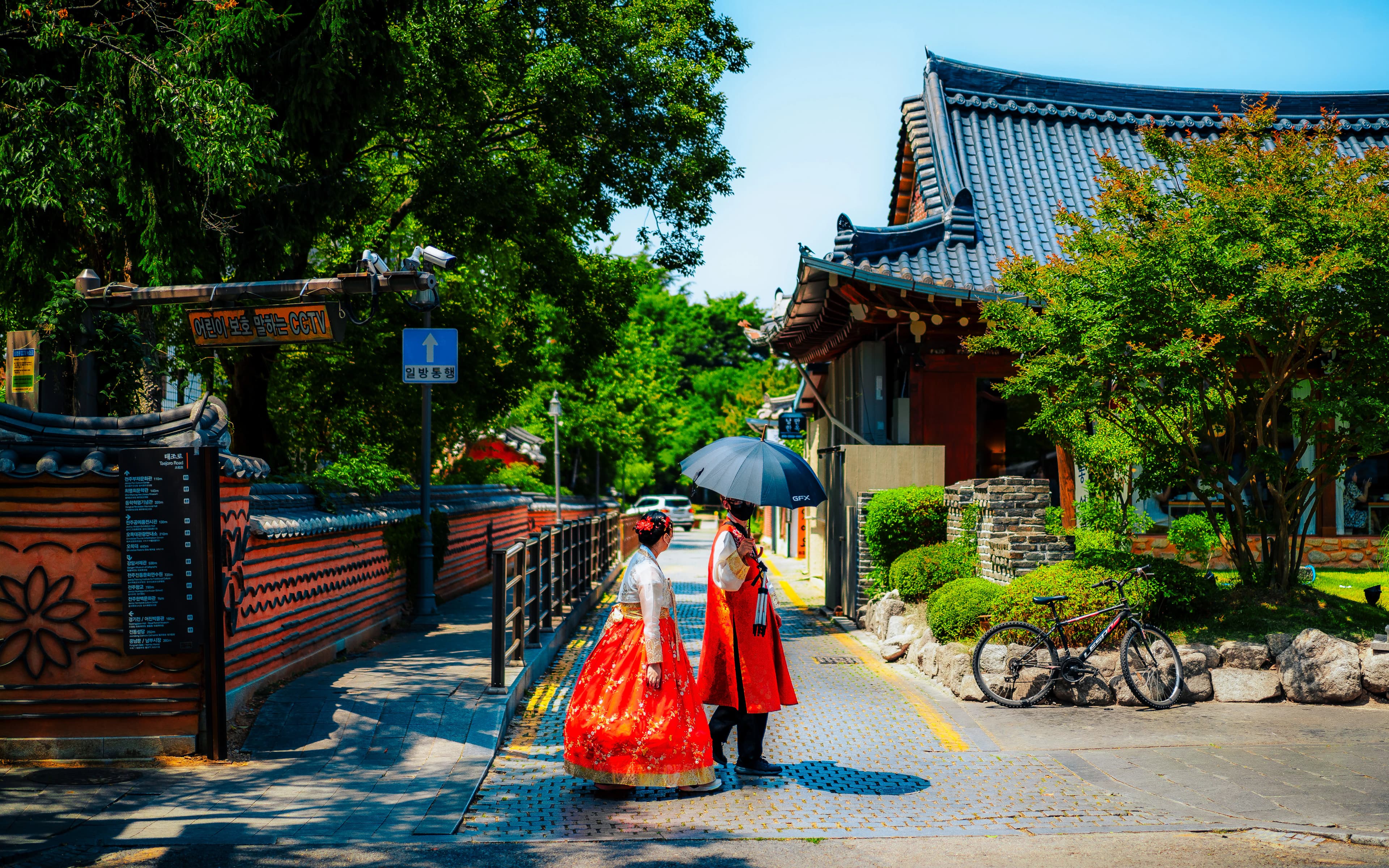
A woman walking down a street holding an umbrella

Jeonju

Jeonju is the culinary capital of South Korea and home to the best Bibimbap in the world. The city in the southwest hosts the best-preserved traditional Hanok village in the country — over 700 houses with curved roofs, which today house guesthouses, teahouses, and craft shops. Jeonju has been designated a UNESCO 'City of Gastronomy' and is a must-visit for anyone who loves Korean cuisine and culture.

CulinaryBibimbapHanok

Seoul

Seoul, the capital of South Korea, is a fascinating metropolis that combines 600-year-old palaces and ultra-modern technology, K-Pop glamour and the tranquility of Buddhist temples into a unique urban experience. The 10-million city pulses around the clock and sets global trends in technology, fashion, music, and gastronomy. The five grand Joseon palaces shape the cityscape: Gyeongbokgung with its daily changing of the guard in historical costumes, Changdeokgung with its Secret Garden (UNESCO World Heritage Site), and the picturesque Deoksugung. The Bukchon Hanok Village with its hundreds of traditional Hanok houses between the palaces uniquely blends tradition and modernity. The N Seoul Tower on Namsan offers panoramic views over the endless city. Korea's culinary culture is a revelation: Korean BBQ, where you grill meat at your own table, Bibimbap, Tteokbokki, and of course Kimchi in countless variations are part of everyday life. The street food markets Gwangjang and Namdaemun offer culinary adventures. Gangnam represents modern, affluent Seoul with shopping and K-Pop cultural sites, while Hongdae hosts the creative indie scene with live music and street art. Spring (cherry blossom) and autumn (foliage) are the most beautiful seasons.

K-PopCulinaryShopping

Sokcho

Sokcho is the gateway to Seoraksan National Park — South Korea's most dramatic mountain range with granite peaks, Buddhist temples, and the country's most spectacular autumn foliage. The coastal city on the east coast also offers one of Korea's best fish markets, a lively harbor, and proximity to the DMZ (demilitarized zone). In autumn, millions of Koreans flock here for the Kouyou — the coloring of the maple leaves.

MountainsAutumn FoliageHiking

Ulsan

Ulsan is South Korea's industrial capital and surprises visitors with a fascinating mix of heavy industry and untouched nature. The city on the southeast coast is home to the world's largest automobile manufacturer (Hyundai) and Korea's largest refinery, yet just outside the gates await whales, bamboo forests, and prehistoric rock paintings. The Bangudae rock paintings — a UNESCO World Heritage site — showcase 7,000-year-old depictions of whales, turtles, and hunting scenes and are the oldest representations of whaling in the world. The Jangsaengpo Whale Museum documents Ulsan's history as Korea's most important whaling location. The Taehwa River runs through the city and offers a 4 km long bamboo forest path — a green oasis in the midst of the industrial city. Ganjeolgot Point is the easternmost point of the Korean mainland and a popular spot for the first sunrise of the new year. The Daewangam coast features dramatic rock formations and pine forests right by the Sea of Japan. In January, whales can actually be spotted from the coast — Ulsan is the only place in Korea for whale watching.

UNESCOWhalesCoast

Islands

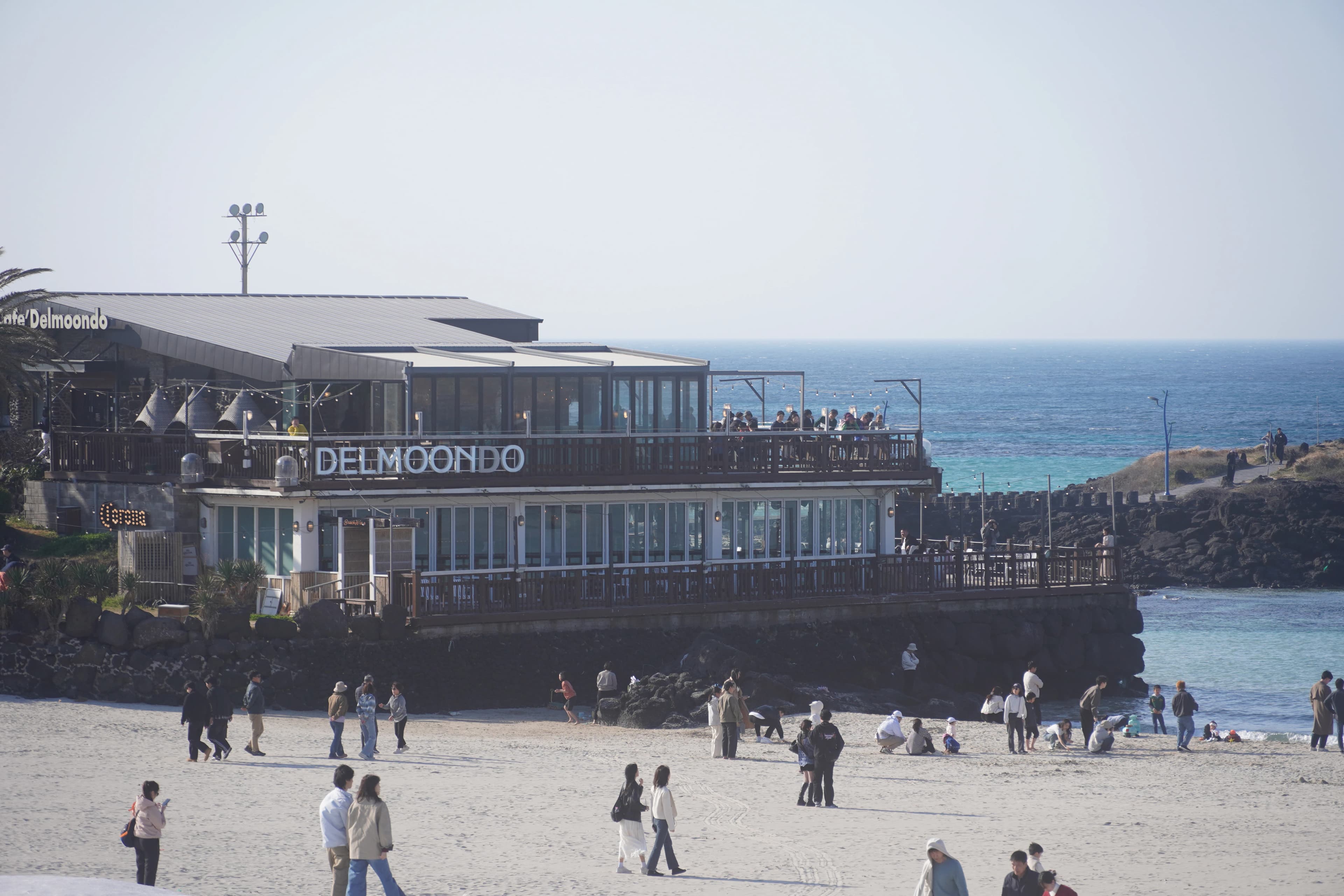
A beachside restaurant overlooks the ocean.

Jeju-do

Jeju-do, South Korea's largest island, is a volcanic natural paradise of UNESCO-protected beauty and the country's most popular holiday destination. The 'Island of the Gods' lies in the Korea Strait south of the peninsula and impresses with a landscape that is hard to surpass in its diversity: extinct volcanic craters, subtropical forests, black lava beaches, and emerald green tea plantations. Hallasan, a 1,950-meter-high shield volcano, forms the majestic center of the island and is South Korea's highest mountain. The ascent to the crater lake at the summit is one of the most popular hikes in the country and offers a spectacular 360-degree view over the island to the mainland and Japan on clear days. Jeju's lava caves are geological wonders. The Manjanggul Cave, one of the longest lava tunnels in the world, stretches over 13 kilometers and impresses with massive lava columns and a 7.6-meter-high lava column — the largest known in the world. The entire volcanic system is part of the UNESCO World Natural Heritage. The island's coast is characterized by the Jusangjeolli cliffs, geometrically perfect basalt columns that appear to be shaped by human hands, and Seongsan Ilchulbong, a dramatic tuff crater that rises directly from the sea. The sunrise from the summit of this 'Sunrise Peak' is one of Korea's most famous sights. Culturally, Jeju is famous for its Hänyeo — the legendary female divers who have been diving for sea urchins, abalone, and shellfish for generations without breathing apparatus. This tradition is UNESCO Intangible Cultural Heritage, and the Hänyeo, many of whom are over 70 years old, are a symbol of female strength and independence. The island also surprises with its thriving art scene. The Bonte Museum, the Arario galleries, and numerous quirky theme museums (from the Teddy Bear Museum to the Trick Art Museum) make Jeju an unusual cultural holiday destination. The O'Sulloc tea plantations offer Korean green tea amidst picturesque plantations, and the tangerine farms invite visitors to harvest the famous Hallabong mandarins.

Volcanic IslandUNESCOHiking

Package holiday to South Korea

Compare flight & hotel at the best price.

Package holidays

Holiday apartment in South Korea

Holiday homes with more space and privacy.

Holiday flats

All accommodations

Map, package holidays & holiday homes at a glance.

All options

Complete guide for South Korea

Regions, attractions, food, routes, costs & practical tips — all in one digital guide.

Open guide
Suitable for:CultureFoodCity tripsK-PopTemples

Ready for South Korea?

Plan your South Korea holiday now with our free tools.

Plan a holiday in South Korea

South Korea is one of the most popular travel destinations in Asia, offering Culture, Food, City trips and much more. The best time to visit South Korea is April–May (cherry blossom) or September–November (autumn foliage), when the weather is ideal for exploration and relaxation. With a daily budget starting from 40–65€ (Budget) to 130–280€ (Luxury), South Korea is suitable for various travel budgets.

From the capital Seoul, South Korea can be excellently explored. The official language is Korean, and the currency is Won (KRW). From Germany, you can reach South Korea in approx. 11 hours. Whether you want to try culinary highlights like Korean BBQ (Bulgogi), Bibimbap, Kimchi, visit top attractions, or simply enjoy the atmosphere: South Korea has something for every type of traveller.

Use our free travel tools to prepare your South Korea holiday perfectly. With the holiday finder, you can discover if South Korea is the right destination for you. The budget calculator helps you plan costs realistically, and with the packing list, you won't forget anything.

Suitable holiday types for South Korea:

More travel destinations in Asia:

All countries in Asia

All destinations in Asia