a large waterfall with a body of water in front of it
🇻🇳

Vietnam holiday

Travel tips, best time to visit & highlights for your Vietnam holiday in Asia

Vietnam surprises with its diversity: Halong Bay, rice terraces in Sapa, the bustling Saigon, the imperial city of Hué, and kilometers of street food. All at incredibly low prices.

Capital

Hanoi

Language

Vietnamese

Currency

Dong (₫)

Time zone

UTC+7

Flight time from DE

approx. 10–12 hours

Entry requirements

Passport, e-visa required

Top hotels & accommodations in Vietnam

Selected hotels and holiday accommodations in Vietnam — with images, reviews, and direct booking links with our partners.

Top 5 highlights in Vietnam

The places you absolutely must not miss.

1

Halong Bay

1,600 limestone pillars in emerald green water – UNESCO World Heritage site and postcard motif.

2

Hội An

The most charming city in Vietnam: lanterns, tailors, street food, and old bridges.

3

Sapa

Rice terraces, mountain tribes, and trekking in the misty north.

4

Phú Quốc

Vietnam's tropical paradise: white beaches, snorkeling, and pepper plantations.

5

Ho Chi Minh City

Vibrant, chaotic, fascinating – war museum, markets, and rooftop bars.

Hotels in Vietnam

Vergleiche tausende Hotels, Apartments und Resorts auf Expedia – mit Bestpreis-Garantie, kostenloser Stornierung und Bonuspunkten.

Über 700.000 Hotels
Kostenlose Stornierung
Bestpreis-Garantie
Hotels in Vietnam vergleichen

* Weiterleitung zu Expedia.de. Es gelten die dortigen Nutzungsbedingungen.

Reise-SIM für Vietnam

Prepaid-SIM mit Datenvolumen für Vietnam. Einfach einlegen und sofort lossurfen – keine Roaming-Gebühren.

Sofort einsatzbereit
200+ Länder
Kein Roaming
SIM-Karte für Vietnam bestellen

* Weiterleitung zu travSIM.de. Es gelten die dortigen Nutzungsbedingungen.

Reiseversicherung abschließen

Rundum-Schutz ab 9,90 € auf TravelSecure.de

Pauschalreisen & Rundreisen

Berge & Meer – 170 Tage Cookie

Best time to visit Vietnam

Recommended travel time

Feb–Apr, Aug–Oct (depending on the region)

Summer

28–35°C

Winter

18–28°C

How much does a holiday in Vietnam cost?

Average cost per person per day (excluding flight)

🎒

Budget

20–35€

Hostel, street food, public transport

🏨

Mid-range

35–70€

Hotel, restaurant, excursions

🌟

Luxury

70–150€

Boutique hotel, fine dining

5 travel tips for Vietnam

Insider knowledge to make your holiday better.

Phở for breakfast – like the locals

Grab motorcycle taxi is cheap and fast

Night trains save hotel and travel time

Order a tailored suit in Hội An

Traffic: Never stop, always walk steadily

Food & drink in Vietnam

These dishes you must try!

Phở
Bánh Mì
Bún Chả
Gỏi Cuốn
Cà Phê Sữa Đá
Bánh Xèo

Discover Vietnam

20 regions, cities and highlights in Vietnam

Cities

Biên Hòa

Biên Hòa is one of the oldest cities in southern Vietnam and is located just 30 km northeast of Ho Chi Minh City on the banks of the Đồng Nai, the longest river in southern Vietnam. The city was once a significant center for the Chinese immigrant community and has a history spanning over 300 years. The Bửu Long Temple (Chùa Bửu Long), often referred to as the golden Angkor Wat of Vietnam, is a Buddhist temple complex in the Thai-Khmer style with golden stupas rising over a lake — an architectural wonder that is still considered a hidden gem. The Đá Xanh Quarry Lake is an emerald green lake in a former granite quarry, surrounded by steep rock walls. The ceramic tradition of Biên Hòa dates back centuries: the Biên Hòa Pottery Village still produces handmade ceramics with characteristic glazes and motifs. The city is also home to the Trấn Biên Temple, a historic Confucian temple from the 17th century. Cát Tiên National Park, a UNESCO Biosphere Reserve with rainforest, endangered species, and archaeological ruins of Khmer culture, is located just 150 km to the north and is a perfect day trip.

TempleCeramicsVietnam

Cần Thơ

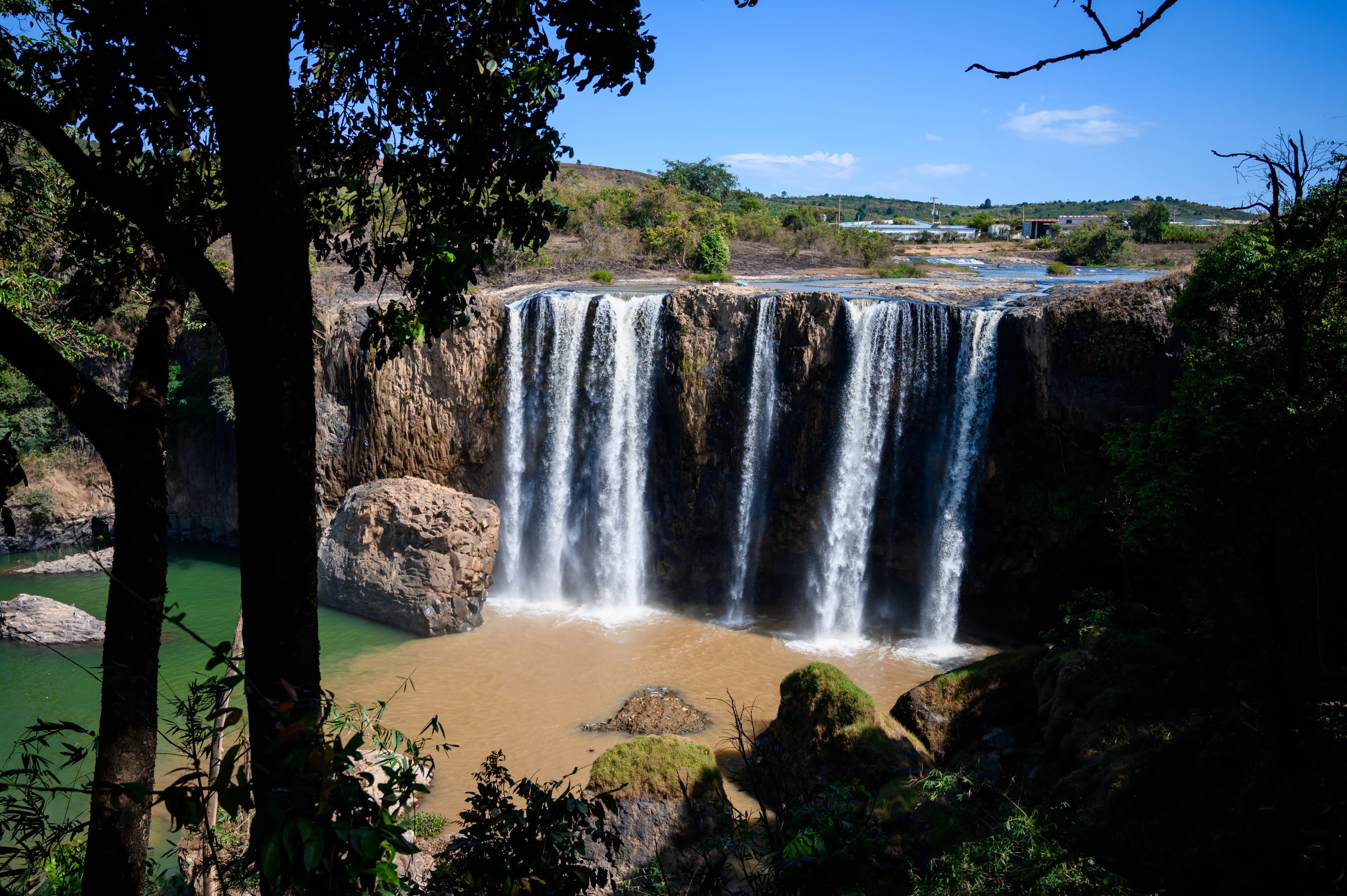
Can Tho is the largest city in the Mekong Delta and the economic and cultural center of southern Vietnam. The city is located at the confluence of the Hau River (a main branch of the Mekong) and several canals that shape daily life — this is where the most authentic river life in Vietnam takes place, far from the tourist paths of Ho Chi Minh City. The Cai Rang Floating Market is the heart of a visit: Every morning from 5 AM, hundreds of boats gather on the river, loaded with tropical fruits, vegetables, rice, and noodle soup. Vendors hang their goods on long bamboo poles at the bow — this way, buyers can see from afar what is being offered. A sampan ride through the market hustle at sunrise is unforgettable. The smaller Phong Dien Floating Market, about 20 km southwest, is less touristy and offers an even more authentic experience. Here, farmers trade directly from boat to boat, and the market dissolves around 9 AM. The Mekong Delta is Vietnam's rice bowl — the region produces over half of Vietnam's rice. Boat trips through the narrow canals lead through endless rice fields, orchards (dragon fruit, durian, rambutan, longan), and small villages where traditional rural life has remained unchanged for generations. The Ninh Kieu promenade is Can Tho's social meeting point: In the evenings, locals and visitors stroll along the river, street vendors offer Banh Mi and fresh fruit shakes, and the illuminated Can Tho Bridge — one of the longest cable-stayed bridges in Southeast Asia — reflects in the water.

Mekong DeltaFloating MarketRice Fields
a large waterfall with a body of water in front of it

Dalat

Dalat is Vietnam's romantic mountain town — a former French hill station at 1,500 meters with eternal spring, pine groves, and a charmingly quirky mix of colonial architecture and crazy buildings like the 'Crazy House'. The city is Vietnam's coffee capital, flower center, and number one honeymoon destination. Waterfalls, canyoning, and the largest night market in the country complete the experience.

MountainsCoffeeRomance

Da Nang

Da Nang is Vietnam's emerging coastal city and the perfect link between the cultural sites of Central Vietnam and the country's most beautiful beaches. The third-largest city in Vietnam has transformed in recent years from a sleepy port town to a modern metropolis that fascinatingly combines tradition and progress. My Khe Beach stretches over 30 kilometers and has been named one of the six most beautiful beaches in the world by Forbes Magazine. The fine, golden sand gently slopes into the turquoise water, surfers find good waves during the winter months, and the nearby Cham Islands offer excellent snorkeling and diving. The beach promenade becomes a meeting point for joggers, families, and street food lovers in the evenings. The Marble Mountains are five marble and limestone hills that rise abruptly from the coastal plain. Inside, they hide Buddhist cave temples, hidden grottos, and viewpoints with breathtaking panoramic views. The pagodas in the caves, illuminated by sunlight streaming through openings in the ceiling, are magical places. The Golden Bridge on Ba Na Hills is Vietnam's most photographed structure — a curved bridge seemingly suspended above the rainforest, held up by two giant stone hands. The entire complex on the mountain offers, in addition to the bridge, a replica French village, an amusement park, and spectacular views. Da Nang is the ideal base camp for two UNESCO World Heritage Sites: the ancient town of Hội An (30 minutes) and the imperial city of Huế (2 hours). The city itself surprises in the evenings with a spectacular light show at the Dragon Bridge, which spews fire and water every Saturday and Sunday. Street food markets like Han Market and Con Market offer the diverse flavors of Central Vietnam at sensational prices.

VietnamBeachGolden Bridge

Haiphong

Haiphong is the third largest city in Vietnam and the most important port in the north, located in the Red River Delta by the Gulf of Tonkin. The city serves as a gateway to the legendary Cat Ba Island and the Lan Ha Bay, a less crowded alternative to the famous Halong Bay. The colonial architecture of Haiphong reflects French rule: The grand opera house (Nha Hat Lon), built in 1912 in neoclassical style, stands in the central square and resembles the opera house in Hanoi. Along the wide boulevards, pastel-colored colonial villas line the streets, giving the city a French flair. Cat Ba Island, the largest island in Halong Bay, can be reached by speedboat in about 45 minutes from Haiphong. The Cat Ba National Park protects dense rainforests with the rare Cat Ba langur, one of the rarest primates in the world with fewer than 70 remaining individuals. The Lan Ha Bay south of Cat Ba offers over 300 limestone karst formations, emerald green water, and significantly fewer tourists than Halong. Do Son Beach, 20 km southeast of the city, is a popular seaside resort with miles of sandy beaches and French colonial villas. The annual buffalo fighting festival in Do Son, a centuries-old ritual, takes place every September. Haiphong's flower markets are legendary: The city is famous for its flamboyant tree avenues (Phuong), which bathe the streets in bright red during May and June, earning Haiphong the nickname City of Red Flamboyant Flowers.

PortColonialCat Ba
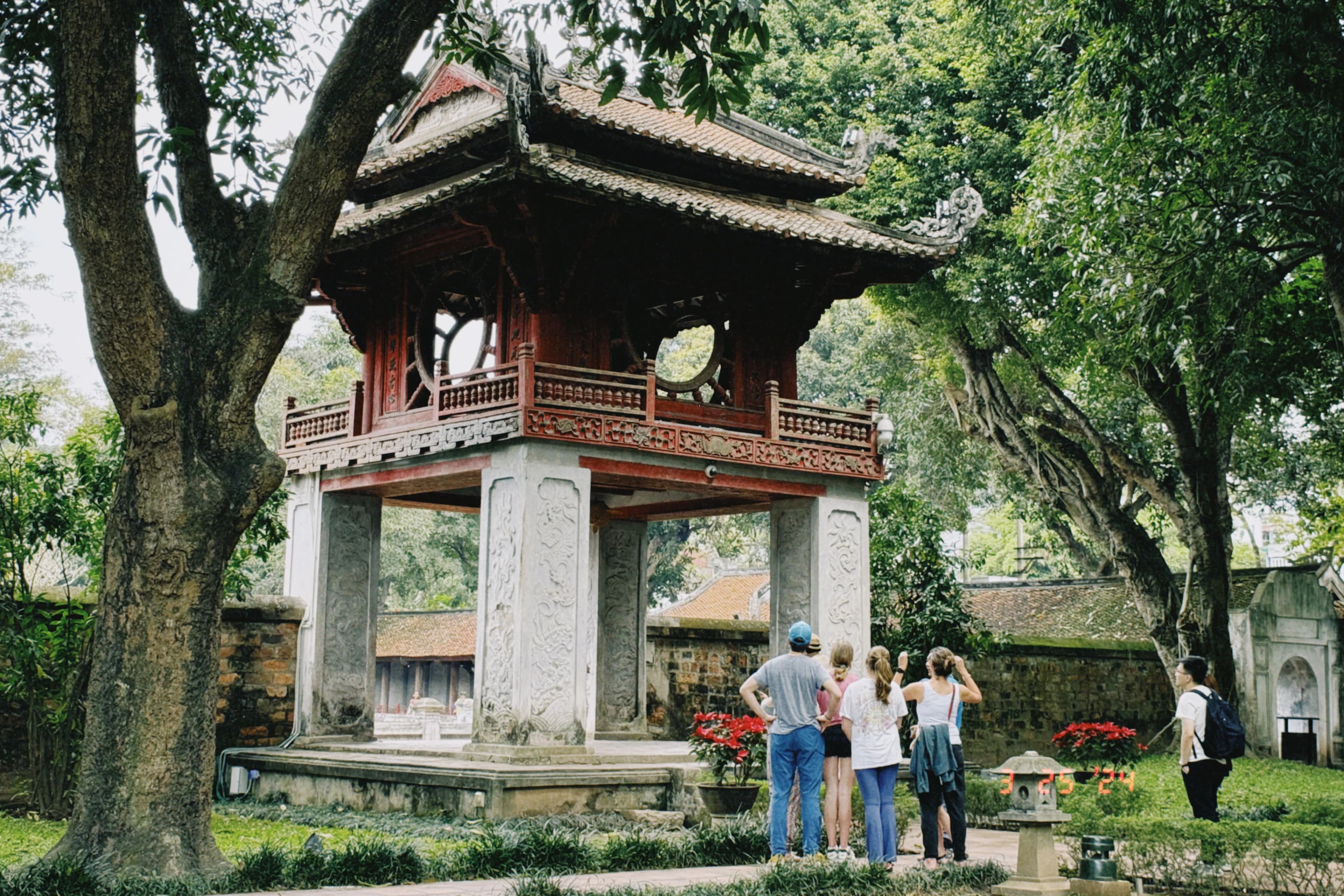
a group of people standing in front of a pagoda

Hanoi

Hanoi, the thousand-year-old capital of Vietnam, combines the charm of an ancient Southeast Asian trading city with French colonial heritage and modern vitality. The Old Quarter, with its 36 streets named after craft guilds, pulses with life — here, small eateries, tea vendors, silk shops, and temples crowd into a small space while motorbikes maneuver through the narrow streets. Hoan Kiem Lake lies like a calm mirror in the heart of the city, surrounded by tamarind trees and the iconic Ngoc Son Temple on a small island. On weekends, the area becomes a pedestrian zone, and families, artists, and street musicians enliven the promenades. The Ho Chi Minh Mausoleum, the 11th-century Temple of Literature, and the One Pillar Pagoda are among the most important sights. Hanoi's street food is considered the best in Vietnam: Pho Bo (beef noodle soup) for breakfast, Bun Cha (grilled pork with noodles) for lunch, and Egg Coffee as an afternoon ritual are part of the city's culinary DNA. Ha Long Bay, with its 1,600 limestone pillars, can be reached in just three hours. The best travel time is from October to December, when pleasant temperatures and little rain prevail.

Street FoodCultureHistory
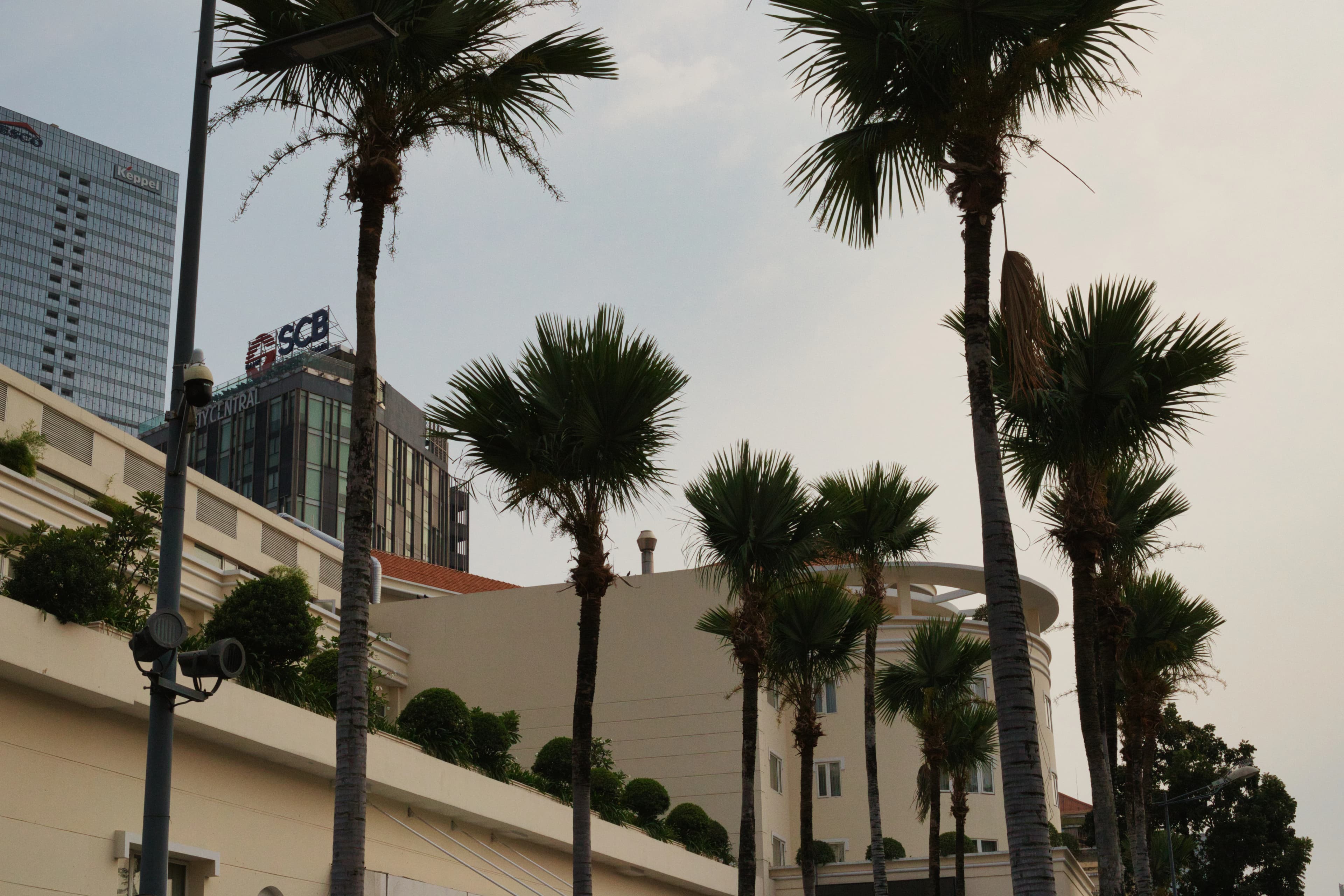
a row of palm trees in front of a building

Ho Chi Minh City

Ho Chi Minh City, formerly Saigon, is the largest and most dynamic metropolis in Vietnam — a bustling melting pot of French colonial architecture, modern skyscrapers, and millions of scooters weaving through the streets like an endless stream. The energy of this 13-million-inhabitant city is both contagious and overwhelming. The heart of the city is District 1, featuring the magnificent Notre-Dame Cathedral made of red brick, the main post office in Beaux-Arts style, and the Reunification Palace, which brings the history of the Vietnam War to life. The War Remnants Museum is one of the most impressive anti-war museums in the world. For the best panoramic view, the observation deck of the Bitexco Financial Tower is the place to be. Culinarily, Saigon is a paradise: The food stalls at Ben Thanh Market offer Pho, Banh Mi, and fresh spring rolls, while the street kitchens in the Binh Thanh district serve authentic local dishes. The Cu Chi Tunnels, a 250-kilometer-long underground tunnel system from the Vietnam War, are just an hour's drive away. From December to April, the dry season brings pleasant temperatures around 30 degrees — ideal for city explorations.

Street FoodHistoryScooters
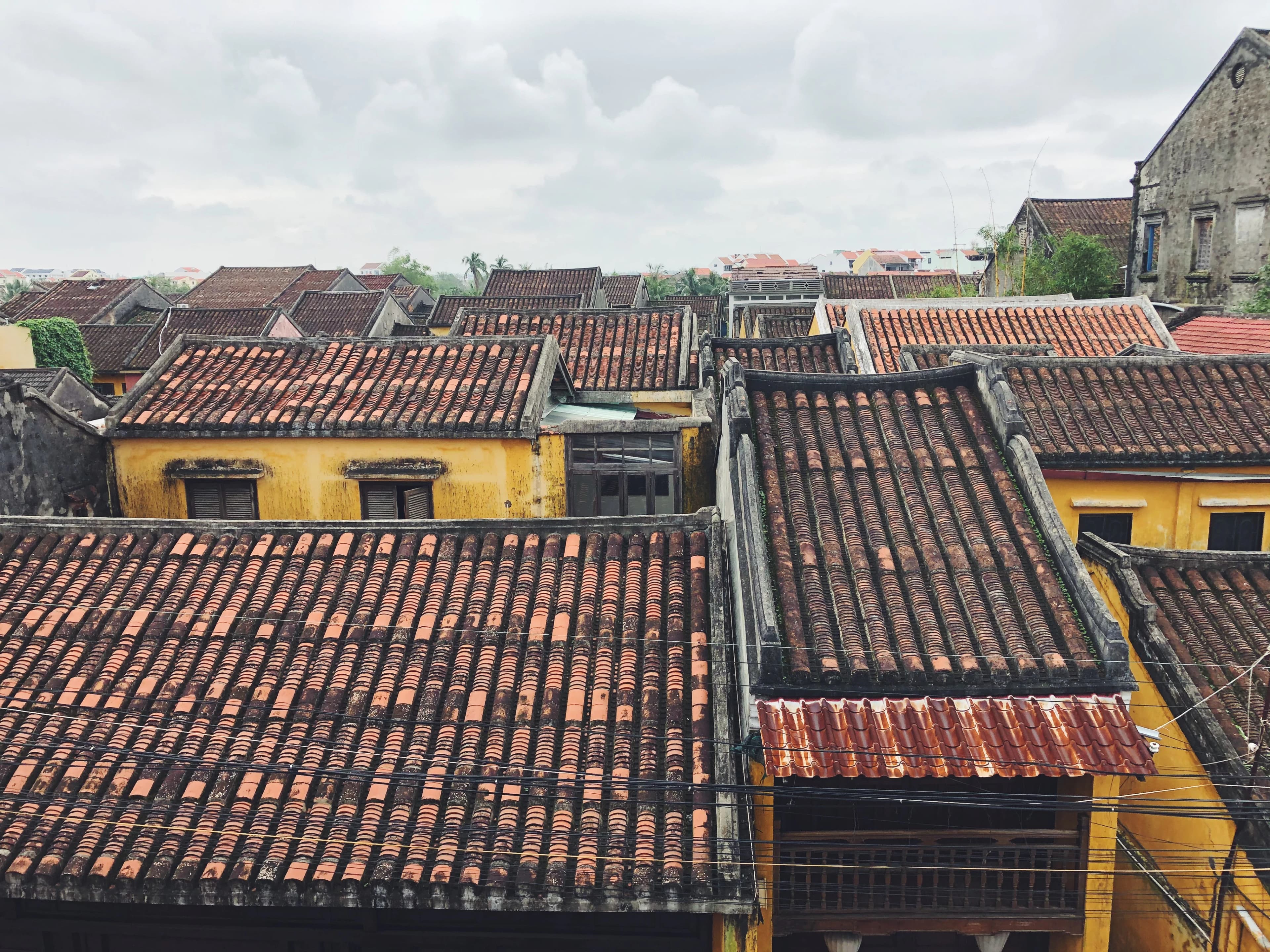
brown and black concrete houses under white clouds during daytime

Hội An

Hoi An is a charming small town on the coast of Central Vietnam, recognized as a UNESCO World Heritage site for its perfectly preserved old town, colorful lanterns, and unique mix of Vietnamese, Chinese, and Japanese architecture. The car-free old town transforms into a magical sea of lights at dusk when hundreds of handcrafted silk lanterns bathe the narrow streets and the Thu Bon River in warm light. Hoi An is Vietnam's capital of tailoring — over 400 tailor shops create custom suits, dresses, and coats within 24 hours at a fraction of European prices. The central market offers a fireworks display of flavors: Cao Lau, a local noodle specialty with crispy rice crackers, and White Rose Dumplings can only be found here. The 16th-century Japanese Bridge is the city's landmark. The nearby An Bang Beach is among the most beautiful in Vietnam, and boat trips to the Cham Islands offer top-notch snorkeling in turquoise waters. Between October and March, the weather is ideal for travel, with the lantern festival during the full moon being a special experience. Hoi An combines history, culinary delights, and beach life in a way that captivates every visitor.

LanternsUNESCORomance
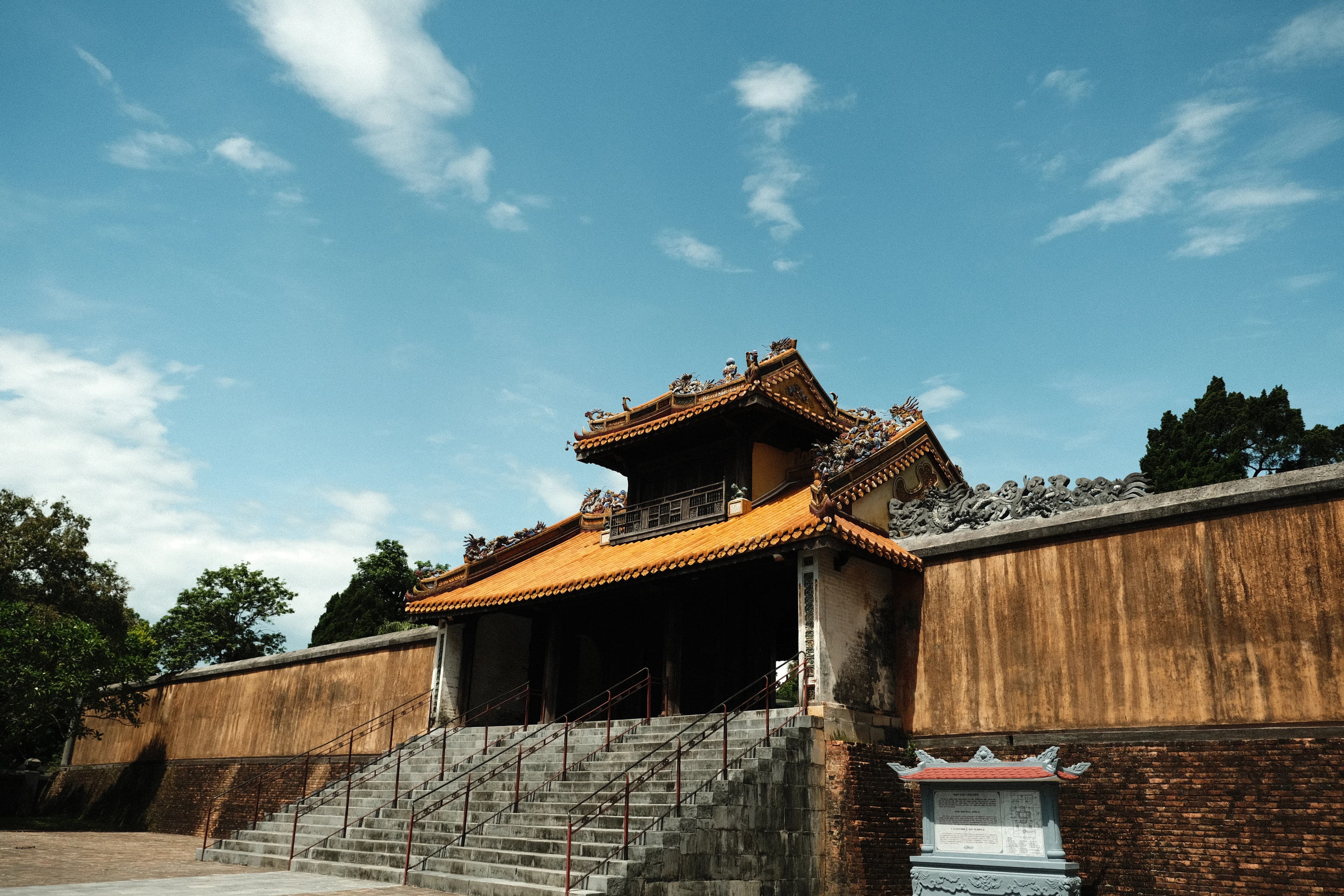
a building with stairs leading up to it

Huế

Hue, the former imperial city of Vietnam, is beautifully situated on the Perfume River and impresses with its imperial citadel, magnificent royal tombs, and a melancholic beauty that recalls past dynasties. The Nguyen dynasty ruled Vietnam from here from 1802 to 1945, and its legacy — protected as a UNESCO World Heritage Site — continues to shape the city today. The Imperial Citadel covers 520 hectares with the Forbidden Purple City at its center, surrounded by massive walls and a wide moat. Although large parts were destroyed during the Vietnam War, the restored pavilions, thrones, and gardens still convey the splendor of the Nguyen era. The royal tombs along the Perfume River — especially the tomb of Tu Duc with its poetic gardens — are architectural masterpieces. Hue's royal cuisine is considered the most refined in Vietnam: delicately arranged dishes like Banh Beo, Bun Bo Hue, and imperial rice cakes reflect a centuries-old culinary tradition. A dragon boat ride on the Perfume River at sunset is one of the most atmospheric experiences in the city. The Thien Mu Pagoda with its seven-story tower is the spiritual landmark. The best time to visit is from February to April when it is dry and pleasantly warm.

Imperial CityUNESCOCulinary
brown desert during daytime

Mui Ne

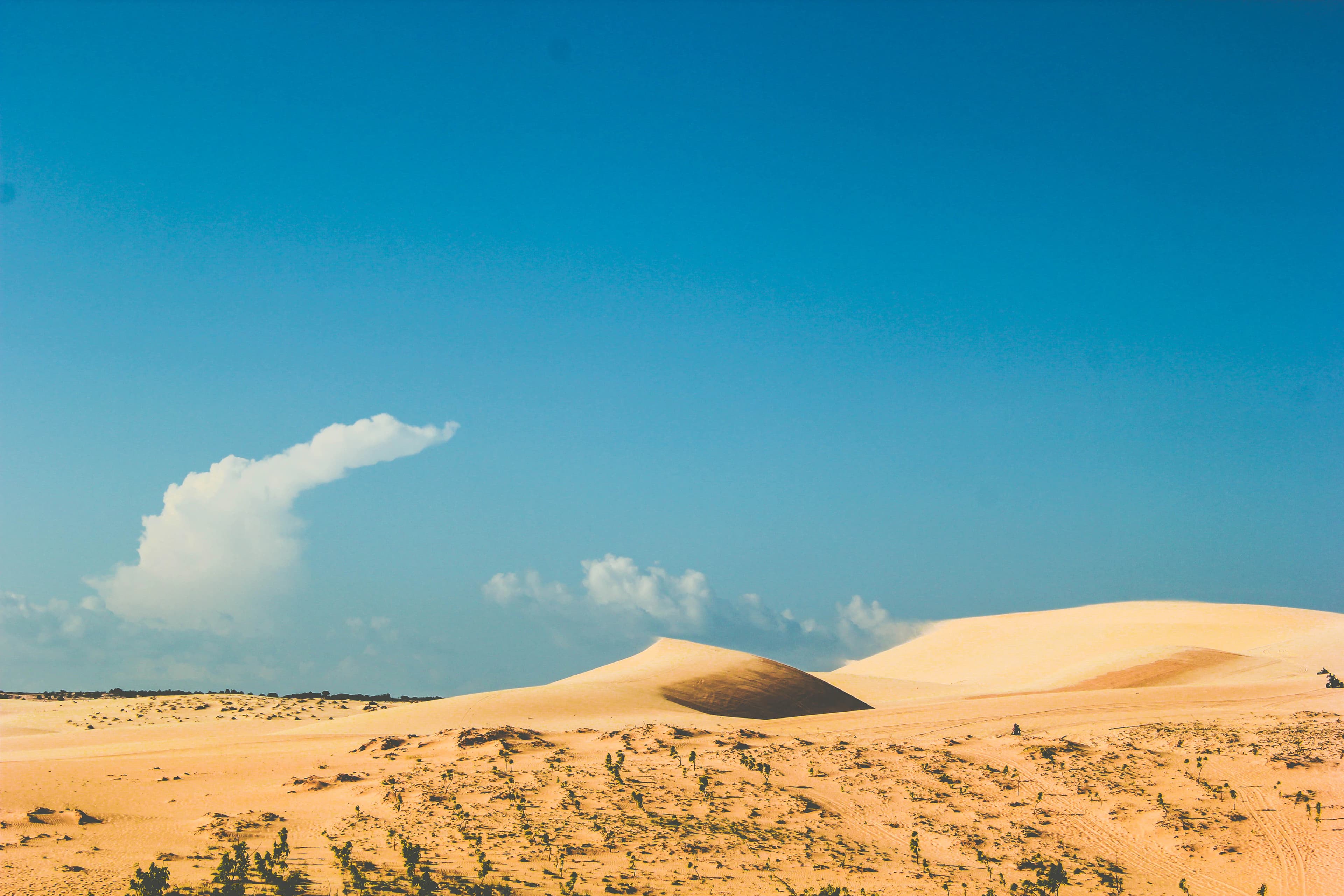
Mui Ne is Vietnam's kitesurfing capital and a place of contrasts, where red and white sand dunes meet turquoise sea. The former fishing village is located 200 kilometers northeast of Ho Chi Minh City on the southeast coast and has developed into one of Vietnam's most popular beach destinations without losing its rugged charm. The 15-kilometer beach road between Mui Ne and the neighboring Phan Thiet connects resorts, kitesurfing schools, and restaurants, while fresh fish is auctioned directly on the beach every morning at the fishing village of Mui Ne. The sand dunes of Mui Ne are a geological sensation and the hallmark of the region. The white dunes (Bau Trang) in the north stretch over a vast area and resemble the Sahara, complete with camels and sandboarding opportunities. A freshwater lake in the midst of the dune landscape is a paradise for lotus lovers when the pink blooms flourish in summer. The red dunes (Bau Do) closer to the village glow in dramatic orange tones at sunset and are accessible on foot. The Fairy Stream (Suoi Tien) connects both dune landscapes – an ankle-deep stream winding through a miniature canyon landscape of red and white sandstone. For kitesurfers, Mui Ne is a paradise: the constant wind from November to April, the flat water in the bay, and the affordable prices for courses and equipment make it one of the best kitesurfing spots in Southeast Asia. During the calm from May to October, surfers and stand-up paddlers take over. The cost of living is low even by Vietnamese standards – a complete seafood dinner costs under €10, and resorts with pools start from €30 per night.

KitesurfingSand DunesVietnam

Nha Trang

Nha Trang is Vietnam's most popular beach resort and the 'Riviera of Southeast Asia'. The lively coastal city on the southern central coast combines a beautiful city beach with an offshore island world, historical Cham temples, and a nightlife that ranks among the best in Vietnam. The seven-kilometer-long city beach with its palm-lined promenade is the heart of Nha Trang. The turquoise water is warm, the waves are gentle, and the infrastructure with sun loungers, bars, and restaurants directly on the sand is first-class. In the background, the green mountains of the coastal range rise — a panorama that sets the beach apart from many others in Southeast Asia. The offshore islands offer a break from the city beach. Hon Mun Island has the best snorkeling area in the region with colorful coral gardens and seahorses. VinWonders on Hon Tre Island is a huge amusement park with a water park, accessible via one of the longest over-water cable cars in the world. Monkey Island and Hon Tam offer quieter beaches for day trips. The Po Nagar Cham Towers from the 8th century are a fascinating relic of the Cham Kingdom, which once ruled the central Vietnamese coast. The Hindu temples on a hill above the Cai River mouth not only provide archaeological interest but also a wonderful view over the city and the bay. Nha Trang is also Vietnam's unofficial diving capital. Over 25 dive spots with coral reefs, underwater caves, and occasional whale shark sightings make the city an ideal place for obtaining a diving certification — PADI courses here are significantly cheaper than in Thailand or the Philippines. In the evenings, the beachfront promenade transforms into a party mile, and the famous mud baths (Mud Baths) of Thap Ba offer a unique relaxation experience.

VietnamBeachDiving

Sapa

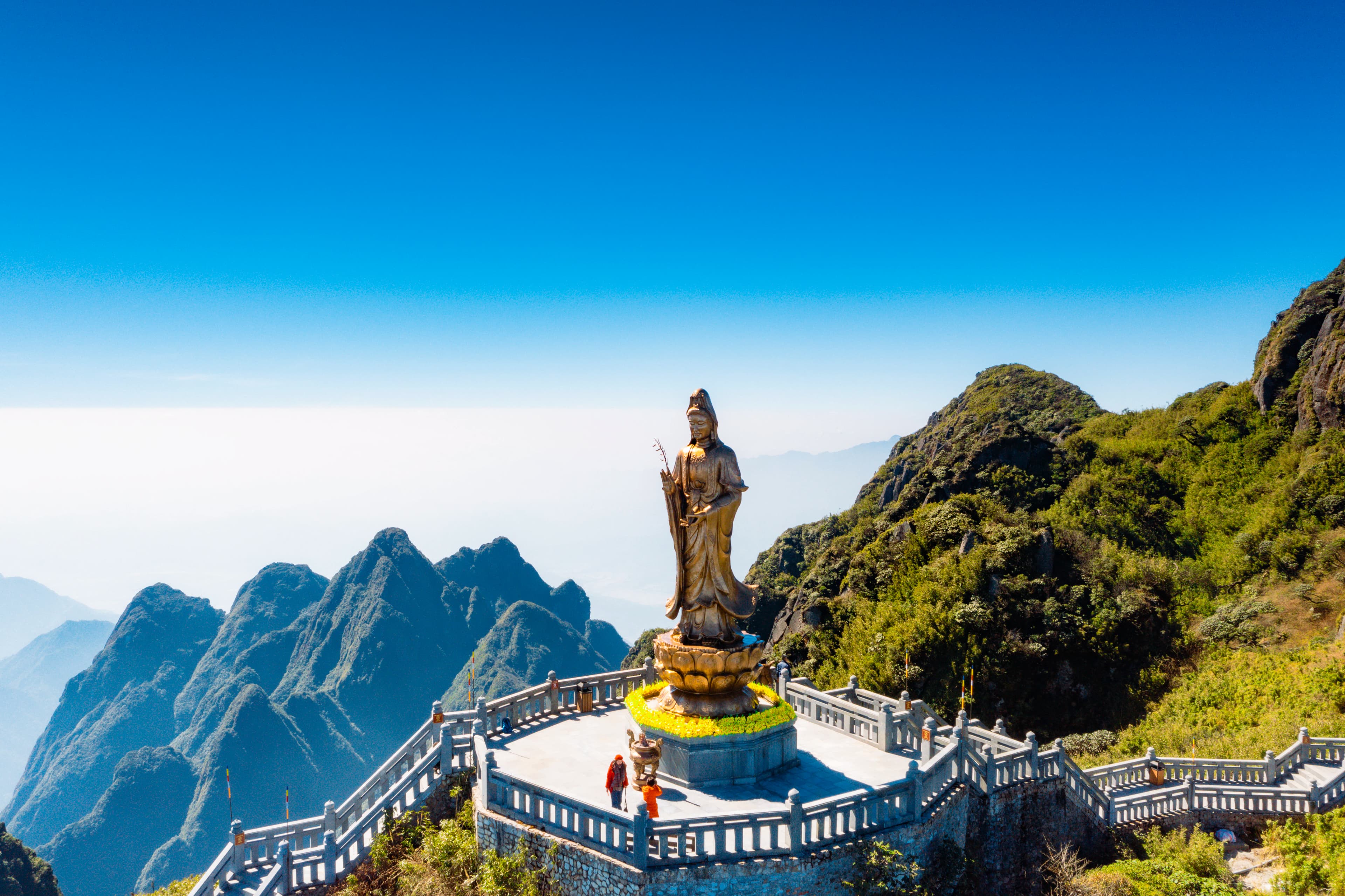
Sapa is located in the misty mountains of northern Vietnam, just 350 kilometers from Hanoi, and offers one of the most spectacular rice terrace landscapes in the world. The terraced rice fields, which rise like green steps up the steep mountain slopes, change color with the seasons — from emerald green in summer to golden yellow at harvest time to silvery shimmering when flooded with water. The region is home to various ethnic minorities, including the Hmong, Dao, and Tay, who trade in colorful traditional clothing at mountain markets and welcome visitors in their villages. A homestay with a Hmong or Dao family is one of the most authentic travel experiences in Vietnam — you sleep on bamboo mattresses, eat together on the floor, and learn firsthand about a way of life that has hardly changed for generations. Fansipan, at 3,143 meters the highest mountain in Indochina, is accessible from Sapa — either as a 2-day trek or comfortably by cable car, which takes only 15 minutes to reach the summit. At the top, you will find a temple complex and, in clear weather, a panorama that includes several mountain ranges. The hikes through the Muong Hoa Valley to the villages of Cat Cat, Ta Van, and Lao Chai lead through the most beautiful rice terraces and over bamboo bridges, past waterfalls and through forests full of tropical orchids. The paths can be slippery and challenging — good footwear and a local guide are recommended. The Bac Ha Sunday Market, 2 hours east of Sapa, is one of the most colorful markets in Southeast Asia. Here, the Flower Hmong meet in their brightly embroidered attire to trade water buffalo, pigs, vegetables, and handwoven textiles — a feast for the senses and for photographers.

VietnamRice TerracesTrekking
a statue of buddha on top of a mountain

Sa Pa

Sa Pa is Vietnam's most dramatic mountain panorama — a small town in the far northwest of the country, perched at an altitude of 1,500 meters on the edge of a massive gorge and surrounded by terraced rice fields that are among the most beautiful in the world. When the morning fog rises from the valleys and reveals the emerald green rice terraces, a landscape of overwhelming beauty unfolds. Fansipan (3,143 m) is the highest mountain in Indochina — the roof of Southeast Asia. Since 2016, a spectacular cable car takes you to the summit in 15 minutes, where a Buddhist temple complex with a gigantic bronze Buddha statue has been erected. For trekking enthusiasts, the classic ascent takes two days through bamboo forests, cloud forests, and rhododendrons. The ethnic minorities are the cultural heart of Sa Pa: The Black Hmong in their indigo-dyed cloth, the Red Dao with their red headscarves, and the Giay with their colorful markets live in the surrounding villages and offer homestay accommodations. The Sunday and Saturday markets in the mountain villages of Bac Ha and Can Cau are among the most colorful markets in Southeast Asia. The rice terraces of Muong Hoa stretch for 20 kilometers along a river valley: In September and October, when the rice is golden yellow and ripe, the valley transforms into a glowing sea of steps — a sight that has made Sa Pa world-famous.

Rice TerracesTrekkingMountain Peoples

Islands

Cát Bà

Cát Bà is the largest island in Ha Long Bay and the relaxed, cheaper alternative to the classic Ha Long cruises. The national park covers half of the island with jungle, limestone caves, and the endangered Cat Ba Langur. Lan Ha Bay to the east of the island offers the same spectacular limestone cliffs as Ha Long Bay, but with fewer tourist boats and clearer water for kayaking and swimming.

Karst cliffsKayakVietnam

Côn Đảo

Côn Đảo, an archipelago of 16 islands off the southeast coast of Vietnam, is one of the last undiscovered island paradises in Southeast Asia. While Phu Quoc and the Thai islands have long been overrun by mass tourism, Côn Đảo retains a quiet, unspoiled beauty that evokes Southeast Asia of past decades. The main island, Côn Sơn, offers some of the most beautiful beaches in Vietnam. Bãi Đầm Trầu, framed by high cliffs and lined with coconut palms, has been repeatedly chosen as one of the most beautiful beaches in Asia. The turquoise water is crystal clear, and the coral reefs just off the coast make the islands one of the best snorkeling and diving spots in Vietnam. However, Côn Đảo has a dark past that contrasts with its paradisiacal nature. The French and later the South Vietnamese government operated notorious prisons here for over a century, where tens of thousands of political prisoners suffered under inhumane conditions. The prison museum and the infamous 'Tiger Cages' — narrow concrete cells exposed to the elements — are now memorials that tell a story of suffering and resistance that deeply touches every visitor. The Côn Đảo National Park protects over 80% of the island's area and includes both the forested mountains and the surrounding marine areas. From June to October, sea turtles come to the remote beaches to lay their eggs — a natural spectacle that can be observed with permission from the park authority. The infrastructure on Côn Đảo is deliberately limited. There are no high-rise buildings, no massive hotels, and no party streets. Instead, you will find stylish boutique resorts, simple guesthouses, and restaurants serving freshly caught fish. The island aims to be a model for sustainable tourism in Vietnam. Hiking in the national park leads through dense tropical forests to secluded bays and viewpoints. Circumnavigating the island by motorcycle is an adventure on narrow coastal roads with views of the endless blue of the South China Sea.

Island paradiseUntouchedDiving

Phu Quoc

Phu Quoc is Vietnam's largest island and the emerging tropical paradise of Southeast Asia – a place that combines the authenticity of a fishing village with the infrastructure of a modern beach resort. The island is located in the Gulf of Thailand, closer to Cambodia than to the Vietnamese mainland, and offers 150 kilometers of coastline with some of the most beautiful beaches in Vietnam. Long Beach on the west coast stretches over 20 kilometers and is famous for its spectacular sunsets, while Sao Beach in the south, with its powdery white sand and crystal-clear water, is considered one of the most beautiful beaches in all of Southeast Asia. Phu Quoc has undergone rapid transformation in recent years. A new cable car, the longest over the sea in the world, connects the main island with the offshore island of Hon Thom and offers breathtaking views of the archipelago during the 8-kilometer ride. The Vinpearl complex in the north includes a safari park with African animals, an amusement park, and an aquarium. At the same time, the Phu Quoc National Park, which covers more than half of the island's area, preserves the original tropical rainforest with hiking trails, waterfalls, and a rich wildlife. The culinary soul of the island is fish sauce – Phu Quoc produces the best and most famous Nuoc Mam in Vietnam, and a visit to one of the traditional fish sauce factories is a must. The night market in Duong Dong, the island's capital, is a feast for the senses: freshly grilled sea urchins, abalone, shrimp, and exotic seafood are prepared at the stalls and served at prices that would be unimaginable in Europe. Phu Quoc has its own international airport with direct flights from Ho Chi Minh City (1 hour) and enjoys visa-free entry for up to 30 days as a special economic zone – ideal for short trips from Germany.

islandVietnambeach

Areas

Halong Bay

Halong Bay in northeastern Vietnam is one of the most spectacular natural wonders of Asia and a UNESCO World Heritage site since 1994. Over 1,600 limestone rocks and islands rise from the emerald waters, creating a surreal seascape that, according to legend, was created by a dragon that descended into the sea here. The majestic karst formations, some over 100 meters high, are covered in lush vegetation and house spectacular limestone caves within. The Sung Sot Cave (Surprise Cave) impresses with enormous caverns filled with stalactites and stalagmites. The Thiên Cung Cave (Heavenly Palace Cave) shines in colorful light and reveals fantastic rock formations. An overnight stay on a traditional junk is the highlight of any Halong experience. Anchoring between the limestone rocks at sunset, dining on the upper deck, and gazing into the still, mist-covered waters in the morning are among the most poetic travel moments in all of Asia. The boats range from simple wooden junks to luxury cruisers with pools on the upper deck. Kayaking tours through hidden lagoons and floating fishing villages offer a more intimate view of the bay. Cat Ba Island, the largest island, surprises with dense rainforests, a national park with endangered langurs, and its own dream beaches. Lan Ha Bay, the less-visited neighboring bay, offers the same scenery with a fraction of the boats. Halong Bay is breathtaking — but also a victim of its own success. Over 500 boats operate daily on the water. Those who want to experience the magic of the bay in peace should choose a 2-night tour that goes further into the remote areas or alternatively head to the nearly untouched Bai Tu Long Bay in the northeast.

VietnamUNESCOKarst Rocks

Phong Nha

Phong Nha-Ke Bang is Vietnam's most spectacular national park — home to the largest cave in the world (Son Doong), countless river caves, and one of the oldest karst mountain ranges on Earth. The UNESCO World Heritage site in central Vietnam offers underground rivers, 300 million-year-old stalactite formations, and dense primary forest above ground. Phong Nha is the perfect place for adventurers seeking Vietnam off the beaten path.

CavesNatureUNESCO

Regions

Mekong Delta

The Mekong Delta in southwestern Vietnam is a world on water: Here, the mighty Mekong splits into nine branches (hence the Vietnamese name Cửu Long — "Nine Dragons") and flows through an endless labyrinth of canals, river arms, and flooded rice fields, forming one of the most fertile regions on Earth. About 18 million people live here in close connection with the water — their houses are built on stilts, they travel by boat to the market, and their livelihood is dictated by the rhythm of the river. The floating markets are the heart of the delta experience: At the Cai Rang Market near Can Tho, the largest floating market in Vietnam, hundreds of boats laden with mountains of pineapples, rambutan, watermelons, and coconuts gather every morning at sunrise. Vendors hang their goods on bamboo poles above the boat so that buyers can see what is offered from afar. Between the wholesalers, small rowboats bustle with steaming Phở, fresh baguettes, and hot coffee — a floating breakfast buffet. A boat ride through the narrow canals of the delta reveals a paradisiacal garden landscape: Coconut palms form green tunnels over the water, orchards offer fresh dragon fruit and pomelo for picking, and colorful butterflies flutter everywhere. In the villages, artisans showcase their crafts: Here, coconut pralines are made, there, rice paper is dried in the sun, and by the riverbank, a small distillery produces rice liquor. The delta is also a culinary paradise: The cuisine of the south is sweeter, more coconut-centric, and fruitier than in other parts of the country. The region around Cần Thơ has also established itself as a center for homestays — overnight stays with local families in stilt houses by the river, where one can cook, fish, and enjoy the sunset over the rice fields together.

Floating MarketMekongBoat Ride

Ninh Bình

Ninh Bình is often referred to as the "Halong Bay on land" — and indeed, the landscape of limestone karst mountains rising from emerald green rice fields and tranquil rivers resembles the famous bay, only here bicycles and rowboats are the main means of transport instead of boats. The Tam Coc complex is the centerpiece: A boat ride on the Ngo Dong River takes you through three natural caves, while rice fields and limestone cliffs create a surreal backdrop on both sides. The female rowers astonishingly row with their feet — a technique you won't see anywhere else. During the harvest season (May/June), the fields shine golden and provide one of the most photogenic scenes in Vietnam. Trang An, the newly designated UNESCO World Heritage site, offers an even more impressive boat tour. On a 3-hour route, you paddle through over 40 low caves, past temples, and through a landscape that served as a filming location for "Kong: Skull Island." The karst mountains rise more dramatically here, the caves are longer, and the atmosphere is even more mystical than in Tam Coc. Bich Dong — the "Jade Pagoda" — is a three-tiered cave temple built into the rock face. The ascent through three stacked temples in different caves rewards you with a view over the rice field landscape that is worth all the effort. The Mua Cave (Dance Cave) offers one of the most spectacular viewpoints in the region after a strenuous climb of over 500 steps: From the dragon statue at the summit, you overlook the entire Tam Coc landscape — rice fields, rivers, and karst mountains stretching to the horizon. Ninh Bình is the perfect day trip or stopover from Hanoi (2 hours) and a welcome alternative to the often crowded Halong.

VietnamKarst MountainsRice Fields

Package holiday to Vietnam

Compare flight & hotel at the best price.

Package holidays

Holiday apartment in Vietnam

Holiday homes with more space and privacy.

Holiday flats

All accommodations

Map, package holidays & holiday homes at a glance.

All options

Complete guide for Vietnam

Regions, attractions, food, routes, costs & practical tips — all in one digital guide.

Open guide
Suitable for:CultureFoodBudgetNatureAdventure

Ready for Vietnam?

Plan your Vietnam holiday now with our free tools.

Plan a holiday in Vietnam

Vietnam is one of the most popular travel destinations in Asia, offering Culture, Food, Budget and much more. The best time to visit Vietnam is Feb–Apr, Aug–Oct (depending on the region), when the weather is ideal for exploration and relaxation. With a daily budget starting from 20–35€ (Budget) to 70–150€ (Luxury), Vietnam is suitable for various travel budgets.

From the capital Hanoi, Vietnam can be excellently explored. The official language is Vietnamese, and the currency is Dong (₫). From Germany, you can reach Vietnam in approx. 10–12 hours. Whether you want to try culinary highlights like Phở, Bánh Mì, Bún Chả, visit top attractions, or simply enjoy the atmosphere: Vietnam has something for every type of traveller.

Use our free travel tools to prepare your Vietnam holiday perfectly. With the holiday finder, you can discover if Vietnam is the right destination for you. The budget calculator helps you plan costs realistically, and with the packing list, you won't forget anything.

Suitable holiday types for Vietnam:

More travel destinations in Asia:

All countries in Asia

All destinations in Asia