Belgium holiday
Travel tips, best time to visit & highlights for your Belgium holiday in Europe
Belgium is small but incredibly rich in delights and culture: world-famous chocolate and pralines, over 1,500 types of beer, perfect waffles and fries – the country is a paradise for gourmets. Additionally, medieval cities like Bruges and Ghent, which resemble open-air museums, and Brussels' cosmopolitan charm as the heart of Europe.
Capital
Brussels
Language
Dutch, French, German
Currency
Euro (€)
Time zone
UTC+1
Flight time from DE
about 1 hour
Entry requirements
EU identity card
Top hotels & accommodations in Belgium
Selected hotels and holiday accommodations in Belgium — with images, reviews, and direct booking links with our partners.
Steigenberger Icon Wiltcher's
Ixelles/Elsene, Belgien
Hotel Sofitel Brussels Europe
Etterbeek, Belgien
Le Louise Hotel Brussels - MGallery
Ixelles/Elsene, Belgien
Le Chatelain Boutique Hotel Brussels
Ixelles/Elsene, Belgien
Hotel Renaissance Brussels
Ixelles/Elsene, Belgien
Hotel Marriott Brussels
Brüssel, Belgien
Hotel Catalonia Brussels
Saint-Gilles / Sint-Gillis, Belgien
Hotel Crowne Plaza Brussels Airport
Machelen, Belgien
Top 5 highlights in Belgium
The places you absolutely must not miss.
Bruges
Fairy-tale medieval city with canals, brick gables, and the best hot chocolate in Belgium.
Brussels
Grand-Place (UNESCO), Manneken Pis, comic murals, and the European Quarter – charming and cosmopolitan.
Ghent
University city with a medieval skyline, street art, and the Ghent Altarpiece in St. Bavo's Cathedral.
Antwerp
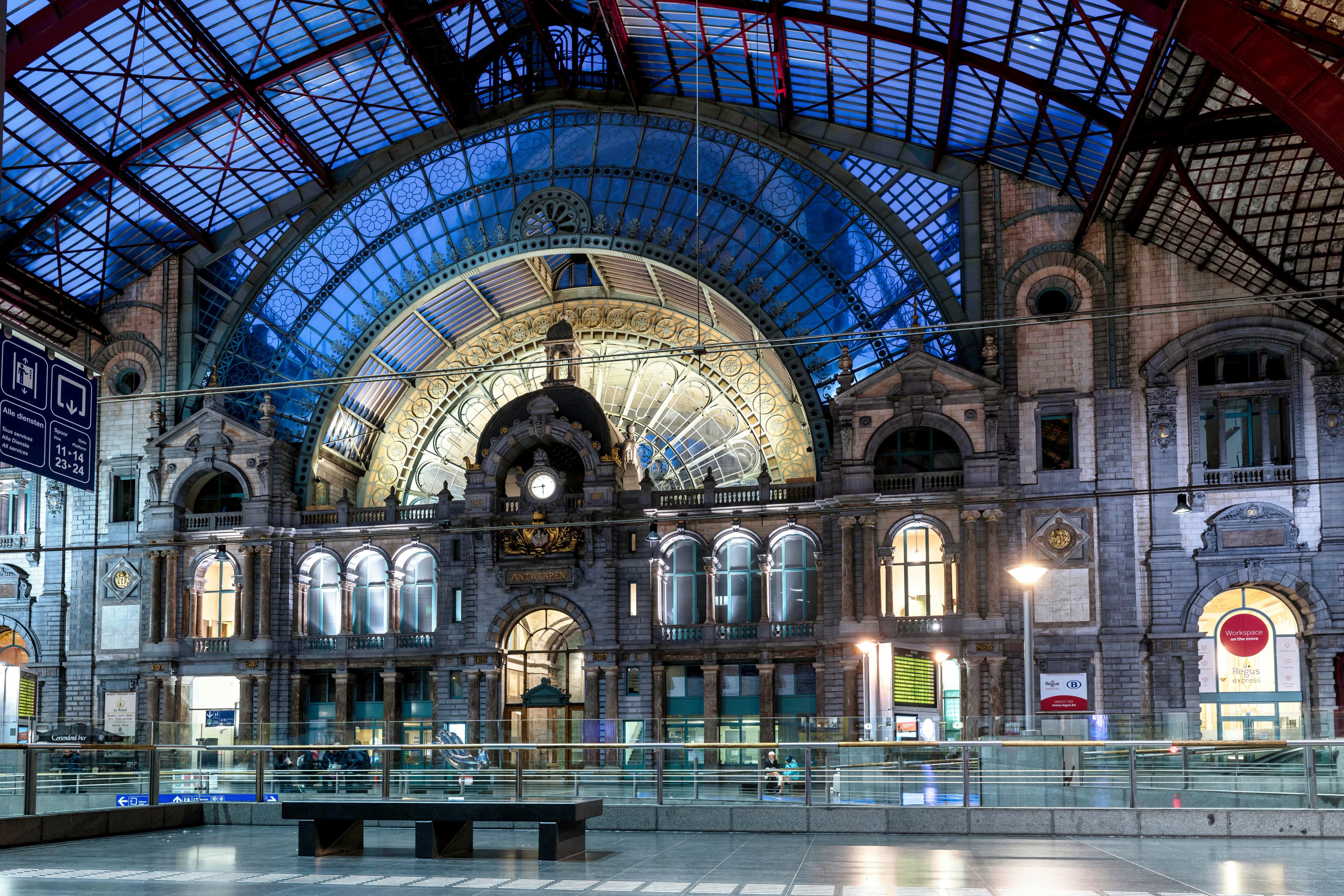
Fashion capital with Rubens heritage, the most beautiful train station in Europe, and Europe's largest diamond district.
Ardennes
Wooded hilly landscape in the south – ideal for hiking, kayaking, and castle visits.
Hotels in Belgium
Vergleiche tausende Hotels, Apartments und Resorts auf Expedia – mit Bestpreis-Garantie, kostenloser Stornierung und Bonuspunkten.
* Weiterleitung zu Expedia.de. Es gelten die dortigen Nutzungsbedingungen.
Reise-SIM für Belgium
Prepaid-SIM mit Datenvolumen für Belgium. Einfach einlegen und sofort lossurfen – keine Roaming-Gebühren.
* Weiterleitung zu travSIM.de. Es gelten die dortigen Nutzungsbedingungen.
Reiseversicherung abschließen
Rundum-Schutz ab 9,90 € auf TravelSecure.de
Pauschalreisen & Rundreisen
Berge & Meer – 170 Tage Cookie
Best time to visit Belgium
Recommended travel time
April–October
Summer
18–25°C
Winter
2–7°C
How much does a holiday in Belgium cost?
Average cost per person per day (excluding flight)
Budget
50–80€
Hostel, street food, public transport
Mid-range
80–150€
Hotel, restaurant, excursions
Luxury
150–300€
Boutique hotel, fine dining
5 travel tips for Belgium
Insider knowledge to make your holiday better.
Always buy Belgian fries in the fryer (Frituur/Friterie) – never in a restaurant
Trappist beers are only produced by 6 monasteries worldwide – 3 of them in Belgium
Bruges is most beautiful early in the morning before day-trippers arrive
Brussels Card offers free entry to 49 museums
Train is the best means of transport – Belgium is small and well-connected
Food & drink in Belgium
These dishes you must try!
Discover Belgium
6 regions, cities and highlights in Belgium
Cities

Antwerp
Antwerp is the secret capital of good taste — a Flemish metropolis where diamonds, fashion, Rubens paintings, chocolate, and craft beer come together in a fascinating way. The second largest city in Belgium on the banks of the Scheldt was the richest city in Europe in the 16th century and has preserved this sense of abundance and elegance to this day. The Grote Markt with its magnificent town hall (UNESCO World Heritage) and the narrow guild houses forms the historical heart of the city. In front stands the Brabo Fountain, which tells the legend of the Roman soldier Brabo, who cut off the hand of the giant Antigoon and threw it into the Scheldt — hence the city's name (Hand werpen). The Cathedral of Our Lady (Onze-Lieve-Vrouwekathedraal), with a height of 123 meters, is the tallest church tower in the Benelux countries and houses four masterpieces by Peter Paul Rubens. The Diamond District around Hoveniersstraat processes 84 percent of all rough diamonds in the world: over 1,700 diamond companies are concentrated on a few streets near the central station, which is itself considered the cathedral of the railway — regularly voted the most beautiful train station in Europe with its neo-baroque dome from 1905. The Museum aan de Stroom (MAS) in the old port district Eilandje is Antwerp's architectural landmark of the 21st century: the 60-meter high tower made of red sandstone slabs and curved glass facades offers a 360-degree panorama of the city, port, and Scheldt from the rooftop terrace. The Rubens House (Rubenshuis) in the old town shows the workshop and private rooms of the Flemish Baroque painter, who spent his most productive years in Antwerp.

Bruges
Bruges is the best-preserved medieval city jewel in Europe — a city where time seems to have stood still in the 15th century. The entire historic center is a UNESCO World Heritage site and enchants with a labyrinth of canals, Gothic brick facades, cobblestone streets, and quiet courtyards, earning Bruges the nickname Venice of the North. The Grote Markt with its 83-meter-high Belfry (Belfort) is the heart of the city: 366 steps lead to the observation platform with a 360-degree panorama over the rooftops of Bruges and the flat Flemish countryside. The colorful gabled houses of the former guilds line the square, and on the ground floor, brasseries invite you to enjoy Belgian fries and Stoofvlees (beef stew with beer). The canals are Bruges' lifelines: boat trips pass under stone bridges, alongside brick houses with stepped gables and the Beguinage, a quiet convent complex from the 13th century, where Benedictine nuns still live today. The Minnewater Park with its Lake of Love is the most romantic spot in the city. Bruges is Belgium's chocolate capital: over 50 chocolatiers work in the old town, including masters like Dominique Persoone (The Chocolate Line), who combines chocolate with wasabi, bacon powder, or Colombian pepper. The Choco-Story Museum tells 4,000 years of cocoa history from the Maya to the Belgian praline. The Groeningemuseum houses masterpieces of the Flemish Primitives — Jan van Eyck's Madonna of Canon van der Paele (1436) and Hans Memling's Altarpiece of St. John are among the most significant paintings in European art history. These works were created in Bruges itself when the city was one of the richest trading cities in the world in the 15th century.

Bruges
Bruges, the "Venice of the North", is one of the best-preserved medieval cities in Europe and a UNESCO World Heritage site. The Flemish city in Belgium enchants with its canals, Gothic brick buildings, the Belfry tower, and the Market Square — one of the most beautiful squares in Belgium. In the 13th century, Bruges was one of the richest cities in Europe and a center of global trade. Today, the city is famous for chocolate, beer, and lace. Over 50 chocolatiers, countless pubs (with 1,500+ Belgian beer varieties), and the Holy Blood Procession make Bruges a feast for all senses. A boat trip reveals hidden gardens, the Minnewater ("Lake of Love"), and the Beguinage — an oasis of tranquility. Bruges is compact enough for a day trip but charming enough for a whole weekend.
Brussels
Brussels is much more than the capital of Europe — the Belgian metropolis combines Flemish and French culture, Art Nouveau architecture, and one of the best food scenes on the continent in a compact space. The Grand-Place, praised by Victor Hugo as the most beautiful square in the world, forms the heart of a city that never takes itself too seriously, with its gilded guild houses and Gothic town hall. In just a few minutes on foot, you can transition from the EU quarter with its glass palaces to winding alleys, where comic characters adorn entire facades as murals — Brussels is the world capital of comics, the birthplace of Tintin, the Smurfs, and Lucky Luke. Over 60 comic murals create a unique city tour. The Art Nouveau heritage is unique: Victor Horta's townhouses, particularly the Hôtel Tassel (UNESCO World Heritage), made Brussels the birthplace of Art Nouveau. Hundreds of Art Nouveau facades shape neighborhoods like Saint-Gilles and Ixelles. Culinary-wise, Brussels offers world-class options: Belgian fries with dozens of sauces, chocolates from Pierre Marcolini and Neuhaus, over 1,500 different beers, waffles in two varieties (Brussels and Liège), and mussels with fries as the national dish. The market hall in Saint-Géry and the Rue des Bouchers provide a culinary delight.
Gent
Gent is Belgium's best-kept secret city — livelier than Bruges, more relaxed than Brussels, and with a mix of medieval splendor and alternative cultural scene that is unmatched in Europe. The East Flanders capital at the confluence of the Leie and Scheldt has everything Bruges has, plus a vibrant student scene and one of the best culinary scenes in the country. The Graslei and Korenlei, the two promenades along the medieval harbor, form one of the most photogenic ensembles in Europe. Guild houses from the 12th to 17th centuries reflect in the water, and on sunny evenings, thousands gather at the quays for the sundowner — the most famous 'Living Room' feeling in Flanders. The Ghent Altarpiece (the 'Adoration of the Mystic Lamb') by the Van Eyck brothers in St. Bavo's Cathedral is one of the most significant works of art in the Western world. The freshly restored polyptych from the 15th century was stolen by the Nazis during World War II and is now displayed in a state-of-the-art climate-controlled showcase — a must-see for any art lover. Gravensteen Castle, a fully preserved medieval count's castle in the city center, looks like it came straight out of a knight's movie. The mighty fortress from the 12th century now houses a museum, and from the battlements, there is a panoramic view of the old town with its three towers — Cathedral, Belfry, and St. Nicholas Church. Gent has established itself as Belgium's most sustainable foodie city. The weekly Veggie Thursday is an urban institution, and the culinary scene ranges from Michelin-starred restaurants to trendy street food markets. The Patershol district, with its narrow streets full of restaurants, is the culinary heart. The street art scene in Gent is legendary. The Werregarenstraatje, a narrow alley that serves as a legal graffiti wall, is constantly changing, and the entire city is a living open-air museum of urban art.

Liège
Liège is the fiery soul of Wallonia and a city that has spectacularly reinvented itself in recent years without losing its rough, authentic charm. The symbol of this transformation is the Liège-Guillemins train station, designed by star architect Santiago Calatrava – a white, cathedral-like masterpiece of steel, glass, and concrete that lies like a stranded spaceship in the city. Just for this building, a stopover in Liège is worthwhile, and indeed, Thalys and ICE trains stop here on the Cologne–Brussels route. The old town of Liège surprises with a density of sights that rivals larger cities. The Montagne de Bueren, a legendary staircase with 374 steps, connects the lower town with the citadel and offers a breathtaking view over the Meuse and the rooftops of the city after the sweaty climb. The Carré district is the ultimate entertainment area: over 200 bars and pubs are lined up in close quarters, making Liège the party center of Belgium – livelier and less touristy than Brussels. What truly distinguishes Liège is its food culture. The Liège waffle, the genuine Gaufre de Liège, has nothing to do with the flat Brussels waffles – it is thicker, sweeter, caramelized with pearl sugar, and eaten as street food. The Sunday market La Batte along the Meuse is the longest and oldest market in Belgium, stretching over three kilometers. Boulets à la liégeoise, meatballs in a sweet-sour syrup sauce, are the national dish of the city. For German visitors, Liège is ideally located: it is only 60 kilometers from Aachen and less than two hours from Cologne by car or train. A day trip or weekend trip is uncomplicated and surprisingly worthwhile.
Complete guide for Belgium
Regions, attractions, food, routes, costs & practical tips — all in one digital guide.
Open guideReady for Belgium?
Plan your Belgium holiday now with our free tools.
Plan a holiday in Belgium
Belgium is one of the most popular travel destinations in Europe, offering Food, Culture, City Trips and much more. The best time to visit Belgium is April–October, when the weather is ideal for exploration and relaxation. With a daily budget starting from 50–80€ (Budget) to 150–300€ (Luxury), Belgium is suitable for various travel budgets.
From the capital Brussels, Belgium can be excellently explored. The official language is Dutch, French, German, and the currency is Euro (€). From Germany, you can reach Belgium in about 1 hour. Whether you want to try culinary highlights like Moules-frites, Belgian Waffles, Stoofvlees/Carbonnade, visit top attractions, or simply enjoy the atmosphere: Belgium has something for every type of traveller.
Use our free travel tools to prepare your Belgium holiday perfectly. With the holiday finder, you can discover if Belgium is the right destination for you. The budget calculator helps you plan costs realistically, and with the packing list, you won't forget anything.
Suitable holiday types for Belgium:
More travel destinations in Europe:
All countries in Europe