United Kingdom holiday
Travel tips, best time to visit & highlights for your United Kingdom holiday in Europe
The United Kingdom combines royal tradition with modern pop culture: London as a global metropolis, the Scottish Highlands, the Cotswolds, Stonehenge, and a pub culture like no other. Additionally, there are the Beatles, Harry Potter, and some of the best museums in the world – often even with free admission.
Capital
London
Language
English
Currency
Pound Sterling (£)
Time zone
UTC+0
Flight time from DE
approx. 1.5–2 hours
Entry requirements
Passport (since Brexit)
Top hotels & accommodations in United Kingdom
Selected hotels and holiday accommodations in United Kingdom — with images, reviews, and direct booking links with our partners.
St. Pancras Renaissance Hotel London
London Borough of Camden, Großbritannien
Hotel ME London
City of Westminster, Großbritannien
The Bloomsbury Hotel
London Borough of Camden, Großbritannien
Hyatt Regency Hotel London The Churchill
City of Westminster, Großbritannien
Kimpton Fitzroy London
London Borough of Camden, Großbritannien
Cheval Three Quays
City of London, Großbritannien
Hotel Rubens at the Palace
City of Westminster, Großbritannien
The Trafalgar St. James London, Curio Collection by Hilton
City of Westminster, Großbritannien
Top 5 highlights in United Kingdom
The places you absolutely must not miss.
London
Big Ben, Buckingham Palace, Tower Bridge, British Museum, and the West End – a city of superlatives.
Scottish Highlands
Wild landscapes, whisky distilleries, Loch Ness, and dramatic coastlines.
Cotswolds
Honey-colored stone villages, gentle hills, and the most picturesque England.
Edinburgh
Majestic castle, Royal Mile, Arthur's Seat, and the legendary Fringe Festival.
Stonehenge
The mysterious stone monument from the Neolithic era – UNESCO World Heritage and an icon of England.
Hotels in United Kingdom
Vergleiche tausende Hotels, Apartments und Resorts auf Expedia – mit Bestpreis-Garantie, kostenloser Stornierung und Bonuspunkten.
* Weiterleitung zu Expedia.de. Es gelten die dortigen Nutzungsbedingungen.
Reise-SIM für United Kingdom
Prepaid-SIM mit Datenvolumen für United Kingdom. Einfach einlegen und sofort lossurfen – keine Roaming-Gebühren.
* Weiterleitung zu travSIM.de. Es gelten die dortigen Nutzungsbedingungen.
Reiseversicherung abschließen
Rundum-Schutz ab 9,90 € auf TravelSecure.de
Pauschalreisen & Rundreisen
Berge & Meer – 170 Tage Cookie
Best time to visit United Kingdom
Recommended travel time
May–September
Summer
15–25°C
Winter
3–10°C
How much does a holiday in United Kingdom cost?
Average cost per person per day (excluding flight)
Budget
70–100€
Hostel, street food, public transport
Mid-range
100–180€
Hotel, restaurant, excursions
Luxury
180–400€
Boutique hotel, fine dining
5 travel tips for United Kingdom
Insider knowledge to make your holiday better.
Use an Oyster Card or Contactless Payment for London's public transport
Most major museums in London are free
Drive on the left – look right when crossing the street
Pub etiquette: order at the bar and pay immediately
Always have a rain jacket – the weather changes hourly
Food & drink in United Kingdom
These dishes you must try!
Discover United Kingdom
13 regions, cities and highlights in United Kingdom
Cities

Bath
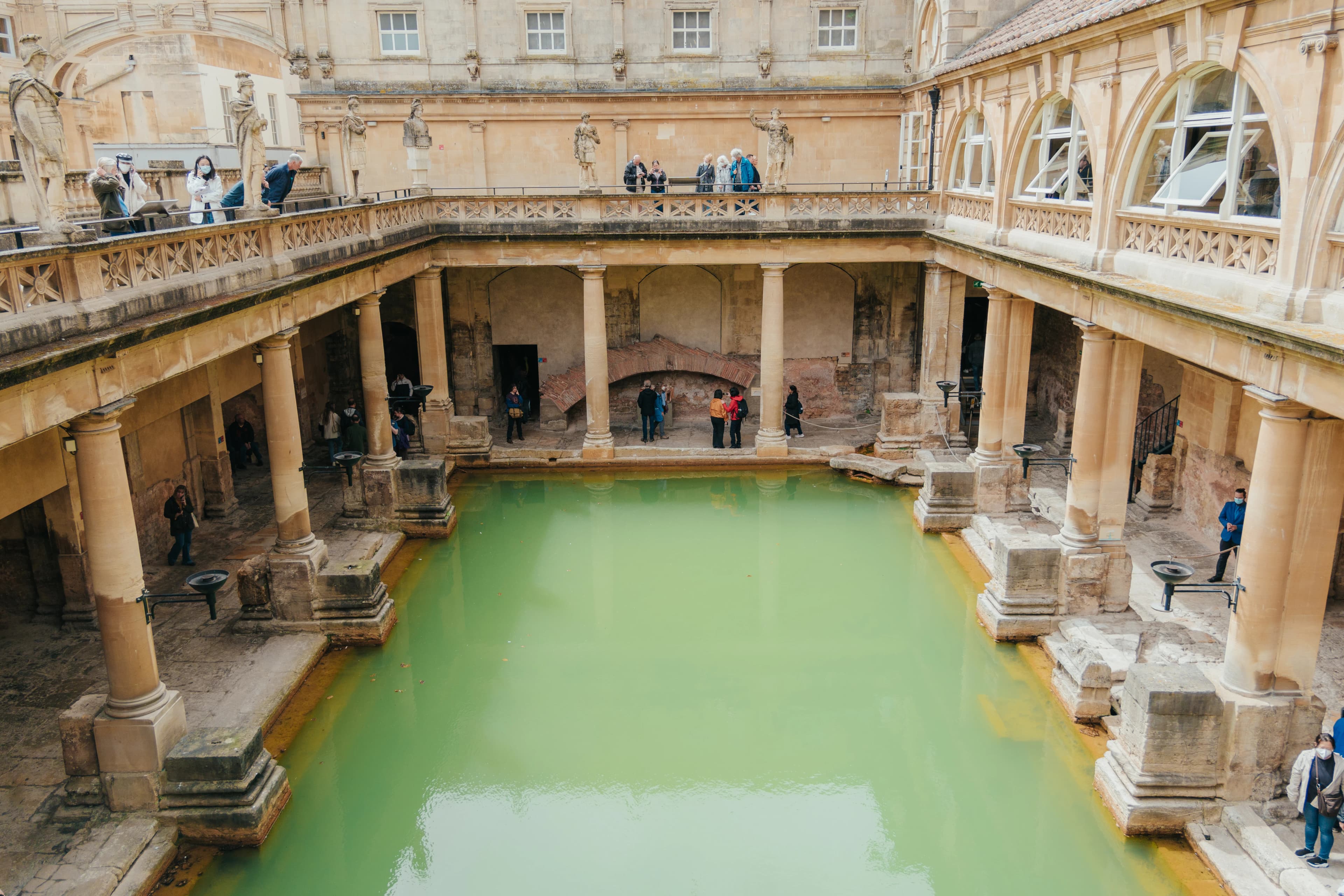
Bath is England's most elegant city — an architectural masterpiece made of honey-colored sandstone, founded by the Romans as a spa and developed in the 18th century into the most beautiful Georgian city in the world. The entire city center is a UNESCO World Heritage site and enchants with a harmony of Roman antiquity, Georgian splendor, and the green English landscape of Somerset. The Roman Baths are the best-preserved Roman bathing house north of the Alps: Nearly 2,000 years ago, the Romans discovered the hot springs that daily pump 1.17 million liters of 46-degree warm water from the depths and built a magnificent bathing complex. The green shimmering Great Bath with its Roman columns and steam is a magical sight. The Royal Crescent is perhaps the most beautiful residential building in the world: A 150-meter-long semicircle of 30 terraced houses with 114 Ionic columns, designed in 1767 by John Wood the Younger. The perfect symmetry in front of the green park lawn overlooking the city is the epitome of Georgian elegance. Number 1 Royal Crescent is furnished as a museum in its original style. The Thermae Bath Spa is the only natural thermal bath in Great Britain where you can still bathe today: The rooftop pool on the roof of the modern glass building offers a surreal view over Bath's historic rooftops while you lie in the 35-degree warm, mineral-rich water that comes from the same source as it did 2,000 years ago. Pulteney Bridge, one of only four bridges in the world built with shops on both sides, spans the Avon with three elegant arches: The view from the riverbank with the weir and cascading steps is one of the most photographed motifs in England.
Birmingham
Birmingham is England's second-largest city and has transformed in recent years from an industrial town to one of the most exciting cultural centers in the UK. The city in the heart of the West Midlands was the birthplace of the Industrial Revolution and is reinventing itself today with creative quarters, Michelin stars, and a vibrant art scene. The Bullring & Grand Central is one of the most modern shopping centers in Europe, and the connected Birmingham New Street Station has been spectacularly renovated. The Selfridges facade — with over 15,000 shiny aluminum discs — is an architectural landmark. The Jewellery Quarter is Birmingham's melting pot of creativity: hundreds of jewelers, artist studios, craft breweries, and independent cafes in Victorian workshops. More than 40% of British jewelry is made here. The Balti Triangle is the birthplace of Balti curry — an entire district full of Pakistani restaurants. The Library of Birmingham — Europe's largest public library — is an architectural masterpiece with a rooftop terrace and panoramic views. The Birmingham Museum & Art Gallery houses the world's largest collection of Pre-Raphaelite art. And for Tolkien fans: J.R.R. Tolkien grew up in Birmingham, and the area around Sarehole Mill inspired the Shire.

Cambridge
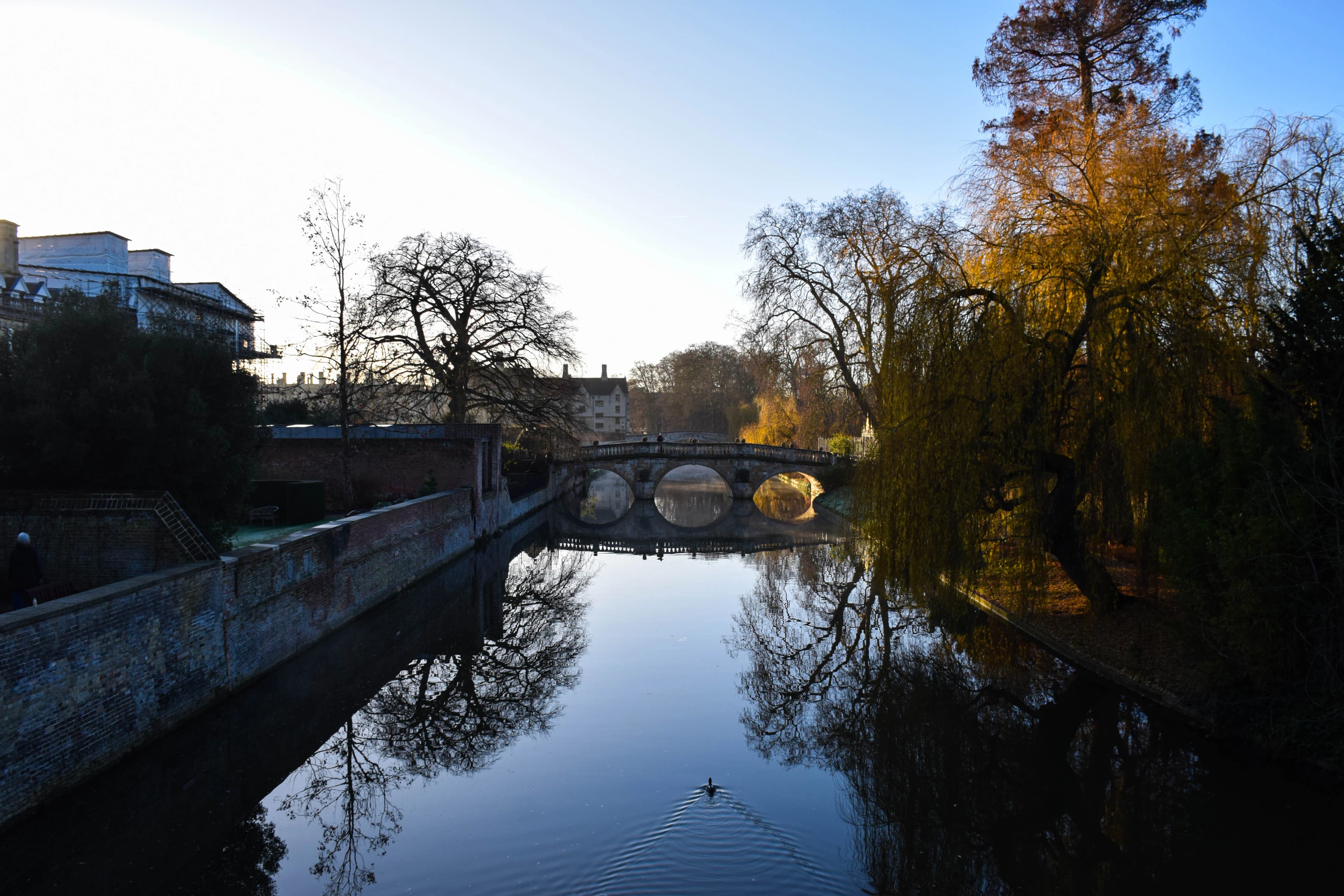
Cambridge is Oxford's eternal rival and one of the most beautiful university cities in the world — a city where the meadows (Backs) of the colleges gently slope down to the River Cam and punts glide under ancient bridges. Since 1209, Newton, Darwin, Hawking, and 121 Nobel laureates have studied here — more than at any other institution in the world. King's College Chapel is Cambridge's crown jewel: The largest fan-vaulted ceiling in the world spans the nave, 26 monumental stained glass windows tell biblical stories in vibrant colors, and Rubens' Adoration of the Magi adorns the altar. The annual Festival of Nine Lessons and Carols on Christmas Eve is broadcast worldwide on the radio. Punting on the Cam is Cambridge's most romantic tradition: The route along the Backs leads under the Bridge of Sighs (St John's), the Mathematical Bridge (Queens'), and past the immaculate lawns of the colleges — where only fellows are allowed to walk, as legend has it. The Fitzwilliam Museum houses one of the best art collections outside London: From Egyptian sarcophagi to Titian and Monet to Picasso and Hockney — and admission is free. The library of Trinity College preserves Newton's own copies of the Principia Mathematica and Milne's original manuscript of Winnie-the-Pooh.
Edinburgh
Edinburgh, the capital of Scotland, dramatically sits on volcanic hills and blends medieval romance with Georgian elegance. The Royal Mile winds down from the mighty Edinburgh Castle to the Palace of Holyroodhouse, passing by winding closes and centuries-old pubs. The Old Town and New Town together are a UNESCO World Heritage site — a mix of dark alleys and spacious Georgian squares. Edinburgh is a city of literature: the birthplace of Harry Potter (J.K. Rowling wrote in the Elephant House Café), home to Sir Walter Scott and Stevenson. The Edinburgh Festival Fringe in August is the world's largest arts festival with over 3,000 shows. Arthur's Seat, an extinct volcano in the city, offers hikes with panoramic views. On foggy evenings, when the street lamps of the Old Town glow, one understands why Edinburgh is considered one of the most atmospheric cities in Europe.
London
London is one of the most diverse and exciting metropolises in the world — a city that combines royal tradition with vibrant modernity and makes over 2,000 years of history palpable at every turn. From the Tower of London to Buckingham Palace and the Tate Modern, the British capital offers an unparalleled density of sights, museums, and cultural experiences. The British Museum, the National Gallery, and the Victoria and Albert Museum are among the best in the world — and entry is free. The Palace of Westminster with Big Ben, the Tower Bridge, and Buckingham Palace with the Changing of the Guard are iconic photo opportunities. The West End theater district rivals Broadway, and Camden Market, Borough Market, and Portobello Road each offer their own universe of street food, vintage, and curiosities. London's neighborhoods each have their own personalities: Shoreditch pulses with street art and startups, Notting Hill enchants with pastel-colored facades, South Bank offers culture by the riverside, and Greenwich lures with the Prime Meridian and the Royal Observatory. Pubs are London’s living rooms, and a Sunday Roast with Yorkshire pudding is part of the British experience. The city is a worthwhile travel destination year-round, with May to September offering the warmest and longest days.
Oxford
Oxford is the city of dreaming towers — the oldest university in the English-speaking world, whose 39 colleges have produced scholars, poets, prime ministers, and Nobel laureates for over 900 years. The honey-colored limestone colleges, Gothic chapels, and green courtyards create one of the most beautiful urban landscapes in Europe. The Bodleian Library is one of the oldest and most beautiful libraries in the world: The Divinity School (1488) with its spectacular ribbed vault served as the Hogwarts infirmary in the Harry Potter films. The Radcliffe Camera, a round Baroque building from 1749, is Oxford's most photographed building. Christ Church is the largest and most famous college: The Great Hall with its portraits and wooden ceiling inspired the Great Hall of Hogwarts, the bell tower (Tom Tower) chimes 101 times every evening (for the 101 original students), and Alice Liddell — the inspiration for Alice in Wonderland — was the daughter of the dean. The Covered Market (since 1774) is Oxford's culinary heart: an indoor market with butchers, cheese merchants, the legendary Ben's Cookies, and Palm's Deli, nestled between historic streets full of bookstores, pubs, and antiques.
York
York is England's most historic city — a living history book where Roman walls, Viking relics, medieval streets, and a Gothic cathedral coexist in close quarters. The walkable city wall from the 14th century encloses an old town that has been continuously inhabited for 2,000 years. York Minster is the largest Gothic cathedral in Northern Europe: 158 meters long, featuring the largest medieval stained glass window in the world (Great East Window, as large as a tennis court) and a crypt that reveals Roman foundations from the 4th century. Climbing the tower (275 steps) offers a 360-degree view over York and the Yorkshire Moors. The Shambles is England's best-preserved medieval street: The overhanging timber-framed houses from the 14th century lean so far towards each other that you can almost reach out and shake hands. The street inspired Diagon Alley in Harry Potter and is now lined with tea shops, fudge stores, and a Harry Potter shop. The Jorvik Viking Centre brings York's Viking history to life: On the site of the largest Viking find in Britain (1976-1981), you travel through a reconstructed Viking village from the 10th century via time machine — complete with authentic smells (including the Viking latrine). York was once known as Jórvík and was the capital of the Viking kingdom in England.
Regions

Cornwall
Cornwall is England's wild southwest — a dramatic peninsula where rugged cliffs meet turquoise waters, hidden coves lie between rock formations, and the Gulf Stream provides a surprisingly mild climate that allows palms and subtropical gardens to thrive. The county at the very tip of England has its own identity: Celtic roots, a unique (almost extinct) language, and a coastal landscape that is among the most spectacular in Europe. St Ives, once a fishing village, is now one of the most charming small towns in England: Narrow cobbled streets wind down to beaches with turquoise water reminiscent of the Caribbean. The Tate St Ives, an award-winning museum right above Porthmeor Beach, showcases modern art with a sea view. Artists have been drawn to Cornwall's unique light and colors for over 100 years. Tintagel Castle on the stormy north coast is, according to legend, the birthplace of King Arthur: The ruins of a medieval castle cling to steep cliffs high above the Atlantic, connected by a spectacular new bridge (2019) that replicates the old land connection. Merlin's Cave beneath the castle is accessible at low tide. The Eden Project, created in a former clay pit, is one of the world's most ambitious ecology projects: Huge geodesic biomes house tropical rainforests and Mediterranean landscapes under transparent domes. The project demonstrates humanity's dependence on plants and is also a masterpiece of sustainable architecture. The South West Coast Path, at 1,014 kilometers, is England's longest long-distance footpath, circling the entire coast of Cornwall: From Padstow to Land's End and further around the south coast, it offers dramatic cliff views, secluded coves, and encounters with seals, dolphins, and puffins.

Cotswolds
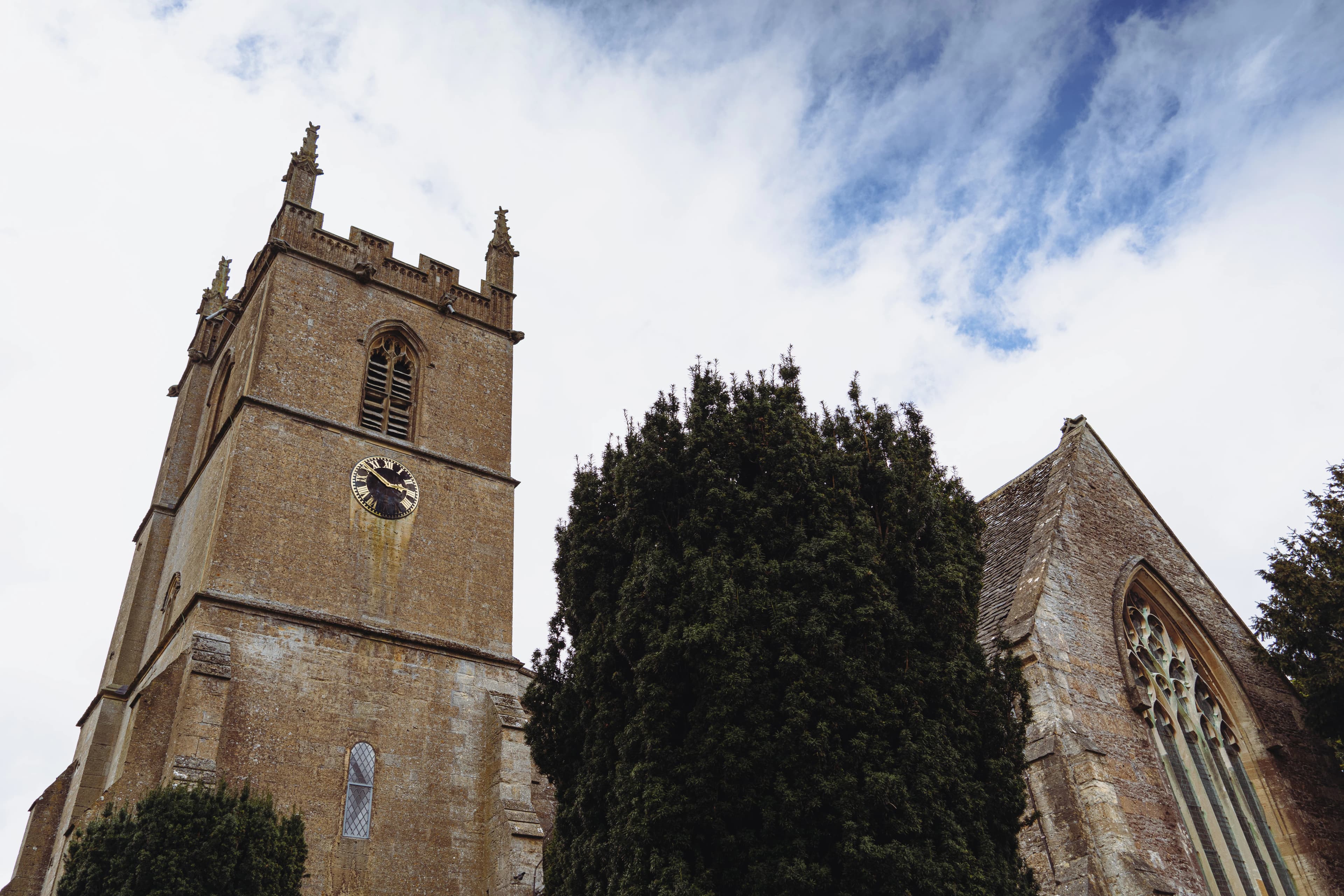
The Cotswolds are the epitome of picture-book England — a gently rolling landscape of honey-colored stone cottages, thatched-roof houses, neatly trimmed hedges, and quietly babbling brooks, stretching across five counties in the heart of South England. The largest Area of Outstanding Natural Beauty (AONB) in England covers around 2,000 square kilometers and is home to some of the most beautiful villages in the world. Bibury was described by William Morris as the most beautiful village in England, and Arlington Row — a row of medieval weavers' houses from the 14th century — is the most photographed motif of the Cotswolds: The honey-colored stone houses reflect in the crystal-clear Coln River, swans glide by, and in spring, lilacs bloom on every wall. Bourton-on-the-Water, the Venice of the Cotswolds, is a charming village through which the River Windrush flows over flat stone bridges. Castle Combe, Stow-on-the-Wold with its historic marketplace, and Broadway with the Broadway Tower (one of England's most famous follies) complete the ensemble of dream villages. The Cotswolds are also home to world-class gardens: Hidcote Manor Garden and Kiftsgate Court Garden are among the most influential garden designs of the 20th century. Blenheim Palace in Woodstock — the birthplace of Winston Churchill and a UNESCO World Heritage site — lies on the edge of the Cotswolds and is one of the grandest country houses in England. The Cotswold Way, a 164-kilometer long long-distance hiking trail from Chipping Campden to Bath, leads over the Cotswold Edge with wide views over the Severn Valley and connects the most beautiful villages, historic pubs, and viewpoints in the region.

Lake District
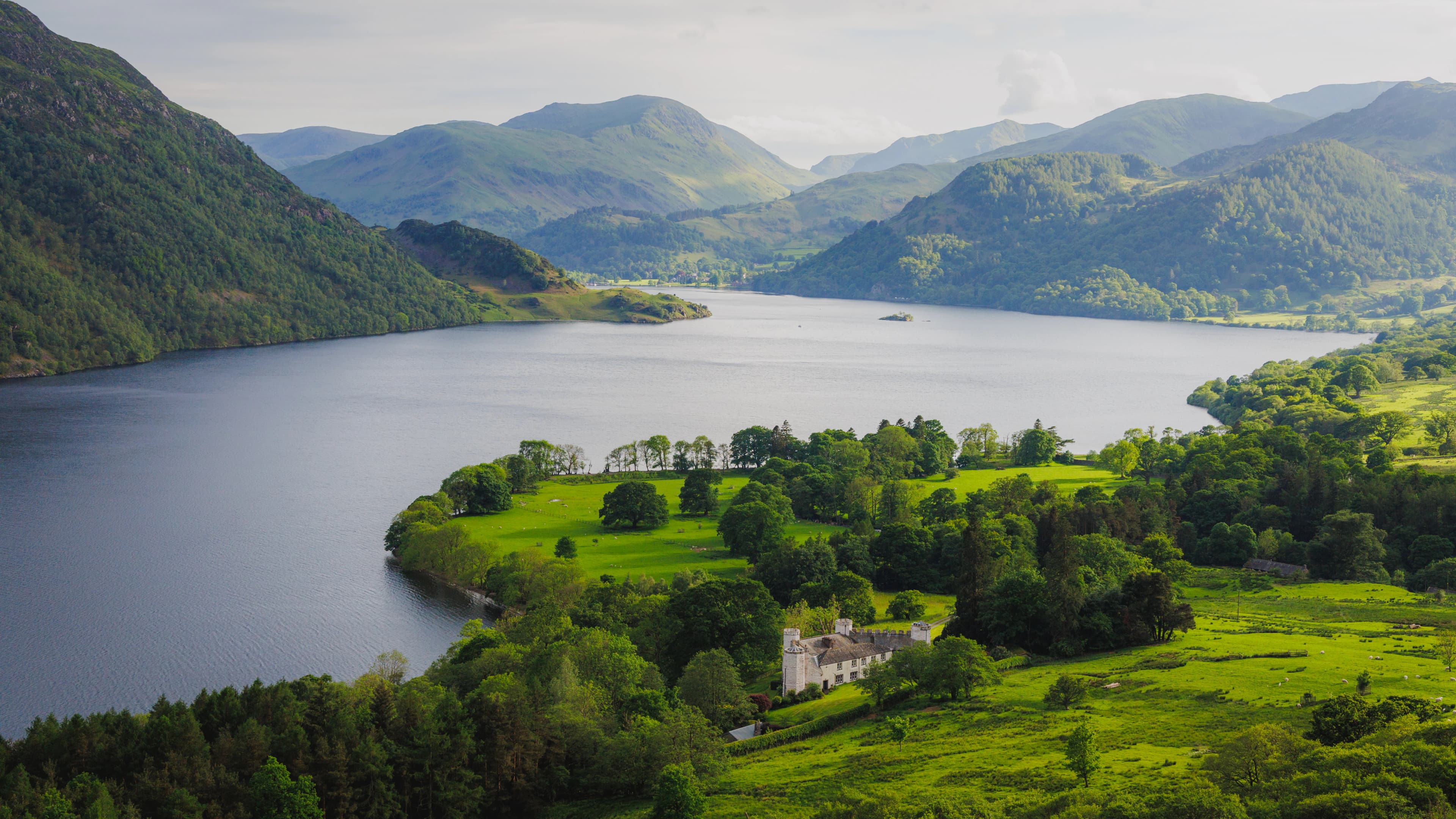
The Lake District is England's greatest national park — a landscape of mirror-smooth lakes, mist-covered mountains, emerald green valleys, and dry stone walls that have been winding through the hills for centuries. Since 2017 a UNESCO World Heritage site, the park in northwest England covers 2,362 square kilometers and is home to the 16 largest natural lakes in the country as well as England's highest mountain, Scafell Pike (978 m). Windermere, the largest natural lake in England at 17 kilometers long, is the heart of the park: steamships have been operating since the 19th century between Ambleside in the north and Lakeside in the south, passing wooded shores, Victorian villas, and the Blackwell Arts & Crafts House. The town of Bowness-on-Windermere on the eastern shore is the main tourist hub with boat rentals, restaurants, and the World of Beatrix Potter Museum. Beatrix Potter, the creator of Peter Rabbit, lived and worked in the Lake District: her farmhouse Hill Top near Near Sawrey is a lovingly preserved museum, where everything looks as it did during her lifetime. With the proceeds from her books, Potter purchased over 1,600 acres of land in the Lake District and bequeathed it to the National Trust — a significant contribution to the preservation of the landscape. The hiking opportunities are legendary: Alfred Wainwright described 214 peaks (the Wainwrights) in his hand-drawn hiking guides, whose ascents become a lifelong mission for enthusiastic hikers. Helvellyn via Striding Edge (a narrow rocky ridge with drops on both sides) is the most exciting mountain hike in England. Catbells above Derwentwater offers an easier ascent with spectacular lake views. The Lake District inspired not only Beatrix Potter but also the Romantic poets: William Wordsworth lived in Grasmere and wrote his most famous works here, including the Daffodils Ode (I Wandered Lonely as a Cloud). Dove Cottage, his home, is now a literary museum.
Scottish Highlands
The Scottish Highlands are one of the last great wildernesses in Europe — a primordial landscape of misty mountains, dark lochs, lonely moors, and rugged coastlines that stretch across the entire north of Scotland. Here, more red deer live than people, and there is not a single road for hundreds of square kilometers. The Highlands are home to whisky distilleries, clan castles, the Loch Ness Monster, and some of the most dramatic landscapes in the world. Loch Ness, the most famous lake in the world, is 37 kilometers long, up to 230 meters deep, and (allegedly) houses the legendary monster Nessie. The ruins of Urquhart Castle on the west shore offer the classic Loch Ness view, and the Loch Ness Centre in Drumnadrochit documents the monster search since 1933. Scientifically, Loch Ness is fascinating: it contains more freshwater than all the lakes in England and Wales combined. The Isle of Skye is Scotland's most fairy-tale-like island: the Old Man of Storr, a 50-meter high rock needle on the Trotternish Peninsula, the Fairy Pools with their crystal-clear turquoise water, the Quiraing with its surreal rock formations, and the Cuillin Mountains create a landscape reminiscent of a fantasy film. Since the bridge was built in 1995, Skye is easily accessible by car. Ben Nevis (1,345 m) is the highest mountain in Great Britain: the normal route (Mountain Track) is a challenging day hike (7-9 hours) that offers a panorama over the entire western Highlands in good weather. The north face, on the other hand, is one of the largest climbing walls in Great Britain. The whisky distilleries of the Highlands and the Speyside region are a paradise for connoisseurs: over 50 distilleries offer tours and tastings. The Malt Whisky Trail in Speyside connects nine distilleries, including Glenfiddich, Macallan, and Glenlivet. Each region — Speyside, Islay, Highland, Lowland — has its own character.
Scotland
Scotland is a land of rugged beauty, ancient myths, and warm hospitality – a destination that captivates every visitor with its wild nature, rich history, and legendary whisky. From the dramatic Highlands with their mist-covered peaks to the mystical lochs and the vibrant cultural scene of Edinburgh: Scotland offers an astonishing variety of experiences in a relatively small area. Edinburgh, the capital, sits atop volcanic rocks and combines the medieval Old Town with the Georgian New Town – both UNESCO World Heritage Sites. The Royal Mile, Edinburgh Castle, and Arthur's Seat provide history and panoramas in one breath. Every August, the city transforms during the Edinburgh Fringe into the world's largest stage for arts and comedy. But true Scotland begins north of the Highland boundary. Glen Coe, the "Valley of Tears," is a natural spectacle of rugged peaks and dramatic light, having served as a backdrop for Harry Potter and James Bond. The Isle of Skye enchants with its surreal rock formations, the Old Man of Storr, and the Fairy Pools. Loch Ness attracts not only monster seekers but also hikers and kayakers to one of the most beautiful lake landscapes in Europe. The Whisky Trail route through Speyside leads to the most famous distilleries in the world – Glenfiddich, Macallan, Balvenie. Each tasting is a journey through peat, heather, and centuries-old craftsmanship. The North Coast 500, Scotland's answer to Route 66, stretches 830 kilometers along the northern coast through a landscape reminiscent of Norway – only with bagpipes. There are direct flights from Germany to Edinburgh and Glasgow in under two hours. A rental car is the best way to explore the Highlands. The best travel time is from May to September, although one should always be prepared for all four seasons in a day in Scotland. The midges (small biting insects) can become a nuisance in the summer in the Highlands – don't forget insect repellent.
Complete guide for United Kingdom
Regions, attractions, food, routes, costs & practical tips — all in one digital guide.
Open guideReady for United Kingdom?
Plan your United Kingdom holiday now with our free tools.
Plan a holiday in United Kingdom
United Kingdom is one of the most popular travel destinations in Europe, offering Culture, History, City and much more. The best time to visit United Kingdom is May–September, when the weather is ideal for exploration and relaxation. With a daily budget starting from 70–100€ (Budget) to 180–400€ (Luxury), United Kingdom is suitable for various travel budgets.
From the capital London, United Kingdom can be excellently explored. The official language is English, and the currency is Pound Sterling (£). From Germany, you can reach United Kingdom in approx. 1.5–2 hours. Whether you want to try culinary highlights like Fish and Chips, Full English Breakfast, Afternoon Tea, visit top attractions, or simply enjoy the atmosphere: United Kingdom has something for every type of traveller.
Use our free travel tools to prepare your United Kingdom holiday perfectly. With the holiday finder, you can discover if United Kingdom is the right destination for you. The budget calculator helps you plan costs realistically, and with the packing list, you won't forget anything.
Suitable holiday types for United Kingdom:
More travel destinations in Europe:
All countries in Europe