Holiday in Thuringia
Region in Germany — tips, highlights & best time to visit 🇩🇪
Country
Germany
Type
Region
Best time to travel
May–October
Budget/day
70–110 €
Getting there from Germany
Erfurt is an ICE stop on the route Berlin–Munich (2h from Berlin, 2.5h from Munich) and Frankfurt (2h).
Deals for Thuringia:
What makes Thuringia special as a destination?
Thuringia, the green heart of Germany, combines an overwhelming density of culture, history, and nature in a small area. Weimar alone represents Goethe, Schiller, Bach, Liszt, and the Bauhaus — and thus some of the most significant chapters of German intellectual history. The Wartburg near Eisenach, where Martin Luther translated the New Testament, is a UNESCO World Heritage site and a symbol of the German Reformation. The Thuringian Forest stretches as a wooded mountain range from Eisenach to Sonneberg and offers with the Rennsteig Germany's oldest and most famous long-distance hiking trail — 169 kilometers along the ridge of the low mountain range with wide views, dark spruce forests, and historic boundary stones. In winter, Oberhof and the surrounding towns transform into a winter sports center for cross-country skiing, biathlon, and bobsleighing. Erfurt, the state capital, delights with the Krämer Bridge, the longest continuously built and inhabited bridge in Europe, and the majestic cathedral with the Severi Church on the Cathedral Hill. Jena is a university town and the cradle of the optical industry (Zeiss, Schott). Gotha impresses with Friedenstein Castle, the largest early Baroque castle in Germany. Thuringian cuisine is hearty and famous for the original Thuringian bratwurst — at least 15 centimeters long, grilled on a charcoal grill, and served in a bun — as well as dumplings and Rostbrätl. The Hainich National Park protects one of the last primeval forests in Central Europe with a spectacular treetop path.
What are the top highlights in Thuringia?
The top highlights in Thuringia include Wartburg, Weimar, Erfurt Old Town, Thuringian Forest, Saalfelder Fairy Grottoes.
The places you absolutely must not miss.
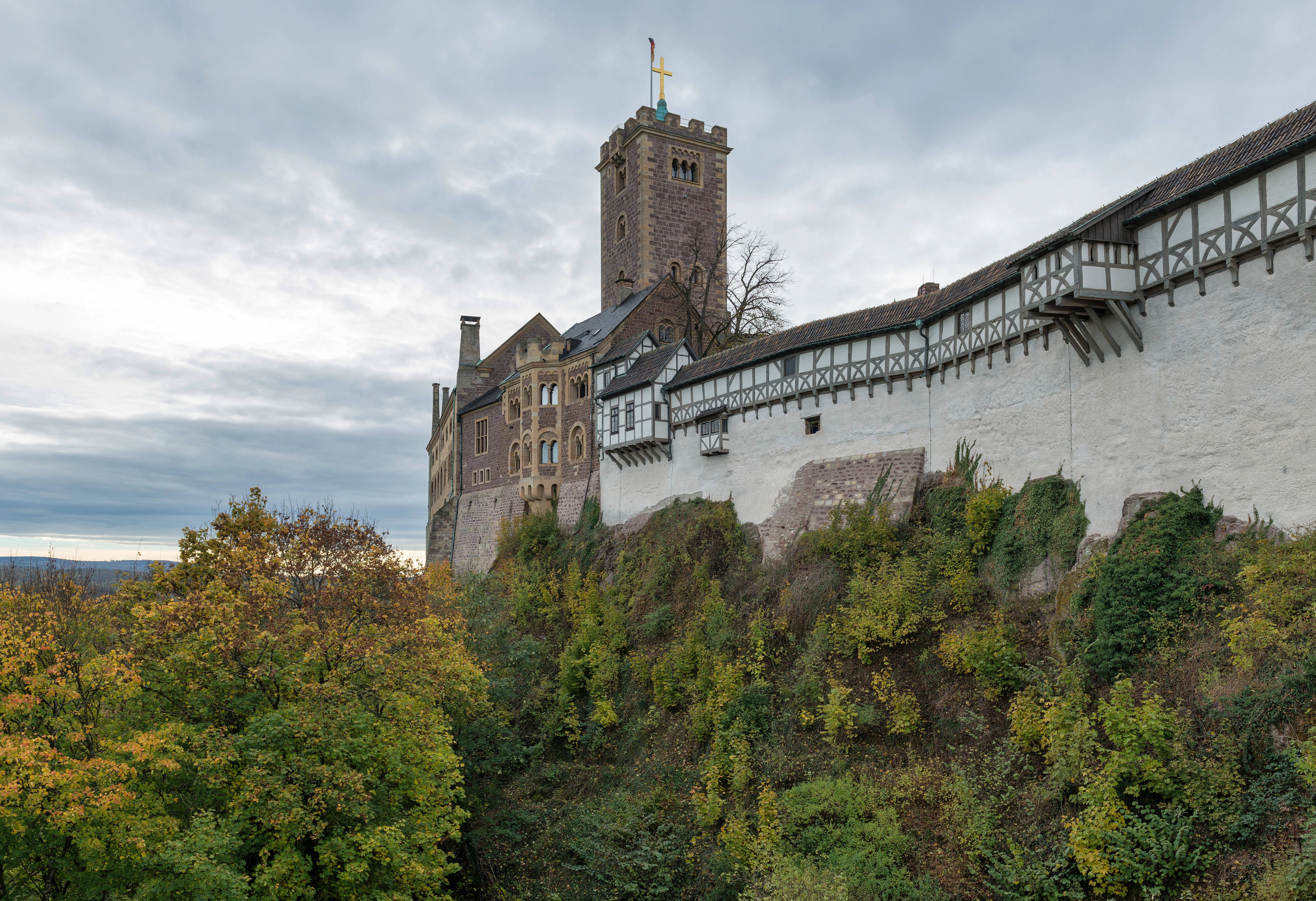
Wartburg
The UNESCO World Heritage castle near Eisenach is the place where Martin Luther translated the New Testament and where Saint Elizabeth lived.
Weimar
The UNESCO World Heritage city was the workplace of Goethe and Schiller, the birthplace of the Bauhaus, and the center of German Classicism.
Erfurt Old Town
The best-preserved medieval old town in Germany impresses with the cathedral, the Krämer Bridge, and winding alleys.
Thuringian Forest
The green low mountain range offers the legendary Rennsteig hiking trail and popular ski areas around Oberhof in winter.
Saalfelder Fairy Grottoes
The most colorful show caves in the world impress with stalactites and underground lakes in a former mine.
Hotels in Thuringia
Compare thousands of hotels, apartments and resorts on Expedia – with price guarantee, free cancellation and reward points.
* You will be redirected to Expedia.de. Their terms of use apply.
Pauschalreisen & Rundreisen
Berge & Meer – 170 Tage Cookie
When is the best time to visit Thuringia?
The best time to visit Thuringia is May–October. Warm, 19–26 °C, pleasant in the Thuringian Forest In winter: Cold, -4–3 °C, snow in the Thuringian Forest
Recommended travel time
May–October
Summer
Warm, 19–26 °C, pleasant in the Thuringian Forest
Winter
Cold, -4–3 °C, snow in the Thuringian Forest
How much does a holiday in Thuringia cost?
Budget travellers: 35–55 €/day, mid-range: 70–110 €/day, luxury: 150–250 €/day.
Average costs per person per day
Budget
35–55 €
Hostel, Street food, Public transport
Mid-range
70–110 €
Hotel, Restaurant, Excursions
Luxury
150–250 €
Boutique hotel, Fine dining
How do I get from Germany to Thuringia?
Erfurt is an ICE stop on the route Berlin–Munich (2h from Berlin, 2.5h from Munich) and Frankfurt (2h).
Book a package holiday to Thuringia
Compare thousands of package holidays to Thuringia and find the best deals with flight & hotel.
Compare package holidays nowWhat travel tips are there for Thuringia?
Insider knowledge that makes your holiday better.
The Krämer Bridge in Erfurt is the longest completely built bridge in Europe – a must-see.
The Rennsteig can also be hiked in daily stages – good bus connections will bring you back.
Weimar is compact and walkable – a day visit is enough for the main sights.
The Thuringian bratwurst tastes best fresh from the charcoal grill at Erfurt Cathedral Square.
In winter, Oberhof is an affordable alternative ski area to the crowded Alpine resorts.
What should you eat in Thuringia?
Typical specialities in Thuringia: Thuringian Bratwurst, Thuringian Dumplings, Rostbrätel, Mutzbraten, Schmandkuchen, Thuringian Yeast Dumplings with Blueberries.
These specialties you must try!
Ready for Thuringia?
Plan your Thuringia holiday now with our free tools.
