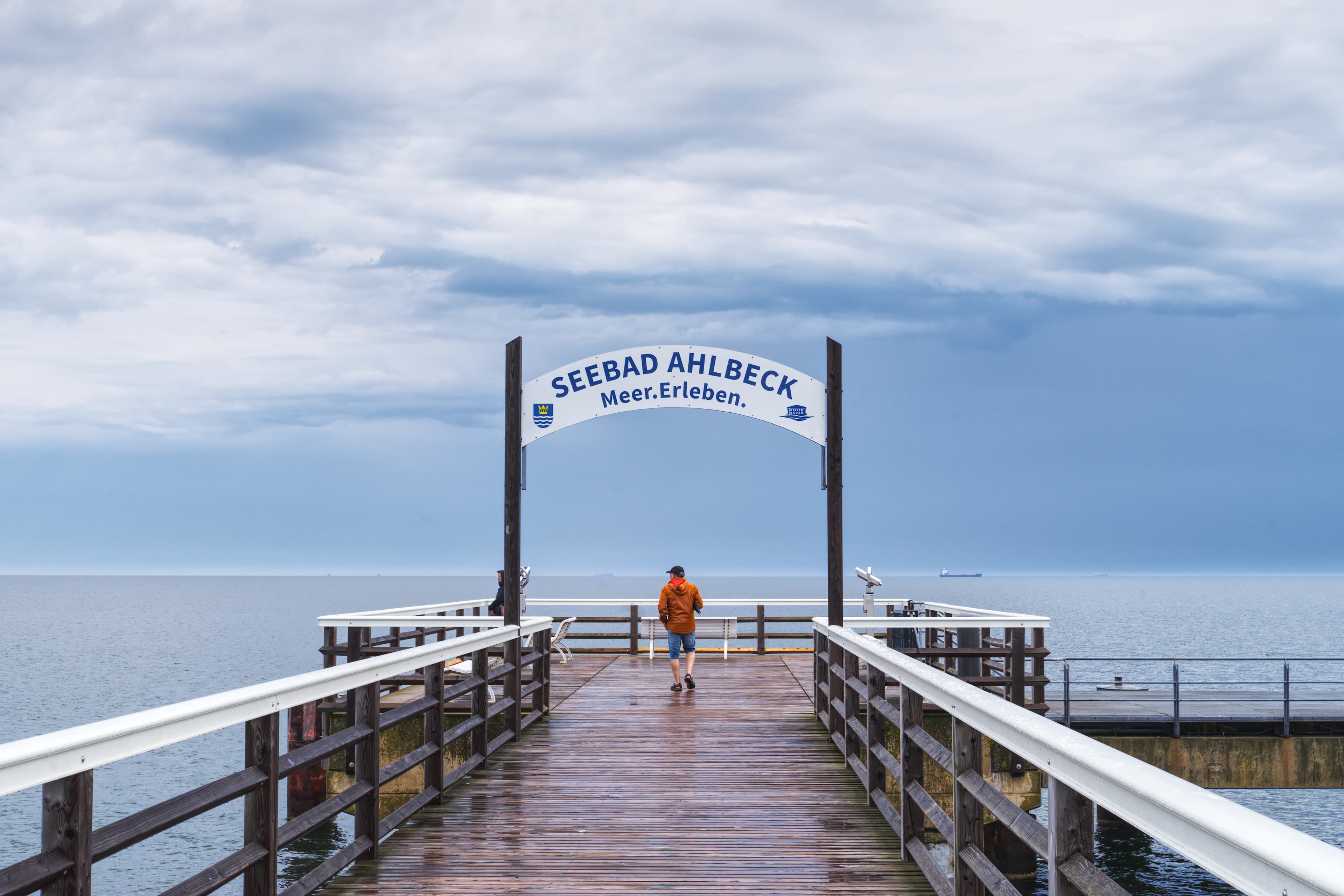
Man walks on pier towards archway over the sea.
🇩🇪

Germany holiday

Travel tips, best time to visit & highlights for your Germany holiday in Europe

Germany is the most popular travel destination for Germans – and for good reason. From the chalk cliffs of Rügen to the Black Forest and the Bavarian Alps, the country offers an incredible variety. Vibrant metropolises like Berlin, Munich, and Hamburg, medieval old towns, world-famous beer, Christmas markets, and a cultural landscape that ranges from the Romantic Road to Saxon Switzerland.

Capital

Berlin

Language

German

Currency

Euro (€)

Time zone

UTC+1

Flight time from DE

Domestic travel by train, car, or short flight

Entry requirements

No visa required (domestic)

Top hotels & accommodations in Germany

Selected hotels and holiday accommodations in Germany — with images, reviews, and direct booking links with our partners.

Top 5 highlights in Germany

The places you absolutely must not miss.

1

Rügen & Baltic Coast

Chalk cliffs in Jasmund National Park, historic seaside resorts, white beaches, and the piers of Sellin and Binz.

2

Black Forest

Dense forests, cuckoo clocks, Black Forest cake, and Lake Titisee – Germany's most romantic region.

3

Bavarian Alps

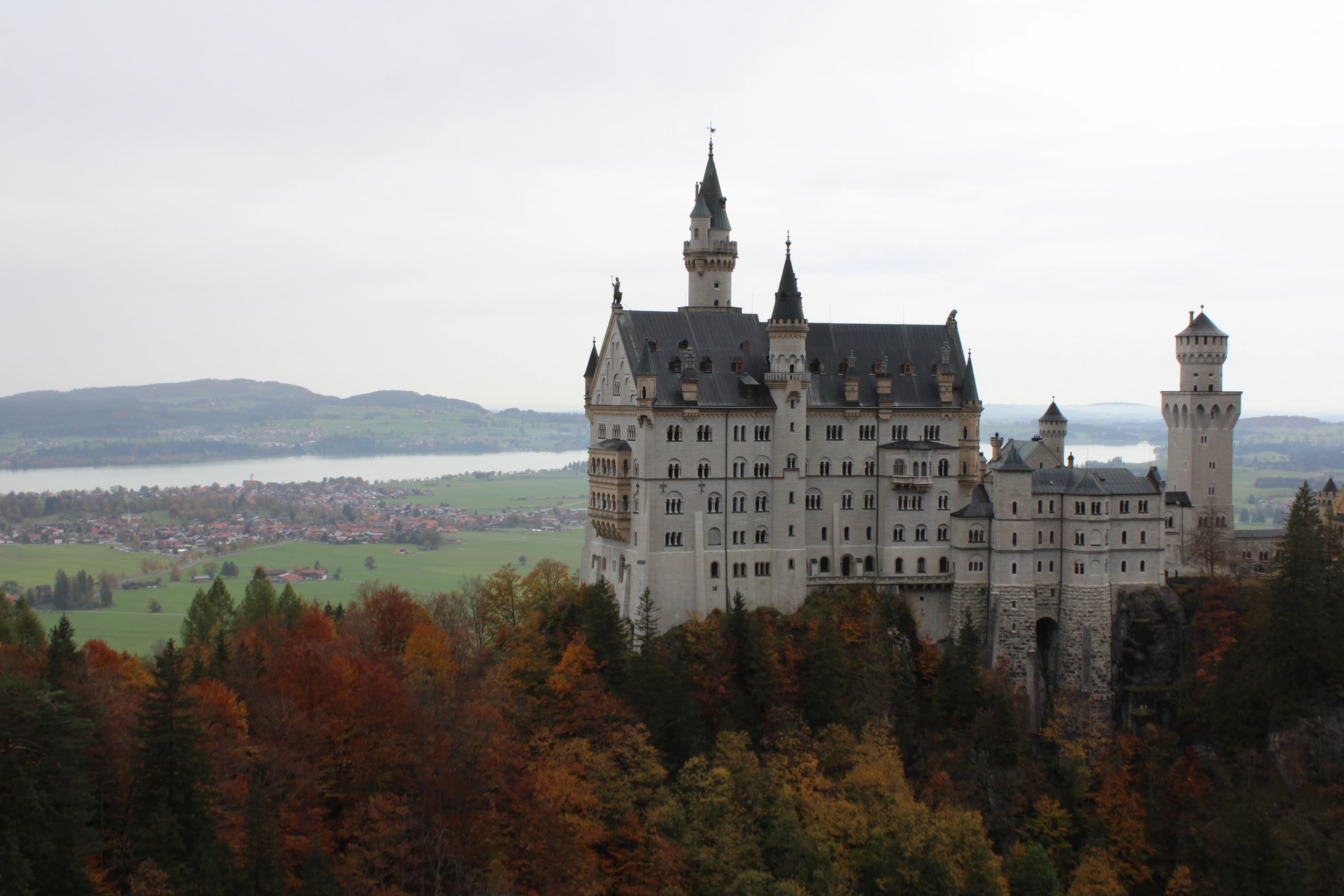
Neuschwanstein Castle, Zugspitze, Königssee, and rustic alpine huts with breathtaking alpine panorama.

4

Berlin

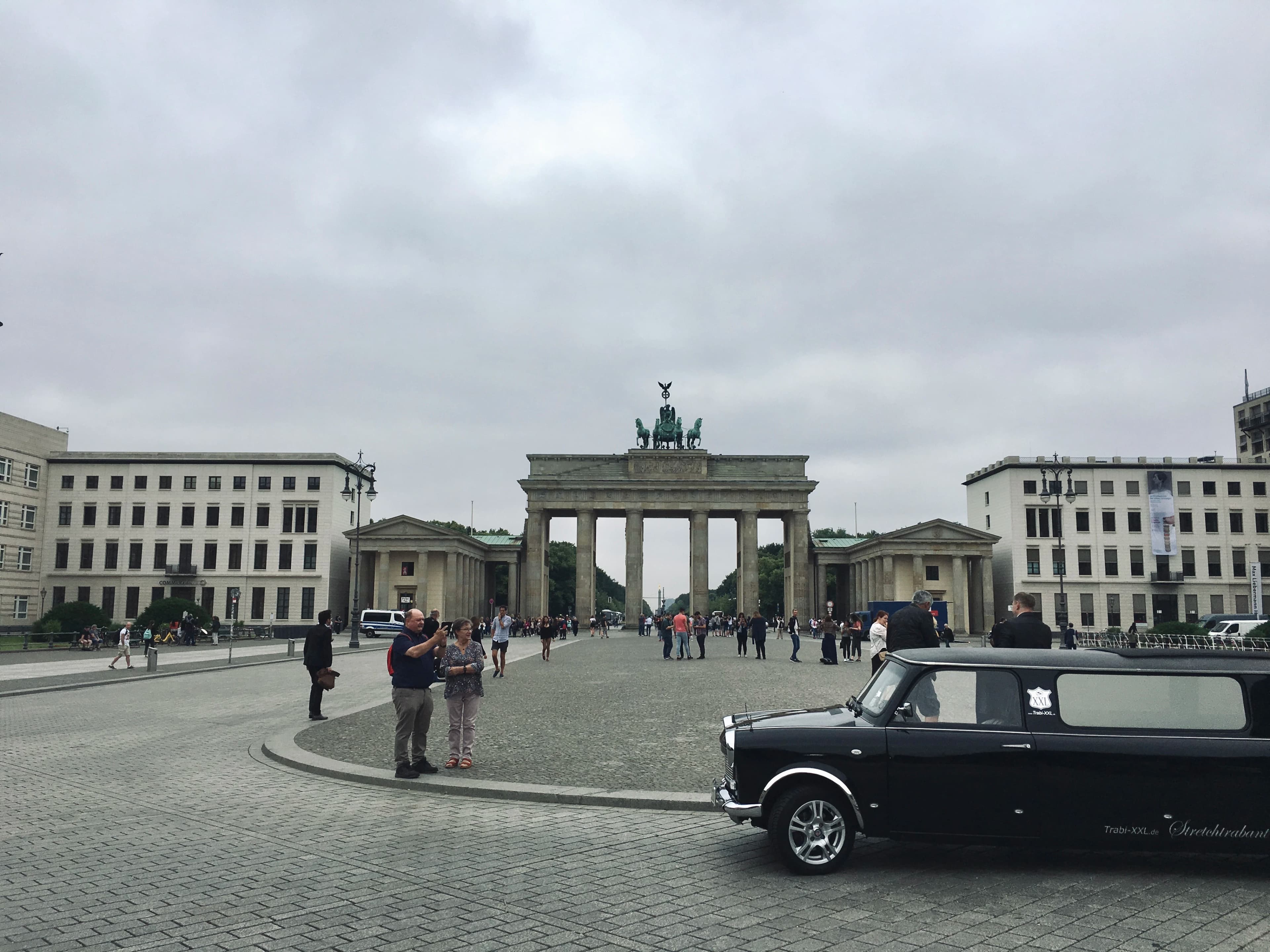
Brandenburg Gate, Museum Island, East Side Gallery, vibrant club scene, and multicultural flair.

5

Saxon Switzerland

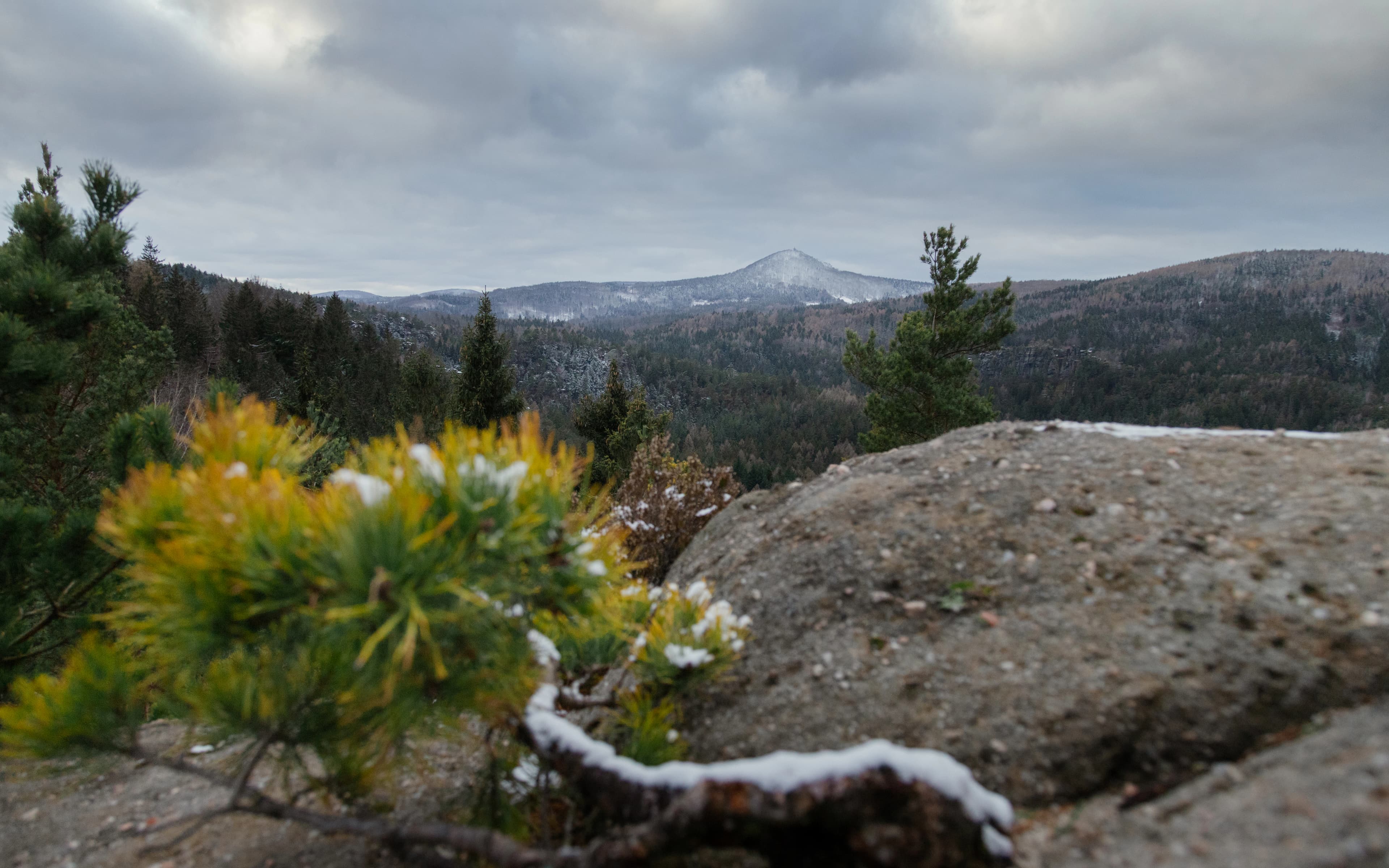
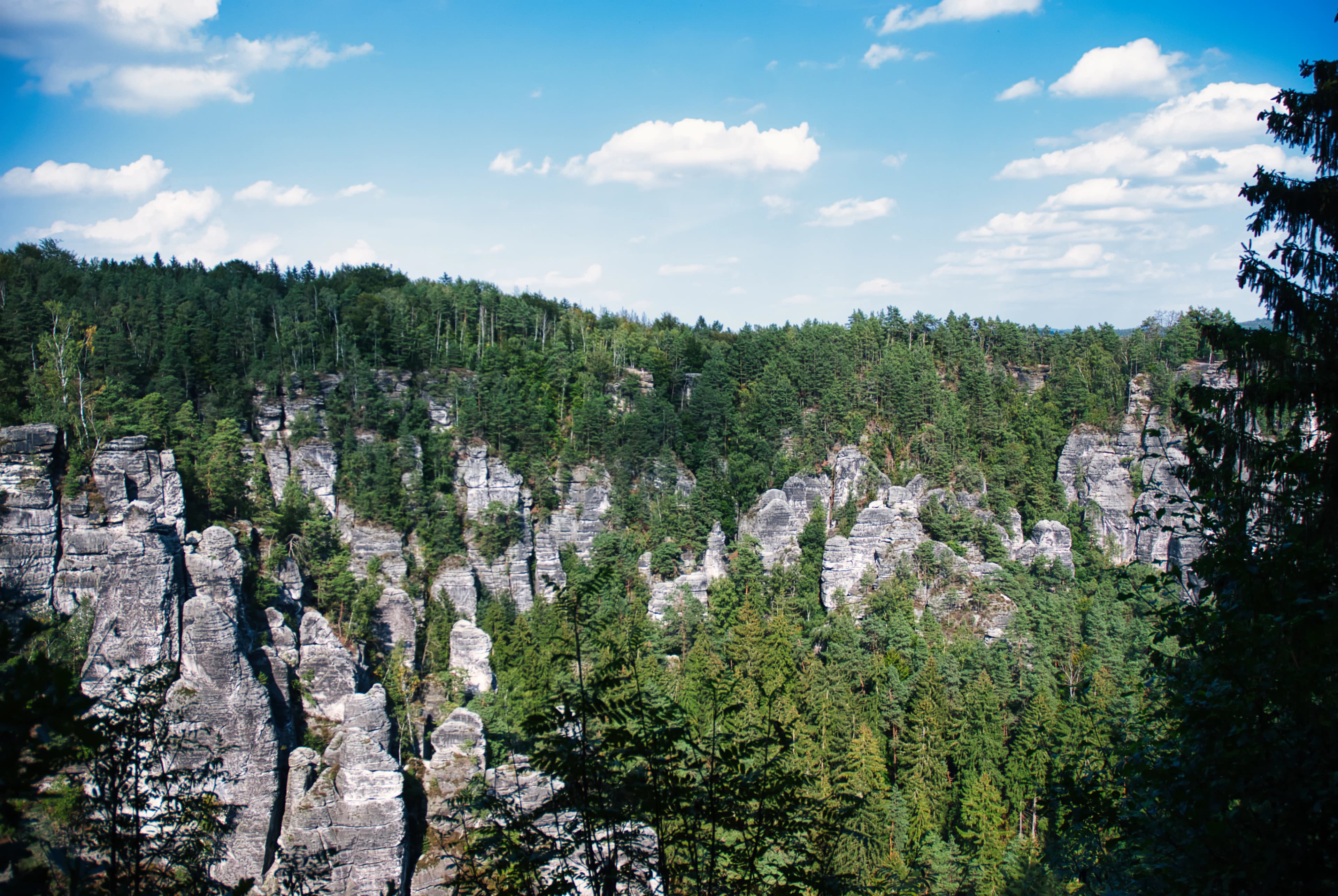
Bizarre sandstone cliffs, the Bastei Bridge, and spectacular hiking trails in the Elbe Sandstone Mountains.

Hotels in Germany

Vergleiche tausende Hotels, Apartments und Resorts auf Expedia – mit Bestpreis-Garantie, kostenloser Stornierung und Bonuspunkten.

Über 700.000 Hotels
Kostenlose Stornierung
Bestpreis-Garantie
Hotels in Germany vergleichen

* Weiterleitung zu Expedia.de. Es gelten die dortigen Nutzungsbedingungen.

Kurzurlaub: Kurzurlaub

Handverlesene Hoteldeals, Kurztrips und Erlebnisgutscheine zu Sparpreisen. Perfekt zum Verschenken oder selbst Genießen.

Bis zu 60 % Ersparnis
Auch als Geschenk
DACH & Südeuropa
Angebote entdecken

* Weiterleitung zu we-are.travel. Es gelten die dortigen Nutzungsbedingungen.

Hotelgutscheine & Kurzreisen

Deals ab 29 € p.P. auf touriDat.com

Pauschalreisen & Rundreisen

Berge & Meer – 170 Tage Cookie

Best time to visit Germany

Recommended travel time

May–October (summer), November–December (Christmas markets)

Summer

20–30°C

Winter

-2–5°C

How much does a holiday in Germany cost?

Average cost per person per day (excluding flight)

🎒

Budget

50–80€

Hostel, street food, public transport

🏨

Mid-range

80–150€

Hotel, restaurant, excursions

🌟

Luxury

150–300€

Boutique hotel, fine dining

5 travel tips for Germany

Insider knowledge to make your holiday better.

The Germany ticket (€49/month) is valid for all local transport

Christmas markets from late November to Christmas in every city

Castles and palaces: The Romantic Road connects the most beautiful ones

Visit German bakeries in the morning – fresh rolls are a must

Hiking in the low mountain ranges is often just as beautiful as in the Alps

Food & drink in Germany

These dishes you must try!

Bratwurst
Pretzel
Schnitzel
Black Forest Cake
Spätzle
Currywurst

Discover Germany

243 regions, cities and highlights in Germany

Cities

Aachen

Aachen is the westernmost major city in Germany and was the residence city of Charlemagne, serving as the political center of the Frankish Empire. For over 600 years, 31 German kings were crowned here — Aachen was the center of European power in the Middle Ages. The Aachen Cathedral, added to the UNESCO World Heritage List in 1978 as the first German building, is an architectural masterpiece: The Carolingian Palatine Chapel from the 8th century with its octagonal floor plan and golden mosaics is one of the most significant sacred buildings in Europe. The shrine of Charlemagne in the cathedral contains the bones of Charlemagne, and the marble throne on which the kings were crowned is still preserved in its original form. At the Three Country Corner, Germany, Belgium, and the Netherlands meet — the observation tower at the tripoint is a popular excursion destination from which one can overlook three countries at once. The thermal springs of Aachen were known to the Romans: The Carolus Thermen Spa uses thermal water that reaches up to 74 °C, the oldest and hottest north of the Alps. The Aachen Printen are world-famous — this spicy pastry resembles gingerbread but is harder and more aromatic. They taste best fresh from the traditional bakeries Nobis or Klein. The International Charlemagne Prize, awarded annually for contributions to European unification, underscores Aachen's role as a European city.

UNESCOCharlemagneSpa
Man walks on pier towards archway over the sea.

Ahlbeck

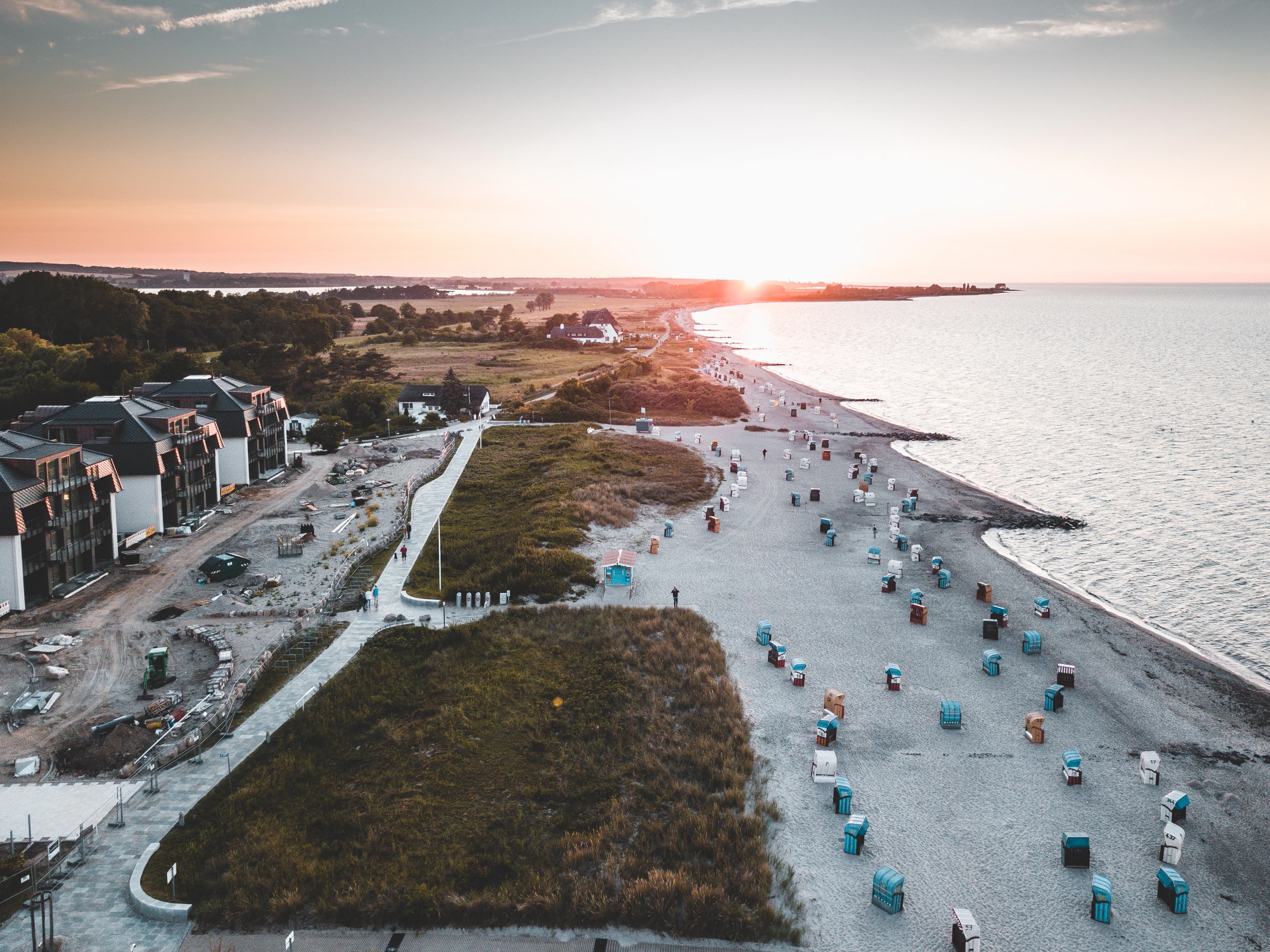
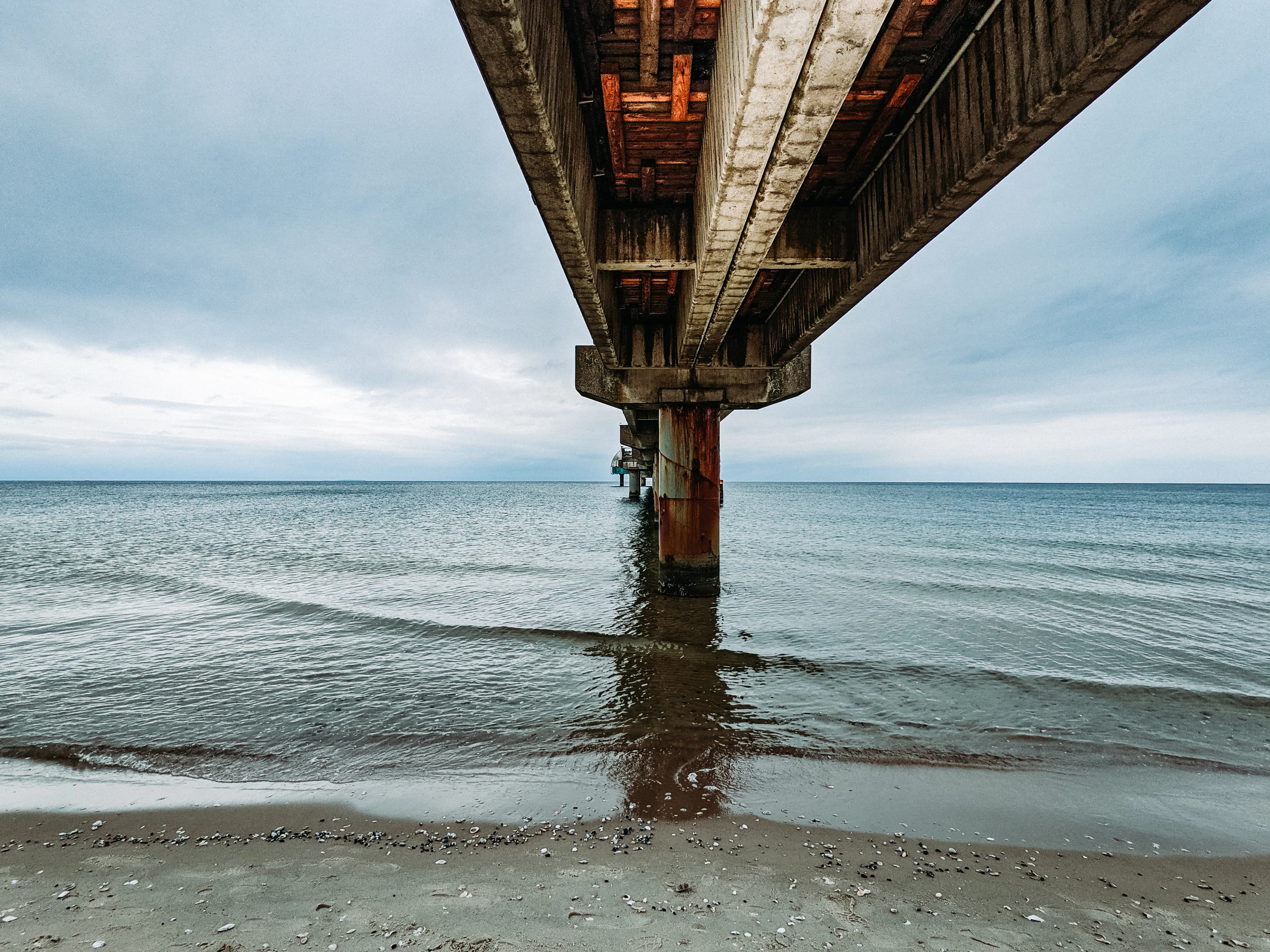
Ahlbeck is the easternmost of the three famous spa towns on the island of Usedom and boasts a true gem of German spa culture with its historic pier from 1899. The Ahlbeck pier is the oldest of its kind on the German Baltic Sea coast and the undisputed landmark of Usedom – its distinctive bridge house with four towers and the elegant restaurant terrace adorn countless postcards and travel guides. The promenade of Ahlbeck connects the spa town with neighboring towns Heringsdorf and Bansin, forming the longest beach promenade in Europe. Along the promenade, magnificent villas of spa architecture line up, which have been meticulously restored in recent years. The whitewashed facades with their turrets, balconies, and verandas tell of the heyday of spa life when Emperor Wilhelm II personally frequented the Usedom spas – hence the name "Kaiserbäder". The wide, fine sandy beach of Ahlbeck is among the most beautiful along the entire German Baltic Sea coast. The special feature: Ahlbeck is located directly at the Polish border, and the beach seamlessly transitions into the Polish resort town of Swinemünde (Świnoujście). A walk across the border into Poland is one of the most popular excursions – in Swinemünde, affordable restaurants, a colorful market, and the tallest lighthouse on the Baltic Sea await. Usedom is considered the sunniest region in Germany, offering an average of over 1,900 hours of sunshine per year, making the island an ideal destination for a beach holiday.

Baltic SeaUsedomKaiserbad
green grass field near green mountains under white clouds during daytime

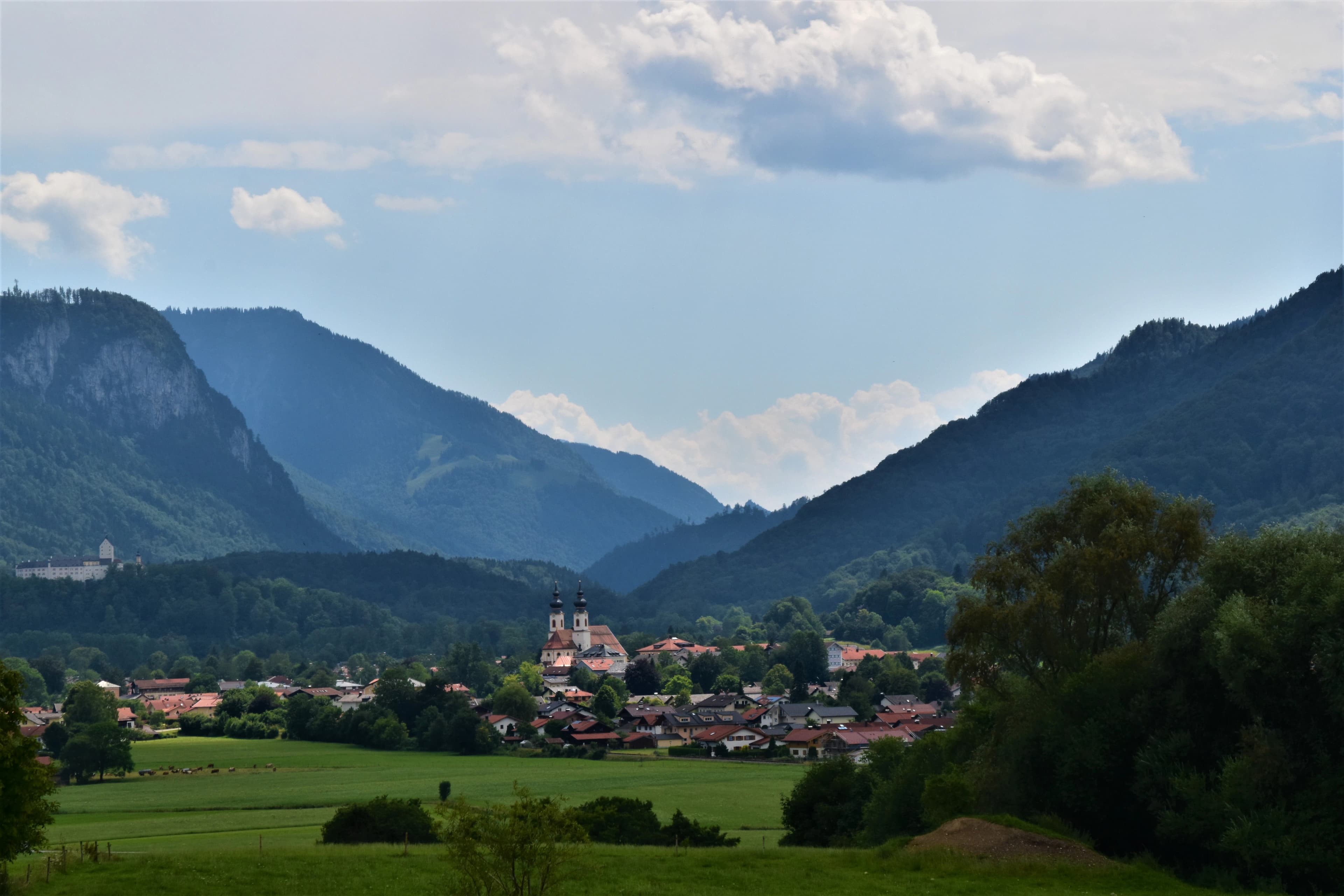
Aschau im Chiemgau

Aschau im Chiemgau is an idyllic spa town at the foot of the Kampenwand and the location of the famous star restaurant by Heinz Winkler. The Kampenwand cable car takes visitors to an altitude of 1,500 m, where the spectacular ridge trail awaits with a grand Chiemgau panorama. Hohenaschau Castle towers over the town and houses a museum about the history of the region. Aschau combines Bavarian mountain village charm with gourmet enjoyment at the highest level.

ChiemgauKampenwandGourmet

Augsburg

Augsburg is one of the oldest cities in Germany, founded in 15 BC as the Roman military camp Augusta Vindelicorum. The third-largest city in Bavaria experienced its heyday during the Renaissance as a trading and financial metropolis of the Fugger and Welser — families that were more powerful than kings and controlled global trade. The Fuggerei is the oldest existing social housing complex in the world: Founded in 1521 by Jakob Fugger the Rich, needy Augsburg citizens still live here today for an annual rent of €0.88 — the historical price of a Rhenish gulden. The 67 houses with 142 apartments, a church, and its own wall form a city within a city. The Augsburg water management system was designated a UNESCO World Heritage Site in 2019: Since the 15th century, the Augsburgers developed an innovative system of canals, water towers, and wells that provided drinking water and driving energy. Three monumental fountains (Augustus Fountain, Mercury Fountain, Hercules Fountain) from the Renaissance adorn Maximilianstraße. The Augsburg Puppet Theater is Germany's most famous marionette theater: Since 1948, Jim Knopf, Urmel, and the Sams have delighted children and adults alike. The museum in the historic Heilig-Geist-Spital showcases the original puppets. The Town Hall with its Golden Hall (1620) is considered the most significant Renaissance building north of the Alps: 14-meter high ceilings with gilded frescoes and portals — a testament to the wealth and self-confidence of the free imperial city.

FuggereiUNESCORenaissance

Bacharach

Bacharach on the Rhine is considered the most beautiful half-timbered town in the UNESCO World Heritage Upper Middle Rhine Valley and is a place where time seems to have stood still. The small town with only 2,000 inhabitants is nestled between steep vineyards and the Rhine, surrounded by an almost completely preserved medieval city wall. Stahleck Castle towers high above Bacharach and today houses one of the most beautiful youth hostels in Germany — those who stay here wake up to a panoramic view of the Rhine Valley, for which others pay hundreds of euros. The castle dates back to the 12th century and was once the seat of the Counts Palatine on the Rhine. The old town is a total work of art made up of half-timbered houses from the 14th to 17th centuries, winding alleys, and the Gothic ruins of the Werner Chapel — one of the most distinctive buildings of Rhine Romanticism. Victor Hugo, who traveled through the Rhine Valley in the 19th century, wrote enthusiastically about Bacharach and immortalized the place in his works. Wine has shaped Bacharach since Roman times: The steep slope vineyards produce excellent Riesling, and the town was the most important wine trading place on the Middle Rhine in the Middle Ages — the name Bacharach may derive from Bacchi Ara (Altar of Bacchus). The wineries offer tastings right by the Rhine. The Rheinsteig and the Rheinburgenweg pass through Bacharach and connect the dozens of castles and ruins of the Middle Rhine Valley. From the city wall, there is an unobstructed view of the opposite Rhine bank with Gutenfels Castle and Pfalzgrafenstein Castle — a customs castle in the middle of the Rhine that seems to float like a ship on the water.

RhineUNESCOHalf-timbered
brown and white concrete building

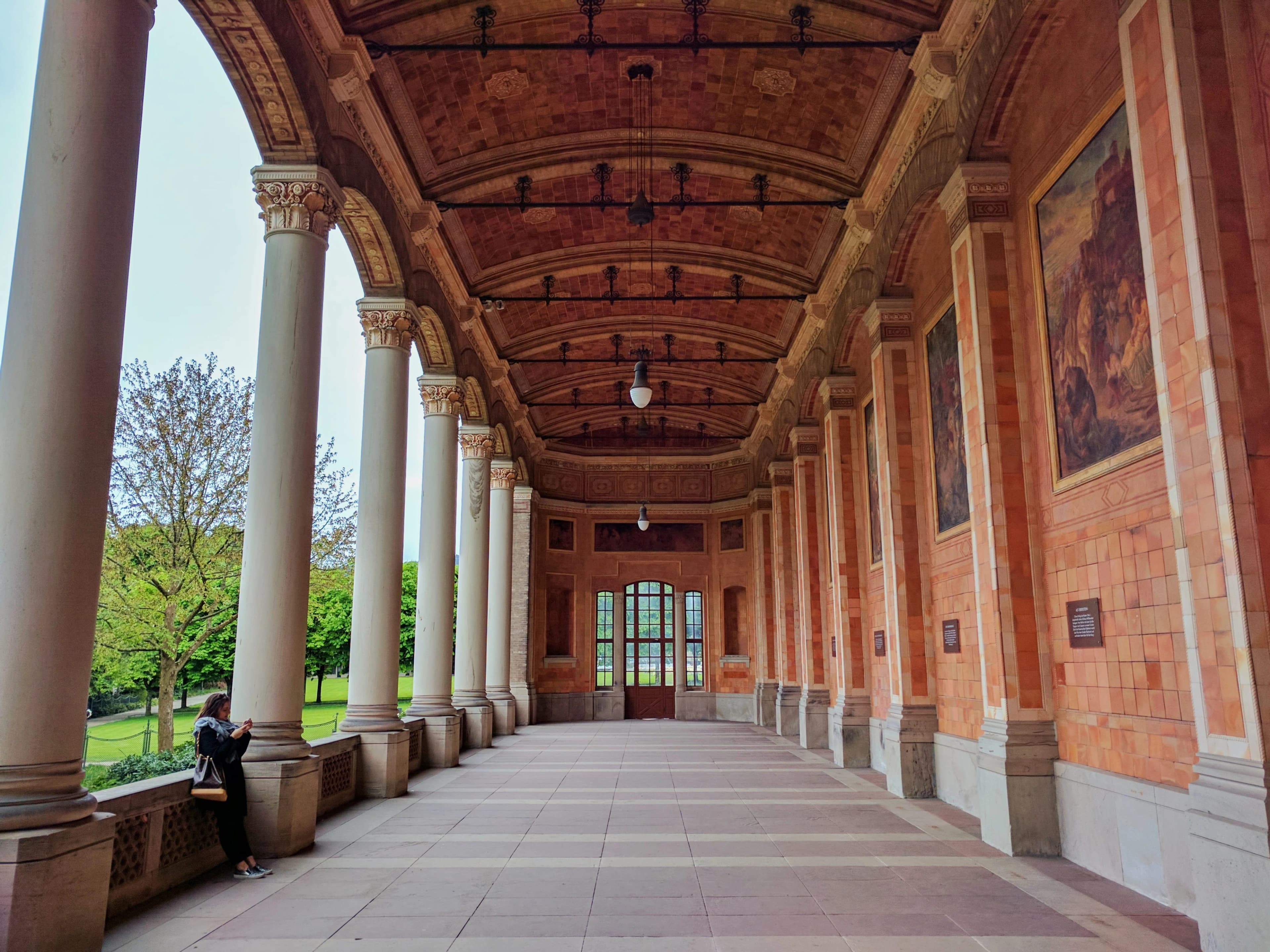
Baden-Baden

Baden-Baden on the edge of the Black Forest has been a symbol of European bathing culture since Roman times and has been part of the UNESCO World Heritage of the Great Spas of Europe since 2021. The elegant spa town combines a cosmopolitan flair with healing thermal springs and a cultural scene that is second to none. German and international guests walk in the footsteps of Fyodor Dostoevsky, who tried his luck at the legendary casino, Johannes Brahms, who composed some of his most beautiful works in Baden-Baden, and Queen Victoria, who regularly visited the summer capital of Europe. The Caracalla Spa and the historic Friedrichsbad with its Roman-Irish bathing ritual offer relaxation at the highest level. The Lichtentaler Allee, a 2.3-kilometer-long park boulevard along the Oos, is considered one of the most beautiful promenades in Europe. The Festspielhaus is Germany's largest opera house and attracts world-class artists.

spaspa towncasino

Bad Endorf

Bad Endorf in Chiemgau is a traditional spa town with the Chiemgau Thermen — one of the largest iodine brine spas in Bavaria. The warm brine pools with a view of the Chiemgau Alps offer wellness and healing effects in one. The town is centrally located between Chiemsee (8 km) and the mountains, making it an ideal starting point for day trips in all directions. The calm atmosphere and affordable prices make Bad Endorf a relaxed alternative to the glamorous Tegernsee.

ChiemgauSpaCure
A view of a town from a hill

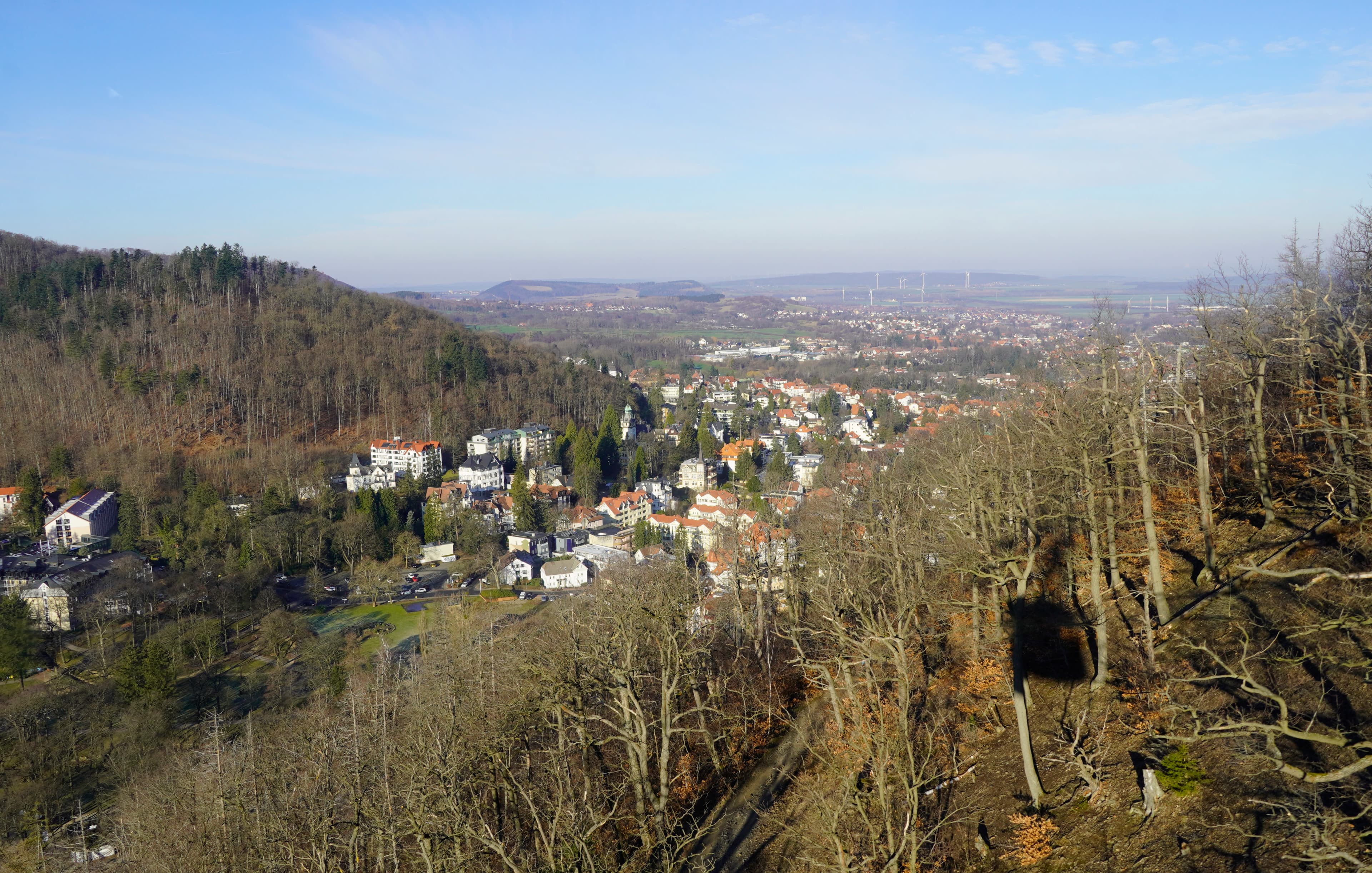
Bad Harzburg

Bad Harzburg is a spa town on the northern edge of the Harz Mountains in Lower Saxony, known for its treetop path, the saline thermal baths, and its location as a gateway to the Harz National Park. The town combines spa tradition with modern nature tourism and offers an ideal starting point for hikes in the Harz. The Treetop Path Harz is the highlight: Over a length of 1,000 meters, the barrier-free path leads through the treetops of the Harz mixed forest at heights of up to 26 meters. At the end, a 30-meter-high observation tower rises with a 60-meter slide as a spectacular descent. The geological exhibition along the path explains the 300-million-year history of the Harz. The Burgberg Cable Car, one of the oldest gondola lifts in Germany (since 1929), takes visitors to the Great Burgberg (485 m), where the Harzburg once stood, which was the site of the Saxon War in 1073-1074. At the top, the Canossa Column, a lynx enclosure, and the treetop path offer a varied experience. The Sole-Therme Bad Harzburg utilizes natural brine from 840 meters deep: brine pools, sauna landscape, and wellness offerings make it the relaxation center of the region. The rejuvenating effect of the brine has been documented since the 16th century. The Harz National Park begins right outside the town: hiking trails lead through spruce forests, raised bogs, and to the Eckertal reservoir. The lynxes, reintroduced to the Harz in 2000, can be observed at the lynx observation enclosure at Rabenklippe.

Treetop PathHarzSpa Town
a person standing on a hill overlooking a body of water

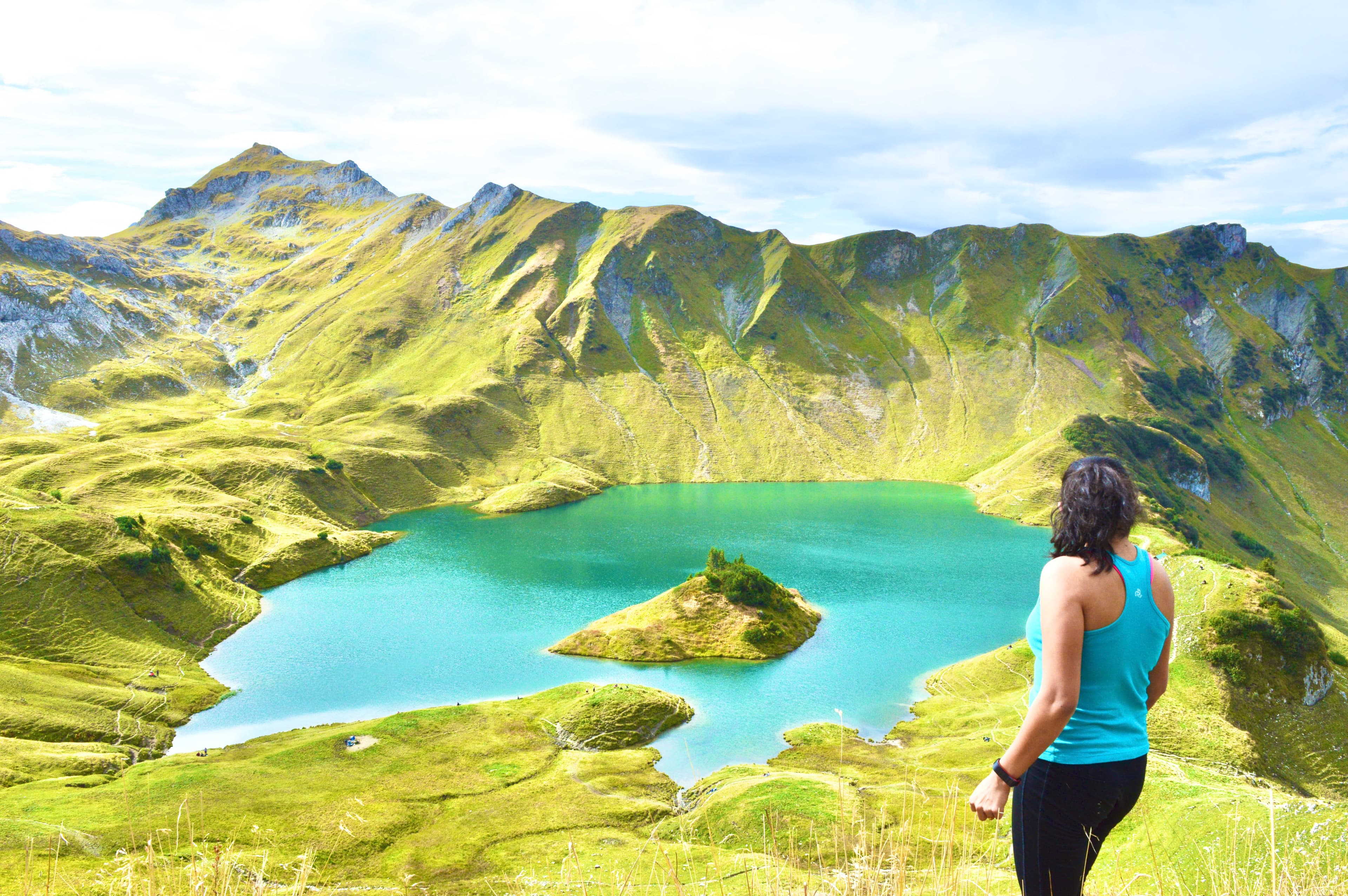
Bad Hindelang

Bad Hindelang is a health resort in the Upper Allgäu, nestled between gentle alpine meadows and rugged mountain peaks. The town is certified as the least polluted health resort in Germany and offers pure mountain air, which is particularly beneficial for allergy sufferers and asthma patients. The Hornbahn opens up an extensive hiking area, and the townscape with its painted farmhouses is picture-book Bavarian.

AllgäuHealthAllergy-friendly

Bad Kissingen

Bad Kissingen in Lower Franconia has been a UNESCO World Heritage site since 2021 as one of the significant spa towns in Europe and has a spa tradition spanning over 500 years. The town on the Franconian Saale was the most elegant spa resort in Europe in the 19th century - Bismarck spent 15 summers here, Emperor Franz Joseph and Tsar Alexander II honored it with their presence, and the magnificent spa buildings from this golden age still shape the town's image today. German wellness travelers and culture enthusiasts find a unique combination of healing brine springs, splendid parks, and Franconian lifestyle here. The monumental Regentenbau with its concert and ballroom, the historic Wandelhalle with its drinking fountains, and the expansive Rosengarten with over 10,000 roses form an ensemble that recalls the great era of European spa culture. The KissSalis Therme combines modern wellness with the charm of this traditional site.

unescospa towntherme

Bad Reichenhall

Bad Reichenhall is the Alpine city of salt and one of the most traditional spa towns in Germany, nestled in the Berchtesgadener Land between the peaks of the Bavarian Alps. The town, with 19,000 inhabitants, owes its wealth and elegance to salt — the white gold has been extracted here for over 2,500 years. The Alte Saline is the architectural jewel of the city: King Ludwig I had it built in 1834 in the magnificent style of the Florentine Renaissance. In the underground tunnels and the massive pumping station (still operational!), the history of salt extraction comes to life. The brine is still used today for the graduation towers in the spa gardens — inhaling the salty air is both therapy and experience. The Predigtstuhlbahn is the oldest original preserved cable car in the world: Since 1928, the wood-paneled cabin in Art Deco style has ascended to a height of 1,614 meters. The panoramic view from the Predigtstuhl over the entire Berchtesgadener Land, the Königssee, and the surrounding three-thousanders is breathtaking. At the top, the listed mountain restaurant remains in its original condition from the 1920s. The Royal Spa Garden with its graduation tower, historic colonnades, and alphorn blowing every Saturday forms the social center. Bad Reichenhall has been a meeting place for European nobility since the 19th century — Crown Princess Victoria, Bismarck, and Richard Strauss all spa here. The proximity to the Berchtesgadener Land makes Bad Reichenhall the perfect starting point: Königssee, Watzmann, Kehlsteinhaus, and the salt mines of Berchtesgaden are reachable in 20-30 minutes.

AlpsSaltSpa

Bad Schandau

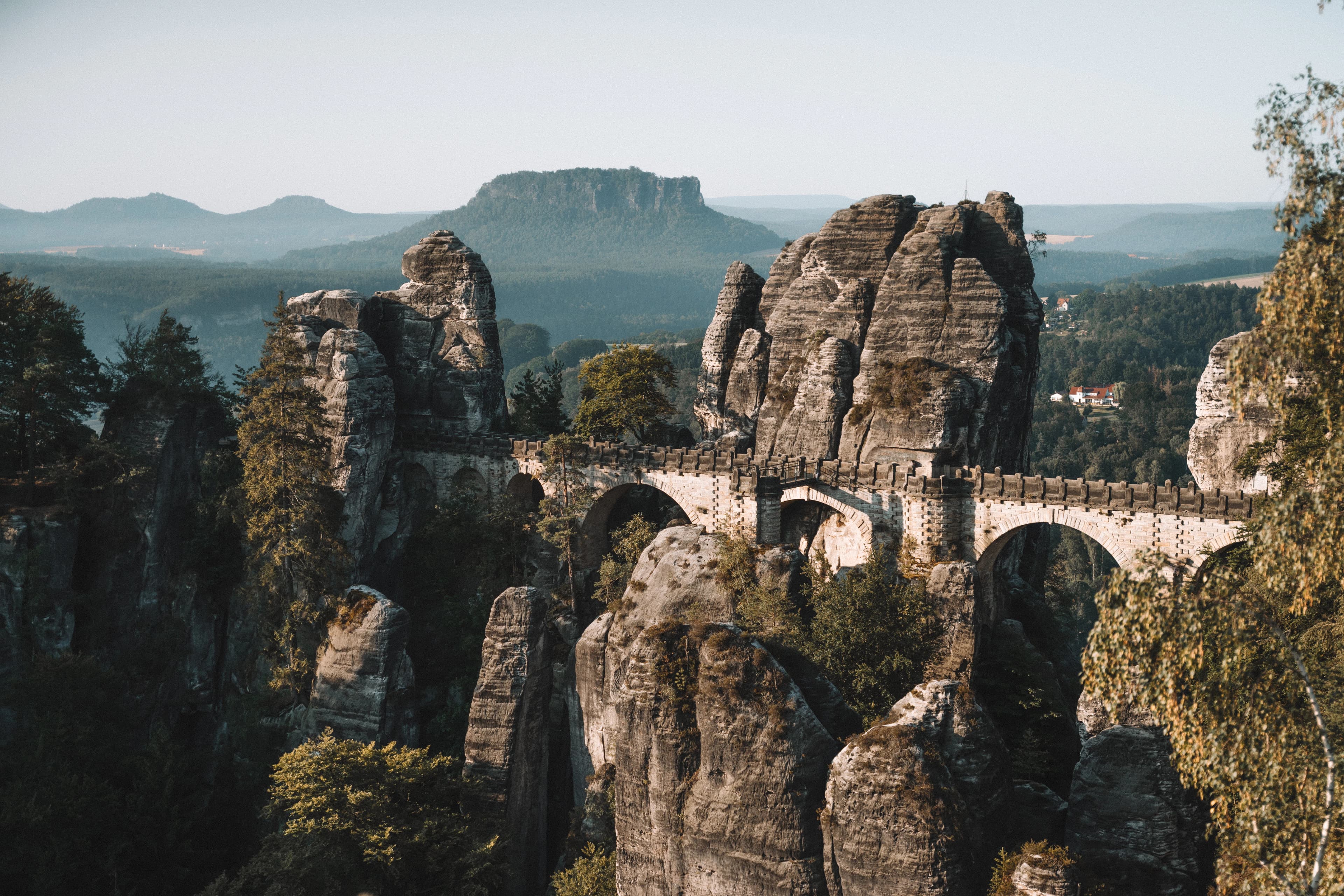
Bad Schandau is the gateway to Saxon Switzerland and is beautifully situated in the Elbe Valley, framed by the bizarre sandstone cliffs of the Elbe Sandstone Mountains. The state-recognized spa town with around 3,500 inhabitants is the ideal starting point for one of Germany's most spectacular natural wonders. The Bastei, just 25 minutes from Bad Schandau, is the most famous rock formation in Saxon Switzerland: The Bastei Bridge spans 194 meters high over the gorge and offers a breathtaking view of the Elbe Valley. The rock needles and table mountains resemble a miniature version of the Grand Canyon — Caspar David Friedrich painted his famous Romantic landscapes here. The historic Kirnitzschtalbahn has been operating since 1898 as a tram from the city center 8 km through the romantic Kirnitzschtal to the Lichtenhainer Waterfall. It is the only interurban tram in Saxony and one of the oldest electric trams in Germany. Bad Schandau is the climbing paradise of Saxony: Over 1,100 free-standing climbing rocks with 21,000 routes make Saxon Switzerland the most important climbing area in Germany. Saxon climbing follows its own strict rules — no magnesium, no camming devices, only natural protection points and rings. This ethic has influenced free climbing worldwide. The historic passenger elevator (built in 1904) transports visitors 50 meters vertically to a viewpoint above the Elbe Valley. The Toskana-Therme offers Liquid Sound — floating in warm saltwater with underwater music and light installations.

Saxon SwitzerlandClimbingBastei
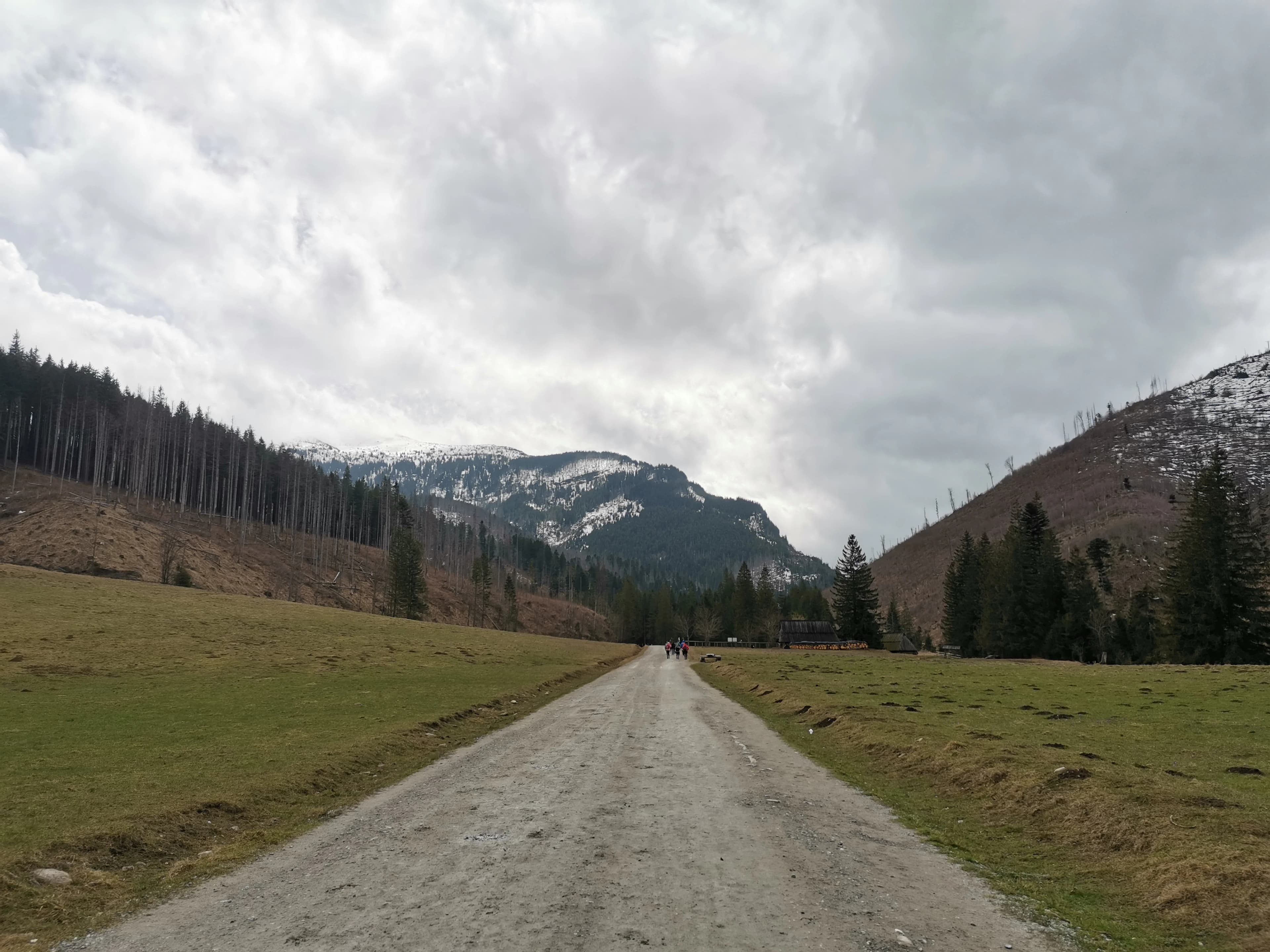
a road with grass and trees on the side and mountains in the background

Bad Tölz

Bad Tölz is a traditional spa town on the banks of the Isar in the Bavarian Oberland, about 50 kilometers south of Munich. The town combines alpine flair with Bavarian lifestyle and is the gateway to the Isarwinkel, one of the most scenic regions of Upper Bavaria. The historic Market Street is the heart of the town: magnificent bourgeois houses from the 17th and 18th centuries with colorful Lüftl paintings (facade painting) line the wide, gently ascending street. At the upper end stands the baroque Franciscan monastery church with a view of the Alpine chain. The Leonhardiritt on November 6 is Bad Tölz's most famous tradition: splendidly decorated horse-drawn carriages with riders in historical costumes parade through the town to the Leonhard Chapel on the Calvary Hill — one of the largest traditional pilgrimages in Bavaria, which has been taking place since the 17th century. The Blomberg summer toboggan run is one of the longest in Germany at 1,286 meters: From the Blomberg summit (1,248 m), the track winds through forest curves into the valley. In winter, Blomberg offers a family-friendly ski area. The iodine-sulfur springs made Bad Tölz a spa town starting in 1846. The Alpamare thermal baths were one of Bavaria's most famous adventure pools for decades. Today, the new iodine bath offers modern wellness and spa services with the healing water. From Bad Tölz, hiking trails lead into the Karwendel mountains, to Brauneck, and to the spectacular Isar Gorge near Lenggries.

BavariaSpa TownIsar

Bad Wiessee

Bad Wiessee on the western shore of Lake Tegernsee is a renowned spa resort with Germany's strongest iodine-sulfur spring. The town combines healing thermal water with alpine elegance and a panoramic view of Tegernsee. The iodine-sulfur baths alleviate joint complaints and skin diseases, while the lakeside promenade invites leisurely strolls. Bad Wiessee is quieter than the fashionable Rottach-Egern and ideal for those seeking relaxation who want to combine wellness and nature.

TegernseeSpaWellness

Baiersbronn

Baiersbronn in the Northern Black Forest is Germany's gourmet capital — nowhere in a village worldwide are there more Michelin stars per inhabitant. The restaurants Bareiss and Traube Tonbach with the legendary Schwarzwaldstube successor attract food lovers from all over the world. But Baiersbronn is much more than just culinary delights: 550 km of marked hiking trails lead through pristine Black Forest valleys, and the Black Forest National Park begins right at the doorstep.

GourmetMichelin starsBlack Forest
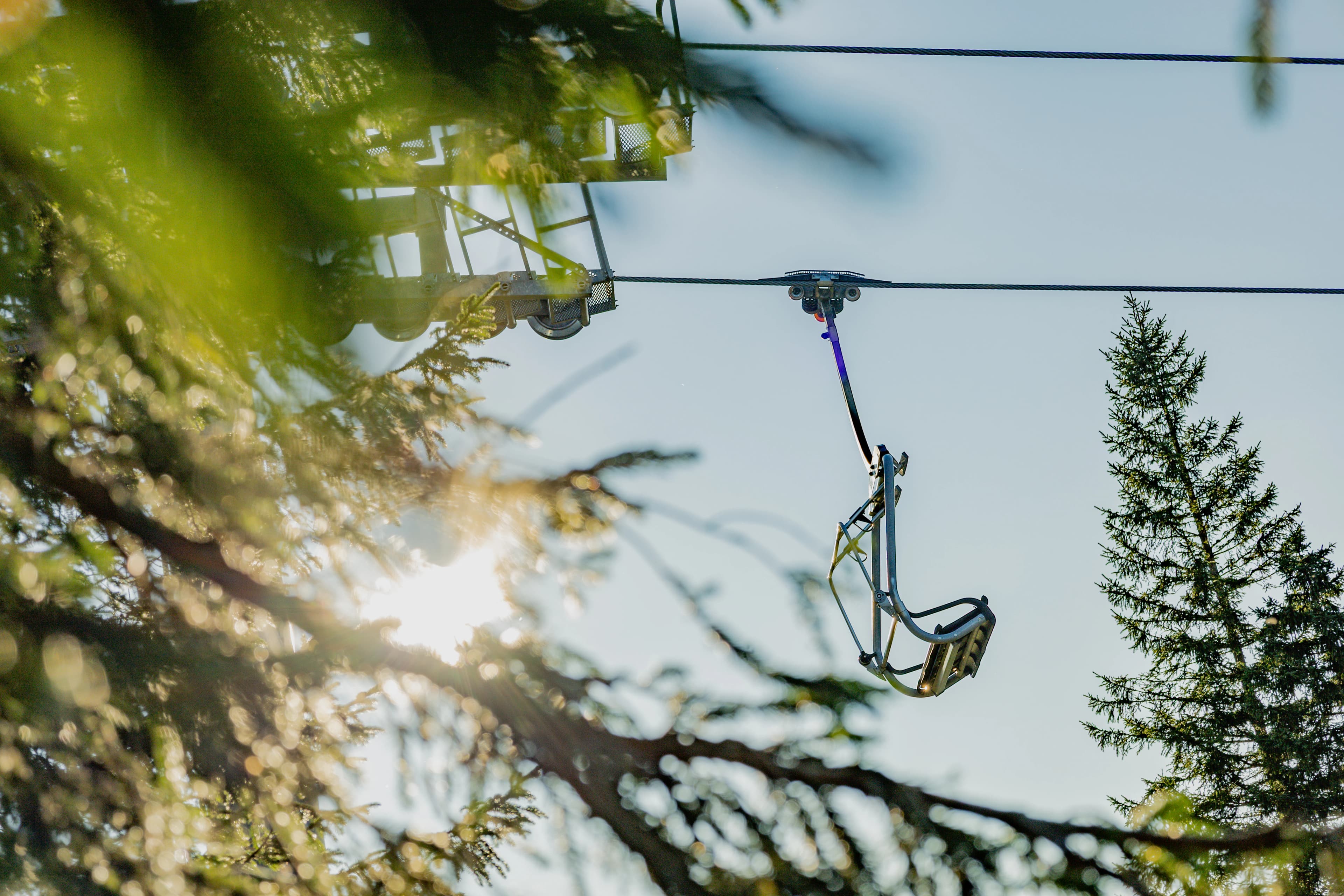
Empty ski lift chair moving through trees

Balderschwang

Balderschwang is the highest and snowiest municipality in Germany and a true insider tip for winter vacationers and nature lovers. Located at an altitude of 1,044 m in the Oberallgäu, it receives more snow than anywhere else in Germany. The small mountain village with only 300 inhabitants offers untouched nature, dreamy cross-country skiing trails, and a family-friendly ski area. In summer, alpine hikes through blooming mountain meadows with a magnificent Alpine panorama attract visitors.

AllgäuSnowInsider tip
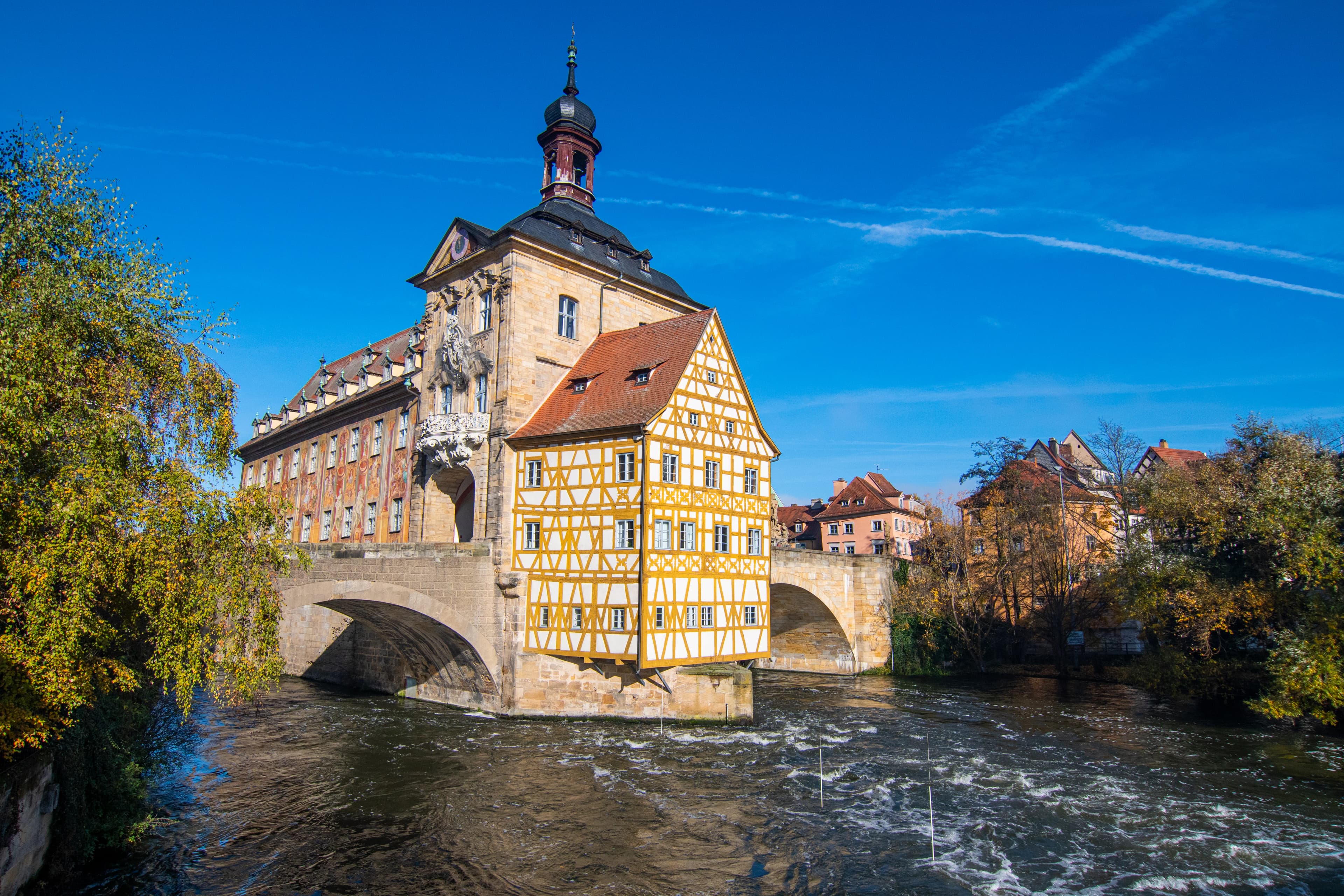
a building on a bridge over a river

Bamberg

Bamberg in Upper Franconia, with its over 1,000-year history, is one of the most beautiful cities in Germany and has been a UNESCO World Heritage Site since 1993. The city spans seven hills — like Rome — and combines Romanesque, Gothic, Baroque, and bourgeois architecture into a unique ensemble that has survived World War II almost unscathed. The Old Town Hall, artistically built on an island in the Regnitz, is the city's landmark and an architectural rarity: According to legend, the bishop denied the citizens a building site, prompting them to create an artificial island. The Bamberg Cathedral (from 1004) houses the famous Bamberg Rider, one of the most significant sculptures of the Middle Ages, as well as the only papal grave north of the Alps — the tomb of Clement II. Klein Venedig, a series of former fishermen's houses on the banks of the Regnitz, is beautifully reflected in the water. The Bamberg Old Town is a vibrant open-air museum with over 2,400 listed buildings. The New Residence, with its magnificent rose garden, offers a splendid view over the rooftops. Bamberg is also Germany's beer capital: More than ten breweries in the city and surrounding area brew around 50 different types of beer, including the unique smoked beer from the Schlenkerla brewery, which is smoked over open beech wood fire. The historic beer cellars on Stephansberg invite social gatherings under old chestnut trees in summer.

World HeritageBeerHalf-timbered
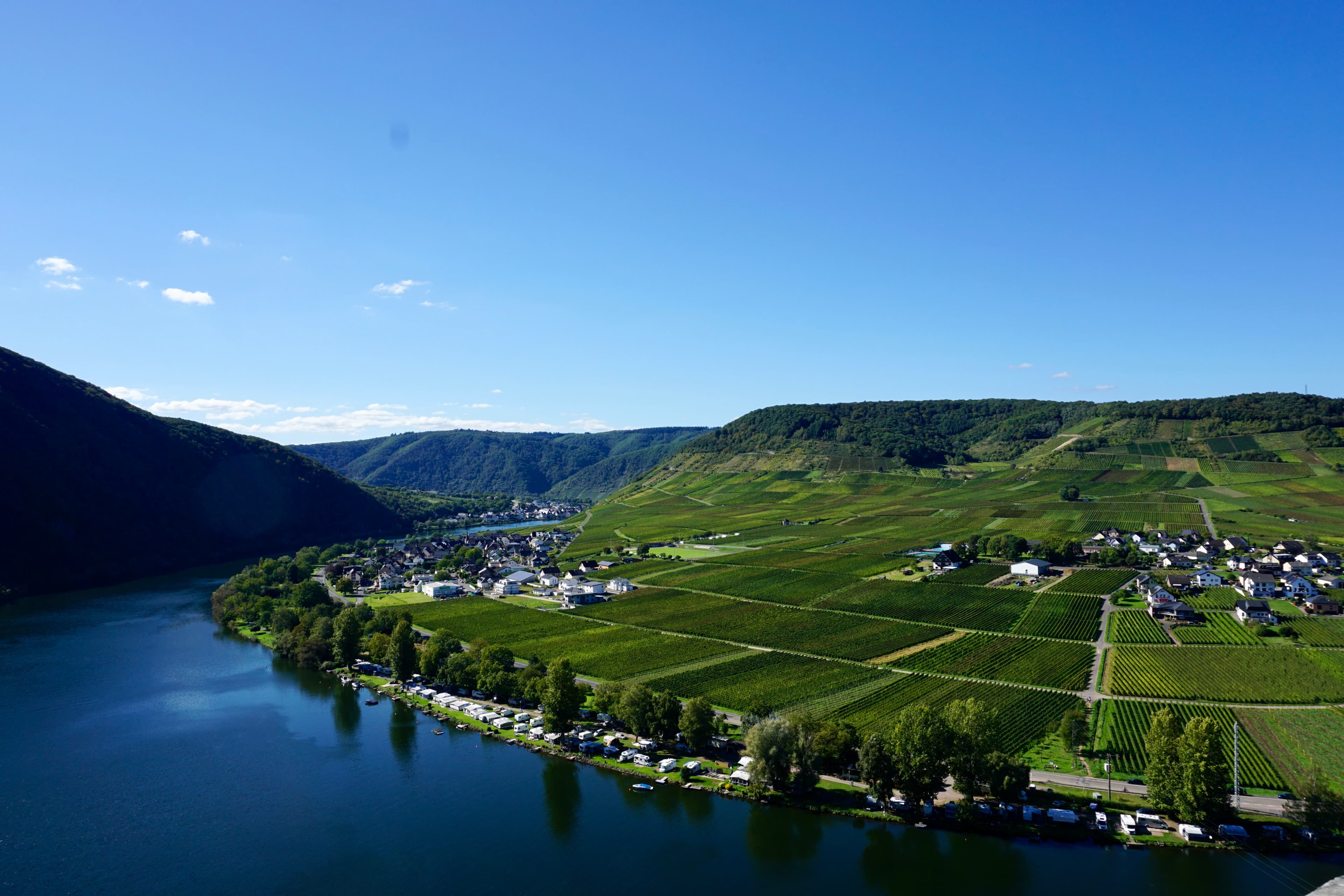
a river running through a lush green countryside

Beilstein

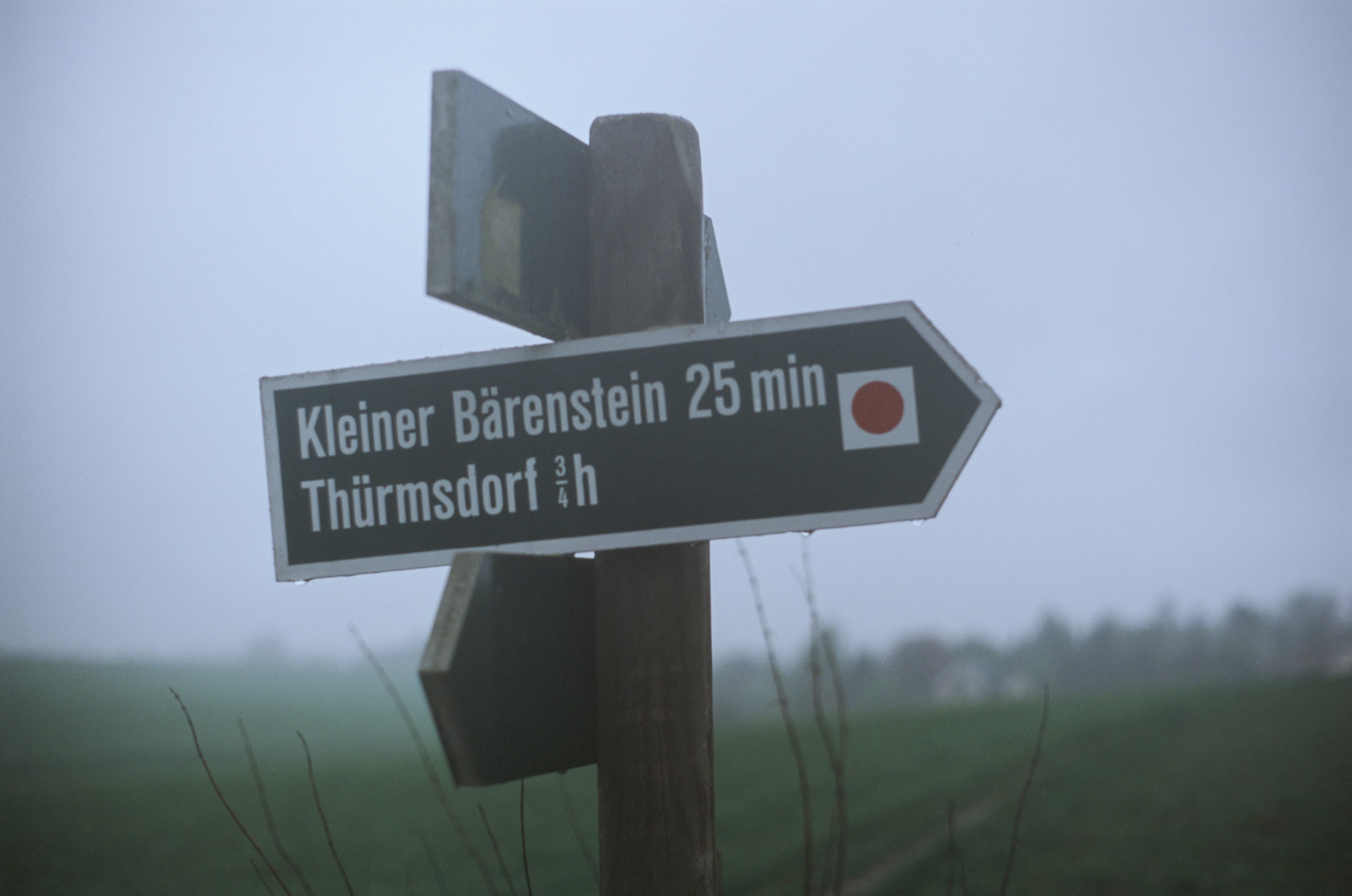
Beilstein is rightly referred to as the Sleeping Beauty of the Moselle - a tiny, timelessly beautiful village nestled against a steep vineyard, preserving its medieval charm over the centuries. With barely 150 inhabitants, Beilstein is one of the smallest yet most enchanting places along the entire Moselle and a hidden gem that has not yet been discovered by mass tourism. The cobblestone streets wind between half-timbered houses and old wine presses up the hill to the ruins of Metternich Castle, which towers high above the village. The ascent through the winding stairs and narrow paths rewards visitors with a panoramic view of the Moselle loop that is unparalleled. The castle itself, once owned by the famous princely family, now houses an atmospheric restaurant where one can enjoy the sunset over the vineyards with a glass of Riesling. The baroque Carmelite Church from the 17th century impresses with its artistic Black Madonna, a significant pilgrimage site. At the small marketplace, barely larger than a living room, historic inns line up, seemingly frozen in time. Beilstein has served as a backdrop for numerous films and television productions, including scenes for the film The New Doctor. Beilstein is perfect as a stopover on a Moselle cycling tour or hike along the Moselsteig. From Cochem, the nearest larger town, it is only eight kilometers upstream. A ferry connection takes hikers and cyclists across the Moselle. Those seeking peace and romance away from well-known tourist spots will find in Beilstein a gem that still breathes the true Moselle atmosphere.

MoselleSleeping BeautyHalf-timbered
a man and a woman walking on a bridge

Bernkastel-Kues

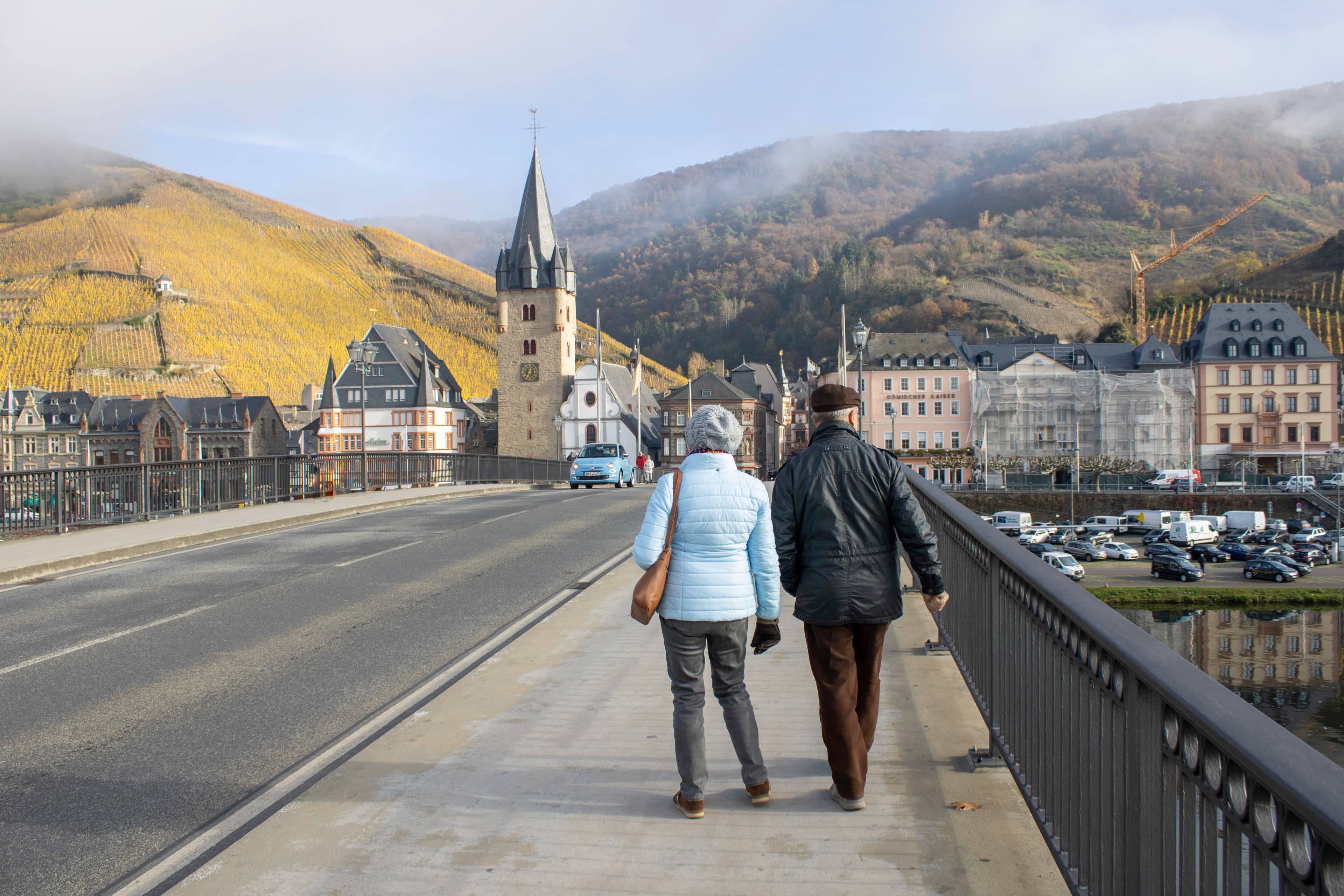
Bernkastel-Kues is the heart of the Mosel region and one of the most picturesque half-timbered towns in Germany. The twin town on both banks of the Mosel enchants with a historic marketplace, considered one of the most beautiful in the entire country. The famous Spitzhäuschen from 1416, a narrow half-timbered house that leans boldly over the street, is the most photographed motif along the Mosel and a symbol of the architectural uniqueness of the town. Bernkastel-Kues is inseparably linked to wine. The steep slate slopes around the town are among the best Riesling locations in the world. The single vineyard Doctor, located directly above the old town, has been producing one of the most expensive and sought-after German white wines for centuries. In the numerous wine taverns and estate inns, you can taste these wines directly from the winemaker, accompanied by regional specialties such as Flammkuchen and Winzersteaks. High above Bernkastel stands the ruins of Landshut Castle, which can be reached via a steep hiking trail in about 30 minutes and rewards visitors with a breathtaking panorama over the Mosel loop. On the Kues side, the Cusanus-Stift, founded by the famous philosopher and cardinal Nikolaus von Kues in the 15th century, houses a valuable library and a senior home that is still operated according to the rules of its founder. The Mosel region around Bernkastel-Kues is excellent for cycling tours along the Mosel cycle path, boat trips through the vineyards, and hiking on the Moselsteig. The wine festival of the Middle Mosel in September is one of the largest wine festivals in Germany and attracts tens of thousands of visitors. Bernkastel-Kues is easily accessible by car from major German cities, with the nearest airport being Frankfurt-Hahn, just 30 minutes away.

MoselWineHalf-timbered
Signpost indicates direction and distance to nearby locations.

Binz

Binz on Rügen is Germany's largest and most elegant seaside resort and the jewel of spa architecture. The snowy white splendor of the villas along the beach promenade, the fine sandy beach, and the 370-meter-long pier make Binz the epitome of German seaside tourism. The spa architecture is the unique feature of Binz: Over 50 magnificent villas from the Gründerzeit and Art Nouveau line the beach promenade and the adjacent streets. These white holiday homes with their playful balconies, towers, bay windows, and wooden verandas were built between 1870 and 1910 and are now lovingly restored. A walk along the promenade resembles an open-air museum of architecture. The pier of Binz extends 370 meters into the Baltic Sea and serves as a dock for excursion boats to the chalk cliffs of Cape Arkona, to Sassnitz, and to the island of Hiddensee. At the end of the pier lies the diving gondola experience: A gondola descends beneath the water's surface, allowing views into the underwater world of the Baltic Sea. The Colossus of Prora, just 4 km north of Binz, is one of the most remarkable buildings from the Nazi era: A 4.5-kilometer-long complex that the KdF organization (Strength Through Joy) planned as a seaside resort for 20,000 vacationers but never completed. Today, the Colossus houses holiday apartments, a museum, and the NVA Museum — a place that makes German history palpable in a haunting way. The Granitz Hunting Lodge, located on the highest hill of Granitz, offers a panoramic view of southeastern Rügen from its 38-meter-high observation tower. It is accessible by the historic Rasender Roland — a narrow-gauge railway that has been puffing through Rügen since 1895.

Baltic SeaSpa ArchitectureRügen
a sign that is on the ceiling of a train

Bodenmais

Bodenmais is the most visited holiday resort in the Bavarian Forest and lies at the foot of the Silberberg, whose visitor mine keeps the 500-year mining tradition alive. The Großer Arber — at 1,456 m the highest mountain in the Bavarian Forest — is only a few kilometers away. Bodenmais delights with extensive hiking trails through the Bavarian Forest National Park, one of the last primeval forests in Europe, and the Joska Glasparadies manufactory with its glass experience world.

Bavarian ForestNational ParkMine
blue and white train on rail road near white concrete building during daytime

Bonn

Bonn on the Rhine is much more than the former capital of the Federal Republic of Germany — the city is Beethoven's birthplace, a UN location, and one of the most livable cities on the Rhine. From 1949 to 1990, Bonn was the provisional federal capital, and to this day, six UN organizations and numerous federal ministries are based here. The Beethoven House at Bonngasse 20 is the birthplace of Ludwig van Beethoven and houses the world's largest Beethoven collection: original scores, hearing aids of the deaf composer, and his last pianos. Every year in September, Bonn celebrates the Beethoven Festival with international concerts. The Museum Mile along the B9 is Bonn's cultural heart: The House of History showcases German post-war history with Adenauer's Mercedes and a piece of the Berlin Wall, the Bundeskunsthalle presents world-class temporary exhibitions, the Bonn Art Museum houses one of the most significant collections of German post-war art, and the Museum König is a natural history museum where the Parliamentary Council met in 1948. The Bonn Cherry Blossom Avenue in the old town transforms into a sea of pink blossoms every April — a photo motif that goes viral every year. The Rhine promenade invites for walks, and the Siebengebirge with the Drachenfels is reachable in 20 minutes: Here, Siegfried is said to have slain the dragon according to the Nibelungen saga.

BeethovenMuseumsmeileRhine

Boppard

Boppard is one of the most beautiful towns on the Middle Rhine and is nestled in one of the most spectacular river bends of the UNESCO World Heritage Site Upper Middle Rhine Valley. The former Roman city - once known as Bodobrica - combines two thousand years of history with a vibrant wine culture and perhaps the most famous view along the entire Rhine: the legendary Four-Lake View. The Four-Lake View is the absolute highlight of Boppard. From the observation platform at Gedeonseck, the Rhine seems to be visible at four different points through the winding river bend, appearing like four individual lakes - a fascinating optical illusion. The easiest way to get there is by the chairlift, which glides from the old town over the vineyards, offering a grand panoramic view of the Rhine Valley. The 20-minute ride is one of the most beautiful cable car experiences in all of Germany. The old town of Boppard itself is a gem with half-timbered houses, the Romanesque Severus Church from the 12th century, and the well-preserved remains of the Roman city wall. The Rhine promenade invites you to stroll, while excursion boats regularly depart towards Loreley and Koblenz. The Bopparder Hamm, the largest contiguous vineyard on the Middle Rhine, produces top-quality Rieslings on steep slate slopes. Boppard is an ideal starting point for hikes on the Rhine Trail, bike tours along the Rhine, and excursions to Marksburg, the only never-destroyed hilltop castle on the Middle Rhine. From Koblenz, Boppard can be reached in 20 minutes by car or comfortably by boat on the Rhine. The best time to visit is from April to October, with autumn being particularly atmospheric due to the grape harvest and the colorful vineyards.

RhineVierseenblickChairlift
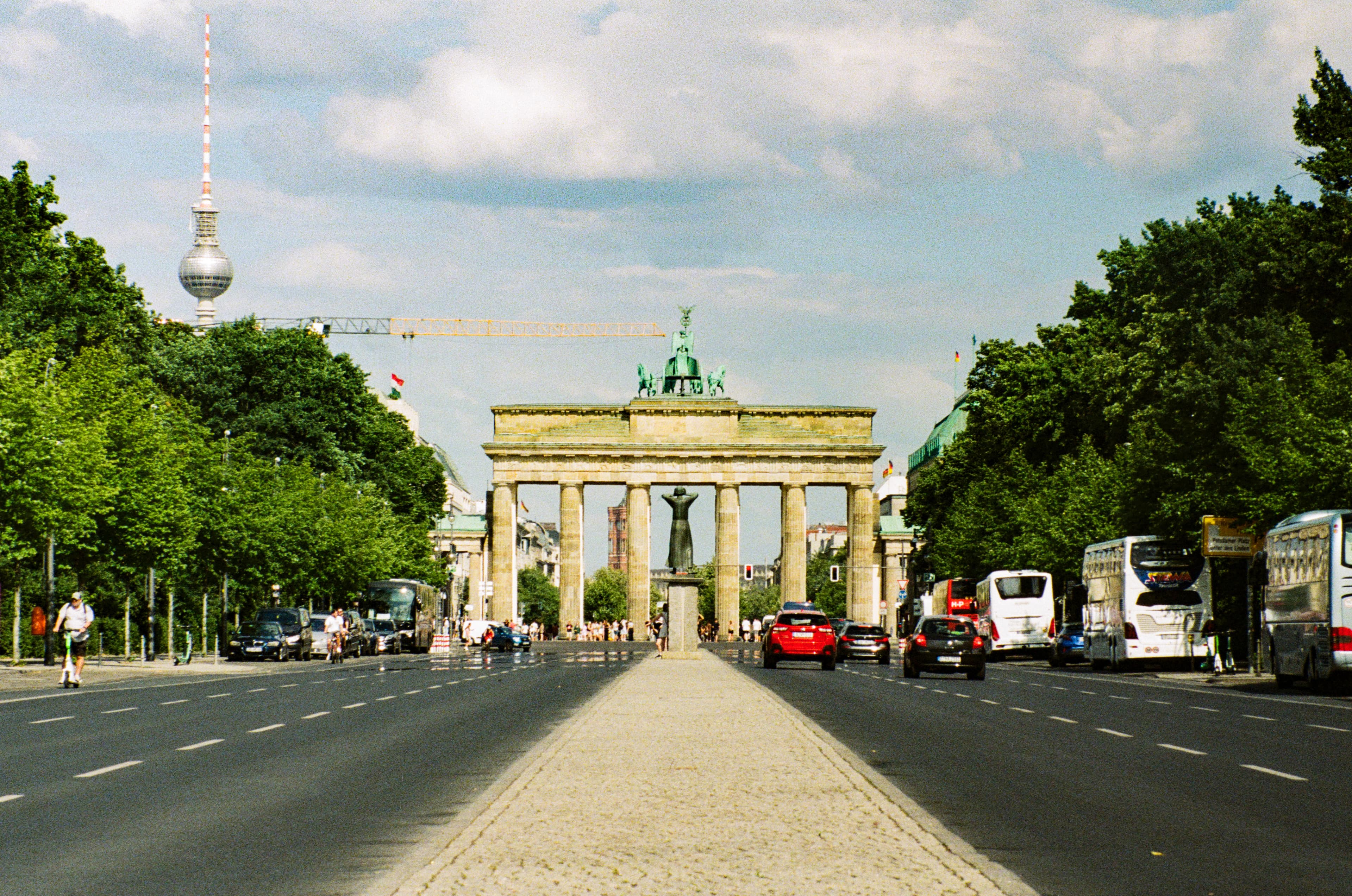
The brandenburg gate in berlin, germany.

Braunlage

Braunlage is a health resort in the Upper Harz region of Lower Saxony, at the foot of the Wurmberg (971 m), the highest mountain in Lower Saxony. The small town is the winter sports center of the Harz and offers year-round outdoor experiences in one of the most forested regions of Germany. The Wurmberg is Braunlage's local mountain and, at 971 meters, the highest mountain in Lower Saxony. The Wurmberg cable car takes visitors comfortably to the summit with a panorama restaurant and a 360-degree view over the Harz to the Brocken. In winter, the Wurmberg transforms into the largest ski area in Northern Germany: 13 slopes, a halfpipe, the Wurmberg snow park, and snow-covered runs make Braunlage the most important ski resort north of the Thuringian Forest. In summer, the Wurmberg downhill and the monster scooters (oversized scooters downhill) provide adrenaline on wheels. Hiking trails lead through the Harz National Park to the Bodefall waterfalls, to the Oderteich (the oldest dam in the Harz, 1722), and along the Harzer Hexenstieg. The Braunlage ice stadium is the only outdoor ice stadium in the Harz and offers ice skating outdoors from October to March. The Wurmberg cable car valley station serves as a starting point for skiers and cross-country skiers who can use a network of over 500 kilometers of trails. The St. Andreas Church in the town center, the historic spa facilities, and the typical Harz wooden houses give Braunlage a cozy charm. Its proximity to the Brocken (12 km straight line) and to Schierke, from where the Brockenbahn departs, makes Braunlage an ideal base for Harz adventures.

SkiHarzWurmberg

Braunschweig

Braunschweig, the Lion City, is inseparably linked to Henry the Lion, the powerful Welf duke of the 12th century. His bronze lion in the Burgplatz, erected around 1166, is the oldest preserved large sculpture of the Middle Ages north of the Alps and the city's landmark. The Burgplatz itself, framed by the cathedral, Burg Dankwarderode, and half-timbered houses, is one of the most beautiful square ensembles in Northern Germany. The Braunschweig Cathedral houses the grave of Henry the Lion and his wife Matilda — the Imervard Cross from the 12th century and the seven-branched chandelier are among the most significant Romanesque artworks in Germany. Next door, Burg Dankwarderode hosts the Herzog Anton Ulrich Museum, one of the oldest art museums in Europe with works by Rembrandt, Vermeer, and Cranach. Braunschweig is a prominent science city: The TU Braunschweig (founded in 1745) is one of the oldest technical universities, the Physikalisch-Technische Bundesanstalt (PTB) defines Germany's official time, and the German Aerospace Center (DLR) has a large site here. Around 27 research institutions make Braunschweig the most research-intensive region in Europe per capita. The Braunschweig Carnival (Schoduvel) is the largest carnival parade in Northern Germany and attracts over 250,000 spectators annually. The Happy Rizzi Houses by artist James Rizzi — brightly painted office buildings at Ackerhalle — are a pop-art landmark and a popular photo motif.

Heinrich der LoeweMiddle AgesScience
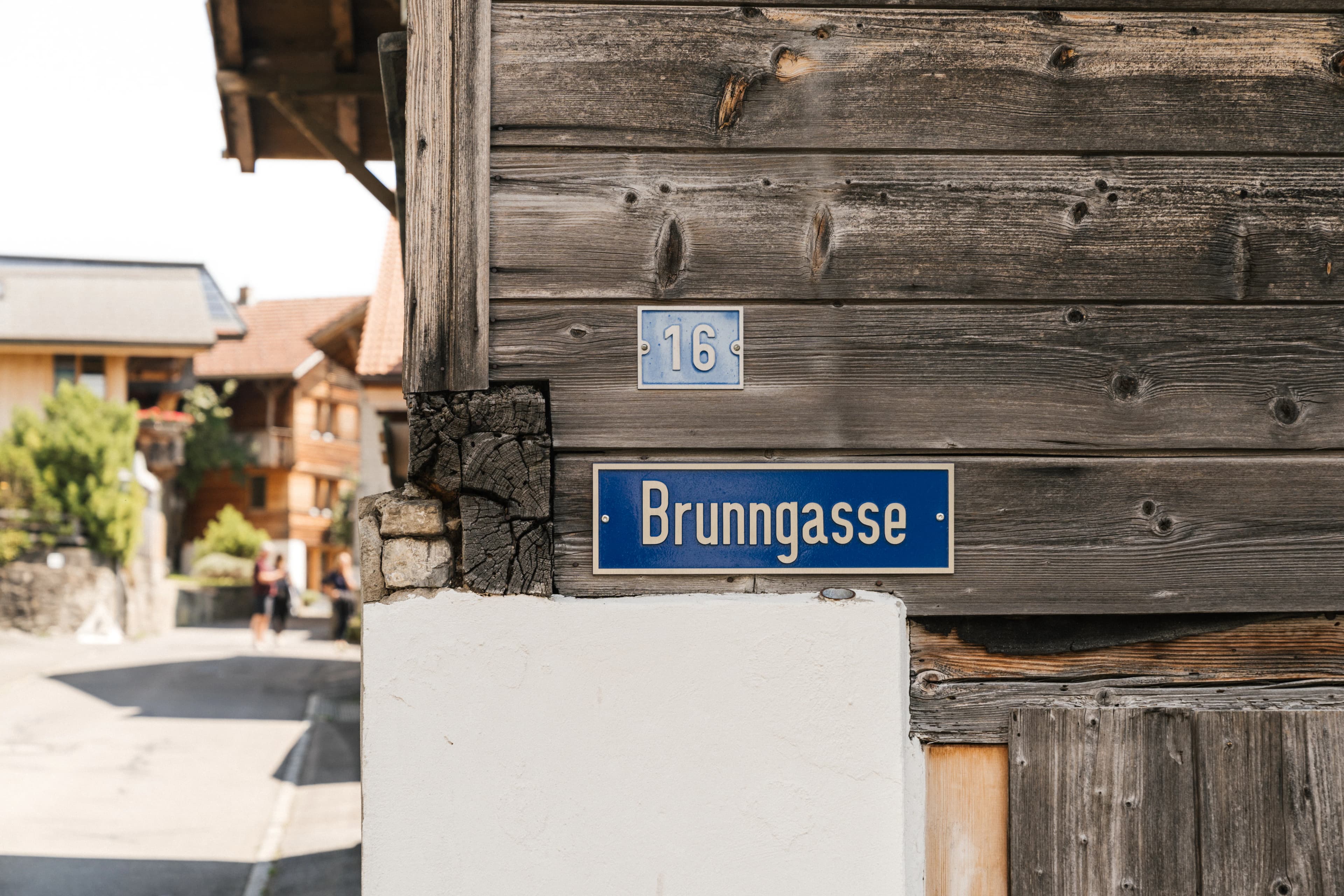
Street sign for brunngasse on a wooden building

Büsum

Büsum is the crab town of the North Sea and one of the most authentic coastal towns on the Schleswig-Holstein west coast. Here, everything revolves around fresh North Sea crabs, the scent of salt and seaweed, and a warm, unpretentious hospitality that has made the place a favorite seaside resort for northern German families for generations. The famous Green Beach - a well-maintained lawn area directly by the dike that gently transitions into the mudflat - is Büsum's unmistakable trademark. The Green Beach is unique on the German coast: instead of sand, lush green grass spreads right up to the water, where beach baskets, picnic blankets, and playing children create a picture of northern German holiday idyll. The Pearl Bay, an artificially created beach area with fine sand and lagoon-like character, additionally offers classic sandy beach with shallow, warm water - ideal for small children. The Büsum harbor is the lively heart of the town. Here, the crab fishing boats unload their catch, and at the stalls by the harbor basin, you can buy the famous Büsum crabs freshly peeled right to hand. The spectacle of the incoming boats at high tide and the bustling activity of the fishermen are among the most authentic experiences that the North Sea coast has to offer. The Museum am Meer and Phänomania Büsum offer interactive exhibitions about the North Sea, the Wadden Sea, and crab culture. The family lagoon Pearl Bay, with its water playgrounds and shallow pools, is a paradise for families. The Wadden Sea in front of Büsum, part of the UNESCO World Heritage, reveals a fascinating world of tidal channels, mussel banks, and mud worms at low tide. Büsum is reachable from Hamburg in just about one and a half hours. The cozy town offers a wide selection of holiday apartments and guesthouses at moderate prices, making it one of the best value-for-money destinations on the North Sea.

North SeaCrabsGreen Beach
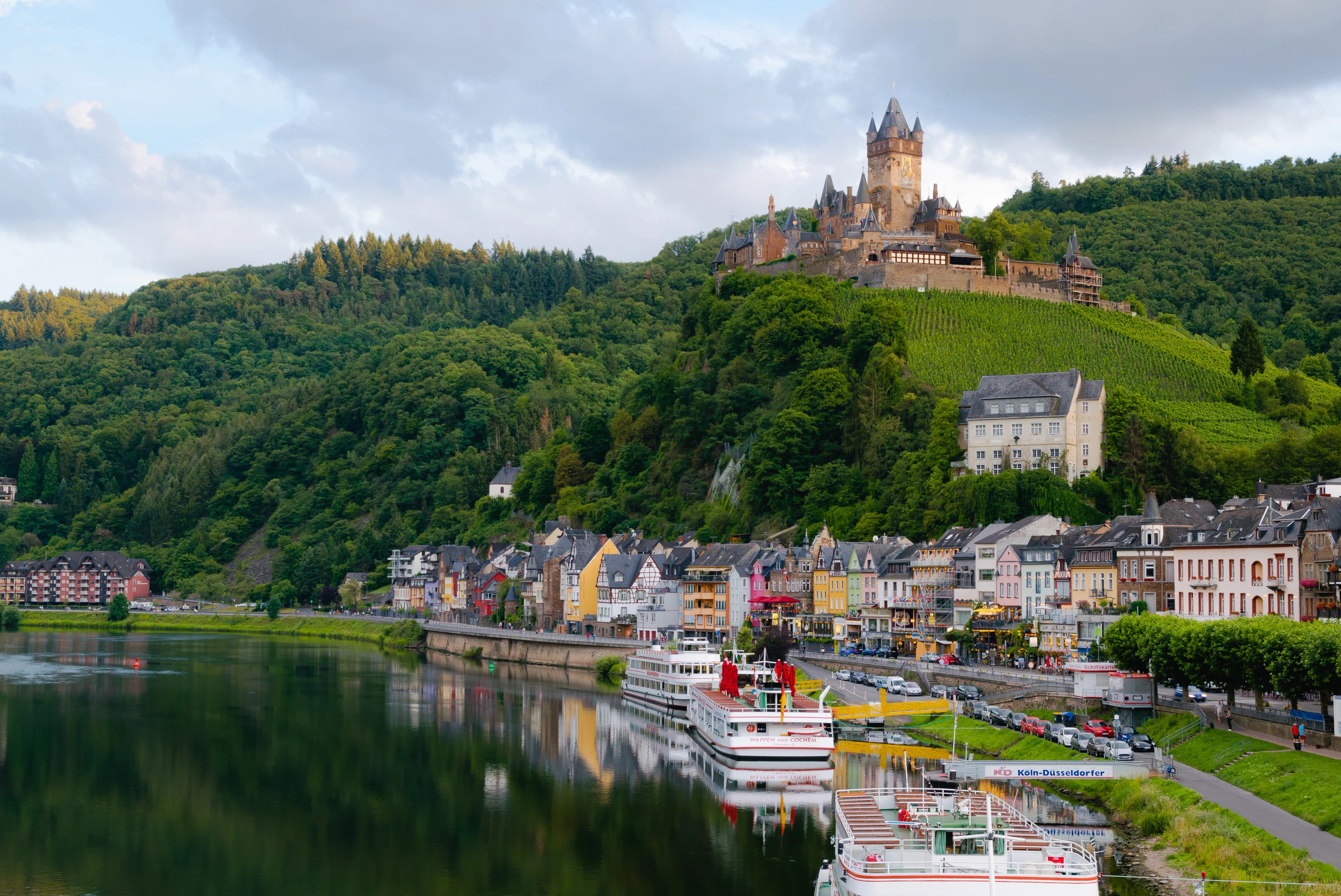
landscape photo of gray and brown buildings

Cochem

Cochem on the Moselle is one of the most romantic small towns in Germany and the heart of the Moselle region. The town, with only 5,000 inhabitants, is dominated by the majestic Reichsburg, which towers on a 100-meter high hill above the Moselle and is arguably the most photographed motif of the entire Moselle landscape. The Reichsburg Cochem has over 1,000 years of history: destroyed by French troops in the 17th century, it was rebuilt in the neo-Gothic style in 1868 and is now one of the best-preserved high castles in Germany. The tours through the state rooms, the knights' hall, and the castle kitchen convey a vivid medieval experience. The Moselle vineyards around Cochem are among the steepest in the world: Riesling has been cultivated on slopes with inclines of up to 65 degrees since Roman times. The Cochemer Krampen, one of the narrowest bends in the Moselle, can be spectacularly viewed from the viewpoints at Pinnerkreuz or Winneburg. A special curiosity is the former Bundesbank bunker: during the Cold War, the Deutsche Bundesbank secretly stored 15 billion Deutsche Marks here as emergency currency in case of a Soviet attack. Since 2016, the bunker has been accessible as a museum and tells a fascinating story of German post-war anxiety. The old town of Cochem enchants with half-timbered houses, the Alte Thorschenke (one of the oldest inns in Germany, since 1332), and the historic marketplace. The Moselle cycle path runs directly through the town — the Cochem-Traben-Trarbach stage (about 50 km) is one of the most beautiful cycling routes in Germany.

MoselCastleWine
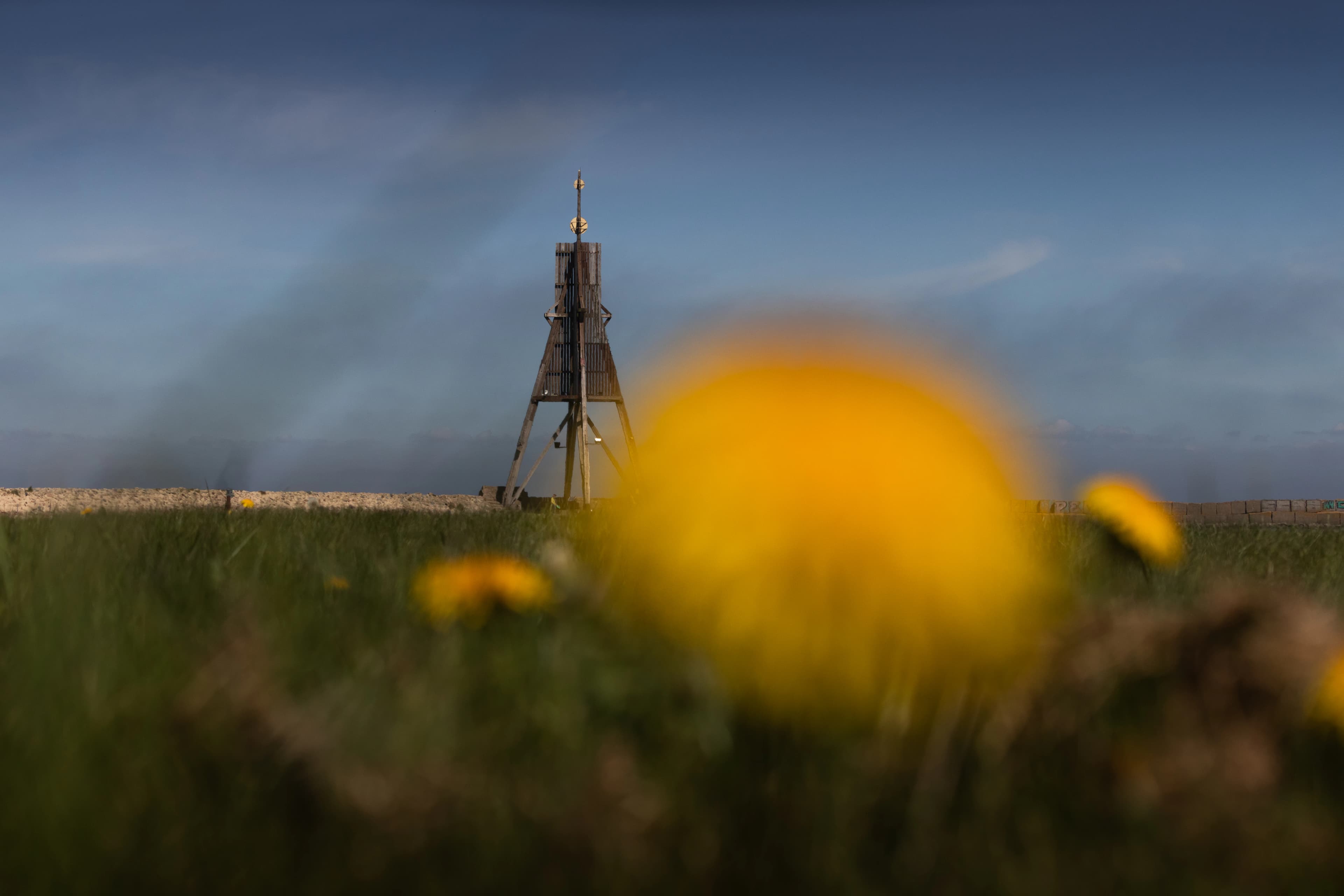
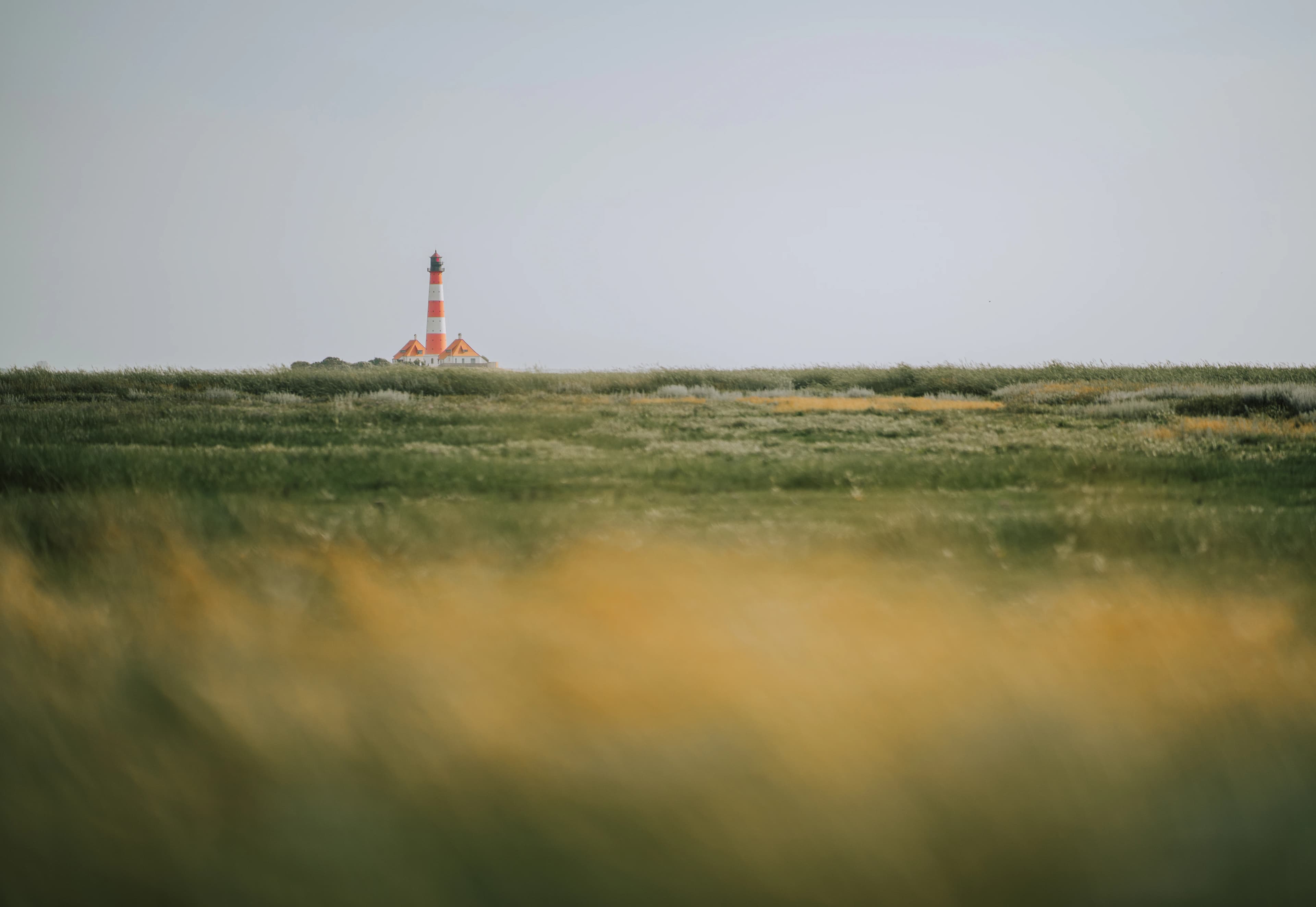
A lighthouse stands tall on a grassy field.

Cuxhaven

Cuxhaven is located at the northernmost tip of Lower Saxony, where the Elbe River flows into the North Sea, offering a maritime experience unmatched in Germany. The Kugelbake, a wooden navigation mark at the mouth of the Elbe, is the city's landmark and marks the exact point where the river meets the sea. Nowhere else in Germany can you simultaneously see the largest container ships in the world pass by, walk in the Wadden Sea, and relax on one of the widest North Sea beaches. The Kugelbake is more than just a navigation mark - it is the emotional center of Cuxhaven and one of the most iconic coastal spots in Northern Germany. From the observation platform, you can watch the unceasing ballet of ships at the Elbe estuary: gigantic container freighters, elegant cruise ships, and small fishing boats pass by in an endless stream just a few hundred meters away. At sunset, when the silhouettes of the ships glide against the glowing red sky, the sight is unforgettable. The beach of Duhnen, Cuxhaven's most upscale district, stretches wide and sandy along the North Sea and offers beach chairs, water sports, and a modern promenade. The beach of Döse, further east, is more family-friendly and transitions directly into the Wadden Sea. The Wadden Sea off Cuxhaven, part of the UNESCO World Heritage, is one of the most significant tidal biotopes in the world and can be explored on guided walks to the island of Neuwerk - a seven-kilometer hike through the mudflats, which is among the most unforgettable natural experiences in Northern Germany. The wreck and fishing museum Windstärke 10 in the old fish packing house is one of the best maritime museums in Northern Germany. The Alte Liebe, a historic ship landing stage, is now a popular observation platform for ship watchers. Ferries to Helgoland, Germany's only offshore island, depart from Cuxhaven. Cuxhaven is accessible from Hamburg by car in about one and a half hours or conveniently by train. The city offers a mix of holiday home settlements, hotels, and guesthouses for every taste and budget.

North SeaKugelbakeWadden Sea

Darmstadt

Darmstadt is a city where art, science, and architecture enter into an extraordinary symbiosis. The large city in southern Hesse has held the official title of "Science City" since 1997 — rightly so, as it is home to the Technical University of Darmstadt, the ESA (European Space Operations Centre ESOC), the GSI Helmholtz Centre for Heavy Ion Research, and three Fraunhofer Institutes. The heart of Darmstadt is the Mathildenhöhe, a UNESCO World Heritage site since 2021. Grand Duke Ernst Ludwig invited artists of the Art Nouveau movement to the hill starting in 1899, including Joseph Maria Olbrich and Peter Behrens. This led to the creation of the artists' colony with the iconic Wedding Tower (the "Five-Finger Tower"), the exhibition building, and the artists' houses — a total work of art in the Art Nouveau style that is unmatched worldwide. Friedensreich Hundertwasser left behind one of his last residential projects with the Waldspirale: a 12-story residential building with over 1,000 windows, none of which are alike, a green roof, and colorful glazed colonnades. The building is freely accessible from the outside and is a magnet for architecture enthusiasts. The Hessisches Landesmuseum combines art, nature, and history under one roof — including one of the most significant collections of Joseph Beuys worldwide and the notorious "Block Beuys." Herrngarten, Darmstadt's oldest park, and the Residenzschloss in the heart of the city invite leisurely strolls.

Art NouveauUNESCOScience
A street sign with a building in the background

Dinkelsbühl

Dinkelsbühl is a medieval gem on the Romantic Road and is considered one of the best-preserved late medieval towns in Europe. The fully intact city walls with 16 towers and the colorful half-timbered houses along the cobblestone streets transport visitors directly to the 15th century. The St. George's Minster is a masterpiece of late Gothic hall architecture, and the annual Kinderzeche festival tells the legend of the children who saved the town during the Thirty Years' War.

MedievalRomantic RoadHalf-timbered

Dresden

Dresden, the Saxon capital on the Elbe, is nicknamed Elbflorenz and combines baroque splendor with an avant-garde art and culture scene. The Frauenkirche, rebuilt after its destruction in 1945 as a symbol of reconciliation and consecrated in 2005, towers over the old town with its stone dome and offers a breathtaking panorama over the Elbe landscape. The Zwinger, a masterpiece of baroque architecture under Augustus the Strong, houses the Old Masters Picture Gallery with Raphael's Sistine Madonna and Vermeer's Girl Reading a Letter. The Semperoper, one of the most beautiful opera houses in the world, delights not only with first-class performances but also with its magnificent Neo-Renaissance architecture. The Royal Palace with the Green Vault showcases the sparkling treasury of Augustus the Strong — one of the richest collections of treasures and jewels in the world. The Brühl's Terrace, the balcony of Europe, offers a walk high above the Elbe with views of the Elbe meadows and the Dresden Neustadt. Beyond the Augustus Bridge, the Neustadt surprises with a lively scene of bars, galleries, and street art in the Outer Neustadt. The Great Garden with the zoo and the park railway is Dresden's green oasis. The Saxon Switzerland with the Bastei Bridge is only 40 minutes away. Culinary highlights include the Dresden Christstollen, Saxon Sauerbraten, and Eierschecke.

BaroqueFrauenkircheSemperoper

Düsseldorf

Düsseldorf is the elegant capital of North Rhine-Westphalia and one of the most dynamic metropolises on the Rhine. The famous Königsallee — affectionately known as Kö — is one of the most exclusive shopping streets in Europe and reflects the cosmopolitan character of the city with its luxury boutiques, the Kö-Bogen, and the plane tree-lined waterfront. The Medienhafen is Düsseldorf's architectural showcase: The dancing buildings by Frank Gehry, the Rhine Tower with its 168-meter high observation deck, and spectacular new buildings have transformed the former harbor area into a vibrant district filled with restaurants, agencies, and galleries. The Old Town — known as the longest bar in the world — brings together over 260 pubs, breweries, and restaurants in a compact space. Here, the top-fermented Altbier is freshly tapped, accompanied by Rhineland cheerfulness and hearty cuisine featuring Rheinischer Sauerbraten and Himmel un Ääd. The Kunstsammlung Nordrhein-Westfalen, K20 and K21, presents one of the most significant collections of modern art in Germany. Düsseldorf is also the most Japanese city in Europe: Around Immermannstraße, a vibrant Japanese community has established itself with authentic restaurants, supermarkets, and cultural institutions. The Japanese Garden in Nordpark and the EKO House of Japanese Culture emphasize this special connection. The Rhine promenade, Benrath Palace, and Carnival make Düsseldorf a versatile travel destination.

FashionOld TownAltbier

Eckernförde

Eckernförde is a harbor town on the Schleswig-Holstein Baltic Sea coast, idyllically located at the eponymous Eckernförde Bay between Kiel and Flensburg. The town combines maritime flair with historical charm and is known for its vibrant candy-making tradition, one of the most beautiful city beaches in Germany, and fresh fish directly from the boat. The old town, with its half-timbered houses, the Gothic St. Nicolai church tower, and the town hall square, radiates North German coziness. Particularly charming is the harbor, where fishermen sell their fresh catch directly from the boat: flounder, cod, herring, and shrimp — it doesn't get fresher than this. The candy factory is Eckernförde's sweetest attraction: In the manufactory on Kieler Strasse, traditional candies (Kamellen) are cooked, pulled, and shaped by hand over an open flame — a spectacle that visitors can watch through the shop windows. The Eckernförde city beach stretches directly in front of the old town: fine sand, beach chairs, a promenade with cafes, and the Kurzimmtwiete (a historic alley) make it one of the most beautiful city beaches in Northern Germany. The pier offers spectacular sunsets over the bay in the evenings. The Baltic Sea Info Center at the harbor showcases the underwater world of the Baltic Sea in aquariums and offers guided snorkeling tours in summer. The Eckernförde Bay is also a center for stand-up paddling and sailing.

Baltic SeaHarborCandies

Erfurt

Erfurt, the state capital of Thuringia, has one of the best-preserved medieval old towns in Germany. With over 1,275 years of history, 25 churches, and the largest contiguous monument in Germany, the city is an architectural jewel that is still considered a hidden gem. The Krämerbrücke is Erfurt's landmark and unique north of the Alps: a medieval stone bridge completely built with 32 half-timbered houses, where today artisans, antique dealers, and small galleries work. It is the longest continuously built and inhabited bridge in Europe — comparable only to the Ponte Vecchio in Florence. The Erfurt Cathedral of St. Mary and the Severikirche form an impressive ensemble on the Cathedral Hill: 70 wide steps lead up to the Gothic cathedral, whose bell Gloriosa from 1497 is the largest free-swinging medieval bell in the world. In summer, the famous DomStufen-Festspiele take place on the cathedral steps — open-air theater in a unique setting. Martin Luther studied and lived in Erfurt before making Wittenberg famous. The Augustinian Monastery, where Luther entered in 1505, can be visited and impressively conveys the beginnings of the Reformation. The Petersberg Citadel is one of the largest and best-preserved baroque city fortifications in Europe, with underground passages that can be explored on guided tours. From above, there is a magnificent view over the old town with its towers and half-timbered houses.

MedievalKrämerbrückeLuther

Ettal

Ettal is a small village in the Ammergau region, dominated by the impressive Ettal Monastery with its powerful Baroque church. Founded in 1330, the Benedictine monastery is still active today and produces the famous Ettal monastery liqueur as well as craft beer. Its location between Oberammergau and Garmisch-Partenkirchen makes Ettal an ideal starting point for cultural and alpine experiences. The Ammergau Alps offer gentle hiking trails, and the nearby Zugspitze is only 30 km away.

MonasteryBenedictineAmmergau

Eutin

Eutin is the city of roses and former residence city of the Holstein Switzerland with a magnificent castle surrounded by an English landscape garden. As the birthplace of the composer Carl Maria von Weber, the famous Eutin Festival takes place every summer in the castle park — open-air operas against a historical backdrop. The Große Eutiner See and the Kellersee frame the city and invite swimming and boating.

CastleOperaFestivals

Flensburg

Flensburg is the northernmost independent city in Germany, located right at the Danish border, at the innermost tip of the Flensburg Fjord. The city is much more than just the seat of the Kraftfahrt-Bundesamt with its notorious points — Flensburg is a historic port city with a rum tradition, Danish-German dual culture, and a vibrant old town. The Rum Mile (Rum Regatta Route) tells the story of Flensburg as a former center of the rum trade: In the 18th and 19th centuries, Flensburg was Denmark's second most important trading port after Copenhagen, shipping rum from the Caribbean to Scandinavia. Today, the historic merchant yards, the Flensburg Maritime Museum, and the Rum Warehouse remind us of this era. The Rum Museum and rum tastings are unique in Germany. The Flensburg harbor extends picturesque into the fjord: Historic sailing ships, the museum harbor, the steamer Alexandra, and the harbor promenade create a maritime masterpiece. The annual Rum Regatta in June is Germany's largest harbor festival. The old town offers a mix of brick Gothic, merchant yards, and Scandinavian flair: The Rote Straße with its courtyards, boutiques, and cafes is the most charming shopping street. The St. Nikolai Church (Nikolaikirche) houses one of the most significant Renaissance organs in Northern Germany. The Danish heritage is omnipresent: Danish schools, churches, newspapers, and the Danish sports club exist alongside their German counterparts. The border town lives bilingualism and offers further cultural highlights with the Museumsberg Flensburg and the Natural History Museum.

HarborRumBorder
a large building with a fountain in front of it

Frankfurt am Main

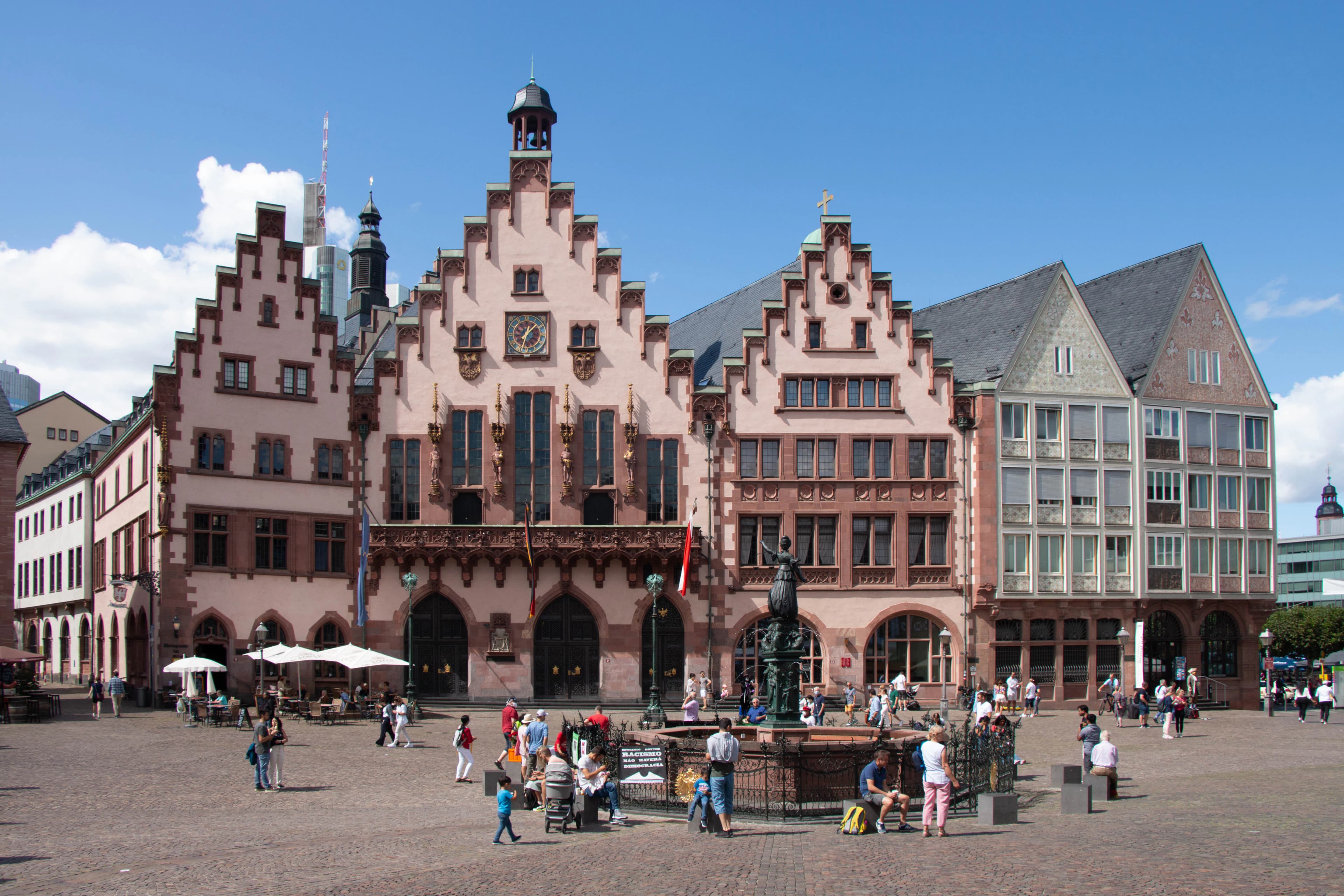
Frankfurt am Main is Germany's financial metropolis and surprises visitors with a fascinating mix of skyscrapers and half-timbered houses, international business activity and cozy apple wine culture. The skyline — unique in Germany — has earned the city the nickname Mainhattan. The Main Tower offers a breathtaking view of the city from 200 meters high, extending to the Taunus. The Museumsufer on the southern bank of the Main brings together 15 museums in a compact area, including the Städel Museum with one of the most significant art collections in Europe, the German Film Museum, and the Museum of Communication. The Paulskirche, the cradle of German democracy, and the Römer with its distinctive stepped gable represent the political history of the city. The new old town between the Römer and the Cathedral was opened in 2018 and connects 35 reconstructed and modern buildings into a charming quarter that revives the historical heart of Frankfurt. The Kleinmarkthalle offers international delicacies and regional specialties over 1,500 square meters. Sachsenhausen on the southern bank of the Main is the heart of Frankfurt's apple wine culture: In traditional taverns, the tart Ebbelwoi is served in a Bembel, accompanied by green sauce with seven herbs and Handkäs with music. The riverside itself is Frankfurt's living room — in summer, locals and visitors gather here for picnics, cycling, and strolling. As an international transport hub and trade fair city, Frankfurt is also an ideal starting point for travels throughout Germany.

SkylineFinanceMuseumsufer

Freiburg im Breisgau

Freiburg im Breisgau, the southernmost major city in Germany, lies at the foot of the Black Forest and is considered the warmest and sunniest city in the country. The Gothic cathedral of Our Lady with its 116-meter-high filigree tower — praised by Jacob Burckhardt as the most beautiful tower in Christendom — overlooks the historic old town, where one of the most beautiful weekly markets in Germany takes place daily. The Freiburg Bächle, narrow water channels from the Middle Ages, run through the old town for a total length of 15.5 kilometers and give the city its unique character. According to legend, anyone who accidentally steps into them must marry a Freiburg resident. The Schwabentor and the Martinstor are the two preserved medieval city gates, while the Fischerau and the Gerberau with their half-timbered houses along canals exude an almost Venetian flair. The Schlossberg, directly adjacent to the old town, offers a wide view over the city to the Vosges mountains after a short climb or a ride on the Schlossbergbahn, and on clear days, even to the Alps. The Vauban district is considered a European showcase project for sustainable living. Freiburg is the gateway to the Black Forest: The Schauinsland (1,284 m) is accessible by cable car, and the Höllental and Ravenna Gorge are right on the doorstep. The Baden cuisine with Flammkuchen, asparagus, and Gutedel wine from the nearby Markgräflerland rounds off the stay.

SchwarzwaldSonneMünster

Freudenstadt

Freudenstadt has the largest marketplace in Germany and is located on a plateau in the Northern Black Forest. The city, planned by Duke Friedrich I in 1599, impresses with its rectangular layout and the imposing marketplace, which is lined with arcades featuring shops and cafes. As a climatic health resort, Freudenstadt offers fresh Black Forest air, scenic hiking trails, and proximity to the Black Forest High Road.

Black ForestMarketplaceSpa
A large body of water with a clock tower in the background

Friedrichshafen

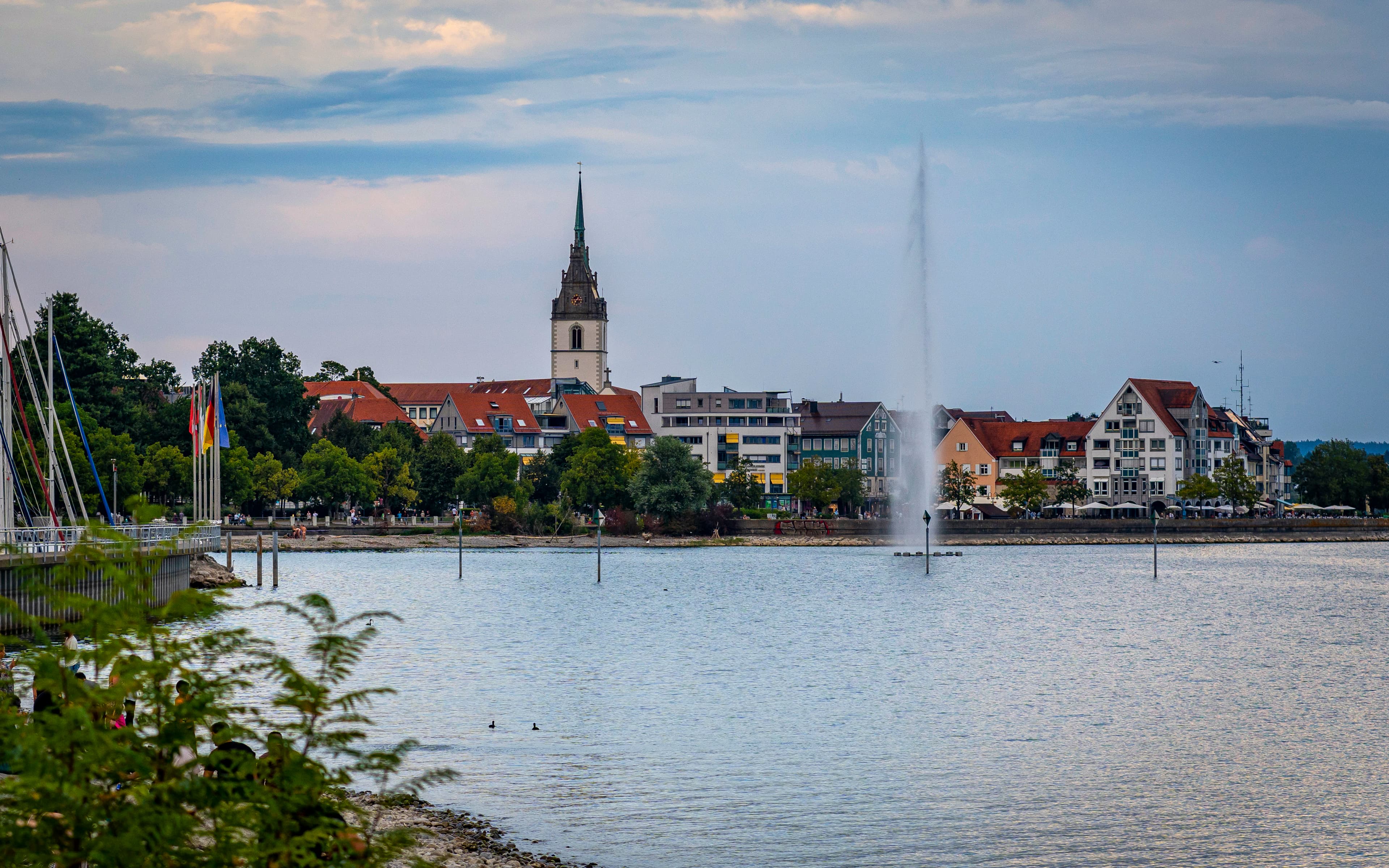
Friedrichshafen on Lake Constance is the city of zeppelins and uniquely combines technical history with lakeside idyll. The world-famous Zeppelin Museum in the former harbor train station houses the largest collection in the world on the history and technology of airship travel, including a walkable partial reconstruction of the Hindenburg. German technology enthusiasts and families come here to float over Lake Constance in the Zeppelin NT - an unforgettable experience that can only be found in Friedrichshafen. The long lakeside promenade with its palm trees and views of the Swiss Alps invites for a stroll, while the city garden with its castle church tower forms the landmark of the city. As the second-largest city on Lake Constance, Friedrichshafen offers good infrastructure with its own airport, exhibition grounds, and a vibrant gastronomy scene.

zeppelintechnologymuseum
A large building with a clock on the front of it

Fuessen

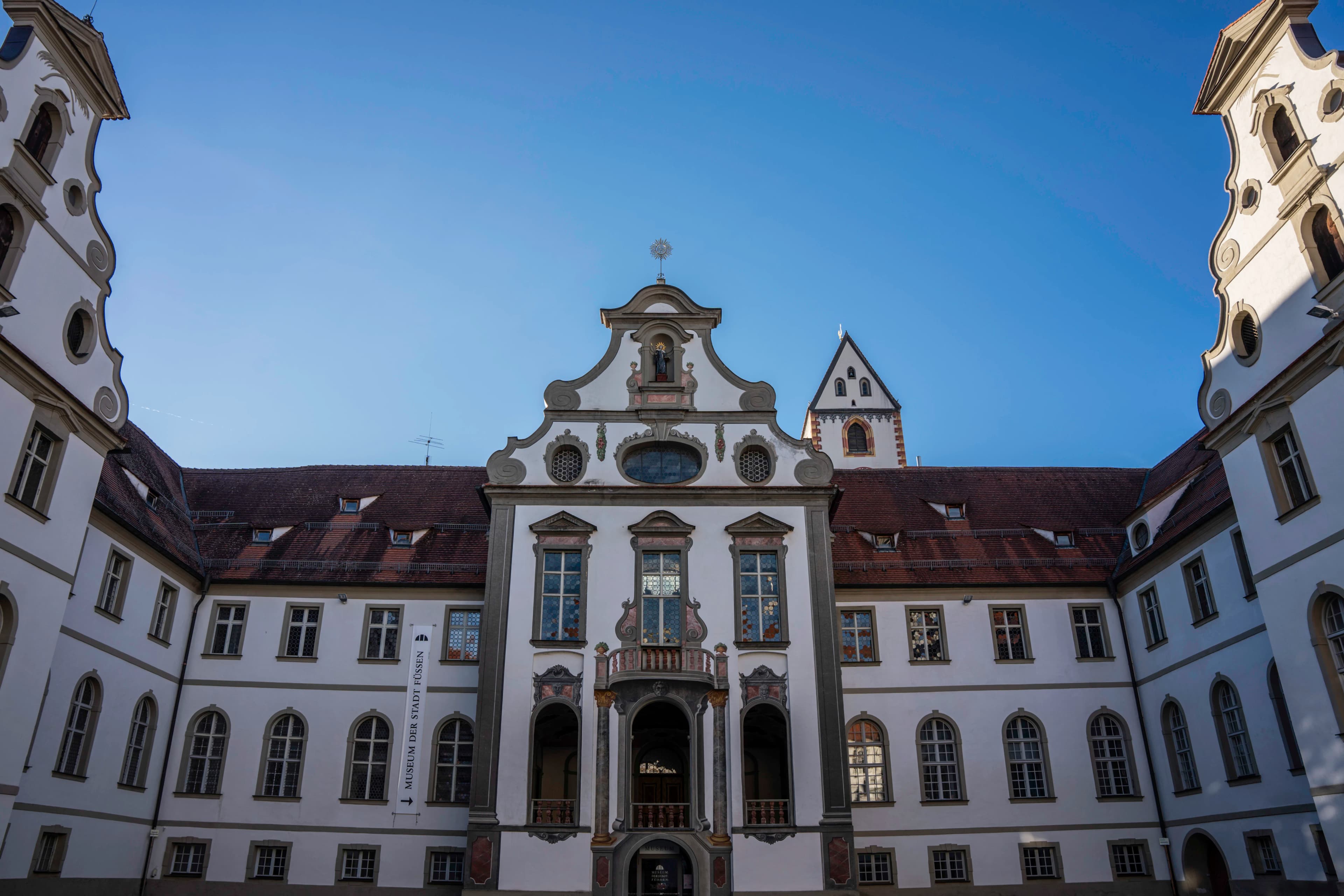
Füssen in the Allgäu is the city of royal castles and the southern end of the Romantic Road — Germany's most famous holiday route, which stretches over 460 kilometers from Würzburg to here. The small town with 15,000 inhabitants is situated at an altitude of 808 meters, surrounded by alpine peaks, turquoise-blue lakes, and dense forests. Neuschwanstein Castle, just four kilometers from Füssen, is the most visited castle in Germany and the inspiration for the Disney castle: King Ludwig II commissioned it in 1869 as a fairy-tale residence in neo-Romanesque style. The splendid rooms with their Wagner scenes, the throne hall, and the singers' hall are of overwhelming splendor. Opposite lies Hohenschwangau Castle, the yellow summer residence of Ludwig II, where he discovered his love for Richard Wagner and German legends. Füssen's old town itself is a gem: The High Castle above the town possesses one of the best-preserved late Gothic illusion paintings in Bavaria — the painted facades deceive the eye with bay windows, windows, and architectural details that do not actually exist. The St. Mang Monastery, founded in the 9th century, houses the oldest Bavarian Dance of Death (1602) and baroque state rooms. The Forggensee near Füssen is the largest reservoir in Germany and offers boat trips in summer with views of the royal castles and the Alps. The Lechfall Gorge on the outskirts, where the Lech cascades through a narrow limestone gorge, is an impressive natural spectacle — accessible via the König-Max Bridge. Füssen also has a significant musical history: The town was the center of lute making in Europe in the 16th century, and the Füssen lute makers laid the foundation for European instrument making.

CastlesNeuschwansteinRomantic Road
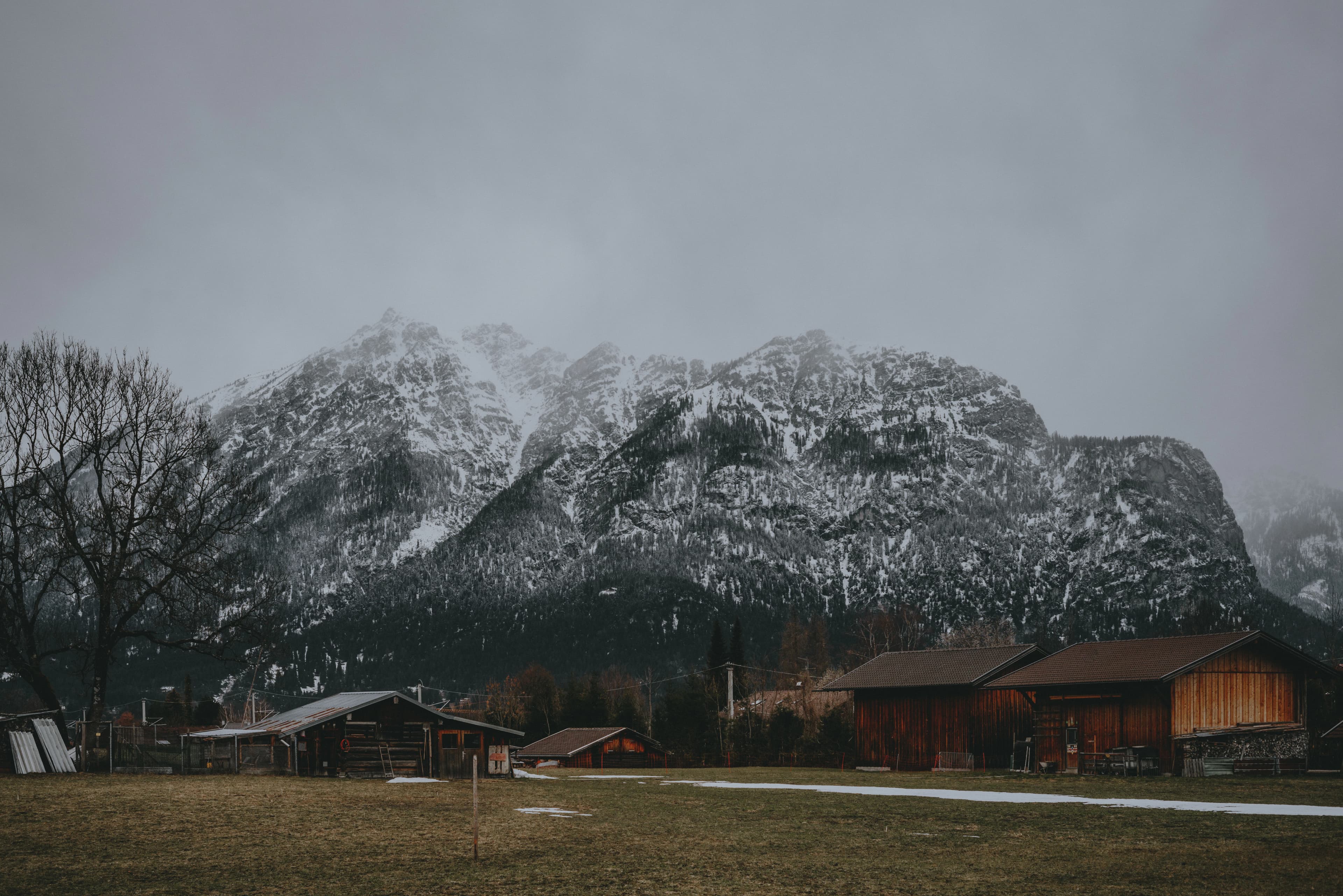
brown wooden houses on green field viewing mountain during daytime

Garmisch-Partenkirchen

Garmisch-Partenkirchen lies at the foot of the Zugspitze (2,962 m), Germany's highest mountain, and is one of the most famous alpine resorts in the world. The double municipality was formed in 1935 from the two towns of Garmisch and Partenkirchen in connection with the 1936 Winter Olympics — the Olympic ski stadium and the historic ski jump still shape the town's image today. The Zugspitze can be reached by cogwheel train (75 minutes from Garmisch) or by cable car from Eibsee. On a clear day, the summit offers a 400-peak panorama over four countries (Germany, Austria, Italy, Switzerland). The cable car ride over the turquoise Eibsee is spectacular in itself. The Partnach Gorge is an impressive natural wonder: Over thousands of years, the Partnach has carved an 80-meter deep and 700-meter long gorge through the rock. In winter, the walls transform into bizarre ice formations. Access is via the Olympic ski stadium, entrance about €5. Garmisch-Partenkirchen is the venue for the traditional New Year's ski jump of the Four Hills Tournament and was the host of the Ski World Championships in 1978 and 2011. The Kandahar descent is one of the most challenging racecourses in alpine ski racing. In summer, over 300 km of marked hiking trails attract visitors, including the King's Way to Linderhof Palace and the Kramer Trail with panoramic views over the Wetterstein mountains.

ZugspitzeAlpsSki

Gengenbach

Gengenbach is one of the best-preserved half-timbered towns in the Black Forest and is often referred to as the most beautiful little town in Baden-Württemberg. The medieval old town with its colorful half-timbered houses, winding alleys, and the imposing town hall served as the backdrop for the film "Charlie and the Chocolate Factory." During Advent, the town hall transforms into the world's largest Advent calendar — a magical spectacle.

Half-timberedOld TownAdvent Calendar

Glücksburg

Glücksburg on the Flensburg Fjord is the northernmost town in Germany and impresses with its fairy-tale water castle, which is considered the cradle of European royal houses. The Baltic Sea spa is located directly at the Danish border and combines Hanseatic elegance with Scandinavian flair. The fjord coast offers sheltered bathing spots, sailing areas, and a view as far as Denmark.

Baltic SeaCastleFlensburger Förde

Gmund am Tegernsee

Gmund on the northern shore of Lake Tegernsee is an elegant town with a village character and home to the world-famous Gmund paper culture. The handmade papers from Gmund are used worldwide for luxury packaging and design projects. The town offers one of the most beautiful views of Lake Tegernsee and the mountain backdrop behind it, and the Mangfall Bridge marks the beginning of the popular Tegernsee circular trail.

Tegernseepaperlake

Goerlitz

Görlitz on the Neisse is Germany's easternmost city and has the best-preserved historical old town in the country — around 4,000 monuments from Gothic, Renaissance, Baroque, Gründerzeit, and Art Nouveau have survived the Second World War almost unscathed. It's no wonder that Hollywood and international film productions have discovered the city as a backdrop: Görlitz is nicknamed Görliwood. Wes Anderson's Grand Budapest Hotel, Quentin Tarantino's Inglourious Basterds, and The Book Thief were filmed here. The Art Nouveau department store at Demianiplatz with its magnificent staircase hall served as the Grand Budapest Hotel and is an architectural gem that can be visited. The old town extends from the Untermarkt with the Schönhof (the oldest Renaissance building in Germany, 1526) over the Obermarkt with the Reichenbacher Tower to the Peterskirche with the legendary Sonnenorgel — a Baroque instrument whose pipes are arranged in a sun shape. The Heilig-Grab-Anlage is a unique late Gothic replica of the holy sites of Jerusalem from the 15th century. Crossing the old town bridge, you can walk to Zgorzelec — the Polish sister city, which was the eastern district of Görlitz until 1945. The German-Polish border running through the city makes Görlitz a fascinating place of European history.

GoerliwoodFilmArt Nouveau

Goslar

Goslar on the northwestern edge of the Harz Mountains is one of the best-preserved medieval towns in Germany and a triple UNESCO World Heritage site: the old town, the Rammelsberg mine, and the Upper Harz water management system are all protected by the World Heritage organization. No other place in Lower Saxony combines so much World Heritage in such a small area. The Kaiserpfalz, built in the 11th century under Heinrich III, is the largest and best-preserved secular building from the Salian period. Over 20 imperial diets convened here, and emperors and kings resided in Goslar — the city was at times the center of the Holy Roman Empire. The monumental historical paintings in the Reichssaal (1879-1897) depict German imperial history over more than 700 square meters. The Rammelsberg mine is the only mine in the world that operated continuously for over 1,000 years (968-1988). Underground, visitors can experience the history of ore mining in original tunnels, from medieval waterwheels to industrial extraction in the 20th century. The old town enchants with over 1,500 half-timbered houses, the marketplace with the carillon at the Kaiserringhaus (which shows scenes from Rammelsberg mining four times daily), the Große Heilige Kreuz (a pilgrim hostel from the 13th century), and the quiet streets of the Frankenberger district. Goslar is also the gateway to the Harz — Germany's northernmost low mountain range with the legendary Brocken (1,141 m) as its highest peak.

UNESCOKaiserpfalzMine

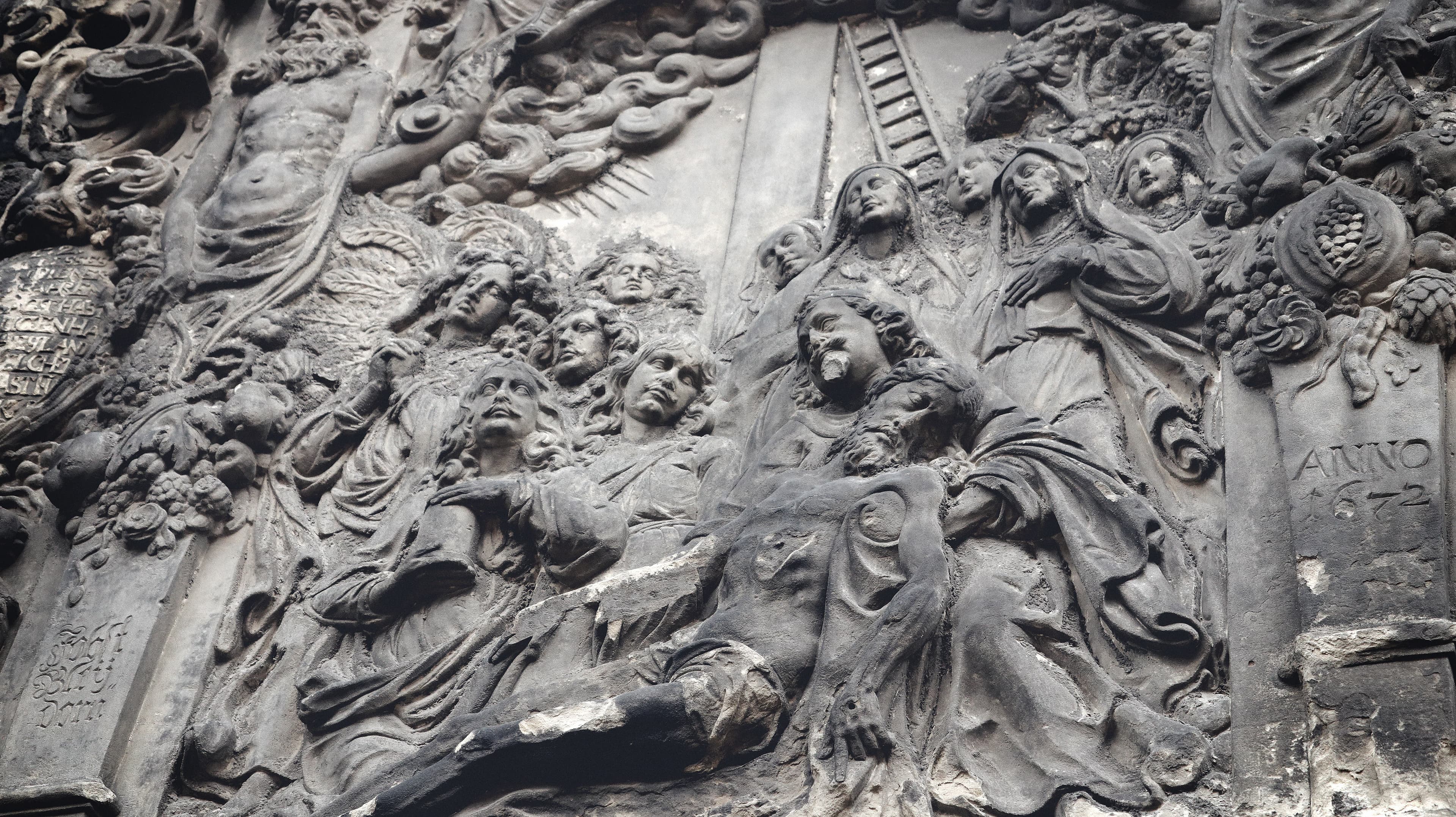
Göttingen

Göttingen is the city of science par excellence — no other German city has produced as many Nobel laureates relative to its size. Over 45 Nobel Prizes are associated with the Georg-August University, including Max Planck (Physics), Werner Heisenberg (Physics), and Max Born (Physics). Founded in 1737, the university continues to shape the city today: about a quarter of the residents are students. The Gänseliesel in the marketplace in front of the Old Town Hall is the most kissed statue in the world — every newly minted doctor of the university climbs the fountain and kisses the goose girl after their promotion. This centuries-old ritual has long become the landmark of Göttingen. The brothers Jacob and Wilhelm Grimm taught in Göttingen and were part of the 'Göttingen Seven' — seven professors who protested against the abolition of the constitution by the King of Hanover in 1837 and were subsequently dismissed from their positions. This act of civil resistance has gone down in history as a milestone in German democracy. The old town of Göttingen is remarkably well preserved: half-timbered houses from the 15th to 18th centuries, narrow alleys, and the four old town churches create a cohesive medieval cityscape. The German Theatre Göttingen is one of the most renowned stages in Lower Saxony. Its location on the western edge of the Harz Mountains and in the Leine Valley makes Göttingen an ideal starting point for hikes: The Hainberg, a nature reserve right by the city, and the nearby Göttingen Forest offer relaxation. The city is centrally located on the north-south axis and is excellently connected in terms of transport.

UniversitätNobelpreisträgerFachwerk
Sculpted relief of figures.

Hannover

Hannover, the capital of Lower Saxony, surprises visitors with a mix of world-famous gardens, a vibrant cultural scene, and a green cityscape. The city was the host of the Expo 2000 and remains one of the most important trade fair locations in the world, but its true gem lies in the Herrenhausen Gardens. The Herrenhausen Gardens are among the most significant Baroque gardens in Europe: The Great Garden, with its geometric hedges, 80 fountains, and the Great Fountain (up to 72 meters high), was designed after the model of Versailles. The Berggarten opposite houses one of the largest orchid collections in Europe and an impressive SEA LIFE aquarium. In summer, the Herrenhausen Festival Weeks take place with fireworks and concerts. The Maschsee is Hannover's artificial lake in the middle of the city: 2.4 km long, ideal for jogging, sailing, pedal boating, and for the Maschsee Festival in summer, one of the largest lake festivals in Germany with over 2 million visitors. The Sprengel Museum is one of the most important museums for 20th and 21st-century art in Germany: works by Picasso, Max Ernst, Nolde, and Niki de Saint Phalle, whose colorful Nanas have become a landmark of Hannover along the banks of the Leine. The Red Thread is a 4.2 km long red line painted on the ground that leads to 36 sights through the city center — a brilliant idea that allows visitors to explore Hannover on their own.

Herrenhaeuser GaertenMaschseeMesse
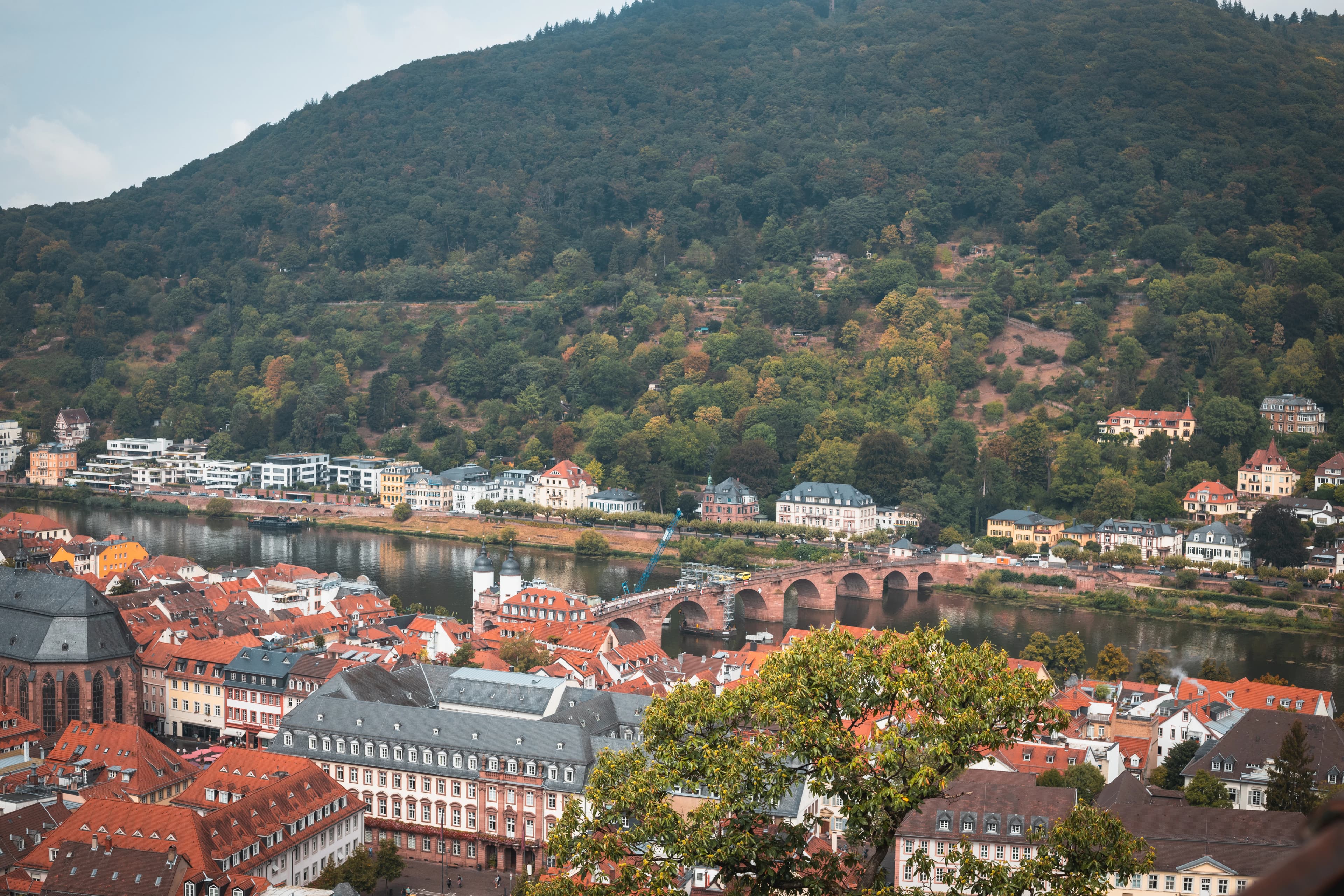
a view of a city with mountains in the background

Heidelberg

Heidelberg is the epitome of German Romanticism and enchants with its majestic castle ruins that tower high above the Neckar and the baroque old town. The city at the confluence of the Neckar and Rhine has inspired poets, painters, and musicians — from Goethe to Mark Twain and the Heidelberg Romantics around Clemens Brentano and Achim von Arnim. The Old Bridge with the Bridge Gate and the Bridge Monkey is one of the most photographed motifs in Southern Germany. The Philosopher's Path on the opposite bank of the Neckar offers a legendary panoramic view over the city, castle, and river valley. The Heidelberg Castle itself houses the Great Barrel — a wine barrel with a capacity of 221,726 liters — and the German Pharmacy Museum. The Ruprecht-Karls-University, founded in 1386, is the oldest university in Germany and shapes the youthful and international flair of the city with around 30,000 students. The student prison, where disobedient students were once locked up, is a popular curiosity with its graffiti walls. The Hauptstraße, one of the longest pedestrian zones in Europe, runs through the old town with its baroque facades, bookstores, and cafes. The Heidelberg Spring is one of the most prestigious music festivals in Germany. The Neckar boat trips, hikes on the Neckarsteig, and the Palatinate cuisine with Pfälzer Saumagen and Handkäse round off the experience of this timelessly beautiful city.

RomanceCastleUniversity

Heiligenhafen

Heiligenhafen is located at the eastern end of the Lübeck Bay and has transformed from a sleepy fishing village into one of the most exciting family holiday destinations on the Baltic Sea with its spectacular experience pier and newly designed inland lake. The town offers a unique mix of traditional harbor charm, modern leisure attractions, and one of Germany's windiest beaches, attracting kite surfers from all over Europe. The experience pier is the landmark of Heiligenhafen and one of the boldest architectural projects on the German coast. It extends 400 meters into the Baltic Sea and ends in a curved platform that seems to hover over the sea like a futuristic ship. From here, there is a breathtaking 360-degree view over the bay, the island of Fehmarn, and, on clear days, all the way to Denmark. The glass floor in some places adds thrill right above the waves. The inland lake has been elaborately transformed into a modern recreational area. Beach bar atmosphere, beach volleyball courts, water playgrounds, and a promenade connect the harbor with the open sea. The pier and the inland lake together form an ensemble that is unique in its modernity and design quality on the Baltic Sea. The nature reserve Graswarder, a foreland peninsula, is a paradise for bird watchers. Thousands of sea and water birds breed here in an untouched dune landscape. Guided walks bring visitors close to oystercatchers, terns, and avocets. The fishing harbor with its colorful boats and fresh fish straight from the boat gives Heiligenhafen an authentic maritime flair. From Hamburg, Heiligenhafen can be reached in just under two hours via the A1 towards Fehmarn. The town is also an ideal starting point for a day trip to Fehmarn, which is only 15 minutes away via the Fehmarn Sound Bridge.

Baltic SeaPierKite surfing

Hinterzarten

Hinterzarten is one of the oldest and most elegant spa resorts in the Hochschwarzwald and is world-famous as the home of the legendary ski jumping dynasty Schmid. The Adler ski jump attracts thousands of spectators every summer during the FIS Grand Prix. The health resort impresses with a unique mix of high moor nature reserve, cross-country skiing trails, and well-maintained Black Forest architecture. The luxurious Parkhotel Adler is an institution in German hospitality.

SchwarzwaldSki JumpingSpa
people walking on gray concrete pathway near brown concrete building during daytime

Husum

Husum is the district town of North Frisia on the Schleswig-Holstein North Sea coast and carries the literary nickname "the gray town by the sea" — after the poem of the same name by the city's most famous son, Theodor Storm (1817-1888). However, Husum is only gray in the autumn storm: In spring, four million crocuses transform the castle park into a violet sea of flowers. The crocus bloom in the Husum castle park is a natural spectacle of European significance: Between mid-March and early April, millions of wild crocuses bloom on the park meadows around the castle in Husum — the largest wild crocus bloom in Central Europe. The origin likely lies in plantings by monks in the 15th century. The Husum harbor is the heart of the city: Right in the city center, fishing boats and ships are located, the harbor street offers fish restaurants and cafes, and during storm surges, the water rises to the house walls — a spectacle that the people of Husum take calmly. The Theodor Storm House, the poet's residence, has been preserved as a museum and showcases the writer's world, who created The Rider on the White Horse, Immensee, and countless novellas. The Storm Days in September are a literary festival. From Husum, one can reach the Halligen, the island of Pellworm, and the Schleswig-Holstein Wadden Sea National Park (UNESCO World Heritage). Mudflat hiking, crab fishing, and excursions to the Halligen Hooge and Langeness are among the unforgettable experiences.

North SeaCrocus BloomStorm

Immenstaad am Bodensee

Immenstaad am Bodensee is a tranquil wine and fruit village on the northern shore of the lake between Friedrichshafen and Meersburg. The village is one of the few places where you can walk directly along Lake Constance through vineyards and orchards. The lakeside promenade with a historic Torkel (wine press), beach resort, and marina combines lake enjoyment with wine culture. Immenstaad is the perfect place for a peaceful Lake Constance holiday away from mass tourism.

Lake ConstanceWineFruit

Inzell

Inzell in Chiemgau is world-renowned as a speed skating stronghold — the Max Aicher Arena is one of the most modern ice rinks in the world and a venue for World Cups and World Championships. Away from ice sports, the spa town delights with its location between the Chiemgau Alps and the romantic Frillensee, the coldest lake in Germany. The mountain village flair and the numerous alpine huts make Inzell an authentic Chiemgau experience.

Chiemgauspeed skatingmountain lake

Kappeln

Kappeln on the Schlei is a picturesque fishing town between Schleswig and Flensburg and the unofficial capital of the Schlei region. The historic old town with the herring fence — the last one in Europe — and the lively harbor exudes maritime flair. The Schlei, a 42 km long Baltic Sea fjord, offers sailing, fishing, and nature experiences. Kappeln also became famous as the filming location for the ARD series "Der Landarzt."

Schleifishing villageherring fence
A beautiful palace and green fields under a blue sky.

Karlsruhe

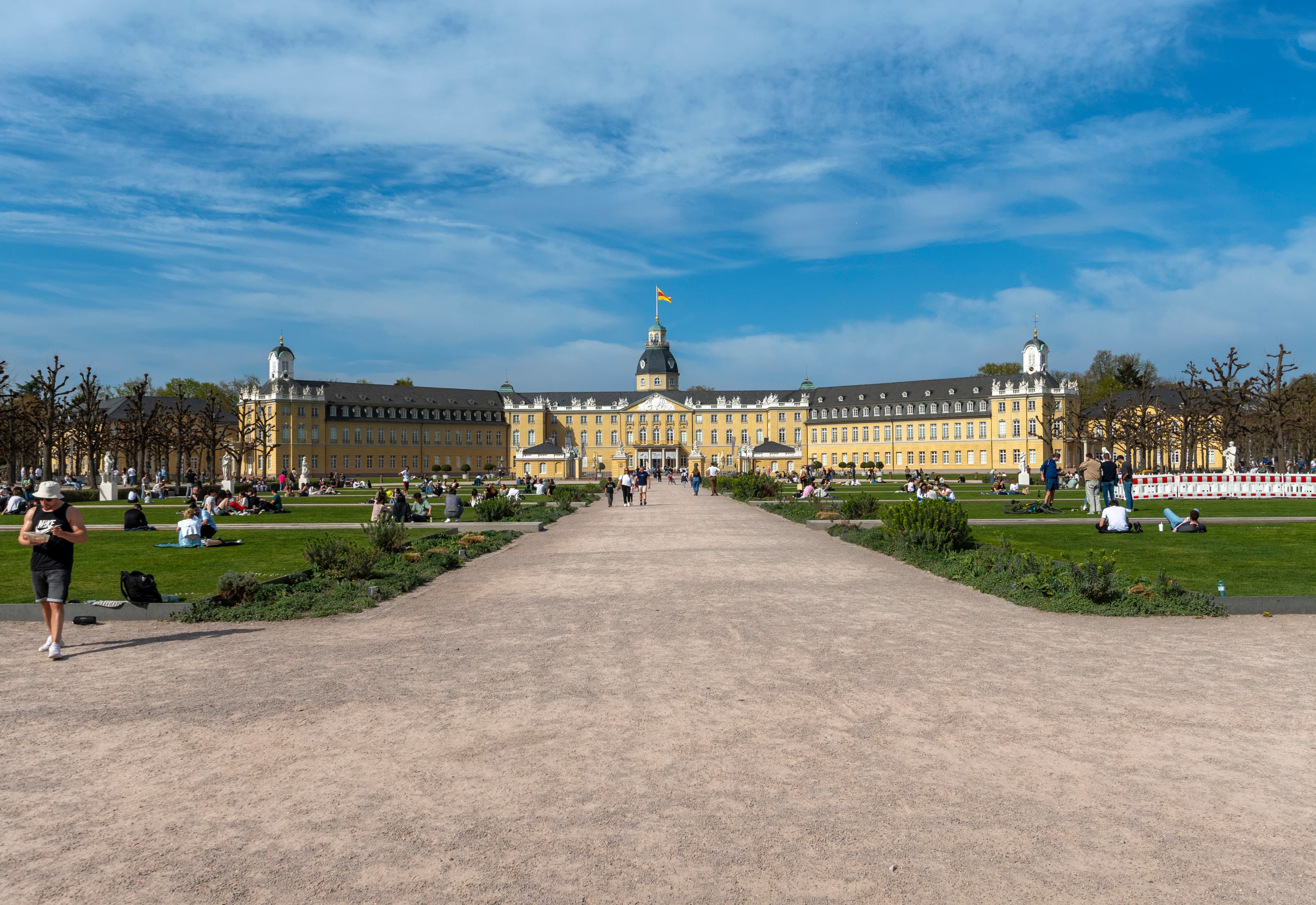
Karlsruhe is the only large German city that was completely planned from scratch. Margrave Karl Wilhelm of Baden-Durlach founded it in 1715 and designed the layout like a fan: 32 streets radiate from the castle tower like sun rays — hence the nickname "Fan City". This unique city plan is still impressively visible from the air today. The Karlsruhe Palace, the starting point of the fan, houses the Badisches Landesmuseum with collections from prehistory to the present. The expansive palace garden behind it is one of the most beautiful urban parks in Germany and invites visitors to stroll year-round. Karlsruhe is home to the Federal Constitutional Court and the Federal Court of Justice — the "Residence of Law". The building of the Constitutional Court at Schlossplatz is architecturally striking and symbolizes the supporting pillars of German democracy. The ZKM (Center for Art and Media) in a former munitions factory is one of the world's most important museums for digital art and media technology. Interactive installations, AI art, and media sculptures make the ZKM an experience far beyond traditional museums. Right next door is the Municipal Gallery with significant art from the 19th to 21st centuries. The Turmberg in Durlach, accessible by funicular railway, offers the best panoramic view over the Upper Rhine Valley to the Vosges. Karlsruhe's location at the edge of the Black Forest and its proximity to the Palatinate and Alsace make it an ideal starting point for excursions.

FaecherstadtZKMBundesverfassungsgericht

Kassel

Kassel in North Hesse is the city of documenta and the Brothers Grimm — a unique combination of world art and fairy tale culture. Every five years, documenta, the world's most significant exhibition of contemporary art, transforms the entire city into a giant open-air museum. The Bergpark Wilhelmshöhe has been a UNESCO World Heritage Site since 2013 and is the largest hillside park in Europe: The complex extends over 240 hectares from Schloss Wilhelmshöhe up to Herkules, Kassel's landmark. The 70-meter-high Herkules statue on a pyramid sits atop the Karlsberg. Every Wednesday and Sunday in summer, the famous water features cascade down the mountain — from Herkules through cascades and aqueducts to the Great Fountain, which shoots 50 meters into the air. This water spectacle from the 18th century still operates today without pumps, solely by gravity. Schloss Wilhelmshöhe houses one of the most important Rembrandt collections in the world and the antiquities collection with paintings by Rubens, Cranach, and Altdorfer. The Brothers Grimm lived and worked in Kassel, where they collected their world-famous fairy tales. The GRIMMWELT on the Weinberg is an interactive museum that presents the fairy tales and the life’s work of the Brothers in a modern and fascinating way — including the German Dictionary, their greatest scientific work. The Karlsaü, a baroque park along the Fulda, is Kassel's green lung and the most important documenta location: Here, permanent art installations stand alongside historical garden architecture.

documentaGrimmBergpark

Kiel

Kiel, the state capital of Schleswig-Holstein, is a port city on the Baltic Sea, inextricably linked to the sea. The Kiel Fjord, a 17 km long natural arm of the sea, runs through the city and makes Kiel one of the most maritime cities in Germany. The Kiel Week is the largest sailing event in the world and also the largest folk festival in Northern Europe: Every last week of June, over 3 million visitors come to experience sailing regattas, live music, international street food, and the tall ship parade on the fjord. The atmosphere is unique — the entire city transforms into a festival ground. The Kiel Canal (NOK) is the most frequented artificial waterway in the world: At the Holtenau lock, visitors can watch huge container ships, cruise liners, and tankers up close as they traverse the 98 km long passage between the North Sea and the Baltic Sea. A free spectacle for ship enthusiasts. The German submarine museum U-995 in Labö, 15 km north of Kiel, is a walk-through submarine from World War II. Right next to it stands the Marine Memorial, an 85-meter high tower with panoramic views over the Kiel Bay. The Kiellinie, Kiel's waterfront promenade, stretches 3.5 km along the water, passing sailing clubs, the GEOMAR aquarium, and the ferry terminals. Ferries to Scandinavia depart from here — Kiel is Germany's most important ferry port to Norway and Sweden.

Kieler WocheSailingBaltic Sea
green trees and city buildings under white clouds during daytime

Koblenz

Koblenz is located at one of the most spectacular river confluences in Germany: the junction of the Rhine and Moselle at the famous Deutsches Eck. Here, where the monumental Kaiser Wilhelm Monument crowns the headland, two of the most important European rivers meet. The city, over 2,000 years old — founded by the Romans as 'Conflüntes' (confluence) — is the gateway to the UNESCO World Heritage Site Upper Middle Rhine Valley. The Ehrenbreitstein Fortress on the opposite side of the Rhine is the second largest preserved fortress in Europe after Gibraltar. You can glide up over the Rhine in just a few minutes via cable car — the view of the river mouth, the old town, and the Rhine Valley is breathtaking. The fortress houses the Landesmuseum Koblenz and regularly hosts open-air events. The Upper Middle Rhine Valley between Koblenz and Bingen has been a UNESCO World Heritage Site since 2002: steep vineyard terraces, over 40 castles and castle ruins within just 65 kilometers, the Loreley, and picturesque wine towns like Bacharach and Oberwesel form one of the most romantic cultural landscapes in Europe. Rhine boat trips from Koblenz reveal this panorama from the water. The Koblenz old town, with its half-timbered houses, the Plan with the historical columns, the Liebfrauenkirche, and the Jesuitenplatz, offers pure Rhineland lifestyle. The Schoppenstube (wine tavern) is just as much a part of the cityscape as the Rhine terraces along the promenade. The Deutsches Eck is simultaneously a memorial of German division and reunification.

Deutsches EckRhineMoselle
Signpost indicates direction and distance to nearby locations.

Kochel am See

Kochel am See is located at the foot of the Bavarian Pre-Alps between Kochelsee and Walchensee — two of the most beautiful lakes in Upper Bavaria. The town is home to the Franz Marc Museum, dedicated to the famous expressionist and co-founder of the Blue Rider. The Walchensee, with its Caribbean turquoise water, is one of the deepest and clearest lakes in Germany. The Herzogstand cable car offers a grand panorama over both lakes.

WalchenseeKochelseeBlue Rider
brown wooden dock on body of water during daytime

Cologne

Cologne, the 2,000-year-old metropolis on the Rhine, pulses with Rhineland cheerfulness, cultural diversity, and the unmistakable Cologne way of life. The Cologne Cathedral, at 157 meters the second tallest church in Germany and a UNESCO World Heritage site since 1996, is the city's landmark: 533 steps lead up to the south tower, from where a magnificent view of the Rhine metropolis can be enjoyed. The Shrine of the Three Kings inside is the largest golden reliquary in the West. The Roman-Germanic Museum right next to the cathedral showcases the famous Dionysus mosaic from the 3rd century, discovered during the construction of the subway. The Museum Ludwig houses one of the most significant collections of modern art in Europe, featuring works by Warhol, Lichtenstein, and Picasso. The Cologne Old Town along the Rhine with its colorful breweries, the historic fish market, and Heumarkt is the social heart of the city. The Cologne Carnival, the fifth season, transforms the city in February into a six-day state of emergency with the Rose Monday parade, costumes, and streams of Kölsch. But even outside the carnival season, Cologne is a lively metropolis: The Belgian Quarter and Ehrenfeld offer trendy cafes, boutiques, and street art. The Cologne brewery culture with its Kölsch — the only beer served in special 0.2-liter glasses — is a UNESCO World Heritage candidate. Früh am Dom, Peters Brauhaus, and Päffgen are institutions. The Hohenzollern Bridge with its thousands of love locks and the Rhine Boulevard offer Rhine romance at sunset.

Cologne CathedralCarnivalRhine
Waterfront view of a town under a blue sky.

Konstanz

Konstanz on Lake Constance is the largest city on Germany's largest lake and the only major German city south of the Rhine — the border with Switzerland runs right through the city. The historic old town was spared from bombing during World War II thanks to its proximity to neutral Switzerland and showcases a cohesive medieval urban landscape with beautifully painted merchant houses, narrow alleys, and the imposing Cathedral of Our Lady. The Council Building at the harbor, where the only conclave on German soil took place from 1414 to 1418 and Pope Martin V was elected, is a landmark of the city's history. In front of it spins the Imperia, a nine-meter-high statue by Peter Lenk, which satirically references the council and has become the most photographed motif in the city. The Niederburg, the oldest district, enchants with its winding alleys and the Romanesque Trinity Church. Mainau Island, the flower island in Lake Constance, is just a few kilometers to the north and delights with Mediterranean vegetation, a Baroque palace, and a butterfly house. The ferry to Meersburg takes just a few minutes to reach the picturesque wine town with Germany's oldest inhabited castle. Konstanz is an ideal starting point for boat tours on Lake Constance, excursions to Lindau, Bregenz, and the pile dwelling settlement in Unteruhldingen (UNESCO World Heritage). The university gives the city a youthful, cosmopolitan flair with a lively pub and cultural scene.

BodenseeOld TownMainau

Kühlungsborn

Kühlungsborn is the largest seaside resort along the entire German Baltic coast, with a beach length of six kilometers, and is one of the most popular holiday destinations in Mecklenburg-Vorpommern. The Baltic seaside resort impresses with its perfect mix of historic spa architecture, wide sandy beaches, and a lively yet not overwhelming tourist infrastructure. The three districts East, Center, and West each offer their own character – from sophisticated to family-friendly. The highlight of the place is the nearly four-kilometer-long beach promenade, which is considered one of the most beautiful along the German Baltic Sea. Lined with restaurants, cafés, and shops, it invites visitors to stroll, while behind the dunes, the wide sandy beach beckons for swimming and relaxation. The 240-meter-long pier extends into the Baltic Sea and serves as a docking station for excursion boats to Warnemünde and the Wustrow peninsula. In summer, a colorful event program regularly takes place on the pier. An absolute highlight is the spa train "Molli," a historic steam locomotive that has been connecting Kühlungsborn with Bad Doberan since 1886. The 15-kilometer route runs through the Mecklenburg landscape and right through the streets of Bad Doberan – a unique experience. From Bad Doberan, a detour to the famous Doberaner Münster, one of the most significant brick churches in Northern Germany, is worthwhile. In recent years, Kühlungsborn has established itself as a year-round holiday destination, with wellness hotels, a marina, and numerous events even in the off-season.

Baltic SeaBäderbahn MolliBeach
aerial view of green field during daytime

Laboe

Laboe is a Baltic Sea resort on the Kiel Fjord in Schleswig-Holstein, about 15 kilometers north of Kiel. The small town with its wide sandy beach, the distinctive Marine Memorial, and the submarine U-995 is one of the most popular excursion destinations on the Schleswig-Holstein Baltic Sea coast. The Marine Memorial is the landmark of Laboe: The 85-meter high tower was built in 1936 as a memorial for the naval personnel who fell in World War I and later expanded to a memorial for all who fell at sea in both world wars. The observation platform offers a breathtaking panoramic view over the Kiel Fjord, the Baltic Sea, and on clear days as far as Denmark. At the foot of the memorial lies the submarine U-995 — one of the last original preserved German submarines of type VII C/41 from World War II. Visitors can climb through the cramped spaces and experience the claustrophobic conditions aboard a World War submarine firsthand. The Laboe beach stretches over several hundred meters of fine sand with beach chairs, a pier, and shallow water, ideal for families. The beach promenade offers cafes, ice cream parlors, and the typical Baltic Sea charm. With the ferry line Kiel-Laboe, the town can be comfortably reached by ship over the Kiel Fjord — passing by cruise ships and naval ports. The annual Laboe Harbor Festival and Kiel Week (25 fjord minutes away) are maritime highlights.

Baltic SeaMarineSubmarine
beige and brown concrete building under blue sky during daytime

Leipzig

Leipzig, the largest city in Saxony, has developed into the most creative and dynamic metropolis in East Germany in recent years. As the city of the Peaceful Revolution of 1989, when hundreds of thousands took to the streets from St. Nicholas Church with the call 'We are the people', Leipzig carries a special historical heritage. The St. Nicholas Church and the Monday demonstrations were the starting point for the fall of the Wall. The Völkerschlachtdenkmal, at 91 meters one of the largest monuments in Europe, commemorates the decisive battle against Napoleon in 1813 and offers a wide view of the city from its observation platform. The Gewandhaus, home to one of the oldest and most renowned symphony orchestras in the world, and St. Thomas Church, where Johann Sebastian Bach served as cantor for 27 years and is buried, make Leipzig a world-class music city. The Thomanerchor has existed for over 800 years. The Südvorstadt and the Plagwitz district with the Baumwollspinnerei — a former industrial area that now houses galleries, studios, and the seed of the New Leipzig School (Neo Rauch) — are the vibrant heart of the young creative scene. Auerbach's Keller, the setting for a scene from Goethe's Faust, is one of the oldest restaurants in Germany. The Mädler Passage, the Old Town Hall at the market, and the Leipzig Zoo with its tropical hall Gondwanaland complement the diverse cityscape. The Leipzig lakes, former open-pit mines, offer water sports just outside the city gates.

MusicArtHistory
green lake surrounded by green mountains during daytime

Lenggries

Lenggries is the heart of the Isarwinkel — one of the most beautiful pre-Alpine regions in Bavaria — and combines alpine flair with family-friendly relaxation. The spa town on the upper reaches of the Isar is situated between the distinctive peaks of Brauneck (1,556 m) and Benediktenwand (1,801 m) and offers an attractive year-round program for outdoor enthusiasts. Brauneck is the local mountain of Lenggries and one of the most popular ski areas in Upper Bavaria: The cable car takes winter sports enthusiasts up to 1,500 meters, where 34 kilometers of slopes and 17 lifts await. In summer, Brauneck transforms into a hiking and paragliding paradise — the thermals on the southern slope make it one of the best launch sites for paragliders in all of Germany. The Isar flows here as a wild, untamed mountain river through a wide gravel bed — a natural experience that is unparalleled in Germany. Wild river rafting, canoeing, and the famous Isar log rafting offer adventures on the water, while the gravel banks are among the most beautiful barbecue spots and swimming areas in the region. The Sylvenstein reservoir — just 20 minutes to the south — impresses with its emerald green water against an alpine backdrop. The bridge over the reservoir is one of the most photographed motifs in Upper Bavaria, and the former village of Fall, which was flooded during the construction of the dam, eerily reappears at low water levels.

SkiingParaglidingIsar
a light house sitting in the middle of a body of water

Lindau

Lindau on Lake Constance is one of the most picturesque small towns in Germany: The historic old town is located on an island in the eastern Lake Constance, connected to the mainland by a railway bridge and a road bridge. Three countries meet here — Germany, Austria, and Switzerland are accessible by ship, bike, or train. The harbor entrance of Lindau is the most photographed motif on Lake Constance: The six-meter-high Bavarian Lion and the 33-meter-high New Lighthouse flank the entrance and create an unforgettable backdrop with the Alpine panorama in the background. From the lighthouse, you have the best 360-degree view over the lake and the mountains. The old town is a labyrinth of medieval alleys, half-timbered houses, and beautifully painted patrician houses. The Old Town Hall from 1436 with its elaborately painted facade shows scenes from the Reichstag of 1496, when Emperor Maximilian I held sessions here. The Mangturm, the former lighthouse from the 12th century, and St. Peter's Church with its frescoes by Hans Holbein the Younger are other highlights. Lindau is the starting point for Lake Constance shipping: Ferries and excursion boats connect the islands of Mainau and Reichenau, Constance, Bregenz, and Rorschach. The Lake Constance bike path (270 km around the lake) runs directly through Lindau. The Nobel Prize Laureate Meetings in Lindau have been held annually since 1951: Dozens of Nobel laureates meet here with young scientists — a unique format that has made Lindau internationally famous.

Lake Constanceislandold town
A yellow van parked in front of a building

Lübeck

Lübeck was once the powerful queen of the Hanse and still impresses today with one of the best-preserved medieval old towns in Northern Europe. The entire old town island, surrounded by the Trave and the Elbe-Lübeck Canal, has been a UNESCO World Heritage Site since 1987. The iconic Holstentor, a landmark of the city and one of the most famous city gates in Germany, has welcomed visitors since 1478. Seven Gothic brick churches shape the majestic silhouette of the Hanseatic city. The St. Mary's Church, with the highest brick vault in the world, served as a model for over 70 churches in the Baltic Sea region. In the cobbled streets, the famous alleys and courtyards hide — once residential quarters for the poorer population, today idyllic oases of tranquility. Lübeck is the city of Nobel Prize winners in literature: Thomas Mann and Willy Brandt were born here, and Günter Grass lived and worked in the Hanseatic city. The Buddenbrook House, the Günter Grass House, and the Willy Brandt House offer deep insights into the lives and works of these personalities. Niederegger marzipan is world-famous and has been produced in Lübeck since 1806 — the main house at the market with its marzipan salon is a must-visit. The banks of the Trave invite for walks, and excursion boats travel to Travemünde on the Baltic Sea. With its rich cultural heritage, North German flair, and culinary delights, Lübeck is a gem on the Baltic Sea.

HanseWorld HeritageMarzipan
Historic buildings line a river with a bridge in foreground

Lueneburg

Lüneburg is the charming salt city on the Ilmenau and the southern gateway to the Lüneburg Heath — one of the most beautiful natural landscapes in Northern Germany. For over 1,000 years, salt was Lüneburg's most important raw material: The saltworks was one of the largest and oldest in Europe and made the city fabulously wealthy in the Middle Ages. This wealth is still visible today in the magnificent patrician houses, churches, and squares. The landmark of the salt history is the leaning houses: The centuries-long salt extraction beneath the city caused the ground to sink, resulting in entire streets tilting. Particularly impressive is the house at Am Sande 1, which leans dramatically to the side. The Kalkberg, once a whole hill with a castle, has been reduced to a small remnant due to gypsum extraction — a walkable viewpoint. The historic Stintmarkt on the banks of the Ilmenau is Lüneburg's social center: pubs, restaurants, and beer gardens line up under old chestnut trees by the water — named after the stint, a small fish that was traded here in the past. The atmosphere is reminiscent of southern European harbor districts. Leuphana University, with over 9,000 students, shapes the youthful, vibrant flair of the city. The central building of the university, designed by Daniel Libeskind (2017), is an architectural exclamation mark. Lüneburg is a starting point for hikes and bike tours into the Lüneburg Heath, which is bathed in a sea of purple heather blooms in August and September — an unparalleled natural spectacle.

Salt CityHeathHalf-timbered
A metal truss bridge over water with reeds.

Magdeburg

Magdeburg, the state capital of Saxony-Anhalt, is a city of contrasts: medieval sacred architecture meets Hundertwasser architecture, and the history of Otto the Great intertwines with GDR prefabricated buildings and modern science. Located on the banks of the Elbe, Magdeburg has developed a completely new face after severe war destruction. The Magdeburg Cathedral is the city's landmark and the oldest Gothic church building on German soil — begun in 1209, completed only in 1520. Here lies Otto the Great, the first emperor of the Holy Roman Empire. The 97-meter high towers dominate the Elbsilhoütte and are visible from afar. Friedensreich Hundertwasser's last architectural work stands in Magdeburg: The Green Citadel, opened in 2005, is a brightly colored, organically shaped residential and commercial building with a green roof, uneven windows, and tree-covered terraces in the city center. Tours also showcase the courtyard and rooftop garden. Otto von Guericke, Magdeburg's most famous son, demonstrated the power of vacuum in 1657 with his Magdeburg hemispheres in front of the Reichstag in Regensburg — 16 horses could not pull apart the vacuum-pumped hemispheres. His monument stands in front of the town hall, and the technology museum commemorates his groundbreaking experiments. The Elbe shapes the cityscape: The Elbaünpark with the Millennium Tower (the tallest wooden structure in Germany, 60 m) offers an interactive science museum covering 6,000 years of human history. The Magdeburg Waterway Junction, where the Mittelland Canal crosses the Elbe via a trough bridge, is an engineering marvel.

CathedralHundertwasserOtto the Great

Mainz

Mainz, the state capital of Rhineland-Palatinate, is the city where Johannes Gutenberg invented movable type printing around 1450, triggering a media revolution that changed the world. Today, Mainz is a media city (headquarters of ZDF), a wine city, and one of the carnival strongholds of Germany. The Gutenberg Museum at Liebfrauenplatz is one of the oldest printing museums in the world and houses two of the 49 remaining Gutenberg Bibles — the so-called 42-line Bibles, considered the most beautiful printed books in history. In the printing workshop, visitors can work on a historical printing press themselves. The Mainz Cathedral of St. Martin is one of the three great Romanesque imperial cathedrals on the Rhine, alongside those in Worms and Speyer. Over 1,000 years old, it combines Romanesque, Gothic, and Baroque elements and towers over the entire old town with its west tower. The Mainz Fastnacht (not Carnival!) is legendary: The Rosenmontag parade is one of the largest in Germany, and the sessions with political cabaret in the Rheingoldhalle are broadcast live on television. The fifth season begins on November 11 and reaches its peak in the week before Ash Wednesday. Mainz is the wine capital: Located directly on the Rhine, surrounded by Rheinhessen, the largest wine-growing region in Germany, the Mainz Wine Market presents over 100 wines from local winemakers at the riverside at the end of August.

GutenbergWineFastnacht

Malente

Bad Malente-Gremsmühlen is the heart of the Holstein Switzerland and a state-recognized spa in the midst of a picturesque lake landscape. The Kellersee, Dieksee, and Ukleisee surround the town and together form a water paradise. The famous 5-Lake Tour connects several lakes by boat and offers idyllic views of the hilly landscape. Malente is quiet, nature-oriented, and the perfect place for relaxation away from mass tourism.

Holstein SwitzerlandLakesBoating
A moving tram with red and white stripes

Mannheim

Mannheim is the square city — the only German city whose downtown is organized not by street names, but by a coordinate system of letters and numbers. Instead of 'Hauptstraße 12', it is 'L 15, 1' here. This grid system dates back to the city's founding as a fortress in the 17th century and is initially confusing, but surprisingly practical. The Mannheim Baroque Palace is the second largest Baroque palace in Europe after Versailles, with a facade length of about 440 meters. It now houses the University of Mannheim and is partially accessible as a museum. The palace church and the state rooms showcase the former splendor of the Electors of the Palatinate. The Technoseum (formerly the State Museum for Technology and Work) is one of the major technology museums in Germany: on 9,000 m², industrial history, natural sciences, and technology are interactively experienced — from the steam engine to robotics. Ideal for families with children. Mannheim is a city of inventions: Karl Drais invented the draisine (precursor of the bicycle) here in 1817, Carl Benz built the world's first automobile in 1886, and Werner von Siemens presented the first electric elevator. The Benz Patent Motorwagen Route traces this history. Luisenpark, one of the most beautiful city parks in Germany, offers a Chinese garden, gondolettas on the lake, a butterfly house, and in summer, open-air concerts on the lakeside stage across its 42 hectares. The Planken, Mannheim's pedestrian zone, and the Jungbusch district as a creative scene quarter complete the cityscape.

Square CityBaroque PalaceTechnoseum

Marburg

Marburg an der Lahn is one of the most fairy-tale-like small towns in Germany — a medieval university town that winds steeply up a castle hill, where the legacy of the Brothers Grimm is ever-present. Jacob and Wilhelm Grimm studied here from 1802 to 1806, and the enchanted alleys and half-timbered houses are said to have inspired them for their fairy tales. The Landgrafenschloss majestically overlooks the town from the 287-meter-high Schlossberg and is one of the earliest Gothic secular buildings in Germany. The knights' hall from the 13th century with its open roof structure is an architectural masterpiece. The castle park offers a breathtaking view over the old town and the Lahn valley. The Elisabethkirche (1235-1283) is the oldest purely Gothic church in Germany and one of the most significant pilgrimage sites of the Middle Ages. It was built over the grave of Saint Elisabeth of Thuringia, who founded a hospital in Marburg and died at the age of just 24. Her golden shrine is a masterpiece of medieval goldsmithing. The upper town with its approximately 400 half-timbered houses, steep stairs, and winding alleys is almost car-free. The Philipps-Universität (founded in 1527 as the first Protestant university in the world) shapes the youthful, vibrant atmosphere of the city with over 25,000 students. Every fourth resident is a student — resulting in one of the highest student densities in Germany.

Fairy TaleGrimmUniversity

Marquartstein

Marquartstein in the Achental is a quiet Chiemgau village at the foot of the Hochplatte and a popular launch site for paragliders. The 1,100 m long summer toboggan run, the medieval Marquartstein Castle, and the proximity to Lake Chiemsee make the village a versatile family destination. The Achental offers wonderful hiking trails between gentle alpine meadows and rugged peaks, and the famous Kampenwand is just a short drive away.

ChiemgauParaglidingSummer Tobogganing
brown ceramic bowls on white and blue checkered table

Meersburg

Meersburg on Lake Constance is a medieval gem that, with the oldest inhabited castle in Germany and a dreamlike lakeside location, ranks among the most picturesque towns in southern Germany. The Old Castle has stood on the rock above the lake for over a thousand years and once housed the poet Annette von Droste-Hülshoff, whose study can still be visited today. German vacationers love the steep descent through the winding half-timbered alleys of the upper town down to the lakeside promenade, where excursion boats depart for Constance, Mainau Island, and the flower island of Reichenau. The baroque New Castle with its splendid halls and terrace offers one of the most beautiful panoramic views over Lake Constance to the snow-covered Alpine peaks. The vineyards around Meersburg produce excellent Müller-Thurgau and Spätburgunder, which can be tasted in the cozy wine taverns of the old town.

bodenseemittelalterburg
a group of people riding motorcycles down a road

Meissen

Meissen on the Elbe is the cradle of European porcelain and one of the most romantic small towns in Saxony. In 1710, Augustus the Strong founded the first porcelain manufactory in Europe here — after the alchemist Johann Friedrich Böttger deciphered the secret of porcelain production at Albrechtsburg. The crossed blue swords remain one of the oldest trademarks in the world to this day. Albrechtsburg, towering high above the Elbe on the castle hill, is considered the oldest castle construction in Germany (built from 1471). Its late Gothic architecture with elegant ribbed vaults and large wall paintings is unique. Right next to it stands the Gothic cathedral, whose slender towers shape the city's skyline. The Meissen porcelain manufactory can be visited in the show workshops: porcelain painters, mold makers, and decorators demonstrate the craftsmanship that has been largely unchanged for over 300 years. The Meissen onion pattern, the swan service, and the figurative sculptures are world-famous. Meissen is also the center of Saxon wine cultivation — the northernmost closed wine-growing region in Europe. The vineyards along the Elbe mainly produce Müller-Thurgau, Riesling, and Weißburgunder. The Saxon Wine Route runs directly through Meissen, and Elbtal wine is served in the historic wine cellars of the old town.

PorcelainWineElbe
Snow-capped mountain range under a clear blue sky

Mittenwald

Mittenwald is a picturesque Alpine town on the Austrian border, located at the foot of the imposing Karwendel mountains — at an altitude of 920 meters in the Upper Bavarian Werdenfelser Land. Goethe called the place a living picture book, and indeed, Mittenwald, with its magnificent Lüftl paintings, looks like something out of a fairy tale. The tradition of violin making has made Mittenwald world-famous: Since Matthias Klotz brought violin making from the Italian Cremona here in 1684, the town has been a center for string instrument construction. The Mittenwald School of Violin Making, founded in 1858, is one of only three state violin-making schools in the world. Historical master instruments can be admired in the Violin Making Museum. The Lüftl painting characterizes the town's image: Artistic facade paintings on the townhouses depict religious motifs, hunting scenes, and everyday life. The parish church of St. Peter and Paul, with its richly painted tower, is the landmark of the town — the ceiling fresco inside is considered a masterpiece of Baroque church painting. The Leutasch Gorge, a spectacular ghost gorge on the Austrian border, offers a steel walkway over 75-meter-deep gorges with roaring white water. The Karwendel Panorama Trail and the Dammkar Hut are among the most beautiful hiking destinations in the Bavarian Alps. In winter, Mittenwald transforms into a cross-country skiing paradise: Over 100 kilometers of groomed trails, along with the Kranzberg descent and the historic jump at Tonihof — this is where the German Nordic Ski National Team trained.

AlpsViolin MakingLüftl Painting
group of people at train station

Munich

Munich, the capital of Bavaria, combines cosmopolitan flair with village coziness, high-tech industry with ancient traditions, and lederhosen with haute couture. Marienplatz forms the pulsating heart of the city: Daily at 11 and 12 o'clock (in summer also at 5 o'clock), the famous Glockenspiel in the New Town Hall comes to life and tells stories from the city's history with 32 figures. The English Garden, one of the largest city parks in the world at 375 hectares, offers surfers on the Eisbach wave, beer gardens under old chestnut trees (the Chinese Tower accommodates 7,000 guests), nudist meadows, and Japanese tea ceremonies—all in one park. Oktoberfest, the largest folk festival in the world, attracts over six million visitors annually to Theresienwiese, but Munich's beer garden culture is alive year-round: Augustiner-Keller, Hofbräuhaus, and Viktualienmarkt invite you to linger. Nymphenburg Palace, the baroque summer residence of the Wittelsbach family, impresses with magnificent halls, the Gallery of Beauties of King Ludwig I, and an extensive palace park. BMW Welt and the BMW Museum showcase engineering excellence at the highest level. The German Museum on Museum Island is the largest technology museum in the world. The Alte and Neue Pinakothek offer art treasures from Dürer to the Impressionists. Culinary delights include Weißwurst (only before 12 o'clock!), Schweinshaxe, Brezn, and of course, a Mass beer, which are part of Munich's lifestyle.

OktoberfestBeer GardenCulture

Murnau am Staffelsee

Murnau am Staffelsee is a cultural jewel in the Bavarian pre-Alps, which gained worldwide fame through the expressionists Wassily Kandinsky and Gabriele Münter. The pedestrian zone with its colorful houses, the Münter House, and the Castle Museum make Murnau the epitome of an art village. The Staffelsee with its seven islands offers swimming and boating pleasure, and the Murnauer Moos — one of the largest contiguous moor areas in Central Europe — is a natural paradise.

ArtExpressionismStaffelsee

Nesselwang

Nesselwang in Ostallgäu is a family-friendly holiday resort at the foot of the Alpspitze and offers a remarkably good value for a holiday in Allgäu. The Alpspitzbahn takes you up to 1,500 m with panoramic views, and the 1,000-meter-long summer toboggan run is a highlight for families. In winter, the manageable ski area provides ideal conditions for families and beginners. The town is conveniently located on the A7, making it easily accessible.

AllgäuFamilySummer Tobogganing

Norddeich

Norddeich is the gateway to the East Frisian Islands and one of the most charming coastal towns on the Lower Saxony North Sea coast. From here, ferries depart to Norderney and Juist, two of the most popular German islands, and the town itself offers much more than just a ferry terminal with its beach, the National Park House, and a relaxed East Frisian atmosphere. The Seal Station National Park House is the highlight of Norddeich and one of the most significant breeding stations for orphaned seals and harbor seals in all of Europe. Every year, dozens of pups - young seals that have lost their mothers - are cared for here and released back into the North Sea. The seal feedings are among the most emotional animal experiences on the German coast. The attached Whale Museum displays a real sperm whale skeleton and informs visitors about the fascinating underwater world of the North Sea. The beach of Norddeich is a typical North Sea beach with beach chairs, playgrounds, and a tidal swimming pool, the Ocean Wave, which guarantees swimming fun even at low tide. The adventure pool offers water slides, a sauna landscape, and a direct view of the North Sea and the offshore islands. At low tide, the Wadden Sea reveals its full splendor - an endless mudflat landscape that is part of the UNESCO World Heritage. The East Frisian hinterland with its windmills, Gulf farms, and endless expanses is the perfect contrast to the beach. Norden, the neighboring town, is home to the East Frisian tea culture and the Tea Museum, which documents the centuries-old tradition of East Frisian tea drinking. East Frisians drink more tea per capita than any other region in the world - a tea ceremony with Kluntje and cream is a must. Norddeich is reachable from Hamburg or Bremen in just over three hours. The town is particularly popular with families who want to combine a relaxed North Sea holiday with island hopping.

North SeaSealsNorderney

Nördlingen

Nördlingen in the Ries is one of the best-preserved medieval towns in Germany and the only one with a fully walkable city wall. The town is located in a 15-million-year-old meteorite crater and is partly made of suevite rock, which only forms during meteorite impacts. St. George's Church with the Daniel Tower offers a spectacular panoramic view over the circular old town and the crater rim — so impressive that even NASA conducted research here.

MeteoriteMedievalCity Wall

Nuremberg

Nuremberg is the second largest city in Bavaria with over 500,000 inhabitants and the unofficial capital of Franconia. The medieval Imperial Castle majestically overlooks the historic old town with its half-timbered houses, Gothic churches, and the famous main market. Here, the Nuremberg Christkindlesmarkt takes place every year — one of the oldest and most famous Christmas markets in the world with over two million visitors. The city has a rich history as a free imperial city and a center of trade and craftsmanship. The German National Museum houses the largest collection of German art and culture, from Dürer's works to the Street of Human Rights. The Nuremberg Trials after World War II made the city a symbol of international law — the historic Hall 600 is now accessible as a museum. Culinarily, Nuremberg is famous for its grilled sausages — small, crispy, and traditionally grilled over beech wood — as well as for Nuremberg gingerbread, which has been made according to traditional recipes since the 14th century. The Bratwurstglöcklein and numerous traditional restaurants invite you to enjoy Franconian hospitality. The Documentation Center Nazi Party Rally Grounds, the city wall with its towers, the Albrecht Dürer House, and the Nuremberg Zoo as one of the most beautiful landscape zoos in Europe make the city a versatile travel destination for culture, history, and enjoyment.

Imperial CastleChristkindlesmarktHistory
green trees near mountain during daytime

Oberammergau

Oberammergau is a municipality in the upper Bavarian district of Garmisch-Partenkirchen, world-famous for the Passion Play that takes place every ten years. The village in the Ammertal, nestled between the Ammergau Alps, is a total work of art made up of Baroque Lüftl painting, wood carving, and a vibrant theater tradition. The Passion Play of Oberammergau has its origins in a plague vow from 1633: The villagers swore to perform the suffering and death of Christ every ten years if God ended the plague. Since then, Oberammergau has kept its promise. Over 2,000 locals participate as actors, singers, and musicians — only native or long-term residents are allowed to take part. Lüftl painting characterizes the entire village: Colorful facade paintings depict biblical scenes, fairy tale motifs, and Bavarian ornamentation. The Pilatushaus and the Hansel-and-Gretel house are among the most beautifully painted buildings in Bavaria. Wood carving has a centuries-old tradition in Oberammergau: Over 100 carvers create intricate nativity scenes, saint figures, and sacred works. The Oberammergau Museum showcases the history of this craft. The Kofel (1,342 m), the local mountain of Oberammergau, offers a challenging mountain tour with a via ferrata and breathtaking panorama. The royal castles of Linderhof (7 km) and Neuschwanstein (30 km) are in close proximity. The Ettal Monastery, one of the most beautiful Baroque churches in Bavaria, is only 4 km away.

Passion PlayLüftl PaintingAlps
yellow leaves in tilt shift lens

Oberstaufen

Oberstaufen in the West Allgäu is Germany's only Schroth spa and a hidden gem for wellness and nature lovers. The Schroth cure — a traditional healing method involving wraps, diet, and rest days — is offered by numerous hotels here. The Oberstaufen-Steibis ski area with the Imbergbahn features family-friendly slopes, and the Nagelfluhkette in the background is a spectacular high-altitude hiking trail between Germany and Austria.

AllgäuSchroth curewellness

Oberstdorf

Oberstdorf in the Allgäu is Germany's southernmost town and one of the country's most renowned alpine spa resorts. Nestled in a high valley at an altitude of 815 meters, surrounded by peaks over 2,500 meters high, the market offers a unique combination of alpine sports, healing climate, and Allgäu coziness. The ski flying hill at Schattenberg is world-famous: Here, the opening jump of the Four Hills Tournament takes place annually, attracting around 25,000 spectators to the stadium. The hill, where distances of over 230 meters can be achieved, can be visited outside of competition times. The Nebelhorn (2,224 m) offers the largest panorama of the Allgäu Alps: On clear days, 400 peaks are visible, with views ranging from the Zugspitze over the Lechtal Alps to the Säntis. The Nebelhorn cable car takes visitors to the summit in three sections, where the spectacular North Wall Trail awaits. The Breitach Gorge is the deepest and most impressive rock gorge in Central Europe: Up to 150 meters high vertical rock walls, through which the Breitach carves its way, can be traversed on secured walkways — a natural spectacle both in summer and winter, when the gorge is enchanted by bizarre ice formations. The Kleinwalsertal (Austria) is directly accessible by road, but only from Germany — a geographical peculiarity that seamlessly connects the German-Austrian hiking area.

AllgaeuAlpsSki Flying

Osnabrück

Osnabrück is the City of Peace — here, together with Münster, the Peace of Westphalia was signed in 1648, ending the Thirty Years' War. In the historic Town Hall, where the peace negotiations took place, the portraits of the 42 envoys still hang today in the original Peace Hall. This room is one of the most significant memorial sites of European history. The St. Peter's Cathedral, begun in the 11th century, towers over the old town with its mighty tower. The Romanesque baptismal font made of bronze and the Gothic cloister are highlights of sacred art in Northern Germany. The St. Mary's Church (St. Marien) opposite the Town Hall forms the historical center of the city together with it. The old town of Osnabrück surprises with a density of half-timbered houses that one would hardly expect in a large city: The Heger-Tor district with its stone works (medieval residential towers) and the Ledenhof is particularly atmospheric. The Felix-Nussbaum-Haus, designed by Daniel Libeskind, is dedicated to the work of the painter from Osnabrück who was murdered in Auschwitz and is architecturally one of the most impressive museums in Germany. The Osnabrück Zoo is uniquely located on the slope of the Schölerberg, nestled in ancient beech forests — a comprehensive concept that connects nature and wildlife and is one of the most popular zoos in Northern Germany. The Teutoburg Forest begins right at the city gates and offers hiking trails through the hilly and wooded landscape. Osnabrück is also the birthplace of Erich Maria Remarque (“All Quiet on the Western Front”). A memorial center in his birthplace documents the life and work of the world-renowned author.

City of PeacePeace of WestphaliaLibeskind

Paderborn

Paderborn is the city of springs — over 200 springs bubble in the urban area, with around 200 of them in close proximity to the cathedral. The Pader, at only 4 km, is Germany's shortest river, originating from over 200 springs directly next to the cathedral and flowing through the Paderaün — a unique natural spectacle in the heart of the city, experienced nowhere else in Germany. The Paderborn Cathedral (13th century) is the city's landmark. In the cloister, there is the famous Three-Hares Window — a Gothic tracery window depicting three hares that together have only three ears, although each hare seems to have two ears. This optical puzzle has been a symbol of the city for centuries and inspired similar representations worldwide. Charlemagne held a historic meeting in Paderborn with Pope Leo III in 799, paving the way for his coronation in 800. The Imperial Palace, faithfully rebuilt on the foundations of the Carolingian palace, and the museum in the Imperial Palace document these key moments in European history. The Heinz Nixdorf MuseumsForum (HNF) is the largest computer museum in the world: covering 6,000 m², it presents the history of information technology from cuneiform writing to artificial intelligence — interactive, modern, and fascinating even for laypeople. Heinz Nixdorf, founder of the eponymous computer company, hailed from Paderborn. The Paderaün, a renatured river area between the springs and the old town, is a public landscape park with crystal-clear spring water, where brook trout can be seen swimming. Together with the historic old town, the baroque Abdinghof Church, and the town hall, they create an unusually compact urban experience.

Spring CityComputer MuseumCharlemagne
a large body of water with a city in the background

Passau

Passau is located at the easternmost tip of Bavaria, directly on the Austrian border, and is known as the Three Rivers City — here, the Danube, Inn, and Ilz converge at a single peninsula. From the Veste Oberhaus, one of the largest preserved castle complexes in Europe, the natural spectacle of the three differently colored rivers can be observed: the blue Danube, the greenish Inn, and the dark Ilz merge in a fascinating play of colors. St. Stephen's Cathedral houses the largest cathedral organ in the world with 17,974 pipes and 233 registers — the daily organ concerts (May to October) are an unparalleled acoustic experience. The cathedral itself is a masterpiece of Italian Baroque, redesigned in the 17th century by Carlo Lurago and Giovanni Battista Carlone after a city fire. The old town on the narrow peninsula between the Danube and Inn impresses with pastel-colored Baroque facades, winding alleys, and a Mediterranean flair — Passau is often referred to as the most Italian city north of the Alps. The Residenzplatz arcades, the Old Town Hall facade with flood marks, and the artists' alley Höllgasse invite for a stroll. Passau is the starting point of the famous Danube Cycle Path to Vienna (approximately 330 km) as well as the departure point for Danube river cruises towards Budapest, Belgrade, and the Black Sea. The three-country region of Bavaria-Upper Austria-South Bohemia also offers wonderful day trips to the Bavarian Forest and the Mühlviertel.

DreifluessestadtDanubeBaroque

Pfronten

Pfronten in Ostallgäu is located directly at the Austrian border and is a popular hiking and winter sports destination at the foot of the Breitenberg. The Breitenbergbahn takes visitors to an altitude of 1,838 m with a grand panorama, and the longest summer toboggan run in Allgäu provides adrenaline. The village consists of 13 districts that are picturesque spread along the Vilstal, and the ruins of Falkenstein Castle — the highest castle ruins in Germany — loom above everything.

AllgäuBreitenbergSummer tobogganing

Plön

Plön is the pearl of the Holstein Switzerland and is beautifully situated on a narrow land bridge between the Great Plön Lake and several smaller lakes. The white Plön Castle sits atop a hill overlooking the town and offers one of the most beautiful views in Schleswig-Holstein. The hilly lake landscape with over 200 lakes, beech forests, and winding hiking trails makes Plön the perfect destination for nature lovers and water sports enthusiasts.

Holsteinische SchweizLakesCastle

Potsdam

Potsdam, the state capital of Brandenburg, is located immediately southwest of Berlin on the Havel River and is part of the UNESCO World Heritage due to its palaces and gardens. Over 500 hectares of parkland and around 150 buildings from the 18th and 19th centuries make the city one of the most significant Gesamtkunstwerke of European garden culture. Sanssouci Palace, the summer residence of Frederick the Great, is the crown jewel of the city. The expansive park also includes the New Palace, the Orangerie, the Chinese House, and the Roman Baths. Babelsberg Park and the New Garden with Cecilienhof Palace — the site of the Potsdam Conference in 1945 — complete the royal ensemble. The Dutch Quarter, with its 134 red brick houses, is the largest Dutch architectural ensemble outside the Netherlands and today is a vibrant neighborhood with cafes, galleries, and boutiques. The Russian Colony Alexandrowka, with its wooden houses and the Orthodox chapel, tells of the historical connections of Prussia. Potsdam is also a media city with the legendary Babelsberg Film Studio, the oldest large film studio in the world. The Havel invites boat tours and swimming excursions, while the Krongut Bornstedt and numerous restaurants serve upscale Brandenburg cuisine. As a day trip from Berlin or an independent travel destination, Potsdam combines Prussian splendor with modern vibrancy.

PalacesPrussiaWorld Heritage
woman in black crew neck t-shirt standing near body of water during daytime

Prien am Chiemsee

Prien am Chiemsee is the tourist capital at the so-called Bavarian Sea and the starting point for trips to Herreninsel with the famous Herrenchiemsee Palace. The spa town combines alpine flair with a lakeside holiday feeling — bathing spots, sailing schools, and the historic Chiemsee shipping make Prien the ideal base for a versatile Bavarian holiday between mountains and water.

ChiemseePalaceLake

Quedlinburg

Quedlinburg on the northern edge of the Harz is an architectural wonder: Over 1,300 half-timbered houses from six centuries make the old town the largest area monument in Germany and a UNESCO World Heritage site since 1994. From early Gothic to Art Nouveau, nearly every era of half-timbered architecture is represented here — a walkable textbook of German architectural history. The St. Servatii Collegiate Church on the Schlossberg is one of the most significant Romanesque buildings in Germany. The cathedral treasury houses the Quedlinburg Cathedral Treasure — a collection of medieval goldsmithing, reliquaries, and liturgical items of world renown, which was adventurously retrieved from the USA after World War II. Quedlinburg is considered the cradle of the German Empire: Here, in 919, the Duke of Saxony, Heinrich, was offered the royal crown, becoming Heinrich I, the first German king. His grave is located in the Collegiate Church. The Ottonian dynasty, which founded the Holy Roman Empire, has its roots here. The Münzenberg opposite the Schlossberg is home to the oldest half-timbered house in Germany (post-and-beam construction around 1310) and offers a particularly picturesque view with its small gardens and crooked houses. The Feininger Museum is dedicated to the Bauhaus artist Lyonel Feininger, who painted Quedlinburg multiple times. Every summer, the old town transforms into an open-air stage during the Quedlinburg Music Summer.

UNESCOHalf-timberedMiddle Ages

Radolfzell

Radolfzell on the western Lake Constance is a lively small town with a historic old town and one of the most beautiful shorelines on the entire Lake Constance. The Mettnau Peninsula offers a unique nature reserve with spa and wellness services, while the old town invites you to stroll with its cathedral, marketplace, and winding alleys. The proximity to Hegau with its volcanic mountains and the Swiss border makes Radolfzell a versatile Lake Constance location.

Lake ConstanceMettnauOld Town

Ramsau bei Berchtesgaden

Ramsau bei Berchtesgaden is one of the most photographed mountain villages in Germany — the parish church of St. Sebastian against the backdrop of the Reiteralpe is a world-famous postcard motif. The village is nestled in the Berchtesgaden National Park and offers access to the spectacular Wimbach Gorge, Hintersee, and numerous hiking trails. The picturesque Hintersee with its crystal-clear water and wooded islands is one of the most beautiful mountain lakes in Bavaria.

BerchtesgadenNational ParkHintersee
A city street at night with a car driving down it

Regensburg

Regensburg on the Danube has the best-preserved medieval city in Germany and has been a UNESCO World Heritage Site since 2006. The city, over 2,000 years old, boasts nearly 1,500 listed buildings, including the Stone Bridge from the 12th century — a masterpiece of medieval architecture and a model for the Charles Bridge in Prague. The Gothic Cathedral of St. Peter, with its 105-meter-high towers, is home to the famous Domspatzen, one of the oldest boys' choirs in the world. The medieval towers of the noble families remind us of the city's heyday as a free imperial city and significant trading center on the Danube. The Old Town Hall was the seat of the Permanent Diet from 1663 to 1806. Regensburg surprises with one of the liveliest old towns in Bavaria: Over 500 pubs, bars, and restaurants line the narrow streets. The Historical Sausage Kitchen by the Stone Bridge has been serving bratwurst since 1146 and is considered the oldest snack bar in the world. The student atmosphere from the university, a creative cultural scene, and traditional Bavarian inns create a unique blend. The Danube can be explored by boat, while the surrounding area attracts visitors with the Walhalla — the neoclassical hall of fame above the Danube — and the Weltenburg Monastery with the oldest monastery brewery in the world. Regensburg is an underrated gem for culture, history, and Bavarian lifestyle.

World HeritageDanubeMedieval

Reit im Winkl

Reit im Winkl is Germany's snowiest place and a winter fairy tale in Chiemgau — this small mountain village on the border with Tyrol regularly holds the country's snow records and was home to the legendary Olympic champion Rosi Mittermaier, whose spirit still shapes the place today. In winter, the 700-inhabitant village is buried under meters of snow and transforms into a picture-book winter wonderland. The Winklmoosalm-Steinplatte ski area connects Germany with Austria and offers 44 kilometers of slopes at heights of up to 1,860 meters — snow-sure from December to April. The Winklmoosalm at 1,160 meters is one of the most beautiful high alpine pastures in the Chiemgau Alps, featuring traditional alpine huts and a panorama that stretches from the Loferer Steinberge to the Wilder Kaiser. In summer, Reit im Winkl reveals its second character: The nature reserve Weitsee-Lödensee-Mittersee — three crystal-clear mountain lakes in a moor landscape — is one of the most untouched natural areas in Upper Bavaria and a paradise for hikers, anglers, and bird watchers. The village itself enchants with lovingly painted Lüftlmalerei facades, flower-decorated wooden balconies, and a Bavarian village idyll that can only be found on postcards. The Geigelstein region — the "Flower Mountain of Chiemgau" — is home to over 500 plant species and is a sea of alpine flowers in June.

SnowSkiingCross-country skiing

Rostock

Rostock is the largest city in Mecklenburg-Vorpommern and combines Hanseatic history with Baltic flair. The university city on the Warnow River is home to one of the oldest universities in Northern Europe (founded in 1419) and was one of the most powerful Hanseatic cities on the Baltic Sea during the Middle Ages. The seaside resort Warnemünde, Rostock's district directly on the Baltic Sea, is one of Germany's most popular beach resorts: a 150-meter wide sandy beach stretches for miles, the historic promenade invites for a stroll, and the Alte Strom — a picturesque harbor canal — is lined with fishing boats, fish restaurants, and colorful captain's houses. Rostock's old town impresses with brick Gothic architecture: The Marienkirche features an astronomical clock from 1472, which still functions today and performs its apostle play daily at noon. The town hall with its baroque facade and Kröpeliner Straße as a promenade form the heart of the city center. The Rostock harbor is the largest cruise port in Germany: over 200 ship calls per season make Warnemünde the most important cruise stop in the Baltic Sea. At the same time, Rostock is a ferry port for connections to Denmark and Sweden. The Hanse Sail, Rostock's major sailing event in August, attracts over a million visitors each year: hundreds of traditional sailing ships and tall ships gather in the city harbor and on the Warnow for one of the largest maritime folk festivals in the world.

Baltic SeaWarnemündeHanse
green trees near brown concrete building during daytime

Rothenburg ob der Tauber

Rothenburg ob der Tauber in Mittelfranken is the best-preserved medieval town in Germany and resembles a walkable picture book from the late Middle Ages. The completely preserved city wall with its 42 towers and gates can be walked around on a covered walkway — a roughly three-kilometer stroll with views over red tiled roofs, winding alleys, and the green Tauber Valley. The town hall at the marketplace combines Gothic and Renaissance architecture; from the 60-meter-high town hall tower, there is a magnificent panoramic view over the entire old town. The Plönlein — a half-timbered junction with two towers — is the most photographed motif in the city and one of the most famous postcard images in Germany. The Jakobskirche houses the Holy Blood Altar by Tilman Riemenschneider, a masterpiece of late Gothic woodcarving. Käthes Weihnachtsdorf, the year-round Christmas museum and shop, attracts visitors from all over the world. During the Advent season, the entire old town transforms into a fairy-tale Christmas market with the scent of mulled wine and Schneeballen — the traditional Rothenburg pastry made from shortcrust dough. The Crime Museum showcases 1,000 years of legal history with torture instruments and shame masks across four floors. The historical Meistertrunk is performed every Pentecost as a festival play and commemorates the city's rescue during the Thirty Years' War. Rothenburg is located on the Romantic Road, Germany's most popular holiday route.

MedievalHalf-timberedRomantic Road

Rottach-Egern

Rottach-Egern on the southern shore of Lake Tegernsee is the most fashionable place in the Tegernsee Valley and a meeting point for Munich's high society. The elegant mountain village combines Bavarian tradition with luxury hotels and gourmet temples. The Wallbergbahn opens up a hiking paradise with grand views of Lake Tegernsee, and the lakeside promenade invites you to stroll. Despite the upscale atmosphere, Rottach-Egern retains its authentic charm with traditional costume shops and rustic alpine huts.

TegernseeLuxuryHiking

Ruedesheim am Rhein

Rüdesheim am Rhein is the jewel of the Rheingau and is nestled between steep vineyards and the majestic Middle Rhine — right in the UNESCO World Heritage Site of the Upper Middle Rhine Valley. The small town with around 10,000 inhabitants attracts over three million visitors annually, making it one of the most visited places in Germany. The Drosselgasse is the heart of Rüdesheim: Only 144 meters long and just two meters wide, over 20 wine taverns and inns crowd this legendary alley, where live Rhineland cheerfulness is celebrated. In summer, music resonates from every door, and the Rheingaür Riesling flows abundantly. The Niederwalddenkmal towers 225 meters above the Rhine and is accessible by the historic cable car — the panoramic view over the Rhine Valley, the Nahe mouth, and the Binger Loch is breathtaking. The 10.5-meter-high Germania statue commemorates the founding of the German Empire in 1871. Siegfried's Mechanical Music Cabinet houses one of the largest collections of self-playing musical instruments in the world: from tiny music boxes to a massive orchestrion organ. The Brömserburg, one of the oldest castles on the Rhine from the 10th century, houses the Rheingaür Wine Museum. From Rüdesheim, legendary Rhine boat trips start through the Valley of Loreley — passing over 40 castles and palaces, steep vineyards, and the famous Loreley rock near St. Goarshausen.

RhineWineUNESCO

Ruhpolding

Ruhpolding in Chiemgau is world-renowned as a biathlon stronghold and at the same time one of the most popular family vacation spots in the Bavarian Alps. The Chiemgau Arena attracts tens of thousands of biathlon fans every winter, but even away from elite sports, Ruhpolding impresses with scenic hiking trails, the popular Ruhpolding leisure park, and a rustic Bavarian atmosphere. The Rauschberg area offers mountain railway experiences and magnificent panoramic views.

BiathlonChiemgauMountains

Sasbachwalden

Sasbachwalden is an award-winning flower village at the foot of the Hornisgrinde in the Northern Black Forest and a multiple winner of the competition "Our Village Should Become More Beautiful". The flower-adorned half-timbered houses, the vineyards, and the Gaishöll Waterfalls make the place one of the most romantic villages in Germany. Its location between the Rhine Plain and the peaks of the Black Forest provides Sasbachwalden with a particularly mild climate and excellent wine.

Flower VillageWineBlack Forest

Schluchsee

Schluchsee is the largest lake in the Black Forest and lies at an altitude of 930 meters — a natural jewel with crystal-clear water, surrounded by dense fir forests. The town of the same name on the southern shore is a state-recognized resort and starting point for hiking, bathing holidays, and winter sports. The altitude ensures fresh, low-pollen air and pleasant summer temperatures, while the 7 km long lakeside path is one of the most popular walking routes in the Black Forest.

Black ForestLakeBathing
A large castle sitting on top of a lush green hillside

Schwangau

Schwangau in the Allgäu is home to the world-famous Neuschwanstein Castle and is therefore one of the most visited places in Germany. However, Schwangau offers much more than just castles: The Tegelbergbahn opens up a fantastic hiking area, the Royal Crystal Spa pampers with brine water and mountain views, and the surrounding lakes invite you to swim. King Ludwig II chose this place for a reason — the landscape is dramatically beautiful.

NeuschwansteinCastlesAllgäu
A yellow and green train pulling into a train station

Schwerin

Schwerin, the state capital of Mecklenburg-Vorpommern, is with around 100,000 inhabitants the smallest German state capital — and at the same time one of the most picturesque. The city of seven lakes is dominated by Schwerin Castle, a fairy-tale castle that sits on an island in Lake Schwerin and is often referred to as the Neuschwanstein of the North. Schwerin Castle is an architectural jewel: remodeled in the style of the French Loire castles in the 19th century, it combines elements of Gothic, Renaissance, and Historicism. Today it houses the state parliament of Mecklenburg-Vorpommern — one of the most beautiful parliamentary buildings in the world. The magnificent interiors with the throne room, the gallery of ancestors, and the castle church can be visited. The castle garden extends south of the castle with baroque garden art, an orangery, and a view over the lake. The castle garden on the opposite side offers a romantic grotto and winding paths. The old town of Schwerin is compact and charming: The cathedral from the 14th century with its 117-meter-high tower (the highest church tower in East Germany) offers a breathtaking panoramic view of the lake landscape after 220 steps. The marketplace with its pastel-colored gabled houses and the state theater rounds off the picture of a city that feels like a journey through time. Schwerin is surrounded by lakes: Lake Schwerin is the fourth largest lake in Germany with 63 square kilometers and offers sailing, swimming, fishing, and boat tours.

CastleLakesFairy-tale castle

Sellin

Sellin on the island of Rügen is one of the most magnificent seaside resorts in Germany and impresses with its splendid spa architecture, the legendary pier, and one of the most beautiful beaches on the German Baltic coast. The seaside resort is located on the southeast coast of Rügen between the bays of Selliner See and Greifswalder Bodden and has attracted spa guests and vacationers from all over Germany for over 100 years. The heart of Sellin is Wilhelmstraße, a magnificent avenue lined with lovingly restored villas of spa architecture from the founding era. White facades with balconies, bay windows, and intricate wooden decorations transport visitors back to the heyday of seaside resorts. At the end of Wilhelmstraße, a breathtaking view opens up: a monumental staircase with 89 steps leads down to the beach and the famous Sellin pier. The 394-meter-long pier with its distinctive white bridge house in the style of spa architecture is the most photographed structure in Rügen and was faithfully rebuilt in 1998. The sandy beach of Sellin stretches for several kilometers and gently slopes into the Baltic Sea – ideal for families with children. The water of the Baltic Sea here is calmer than that of the North Sea, as Rügen is sheltered by the Vorpommern coast. Above the cliffs lies the beech forest of Granitz, a UNESCO World Heritage beech forest, in the middle of which stands the Granitz hunting lodge – one of the most visited attractions in Mecklenburg-Vorpommern. The "Rasende Roland," a historic steam train, connects Sellin with the other Baltic resorts of Rügen.

Baltic SeaRügenspa architecture
Historic church with red roof and steeple surrounded by trees

Sonthofen

Sonthofen is the southernmost city in Germany and the urban center of the Oberallgäu. The lively small town combines Alpine flair with urban infrastructure and is an ideal starting point for excursions to Oberstdorf, the Kleinwalsertal, and the Hörnerdörfer. The Alpsee-Bergwelt with Germany's longest year-round toboggan run, the Wonnemar-Therme, and the historic city center make Sonthofen a practical base camp in the Allgäu.

AllgäuSouthernmost CityToboggan Run
a sign on a tree

Spitzingsee

Spitzingsee is located at an altitude of 1,084 m in the Schliersee mountains and is one of the highest lakes in Bavaria. The namesake mountain village is a popular winter sports area with the Taubensteinbahn and family-friendly slopes. In summer, the crystal-clear mountain lake invites swimming, and the surrounding peaks offer scenic hiking trails. Its location just 70 km from Munich makes Spitzingsee the perfect weekend getaway.

Mountain lakeSkiingNear Munich
A large white sailing ship docked at a pier.

Stralsund

Stralsund is the gateway to the island of Rügen and one of the most magnificent Hanseatic cities on the Baltic Sea — since 2002, together with Wismar, a UNESCO World Heritage site. The city is picturesque, located on an island between the Strelasund and several ponds, surrounded by water and characterized by a stunning brick Gothic silhouette. The three monumental brick churches — St. Mary, St. Nicholas, and St. James — dominate the city and testify to the wealth of the Hanseatic period. St. Mary, with its 104-meter-high tower, was at times the tallest building in the world during the Middle Ages. From the tower platform, there is a breathtaking panoramic view over the old town, the Strelasund, and the island of Rügen. The Ozeaneum is one of the most modern marine museums in Europe and was awarded European Museum of the Year 2010. In huge aquariums, visitors dive into the underwater world of the Baltic Sea, North Sea, and Atlantic — the largest tank holds 2.6 million liters. The penguin enclosure on the roof offers a quirky contrast to the brick panorama of the old town. The town hall at the Old Market with its magnificent Gothic façade is one of the most significant secular buildings of northern German brick Gothic. The perforated façade with its rosettes and blind arcades is a stone masterpiece. Directly opposite stands St. Nicholas Church with its opulent interior, which is among the richest furnishings of northern German churches. Via the Rügen Bridge (4,100 m, one of the longest bridges in Germany), you can reach Germany's largest island in just a few minutes.

UNESCOHanseBaltic Sea
a couple of men standing next to each other

Stuttgart

Stuttgart, the capital of Baden-Württemberg, is beautifully nestled in a basin between vineyards and wooded heights and is the birthplace of the automobile — here, Carl Benz and Gottlieb Daimler independently invented the automobile in 1886. The Mercedes-Benz Museum and the Porsche Museum are among the most spectacular automobile museums in the world and tell the story of mobility on futuristic architectural floors. The Stuttgart city center offers an elegant core with Schlossplatz, the New and Old Castle, and the bustling Königstraße. The State Gallery, a masterpiece of postmodern architecture by James Stirling, houses an outstanding art collection from the Old Masters to modern times. The Stuttgart Ballet under John Cranko and later Reid Anderson gained worldwide fame and is one of the leading ballet companies in the world. The Wilhelma, Germany's only zoological-botanical garden, combines 11,000 animals and 8,500 plant species in Moorish palace architecture. The vineyards extend into the city center — Stuttgart is the only large German city with viticulture within its city limits. A hike through the wine trails or a visit to the Besen and Straußwirtschaften, where winemakers serve their own wine, is part of the Stuttgart lifestyle. The market hall in Art Nouveau style offers delicacies from around the world. The Stuttgart TV tower, built in 1956 as the world's first television tower in reinforced concrete, offers a panoramic view up to 150 meters high, reaching the Swabian Jura and the Black Forest.

AutomobileVineyardsCulture
aerial view of green field during daytime

Todtmoos

Todtmoos is a health resort in the Southern Black Forest and a traditional pilgrimage site with a baroque pilgrimage church that attracts thousands of pilgrims each year. The town is located at an altitude of 820 m in a sunny high valley and offers low-pollen, pure Black Forest air. The surroundings are a paradise for hikers with the nearby Wutach Gorge, the Wehrastausee, and the Hochrheinsteig. In winter, Todtmoos transforms into a cross-country skiing mecca with perfectly groomed trails.

Black ForestPilgrimageCross-country skiing

Todtnau

Todtnau is a traditional Black Forest town at the foot of the Feldberg and home to the Hasenhorn toboggan run, one of the most spectacular summer toboggan runs in Germany. The Todtnau Waterfall, at 97 meters, is one of the highest natural waterfalls in the Black Forest. Its location at 659 meters between Belchen and Feldberg makes Todtnau the perfect starting point for hikes and mountain biking tours in the High Black Forest.

Black Foresttoboggan runwaterfall
people walking on gray concrete pathway near brown concrete building during daytime

Travemuende

Travemünde is the elegant seaside resort at the mouth of the Trave River into the Baltic Sea and has been part of Lübeck since 1329 — making it one of the oldest seaside resorts in Germany. The district, with nearly 13,000 inhabitants, uniquely combines Hanseatic history, bathing culture, and maritime flair. The four-masted barque Passat is the landmark of Travemünde: The sailing ship, built in Hamburg in 1911, has been a museum ship in the harbor since 1960 and tells the story of the last great sailing freighters that brought wheat from Australia around Cape Horn to Europe. The Passat can be visited — below deck, you feel like you are on a time travel to the era of the tall ships. The beach promenade stretches over four kilometers along the fine sandy Baltic Sea beach: Belle Époque villas, the spa park, and the Casino Travemünde (one of the oldest gaming casinos in Germany, since 1913) shape the image. The Travemünder Woche, one of the largest sailing regattas in the world, has been held every July since 1889 and transforms the entire bay into a sailing spectacle. The Brodtener Steilufer north of Travemünde is a geological phenomenon: The 20-meter-high cliff made of glacial till has been eroding for millennia and moves one meter inland each year. The hiking trail along the cliff edge offers dramatic views of the Baltic Sea and the passing ferries and cruise ships. Ferries to Scandinavia operate from Travemünde — the arrival and departure of the huge Baltic ferries in the narrow Travemündung is a daily spectacle that hundreds of spectators watch at Priwall and the Nordermole.

Baltic SeaSeaside resortPassat

Triberg

Triberg in the central Black Forest is the cuckoo clock capital of the world and home to Germany's highest waterfalls. The 163-meter-high Triberg Waterfalls cascade through the dense Black Forest in seven stages and are a spectacular natural spectacle. The town embodies Black Forest tradition with cuckoo clock manufacturers, Bollenhut costumes, and the legendary Black Forest Railway, which, with 39 tunnels, is one of the boldest railway routes in Europe.

Black Forestwaterfallscuckoo clock
brown and green mountain beside blue body of water during daytime

Trier

Trier on the Moselle is the oldest city in Germany and has over 2,000 years of history. Founded as Augusta Treverorum, the city was the largest north of the Alps in the 3rd and 4th centuries and the residence of Roman emperors — this heritage is still visible today in impressive buildings that are part of the UNESCO World Heritage. The Porta Nigra, the mighty Roman city gate from the 2nd century, is the best-preserved Roman city gate north of the Alps and Trier's unmistakable landmark. Over 7,200 sandstone blocks, held together without mortar only by iron clamps, form the 30-meter-high structure. The Constantine Basilica, originally the throne room of Emperor Constantine, is the largest preserved single room of antiquity with its massive dimensions. The Imperial Baths, the amphitheater for 20,000 spectators, and the Roman Bridge — the oldest bridge in Germany — complete the Roman heritage. St. Peter's Cathedral, Germany's oldest bishop's church, combines 1,700 years of construction history from Roman antiquity to Baroque. Directly attached is the Gothic Church of Our Lady, one of the oldest Gothic churches in Germany. Karl Marx was born in Trier in 1818; his birthplace on Brükenstraße is now a museum. The location on the Moselle makes Trier an ideal starting point for wine tastings in the steepest vineyards in Europe — Riesling from Piesport, Bernkastel-Küs, and Trittenheim ranks among the world's best.

RomansWorld HeritageMoselle

Überlingen

Überlingen on Lake Constance is one of the most beautiful historical towns by the lake and was the host of the State Garden Show in 2021. The medieval old town with the Gothic Minster, the patrician houses, and the long lakeside promenade combines cultural enjoyment with a lakeside holiday. The Bodensee-Therme offers wellness right by the water, and the surroundings with pile dwellings, pilgrimage churches, and orchards make Überlingen the ideal location on Lake Constance.

Lake ConstanceOld TownThermal Bath

Uhldingen-Mühlhofen

Uhldingen-Mühlhofen on the northern shores of Lake Constance is home to the world-famous stilt houses — a UNESCO World Heritage site that brings to life the way of life of Stone Age and Bronze Age people by the lake. The Stilt House Museum is one of the most visited attractions at Lake Constance. Additionally, the town delights with the baroque pilgrimage church of Birnau, fruit orchards, and one of the sunniest stretches of the Lake Constance shore.

Lake Constancestilt housesUNESCO
a river filled with lots of boats on top of it

Warnemünde

Warnemünde is the seaside resort of Rostock and one of the most famous bathing resorts on the German Baltic Sea coast. The former fishing village at the mouth of the Warnow River into the Baltic Sea has developed into a vibrant holiday destination that attracts millions of visitors each year with one of the widest beaches in Germany, a picturesque old town center, and its famous lighthouse. Warnemünde combines maritime flair with urban accessibility, as Rostock is just a short S-Bahn ride away. The beach of Warnemünde is legendary: over 100 meters wide and several kilometers long, it is one of the widest sandy beaches in the entire Baltic Sea. Here, everyone can find their place – whether at the supervised family beach, in the beach volleyball area, at the surfer section, or in the quieter nudist area. The lighthouse from 1898 is the landmark of the place and offers a spectacular view from its observation platform over the beach, harbor, the Warnow mouth, and the passing cruise ships. Warnemünde is one of the largest cruise ports in Germany, and the spectacle of the incoming and outgoing ocean giants is part of everyday life. The Alte Strom, a historic canal in the town center, is the heart of Warnemünde. Here, fishing boats line up, and at the stalls, you can find the freshest fish sandwiches on the Baltic Sea directly from the boat. The colorful fishermen's houses along the Alte Strom now house restaurants, boutiques, and galleries. In August, the Warnemünde Week takes place, one of the largest sailing regattas in Europe, accompanied by a huge folk festival on the beach. Warnemünde is conveniently reachable by S-Bahn from Rostock Central Station in 20 minutes.

Baltic SeaRostockLighthouse

Weimar

Weimar in Thuringia is the intellectual hub of Germany: Here, German cultural history is condensed in a way that is unmatched anywhere else. Goethe and Schiller created their most significant works here, Bach served as court organist, Liszt conducted the court orchestra, and Walter Gropius founded the Bauhaus in 1919 — the most influential art and design school of the 20th century. The Goethe National Museum at Frauenplan, with Goethe's original preserved residence, shows how the poet prince lived and worked for 50 years. The Schiller House, the Anna Amalia Library with its magnificent Rococo hall and over a million books, as well as the City Palace with Cranach paintings, form the classic Weimar, which is a UNESCO World Heritage site. The Bauhaus Museum has been presenting the world's oldest Bauhaus collection in a modern building since 2019. However, Weimar also carries a dark history: The Buchenwald concentration camp on the Ettersberg, just eight kilometers from the city center, serves as a reminder of the crimes of National Socialism and is now a significant memorial site. This tension between the highest cultural achievement and the deepest civilizational break makes Weimar a place of unique historical reflection. The Park on the Ilm with Goethe's garden house, the German National Theatre with the Goethe-Schiller monument in front, and the numerous cafes and restaurants in the compact old town invite visitors to linger. Weimar is a city to be explored on foot.

GoetheBauhausClassical

Wernigerode

Wernigerode is a half-timbered town on the northern edge of the Harz mountains in Saxony-Anhalt, known as "the colorful town on the Harz." With over 1,000 lovingly restored half-timbered houses from five centuries, a fairytale castle, and the legendary Harz narrow-gauge railway to the Brocken, Wernigerode is one of the most popular travel destinations in Central Germany. Wernigerode Castle towers on a mountain spur above the town: Originally a medieval fortress from the 12th century, it was magnificently remodeled in the 19th century in the style of historicism. The interior rooms, including the grand hall, church hall, and princely chambers, are open to the public and offer a panoramic view over the old town to the Brocken. The town hall at the marketplace is a jewel of North German half-timbered architecture: built in 1498, with carved wooden figures and pointed turrets, it is considered one of the most beautiful town halls in Germany. The marketplace, with its charity fountain and surrounding half-timbered houses, is a popular filming location. The Harz narrow-gauge railways (HSB) operate the famous Brocken railway from Wernigerode: steam locomotives pull trains on narrow gauge through spruce forests, over viaducts, and past Schierke to the Brocken (1,141 m), the highest mountain in Northern Germany. The 34-kilometer route is one of the most spectacular steam train experiences in Europe. The smallest house in Wernigerode, located on Kochstrasse, is only 4.20 meters high and 2.95 meters wide — a tiny half-timbered house from the 18th century where families actually lived.

FachwerkBrockenDampfbahn

Wiesbaden

Wiesbaden, the capital of Hesse, is one of the oldest spa towns in Europe. The Romans already utilized the hot thermal springs — 26 springs still bubble in the city area today, including the Kochbrunnen with water at 66 °C right in the city center. The nickname "Nice of the North" refers to the mild climate in the wind-protected foothills of the Taunus. Wilhelmstraße and the adjacent Kurhaus promenade form the elegant heart of the city. The Kurhaus, built in 1907 in neoclassical style, houses the casino — one of the oldest and most beautiful in Germany. Fyodor Dostoevsky lost his fortune here and processed the experience in the novel "The Gambler." Neroberg, Wiesbaden's local mountain (245 m), is accessible via the historic water ballast funicular from 1888 — one of the oldest water-weight-operated funiculars in Germany. At the top stands the Russian Church with its golden domes, built in 1855 for a young deceased Russian duchess. The view over Wiesbaden, the Taunus, and, on clear days, as far as the Odenwald is magnificent. Wiesbaden is the gateway to the Rheingau, one of the best Riesling wine regions in the world. The Eberbach Monastery (filming location of "The Name of the Rose") and the wine towns of Eltville, Rüdesheim, and Assmannshausen are just a few kilometers away. The sparkling wine cellars Henkell & Söhne are located in Wiesbaden-Biebrich.

Spa townThermal springsWine

Willingen

Willingen im Upland is a popular holiday destination in the Hochsauerland and home to the Mühlenkopfschanze — the largest ski jump in the world. Every winter during the FIS Ski Jumping World Cup, Willingen transforms into a party hotspot with over 30,000 spectators. In summer, the Ettelsberg with its Hochheideturm, the summer toboggan run, and an extensive hiking network attract visitors. Willingen combines top-level sports with active holidays and a lively après-ski scene.

SauerlandSki jumpingMühlenkopfschanze

Winterberg

Winterberg in the Sauerland is the winter sports center of Northwest Germany and the venue for bobsled and luge World Cups at the famous VELTINS-EisArena. The Winterberg ski area, with over 25 slopes and 27 lifts, is the largest north of the Alps. In summer, the mountains transform into a paradise for mountain bikers with the Bikepark Winterberg, one of the best in Germany. The location at 670 m altitude in the Rothaargebirge ensures fresh air and snowy winters.

Sauerlandskiingwinter sports
A blue train traveling down train tracks next to a forest

Wismar

Wismar on the Baltic Sea is one of the best-preserved Hanseatic cities in Northern Germany and has been a UNESCO World Heritage site since 2002, along with Stralsund. The city on the southwestern Baltic coast impresses with monumental brick Gothic architecture, a huge marketplace, and a historic harbor that still thrives on fishing. The marketplace of Wismar is one of the largest in Northern Germany, measuring 100 by 100 meters. The Wasserkunst, a Renaissance fountain from 1602, forms its center and once supplied the city with drinking water. Surrounding the square are magnificent gabled houses from various eras, including the baroque merchant house "Alter Schwede" from 1380. The three large brick churches shape Wismar's skyline: St. Nikolai with its 37-meter-high nave (one of the tallest brick church naves in the world), the tower of St. Marien (the church itself was destroyed in the war, only the 80-meter tower remains), and St. Georgen, which serves as a cultural church after decades of reconstruction. Wismar's Swedish past is unique: from 1648 to 1903, the city belonged to Sweden — 255 years under the Swedish crown. The landmark known as Schwedenköpfe at the harbor, the Schabbellhaus (city museum in a Renaissance building), and the annual Schwedenfest in August remind us of this era. The Old Harbor, with its fishing boats, historic tree house, and smoked eel stalls, is the maritime heart of the city.

UNESCOHanseBrick Gothic
A sign in front of a mountain with a blue sky in the background

Wolfratshausen

Wolfratshausen is located at the confluence of the Loisach and Isar rivers and is the starting point for the legendary Isar raft trip to Munich. The traditional rafting town connects the alpine foothills with the Munich metropolitan area and offers a charming town center with a historic marketplace. The Pupplinger Au — one of the last natural river floodplain areas in Bavaria — is a natural gem right on the doorstep.

Isarraft tripnear Munich

Würzburg

Würzburg, the Baroque bishop city on the Main, is the gateway to the Franconian wine region and impresses with a wealth of cultural treasures in a small area. The Würzburg Residence, the masterpiece of Balthasar Neumann, has been a UNESCO World Heritage Site since 1981 and houses the ceiling fresco by Giovanni Battista Tiepolo, the largest continuous ceiling fresco in the world — an over 600 square meter artwork depicting the four continents known at the time. The Marienberg Fortress towers high above the Main on the opposite riverbank and offers a spectacular view over the city, the vineyards, and the Main loop. The ascent through the terraced vineyards leads through the Würzburger Stein vineyard, one of the oldest and most famous wine regions in Germany, where Silvaner has been cultivated for over 1,200 years. The Alte Mainbrücke, adorned with twelve Baroque saint figures, is Würzburg's most popular meeting point — enjoying a glass of Franconian wine from the Bocksbeutel at sunset on the bridge is part of the Würzburg way of life. The old town features the Falkenhaus with its magnificent Rococo facade, the Romanesque Kiliansdom, and the Marienkapelle at the marketplace. The university, one of the oldest in Germany, gives the city a youthful flair. Würzburg is the starting and ending point of the Romantic Road and an ideal base for wine hikes, Main bike path tours, and excursions to the Franconian Switzerland.

WineBaroqueResidence
brown and red concrete building beside river during daytime

Hamburg

Hamburg, Germany's gateway to the world, is a metropolis with a maritime character, cultural diversity, and an unparalleled mix of harbor roughness and Hanseatic elegance. The Elbphilharmonie, an architectural masterpiece on a former warehouse, has become the city's landmark since its opening in 2017 — the plaza at 37 meters high offers a free panoramic view over the harbor, city, and Elbe. The Speicherstadt, the largest contiguous warehouse complex in the world and a UNESCO World Heritage site, fascinates with its neo-Gothic brick facades that reflect in the canals. Here you will also find Miniatur Wunderland — the largest model railway exhibition in the world and one of Germany's most visited attractions. Adjacent to it lies HafenCity, Europe's largest inner-city development project featuring modern architecture, restaurants, and the International Maritime Museum. The Reeperbahn, Hamburg's legendary entertainment district in St. Pauli, offers much more than its red-light image suggests: live music clubs, theaters, comedy, and the famous neighborhood pubs make it a nighttime magnet. In the early days of the Beatles, the band played at the Star-Club, and the Beatles-Platz commemorates this era. Every Sunday morning, the fish market on the Elbe attracts thousands of visitors — whether early in the morning after a night out or for a family market stroll. The Alster, Hamburg's inland waters, divides into Binnenalster and Außenalster and invites sailing, paddling, and strolling. The Schanzenviertel and Ottensen are Hamburg's creative hearts with concept stores, cafes, and street art. Culinary delights in Hamburg include the classic fish sandwich at the harbor, Labskaus, Franzbrötchen, and a steadily growing fine dining scene. Hamburg is rough, honest, and irresistible — a city you must feel.

HarborElbphilharmonieReeperbahn

Berlin

Berlin is Germany's vibrant capital and with 3.7 million inhabitants, the largest city in the European Union. The metropolis on the Spree uniquely combines history, culture, creativity, and openness to the world. From the Brandenburg Gate to the East Side Gallery to the Reichstag with its walkable glass dome, every corner tells stories of the twists and turns of the 20th century. Museum Island, a UNESCO World Heritage site in the heart of the city, houses five world-class museums with treasures ranging from the bust of Nefertiti to the Pergamon Altar. Gendarmenmarkt is considered one of the most beautiful squares in Europe. The TV Tower at Alexanderplatz offers panoramic views of the endless expanse of the city from 368 meters. Berlin is Europe's creative capital: Over 180 museums, three opera houses, the Berlinale as the largest public film festival in the world, and a legendary club and music scene shape the cultural life. Neighborhoods like Kreuzberg, Neukölln, and Prenzlauer Berg each have their own character with street art, international cuisine, and vibrant community culture. Tiergarten, Grunewald, and the lakes in the Berlin area offer surprisingly much nature in the midst of the metropolis. Culinary-wise, Berlin shines with street food markets, currywurst as a cult snack, and a thriving fine dining scene. Whether history enthusiasts, art lovers, night owls, or families — Berlin captivates every visitor.

CapitalHistoryNightlife
A large building with a clock on it's side

Bremen

Bremen, the Free Hanseatic City on the Weser River, combines Hanseatic tradition with a cosmopolitan flair and is much more than just the home of the famous Town Musicians. The bronze statue of the fairy tale characters by Gerhard Marcks at the Town Hall — donkey, dog, cat, and rooster stacked on top of each other — is the most photographed landmark of the city; those who touch the front legs of the donkey are allowed to make a wish. The Town Hall and Roland on the market square have been UNESCO World Heritage sites since 2004: The Gothic Town Hall with its magnificent Weser Renaissance facade is one of the most beautiful in Europe, while the ten-meter-high Roland has stood as a symbol of civic freedom since 1404. Böttcherstraße, a mere 100-meter-long alley between the market square and the Weser, is an expressionist total work of art from the 1920s featuring museums, workshops, and the famous carillon made of Meissen porcelain. The Schnoor district, Bremen's oldest neighborhood, enchants with tiny half-timbered houses from the 15th and 16th centuries, unique shops, and cozy cafes in charming courtyards. The Schlachte, the historic waterfront promenade along the Weser, is now a popular promenade with restaurants and beer gardens. Bremen's Überseestadt, a former port area, has developed into the largest urban development project in Europe. The Universum Science Center offers interactive science in futuristic architecture. Culinary highlights include Kohl und Pinkel (kale with Pinkel sausage) and Knipp on the menu — accompanied by a freshly tapped Beck's, which has been brewed here since 1873.

Town MusiciansHanseatic CityFairy Tales

Areas

Ahrtal

The Ahr Valley in Rhineland-Palatinate is one of the northernmost red wine regions in the world and one of the most beautiful river valleys in Germany. On just 536 hectares of vineyard area along the 85-kilometer-long Ahr, predominantly Pinot Noir vines grow on steep slate slopes — these steep locations are among the most extreme in all of Germany, some with over 70% incline. The devastating flood disaster in July 2021, when the Ahr swelled into a raging torrent within hours and destroyed entire villages, has forever changed the valley. Over 130 people lost their lives. The reconstruction is an impressive testament to solidarity and cohesion — the wineries, restaurants, and hiking trails are mostly accessible again, and the winemakers continue to produce excellent wines. The Red Wine Hiking Trail leads for 35 kilometers from Bad Bodendorf to Altenahr through picturesque vineyards, past castle ruins, and through historic wine-growing towns. Dernau, Mayschooss, and Rech are known for their street wine festivals, which take place from May to October. The Mayschooss Wine Cooperative, founded in 1868, is the oldest wine cooperative in the world. Burg Are above Altenahr, the ruins of Saffenburg, and the Documentation Center Government Bunker (a former secret atomic bunker of the federal government during the Cold War, 17 km long) are further highlights. The Ahr Valley Thermal Spa in Bad Neünahr offers thermal water and wellness after hiking.

Red wineHikingCastles

Allgäu

The Allgäu in southwestern Bavaria and adjacent Baden-Württemberg is one of the most popular holiday regions in Germany. From the gentle hills of Unterallgäu to the rugged peaks of the Allgäu Alps, including the 2,649-meter-high Großer Krottenkopf, the region offers a diversity of landscapes that is unparalleled. Landmarks of the area include the world-famous royal castles of Neuschwanstein and Hohenschwangau near Füssen. Hikers will find over 800 kilometers of marked trails in the Allgäu, including the legendary long-distance hiking trail E5 from Oberstdorf to Merano. In winter, places like Oberstdorf, Bad Hindelang, and Balderschwang transform into top-notch ski resorts with over 500 kilometers of slopes combined. Oberstdorf is also known as the venue for the Four Hills Tournament and offers ski jumping experiences year-round. The Allgäu cuisine delights with spicy mountain cheese from over 700 alpine pastures, Kässpatzen, Krautknödle, and fresh alpine milk. Towns like Kempten — one of the oldest cities in Germany — combine Roman history with vibrant old town charm. Füssen enchants with its medieval old town and as the endpoint of the Romantic Road. Whether for a wellness holiday in one of the many spa towns, family vacations on a farm, challenging mountain tours, or winter skiing fun — the Allgäu offers the right experience for every taste and is a true year-round destination.

AlpsNeuschwansteinHiking
A lush green valley surrounded by trees and houses

Bavarian Forest

The Bavarian Forest is Germany's wild east - an endless sea of forests stretching along the Czech border, forming together with the Bohemian Forest the largest contiguous forest area in Central Europe. The Bavarian Forest National Park, founded in 1970 as the first German national park, follows the revolutionary concept of "letting nature be nature" and has created a primeval forest landscape that is unique in Central Europe. Fallen tree giants, moss-covered rocks, and sunlit clearings tell the story of a forest that regenerates itself. The absolute highlight is the treetop path in Neuschönau - at 1,300 meters long and with a spectacular tree tower of 44 meters high, it is one of the longest and most impressive treetop paths in the world. The egg-shaped tower spirals around three mighty trees and offers a panorama that stretches from the Bavarian Forest over the Danube plain to the Alps on clear days. The path is barrier-free and thus also accessible with strollers and wheelchairs - a natural experience for everyone. The animal enclosure in Ludwigsthal covers 200 hectares and showcases animals that are native to or once lived in the Bavarian Forest: wolves, lynxes, brown bears, bison, wild horses, and otters live in spacious, nature-like enclosures. The seven-kilometer circular path through the area is one of the most popular excursions for families and nature lovers. With a bit of patience, one can observe the shy lynxes sunbathing or the wolves playing. The Großer Arber, at 1,456 meters the highest mountain in the Bavarian Forest, offers summer hikes with magnificent views and a family-friendly ski area in winter. The Arber lakes, glacial tarns at the foot of the mountain, shimmer darkly and mysteriously between the rock walls. The Glass Road and Golden Trail tell of the centuries-old tradition of glassmaking and salt trading in the region. From Munich, the Bavarian Forest can be reached in about two and a half hours, from Nuremberg in two hours. The region is a year-round destination: hiking and cycling in summer, skiing and cross-country skiing in winter, and a paradise for those seeking peace and nature in all seasons. Holiday apartments and guesthouses offer excellent value for money, and the warm Bavarian hospitality makes the stay unforgettable.

National ParkForestTreetop Path
a large mountain covered in trees next to a body of water

Berchtesgaden

Berchtesgaden is a market town in the far southeast of Bavaria, nestled in the spectacular alpine landscape of the Berchtesgaden region. The area is dominated by the Watzmann (2,713 m), the third highest mountain in Germany, whose distinctive eastern face at 1,800 meters is the highest rock face in the Eastern Alps. The Königssee is the jewel of the region: a fjord-like mountain lake, enclosed by steep rock walls, with crystal-clear, emerald-green water. The electric boats, which have been gliding silently across the lake since 1909, take visitors to the baroque pilgrimage church of St. Bartholomew on a peninsula — and further to the even more untouched Obersee with its Röthbach Waterfall, Germany's highest waterfall (470 m). The Berchtesgaden National Park is the only alpine national park in Germany and a UNESCO Biosphere Reserve. Golden eagles, chamois, marmots, and rare orchids find refuge here. The Wimbach Gorge and the Almbach Gorge offer spectacular gorge hikes. The Berchtesgaden Salt Mine has been in operation since 1517, making it one of the oldest active mines in the world. Visitors slide down wooden slides into the depths, cross an underground salt lake on a raft, and learn about the 500-year history of white gold. The Kehlsteinhaus (Eagle's Nest) at 1,834 meters is accessible via a spectacular road carved into the rock and a brass elevator. From Hitler's former representative building, there is a 360-degree panorama over the Berchtesgaden Alps to Salzburg.

AlpsKönigsseeWatzmann

Berchtesgadener Land

The Berchtesgadener Land in the far southeast of Bavaria is one of the most spectacular alpine landscapes in Germany. The Berchtesgaden National Park, Germany's only alpine national park, protects a primordial landscape of rugged limestone walls, turquoise lakes, roaring waterfalls, and species-rich alpine meadows. At its center stands the Watzmann (2,713 m), Germany's third-highest mountain and one of the most legendary peaks of the Alps. The Königssee is the crown jewel of the region: 8 kilometers long, up to 190 meters deep, and surrounded by cliffs up to 2,000 meters high, it is considered one of the cleanest and most beautiful lakes in Europe. The electrically powered excursion boats glide silently over the emerald green water to the pilgrimage church of St. Bartholomew, where the boatman demonstrates the famous echo — the trumpet sounds reverberate sevenfold from the walls. The Berchtesgaden Salt Mine is one of the oldest active salt mines in the world (since 1517) and offers a fascinating underground tour: visitors slide down wooden slides into the depths, cross an underground salt lake by boat, and learn why Berchtesgaden lived off the white gold for centuries. The dark history of the region includes the Obersalzberg, Hitler's former mountain retreat, and the Kehlsteinhaus (Eagles Nest) at 1,834 meters. The Obersalzberg documentation presents the history of the Nazi regime factually and impressively. The Kehlsteinhaus itself now features a restaurant with one of the most spectacular alpine panoramas ever — accessed via a 124-meter-long tunnel and a brass-clad elevator.

KoenigsseeWatzmannNationalpark

Bergisches Land

The Bergisches Land, east of Cologne, is a surprisingly green and hilly low mountain landscape, named not after the mountains, but after the historical Duchy of Berg. The region between the Wupper, Sieg, and Ruhr rivers covers around 3,600 square kilometers and offers a diverse cultural landscape with forests, reservoirs, and the characteristic slate houses with their black and white facades. Wuppertal is the cultural center with the world-famous suspension railway, which has been hovering over the Wupper since 1901 and offers a unique public transport experience. Solingen is the city of blades with a centuries-old tradition of cutlery, while Remscheid is the center of German tool manufacturing. Together, they form the Bergisches Städtedreieck. The nature of the Bergisches Land delights with over 20 reservoirs — including the large Dhünn Reservoir and the Wuppertal Reservoir — which invite hiking, cycling, and water sports. The Bergische Panoramasteig leads through the most beautiful landscapes of the region over 244 kilometers. The Bergisches Land Nature Park and the Siebengebirge Nature Park protect rare habitats. The Bergische Kaffeetafel is a culinary institution: An opulent table with hearty and sweet dishes, from rye bread and liver sausage to waffles with hot cherries and cream, accompanied by coffee from the traditional Dröppelmina, the Bergische coffee pot. This hospitality makes the Bergisches Land an authentic and undiscovered travel destination.

Suspension RailwayIndustrial CultureReservoirs
green grass field near green mountains under white clouds during daytime

Chiemgau

Chiemgau in southeastern Bavaria is one of the most versatile holiday regions in Germany. Around Lake Chiemsee — the Bavarian Sea — stretches a picturesque pre-Alpine landscape with gentle hills, dense forests, and imposing mountain peaks of the Chiemgau Alps. On Herreninsel stands the magnificent Herrenchiemsee Palace, King Ludwig II's homage to Versailles, while Fraueninsel offers a place for quiet reflection with its historic Benedictine convent from the 8th century. The region is a paradise for active holidaymakers: Over 1,500 kilometers of marked hiking trails lead through alpine meadows and to scenic peaks like Kampenwand (1,669 m). In winter, family-friendly ski resorts in Reit im Winkl, Ruhpolding, and Winklmoosalm attract with reliable snow conditions. Lake Chiemsee itself offers ideal conditions for sailing, surfing, swimming, and stand-up paddling in summer. Culinary delights in Chiemgau include hearty Bavarian cuisine, freshly smoked Chiemsee fish, and spicy alpine cheese directly from the dairies. Traditional inns and beer gardens invite for a stop. Cities like Traunstein and Rosenheim offer historic old towns, museums, and regular festivals such as the Georgiritt in Traunstein. With its mix of culture, nature, and Bavarian coziness, Chiemgau is a year-round destination for families, couples, and nature lovers.

ChiemseeAlpsPalace

Darß

Darß is the central part of the Fischland-Darß-Zingst peninsula and one of the wildest and most pristine coastal landscapes in Germany. The Vorpommersche Boddenlandschaft National Park protects a unique combination of primeval coastal forest, spectacular cliffs, and the famous Weststrand, which is regularly voted one of the most beautiful beaches in Europe. Darß is not a place for mass tourism – nature reigns here, and that is precisely what gives it its irresistible charm. The Weststrand of Darß is legendary: a wild, unpaved sandy beach stretches for kilometers, where the Baltic Sea constantly gnaws at the shore, and gnarled, wind-bent trees stand in bizarre shapes along the beach. These so-called windbreakers are the quintessential photo motif and symbol of Darß. There are no beach chairs, no snack stalls, no infrastructure – just nature in its purest form. The Weststrand can only be reached on foot or by bicycle through the Darßwald, which protects it from overcrowding. The Darßwald itself is a magical place: an ancient beech and oak forest crisscrossed by hiking trails and bike paths, home to deer, wild boars, and sea eagles. At Darßer Ort, the northern tip of the peninsula, there is a lighthouse that houses a museum about coastal ecology called Natureum. In autumn, Darß becomes the stage for one of the largest natural spectacles in Europe: up to 60,000 cranes rest on the surrounding Bodden meadows on their way south. The charming towns of Prerow, Born, and Wieck in Darß impress with their colorful Darßer doors – hand-carved, colorful artworks that make each house unique.

Baltic SeaDarßWeststrand
Eiffel tower seen through green trees under blue sky.

Eifel

The Eifel is a fascinating volcanic landscape in western Germany, extending over parts of North Rhine-Westphalia and Rhineland-Palatinate. Just 13,000 years ago — geologically a blink of an eye — a volcano last erupted here, leaving behind the circular maars, water-filled volcanic craters that are among the most impressive natural wonders in Germany. The Pulvermaar near Gillenfeld is the best-preserved maar in Europe. The Eifel National Park protects ancient beech forests, which are developing into one of the few wilderness areas in Germany. As a certified star park, it offers a spectacularly clear night sky — a rare experience in Central Europe. Wildcats, black storks, and over 2,000 endangered animal and plant species find habitat here. The Eifelsteig, a 313-kilometer premium hiking trail from Aachen to Trier, crosses the most beautiful landscapes of the region. Along the route, castles like Burg Eltz — one of the best-preserved knight's castles in Germany — historical monastery complexes, and picturesque half-timbered villages await. Eifel cuisine is hearty and down-to-earth: Döbbekooche (potato cake), Eifel trout, and Eifel game dishes are served in rustic inns. The Nürburgring, the legendary racetrack in the Hocheifel, attracts motorsport fans from around the world. Whether it's volcanic adventures, stargazing, or hiking bliss — the Eifel is an underrated natural gem.

VolcanoesMaarsNürburgring
A van is driving down a mountain road

Franconia

Franconia in northern Bavaria is an independent cultural landscape that stretches from the Main Triangle over the Franconian Switzerland to the Steigerwald. The region combines UNESCO World Heritage, top-notch wine production in the distinctive Bocksbeutel, a vibrant beer culture, and hospitality that even makes Bavaria envious. The Würzburg Residence, a UNESCO World Heritage site since 1981, is considered the most significant Baroque palace in Germany and houses the largest contiguous ceiling fresco in the world by Giovanni Battista Tiepolo. The Court Garden and the Old Town with the Marienberg Fortress, the Old Main Bridge (Franconia's answer to the Ponte Vecchio — here you drink wine with a view of the city), and the Käppele complete the picture. Bamberg, also a UNESCO World Heritage site, delights with its Old Town built on seven hills, the Old Town Hall in the river, the Romanesque-Gothic cathedral with the mysterious Bamberg Rider, and a beer culture that is second to none: Nine breweries in the city brew over 50 different types of beer, including the world-famous Rauchbier. The Franconian Switzerland between Bamberg, Bayreuth, and Nuremberg is a karst landscape with over 1,000 caves, striking rock towers, and romantic castle ruins. The beer culture reaches its highest density here: over 70 breweries in an area smaller than Berlin — the highest brewery density in the world.

FranconiaWineBeer

Franconian Switzerland

Franconian Switzerland in Upper Franconia, nestled between Nuremberg, Bamberg, and Bayreuth, is one of Germany's oldest tourist regions and fascinates with a romantic landscape of bizarre rock formations, deep river valleys, over 1,000 caves, and more castles and castle ruins per square kilometer than any other region in Europe. The name comes from travelers of the 19th century who found the dramatic landscape reminiscent of Switzerland. The Wiesent Valley and the Trübach Valley form the scenic heart of the region: rugged limestone cliffs rise from dense beech forests, crystal-clear streams wind through narrow valleys, and on almost every rock ledge, the remnants of a medieval castle can be found. Castle Rabenstein houses a falconry, Castle Pottenstein majestically overlooks the town of the same name, and the ruins of Neideck with its distinctive tower are the landmark of the region. The Teufelshöhle near Pottenstein, the Bing Cave near Streitberg, and the Sophien Cave near Ahorntal are among the most impressive show caves in Germany. Climbers appreciate the over 6,500 climbing routes on the limestone cliffs, canoeists paddle on the Wiesent, and hikers explore the extensive network of trails. Franconian Switzerland is also Germany's number one brewery region: with around 80,000 inhabitants, there are over 70 breweries, mostly producing small batches of spicy cellar beers and unfiltered lagers. A visit to a beer cellar in summer with freshly tapped beer, a snack, and a view of the rocky landscape is one of the most beautiful Franconian experiences.

ClimbingBeerCaves
Snow-capped mountain peak under a clear blue sky.

Harz

The Harz is the northernmost mountain range in Germany, extending over the three federal states of Lower Saxony, Saxony-Anhalt, and Thuringia. Covering approximately 2,200 square kilometers, the landscape rises from gentle foothills to the 1,141-meter-high Brocken, the legendary peak of Walpurgis Night. The region combines mystical forests, historic mining towns, and a vibrant world of legends. The half-timbered towns of the Harz are among the most beautiful in Germany: Quedlinburg, with its more than 2,000 half-timbered houses, is a UNESCO World Heritage site; Goslar impresses with the Imperial Palace and the historic Rammelsberg mine; Wernigerode delights with its fairy-tale castle overlooking the colorful old town. The Harz narrow-gauge railways are a living piece of railway history. The steam-powered trains travel over 140 kilometers through fir forests up to the Brocken and connect the towns of the region. In winter, the Harz transforms into a winter sports area with cross-country skiing, toboggan runs, and the largest ski jump stadium in the Harz located in Braunlage. The Harzer Hexenstieg, a 97-kilometer long long-distance hiking trail, runs through the mountains and connects the highlights of the region. The Iberger dripstone cave, the Rappbodetalsperre with the longest suspension bridge in Germany, and the Upper Harz Water Management System as a UNESCO World Heritage site offer additional attractions. Culinary delights include Harzer Roller cheese, game specialties, and Brocken herbal liqueur.

BrockenSteam trainWitches

Lüneburger Heide

The Lüneburg Heath is a unique cultural landscape between Hamburg, Hanover, and Bremen, known for its endless heathlands, gnarled juniper bushes, and gentle hills, making it one of the most atmospheric natural landscapes in northern Germany. Between mid-August and mid-September, the heath transforms into a sea of violet blossoms — a natural spectacle that attracts hundreds of thousands of visitors each year. The Lüneburg Heath Nature Park protects the largest contiguous heathlands in Central Europe. The Wilseder Berg rises to 169 meters as the highest elevation of the northern German lowlands and offers wide views over the blooming heath landscape. Heidschnucken — the characteristic gray sheep — naturally tend to the heath and are a popular photographic motif. The Hanseatic city of Lüneburg delights with its crooked medieval skyline shaped by salt mining. The German Salt Museum, the Gothic brick churches, and the vibrant pub street make the university town a cultural center of the region. Celle surprises with the largest preserved half-timbered ensemble in Europe and a magnificent castle. The Heide-Park Soltau is one of the largest amusement parks in Germany and delights families with roller coasters and themed attractions. The Walsrode Bird Park showcases the largest collection of birds in the world. Cycling and carriage rides through the heath, wellness offerings in Bad Bevensen, and regional cuisine featuring Heidschnucken roast and buckwheat cake round out the offerings.

Heath bloomNature parkLüneburg

Moseltal

The Mosel Valley is one of the most romantic river landscapes in Europe. Over more than 240 kilometers, the Mosel winds from the German-French border at Perl to its confluence with the Rhine at the Deutsches Eck in Koblenz, through steep slate cliffs, sun-drenched vineyards, and medieval wine villages. The numerous river bends create spectacular panoramas that have fascinated travelers since Roman times. The Mosel Valley is one of the oldest and steepest wine-growing regions in the world. On slate soils, some of the best Riesling wines on the planet grow on slopes with inclinations of up to 65 degrees. Wineries in Bernkastel-Küs, Piesport, Uerzig, and Zeltingen invite visitors for tastings. The Calmont region between Bremm and Ediger-Eller boasts the steepest vineyard in Europe. Historic cities line the valley: Trier, the oldest city in Germany, impresses with its Roman Porta Nigra, Imperial Baths, and Cathedral. Cochem is dominated by the majestic Reichsburg. Bernkastel-Küs enchants with its marketplace and its gabled half-timbered houses. Burg Eltz in the side valley of the Elz is considered one of the most beautiful high castles in Germany. The Mosel Cycle Path runs almost continuously flat along the riverbank for 248 kilometers and is one of the most popular cycling routes in Europe. Excursion boats navigate the Mosel between Trier and Koblenz. Whether wine tasting, castle visits, cycling tours, or relaxing boat trips — the Mosel Valley uniquely combines enjoyment, history, and nature.

WineMoselCycling

Münsterland

The Münsterland in North Rhine-Westphalia is a landscape like a Dutch painting: flat, expansive, and crisscrossed by water ditches, over 100 water castles and palace complexes rise from the gently rolling park landscape — the highest density of water castles in Europe. The 100 Castles Route, a 960-kilometer long cycling path, connects the most beautiful of these sites and leads through avenues, rural villages, and past horse paddocks. Münster, the capital of the region, is one of the most livable cities in Germany and bears the nickname Bicycle Capital: With over 500,000 bicycles for around 315,000 inhabitants, almost every journey is made on two wheels. The Prinzipalmarkt with its Gothic gabled houses and arcades, the historic town hall where the Peace of Westphalia was signed in 1648, and the mighty St. Paul's Cathedral shape the city center. The weekly market in the cathedral square is one of the most beautiful in North Rhine-Westphalia. Burg Vischering near Lüdinghausen, a picture-perfect water castle from the 13th century, and Schloss Nordkirchen, the Westphalian Versailles with its baroque garden, are the highlights among the water castles. The Münsterland is Germany's number one horse region: breeding areas for Westphalian horses, riding stables, and international tournaments like the CHIO shape the region. The Münsterland cuisine is hearty with Töttchen (ragout), Pumpernickel, Struwen (yeast pancakes), and a strong Altbier or Münsterländer Korn.

BicycleWater CastlesMünster
a city with a mountain in the background

Upper Bavaria

Upper Bavaria, the southernmost administrative district of Germany, is the essence of Bavarian lifestyle: snow-covered alpine peaks, emerald-green lakes, magnificent royal castles, and a deeply rooted folk culture with traditional costumes, brass music, and customs characterize this region, which is one of the most popular travel destinations in Europe. The Zugspitze (2,962 m), as the highest mountain in Germany, forms a dramatic backdrop in the south, while the Königssee, with its fjord-like steep walls and legendary echo, offers a top-class natural experience. Neuschwanstein Castle, King Ludwig II's fairy-tale dream castle near Füssen, is the most visited castle in Germany with over 1.4 million visitors annually and inspired Walt Disney's Sleeping Beauty Castle. Garmisch-Partenkirchen at the foot of the Zugspitze combines alpine flair with winter sports tradition — the New Year's ski jumping at the Olympic Hill opens the Four Hills Tournament. Bad Tölz, Tegernsee, and Schliersee offer Upper Bavarian picture-book idylls with beer gardens right by the water. The Andechs Monastery on the Holy Mountain above Lake Ammer has been brewing its famous Andechs beer for centuries. Mittenwald is the violin-making town, and Berchtesgaden is the gateway to Germany's only national park in the Alps. The Upper Bavarian cuisine with pork knuckle, Obatzda, pretzels, and mass beer in the shady beer garden under chestnut trees is a living tradition. Almabtriebe in September, Christmas markets in December, and Leonhardifahrten in November shape the annual cycle.

AlpsMountainsLakes

Odenwald

The Odenwald is a low mountain range between the Rhine, Main, and Neckar rivers, extending over parts of Hesse, Bavaria, and Baden-Württemberg. The region combines fairy-tale forests, the legendary Felsenmeer, picturesque half-timbered towns, and the Nibelungenstraße — the route that, according to legend, Siegfried took on his last journey through the Odenwald before he was murdered by Hagen. The Felsenmeer near Lautertal-Reichenbach is the most famous natural monument of the Odenwald: a massive stream of granite blocks that stretches down the slope for over 200 meters, as if a giant had poured them out. The Romans worked granite here 1,800 years ago — unfinished Roman column fragments still lie among the rocks today. Children love to climb and balance on the rocks. The Nibelungenstraße leads from Worms through the Odenwald to Würzburg, following the mythical route of the Nibelungen saga. Along the way are the Siegfried Fountain at Grasellenbach (alleged murder site of Siegfried) and numerous castles and castle ruins. The half-timbered towns of Michelstadt, Erbach, and Hirschhorn on the Neckar are among the most beautiful in all of Germany: The town hall of Michelstadt (1484) with its distinctive pointed arch bay windows is one of the most photographed half-timbered houses in Germany. The Odenwald Marbach Reservoir and the UNESCO Geopark Bergstraße-Odenwald with its fossil finds complete the offer.

Half-timberedFelsenmeerNibelungen
a train going over a bridge

Baltic Sea Coast

The German Baltic Sea coast stretches for about 2,200 kilometers from Flensburg at the Danish border to Ahlbeck on Usedom at the Polish border. It offers a fascinating variety of white sandy beaches, dramatic cliffs, historical spa architecture gems, and pristine lagoon landscapes. The imperial spas on Usedom — Ahlbeck, Heringsdorf, and Bansin — delight with magnificent spa architecture from the founding era: white villas, historic piers, and the longest beach promenade in Europe (12 km). The Ahlbeck pier, built in 1898, is the oldest pier in Germany and a landmark of the island. Rügen is Germany's largest island and is home to the Jasmund National Park with its famous chalk cliffs: the Königsstuhl rises 118 meters above the Baltic Sea and inspired the painter Caspar David Friedrich for his famous painting. The treetop path in the Nature Heritage Center Prora offers spectacular views over the beech forest. The Hanseatic cities of Lübeck, Wismar, Stralsund, and Rostock combine maritime history with vibrant culture. Lübeck's Holstentor and brick Gothic architecture are UNESCO World Heritage sites, while Warnemünde attracts visitors with its wide beach right by the harbor city. The coast also offers the Darss-Zingst peninsula with its ancient windbreak trees and the crane resting places in autumn, where up to 70,000 cranes can be observed at the same time.

Baltic SeaBeachRügen

Pfalz

The Pfalz in Rhineland-Palatinate is Germany's largest contiguous wine-growing region and a place that uniquely combines enjoyment, history, and nature. The German Wine Route, opened in 1935 as the first tourist wine route in Germany, winds for 85 kilometers from Bockenheim in the north to the German Wine Gate in Schweigen-Rechtenbach at the French border. The Pfälzerwald is the largest contiguous forest area in Germany and has been designated a UNESCO Biosphere Reserve along with the adjacent French Northern Vosges. Bizarre sandstone cliffs, mighty castle ruins, and tranquil ponds shape a landscape that is unparalleled as a hiking paradise. The Dahner Felsenpfad and the Felsenland Sagenweg lead past bizarre rock formations. Bad Dürkheim is home to the Dürkheimer Wurstmarkt, the largest wine festival in the world: over 600,000 visitors celebrate for nine days every September with Pfälzer wine, Saumagen, and brass music. The giant barrel in Bad Dürkheim holds 1.7 million liters and houses a wine restaurant. The region surprises with an almost Mediterranean climate: figs, almonds, lemons, and kiwis thrive along the Wine Route. In spring, the Haardt transforms into a sea of pink blossoms when the almond trees bloom — the Pfälzer almond blossom is considered Germany's harbinger of spring.

WeinstrassePfalzWandern

Rheingau

The Rheingau, a sun-drenched landscape on the right bank of the Rhine between Wiesbaden and Lorch, is one of the most prestigious wine regions in Germany and the cradle of German Riesling. The south-facing steep slopes capture every hour of sunlight and produce world-class wines that mature in famous VDP wineries such as Schloss Johannisberg, Kloster Eberbach, and Robert Weil. Kloster Eberbach, the best-preserved medieval Cistercian abbey in Germany, served as a filming location for the movie The Name of the Rose and now houses one of the most significant collections of wine presses in Europe. The monastery is home to the Hessian State Wineries and a venue for magnificent wine auctions. Schloss Johannisberg is considered the oldest Riesling winery in the world — the late harvest was invented here in 1775 when a delayed messenger delivered the harvest order too late. Rüdesheim am Rhein, the most famous town in the Rheingau, attracts visitors with the Drosselgasse, a narrow alley just two meters wide filled with wine taverns and live music, the Niederwalddenkmal with the Germania statue high above the Rhine, and the cable car through the vineyards. Eltville, the city of roses, enchants in June with blooming roses on half-timbered houses and the Electoral Castle. Assmannshausen is famous for its Spätburgunder, while Oestrich-Winkel and Hattenheim are quiet wine villages with historic inns. The Rheingau Wine Week in Wiesbaden and the Rheingau Music Festival are among the cultural highlights.

WineRieslingRhine
grey rock formation during daytime

Saxon Switzerland

Saxon Switzerland is a breathtaking natural wonder southeast of Dresden, where bizarrely shaped sandstone cliffs, deep gorges, and table-like plateaus create one of the most spectacular landscapes in Central Europe. The Elbe Sandstone Mountains stretch on both sides of the Elbe River and continue on the Czech side as Bohemian Switzerland. The Bastei Bridge is the iconic landmark of the region and offers a stunning view over the Elbe Valley from a height of 194 meters. The Königstein Fortress, one of the largest mountain fortresses in Europe, sits atop a table mountain and documents 800 years of Saxon history. The Lilienstein, the Pfaffenstein with the Barbarine rock, and the Schrammsteine offer challenging climbing routes and magnificent views. The area is the cradle of free climbing in Europe — for over 150 years, the special Saxon climbing rules have been maintained here, opening up more than 1,100 climbing peaks. Hikers will find over 400 kilometers of marked trails, including the 112-kilometer Malerweg, one of the most beautiful long-distance hiking trails in Germany. The Saxon Switzerland National Park protects the unique flora and fauna of the rocky landscape. Steamships of the Saxon Steamship Company — the oldest paddle steamer fleet in the world — operate on the Elbe between Dresden and the Czech border. The region combines nature experiences, climbing adventures, and Saxon cultural history into an unforgettable travel destination.

CliffsHikingClimbing

Sauerland

The Sauerland, often referred to as the land of a thousand mountains, extends in southeastern North Rhine-Westphalia and is the largest contiguous low mountain range recreation area north of the Main. Dense beech forests, deep valleys, clear reservoirs, and gentle ridges characterize a landscape that attracts outdoor enthusiasts and families year-round. In winter, the Sauerland transforms into the most important ski area west of the Harz: Winterberg at Kahlen Asten (843 m), the highest mountain in North Rhine-Westphalia, offers over 25 kilometers of slopes, night skiing, and a professional bobsled track used for the World Cup. Willingen, with its Mühlenkopfschanze, attracts tens of thousands of spectators for ski jumping each year. In summer, over 2,000 kilometers of marked hiking trails, including the award-winning Rothaarsteig, beckon. The Biggesee and Sorpesee offer sailing, surfing, and swimming amidst wooded hills. The Atta Cave in Attendorn is one of the most beautiful stalactite caves in Germany, featuring fascinating stalagmites and stalactites. The old town of Freudenberg, with its black-and-white half-timbered houses — known as Alter Flecken — is an architectural masterpiece and a popular photo motif. Arnsberg, Meschede, and Schmallenberg are charming small towns with historic cores. The Sauerland cuisine is hearty and down-to-earth: Potthucke (potato cake), Pfefferpotthast, and fresh trout from the mountain streams are among the regional specialties.

Winter SportsHikingLakes

Black Forest

The Black Forest, Germany's highest and most famous low mountain range, stretches over 160 kilometers along the French border and combines dense fir forests, idyllic valleys, picturesque half-timbered villages, and a culinary tradition that goes far beyond the famous Black Forest cake. The Feldberg rises as the highest peak at 1,493 meters and offers a panorama up to the Alps on clear days. The Triberg Waterfalls, at 163 meters in height, are the highest in Germany, cascading down seven steps through moss-covered forest. Triberg is also the center of the cuckoo clock tradition — the handcrafted clocks from the Black Forest have been a symbol of German craftsmanship since the 18th century, and in the clock museum, one can trace the development from simple wooden mechanisms to intricate carvings. Baden-Baden, the elegant spa town on the northwestern edge of the Black Forest, has attracted visitors with its hot thermal springs since Roman times. The Friedrichsbad (1877) offers a Roman-Irish bathing experience in magnificent neo-Renaissance architecture, while the modern Caracalla-Therme provides a more relaxed atmosphere. The Festspielhaus is Europe's second-largest opera house, and the casino in the Kurhaus even inspired Dostoevsky for his novel "The Gambler." Over 24,000 kilometers of marked hiking trails crisscross the Black Forest — including the Westweg (285 km, one of the oldest long-distance hiking trails in Germany) and the Schluchtensteig. In winter, Feldberg and Belchen transform into ski areas, while the smoking men figurines glow in the huts. Culinary highlights of the region include Black Forest ham, Flammkuchen, Spätzle, Bibbeliskäs, and the robust red wines of Ortenau. The Black Forest is not a single destination — it is a whole world of nature, tradition, and enjoyment.

HikingForestCherry Cake

Spreewald

The Spreewald is a unique biosphere reserve located about 100 kilometers southeast of Berlin, where the Spree River branches into over 200 natural and artificially created waterways. This vast labyrinth of waterways, alder forests, and lush green wetlands covers more than 475 square kilometers and has been a UNESCO Biosphere Reserve since 1991. A boat trip through the tranquil waterways is one of the most unforgettable experiences in Brandenburg. Traditional Spreewald boats glide silently beneath the tree canopies, passing scattered farms and idyllic villages. Lübbenau is considered the gateway to the Spreewald and offers the largest boat harbor in the region. Paddlers and canoeists will also find a network of over 300 kilometers of navigable waterways here. The Spreewald is also home to the Sorbs, a West Slavic minority with a vibrant culture, colorful traditional costumes, and unique customs such as Easter riding. Sorbian tradition influences architecture, festivals, and regional cuisine. The famous Spreewald pickles — pickled according to a traditional recipe — are known far beyond the region. Additionally, there are linseed oil with boiled potatoes, fresh fish, and hearty Brandenburg home cooking. Whether it's a nature experience on the water, cycling tours on the pickle bike path, or cultural discoveries in the Sorbian villages — the Spreewald offers an incomparable travel experience all year round.

Boat TripPicklesBiosphere Reserve

Wattenmeer

The Wadden Sea is a UNESCO World Heritage Site and one of the largest contiguous tidal areas on Earth. It stretches over approximately 11,500 square kilometers along the North Sea coast from the Netherlands through Germany to Denmark. Nowhere else in the world can the interplay of ebb and flow be experienced as impressively as here — twice daily, the sea recedes and reveals the seabed. Wadden walks are among the most unforgettable natural experiences in Germany: barefoot over the muddy ground, past lugworms, shells, and small crabs, accompanied by a certified Wadden guide who explains the secrets of this unique ecosystem. Guided walks to offshore islands such as Neuwerk or the Halligen are possible from the coast. The seal banks are a highlight for families and nature lovers: thousands of harbor seals and gray seals rest on the sandbanks and can be observed from a boat at a respectful distance. The Wadden Sea Protection Station on Sylt, Föhr, and in St. Peter-Ording offers guided tours and aquariums. The North Sea islands and Halligen form a chain of unique habitats: Sylt with its steep coasts, Föhr with Frisian villages, Amrum with the Kniepsand (Europe's widest beach), Pellworm, and the tiny Halligen that are almost completely flooded during storm surges. The Multimar Wattforum in Tönning is Germany's largest information center about the Wadden Sea.

UNESCOWaddenNorth Sea
A clock on the side of a building

Watzmann

The Watzmann is Germany's most famous mountain — at 2,713 meters, it is the third highest in the country and the highest that is entirely on German soil. Its distinctive silhouette with five peaks, which according to legend represent the petrified King Watzmann and his family, dominates the Berchtesgadener Land and is one of the most iconic mountain views in the Alps. The Watzmann East Face is the highest rock face in the Eastern Alps at 1,800 meters and one of the great walls of alpinism. Its ascent — first achieved by Johann Grill in 1881 — is considered one of the most challenging routes in the Northern Alps and attracts experienced climbers from around the world. For hikers, the Watzmann region offers numerous trails of varying difficulty: The Watzmannhaus hike (1,930 m) is the most popular day tour and leads through mountain forests and alpine meadows to the historic Watzmannhaus, which has been hosting climbers since 1888. From here, there is a frontal view of the East Face and the Königssee far below. The Wimbach Gorge at the northwest foot of the Watzmann is a wild and romantic gorge with roaring waterfalls and moss-covered rock walls. The Wimbachgries — a kilometer-long high valley of rubble — offers a bizarre, almost arctic landscape in the midst of the Alps and leads to the Wimbachgrieshütte, one of the most remote bases in the Berchtesgaden Alps.

MountainAlpinismHiking

Zugspitze

The Zugspitze, at 2,962 meters, is the highest mountain in Germany and stands on the border between Bavaria and Tyrol. On clear days, the summit offers a panorama that includes over 400 peaks in four countries — from the Dolomites to the Großglockner and the Säntis in Switzerland. No other point in Germany is so close to the sky. Three cable cars lead to the summit: The Bavarian Zugspitze Railway (cogwheel train from Garmisch, 75 minutes), the Eibsee Cable Car (newest cable car, opened in 2017, 10 minutes, with a height of 127 m, the highest support in the world), and the Tyrolean Zugspitze Railway from the Austrian side. The Eibsee Cable Car holds three world records: the largest elevation difference (1,945 m), the longest free span (3,213 m), and the highest steel support. The Eibsee at the foot of the Zugspitze is considered one of the most beautiful mountain lakes in Germany: crystal clear, turquoise water surrounded by dense forest and the imposing Zugspitze massif. A 7 km long circular hike leads around the lake, and in summer, small bays invite swimming. The Schneefernhaus at 2,650 m, once the highest hotel in Germany, now serves as a research station. The Schneeferner, one of the last glaciers in Germany, is a visible sign of climate change — it is expected to completely disappear in the coming years. At the summit platform, a golden summit cross marks the highest point in the country.

ZugspitzeHighest MountainAlps

Lakes

A large boat floating on top of a large body of water

Ammersee

The Ammersee is Upper Bavaria's underrated gem and the third-largest lake in Bavaria — located just 40 kilometers southwest of Munich, but far less crowded than the neighboring Starnberger See. The western shore with the historic artists' town of Dießen am Ammersee has attracted painters, writers, and artisans since the 19th century and has preserved its bohemian charm to this day. The Klosterkirche Mariä Himmelfahrt in Dießen — a masterpiece of Bavarian Rococo with ceiling paintings by Johann Baptist Tiepolo — is one of the most beautiful sacred buildings in Upper Bavaria. The Dießen Pottery Market in May attracts over 100,000 visitors and is one of the most significant ceramics markets in Europe, featuring artisans from across the continent. The eastern shore offers Herrsching, the largest town by the lake and the starting point for the hike to Kloster Andechs — Bavaria's holy mountain with its legendary monastery brewery, whose Andechser Doppelbock has attracted pilgrims and connoisseurs alike for centuries. The combination of lake hiking and a beer garden visit is a Bavarian ritual. The steamboat trips with the historic Ammersee shipping line connect all the lakeside towns and offer spectacular views of the Alps from the water. In summer, the Ammersee is a paradise for sailors, stand-up paddlers, and bathers, while the winter months create a mystical atmosphere with fog over the lake.

LakeMonasteryBeer Garden

Lake Constance

Lake Constance is the largest lake in Central Europe, covering 536 square kilometers, and a unique tri-border area where Germany, Austria, and Switzerland meet. The combination of a mild climate, alpine panorama, and cultural diversity makes the lake, often referred to as the 'Swabian Sea', one of the most popular holiday destinations in Southern Germany. Mainau Island, the jewel of Lake Constance, is a 45-hectare subtropical paradise with millions of flowers, a butterfly house, a baroque palace, and Mediterranean gardens. In spring, tulip fields and rhododendrons transform the island into a sea of colors, while in summer, roses and dahlias bloom. The entrance is worth it at any time of the year. Lindau, the Bavarian island town, delights with its protected old town, the famous harbor entrance with a lion and lighthouse, and an alpine panorama that stretches from Säntis to Zugspitze on clear days. Meersburg enchants with the oldest inhabited castle in Germany and picturesque vineyards right by the lake. Constance, the largest city on the lake, offers urban flair with its cathedral, historic old town, and the Imperia monument at the harbor. The pile dwellings in Unteruhldingen, a UNESCO World Heritage site, bring the world of Stone Age and Bronze Age settlers at the lake to life. The lake can be comfortably explored by ferry, catamaran, or excursion boat, and the Lake Constance Cycle Path (260 km) is one of the most popular cycling routes in Europe. The region also shines with top-quality wines, especially the Spätburgunder and Müller-Thurgau from the northern shore.

LakeCycle PathAlpine View
woman in black crew neck t-shirt standing near body of water during daytime

Chiemsee

Chiemsee, affectionately called the Bavarian Sea, is the largest lake in Bavaria at 80 square kilometers and is nestled between gentle hills and the majestic Alpine panorama of Chiemgau. Three islands shape its character: Herreninsel with its magnificent royal palace, the idyllic Fraüninsel with its ancient monastery, and the uninhabited Krautinsel. Herrenchiemsee Palace on Herreninsel is King Ludwig II's most ambitious construction project — designed as a Bavarian Versailles, it impresses with a 98-meter-long mirror gallery, splendid state rooms, and extensive gardens with fountains. The Augustinian Canons' Monastery on the same island houses a museum that commemorates the creation of the German Basic Law, which was drafted here in 1948. Fraüninsel enchants with its 1,200-year-old Benedictine convent, where nuns still live today and produce their famous Chiemsee monastery liqueur. Picturesque fishermen's huts, small galleries, and the scent of smoked fish characterize the atmosphere. The lakeside towns of Prien, Gstadt, Bernau, and Chieming offer beach baths, sailing schools, and cycling paths along the 64-kilometer lakeside trail. The fleet of steamers connects the islands every half hour. Culinary delights include fresh Chiemsee whitefish, Kaiserschmarrn in rustic alpine huts, and beer gardens with views of Kampenwand and Hochfelln.

lakepalaceAlps

Eibsee

Eibsee is Germany's most spectacular mountain lake — a crystal-clear jewel at the foot of the Zugspitze, whose emerald green to turquoise waters are on par with Canada's Moraine Lake or New Zealand's Milford Sound. The lake, at an altitude of 1,000 meters, was formed by a massive rockfall from the Zugspitze massif and is adorned with eight small islands that float like green dots on the turquoise water. The Zugspitze (2,962 m) — Germany's highest mountain — rises directly above the Eibsee and reflects in the crystal-clear water on calm days. The Bavarian Zugspitzbahn departs just a few hundred meters from the lake and takes visitors to the summit in 10 minutes by cable car, where three countries — Germany, Austria, and Italy — are visible. The Eibsee circular trail (approx. 7 km, 2 hours) is one of the most beautiful lake walks in the Alps, alternating between forest passages, rocky beaches, and hidden bays with a Caribbean flair. Especially the bays on the western shore with their turquoise water and white gravel bottoms look like a postcard from the South Seas — only with alpine peaks in the background. Stand-up paddling on the Eibsee with the Zugspitze above you is one of the most iconic experiences of the German Alps. In summer, the water reaches a pleasant 20-22 degrees, and the sheltered bays offer natural swimming beaches with breathtaking scenery.

TurquoiseZugspitzeSUP
a mountain range is reflected in the water of a lake

Hintersee

Hintersee near Ramsau is Bavaria's most painted lake and one of the most romantic places in the German Alps — no wonder that painters of the Romantic era like Carl Rottmann and Ludwig Richter pilgrimaged here to capture the lake with its moss-covered boulders, the mirror-like water, and the dramatic mountain backdrop on canvas. The "Malerwinkel" on the northern shore marks the location where the most famous paintings were created. The Zauberwald — a mystical forest of giant, moss-covered boulders — stretches between Hintersee and Ramsau and is the result of a massive rockfall over 3,500 years ago. The circular path through the Zauberwald (about 1 hour) leads through house-sized, moss-covered granite blocks and feels like a scene from a Tolkien novel. Hintersee itself is only 16 hectares in size and a maximum of 18 meters deep, but its beauty is disproportionately large: The turquoise-green water reflects the surrounding mountains — the Hochkalter (2,607 m) and the Reiteralpe — and in autumn, the beech trees along the shore glow in gold and red, creating one of the most spectacular color displays in the Bavarian Alps. Nearby Ramsau — officially "Ramsau bei Berchtesgaden" — is certified as a "mountain climbing village" and epitomizes a Bavarian alpine village: The baroque church of St. Sebastian against the backdrop of the Reiteralpe is one of the most photographed motifs in all of Bavaria and adorns countless postcards and calendars.

RomancePaintingZauberwald
white boat on a lake

Königssee

The Königssee in the Berchtesgaden National Park is one of the cleanest and most beautiful mountain lakes in Germany. The emerald green water of the fjord-like lake stretches over eight kilometers in length and up to 190 meters in depth between steep rock faces that rise up to 1,800 meters above the lake's surface. The strict nature conservation regulations ensure that since 1909, only electrically powered excursion boats are allowed to navigate the lake. The famous boat trip first leads to the pilgrimage church of St. Bartholomew, whose red onion domes create an iconic postcard motif against the dramatic backdrop of the Watzmann East Face. Along the way, the boat captain demonstrates the legendary Königssee echo by playing a trumpet against the rock wall — a magical moment that has delighted visitors for generations. At the southern end of the lake lies the even more remote Obersee, a small natural gem that can only be reached on foot via a picturesque path. A spectacular waterfall plunges 470 meters down from the Röthwand here. The Fischunkelalm at Obersee is one of the most secluded and romantic alpine pastures in the Bavarian Alps. Hikers will find routes around the Königssee for every level of difficulty: from the easy lakeside promenade in Schönau to the challenging Watzmann crossing, one of the classic high-altitude tours of the Eastern Alps. The Malerwinkel circular trail offers the famous view over the lake's surface. The National Park Information Center in Schönau am Königssee prepares visitors for the natural experience.

Mountain lakeNational parkAlps
a whale in the water

Müritz

The Müritz in Mecklenburg-Vorpommern is the largest lake entirely located in Germany, covering 117 square kilometers, and is often referred to as the Little Sea — on clear days, the view from the eastern shore truly disappears into the horizon, without recognizing the opposite shore. The Müritz National Park, which stretches east of the lake, protects a primeval forest and lake landscape over 322 square kilometers with more than 100 lakes. The eastern shore is one of the most pristine natural landscapes in Germany: primeval beech forests, which are part of the UNESCO World Heritage, tranquil moor landscapes, and lonely lakes that can only be reached on foot or by canoe. Ospreys, sea eagles, and cranes nest here in large numbers — in autumn, up to 30,000 cranes rest on the southeastern shore, providing an unforgettable natural spectacle. Waren (Müritz) on the northern shore is the tourist center with a charming old town, the Müritzeum — Germany's largest freshwater aquarium — and a lively harbor promenade. Röbel on the western shore enchants with half-timbered houses and a Gothic brick church. The Mecklenburg Lake District offers over 1,000 lakes connected by rivers and canals, creating paradise-like conditions for houseboat tours, kayaking, and sailing. Anglers appreciate the stocks of pike, zander, and perch. Cycling paths lead flat and shady through avenues and past quiet villages.

LakeHouseboatNational Park
a blue and white sign hanging from the side of a building

Schliersee

The Schliersee is the calm, authentically preserved counterpart to the glamorous Tegernsee — just a ridge away, but a world of its own. While Tegernsee shines with celebrity villas and chic restaurants, Schliersee has maintained its down-to-earth Bavarian character: Here, locals and vacationers still sit together in the beer garden, and property prices have not yet reached Munich levels. The town of Schliersee on the northern shore is a charming market town with the oldest rural theater in Bavaria, the Schliersee Bauerntheater, which has been performing folk plays in Upper Bavarian dialect since 1892 — a vibrant piece of Bavarian theater culture that cannot be found anywhere else. The Schliersbergalm — accessible by chairlift or on foot — offers a summer toboggan run that especially delights families. The 1.1 km long track winds through the mountain forest with views of the lake and the surrounding peaks. The Markus Wasmeier Open-Air Museum on the lakeshore showcases authentically reconstructed Bavarian farms and crafts from the 18th century — founded by the Olympic champion in giant slalom, who lives out his passion for Bavarian culture here. In winter, the region transforms into a snow-sure ski area at Spitzingsee, which is only 15 minutes away.

LakeAlmToboggan run

Starnberger See

Starnberger See, located just 25 kilometers southwest of Munich, is one of the largest and deepest lakes in Bavaria and is nicknamed the Prince's Lake — for centuries, it has attracted the Bavarian nobility and the Munich society to its shores. With an area of nearly 57 square kilometers and a maximum depth of 128 meters, it offers crystal-clear water against the spectacular backdrop of the Bavarian Alps. Roseninsel, the only island in the lake, was once the retreat of King Ludwig II and features a casino in Pompeian style as well as a historic rose garden. On the eastern shore, a simple wooden cross in the water commemorates the mysterious death of the fairy-tale king in 1886 — the votive chapel on the slope above is a pilgrimage site for Ludwig admirers from around the world. The 49-kilometer lakeside path is excellent for hiking and cycling, passing by stately villas, well-kept beer gardens, and idyllic swimming spots. Starnberg on the northern shore offers a lovely lakeside promenade and regular boat trips. The Buchheim Museum of Fantasy in Bernried showcases expressionist art in spectacular architecture right by the lake. The traditional inns in Berg, Tutzing, and Seeshaupt serve Bavarian specialties with a view of the lake — a grilled Renke is a culinary must at Starnberger See.

LakeLudwig II.Near Munich

Tegernsee

Tegernsee in Upper Bavaria is one of the most beautiful alpine lakes in Germany and has been a place of longing for those seeking relaxation, artists, and crowned heads for centuries. The 6-kilometer-long and up to 72-meter-deep lake is nestled between the Bavarian Pre-Alps at an altitude of 726 meters and offers crystal-clear water of drinking quality. The history of the Tegernsee Valley dates back over 1,200 years: The Tegernsee Monastery, founded in 746, was one of the most significant Benedictine monasteries in Bavaria and a center of medieval scholarship. Today, the former monastery houses the Bräuhaus Tegernsee, where beer is brewed according to ancient monastic tradition — Tegernseer Hell is one of the most popular beers in Bavaria. The ducal tradition is still alive: The castle of the Wittelsbach family on the southern shore and the venerable villas around the lake testify to the long aristocratic history. The town of Rottach-Egern on the southern shore is considered one of the most exclusive spa resorts in Germany, with luxury hotels and delicatessens. The surrounding area offers excellent hiking opportunities: Wallberg (1,722 m) with the longest natural toboggan run in Germany (6.5 km), Hirschberg with panoramic views of the lake, and the easy hike to Gaistalalm are classics. In winter, Wallberg is a popular ski area for families.

Alpine LakeBavariaBrewery
A large sign in the middle of a desert

Titisee

Titisee is the most famous lake in the Black Forest and a natural jewel framed by dark fir trees and gentle hills — the essence of Black Forest romance. The glacial lake at an altitude of 845 meters was formed during the last Ice Age and has been enchanting visitors for over 150 years with its clear water and fairy-tale surroundings. The spa town of Titisee-Neustadt on the northern shore is the tourist center of the High Black Forest and is known for its lakeside promenade with souvenir shops, where the famous Black Forest cuckoo clocks are offered in all sizes and variations — from hand-carved originals to modern designer clocks. The Feldberg (1,493 m) — the highest mountain in the Black Forest — is only 15 minutes away and offers the largest ski area in the region in winter with views extending to the Alps and panoramic hikes over blooming mountain meadows in summer. The Wutach Gorge — Germany's 'Grand Canyon' — is half an hour to the east and impresses with a 30 km long, wild romantic gorge. The Badische Wine Route and the Black Forest High Road open up the region for pleasure drivers, while the Schluchsee — the largest lake in the Black Forest — is just 10 minutes further south, inviting swimming, sailing, and diving. The Black Forest cherry cake, ham, and cherry brandy are culinary icons that are still handcrafted here.

LakeBlack ForestCuckoo Clock
A white building with a sign that says vollbrenlie

Walchensee

Walchensee is often referred to as the "Caribbean of Bavaria" — and indeed, the water of this mountain lake shines in an unreal turquoise blue that one would expect more in the South Seas than in the Bavarian Alps. With a depth of up to 190 meters, it is one of the deepest and largest alpine lakes in Germany and is nestled at an altitude of 800 meters between the peaks of the Karwendel and Ester mountains. The color of Walchensee is created by the extremely clear, calcium-rich glacial water and the depth of the lake — a phenomenon that attracts photographers and nature lovers from all over Europe. The Herzogstand (1,731 m) and the Jochberg (1,565 m) offer spectacular panoramic hikes with views of the turquoise lake and the entire Alpine range. The cable car to Herzogstand transports hikers to 1,600 meters in just a few minutes and opens up one of the most beautiful ridge tours in the Bavarian Alps: the panoramic path to Heimgarten (1,790 m), with views down to both Walchensee and Kochelsee at the same time. Walchensee is one of the best surf and kite spots in the German Alps — the thermal south wind reliably blows on summer afternoons. The historic Walchensee power plant by Oskar von Miller (1924) was the largest storage power plant in the world at its opening and is now an industrial monument.

TurquoiseMountain LakeSurfing

Islands

Amrum

Amrum, the smallest of the three North Frisian main islands, has Kniepsand, one of the widest sandy beaches in Europe — the fine, white sand stretches up to one and a half kilometers between dunes and the North Sea, ensuring a sense of spaciousness and solitude even in high season. The island is part of the UNESCO World Heritage Site Wadden Sea and is a paradise for nature lovers and those seeking tranquility. Five villages shape island life: Wittdün in the south with the ferry terminal, Nebel with its Romanesque seafarers' church St. Clemens from the 13th century and the atmospheric cemetery of the nameless, where washed-up unknown sailors are buried, as well as Norddorf in the north as a starting point for dune hikes. The Frisian houses with their thatched roofs and blooming front gardens exude a timeless coziness. The lighthouse of Amrum, at 63 meters the tallest on the German North Sea coast, offers breathtaking views over the entire island, the Wadden Sea, and on clear days as far as Sylt and Föhr. The Amrum dunes in the northern part of the island form a unique dune landscape with rare orchids and common toads. Wadden Sea hikes to Föhr (about 2 hours) are a special experience. The island is largely car-free and is best explored by bike or on foot. Fresh crab sandwiches at the harbor and Frisian cake with cream and plum jam are part of the Amrum experience.

North SeaBeachNature
A street sign on a pole in front of a building

Borkum

Borkum is the largest and westernmost of the East Frisian Islands, located about 30 kilometers off the Lower Saxony coast in the UNESCO World Heritage Site Wadden Sea. With an area of 31 square kilometers, 26 kilometers of beach, and the stimulating climate of the open North Sea, Borkum is a state-recognized North Sea spa that has attracted spa guests and those seeking relaxation for over 180 years. The island offers three different types of beaches: The North Beach with its powerful surf is ideal for surfers and wave riders, the South Beach by the Wadden Sea is perfect for families with children, and the nudist beaches provide nature-loving bathing pleasures. The oceanic climate with low pollen levels and iodine-rich aerosols is particularly beneficial for respiratory diseases and allergy sufferers. Three historic lighthouses shape the silhouette of Borkum: The Old Lighthouse from 1576, the Small Lighthouse, and the New Lighthouse offer observation platforms with panoramic views over the island and the sea. The island railway connects the ferry terminal with the town center and is one of the island's landmarks. The North Sea Aquarium, the local museum, and guided mudflat hikes to seal colonies and shell banks bring visitors closer to the Wadden Sea ecosystem. Borkum's car-free character — traffic is limited to bicycles, horse taxis, and the island railway — ensures relaxed deceleration. Fresh North Sea fish, East Frisian tea with Kluntje and cream, and crab sandwiches at the harbor shape the culinary island experience.

North SeaSpaBeach

Fehmarn

Fehmarn, Germany's third-largest island, is located in the western Baltic Sea and is connected to the mainland by the impressive Fehmarnsund Bridge — one of the most photographed bridges in Northern Germany. With over 2,200 hours of sunshine per year, Fehmarn is one of the sunniest regions in Germany and is nicknamed the Sunshine Island. The island offers an astonishing variety of coastal landscapes over 185 square kilometers: In the south, fine sandy beaches like Südstrand and the beach of Meeschendorf attract families. The northern coast, with its natural beaches and cliffs, is wilder and more unspoiled. Particularly impressive is the Wallnauer Bird Sanctuary in the west, where thousands of migratory birds rest and breed — a NABU reserve with observation points and guided tours. Burg auf Fehmarn, the main town of the island, surprises with a charming old town and the St. Nikolai Church from the 13th century. The Meereszentrum Fehmarn houses one of the largest display aquariums in Germany with sharks, rays, and tropical fish. Fehmarn is one of the best surfing and kitesurfing spots in the Baltic Sea: Gold at Lemkenhafen and Wulfen offers perfect conditions with west winds. The annual Surf Festival attracts the scene from all over Europe. The Galileo Knowledge Center and the Seabridge Heiligenhafen on the nearby mainland complement the excursion offerings. With the planned Fehmarnbelt Tunnel to Denmark, the island will soon become a gateway to Scandinavia.

Baltic SeaSurfingBeach

Föhr

Föhr, the second largest North Frisian island, is affectionately called the green island and stands out with its lush meadows, old tree-lined avenues, and tranquil Frisian villages, distinctly different from the sandy neighboring islands of Sylt and Amrum. Its sheltered location in the lee of Amrum and the Halligen provides Föhr with a surprisingly mild climate and a diverse vegetation. The 15 kilometers of sandy beach on the southern side of the island gently slope into the water, making it ideal for families with children. The Wadden Sea in front of Föhr, a UNESCO World Natural Heritage site, reveals its fascinating world of tidal channels, mussel banks, and lugworms at low tide. Guided mudflat hikes to the neighboring island of Amrum are among the most unforgettable experiences. The Halligen Langeness and Oland are accessible by mudflat hiking or ferry. Wyk auf Föhr, the only town with city rights on the island, was declared a seaside resort as early as 1819 and retains the charm of a classic North Sea spa with its promenade, colorful beach cabins, and historic spa park. The Frisian Museum showcases the culture of the island's Frisians, while the talking gravestones in the cemeteries of Süderende and Nieblum tell entire life stories of whalers and captains. Nieblum, with its thatched captain's houses, is considered one of the most beautiful villages in northern Germany. The Frisian cuisine offers Grönkohlessen in winter, freshly caught crabs, and the traditional Frisian cake with plum jam and cream.

North SeaFamilyFriesland

Helgoland

Helgoland, Germany's only offshore island, rises 48 kilometers off the coast as a red sandstone cliff from the North Sea and offers a natural experience that is unmatched in Germany. The distinctive landmark is the Lange Anna, a 47-meter high freestanding rock tower at the northwest tip, which has withstood wind and waves for centuries and is the most photographed motif of the island. The Oberland on the rock plateau and the Unterland at the foot of the cliffs form the main island, while the offshore dune — once connected to the main island — attracts visitors with its fine sandy beaches, clear water, and a colony of harbor seals. Between November and February, hundreds of seal pups are born here, which can be observed up close. In early summer, thousands of northern gannets, guillemots, and black-legged kittiwakes nest in the red cliffs — Germany's only seabird cliff colony. Helgoland is duty-free, making the purchase of perfume, spirits, and cigarettes particularly affordable. The island is completely car-free and can be circled in an hour. The Hummerbuden at the harbor, small colorful wooden huts, now house restaurants and galleries and are the social meeting point of the island. The James-Kruss-Museum commemorates the famous children's book author who grew up on Helgoland. The ferry ride from Cuxhaven or Hamburg takes between two and a half and four hours and is already part of the adventure.

offshore islandLange Annaseals
Mountain landscape shrouded in low clouds and mist

Hiddensee

Hiddensee is a narrow, car-free island west of Rügen and has been a place of longing for artists, poets, and those seeking peace for over a hundred years. Thomas Mann, Gerhart Hauptmann, Asta Nielsen, and Albert Einstein spent their summers on this magical island, which has lost none of its special charm to this day. Hiddensee is affectionately called "dat söte Länneken" (the sweet little land) and enchants with a landscape that is hard to surpass in its diversity on just 17 square kilometers. The island is divided into three completely different sections: In the north, the Dornbusch rises with its steep cliffs up to 72 meters high, crowned by the lighthouse, which offers one of the most beautiful views of the entire Baltic Sea coast. In the middle lies the flat, wind-swept dune heath with heathland and the picturesque fishing village of Vitte. In the south extends the Gellen, a sandy peninsula that houses an important bird sanctuary and becomes a resting place for thousands of cranes in autumn. Hiddensee is completely car-free – on the island, one moves on foot, by bicycle, or with a horse-drawn carriage. This tranquility has always attracted artists, and the cultural heritage on this small island is remarkably rich: The Gerhart Hauptmann House in Kloster is now a museum, the island church has a unique altar, and exhibitions are regularly shown in the island's galleries. Access is by ferry from Schaprode on Rügen or from Stralsund. Hiddensee is a place that changes its visitors – those who have been here once come back.

Baltic SeaCar-freeArtists' island

Insel Poel

Insel Poel is Mecklenburg's only Baltic Sea island and a quiet natural paradise in the Wismar Bay. Connected to the mainland by a dam, the small island offers kilometers of sandy beaches, untouched salt marshes, and a relaxed atmosphere away from mass tourism. The main town of Kirchdorf with its harbor and the natural beaches of Timmendorf and Gollwitz make Poel a hidden gem for those seeking tranquility.

Baltic Seaislandquiet
people walking on gray concrete pathway near brown concrete building during daytime

Juist

Juist is the narrowest of the East Frisian Islands and a true paradise for anyone looking to escape the hustle and bustle of everyday life. What makes this 17-kilometer-long island so special: There are no cars here. Instead, horse-drawn carriages, bicycles, and your own feet set the pace. The seemingly endless sandy beach on the northern side of the island is one of the most beautiful along the entire German North Sea coast and offers plenty of space for undisturbed beach days even in high season. The Wadden Sea in front of Juist is a UNESCO World Heritage site and reveals a fascinating world of tidal channels, mussel banks, and lugworms at low tide. Guided mudflat hikes are an absolute must and delight both children and adults alike. The Hammer Lake, Germany's only freshwater lake on a North Sea island, is beautifully nestled in the dune landscape and is home to numerous bird species. The island has consciously opted against mass tourism and focuses on sustainability and deceleration. The journey to Juist is already an experience: The ferry from Norddeich-Mole only operates at high tide and takes about two hours – a natural deceleration that immediately switches you into vacation mode. The car-free concept makes Juist particularly attractive for families with small children, who can enjoy freedom here without danger. In the town center, you will find cozy cafés, small boutiques, and excellent fish restaurants. In the evenings, it becomes wonderfully quiet on Juist, and the starry sky above the island is spectacular due to the lack of light pollution.

North SeaCar-freeEast Frisian Islands

Langeoog

Langeoog, the 'long island', with its 14 kilometers of sandy beach, impressive dune landscapes, and car-free charm, is one of the most popular holiday destinations on the Lower Saxony North Sea coast. The island compactly combines everything that makes a perfect North Sea holiday: wide sandy beaches, an intact nature in the UNESCO World Heritage Site Wadden Sea, and a cozy village center with the unmistakable character of an East Frisian island. What sets Langeoog apart from the other East Frisian islands is the island railway – the historic narrow-gauge railway takes holidaymakers from the ferry terminal directly to the village and is an experience in itself, especially for children. The highest elevation of the island, the Melkhörndüne at 20 meters, offers a fantastic panoramic view over the beach, mudflats, and sea. The dune landscapes in the east of the island are almost untouched and home to rare plants and birds. The island village has preserved its cozy character: small shops, cafés with homemade cakes, and rustic restaurants shape the streetscape. The water tower, a landmark of the island, houses a small museum and offers a wonderful view of the entire island from the observation platform. Langeoog is particularly popular with families, as in addition to the safe, supervised beach, there is a seawater adventure pool, a playground in the dunes, and numerous events for children. Access is via ferry from Bensersiel, which operates several times daily throughout the year.

North SeaCar-freeEast Frisian Islands

Mainau

The flower island Mainau in Lake Constance is a 45-hectare garden paradise that, thanks to the mild Lake Constance climate, hosts a subtropical plant splendor that is unique in Germany. The island belongs to the Lennart Bernadotte Foundation and has been maintained as a botanical jewel by the Swedish-German noble family Bernadotte since 1932. From March to October, Mainau showcases a constantly changing floral spectacle: In spring, over a million tulips, daffodils, and hyacinths bloom, followed by 500 varieties of rhododendrons in May. Summer belongs to the rose garden with 1,200 varieties and the Italian flower water staircase. In autumn, over 12,000 dahlias are presented in the spectacular dahlia exhibition. The baroque Deutschordensschloss and the St. Marien Castle Church form the architectural center of the island. The butterfly house — one of the largest in Germany — is home to around 120 tropical species fluttering among exotic plants and waterfalls. The farm with petting zoo, the adventure playground, and the dwarf castle make Mainau a paradise for families. The island is accessible via a bridge from the mainland at Konstanz or by ship from Meersburg, Überlingen, and Konstanz. Giant sequoias, palm trees, citrus fruits, and an arboretum with rare tree species from around the world give Mainau a Mediterranean flair. Whether garden lovers, nature enthusiasts, or families — Mainau is a place of beauty and inspiration on Lake Constance.

Flower islandLake ConstanceGarden

Norderney

Norderney, the second largest of the East Frisian Islands, combines a sophisticated North Sea spa flair with wild, unspoiled nature and is one of the oldest seaside resorts in Germany — guests have been coming for cures and relaxation since 1797. The island stretches over 14 kilometers in length, with only the western part being populated; the larger eastern part belongs to the UNESCO World Heritage Site Wadden Sea and serves as a retreat for seals, birds, and rare plants. The townscape of Norderney surprises with elegant spa architecture from the 19th century: The Conversationshaus (now an event center), the white Wandelhalle, and the representative spa hotels testify to its glorious past as the royal seaside resort of Hanover. The milk bar on the beach promenade is an iconic place with panoramic windows directly above the waves. The northern side of the island offers a 14-kilometer long white sandy beach, inviting for swimming, surfing, and kitesurfing. The Norderney Lighthouse (54 m) has been in operation since 1874 and offers a panoramic view of the entire island and the Wadden Sea from its observation platform. Mudflat hiking to the neighboring island of Baltrum is one of the most popular activities. The island is car-free in the tourist area — bicycles are the preferred means of transportation. East Frisian tea ceremonies with Kluntje and cream as well as fresh North Sea fish in the harbor restaurants shape the culinary side.

North SeaThalassoWadden Sea

Pellworm

Pellworm is the green island in the North Frisian Wadden Sea and one of the most relaxed places in Germany. The car-free island lies below sea level, protected by a ring of dikes, and offers absolute tranquility, birdwatching, and the UNESCO World Heritage Wadden Sea right at its doorstep. With only 1,100 inhabitants and no traffic lights, Pellworm is the perfect antidote to everyday stress — here, the tides dictate the daily rhythm.

Wadden SeaUNESCOisland

Reichenau

The island of Reichenau in the western Lake Constance is a UNESCO World Heritage site and the largest island in Lake Constance. Three Romanesque churches from the 9th to 11th centuries with unique Carolingian and Ottonian wall paintings testify to the former significance of the Benedictine monastery, which was one of the most important spiritual centers in Europe during the Middle Ages. German culture and nature lovers appreciate the combination of sacred art history and idyllic vegetable island atmosphere: The fertile soils of Reichenau have been producing top-quality vegetables for centuries, and the greenhouses and fields shape the landscape of the flat island. Reichenau is connected to the mainland by a dam with a beautiful poplar avenue. The herb garden, based on the historical model of the monk Walahfrid Strabo, recalls the botanical tradition of the monastery. Cycling paths and shore trails open up the tranquil island, offering a soothing slowdown from everyday life.

unescomonastery islandromanesque

Rügen

Rügen is Germany's largest island with 926 square kilometers and captivates with an unparalleled diversity of white chalk cliffs, endless sandy beaches, dreamy Bodden landscapes, and elegant spa architecture. The island off the coast of Mecklenburg-Vorpommern is connected to the mainland at Stralsund by the Rügen Dam and the impressive Rügen Bridge. The chalk cliffs in the Jasmund National Park are the island's landmark and a UNESCO World Heritage site. In the southeast, the Southeast Rügen Biosphere Reserve attracts visitors with the picturesque Mönchgut and its traditional fishing villages. Cape Arkona at the northern tip impresses with its two lighthouses, the Slavic fortification, and the charm of an end of the world. The seaside resort tradition on Rügen dates back to the 19th century. Binz is the largest seaside resort with magnificent white spa architecture, a 370-meter-long pier, and fine sandy beach. Sellin enchants with its rebuilt pier in historical style, while Göhren offers a double beach between the Baltic Sea and the Bodden. The Rasende Roland, a steam-powered narrow-gauge railway, has been puffing since 1895 between Putbus and Göhren through the island landscape. Prora, the gigantic and never completed Nazi holiday complex, is an impressive historical document. Freshly smoked fish, sea buckthorn products, and the Rügen Bodden fishing shape the culinary identity of the island.

Chalk cliffsBaltic SeaBeach

Spiekeroog

Spiekeroog is the quietest and most natural of the inhabited East Frisian Islands – a place where time seems to stand still. The car-free island is home to only about 800 residents and consciously avoids any mass tourism. Instead, visitors are greeted by an island of breathtaking natural beauty: ancient dune landscapes, some of the highest in the East Frisian Islands, a 15-kilometer-long sandy beach, and a biodiversity that is unmatched. The old village center of Spiekeroog is a sight to behold: brick churches from the 17th century, thatched Frisian houses, and winding alleys form an ensemble that has preserved its historical character over the centuries. The Old Island Church from 1696 is the oldest preserved church on the East Frisian Islands and houses art treasures that come from stranded ships. The island museum tells the fascinating story of seafaring, shipwrecks, and island life. What particularly distinguishes Spiekeroog is the absence of any hustle and bustle. There is no beach promenade with stalls, no nightclubs, and no car traffic. Instead, one finds tranquility, clean air, and the healing stimulating climate of the North Sea. The island is ideal for families: the flat, supervised beach invites castle building, the national park rangers offer fascinating tours through the mudflats and dunes, and in the village there is enough variety for rainy days. The ferry from Neuharlingersiel takes about an hour.

North SeaCar-freeEast Frisian Islands

Sylt

Sylt is Germany's northernmost island and a legendary destination on the North Sea coast of Schleswig-Holstein. Connected to the mainland by the 11-kilometer-long Hindenburg Dam, the narrow island stretches over 99 square kilometers between the Wadden Sea and the open North Sea. The UNESCO World Heritage Site Wadden Sea surrounds Sylt and offers guided mudflat walks to seal banks and oyster reefs during low tide. The island combines raw natural power with elegant lifestyle. About 40 kilometers of fine sandy beach stretch from List in the north to Hörnum in the south. The Red Cliff near Kampen glows spectacularly at sunset, while the wandering dunes at List are among the largest in Europe. Westerland is the lively center with a beach promenade, casino, and shopping mile, while Kampen is the upscale village with thatched-roof houses and the legendary whisky mile. Surfers find excellent wave conditions on the west side, while the calmer mudflat side is ideal for kitesurfing and stand-up paddling. Cyclists can explore the island on over 200 kilometers of bike paths through heath, dunes, and along the coast. Culinary delights abound in Sylt with Michelin-starred restaurants, fresh oysters from the List-Königshafen farm, crab sandwiches, and regional North Sea cuisine. Whether it's a wellness vacation in luxurious spas, a nature experience in a World Heritage Site, or cultural discoveries — Sylt offers an unparalleled island experience year-round.

North SeaBeachLuxury

Usedom

Usedom is Germany's second-largest island and carries the nickname Sunny Island, as it boasts an average of over 1,900 hours of sunshine per year, making it the sunniest place in the Federal Republic. The Baltic Sea island stretches over 445 square kilometers between the Peene River and the Pomeranian Bay, with the eastern tip around Swinoujscie belonging to Poland. The impressive coastline offers 42 kilometers of fine, white sandy beach, lined by the elegant spa towns of Ahlbeck, Heringsdorf, and Bansin. The magnificent spa architecture from the Gründerzeit, with its villas, piers, and promenades, recalls the glamorous past as Berlin's bathtub in the 19th century. The Ahlbeck pier is the oldest in Germany and an iconic photo motif. Away from the spas, Usedom surprises with a surprisingly diverse nature: The Achterwasser, a shallow lagoon in the island's interior, offers calm waters for sailors and paddlers. The Usedom Island Nature Park protects salt marshes, coastal forests, and rare bird species. The swan colony at Gothensee and the Peenemünde hook are insider tips for nature observers. Culinary delights on the island include freshly smoked Baltic fish, sea buckthorn specialties, and regional cuisine. The Historical-Technical Museum Peenemünde documents 20th-century rocket research. Usedom combines a relaxed beach holiday with nature, history, and culinary pleasures.

OstseeStrandSonne
a wooden staircase leading to the beach

Wangerooge

Wangerooge is the easternmost and second smallest of the inhabited East Frisian Islands and surprises with its own unique character. While the other islands belong to the districts of Aurich or Wittmund, Wangerooge is politically part of the city of Wilhelmshaven – and this detail is reflected in an unusual mix of island tradition and mainland pragmatism. The car-free island is only three kilometers wide and eight kilometers long, but offers a beautiful sandy beach and a historically rich past. The most prominent building on the island is the Old Lighthouse, which towers over the West Village as a landmark and now serves as an observation tower. From its platform, you have a breathtaking 360-degree view over the entire island, the Wadden Sea, and on clear days, all the way to the mainland and neighboring islands. The New Lighthouse at the western tip is one of the youngest lighthouses in Germany and guides ships through the Jade Estuary into the Jade Bay. Wangerooge has a tumultuous history: the island has been devastated multiple times by storm surges over the centuries, and the village had to be relocated three times. This history is vividly told in the island museum. Particularly worth seeing is the Rosengarten Promenade along the southern side with views of the Wadden Sea. The journey from Harlesiel by ferry takes about 90 minutes, after which the island train takes guests to the village. Wangerooge is ideal for families and those seeking tranquility who are looking for an authentic island experience.

North SeaCar-freeEast Frisian Islands

Beaches

Baabe

Baabe is a tranquil seaside resort on the Mönchgut peninsula in the southeast of Rügen. The family-friendly place impresses with its fine sandy beach that gently slopes into the sea and the typical Rügen spa architecture. Located between the more upscale neighboring towns of Sellin and Göhren, Baabe offers the perfect mix of tranquility, beach enjoyment, and the opportunity to discover Rügen's attractions via the Rasender Roland.

Baltic SeaRügenMönchgut

Boltenhagen

Boltenhagen is the oldest seaside resort in Mecklenburg and is located on the western Baltic Sea coast between Lübeck and Wismar Bay. The Baltic Sea spa impresses with its steep coast, white sandy beach, and a charming mix of spa architecture and maritime coziness. The sheltered location ensures particularly calm waters — ideal for families with small children.

Baltic SeaSteep CoastFamilies

Dahme

Dahme is a tranquil Baltic Sea resort on the Lübeck Bay with one of the widest sandy beaches in Schleswig-Holstein. This small holiday village impresses with its calm, family-friendly atmosphere and the spectacular cliffs with the Dahmeshöved lighthouse. The natural beaches are expansive and never crowded, making Dahme the perfect insider tip for those looking to escape the hustle and bustle of the well-known Baltic resorts.

Baltic SeaInsider TipBeach

Damp

Damp on the Eckernförde Bay is a modern holiday resort on the Schleswig-Holstein Baltic Sea coast with a unique blend of beach vacation, marina, and wellness. The Baltic Sea Resort Damp offers a 4 km long sandy beach, a marina with 400 berths, and the Entdeckerbad-Therme. Its location between Eckernförde and Kappeln at the entrance to the Schlei makes Damp an ideal starting point for sailors and culture tourists.

Baltic SeaResortSailing
a couple of chairs sitting on top of a sandy beach

Graal-Müritz

Graal-Müritz is the largest seaside spa without a pier on the German Baltic coast and is located where the Darß transitions into the Rostocker Heide. The town is surrounded by one of the largest contiguous coastal forests in Germany and offers a wide, natural beach with fine sand. Especially the healing combination of sea air, forest climate, and iodine-rich Baltic Sea water makes the place an ideal destination for those seeking relaxation.

Baltic Seaseaside spacoastal forest
Signpost indicates direction and distance to nearby locations.

Grömitz

Grömitz is one of the most popular family seaside resorts in Schleswig-Holstein and delights with an eight-kilometer-long sandy beach, one of the longest piers in Germany, and a range of leisure activities that leave little to be desired for families. The town on the Lübeck Bay has retained its cozy charm and offers the perfect mix of beach holiday, nature, and family-friendly attractions. The Grömitz pier extends 398 meters into the Baltic Sea, making it one of the longest along the entire German Baltic coast. At the end of the pier stands a distinctive tower from which you can enjoy a wide view over the bay. At sunrise and sunset, the pier is a magical place that invites you to linger and take photographs. The highlight for families is the Zoo Arche Noah, a lovingly designed zoo with over 300 animals from around the world, specializing in endangered species. Monkeys, meerkats, kangaroos, and tropical birds light up children's eyes. Right by the beach is the Grömitzer Welle, a modern water park with slides, wave pools, and a sauna area, which also provides fun for swimming even in rainy weather. The Lensterstrand promenade connects Grömitz with the neighboring town of Lenste and is perfect for extensive beach walks and bike tours. The hinterland of the Holstein Switzerland with its gentle hills and clear lakes is just a few kilometers away and offers a change from the beach program. Grömitz is about one and a half hours from Hamburg and offers a wide selection of holiday apartments and holiday homes, which are particularly ideal for families. The main season runs from June to September, but spring with its long, bright evenings at the beach also has its special charm.

Baltic SeaFamilyPier
a street sign with a sky in the background

Haffkrug

Haffkrug is the oldest seaside resort of the Lübeck Bay and a charming fishing village with authentic Baltic Sea flair. The place is located right next to the more well-known Scharbeutz, but offers a significantly quieter atmosphere. The historic pier, the small fishing harbor, and the wide natural beach make Haffkrug the perfect place for a relaxed family holiday by the Baltic Sea without the hustle and bustle of the large seaside resorts.

Baltic SeaFishing villageBeach
white concrete structure

Heringsdorf

Heringsdorf is the most fashionable of the three imperial spas on Usedom and rightly carries the nickname "Nice of the North." The magnificent spa architecture with white villas, the longest pier in Germany (508 meters), and the fine sandy beach make the place the epitome of elegant Baltic Sea summer freshness. Guests have been relaxing here for over 150 years — from Emperor Wilhelm II to today's beach vacationers.

Baltic SeaUsedomImperial Spa
people on beach during daytime

Hohwacht

Hohwacht is located at the eponymous bay between Kiel and Fehmarn and is a quiet, elegant Baltic Sea resort with one of the most beautiful beach sections in Schleswig-Holstein. The highlight is the Flunder — a spectacular, architecturally unique observation platform that extends far over the sea. The Hohwacht Bay is shallow and sandy, ideal for families, and the steep coast offers dramatic views of the Baltic Sea.

Baltic Seasteep coastFlunder

Kampen

Kampen is the most exclusive place on Sylt and one of the most expensive residential areas in Germany. The thatched Frisian houses, the legendary Red Cliff, and the Whisky Mile with its celebrity bars make Kampen the epitome of Northern German luxury. The Red Cliff, which rises up to 30 meters high, is one of the most impressive natural spectacles on the German North Sea coast and glows in spectacular shades of red at sunset.

SyltLuxuryRed Cliff
A hill covered in grass under a cloudy sky

List on Sylt

List is the northernmost town in Germany and is located at the northern tip of Sylt, surrounded by the shifting dunes of the Listland. The harbor is the starting point for ferry connections to Denmark and seal safaris. The Lister Ellenbogen — a private dune landscape — is one of the wildest and loneliest beaches in Germany. The Sylter Royal oysters are cultivated in the Lister oyster beds directly off the coast.

SyltNorthernmost PointOysters
people walking on gray concrete pathway near brown concrete building during daytime

Prerow

Prerow on the Darß is an idyllic Baltic Sea resort with one of the widest natural beaches in Germany. The fine sandy Weststrand has been repeatedly voted one of the most beautiful beaches in Europe and is nestled between ancient Darß forest and the open Baltic Sea. The former seafaring village combines maritime tradition with nature-oriented tourism and is the starting point for hikes through the unique Darßer Urwald.

Baltic SeaDarßWeststrand

Rerik

Rerik is a small Baltic Sea resort on the Mecklenburg coast, located between the open Baltic Sea and the calm Salzhaff. The unique location makes the place a paradise for kitesurfers and sailors, while the wide sandy beach attracts bathers. Behind Rerik lies the mysterious Wustrow Peninsula — a closed former military facility with a lost-place atmosphere, offering fascinating views from the observation point.

Baltic SeaKitesurfingSalzhaff

Scharbeutz

Scharbeutz has transformed in recent years from a sleepy Baltic seaside resort to the most modern beach village of the Lübeck Bay - featuring a spectacularly redesigned beach promenade that combines beach bar atmosphere with North German flair. The six-kilometer-long, wide sandy beach is one of the most beautiful along the entire Schleswig-Holstein Baltic coast and offers space for families, athletes, and those seeking relaxation alike. The new Dune Mile, the centerpiece of the redesign, is a modern promenade directly by the beach with restaurants, bars, and shops in contemporary architecture. Here, North German serenity meets an urban lifestyle that is rarely found along the Baltic Sea. The beach lounge atmosphere with sun loungers, cocktails, and chill-out music is more reminiscent of Ibiza than the Lübeck Bay - and that is exactly what makes Scharbeutz so special. For the active, Scharbeutz offers a wide range of water sports: stand-up paddling, kitesurfing, sailing, and surfing are possible right on the beach. The Ostsee-Therme, a modern adventure pool with a large sauna area and outdoor pool with sea views, is the perfect bad weather program. The Hansa-Park in Sierksdorf, one of the largest amusement parks in Germany, is just a five-minute drive away. The hinterland around Scharbeutz offers gentle hilly landscapes, small villages, and riding stables that invite excursions. The Holstein Switzerland with the Great Plön Lake and Eutin Castle is only half an hour away. Scharbeutz is located between Timmendorfer Strand and Grömitz and benefits from excellent connections to Hamburg and Lübeck.

Baltic SeaDune MileBeach
Row of historic half-timbered houses on a street.

Sierksdorf

Sierksdorf on the Lübeck Bay is home to Hansa-Park — Northern Germany's largest amusement park right by the sea. This small Baltic seaside resort combines beach holidays with roller coaster action, making it a unique destination for families. The wide sandy beach and the quiet residential area away from the park offer relaxation, while Hansa-Park with over 125 attractions provides adrenaline.

Hansa-Parkamusement parkBaltic Sea

St. Peter-Ording

St. Peter-Ording is Germany's only seaside resort with a real sandbank - an endless beach up to two kilometers wide, which reveals an almost surreal expanse at low tide and is rightly considered one of the most spectacular beaches in Europe. The iconic stilt houses, which seem to float above the sand on their wooden stilts, are the landmark of the place and make SPO, as fans affectionately call it, one of the most photogenic coastal towns in Germany. The beach of St. Peter-Ording is a phenomenon in itself. Twelve kilometers long and at times so wide that you can hardly see the sea at low tide, it unfolds an almost surreal vastness reminiscent of the Sahara - only with North Sea waves on the horizon. The stilt houses house restaurants and changing rooms that are washed by the water at high tide. In the Böhl section, cars even park directly on the beach - a North German tradition that would be unthinkable elsewhere. SPO is the kite surfing capital of Germany. The constant North Sea wind and the shallow waters in front of the beach provide perfect conditions for kite surfing, windsurfing, and sand yachting. The surf world cup stage, which regularly stops in SPO, transforms the beach into an international sports arena. But even for non-surfers, the wind offers a special experience: beach walks against the fresh North Sea wind have an almost therapeutic effect. The Dünen-Therme is a wellness paradise with sulfur brine from its own source - SPO is one of the few North Sea resorts with a spa that has its own sulfur spring. The salt marshes and dune landscapes around the town belong to the Schleswig-Holstein Wadden Sea National Park, a UNESCO World Heritage Site, and offer unique nature experiences. St. Peter-Ording is about two hours from Hamburg. The town consists of four parts - Ording, Bad, Dorf, and Böhl - which stretch over several kilometers and each have their own character. Holiday homes and apartments dominate the accommodation landscape and are the ideal choice for a relaxing North Sea vacation.

North SeaStilt HousesKite Surfing

Timmendorfer Strand

Timmendorfer Strand is the upscale seaside resort of the Lübeck Bay and has been one of the most exclusive beach addresses in Germany for decades. The place exudes an elegant atmosphere reminiscent of the fashionable seaside resorts of the turn of the century and attracts a discerning audience that appreciates fine dining, stylish boutiques, and a well-maintained sandy beach. The pier extends 220 meters into the Baltic Sea and offers a view as far as Fehmarn on clear days. The beach promenade is the heart of the town - a wide walkway between fine sandy beach and a variety of restaurants, cafés, and hotels that invite you to linger. The beach itself is wide, well-kept, and equipped with beach chairs that create the typical Baltic postcard motif during the summer months. Families appreciate the gently sloping shores and the good infrastructure with lifeguards, playgrounds, and water sports offerings. The SEA LIFE Aquarium at the spa park delights with a glass underwater tunnel and over 2,500 sea creatures. Right next door is the Niendorf Bird Park, a lovingly designed park with over 1,000 birds in naturalistic enclosures, which is particularly a highlight for families. The Brodtener Cliffs, an impressive cliff edge north of the town, offers spectacular hikes high above the Baltic Sea. Timmendorfer Strand is just 15 minutes north of Lübeck and can be reached from Hamburg in just over an hour by car or train. The season extends from May to September, with the town also attracting visitors in the off-season thanks to its numerous wellness hotels and indoor attractions. Particularly appealing are the quiet autumn days when the wind sweeps over the empty beaches and the restaurants serve their shellfish and fish dishes.

Baltic SeaNoble seaside resortBeach

Travemünde

Travemünde is the maritime gateway to Lübeck and one of the oldest and most traditional seaside resorts in Germany. Since 1802, this Baltic seaside resort at the mouth of the Trave has attracted guests to its wide sandy beach - while preserving an elegance reminiscent of the golden era of summer vacations. The unique combination of beach promenade, harbor flair, ferry service to Scandinavia, and historic spa architecture makes Travemünde one of the most versatile coastal towns along the entire Baltic Sea. The beach promenade is the heart of the town - a wide boulevard between fine sandy beach and a row of elegant hotels, including the legendary Maritim Strandhotel and the historic casino. The beach itself stretches over four kilometers and offers everything the Baltic heart desires: beach chairs, volleyball courts, water sports rentals, and gentle waves that invite swimming. The landmark of Travemünde is the four-masted barque Passat, one of the last large cargo sailing ships in the world, which has been moored as a museum ship in the harbor since 1960. Visiting the mighty windjammer is a must for every visitor. Large ferries to Sweden, Finland, and the Baltic States regularly depart from Skandinavienkai - a fascinating spectacle that can be observed from the pier. The old town of Travemünde surprises with the Gothic brick church of St. Lorenz, narrow alleys, and the historic Vorderreihe, the oldest row of houses by the sea. The Old Lighthouse, one of the oldest lighthouses in Germany, offers a spectacular panoramic view after climbing up. The Travemünder Woche, one of the largest sailing regattas in the world, transforms the town into a maritime folk festival every July. Travemünde is easily reachable from Hamburg in just over an hour, and only 20 minutes from Lübeck. Its location directly at the mouth of the Trave creates a special atmosphere where beach and harbor life uniquely blend.

Baltic SeaHarborPassat

Wenningstedt

Wenningstedt is located between Westerland and Kampen on Sylt and is the most family-friendly place on the island. The wide sandy beach with lifeguards, the shallow water, and the numerous playgrounds make Wenningstedt the perfect family beach holiday. The Denghoog — a 5,000-year-old Stone Age grave — is one of the oldest structures in Northern Europe. Its location between the fashionable Kampen and lively Westerland offers the best of both worlds.

SyltFamilyBeach

Westerland

Westerland is the vibrant center of the North Sea island of Sylt and one of the most famous seaside resorts in Germany. The famous beach promenade, the glamorous atmosphere, and the legendary waves attract hundreds of thousands of vacationers every year. The surf on the west coast makes Westerland one of the best surf spots in Germany, while Friedrichstraße invites you to stroll with its boutiques and restaurants. The journey over the Hindenburg Dam is already an experience.

SyltNorth SeaSurfing

Zingst

Zingst is located on the eponymous peninsula between the Baltic Sea and Bodden and is one of the most beautiful seaside resorts on the German Baltic coast. The wide, fine sandy beach stretches for kilometers and seamlessly transitions into the untouched dune landscape of the Vorpommersche Boddenlandschaft National Park. The Baltic Sea spa is known for its unique blend of beach holiday, nature experience, and the annual environmental photo festival 'Horizonte Zingst'.

Baltic SeaBeachNational Park
brown wooden bridge over the sea during daytime

Zinnowitz

Zinnowitz is a lively Baltic Sea resort in the north of Usedom with a wide sandy beach, an inviting promenade, and the famous Vineta diving gondola on the pier. The town combines bathing pleasures with cultural offerings such as the open-air stage 'Vineta' and is particularly popular with families. The protected location between the Baltic Sea and Achterwasser ensures a mild microclimate.

Baltic SeaUsedomFamilies

Regions

Bergstraße

The Bergstraße is Germany's mildest region and a true garden of Eden between Darmstadt and Heidelberg – a narrow strip on the western edge of the Odenwald, where almond trees, figs, and even kiwis thrive, and spring arrives weeks earlier than elsewhere in Germany. The Romans called this section 'strata montana' and planted the first vines here, which still cover the slopes today. The Bergstraße is not a large, well-known holiday region – it is a top secret tip. The almond blossom in March transforms the Bergstraße into a sea of pink blossoms reminiscent of Japan. Along the historic Roman road, dreamy wine villages stretch like pearls on a string: Bensheim with its charming old town, Heppenheim with its medieval marketplace and the Starkenburg panorama, Zwingenberg as the oldest town on the Bergstraße, and Weinheim with its exotic gardens. The Felsenmeer in the Odenwald is a geological sensation: a river of granite blocks cascades down the mountainside for hundreds of meters – a huge natural climbing playground that delights both children and adults. The Romans already quarried stones here, and their remnants still lie among the rocks. Schloss Auerbach, towering high above Bensheim, offers the perfect panoramic view over the Rhine plain to the Pfälzer mountains. The Starkenburg above Heppenheim and the numerous smaller castles give the Bergstraße an almost Tuscan charm. The Electoral Palace in Weinheim with its palace garden and exotic forest is a botanical gem. The Bergstraße is ideally located in terms of transport: nestled between Frankfurt, Mannheim, and Heidelberg, with an ICE stop in Bensheim, it can be reached from the Rhine-Main area in 30 minutes. A perfect destination for short vacations, wine weekends, and anyone who wants to discover Mediterranean Germany.

Almond BlossomWineOdenwald
Snow-capped mountain peak under a clear blue sky.

Harz

The Harz is Germany's most mystical low mountain range – a place of ancient legends, dense forests, steep gorges, and a history that dates back to the time of Germanic mythology. As the northernmost mountain range in Germany, the Harz rises abruptly from the North German Plain and offers a surprising variety of natural experiences, historic towns, and family-friendly attractions in a relatively small area. The Brocken, at 1,141 meters the highest peak, is the heart of the Harz. According to legend, witches dance here on Walpurgis Night, May 1st – a myth that permeates the entire Harz region. The Harz narrow-gauge railways, especially the steam-operated Brockenbahn, puff through fog-covered spruce forests up the mountain, offering one of the most romantic train experiences in Germany. Wernigerode, the "Colorful Town at the Harz," enchants with over 500 half-timbered houses and a fairy-tale castle high above the town. Goslar, once an imperial residence and now a UNESCO World Heritage Site, surprises with the medieval Rammelsberg mine and a perfectly preserved old town. Quedlinburg, also UNESCO-protected, boasts over 2,000 half-timbered houses from six centuries – more than any other place in Germany. For active vacationers, the Harz offers over 8,000 kilometers of marked hiking trails, including the Harzer Hexenstieg that crosses the mountain range. The Rappbodetalsperre houses Germany's longest suspension bridge (458 meters) and a mega zipline. In winter, modest but charming ski areas beckon, and the ice skating season transforms frozen ponds into winter fairy tales. The Harz is easily accessible from anywhere in Germany – from Hanover, Göttingen, or Magdeburg in one to two hours. There is no airport connection, but that is precisely what makes it appealing: the Harz is a destination for slowing down, for families, hikers, and anyone who wants to experience Germany away from the big cities. The best time to visit depends on preferences – spring and autumn for hiking, winter for snowy romance, summer for family adventures.

BrockenHikingSteam train

Holsteinische Schweiz

The Holstein Switzerland is a charming hilly landscape in the heart of Schleswig-Holstein, which, with its over 200 lakes, gentle moraine hills, and stately manors, is considered one of the most beautiful inland landscapes in Northern Germany. The name 'Switzerland' may sound bold for Northern Germany, but the rolling hills that rise up to 168 meters, the deep blue lakes, and the dense beech forests indeed create a landscape reminiscent of a gentle pre-Alpine region. The Großer Plöner See, with 30 square kilometers the largest lake in Schleswig-Holstein, forms the heart of the region. The town of Plön itself sits on a hill overlooking the lake, crowned by its white Baroque castle – a sight straight out of a picture book. Sailing, canoeing, fishing, and swimming: the lake offers everything a water sports enthusiast could desire, nestled in a landscape that invites daydreaming. Eutin, the 'City of Roses', enchants with its Renaissance castle and the open-air theater, which offers opera performances by the lakeside every summer – the Eutiner Festspiele are a cultural highlight of the region. Malente, nestled between five lakes, is a spa town that perfectly combines relaxation and active vacationing. The Five-Lakes Cruise by excursion boat glides over interconnected lakes through a picturesque landscape. For cyclists and hikers, Holstein Switzerland is a paradise: well-developed paths lead through beech forests, over hills with panoramic views, and along lake shores. The Holstein Switzerland Nature Park protects the landscape and offers observation points for sea eagles, cranes, and kingfishers. Getting there is remarkably easy: located between Hamburg and the Baltic Sea coast, the region can be reached in an hour from Hamburg or Kiel. A hidden gem for those seeking lakes, nature, and Northern German tranquility without traveling far.

LakesNatureCycling

Hunsrück

The Hunsrück is the underrated gem between the Moselle, Rhine, and Nahe – a low mountain range full of surprising superlatives and quiet natural beauty. For a long time, the Hunsrück was considered a rough, remote corner of Rhineland-Palatinate, but that is exactly what makes it appealing: untouched high plateaus, deep forests, breathtaking steep slopes to the surrounding river valleys, and a handful of attractions that can compete with Germany's most famous sights. The Geierlay suspension bridge was one of the longest suspension bridges in Germany at its opening and catapulted the Hunsrück into tourist consciousness. Spanning 360 meters, it hovers 100 meters above the Mörsdorfer Bachtal – an adrenaline kick in the middle of the forest. The Traumschleifen trail leading there makes the hike a complete experience. The Saar-Hunsrück Trail, one of the best-rated long-distance hiking trails in Germany, stretches over 410 kilometers through the most beautiful landscapes of the region. The Traumschleifen, premium circular hiking trails that branch off from the trail, regularly rank among the best-rated hiking paths in Europe. The combination of high plateaus, steep slopes to the Moselle and Rhine, and deep forests creates an addictive variety. Idar-Oberstein, the gemstone city, surprises with its rock-hewn church and the German Gemstone Museum. Here, gemstones have been cut for centuries – a tradition that is still alive today. At the edge of the Hunsrück lies Frankfurt-Hahn Airport, which surprisingly connects the region well. The Moselle and Rhine valleys on both sides of the Hunsrück offer top-quality wine, picturesque half-timbered villages, and castles at every river bend. A holiday in the Hunsrück combines hiking on lonely heights with wine enjoyment in the valleys – and at prices that are hard to find elsewhere.

HikingGeierlayTraumschleifen

Mecklenburg Lake District

The Mecklenburg Lake District is Germany's largest contiguous lake area and a paradise for those looking to escape the hustle and bustle of everyday life on the water. Over a thousand lakes, connected by rivers and canals, form a water labyrinth that is unmatched in Europe. The Müritz – Germany's largest inland lake after Lake Constance – is the centerpiece of this tranquil, expansive landscape, often referred to as the "Land of a Thousand Lakes." What makes the lake district special is the opportunity to glide for days on connected waterways by houseboat, canoe, or sailboat without ever seeing the same place twice. License-free houseboats make the experience accessible even for beginners – just a briefing is enough, and you glide over mirror-smooth lakes, through narrow canals, and past herons standing motionless on the shore. The Müritz National Park protects one of the last untouched landscapes in Germany. Sea eagles circle over the lakes, ospreys dive swiftly into the water, and in autumn, tens of thousands of cranes gather to rest. The hiking and cycling trails through the national park lead through ancient beech forests – the Serrahn area is part of the UNESCO World Heritage. The towns around the lake district have a calm, almost timeless charm: Waren at the Müritz with its harbor and the Müritzeum, Röbel with its brick church, Plau am See with its historic lift bridge, Malchow on its island between two lakes. Holiday homes right by the water, often with their own jetty and rowing boat, make vacations here especially a dream for families and nature lovers. The journey from Berlin takes just over two hours – and yet you feel like you are in another world.

LakesHouseboatMüritz
a field with a light house in the distance

North Sea

The German North Sea coast is one of the last great natural paradises in Europe – a place where the horizon seems endless, the wind tastes of salt and freedom, and the UNESCO World Heritage Site Wadden Sea reveals its fascinating underwater world at low tide. For millions of Germans, the North Sea is not an exotic distant destination, but a deeply rooted piece of home: Here, as children, they built sandcastles, peeled crabs, and listened to the sound of the waves. The East Frisian Islands – Borkum, Juist, Norderney, Baltrum, Langeoog, Spiekeroog, and Wangerooge – are the crown jewels of the North Sea. Each island has its own character: Norderney, the fashionable seaside resort with a thalasso spa, Juist, the car-free dream island, Spiekeroog, the untouched natural beauty. The North Frisian Islands Sylt, Föhr, and Amrum complement with kilometers of sandy beaches and thatched-roof villages. Wadden walks at low tide are among the most unique natural experiences in Germany. Walking barefoot through the mud, discovering lugworms and heart clams, perhaps even taking a guided walk to a Hallig – these create memories for a lifetime. The Halligen, those tiny marsh islands that are almost completely submerged during storm surges, are unique in the world. Along the coast, the seaside resorts line up: Cuxhaven, Büsum, Husum, Sankt Peter-Ording with its 12-kilometer-long beach and iconic stilt houses. The North Sea is perfect for families – the healing climate, the shallow beaches, and the abundance of nature experiences make every vacation an adventure. The journey is incredibly easy: reachable by car or train from almost any German city in just a few hours, no flights needed, no language barrier.

North SeaWadden SeaUNESCO

Upper Lusatia

Upper Lusatia in the far east of Saxony is Germany's most underrated cultural landscape – a mosaic of baroque towns, Sorbian tradition, an emerging lake landscape, and a history that spans from Slavic roots to Prussian cloth makers to one of the most spectacular landscape transformations in Europe. Here, where Germany borders Poland and the Czech Republic, one of the largest artificial lake landscapes in the world is being created from former lignite open-cast mines. Görlitz is the pearl of Upper Lusatia and boasts the best-preserved old town in Germany – no wonder Hollywood regularly films here. Over 4,000 listed buildings from Gothic, Renaissance, Baroque, and Art Nouveau stand closely together, without a single bomb having fallen during the war. The divided city with the Polish Zgorzelec on the other side of the Neisse has its own unique border town charm. Bautzen, the "City of Towers," is the capital of the Sorbs – Germany's only recognized Slavic minority. Bilingual street signs, Sorbian Easter customs like Easter riding, and a vibrant culture make Bautzen unique. The medieval old town on the rocky spur above the Spree and the famous Bautzen mustard factory are additional highlights. The Lusatian Lake District is a unique future project: dozens of former open-cast mines are being flooded to create lakes and connected by navigable canals. Bärwalder See, Berzdorfer See, and Senftenberger See already offer beaches, marinas, and water sports – a whole new holiday landscape is emerging before our eyes. The Zittau Mountains at the Czech border surprise with bizarre sandstone rocks, the lovingly restored spa town of Oybin with its castle ruins, and the narrow-gauge railway that steams through the fairytale landscape. Upper Lusatia is reachable from Berlin in two hours and from Dresden in one hour – and costs a fraction of western German holiday regions.

GörlitzBautzenSorbs

Oberpfalz

The Oberpfalz in the northeast of Bavaria is a landscape of quiet, primal beauty – far away from the tourist trails that lead through Upper Bavaria and the Alps. Here, between the Franconian Jura and the Bohemian Forest, where Germany borders the Czech Republic, travelers find a piece of unspoiled Bavaria: dark forests, gentle hills, crystal-clear rivers, and towns with medieval old towns that inspire awe. Regensburg, the capital of the Oberpfalz, is a jewel of world significance and a UNESCO World Heritage Site. The medieval old town with the Stone Bridge, the Gothic cathedral, and the Italian-looking patrician towers is one of the best-preserved medieval cities in Europe. In summer, life pulses along the Danube, and the Wurstkuchl at the Stone Bridge has been serving the most famous sausages in Bavaria since 1146. The Oberpfälzer Wald along the Czech border is one of the quietest low mountain ranges in Germany. Here, one can hike for hours through forests without encountering a soul. The Goldsteig, Germany's longest quality hiking trail with over 660 kilometers, leads through this solitary landscape. Castles and castle ruins crown rocky pinnacles – Burg Flossenbürg and Leuchtenburg are particularly impressive. Amberg, the "little sister" of Regensburg, enchants with a completely preserved city wall, the Stadtbrille – a bridge building that reflects in the river Vils – and a vibrant pub scene. Weiden in the Oberpfalz surprises with the Max Reger cultural heritage and colorful market activity. The Oberpfalz is Zoigl country: In ancient brewing tradition, community beer is served in private rooms, recognizable by the Zoigl star in front of the door. There is nothing more authentic in all of Bavaria. Getting there is straightforward: Regensburg is on the ICE network, the region can be reached from Munich in one hour and from Nuremberg in 45 minutes.

RegensburgUNESCOHiking

Baltic Sea

The German Baltic Sea coast is the ultimate place of longing for millions of holidaymakers – an endless stretch of white sandy beaches, majestic cliffs, and elegant seaside resorts that extends from Flensburg in the west to Usedom in the east over more than 2,000 kilometers. Where the North Sea is rough and untamed, the Baltic Sea shows its gentler side: calmer waters, finer sand, and a light that has captivated painters and photographers for centuries. The Lübeck Bay with Travemünde, Timmendorfer Strand, and Scharbeutz forms the sun-drenched heart of the western Baltic Sea – quickly accessible from Hamburg and the Ruhr area. Further east, the Hanseatic cities of Wismar and Stralsund enchant with their brick Gothic old towns, both UNESCO World Heritage sites. Rostock-Warnemünde attracts with its wide beach, historic lighthouse, and lively promenade. The Fischland-Darß-Zingst peninsula is a natural jewel like no other: the bizarre windbreak trees on the West Beach, the endless Darßer Ort with its lighthouse, and the golden Bodden landscape in autumn, when tens of thousands of cranes rest, are among the most moving natural spectacles in Germany. The Baltic Sea is ideal for families: the water is less salty and calmer than in the North Sea, the beaches are shallow and safe, and the infrastructure is perfectly developed. Holiday apartments and houses are available in every price range and size. The journey is uncomplicated – by car or train from Berlin, Hamburg, or the entire north in just a few hours. Cyclists will find one of the most beautiful long-distance cycling routes in Europe right on their doorstep with the Baltic Sea Cycle Path.

Baltic SeaBeachFamily

Palatinate Forest

The Palatinate Forest is the largest contiguous forest area in Germany and one of the best-kept secrets of the Republic. As a UNESCO Biosphere Reserve that seamlessly transitions into the French Northern Vosges, it forms a cross-border natural paradise that captivates hikers, wine lovers, and castle enthusiasts alike. The combination of endless forest, spectacular sandstone cliffs, and the sun-drenched German Wine Route makes the Palatinate Forest a destination that appeals to all senses. The sandstone cliffs of the Dahner Felsenland are the geological highlight: Bizarre towers, needles, and mushroom rocks rise from the sea of trees, creating an almost surreal landscape reminiscent of the American Southwest – only greener. The Teufelstisch near Hinterweidenthal, a 14-meter-high mushroom rock, is the landmark of the region. Climbers will find some of the best sandstone rocks in Germany here. Above the forest, more than 100 castle ruins stand – more than in any other region of Europe. The Reichsburg Trifels, where the crown jewels of the Holy Roman Empire once lay, the double castle Altdahn-Grafendahn, and the Hambacher Schloss, the cradle of German democracy, are just the most famous. Between the castles, beautiful hiking trails wind through the forest, including the Palatinate Forest Path and the Palatinate Wine Trail. At the eastern edge of the forest, the German Wine Route stretches over 85 kilometers from Bockenheim to Schweigen-Rechtenbach – a landscape of vineyard slopes, almond trees, and charming wine villages. The Palatinate is Germany's second-largest wine-growing region and produces some of the best Rieslings and Spätburgunders in the country. In the Straußwirtschaften, winemakers serve their wines seasonally, accompanied by hearty Palatinate cuisine. The journey is ideal: Located between Mannheim, Kaiserslautern, and Karlsruhe, the Palatinate Forest can be reached from the entire Southwest in under two hours.

HikingWineCastles

Thuringian Forest

The Thuringian Forest is one of the most traditional hiking areas in Germany and the green heart of the republic. Like a mighty ridge, the low mountain range stretches over 150 kilometers through Thuringia and offers a mix of dense forests, historic high paths, and a cultural landscape shaped by Goethe, Schiller, and Bach. The Rennsteig, Germany's oldest and most famous long-distance hiking trail, follows the mountain ridge for 170 kilometers from Hörschel to Blankenstein and is a life goal for many hikers. The landscape is of breathtaking beauty: deep valleys with rushing streams, scenic peaks like the Großer Beerberg (982 m), the Schneekopf, and the Großer Inselsberg with its panoramic views as far as the Brocken. In autumn, the mixed forests transform into a sea of colors of gold, orange, and red – one of the most beautiful autumn forests in Europe. At the northern edge of the Thuringian Forest lie world-class cultural cities: Eisenach with the Wartburg, where Luther translated the Bible and German history was written chapter by chapter. Gotha with its Baroque Schloss Friedenstein, Arnstadt as the oldest town in Thuringia, and Oberhof, the winter sports center with the legendary biathlon arena at Rennsteig. In winter, the Thuringian Forest transforms into a cross-country skiing and biathlon paradise. The trails around Oberhof are among the most snow-sure in Central Europe, and the atmosphere at the Biathlon World Cup is electrifying. Away from the sports, snow-covered villages, cozy inns with Thuringian dumplings and red cabbage, and an Advent atmosphere like no other beckon. Getting there is convenient from all over Germany: Erfurt as an ICE hub is located directly at the northern edge of the forest, and from there it is only 30 minutes to the mountains. The Thuringian Forest is one of the most affordable holiday regions in Germany – here you get a lot of nature, culture, and hospitality for little money.

RennsteigHikingWartburg
Snow-covered trees reflected in a calm lake

Weserbergland

The Weserbergland is one of the most romantic river landscapes in Germany – a winding valley through which the Weser flows in wide loops between wooded hills, lined with half-timbered towns, castles, and the settings of the Brothers Grimm's fairy tales. Between Hann. Münden, where the Werra and Fulda converge to form the Weser, and Porta Westfalica, where the river reaches the North German Plain, lies a landscape that looks like it came straight out of a picture book. The German Fairy Tale Route runs through the Weserbergland and connects the places that inspired the Brothers Grimm for their fairy tales. Hameln and its Pied Piper, the Sleeping Beauty Castle Sababurg, Münchhausen's Bodenwerder, Rapunzel's Trendelburg – history and legend merge here in a charming way. The open-air performances in Hameln tell the story of the Pied Piper every summer in the marketplace. The half-timbered town of Hann. Münden, which Alexander von Humboldt once counted among the seven most beautiful towns in the world, delights with over 700 half-timbered houses in perfect condition. Höxter, with the UNESCO World Heritage site Corvey Castle, once one of the most powerful monasteries of the Middle Ages, and Bad Pyrmont with its historic spa park complement the cultural offerings. The Weser Cycle Path is one of the most popular long-distance cycling routes in Germany: 520 kilometers downstream, almost always flat along the water, passing castles, ferries, and half-timbered villages. For canoeists and paddlers, the Weser is a dream – gentle currents, sandy beaches for landing, and campsites along the shore. The Weser shipping offers cozy river cruises. The Weser Renaissance architecture is a unique feature of the region: castles and manors such as Hämelschenburg, Bevern, and Bückeburg showcase a unique architectural style found only here. The location is central: Situated between Hanover and Kassel, the Weserbergland can be reached in an hour from both cities.

Fairy taleHalf-timberedWeser
a large white building with the name of an arena on it

Bavaria

Bavaria is the largest federal state in Germany, covering 70,550 square kilometers, and captivates with a unique diversity from the Alps to the Fichtel Mountains, from the Danube to Lake Constance. The Free State combines world culture, breathtaking nature, and Bavarian lifestyle into one of Europe's most popular travel destinations, with over 100 million overnight stays annually. The state capital, Munich, offers world-class museums such as the three Pinakotheken and the Deutsches Museum, the Oktoberfest as the largest folk festival in the world, and the English Garden as one of the largest urban parks overall. Nuremberg, Regensburg, Augsburg, and Würzburg set their own cultural accents with their historic old towns, churches, and castles. The Bavarian Alps with Zugspitze (2,962 m), Königssee, and the royal castles of Neuschwanstein and Linderhof attract millions of visitors. The Allgäu, Chiemgau, and Berchtesgaden offer top-notch hiking and skiing. The Franconian Switzerland surprises with caves, castles, and breweries, while the Bavarian Forest features Germany's oldest national park. Bavarian cuisine is legendary: Weisswurst with sweet mustard and pretzel, pork knuckle, dumplings, Obatzda, and of course, beer according to the purity law of 1516. Over 650 breweries — more than in any other federal state — brew regional specialties. Beer garden culture, Christmas markets, traditional costumes, and customs make Bavaria a distinctive experience between tradition and modernity.

AlpsCastlesBeer garden
black and white cable cars

Baden-Württemberg

Baden-Württemberg in southwestern Germany combines an extraordinary variety of landscapes, culture, and lifestyle across 35,751 square kilometers. From the mysterious Black Forest to the sun-drenched vineyards at Kaiserstuhl, to the sparkling Lake Constance and the peaks of the Swabian Jura, the third-largest federal state offers the perfect destination for every travel taste. The state capital Stuttgart delights as an automotive city with the museums of Mercedes-Benz and Porsche, the state opera, and the wine village festival. Heidelberg enchants with castle romance and student flair, while Freiburg attracts as the gateway to the Black Forest with the most sunshine in Germany. Tübingen, Constance, and Baden-Baden set their own accents with university culture, Lake Constance flair, and sophisticated thermal luxury. The Black Forest is the most visited low mountain range in Germany and home to cuckoo clocks, Black Forest cake, and extensive hiking trails like the 280-kilometer Westweg. The Swabian Jura fascinates with caves, castle ruins, and the biosphere reserve. Lake Constance is shared by Germany, Austria, and Switzerland and offers sailing, cycling, and the flower island Mainau. Culinary delights in Baden-Württemberg include the highest density of Michelin-starred restaurants in Germany, Swabian Maultaschen and Spätzle, Baden wine, and Black Forest ham. UNESCO World Heritage sites such as Maulbronn Monastery, the pile dwellings at Lake Constance, and the caves of the Swabian Jura with the oldest artworks of humanity make the state a cultural heavyweight.

Black ForestLake ConstanceWine

North Rhine-Westphalia

North Rhine-Westphalia is the most populous state in Germany with around 18 million inhabitants and surprises with an enormous diversity beyond its industrial past. The Rhineland with Cologne, Düsseldorf, and Bonn offers Rhineland cheerfulness, Romanesque churches, carnival, and world culture. Westphalia counters with the historic Münster, the Teutoburg Forest, and the half-timbered romance of the Münsterland. The Ruhr area has transformed from an industrial site to a cultural metropolis: The UNESCO World Heritage Site Zeche Zollverein in Essen, the Gasometer Oberhausen, and the German Mining Museum Bochum tell the story of structural change. The Ruhr universities and the vibrant art scene make the region a creative hotspot. Nature lovers will find green mid-mountain landscapes with hiking trails, reservoirs, and winter sports opportunities in the Sauerland, Eifel, and Bergisches Land. The Eifel National Park offers wild romantic beech forests and one of the few star parks in Germany for nighttime sky observations. Cologne with its Gothic cathedral — the most visited landmark in Germany — and the lively carnival, Aachen with the imperial cathedral of Charlemagne, and Bonn as the former federal capital with the Beethoven House set cultural accents. The Rhineland cuisine with Himmel un Ääd, Halver Hahn, and Kölsch from the tap rounds off the experience.

Cologne CathedralRuhr areaCarnival
a large building with a clock tower on top of it

Lower Saxony

Lower Saxony, the second largest federal state in Germany by area, stretches from the storm-lashed North Sea coast over the vast Lüneburg Heath to the forested low mountain ranges in the south. The East Frisian Islands — Borkum, Juist, Norderney, Baltrum, Langeoog, Spiekeroog, and Wangerooge — line the coast like a string of pearls and offer kilometers of sandy beaches, fresh sea air, and the fascinating UNESCO World Natural Heritage Wadden Sea. The Lüneburg Heath transforms into a purple sea of blossoms every August and September, extending to the horizon. The Wilseder Berg (169 m) offers the most beautiful panoramic view of this unique natural spectacle. The Hanseatic city of Lüneburg enchants with its crooked gabled houses and historic salt history. Hanover, the state capital, surprises with the Herrenhausen Gardens — one of the most significant Baroque gardens in Europe — and the expansive Maschsee. In the south, the Harz mountains entice with the legendary Brocken (1,141 m), where the historic Brockenbahn steam train runs, deep forests, and medieval half-timbered towns like Goslar, whose old town is a UNESCO World Heritage site. The Alte Land along the Elbe is Northern Europe's largest fruit-growing area — an unforgettable sight during the blossom season in May. Wolfsburg is home to the Volkswagen Autostadt, while Celle shines with its closed half-timbered ensemble of over 400 houses.

North SeaWadden SeaHeath
Half-timbered houses with outdoor cafe seating

Hessen

Hessen in the heart of Germany combines vibrant metropolises with fairy-tale low mountain landscapes and a rich cultural tradition. Frankfurt am Main, the financial metropolis with Germany's only true skyline, offers world-class museums along the Museumsufer, the Römer as a historic town hall, and the apple wine taverns of Sachsenhausen. Yet beyond the banking district, Hessen reveals surprisingly much nature and culture. The Taunus, Frankfurt's green lung, rises north of the skyline with the Großer Feldberg (880 m), the open-air museum Hessenpark, and the Roman Limes, which is a UNESCO World Heritage site. Wiesbaden, the elegant state capital, shines with its Kurhaus, Neroberg, and hot thermal springs. Kassel is the venue for documenta every five years, the world's most significant exhibition of contemporary art, and is home to the Bergpark Wilhelmshöhe with its monumental water features — also a UNESCO World Heritage site. The university town of Marburg enchants with a medieval upper town where the Brothers Grimm studied and collected their fairy tales. The Edersee in the Kellerwald National Park (UNESCO World Natural Heritage) is one of the largest reservoirs in Germany with crystal-clear water. The Rhön in the east, protected as a biosphere reserve, offers gliding, stargazing in the star park, and autumnal seas of fog. The Hessian cuisine is characterized by Frankfurter Grüne Soße with seven herbs, Handkäs with music, and of course the tart apple wine.

FrankfurtHalf-timbered townsWine culture
Snowy mountain landscape seen from a rocky vantage point.

Saxony

Saxony in eastern Germany is one of the richest in culture and most diverse in landscape of the federal states. The capital city Dresden — the Florence on the Elbe — impresses with the rebuilt Frauenkirche, the Zwinger, the Semperoper, and world-class art collections in the Gemäldegalerie Alte Meister. Leipzig, the dynamic trade fair city, is the cradle of the Peaceful Revolution of 1989 and today a vibrant center for art, music, and the creative economy. The Saxon Switzerland southeast of Dresden offers one of the most spectacular natural experiences in Central Europe with its bizarre sandstone cliffs, deep gorges, and the legendary Bastei Bridge. The Ore Mountains on the Czech border is a UNESCO World Heritage site and fascinates with centuries-old mining traditions, woodcraft, and the most atmospheric Christmas culture in Germany. Saxony is also a land of music: Johann Sebastian Bach worked in Leipzig, Richard Wagner was born here, and the Gewandhaus Orchestra and the Thomanerchor enjoy worldwide fame. The Meissen porcelain factory, founded in 1710, is the oldest in Europe and can be experienced up close during tours. Whether hiking in Saxon Switzerland, enjoying culture in Dresden and Leipzig, winter sports in the Ore Mountains, or wine tasting along the Saxon Wine Route by the Elbe — Saxony uniquely combines world culture with natural experiences and Saxon hospitality.

DresdenLeipzigElbe Sandstone Mountains
a whale in the water

Mecklenburg-Vorpommern

Mecklenburg-Vorpommern, Germany's federal state on the Baltic Sea, impresses with a unique mix of kilometers of sandy beaches, dramatic cliffs, over 2,000 lakes, and a tranquility that is unmatched. The sparsely populated land in the northeast offers more water than any other German region and is a paradise for sailors, paddlers, and nature lovers. The island of Rügen, with its famous chalk cliffs in the Jasmund National Park — immortalized by Caspar David Friedrich in his iconic painting — is the crown jewel of the coast. The seaside architecture in Binz, Sellin, and Heringsdorf on Usedom showcases the elegance of the imperial era with its white villas and piers. Usedom's imperial baths offer the longest sandy beach in Germany, and the German-Polish border location gives the island a special charm. The Hanseatic city of Stralsund, with its Gothic brick splendor and the Ozeaneum, is a UNESCO World Heritage site, as is the old town of Wismar. Rostock, the largest city in the state, combines university flair with the lively Baltic seaside resort of Warnemünde. The Mecklenburg Lake District in the interior offers over 1,000 lakes, including the Müritz, the largest inland lake in Germany. Houseboat tours through the lake district do not require a boating license and are among the most popular vacation experiences. Schwerin impresses with its fairytale castle on an island in Lake Schwerin, reminiscent of Neuschwanstein Castle.

Baltic SeaRügenLake District

Schleswig-Holstein

Schleswig-Holstein, the northernmost federal state of Germany, lies between two seas — the stormy North Sea to the west and the gentle Baltic Sea to the east — and combines a maritime diversity that is unmatched in a small area. The North Sea, with the UNESCO World Heritage Site Wadden Sea and the islands of Sylt, Föhr, and Amrum, represents wild nature, while the Baltic Sea, with the Lübeck Bay, Timmendorfer Strand, and the island of Fehmarn, offers milder bathing pleasures. Lübeck, the former queen of the Hanseatic League, delights with its water-surrounded old town featuring Gothic brick architecture, the iconic Holstentor, and the sweet marzipan from Niederegger — the entire old town is a UNESCO World Heritage Site. Flensburg, at the Danish border, surprises with Germany's northernmost rum heritage, the historic Rum Mile, and a charming harbor town with Danish influence. Kiel, the state capital, is the city of sailing — Kiel Week is the largest sailing event in the world. The Holstein Switzerland between Lübeck and Kiel offers a lovely hilly landscape with lakes, including the Great Plön Lake, Plön Castle, and romantic estate villages. The Halligen, ten tiny islets in the Wadden Sea, are unique worldwide: during storm surges, only the warfts with their houses rise above the water. The Schlei, a 42-kilometer-long arm of the sea, leads from Schleswig with its Viking Museum Haithabu to the mouth at Maasholm. Fish sandwiches at the harbor, Labskaus, and Pharisäer (coffee with rum and cream) are part of the northern German coastal culture.

North SeaBaltic SeaSylt
a black car parked in front of a building

Brandenburg

Brandenburg, the federal state around Berlin, surprises with a wealth of natural beauty: Over 3,000 lakes, extensive pine forests, tranquil river landscapes, and wide fields characterize this sparsely populated land, which is excellent for slowing down. The Spreewald, a unique biosphere reserve southeast of Berlin, is the heart of Brandenburg — a labyrinth of over 300 waterways that can be explored by canoe or paddle boat. Potsdam, the state capital, is a jewel of European cultural history: Sanssouci Palace, the summer residence of Frederick the Great with its terraced vineyards and expansive park, is a UNESCO World Heritage site and one of the most visited palaces in Germany. The Dutch Quarter with its 134 brick buildings, the Russian colony of Alexandrowka, and the New Palace complement the royal heritage. The Märkische Schweiz east of Berlin offers gorges and forests reminiscent of a miniature mountain range. The Uckermark Nature Park in the north impresses with deserted lakes and the Schorfheide-Chorin biosphere reserve. The Oder-Neisse region in the east surprises with the Lower Oder Valley National Park, where extensive polder landscapes are flooded in spring and migratory birds rest in huge flocks. Historical monastery complexes like Chorin and Lehnin, the brick old town of Brandenburg an der Havel, and the Tropical Islands leisure world in a former airship hangar offer diverse excursion destinations.

PotsdamSpreewaldLakes
A large castle perched on a hill with trees.

Thuringia

Thuringia, the green heart of Germany, combines an overwhelming density of culture, history, and nature in a small area. Weimar alone represents Goethe, Schiller, Bach, Liszt, and the Bauhaus — and thus some of the most significant chapters of German intellectual history. The Wartburg near Eisenach, where Martin Luther translated the New Testament, is a UNESCO World Heritage site and a symbol of the German Reformation. The Thuringian Forest stretches as a wooded mountain range from Eisenach to Sonneberg and offers with the Rennsteig Germany's oldest and most famous long-distance hiking trail — 169 kilometers along the ridge of the low mountain range with wide views, dark spruce forests, and historic boundary stones. In winter, Oberhof and the surrounding towns transform into a winter sports center for cross-country skiing, biathlon, and bobsleighing. Erfurt, the state capital, delights with the Krämer Bridge, the longest continuously built and inhabited bridge in Europe, and the majestic cathedral with the Severi Church on the Cathedral Hill. Jena is a university town and the cradle of the optical industry (Zeiss, Schott). Gotha impresses with Friedenstein Castle, the largest early Baroque castle in Germany. Thuringian cuisine is hearty and famous for the original Thuringian bratwurst — at least 15 centimeters long, grilled on a charcoal grill, and served in a bun — as well as dumplings and Rostbrätl. The Hainich National Park protects one of the last primeval forests in Central Europe with a spectacular treetop path.

WeimarErfurtWartburg

Rhineland-Palatinate

Rhineland-Palatinate, located in the southwest of Germany, is the land of castles and vineyards: Over 500 castles and castle ruins crown rocky peaks and mountain ridges, while some of the best wines in Germany mature on steep slopes along the Rhine, Moselle, Nahe, and Ahr rivers. Two-thirds of German wine production comes from this federal state, and the wine culture shapes the lifestyle of its residents. The Upper Middle Rhine Valley between Koblenz and Bingen, a UNESCO World Heritage site since 2002, is the essence of Rhine romance: The Loreley Rock, the legendary seat of the blonde sorceress, rises 120 meters above the river, while castles like Marksburg, Burg Eltz, and Reichsburg Cochem line the banks. The Deutsches Eck in Koblenz, where the Moselle and Rhine converge, and the Ehrenbreitstein Fortress high above offer a dramatic panorama. The Palatinate in the south surprises with a Mediterranean flair: The German Wine Route stretches 85 kilometers through almond and fig trees, wine villages, and the picturesque half-timbered towns of Deidesheim, Neustadt, and Bad Dürkheim, which hosts the world's largest wine market every year. Speyer, with its Romanesque Imperial Cathedral — the largest preserved Romanesque church in the world and burial site of Salian emperors — is a UNESCO World Heritage site. Mainz, the state capital, is the city of Gutenberg and Carnival. The Eifel in the north offers the Laacher See, a volcanic crater lake, and the Nürburgring.

WineRhineMoselle

Saxony-Anhalt

Saxony-Anhalt, located in the heart of East Germany, has an astonishing density of UNESCO World Heritage Sites and combines Romanesque architecture, Reformation history, and untouched natural landscapes. Five World Heritage Sites in one federal state — this is unique in Germany and reflects the cultural and historical significance of this often underestimated region. Wittenberg, the city of Luther, is the birthplace of the Reformation: In 1517, Martin Luther nailed his 95 theses to the door of the Castle Church, changing the world. The Luther memorials are part of the UNESCO World Heritage, as are the Bauhaus buildings in Dessau, where Walter Gropius founded the most influential design school of the 20th century in 1925. The Garden Kingdom of Dessau-Wörlitz, with the Wörlitz Park, is one of the earliest and most beautiful landscape gardens in continental Europe. The Harz mountains in the southwest rise with the Brocken (1,141 m) as the highest peak in northern Germany. The narrow-gauge railways of the Harz Brocken Railway steam through deep fir forests to the summit — one of the last regular steam railways in Germany. Quedlinburg, with over 2,000 half-timbered houses from eight centuries, has the best-preserved medieval old town in Germany and is a UNESCO World Heritage Site. Magdeburg, the state capital, surprises with the Green Citadel, the last building by Friedensreich Hundertwasser, and the Romanesque cathedral as the oldest Gothic cathedral in Germany. The Romanesque Road connects 80 Romanesque buildings over 1,000 kilometers.

LutherBauhausHalf-timbered

Saarland

Saarland is Germany's smallest state and surprises with a unique mix of French Savoir-vivre and German coziness on a compact 2,570 square kilometers. The tumultuous history between Germany and France has shaped a cultural region where lifestyle, cuisine, and language are influenced by both sides. The Saarschleife near Mettlach is the landmark of the state and one of Germany's most impressive natural wonders. From the Clöf observation platform, there is a breathtaking view of the river loop that has carved 180 meters deep into wooded rocks. The treetop path Saarschleife complements the experience with a 42-meter-high observation tower. The UNESCO World Heritage site Völklinger Hütte is the only fully preserved ironworks in the world from the heyday of industrialization and today hosts spectacular art exhibitions and cultural events. Saarbrücken, the state capital, combines baroque architecture by the master builder Stengel with French flair and a lively pub scene at St. Johanner Markt. Culinary delights in Saarland include the Schwenker — a neck steak prepared on a swing grill —, Dibbelabbes, Lyoner sausage, and French-inspired bistros. The density of Michelin-starred restaurants per capita is one of the highest in Germany. The Saar-Hunsrück-Steig is among the best long-distance hiking trails in Europe, leading through forests, over rocky paths, and to scenic heights.

SaarschleifeFranceIndustrial culture

National parks

Bavarian Forest National Park

Bavarian Forest National Park is the oldest national park in Germany, established in 1970. Together with the adjacent Czech National Park Šumava, it forms the largest contiguous forest protection area in Central Europe, covering over 900 square kilometers. Under the motto "Let Nature Be Nature," the forest is allowed to develop undisturbed — the result is a fascinating primeval forest in the heart of Europe. The landscape ranges from dark spruce valleys to mountain mixed forests and the summit regions of Rachel (1,453 m) and Lusen (1,373 m), where dead tree trunks create a ghostly beautiful silhouette against the sky. Raised bogs, mountain streams, and glacial tarns shape the wild topography. The animal enclosure in Neuschönau showcases the native wildlife over 200 hectares: brown bears, wolves, lynxes, moose, and wisents live in spacious enclosures. The treetop path stretches 1,300 meters through the treetops and ends in a 44-meter-high observation tower with panoramic views over the endless forest. Over 320 kilometers of hiking trails and 170 kilometers of cycling paths open up the national park. In winter, 80 kilometers of cross-country ski trails and snowshoe trails attract visitors. The Hans-Eisenmann-Haus and the House of Wilderness offer modern visitor centers with interactive exhibitions. Bavarian Forest National Park is a paradise for all who wish to experience untouched wilderness and the power of nature.

National ParkPrimeval ForestTreetop Path
a rocky mountain with snow

Nationalpark Berchtesgaden

The Berchtesgaden National Park is Germany's only Alpine national park and has been protecting one of Central Europe's most impressive high mountain landscapes over an area of 210 square kilometers since 1978. Nestled between steep rock formations, the Watzmann rises to 2,713 meters as the third highest mountain in Germany. Together with the adjacent Austrian national park, it forms a cross-border protected area. The heart of the park is the Königssee, a fjord-like mountain lake whose emerald green water is framed by rock walls up to 1,800 meters high. The electrically powered excursion boats glide silently to the pilgrimage church of St. Bartholomew, where the famous echo resonates off the rock walls. At the end of the lake, a hiking trail leads to the even more remote Obersee with its spectacular waterfall. Over 230 kilometers of hiking trails open up a world of glacial valleys, alpine meadows, larch fields, and high alpine regions. Golden eagles circle above the peaks, marmots whistle on the high plateaus, and chamois climb through the rocky slopes. The Steinernes Meer and the Reiteralpe offer challenging routes for experienced mountaineers. The House of the Mountains in Berchtesgaden serves as a modern information center with interactive exhibitions. The region combines national park experiences with Bavarian culture, salt mine tours, and views from the Kehlsteinhaus over the entire panorama of the Berchtesgaden Alps.

National ParkAlpsWatzmann

Harz National Park

The Harz National Park protects around 247 square kilometers of the rugged and mystical low mountain landscape of Germany's northernmost mountain range. Since the merger of the Harz and Hochharz National Parks in 2006, the protected area extends across the states of Lower Saxony and Saxony-Anhalt. The centerpiece is the Brocken at 1,141 meters — the highest peak in Northern Germany and a legendary site of Walpurgis Night. The landscape impresses with ancient spruce forests, bizarre granite rock formations, misty high moors, and wild romantic stream valleys. The national park is one of the largest forest national parks in Germany and allows for natural forest development over large areas. Visitors experience how the forest of the future emerges from itself — a fascinating natural spectacle. Over 600 kilometers of hiking trails traverse the park, including the popular Goethe Trail to the Brocken and the Heinrich Heine Trail. The Brocken Railway of the Harz Narrow Gauge Railways has been steaming to the summit since 1899 and is one of the most spectacular railway experiences in Germany. In winter, cross-country ski trails, toboggan runs, and snowy winter hiking paths offer Nordic charm. The national park is home to rare species such as the lynx, which has been successfully reintroduced here, as well as black storks, peregrine falcons, and the rare Brocken anemone. The National Park House in Wernigerode and ranger-led tours provide deep insights into this unique ecosystem.

BrockenLynxWilderness
Rocky cliffs covered in lush green forest under blue sky

Jasmund National Park

Jasmund National Park on the island of Rügen is Germany's smallest national park, covering only 30 square kilometers, but it contains one of the most spectacular natural landscapes in the country within its compact area. The famous chalk cliffs rise up to 118 meters above the Baltic Sea and shine bright white against the deep blue of the ocean — a sight immortalized by Caspar David Friedrich in his famous painting. The Königstuhl is the highest and most famous chalk cliff and offers a dramatic view of the Baltic coast from the National Park Center. The Victoria viewpoint, just a few hundred meters away, provides an even more impressive view of the Königstuhl itself. A descent of 118 steps leads to the beach, where the immense dimensions of the white cliffs become truly palpable. Behind the chalk cliffs lies one of Europe's most valuable beech forests. The ancient, gnarled European beeches of the Stubnitz forest have been part of the UNESCO World Heritage site "Ancient Beech Forests of Germany" since 2011. Moss-covered roots, boulders, and the silence of the forest create a fairy-tale atmosphere. The Hochuferweg trail stretches about 12 kilometers from Sassnitz to the Königstuhl and is considered one of the most beautiful coastal hikes in Germany. Rare species of orchids, sea eagles, and peregrine falcons find habitat in the national park. Jasmund combines the drama of the steep coast with the tranquility of ancient beech forests for an unforgettable natural experience.

Chalk cliffsBeech forestsRügen

Black Forest National Park

The Black Forest National Park was established in 2014 as the first national park in Baden-Württemberg and protects around 10,000 hectares of wild mountain forests and moor landscapes in the northern Black Forest between the Black Forest High Road and the Rhine Valley. Here, nature is allowed to unfold freely, and the forest can return to a primeval ecosystem. The landscape is characterized by dense spruce and fir forests, mystical cirque lakes — glacial mountain lakes like the Wild Lake and the Huzenbacher Lake — as well as open grinden, the treeless high plateaus with blueberries and dwarf pines. The national park is located at altitudes between 500 and 1,164 meters and offers spectacular views over the Rhine plain to the Vosges. The National Park Center Ruhestein is architecturally award-winning and offers interactive exhibitions on the topics of wilderness and forest ecology. Numerous ranger tours and themed hikes start from here. The Lynx Trail and the Wilderness Trail make the national park an experience for families with children. Over 80 kilometers of hiking trails lead through untouched nature. The national park is home to rare species such as capercaillie, three-toed woodpecker, and lynx. In the streams, crayfish and fire salamanders live. In autumn, the forests transform into a sea of vibrant colors, and in winter, snowshoe hikes and winter walking paths invite quiet nature experiences.

National ParkPrimeval ForestBlack Forest

Package holiday to Germany

Compare flight & hotel at the best price.

Package holidays

Holiday apartment in Germany

Holiday homes with more space and privacy.

Holiday flats

All accommodations

Map, package holidays & holiday homes at a glance.

All options

Complete guide for Germany

Regions, attractions, food, routes, costs & practical tips — all in one digital guide.

Open guide
Suitable for:CultureNatureCitiesChristmas MarketsHiking

Ready for Germany?

Plan your Germany holiday now with our free tools.

Plan a holiday in Germany

Germany is one of the most popular travel destinations in Europe, offering Culture, Nature, Cities and much more. The best time to visit Germany is May–October (summer), November–December (Christmas markets), when the weather is ideal for exploration and relaxation. With a daily budget starting from 50–80€ (Budget) to 150–300€ (Luxury), Germany is suitable for various travel budgets.

From the capital Berlin, Germany can be excellently explored. The official language is German, and the currency is Euro (€). From Germany, you can reach Germany in Domestic travel by train, car, or short flight. Whether you want to try culinary highlights like Bratwurst, Pretzel, Schnitzel, visit top attractions, or simply enjoy the atmosphere: Germany has something for every type of traveller.

Use our free travel tools to prepare your Germany holiday perfectly. With the holiday finder, you can discover if Germany is the right destination for you. The budget calculator helps you plan costs realistically, and with the packing list, you won't forget anything.

Suitable holiday types for Germany:

More travel destinations in Europe:

All countries in Europe

All destinations in Europe