Myanmar holiday
Travel tips, best time to visit & highlights for your Myanmar holiday in Asia
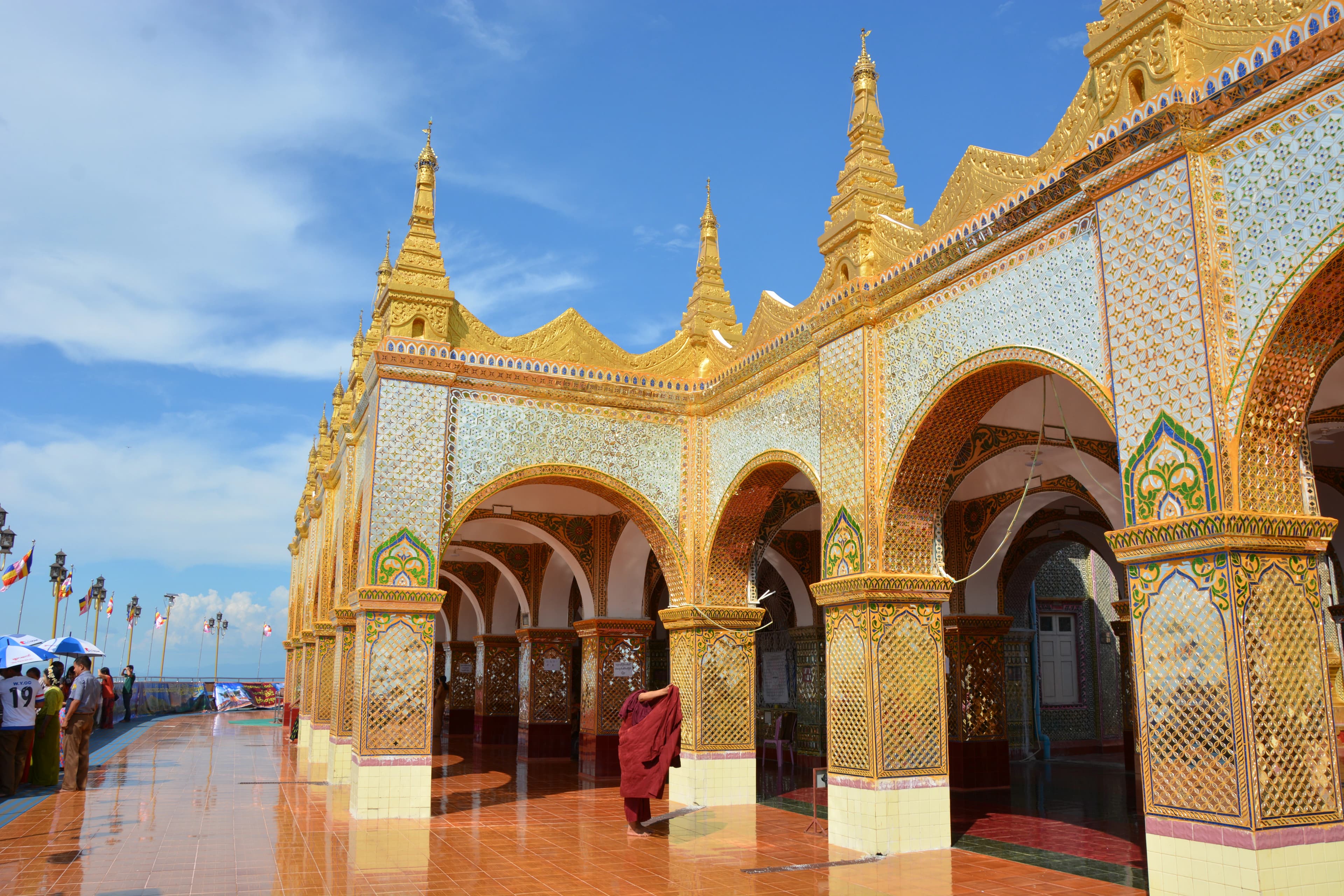
Myanmar is a country of overwhelming beauty and profound Buddhist spirituality: The temple landscape of Bagan with over 2,000 pagodas in the morning mist is one of the most impressive sights in Asia. Inle Lake with its one-legged fishermen, the golden Shwedagon Pagoda in Yangon, and the Golden Rock are unforgettable experiences in a country that is slowly opening up to tourism.
Capital
Naypyidaw
Language
Burmese
Currency
Kyat (MMK)
Time zone
UTC+6:30
Flight time from DE
approx. 12–14 hours (with layover)
Entry requirements
Passport + eVisa (apply online)
Top 5 highlights in Myanmar
The places you absolutely must not miss.
Bagan
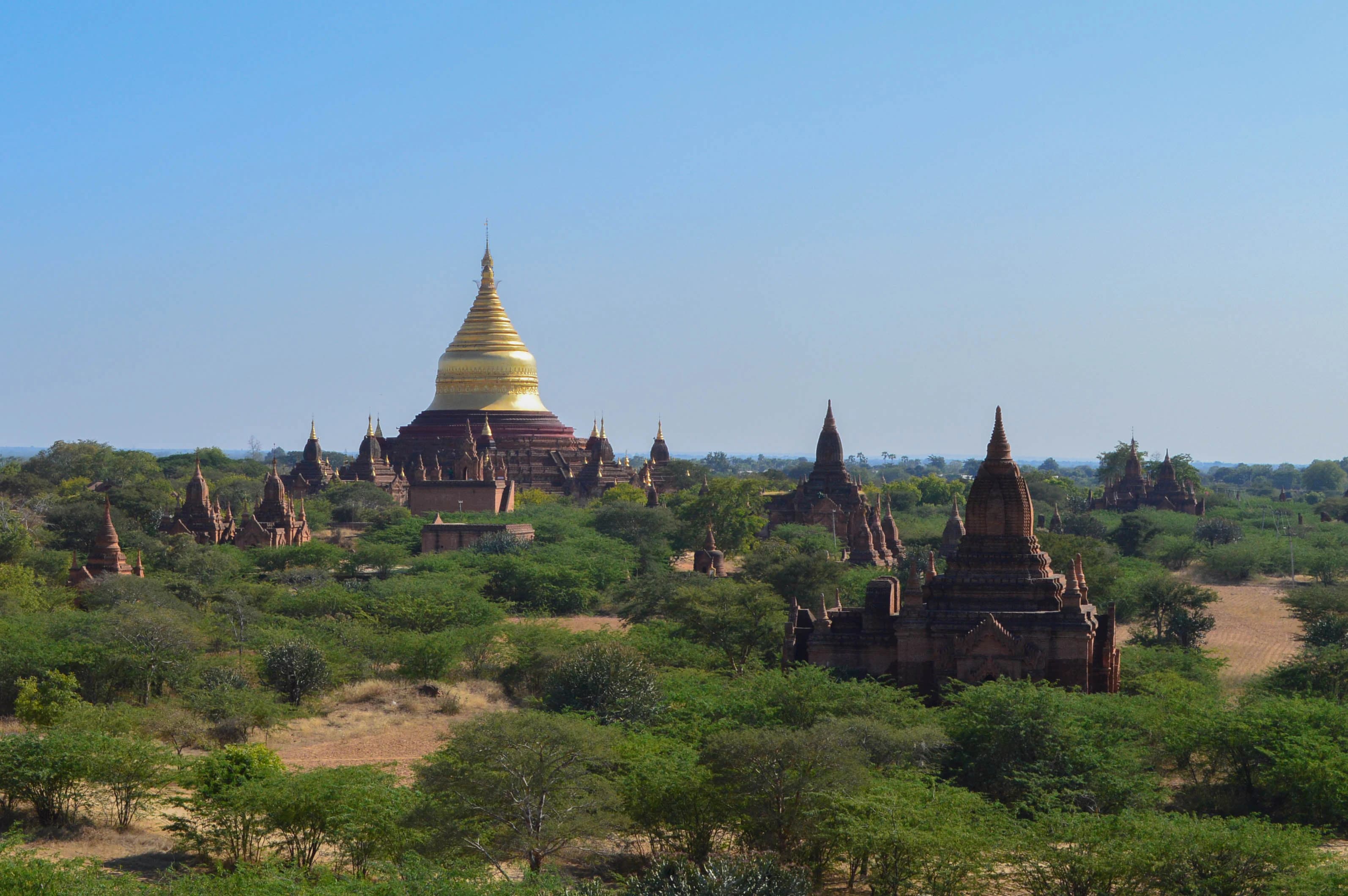
Over 2,000 temples and pagodas on a plain by the Irrawaddy – especially magical at sunrise.
Inle Lake
One-legged fishermen, floating gardens, silk weaving, and stilt villages on Myanmar's second-largest lake.
Shwedagon Pagoda
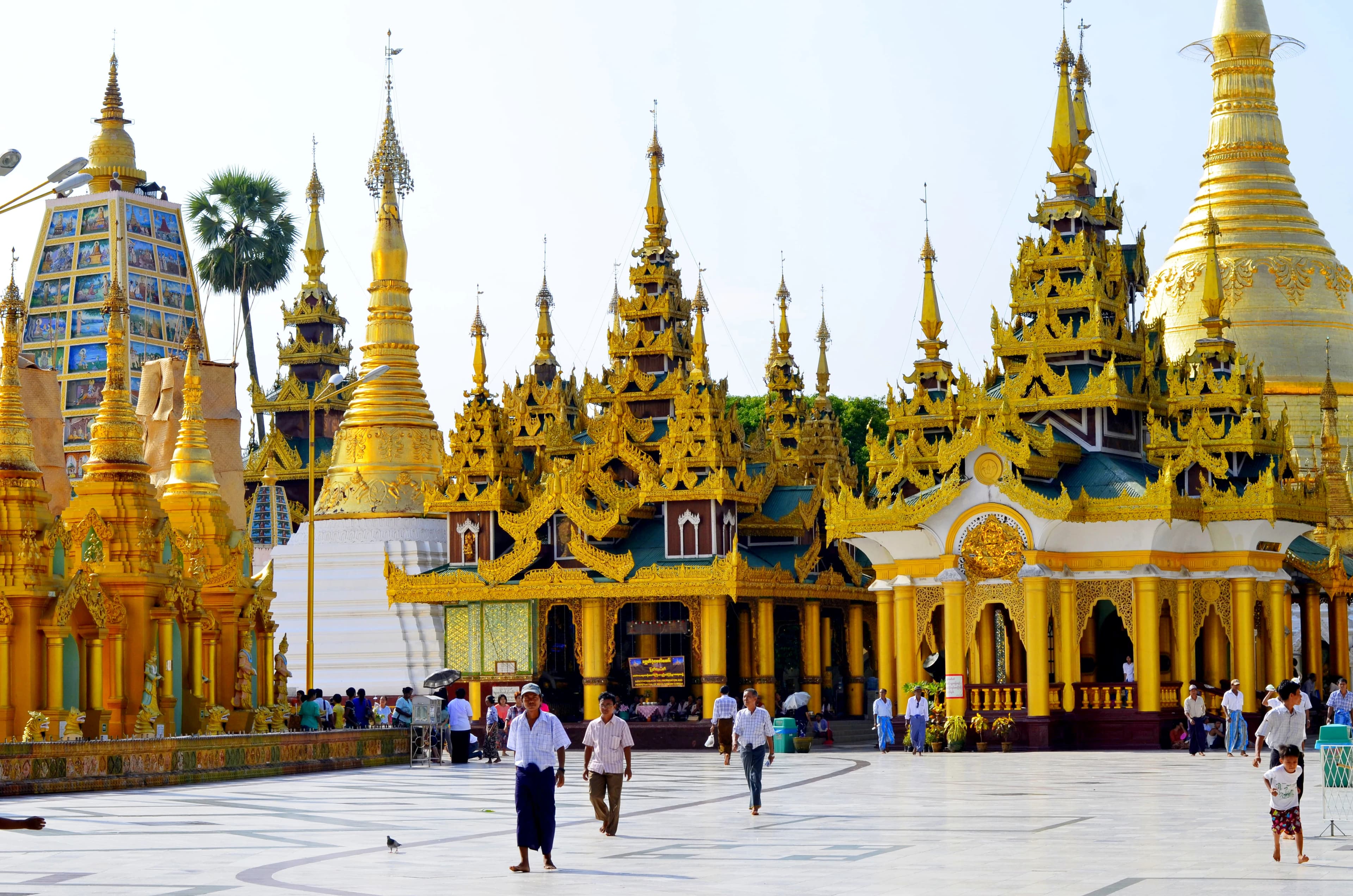
Yangon's golden landmark: 99 meters high, gold-covered stupa – one of the holiest Buddhist structures.
Mandalay
Royal city with Mandalay Hill, U-Bein Bridge (the longest teak bridge in the world), and Mahamuni Buddha.
Golden Rock (Kyaiktiyo)
A rock covered in gold leaf on a mountain peak that seemingly defies gravity – a sacred pilgrimage site.
Hotels in Myanmar
Vergleiche tausende Hotels, Apartments und Resorts auf Expedia – mit Bestpreis-Garantie, kostenloser Stornierung und Bonuspunkten.
* Weiterleitung zu Expedia.de. Es gelten die dortigen Nutzungsbedingungen.
Reise-SIM für Myanmar
Prepaid-SIM mit Datenvolumen für Myanmar. Einfach einlegen und sofort lossurfen – keine Roaming-Gebühren.
* Weiterleitung zu travSIM.de. Es gelten die dortigen Nutzungsbedingungen.
Reiseversicherung abschließen
Rundum-Schutz ab 9,90 € auf TravelSecure.de
Pauschalreisen & Rundreisen
Berge & Meer – 170 Tage Cookie
Best time to visit Myanmar
Recommended travel time
November–February (cool and dry)
Summer
28–38°C
Winter
18–30°C
How much does a holiday in Myanmar cost?
Average cost per person per day (excluding flight)
Budget
25–40€
Hostel, street food, public transport
Mid-range
40–80€
Hotel, restaurant, excursions
Luxury
80–200€
Boutique hotel, fine dining
5 travel tips for Myanmar
Insider knowledge to make your holiday better.
Check the current political situation before traveling – political instability has existed since 2021
Remove shoes and socks at all pagodas and temples – even on the grounds
Cash (US dollars or Kyat) is often needed – ATMs are only available in cities
Wearing a Longyi (wrap skirt) shows respect and is appreciated by locals
Best to explore Bagan by E-bike – affordable, flexible, and environmentally friendly
Food & drink in Myanmar
These dishes you must try!
Discover Myanmar
7 regions, cities and highlights in Myanmar
Areas

Alt-Bagan
Bagan is one of the most overwhelming archaeological sites on Earth: Over 2,200 temples, pagodas, and monasteries stretch across an area of 40 square kilometers along the Irrawaddy River — remnants of a civilization that built the largest Buddhist city in the world here between the 11th and 13th centuries. The Bagan plain at sunrise is a sight that engraves itself forever: As the morning mist rises over the Irrawaddy and the first rays of sunlight bathe the hundreds of temples in golden light, it becomes clear why Bagan is mentioned in the same breath as Angkor Wat and Machu Picchu. The Ananda Pahto, built around 1105, is the best-preserved and most elegant of the great temples — its golden tower rises 51 meters above the plain, and the four golden Buddha statues inside seem to change their expression depending on the angle of view. The experience in Bagan lies not in individual highlights, but in immersing oneself in the seemingly endless temple landscape: Riding an E-bike, one pedals along sandy paths between pagodas, discovers hidden temples where no other tourist has ever been, and encounters monks meditating in the ruins. The Dhammayangyi, the largest of all Bagan temples, impresses with its massive brick construction, while the Sulamani showcases the craftsmanship of the Bagan era with its fine stucco work and faded frescoes. Since 2019, Bagan has been a UNESCO World Heritage Site, and since then, climbing most temples is no longer allowed for protection. Official viewing platforms have been established, and the opportunity to float over the temple plain in a hot air balloon at sunrise is undoubtedly one of the most unforgettable travel experiences ever.
Bagan
Bagan in Myanmar is one of the most extraordinary archaeological sites in the world: On an area of 42 square kilometers, over 2,200 temples, pagodas, and monasteries rise from a dry plain on the banks of the Irrawaddy River — the largest concentration of Buddhist structures on the planet. The panorama at sunrise, when mist rises between the temple peaks, is one of the most magical sights in Southeast Asia. The temples date back to the heyday of the Kingdom of Bagan between the 9th and 13th centuries. The Ananda Temple, with its four standing Buddha statues, is considered an architectural masterpiece, while the massive Dhammayangyi Temple impresses with its finest masonry. The Shwesandaw Temple offers one of the last accessible viewpoints for sunrises and sunsets over the sea of temples. The best way to explore Bagan is by E-bike: Dusty paths lead between centuries-old stupas to hidden temples, which you often have all to yourself. Hot air balloon rides over the temple field at sunrise are Bagan's signature experience (October to March). A boat trip on the Irrawaddy reveals rural Myanmar. Bagan has been a UNESCO World Heritage Site since 2019. The best travel time is from November to February with cooler temperatures and clear visibility.
Cities

Hpa-An
Hpa-An, the capital of the Karen State in southeastern Myanmar, is one of those places that leaves even experienced Southeast Asia travelers speechless. Surrounded by dramatic karst cliffs that rise steeply from a flat plain of rice fields and lotus lakes, the small town offers a density of natural wonders and sacred sites that is unparalleled. The most impressive sight is Mount Zwegabin, a 722-meter-high karst rock that towers over the town and has a golden monastery perched on its summit. The ascent via the steep staircase is sweaty, but the reward is a 360-degree panorama over the entire region — especially unforgettable at sunrise or sunset. At the foot of the mountain lives a colony of tame monkeys that are fed by the monks. The caves around Hpa-An are spectacular: The Saddan Cave leads through a huge chamber full of Buddha statues and stalactites to an underground lake, from which you can be taken by boat out the back of the mountain — an experience that feels like a mix of Indiana Jones and a spiritual pilgrimage. The Kawgun Cave impresses with thousands of tiny Buddha figures that have been embedded in the rock walls since the 7th century. The Yathä-Pyan Cave offers a cinematic view through a natural rock opening onto the green landscape. Rural life around Hpa-An is still largely untouched by mass tourism: Farmers work in the rice fields, fishermen cast their nets in the Thanlwin River, and water buffalo leisurely roam the plains. The Kyauk-Ka-Lat Pagoda, a golden stupa on a needle-like rock peak in the middle of a small lake, is one of the most surreal religious buildings in Southeast Asia and an image that is not easily forgotten.
Kalaw
Kalaw is a sleepy mountain town in the Shan State of Myanmar, which once served as a summer retreat for British colonial rulers and is now the starting point for one of the most beautiful multi-day treks in Southeast Asia: the trek to Inle Lake. Located at an altitude of 1,320 meters, Kalaw offers pleasantly cool temperatures and a relaxed atmosphere, providing a refreshing contrast to the heat of the lowlands. The two- to three-day trek from Kalaw to Inle Lake takes you through a landscape of timeless beauty. Gentle green hills, fields of chili, turmeric, and rice, dense bamboo groves, and pine forests alternate along the way. Overnight stays are in the villages of the Pa-O, Danu, and Taung Yo — ethnic minorities that have largely preserved their traditional way of life and welcome hikers with warm hospitality. The nights in the village communities are unforgettable. You sleep on the floors of monasteries or village houses, eat together with families, and gain insight into a rural Myanmar that is hardly touched by tourism. The shared cooking and eating, the stories from the guides, and the silence of the mountain nights create moments of deep connection. Kalaw itself has its own unique charm. Colonial villas with faded facades, a lively morning market where various ethnic groups sell their goods, and the golden Shwe Oo Min Pagoda with its cave full of thousands of Buddha statues make for a relaxed day of exploration. The surrounding area offers, in addition to the main trek, shorter day hikes to remote villages and monasteries. The Green Hill Valley Elephant Camp — one of the most ethical elephant projects in Myanmar — allows for responsible encounters with rescued working elephants. Kalaw stands as a representative of a Myanmar that, despite political turbulence, has preserved its soul: hospitable, modest, and with a beauty that is not staged but simply exists.
Mandalay
Mandalay is the last royal capital of Myanmar and the cultural heart of the country — a city where golden pagodas, monastic scholarship, and the bustling activity along the Irrawaddy River create a unique atmosphere. The second-largest city in the country was founded in 1857 by King Mindon as a new capital and was the center of the Burmese monarchy until the British conquest in 1885. Mandalay Hill (236 m) offers a breathtaking panoramic view of the city, the royal palace, and the endless plain extending to the Shan Plateau in the east from its summit. The ascent involves 1,729 covered steps, passing by places of worship, monks, and golden Buddha statues. Especially at sunset, when the light bathes the golden pagodas and the Irrawaddy River in warm tones, the view is unforgettable. The Kuthodaw Pagoda houses the largest book in the world: 729 marble slabs, each housed in its own white miniature temple (stupa), contain the entire Theravada Pali Canon. King Mindon commissioned this monumental work to be carved in stone between 1860 and 1868 — it would take 450 days to read the entire book aloud. The U-Bein Bridge in Amarapura, just 11 kilometers south of Mandalay, is the longest teak bridge in the world at 1.2 kilometers. At sunset, when monks in saffron robes and fishermen in their boats create silhouettes against the golden sky, it becomes one of the most iconic photographic motifs in Southeast Asia. The former royal cities of Inwa (Ava), Sagaing, and Mingun are in close proximity and offer day trips to crumbling monasteries, massive pagodas, and the unfinished Mingun Pagoda, which would have been the largest structure in the world if completed.
Naypyidaw
Naypyidaw is probably the most bizarre capital in the world — built from scratch in the jungle of Myanmar in 2005 to replace Yangon as the seat of government. The result is a city for one million inhabitants, where it feels like you are alone: 20-lane boulevards without traffic, gigantic government buildings, and an unsettling silence. The Uppatasanti Pagoda, an almost exact copy of the Shwedagon Pagoda in Yangon (only 30 cm smaller), is the religious center — unlike the original, it is mostly empty. The city's zone architecture strictly separates government districts, military zones, hotels, and residential areas. The National Museum showcases the history of Myanmar from the Pyu city-states to the present, the zoo with safari park is surprisingly well-maintained, and the water park offers a refreshing escape. Naypyidaw is a curiosity: a city built to be impressive and is precisely impressive because of its emptiness. For travelers seeking the absurd, it is an unforgettable experience — a ghost capital that truly exists.

Yangon
Yangon, Myanmar's largest city, impresses with the golden Shwedagon Pagoda — one of the holiest Buddhist sites in the world — and colonial architecture that is among the best preserved in Southeast Asia. The city was known as Rangoon and was the capital of British Burma, and the weathered Victorian buildings, Art Deco facades, and Scott Market (Bogyoke Market) bear witness to this era. Unlike many Asian metropolises, Yangon has preserved its historical substance — there are few skyscrapers, but plenty of patina and charm. The Shwedagon Pagoda, over 2,500 years old and covered in real gold, is particularly breathtaking at sunset. Note: Due to the political situation since the military coup in 2021, the security situation should be checked before traveling.
Complete guide for Myanmar
Regions, attractions, food, routes, costs & practical tips — all in one digital guide.
Open guideReady for Myanmar?
Plan your Myanmar holiday now with our free tools.
Plan a holiday in Myanmar
Myanmar is one of the most popular travel destinations in Asia, offering Temples, Culture, Spiritual and much more. The best time to visit Myanmar is November–February (cool and dry), when the weather is ideal for exploration and relaxation. With a daily budget starting from 25–40€ (Budget) to 80–200€ (Luxury), Myanmar is suitable for various travel budgets.
From the capital Naypyidaw, Myanmar can be excellently explored. The official language is Burmese, and the currency is Kyat (MMK). From Germany, you can reach Myanmar in approx. 12–14 hours (with layover). Whether you want to try culinary highlights like Mohinga, Shan Noodles, Laphet Thoke, visit top attractions, or simply enjoy the atmosphere: Myanmar has something for every type of traveller.
Use our free travel tools to prepare your Myanmar holiday perfectly. With the holiday finder, you can discover if Myanmar is the right destination for you. The budget calculator helps you plan costs realistically, and with the packing list, you won't forget anything.
Suitable holiday types for Myanmar:
More travel destinations in Asia:
All countries in Asia