Peru holiday
Travel tips, best time to visit & highlights for your Peru holiday in South America
Peru is the land of the Incas: Machu Picchu, Lake Titicaca, the Nazca Lines, and an emerging gastronomy scene in Lima. From the Andes to the Amazon to the coast, Peru offers breathtaking contrasts.
Capital
Lima
Language
Spanish, Quechua
Currency
Sol (PEN)
Time zone
UTC-5
Flight time from DE
approx. 12–14 hours
Entry requirements
Passport, 90 days visa-free
Top hotels & accommodations in Peru
Selected hotels and holiday accommodations in Peru — with images, reviews, and direct booking links with our partners.
Rundreisen Peru: Das Erbe der Inka - Eine Reise in die Vergangenheit
Peru

Erlebnisreisen Peru: Magische Momente zwischen Vergangenheit und Natur
Peru

Rundreisen Peru: Durch das Reich der Inka & entlang spektakulärer Andenlandschaften
Peru

Rundreisen Peru & Amazonas: Von alten Inkawegen ins Reich des Dschungels
Peru

Erlebnisreisen Peru: Unvergessliche Höhepunkte zwischen Anden, Inka Trail & Titicacasee
Peru

Rundreisen Peru: Anden, Inka & Amazonaszauber
Peru
Top 5 highlights in Peru
The places you absolutely must not miss.
Machu Picchu
The lost city of the Incas in the clouds – one of the New Seven Wonders of the World.
Cusco
Inca capital, colonial architecture, and starting point for the Inca Trail.
Lima
South America's gourmet capital: Ceviche, Pisco Sour, and Michelin-level.
Lake Titicaca
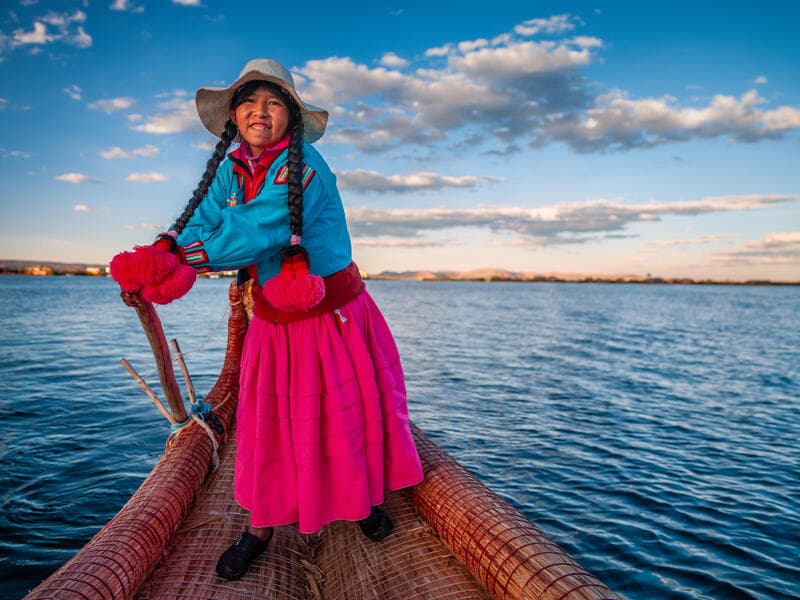
The highest navigable lake in the world (3,812m) with floating islands of the Uros.
Rainbow Mountain
Vinicunca – the colorful mountain with its natural stripes.
Hotels in Peru
Vergleiche tausende Hotels, Apartments und Resorts auf Expedia – mit Bestpreis-Garantie, kostenloser Stornierung und Bonuspunkten.
* Weiterleitung zu Expedia.de. Es gelten die dortigen Nutzungsbedingungen.
Reise-SIM für Peru
Prepaid-SIM mit Datenvolumen für Peru. Einfach einlegen und sofort lossurfen – keine Roaming-Gebühren.
* Weiterleitung zu travSIM.de. Es gelten die dortigen Nutzungsbedingungen.
Reiseversicherung abschließen
Rundum-Schutz ab 9,90 € auf TravelSecure.de
Pauschalreisen & Rundreisen
Berge & Meer – 170 Tage Cookie
Best time to visit Peru
Recommended travel time
May–September (dry season, highlands)
Summer
20–25°C (Lima)
Winter
15–20°C (Lima)
How much does a holiday in Peru cost?
Average cost per person per day (excluding flight)
Budget
25–40€
Hostel, street food, public transport
Mid-range
40–80€
Hotel, restaurant, excursions
Luxury
80–200€
Boutique hotel, fine dining
5 travel tips for Peru
Insider knowledge to make your holiday better.
Take altitude sickness seriously – acclimatize for 2 days in Cusco
Coca tea helps with the altitude
Machu Picchu tickets are limited – book weeks in advance
Book Peru Rail or Inca Rail to Machu Picchu
Lima: The Miraflores district is safe and full of restaurants
Food & drink in Peru
These dishes you must try!
Discover Peru
10 regions, cities and highlights in Peru
Cities
Arequipa
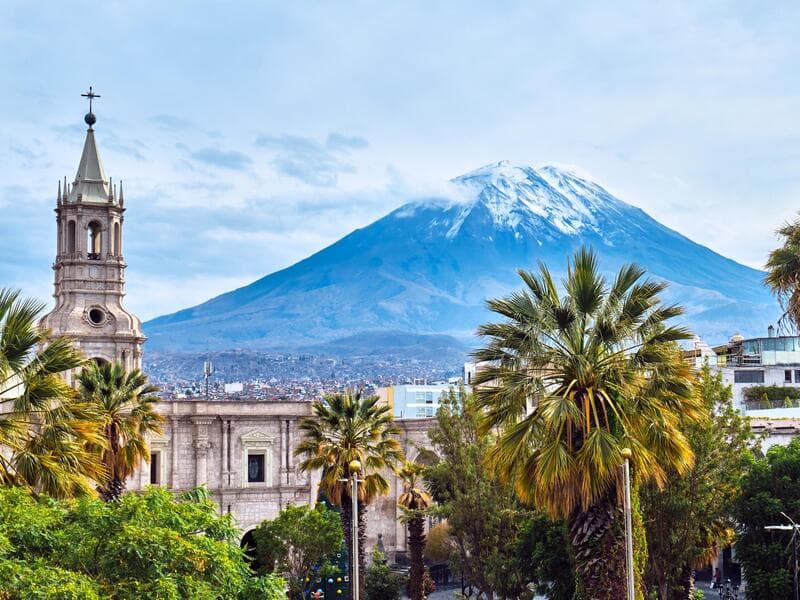
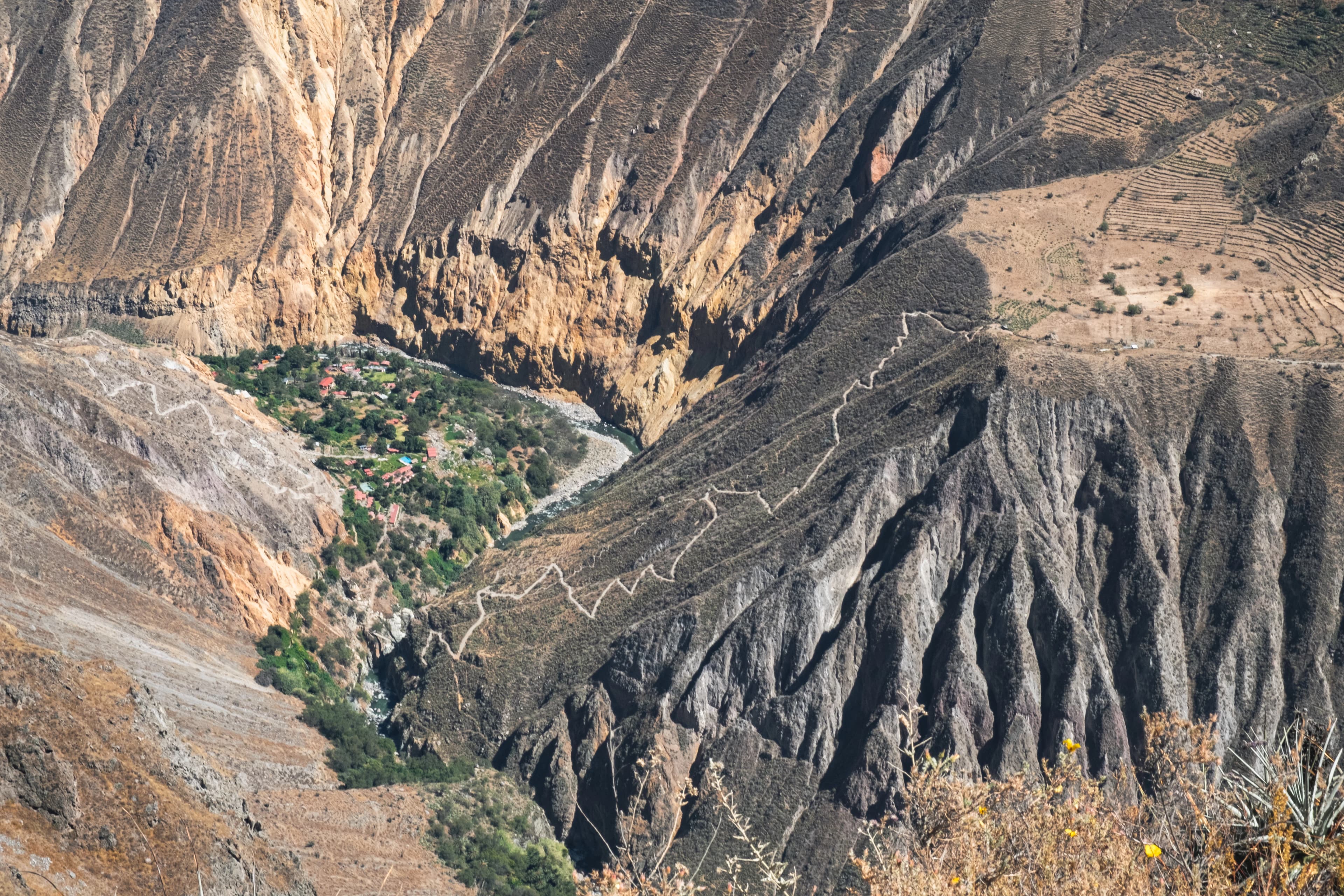
Arequipa, Peru's "White City," is located at an altitude of 2,335 meters at the foot of three mighty volcanoes and boasts one of the most beautiful old towns in South America. The historic buildings made of white Sillar volcanic stone shine in the Andean sun and create a backdrop of breathtaking drama together with the eternally snow-capped El Misti volcano. The Santa Catalina Monastery is Arequipa's crown jewel — a city within a city. Spanning 20,000 square meters, this colorful monastery complex features narrow streets in orange, blue, and terracotta, tranquil courtyards, and rows of cells where wealthy nuns lived remarkably comfortable lives for centuries. It is one of the most surprising and photogenic places in all of Peru. The Plaza de Armas, with its imposing cathedral, is one of the most beautiful squares in South America. The Sillar stone arcades, the volcanic backdrop, and the lively hustle and bustle of the Arequipeños create an atmosphere that is both majestic and vibrant. In the evening, the cathedral is illuminated, and the restaurants in the arcades serve Pisco Sours with a view of the colonial splendor. Arequipa is the gateway to the Colca Canyon, one of the deepest canyons in the world — twice as deep as the Grand Canyon. At Cruz del Cóndor, you can see Andean condors soaring in the thermals, majestically gliding through the gorge with their wingspan of three meters. The 2-day tour to the canyon is one of Peru's great highlights. Arequipeña cuisine is considered the best in Peru — and that means a lot in a country known as the culinary capital of South America. The Picanterías, traditional restaurants with open kitchens, serve specialties like Rocoto Relleno (stuffed spicy peppers) and Chupe de Camarones (shrimp soup), which have been prepared using the same recipes for generations.

Callao
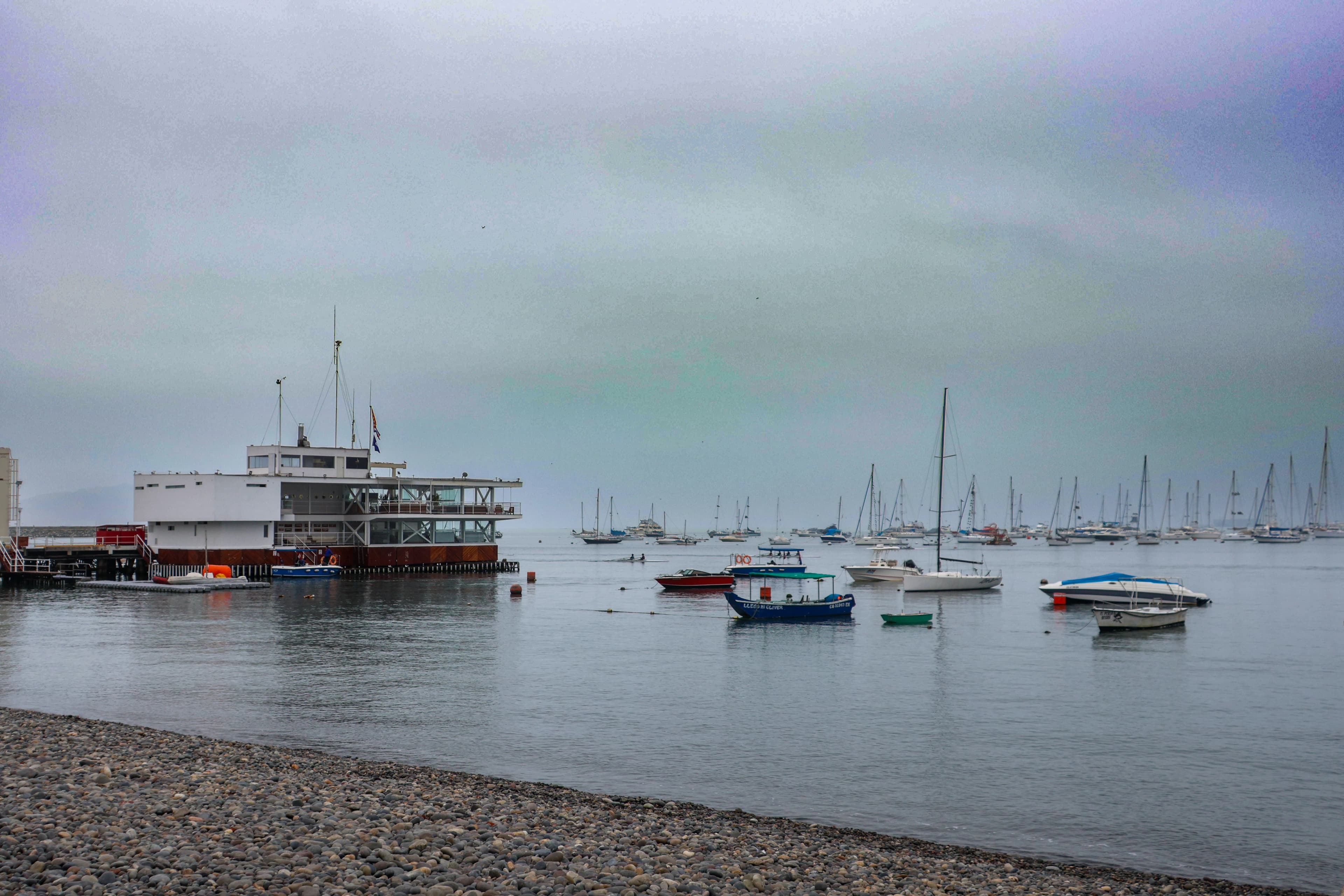
Callao is Peru's most important port and is located directly on the Pacific coast at the gates of Lima. The city boasts over 480 years of maritime history and was the most significant port in South America during the colonial period — from here, the legendary silver from the mines of Potosi was shipped to Spain. Today, Callao surprises with a thriving street art scene, historic fortresses, and an authentic harbor atmosphere that stands in refreshing contrast to touristy Lima. The Fortaleza del Real Felipe is the largest Spanish fortress in South America and the landmark of Callao: Built between 1747 and 1774, it served to defend against pirate attacks from Francis Drake to the independence movement. The star-shaped structure with meter-thick walls, underground passages, and the military museum tells the story of Spanish colonial rule and Peruvian liberation. Callao Monumental is the most creative district of the city: In the former port warehouses and rundown street lines, an impressive street art project has developed since 2016. International and local artists have transformed entire building facades into large-scale murals — political, poetic, and colorful. Galleries, cafes, and creative workshops enliven the streets. La Punta, the narrow peninsula at the tip of Callao, is a surprisingly charming neighborhood with colonial villas, a waterfront promenade, and views of the nearby Isla San Lorenzo — the largest island in Peru. Fishermen sell their catch directly at the pier, and in the evening, the restaurants transform into seafood paradises with freshly caught ceviche and views of the Pacific.

Cusco
Cusco, the former capital of the Inca Empire, is located at an altitude of 3,400 meters in the Peruvian Andes and is one of the most fascinating cities in South America. The Spaniards built their colonial churches and palaces directly on the foundations of Inca structures, creating a unique architectural fusion that is a UNESCO World Heritage Site. The Plaza de Armas, the heart of the city, is framed by the Cathedral and the Jesuit church Compania de Jesus. The street Hatun Rumiyoc houses the famous Twelve-Angled Stone — a stone perfectly integrated into an Inca wall with twelve corners, demonstrating the superior stonemasonry of the Incas. The fortress ruins of Sacsayhuaman above the city consist of stone blocks weighing up to 200 tons, the transport of which remains a mystery to this day. The artist district of San Blas, with its steep cobblestone streets, is home to workshops, galleries, and charming cafes. Cusco is the starting point for the Sacred Valley of the Incas with Ollantaytambo and Pisac, as well as for the journey to Machu Picchu. The local cuisine surprises with specialties such as Cuy (guinea pig) and alpaca steak. Important: Plan at least two days for acclimatization to the altitude. May to October offers dry, sunny weather.

Huaraz
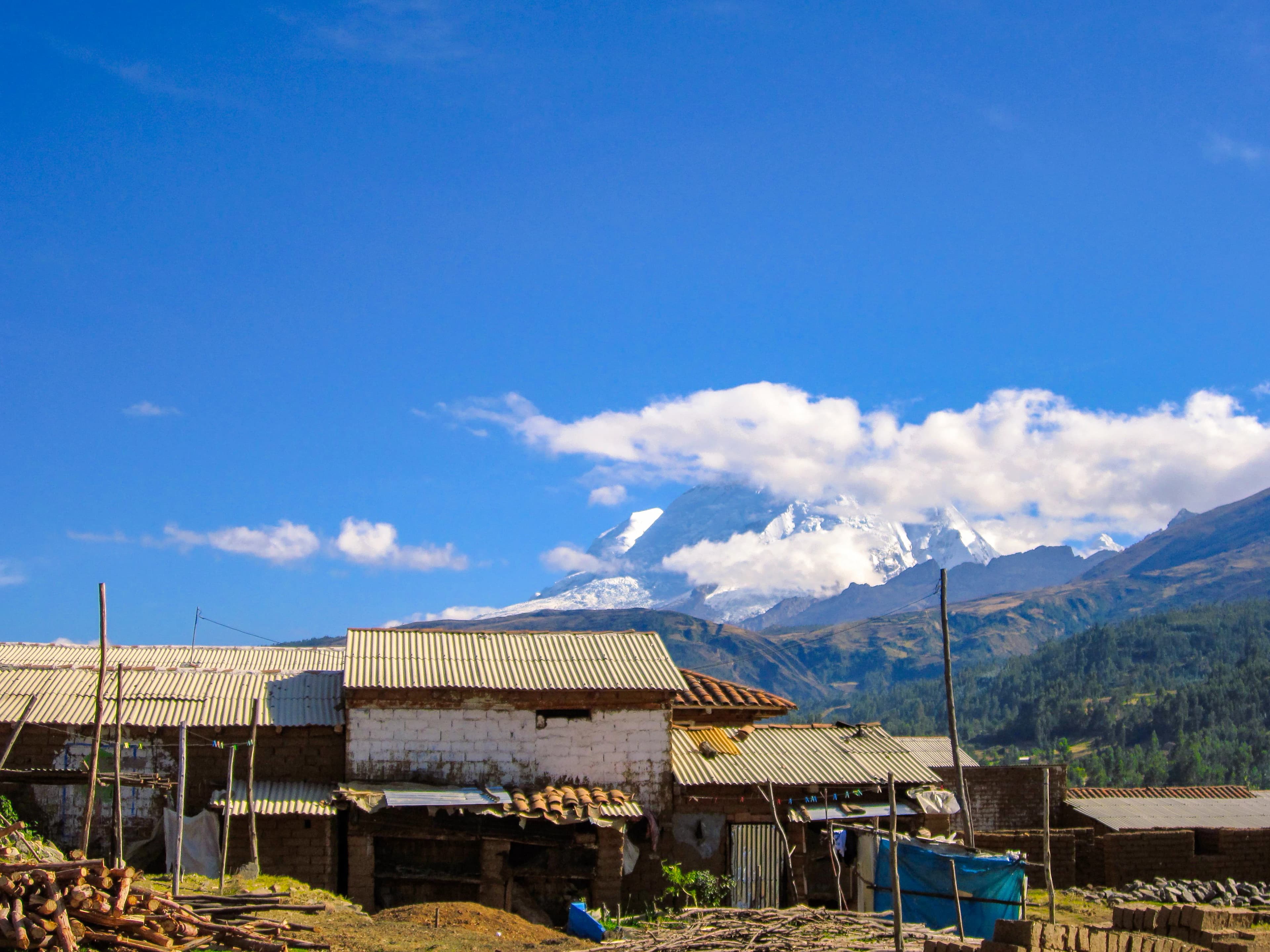
Huaraz is the trekking capital of South America and the gateway to the Cordillera Blanca — the highest tropical mountain range in the world. Located at an altitude of 3,090 meters, the city provides access to over 30 snow-capped peaks over 6,000 meters, turquoise mountain lakes, and the famous Santa Cruz Trek. For climbers, hikers, and nature lovers, Huaraz is a paradise that can compete with Nepal and the Alps.

Lima
Lima, the capital of Peru, has developed into one of the most exciting gourmet metropolises in the world in recent years. With three restaurants among the top 50 worldwide — including Central, which has been awarded the best restaurant in the world — Lima is a culinary epicenter that brings the incredible biodiversity of Peru from the coast to the Andes and the Amazon to the plate. The historic old town around the Plaza Mayor is a UNESCO World Heritage site and impresses with magnificent colonial churches, the Archbishop's Palace, and the catacombs of the San Francisco Monastery, which house thousands of bones. The Barranco district enchants with colorful street art, bohemian bars, and the Bridge of Sighs, while Miraflores, with its dramatic coastal location above the Pacific, elegant parks, and the pre-Columbian Huaca-Pucllana temple, represents modern Lima. Ceviche, Lima's national dish made from raw fish in lime juice, chili, and onions, is the best in the world here — whether in a Michelin-starred restaurant or at a simple cevicheria in the market. Paragliding over the cliffs of Miraflores offers spectacular views of the Pacific. Lima is the ideal starting point for trips to Cusco, Machu Picchu, and the Amazon. June to September offers the driest season.

Trujillo
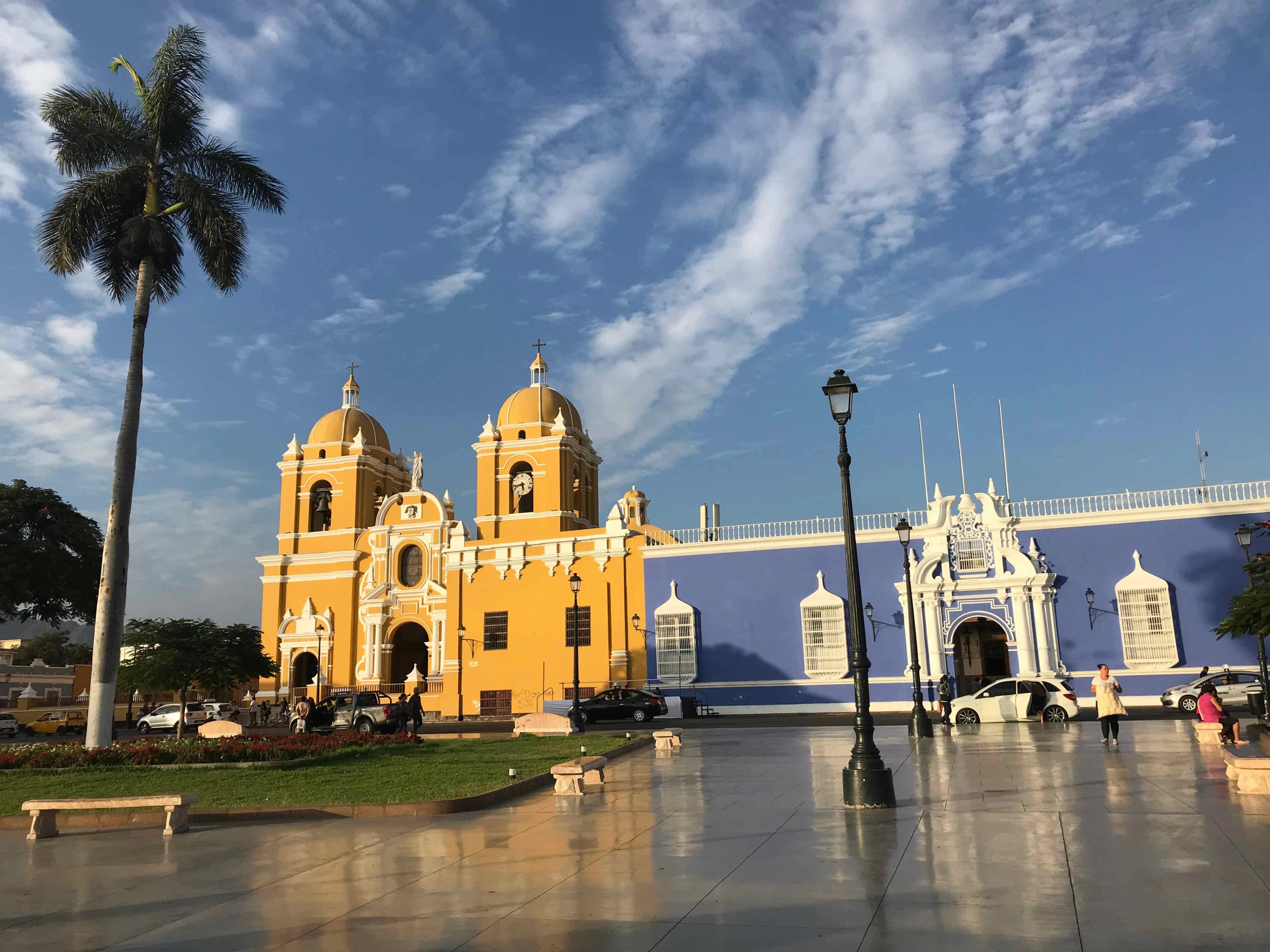
Trujillo is the secret cultural capital of northern Peru and the birthplace of two great pre-Columbian civilizations — the Moche and the Chimu. The third-largest city in Peru is located in a fertile coastal strip between the Atacama Desert and the Pacific Ocean, combining an impressive colonial center with world-class archaeological treasures. Chan Chan, the largest adobe citadel in the world and a UNESCO World Heritage site, is located just 5 kilometers west of the city: The capital of the Chimu Empire (circa 900-1470 AD) once extended over 20 square kilometers and housed up to 100,000 inhabitants. The intricate adobe wall reliefs depict fish, birds, waves, and geometric patterns that still impress despite centuries of erosion. The Huacas del Sol y de la Luna (Sun and Moon Pyramids) of the Moche culture (100-800 AD) lie south of the city: The Huaca del Sol was the largest pyramid in South America, built with 50 million adobe bricks, while the smaller Huaca de la Luna has preserved colorful wall paintings featuring the fearsome god Ai Apäc. The polychrome reliefs in red, yellow, white, and black are among the best-preserved pre-Columbian artworks in the Americas. The colonial center of Trujillo around the Plaza de Armas is one of the best-preserved in Peru: Pastel-colored mansions with wrought-iron balconies and courtyards (Casonas), the yellow cathedral, and the carved wooden windows of Casa Urquiaga tell of its heyday as the richest sugar town of the colonial era. In nearby Huanchaco, a traditional fishing village on the Pacific, fishermen still use Caballitos de Totora — reed-woven one-man boats that have been built unchanged for over 3,000 years. The long left-hand wave also makes Huanchaco a popular surf spot on the Peruvian coast.
Areas

Colca Canyon
The Colca Canyon in the Peruvian Andes is 3,270 meters deep, making it twice as deep as the Grand Canyon and one of the most impressive gorges in the world. The dramatic landscape with terraced slopes from Inca times, hot springs by the river, and majestic Andean condors soaring above the canyon is breathtaking. The villages in the canyon still preserve their traditional Kollagua and Cabana culture with colorful costumes and festivals.
Huacachina
Huacachina is a surreal oasis in the middle of the Peruvian desert — an emerald green lake surrounded by sand dunes up to 100 meters high and a handful of palm trees, hostels, and restaurants. The place is only five kilometers from the coastal city of Ica and looks like a movie set: too perfect to be real, yet it is exactly that. The legend says that the lake was formed from the tears of an Inca princess who wept for her lost warrior. Today, Huacachina is less romantic and more of an adrenaline hotspot. Dune buggy tours are the main event: Open buggies race over the massive dunes, taking steep descents at full speed and leaving passengers hovering between euphoria and panic. Sandboarding on the dunes is the second adrenaline highlight. You strap a board to your feet (or lie on your stomach) and glide down the steep sand mountains. The speed is surprisingly high, the sand remarkably hard, and the fun is limitless. The sunset over the dunes is Huacachina's third trump card. When the sun turns the sand deep orange and the shadows violet, the scene looks like a painting. The bar terraces by the lake fill up, the atmosphere turns golden, and for a moment, Huacachina is the most romantic spot in Peru. The oasis itself is tiny — you can walk around it in five minutes. Backpacker hostels with pools, small restaurants, and souvenir shops make up the entire infrastructure. The atmosphere is relaxed, international, and slightly crazy — a kind of desert party village for backpackers. Ica, the nearby city, offers Peru's best Pisco experience. The distilleries around Ica produce the national grape brandy, and tours with tastings are a rewarding half-day trip. The region is also the center of the Nazca culture, and the regional museum in Ica showcases impressive artifacts.

Machu Picchu
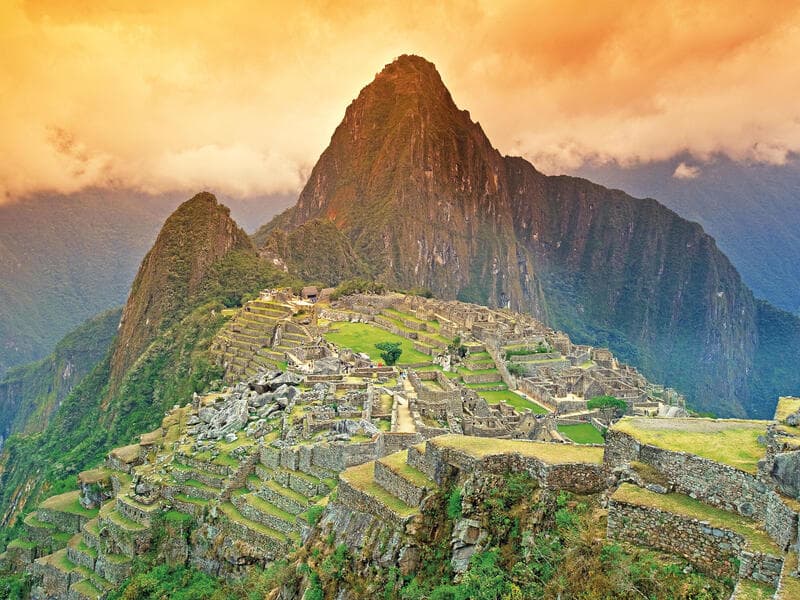
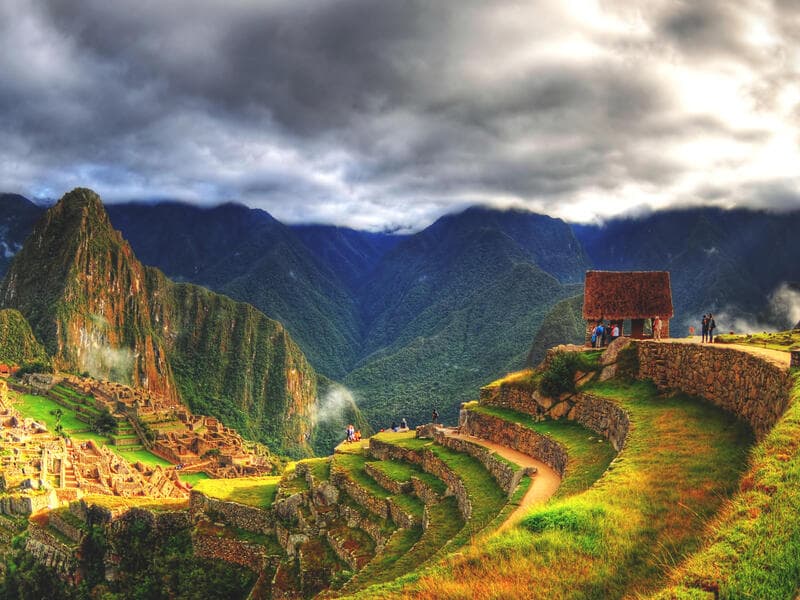
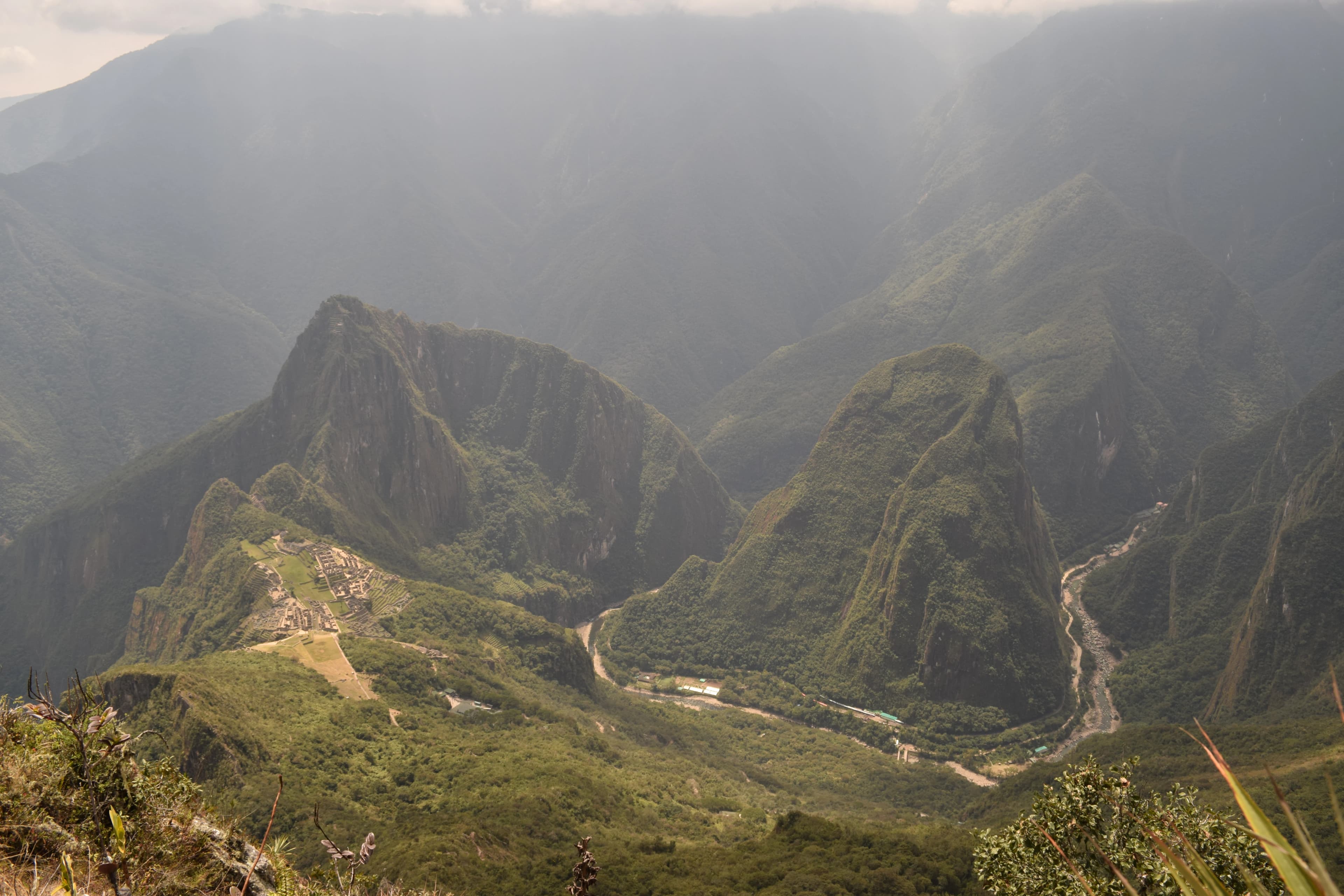
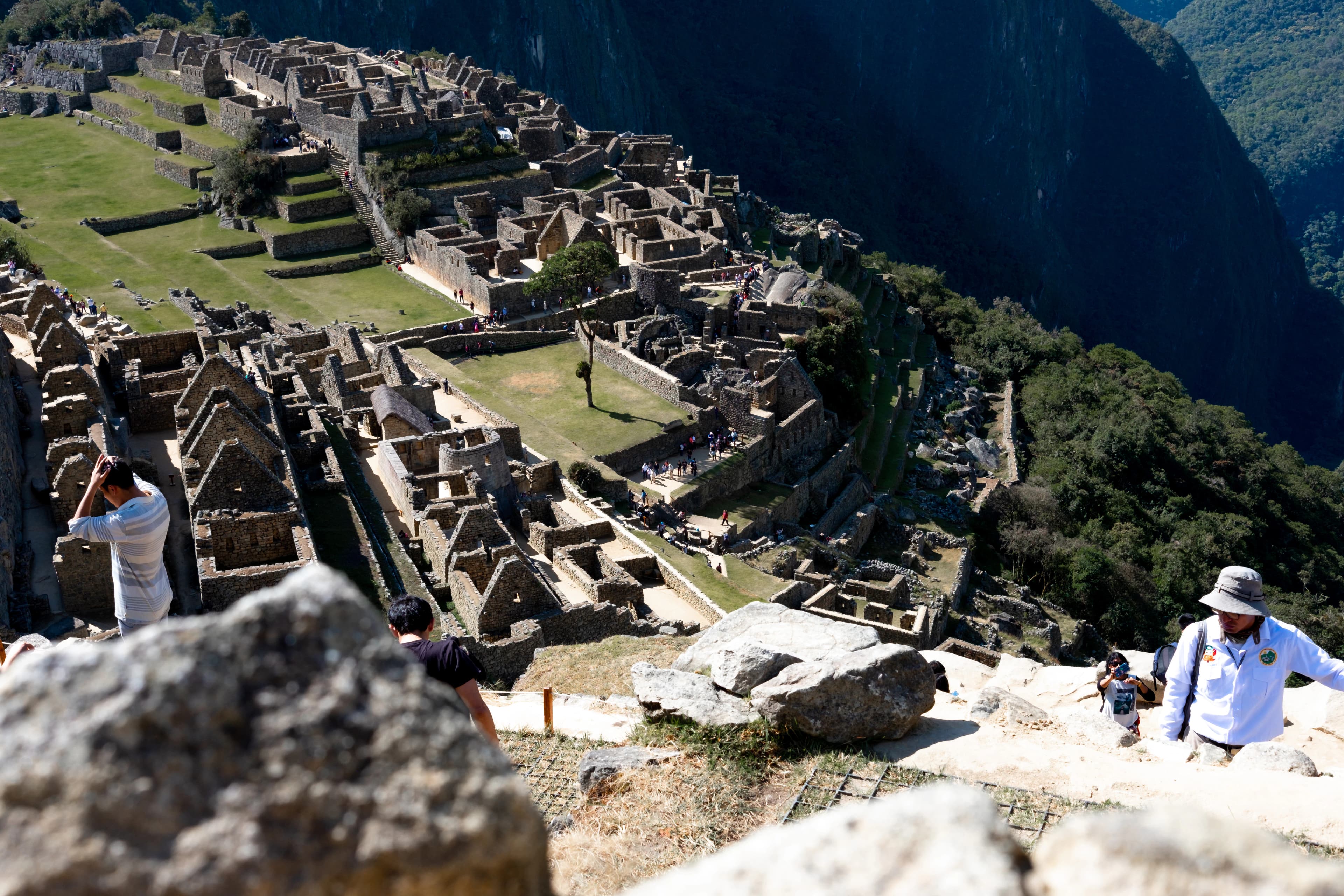
Machu Picchu, the lost city of the Incas high in the Peruvian Andes, is one of the greatest archaeological wonders of the world and holds the title of one of the New Seven Wonders. At an altitude of 2,430 meters, the citadel sits on a ridge between two peaks, surrounded by steep ravines and the meandering Urubamba River — a sight that takes your breath away even in photos. The Incas built this complex around 1450 as a royal residence and ceremonial center. Over 200 stone buildings, terraces, and water channels testify to engineering brilliance: the precisely carved granite stones fit seamlessly together without mortar. The Intihuatana stone, the Incas' sundial, and the Temple of the Sun are masterpieces of astronomical architecture. The classic Inca Trail leads through misty cloud forest to the Sun Gate in four days, where Machu Picchu reveals itself in all its glory. Alternatively, the train from Cusco to Aguas Calientes conveniently brings visitors to the foot of the mountain. The ascent to Huayna Picchu offers an adventurous perspective from above. Visitors must book tickets in advance with a fixed time slot. May to September is the dry season and the most popular travel time.
Complete guide for Peru
Regions, attractions, food, routes, costs & practical tips — all in one digital guide.
Open guidePlan a holiday in Peru
Peru is one of the most popular travel destinations in South America, offering Culture, Adventure, History and much more. The best time to visit Peru is May–September (dry season, highlands), when the weather is ideal for exploration and relaxation. With a daily budget starting from 25–40€ (Budget) to 80–200€ (Luxury), Peru is suitable for various travel budgets.
From the capital Lima, Peru can be excellently explored. The official language is Spanish, Quechua, and the currency is Sol (PEN). From Germany, you can reach Peru in approx. 12–14 hours. Whether you want to try culinary highlights like Ceviche, Lomo Saltado, Pisco Sour, visit top attractions, or simply enjoy the atmosphere: Peru has something for every type of traveller.
Use our free travel tools to prepare your Peru holiday perfectly. With the holiday finder, you can discover if Peru is the right destination for you. The budget calculator helps you plan costs realistically, and with the packing list, you won't forget anything.
Suitable holiday types for Peru:
More travel destinations in South America:
All countries in South America