Italy holiday
Travel tips, best time to visit & highlights for your Italy holiday in Europe
Italy is the country where food is art, history awaits at every corner, and the Dolce Vita is not an empty phrase. From the canals of Venice to the hills of Tuscany and the beaches of Sardinia – Italy enchants all the senses.
Capital
Rome
Language
Italian
Currency
Euro (€)
Time zone
UTC+1
Flight time from DE
approx. 1.5–2.5 hours
Entry requirements
EU Identity Card
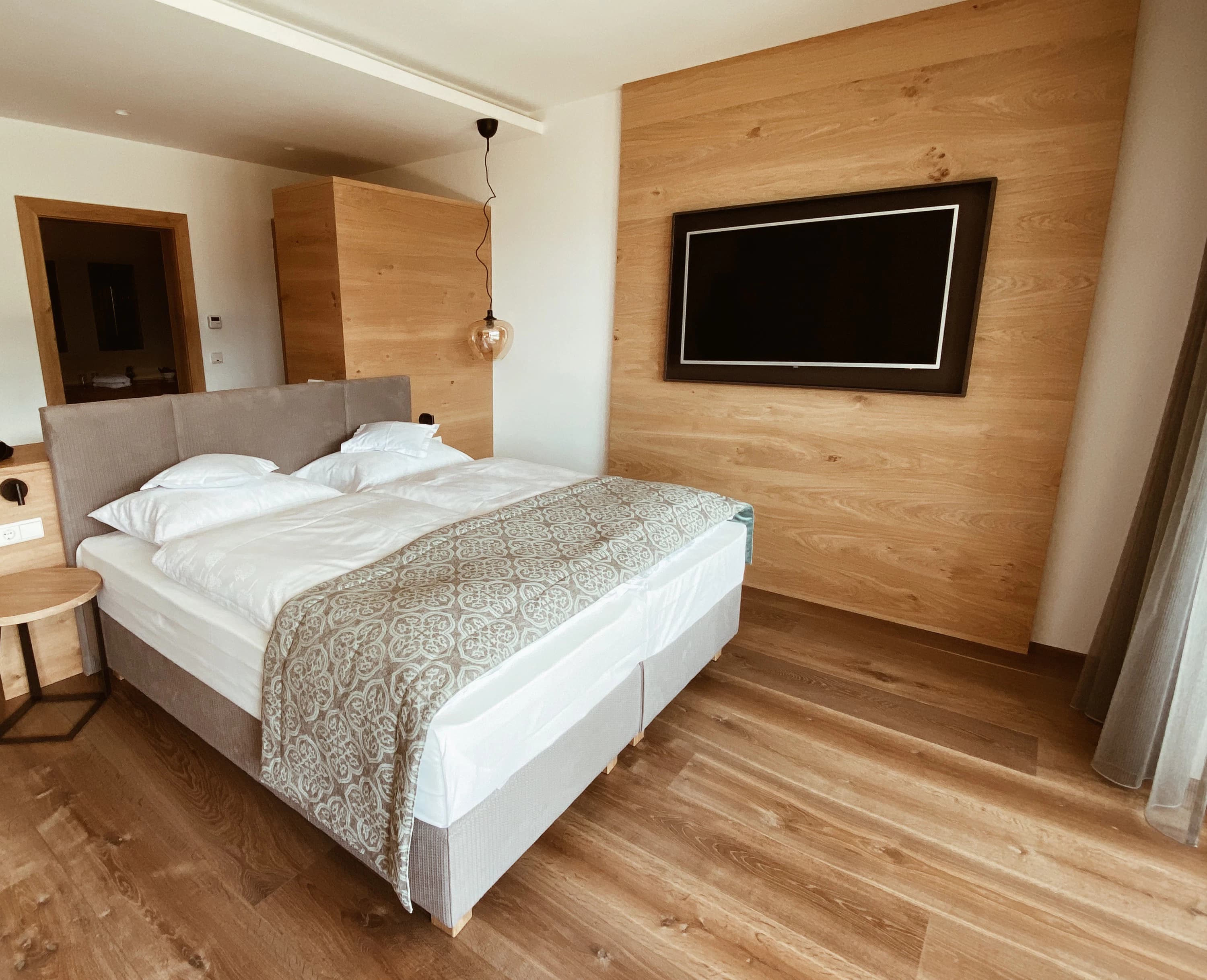
Top hotels & accommodations in Italy
Selected hotels and holiday accommodations in Italy — with images, reviews, and direct booking links with our partners.
Grand Hotel Sitea
Turin, Italien
Mangia's Brucoli Sicily Autograph Collection
Brucoli, Italien
Forte Village - Hotel Il Castello
Santa Margherita di Pula, Italien
Tivoli Palazzo Gaddi Firenze Hotel
Florenz, Italien
Lefay Resort & SPA Dolomiti
Carisolo, Italien
Hotel Tivoli Milano President
Mailand, Italien
Fifty House
Mailand, Italien
Hotel Gabrielli Sandwirth
Venedig, Italien
Top 5 highlights in Italy
The places you absolutely must not miss.
Rome
Colosseum, Vatican, Pantheon, Trevi Fountain – 3,000 years of history to touch.
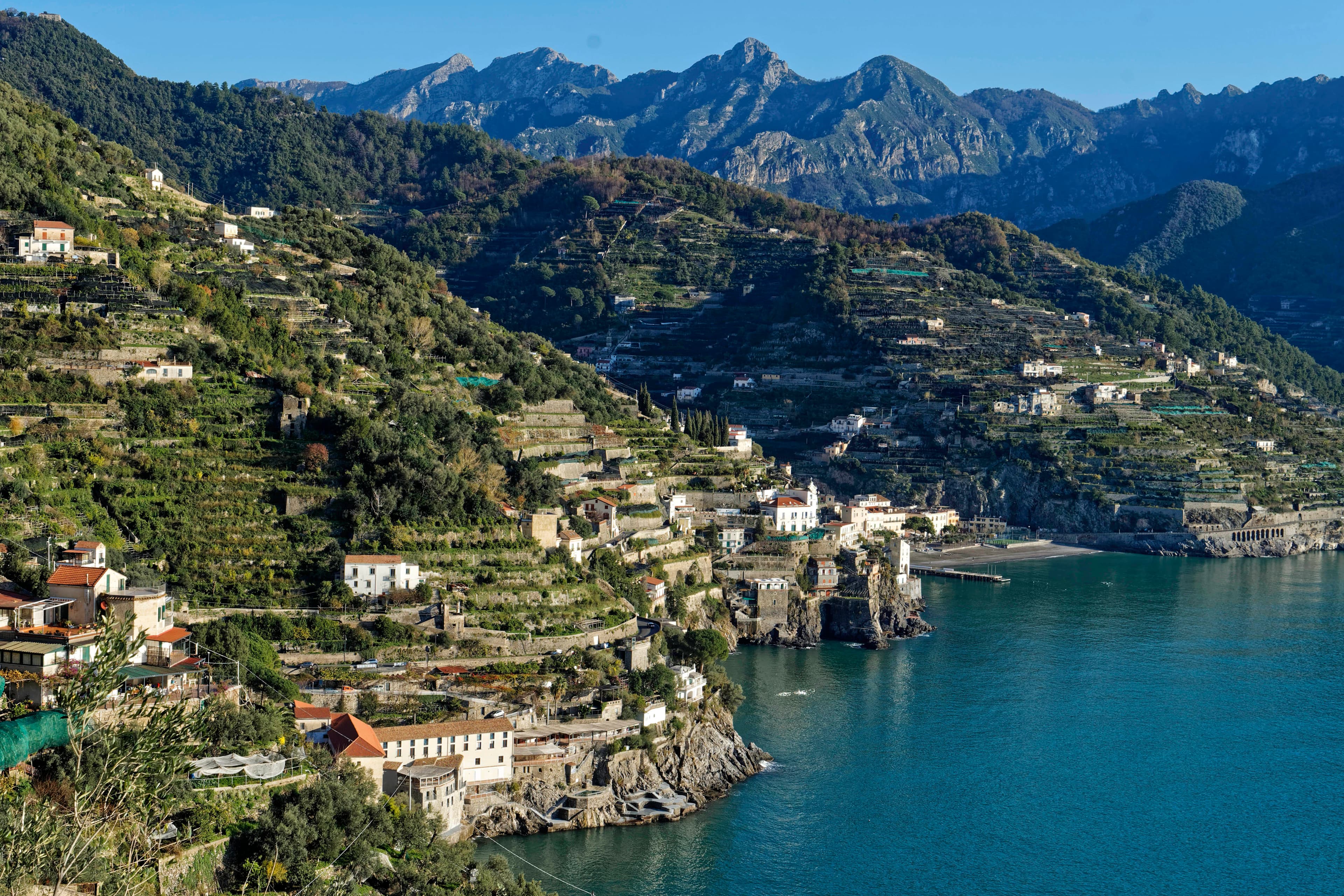
Amalfi Coast
Steep cliffs, colorful fishing villages, lemons, and the deep blue Tyrrhenian Sea.
Tuscany
Gentle hills, cypress trees, vineyards, Florence, and Siena – Italy's romantic heart.
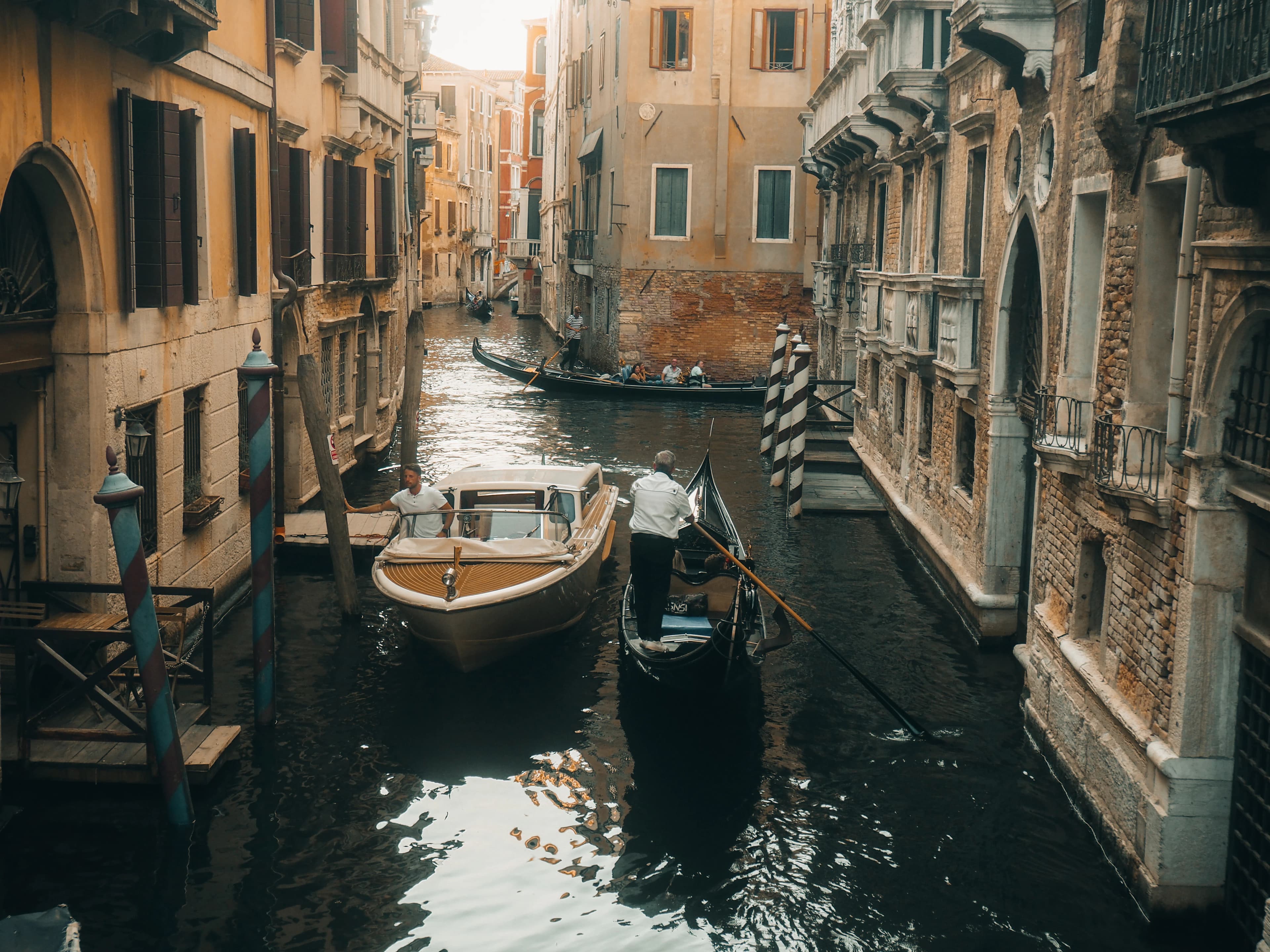
Venice
The floating city: gondolas, St. Mark's Square, Murano glass, and a unique atmosphere.
Cinque Terre
Five colorful villages on the Ligurian cliffs, connected by hiking trails.
Hotels in Italy
Vergleiche tausende Hotels, Apartments und Resorts auf Expedia – mit Bestpreis-Garantie, kostenloser Stornierung und Bonuspunkten.
* Weiterleitung zu Expedia.de. Es gelten die dortigen Nutzungsbedingungen.
Kurzurlaub: Kurzurlaub
Handverlesene Hoteldeals, Kurztrips und Erlebnisgutscheine zu Sparpreisen. Perfekt zum Verschenken oder selbst Genießen.
* Weiterleitung zu we-are.travel. Es gelten die dortigen Nutzungsbedingungen.
Reiseversicherung abschließen
Rundum-Schutz ab 9,90 € auf TravelSecure.de
Hotelgutscheine & Kurzreisen
Deals ab 29 € p.P. auf touriDat.com
Pauschalreisen & Rundreisen
Berge & Meer – 170 Tage Cookie
Best time to visit Italy
Recommended travel time
April–June, September–October
Summer
25–35°C
Winter
5–12°C
How much does a holiday in Italy cost?
Average cost per person per day (excluding flight)
Budget
60–90€
Hostel, street food, public transport
Mid-range
90–160€
Hotel, restaurant, excursions
Luxury
160–350€
Boutique hotel, fine dining
5 travel tips for Italy
Insider knowledge to make your holiday better.
Cappuccino is only drunk in the morning – never after a meal
Coperto is the table fee, not a tip
Beware of overpriced tourist traps near attractions
In Osterie and Trattorie, you eat more authentically and cheaper
Tickets for the Vatican and Uffizi must be booked in advance
Food & drink in Italy
These dishes you must try!
Discover Italy
89 regions, cities and highlights in Italy
Cities

Alberobello
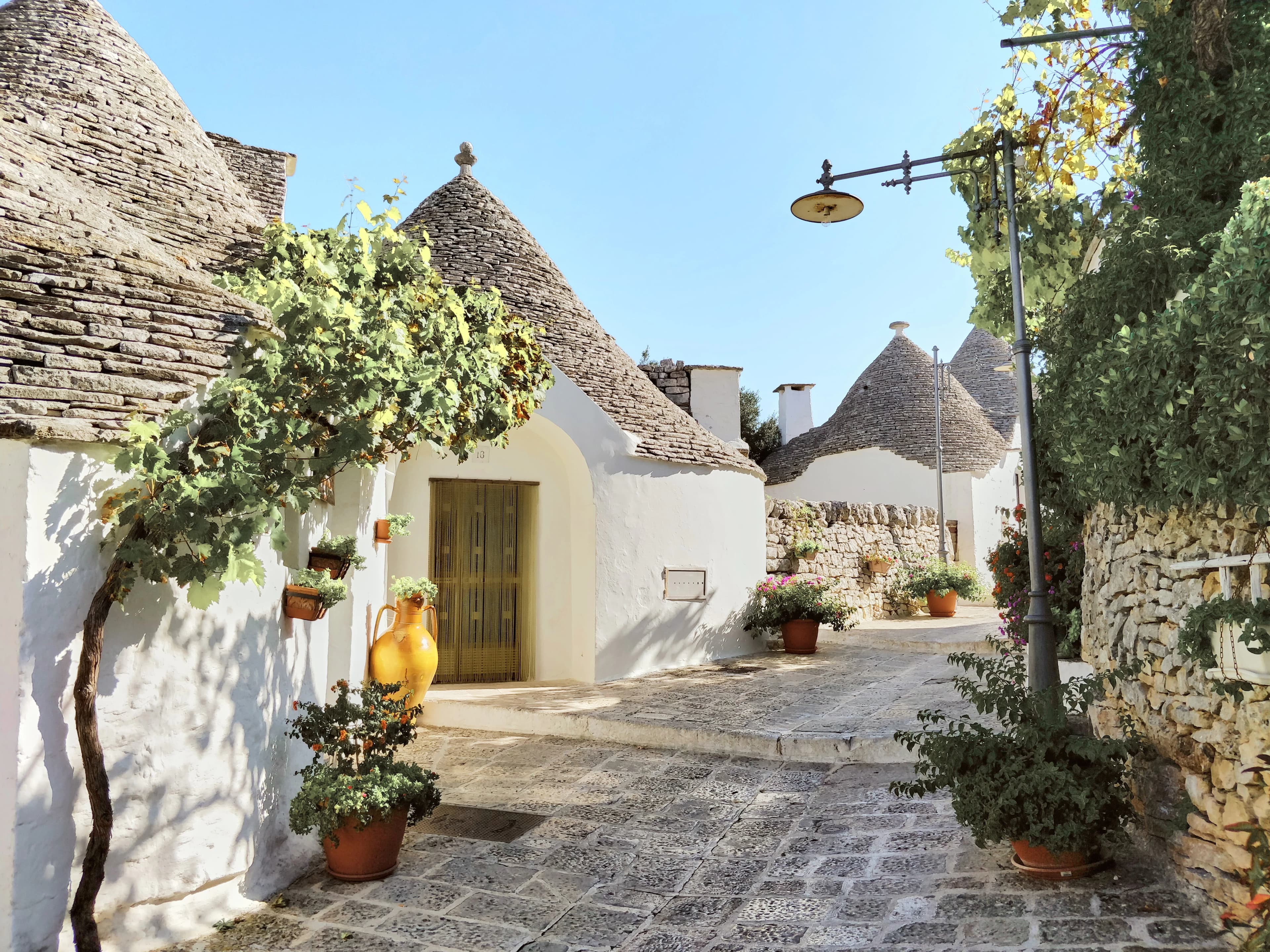
Alberobello is one of the most unusual places in Europe and the capital of the Trulli - those unique, cone-shaped stone houses with white walls and gray dome roofs, which exist in this concentration nowhere else in the world. The UNESCO World Heritage site in the heart of Apulia looks like a scene from a fairy tale: Over 1,500 Trulli crowd the hills of the old town, each one stacked without mortar from limestone slabs - a building technique that dates back to prehistoric times. The two Trulli districts, Rione Monti and Aja Piccola, form the heart of Alberobello. Rione Monti is the larger and more touristy district with over 1,000 Trulli, many of which today house souvenir shops, restaurants, and small museums. The steep, cobbled streets between the white cone roofs offer endless photo opportunities and an atmosphere that oscillates between oriental fairy tale and Italian rural idyll. Many roofs display mysterious symbols - crosses, hearts, astrological signs - whose meanings are still debated today. Aja Piccola is significantly quieter and more authentic - locals still live in their Trulli here, and the streets have retained their original character. The Trullo Sovrano, the only two-story Trullo, can be visited as a museum and provides insight into traditional life in these unique dwellings. The Chiesa di Sant'Antonio, a church in Trullo style with a dome roof, is an architectural curiosity. The history of the Trulli's origin is fascinating: According to legend, farmers built their houses without mortar so that they could be quickly dismantled and disguised as piles of stones during tax inspections. Whether this story is true is disputed, but it adds an extra romantic touch to the Trulli. From Germany, Alberobello can be reached via Bari Airport, which is about 55 kilometers away. A rental car is recommended to explore the surrounding region with its olive groves, vineyards, and Masseria estates. The best time to visit is from April to October, with the summer months being very hot. An overnight stay in a Trullo hotel is an unforgettable experience.

Amalfi
Amalfi is the radiant heart of the eponymous Amalfi Coast and was once a powerful maritime republic that competed with Venice, Genoa, and Pisa for supremacy in the Mediterranean. Today, the small town nestles picturesque against steep cliffs, and its monumental Cathedral of Sant'Andrea with its magnificent Arab-Norman facade majestically overlooks the Piazza. German tourists love Amalfi as a starting point for hikes on the famous Sentiero degli Dei, as a place to enjoy fresh seafood and homemade Limoncello, and as a photographic motif that is second to none. The terraced lemon groves climb up the hillsides, giving the entire coast its distinctive scent. Narrow alleys, hidden ceramic workshops, and the sparkling Tyrrhenian Sea make Amalfi one of the most romantic places in Italy.

Assisi
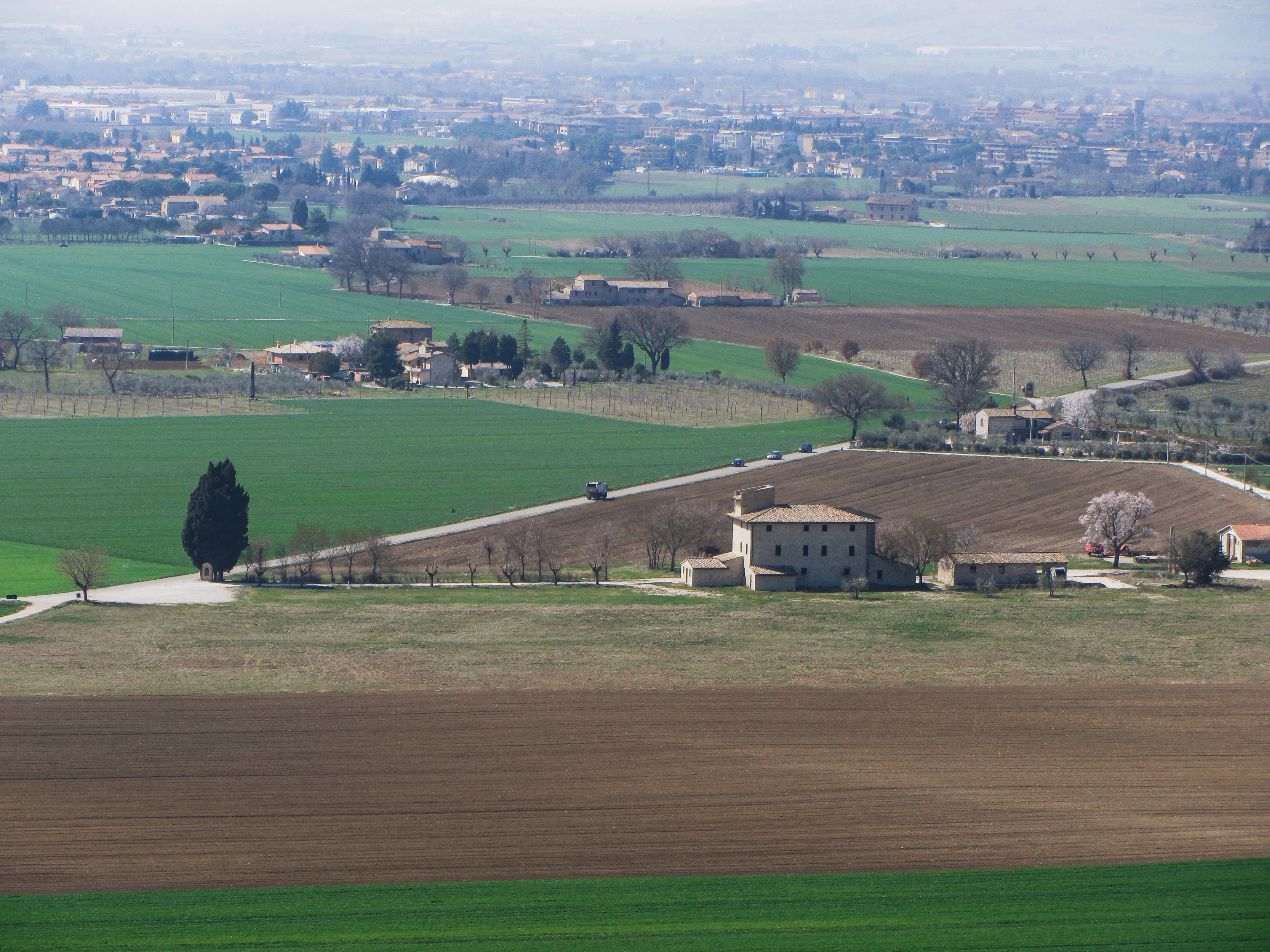
Assisi is one of the most spiritual cities in Europe and the home of Saint Francis, the founder of the Franciscan Order and the patron saint of Italy and animals. The small Umbrian town, which nestles like an amphitheater on the western slope of Monte Subasio, radiates a tranquility and grandeur that deeply touches even non-religious visitors. The entire old town is a UNESCO World Heritage site, and the pink stones from the local limestone give Assisi a unique, warm glow, especially at sunset. The Basilica of San Francesco is the centerpiece and one of the most important pilgrimage sites in the Christian world. The double church consists of an upper and a lower church, both adorned with frescoes by Giotto, Cimabue, and the Lorenzetti brothers, which are among the most significant works of art from the Middle Ages. Giotto's cycle depicting the life of Saint Francis in the upper church is considered a turning point in European painting - this is where the revolution towards the Renaissance began. The tomb of the saint in the crypt of the lower church is a place of quiet devotion. The Piazza del Comune, the main square, impresses with the ancient Temple of Minerva, whose Corinthian columns date back to the 1st century BC and which is now used as a church. The Rocca Maggiore, the imposing fortress above the town, offers a breathtaking panoramic view over the Umbrian valley to Perugia and Spoleto. Below the town lies the mighty Basilica of Santa Maria degli Angeli with the Porziuncola, the tiny chapel where Francis founded the order. Assisi is only 25 kilometers from Perugia and can be reached via Perugia-San Francesco Airport (an apt name) or alternatively via Rome. The town is an excellent starting point for exploring Umbria - Spoleto, Spello, and Trevi are within a short drive. The best travel time is from April to June and September to October, when the weather is mild and the summer pilgrimage crowds are either not present or have dissipated.

Bellagio
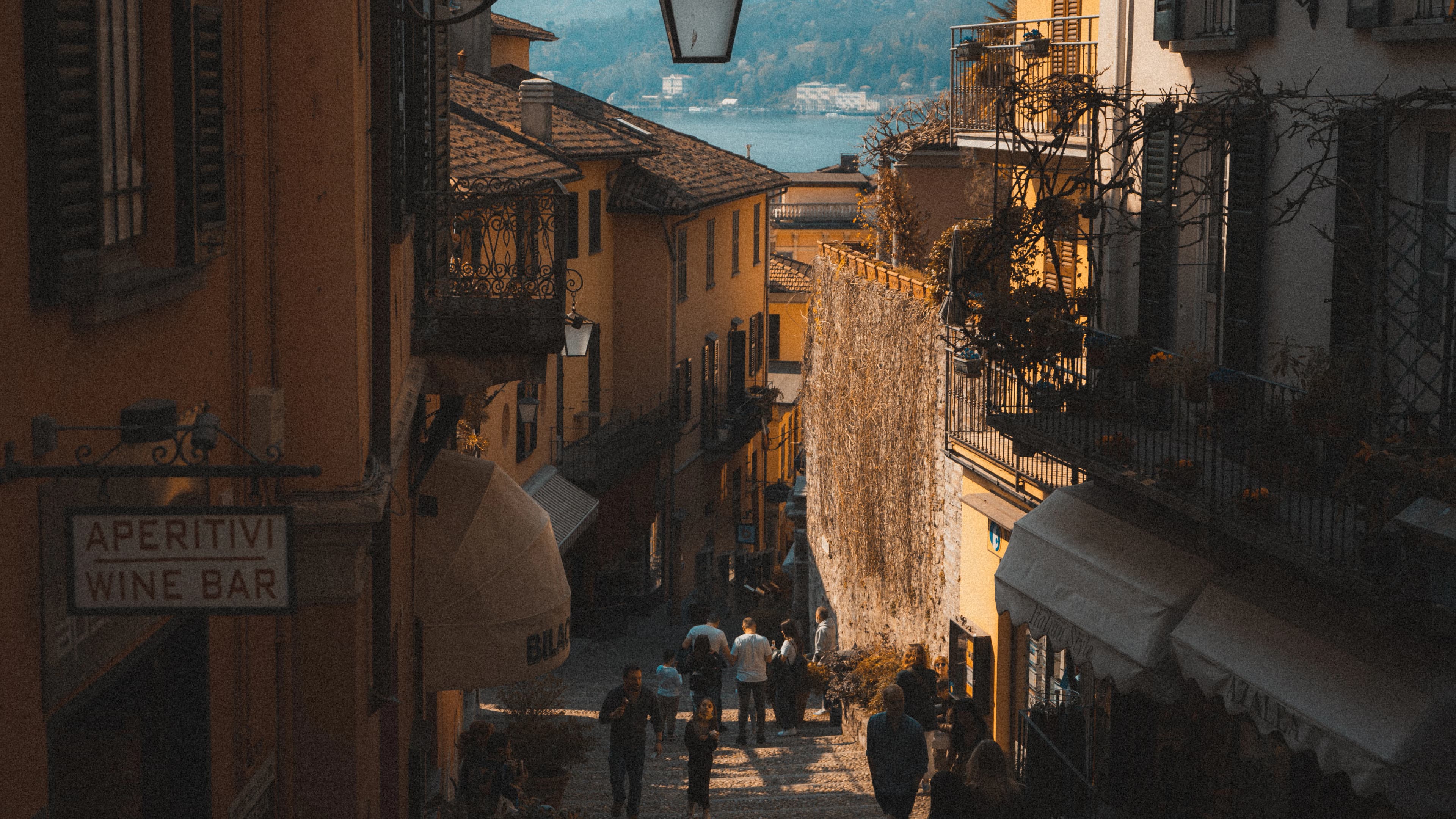
Bellagio is located at the tip of the peninsula where the two arms of Lake Como meet and is considered one of the most beautiful places in Italy. The "Pearl of Lake Como" enchants with its winding stone streets, magnificent villas with gardens, and a lakeside promenade that made George Clooney a neighbor. The gardens of Villa Melzi and Villa Serbelloni are botanical masterpieces, and ferries connect Bellagio with Varenna, Menaggio, and Como.
Bolzano
Bolzano is the fascinating capital of South Tyrol — a city where Mediterranean and alpine cultures merge in a unique way. Here, one orders cappuccino in German and dumplings in Italian, strolls under palm trees with a view of snow-capped peaks, and enjoys speck and pasta in the same menu. The old town is a jewel of Gothic churches, Art Nouveau facades, and the famous porticoed streets — covered shopping streets with arcades that have formed the heart of trade since the Middle Ages. The Archaeological Museum houses Ötzi, the 5,300-year-old glacier mummy — Bolzano's absolute highlight. The three cable cars from Bolzano lead directly from the city to the surrounding high plateaus — in just minutes, one can reach an altitude of 1,200 meters from the city center. The Ritten cable car takes visitors to Ritten with its famous earth pyramids. From Munich, Bolzano can be reached in just three hours via the Brenner Pass. The city is a starting point for hikes in the Dolomites, ski tours in winter, and wine tastings in the surrounding vineyards.
Cagliari
Cagliari is Sardinia's vibrant capital and an underrated gem of the Mediterranean — a city on seven hills that combines beach, culture, and culinary delights in Sardinian style. The Castello district on the highest hill, with its medieval towers and palaces, offers panoramic views over the Gulf and the lagoon. The Poetto beach, eight kilometers of fine white sand right in front of the city, is one of the most beautiful city beaches in Europe. The Molentargius lagoon, directly behind it, is home to one of the largest flamingo colonies in the Mediterranean — pink flamingos against the city backdrop are a surreal sight. The old town is divided into four historic districts: Castello, Marina, Stampace, and Villanova — each with its own character. The Mercato di San Benedetto is one of the largest covered markets in Italy and a paradise for fish lovers. The archaeological site of Tuvixeddu, a Phoenician-Punic necropolis in the middle of the city, recalls Cagliari's 3,000-year history. From Germany, it takes just over 2 hours to fly to Cagliari — and you land in a world that could not be more Italian, but is spiced with Sardinian idiosyncrasies.
Caorle
Caorle is a charming fishing village on the upper Adriatic coast that has preserved its Venetian charm over the centuries. While neighboring towns Jesolo and Bibione are primarily known as beach metropolises, Caorle impresses with its picturesque old town, whose colorful fishermen's houses and winding alleys resemble a smaller version of Burano. The cylindrical bell tower from the 11th century and the cathedral with its Byzantine mosaics testify to the long history of this place as an important port of the Serenissima. The beach promenade of Caorle uniquely combines beach holidays with art: Along the rocky coast Scogliera Viva, over 130 sculptures by international artists are carved into the sea cliffs, creating a permanent open-air gallery. Behind it, the wide sandy beaches of Levante and Ponente stretch out, which, with their gentle entry and warm Adriatic water, are perfect for families. The hinterland of Caorle surprises with the expansive Caorle Lagoon, a nature reserve where traditional fishing is still practiced today. The Casoni, thatched fishermen's huts on stilts, are a fascinating relic of the past and can be visited by boat. The lagoon also offers excellent opportunities for birdwatching and nature hikes. Caorle is just about five hours by car from Munich and is easily accessible via the A4. The compact old town can be wonderfully explored on foot, and the beach is reachable within minutes from anywhere. Every Friday morning, the large weekly market transforms the town into a colorful hustle and bustle with fresh fish, fruits, cheese, and fashion.

Catania
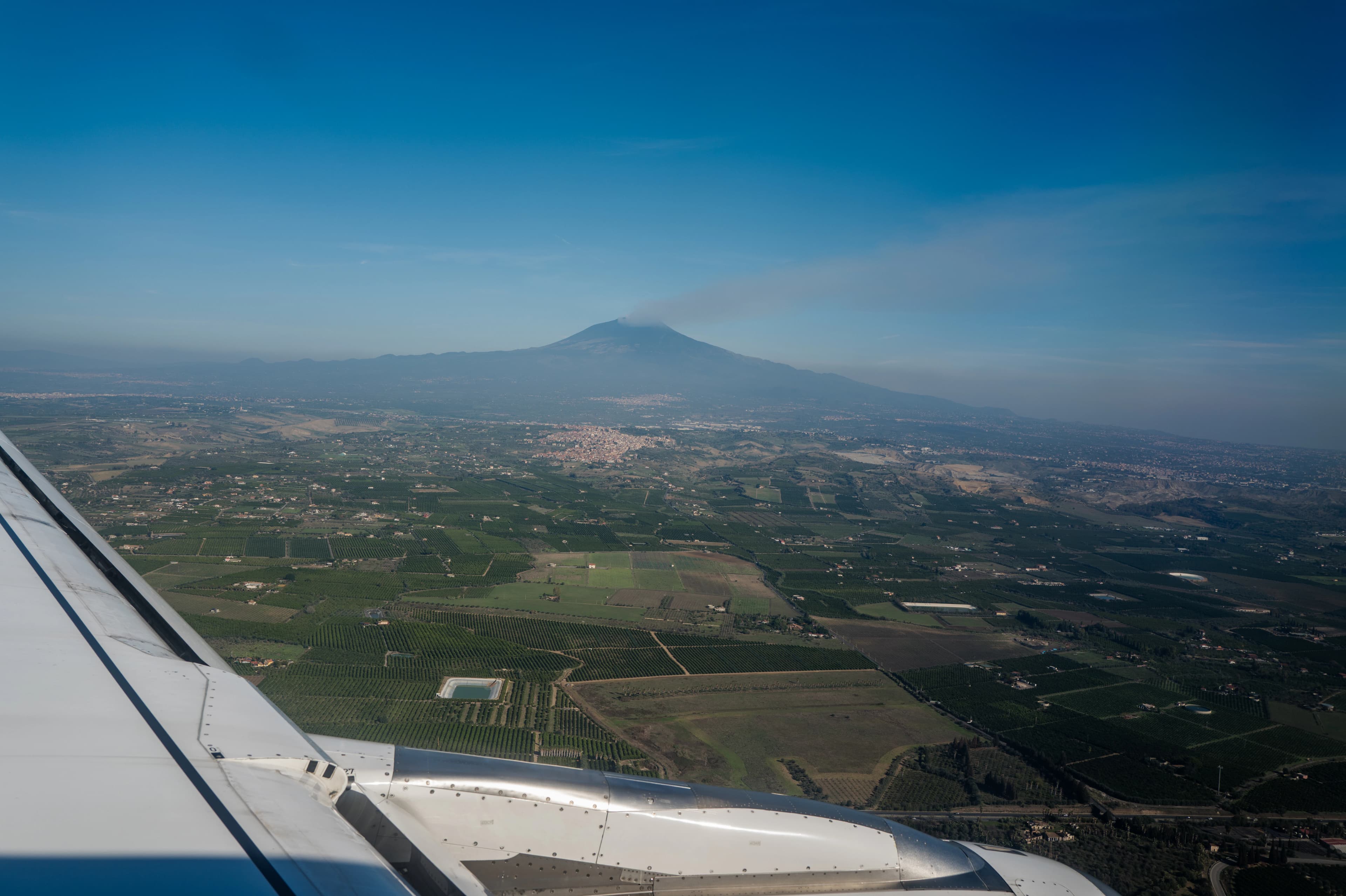
Catania is the black pearl of Sicily — a baroque port city at the foot of Mount Etna, Europe's highest and most active volcano (3,357 m), built from lava stone and existing in its dramatic beauty between fire and sea. The second largest city in Sicily (after Palermo) has been destroyed seven times throughout its history by earthquakes and volcanic eruptions, and each time rebuilt more magnificently — most recently after the devastating earthquake of 1693, which gave rise to Sicilian late baroque architecture, now a UNESCO World Heritage site. Mount Etna dominates the city skyline like an omnipresent deity: From almost every street in Catania, the smoking volcanic peak can be seen, and the fertile lava soils on its slopes produce some of the best wines and pistachios in the world. Excursions to the crater rim (by cable car and off-road vehicle from Rifugio Sapienza at 1,910 m) are among the most spectacular experiences in Sicily. La Pescheria, the historic fish market behind Piazza del Duomo, is a feast for all the senses: Every morning (except Sunday), fishmongers shout their prices, swordfish and tuna are filleted before the eyes of buyers, and the scent of fresh sea urchins (Ricci di Mare) and grilled octopus mingles with the aroma of Sicilian spices. Piazza del Duomo with the Elephant Fountain (Fontana dell'Elefante, Catania's landmark), the baroque cathedral of Sant'Agata, and the Palazzo degli Elefanti is the heart of the city: The small lava elephant with an Egyptian obelisk on its back is the curiosity around which dozens of legends revolve. Nighttime Catania is a revelation: Via Etnea, which runs straight from the Duomo to Etna, is lined with bars and ice cream parlors, and the neighborhoods of San Berillo and Castello Ursino transform into a lively nightlife area with live music and street food.

Cefalù
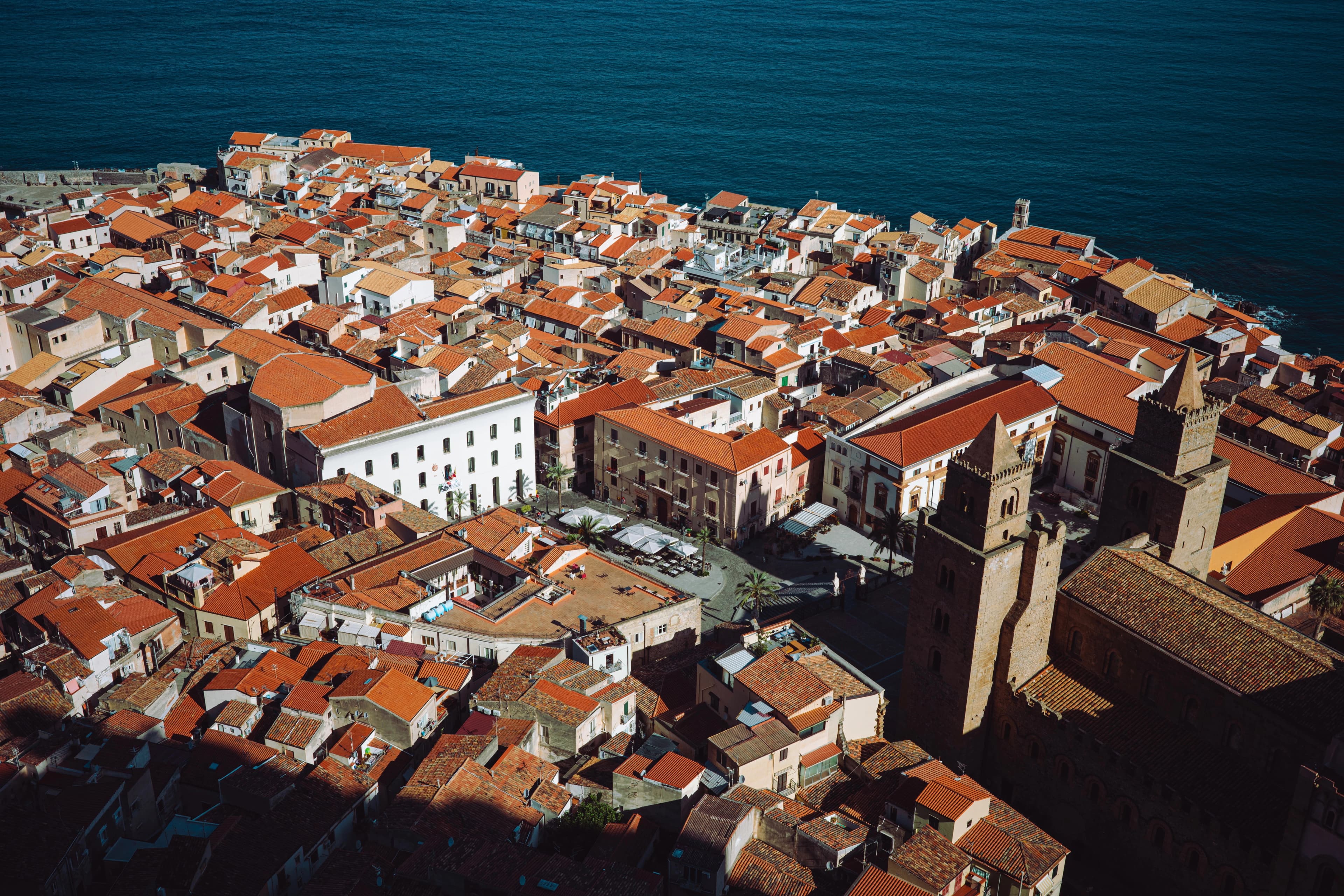
Cefalù is one of the most picturesque coastal towns in Sicily, combining everything that the island has to offer in a compact space: a golden sandy beach right in front of the medieval old town, an imposing Norman cathedral with Byzantine mosaics, winding alleys adorned with bougainvillea, and the dramatic rock La Rocca, which looms over the town like a guardian. Located just 70 kilometers east of Palermo, Cefalù is the perfect beach destination for those who want to combine sun and culture. The cathedral of Cefalù, built in the 12th century under the Norman king Roger II, is a UNESCO World Heritage site and houses one of the most impressive Christ mosaics in the world. The gold-backgrounded Christ Pantokrator in the apse gazes down at visitors with an intense look and is considered one of the masterpieces of Byzantine art. The two massive towers of the cathedral dominate the city skyline and are visible from everywhere. The ascent to La Rocca, the 270-meter-high limestone rock behind the town, is a must. The path leads past the remains of a temple dedicated to Diana and a Norman fortress, ending with a breathtaking panorama over the old town, the beach, and the Aeolian Islands on the horizon. The city beach of Cefalù, the Lungomare, is a wide sandy strip directly below the old town with crystal-clear water and views of the medieval houses. Cefalù is also an excellent starting point for excursions to the Madonie National Park with its mountain villages and hiking trails or for boat tours to the offshore coves. In summer, the nightlife pulses in the bars and restaurants of the old town, which fill up late into the night. From Germany, you can fly to Palermo (Falcone-Borsellino) in just two and a half hours and reach Cefalù in an hour by train or rental car. The best travel time is from May to October, with high summer being able to get quite hot. Cefalù offers excellent value for money compared to the more famous Italian coastal towns.

Gallipoli
Gallipoli is one of the most fascinating coastal towns in Apulia and a gem on the Ionian Sea that still flies under the radar of most German vacationers. The name derives from the Greek "Kallipolis" – "beautiful city" – and this name is fitting: The historic old town sits on a limestone island connected to the modern district by a 17th-century bridge, surrounded by crystal-clear turquoise water and one of the most beautiful coastlines in Southern Italy. The old town of Gallipoli is a labyrinth of narrow streets, baroque churches, and whitewashed houses that seem to rise directly from the sea. The massive city wall encloses the entire island and forms a promenade from which one can overlook the Ionian Sea in all directions. The Cathedral of Sant'Agata impresses with its opulent baroque facade and 17th-century paintings. Beneath the city lies a network of oil presses – the Frantoio Ipogeo – that produced olive oil for all of Europe for centuries. The beaches around Gallipoli are among the most beautiful in Italy. The Baia Verde, with its powdery white sand and shallow turquoise water, resembles the Caribbean. In summer, the beach bars transform into clubs under the stars, and Gallipoli becomes the secret party capital of Apulia – an Italian Ibiza for young Italians. However, away from the party beaches, hidden coves like Punta della Suina and the nature park beaches of Porto Selvaggio offer unspoiled nature. The cuisine of Gallipoli is a celebration of the sea. Fresh fish and seafood are transformed into simple yet heavenly dishes in the trattorias by the harbor. Sea urchins (Ricci di Mare), eaten raw straight from the shell, are a delicacy that is hard to find so fresh elsewhere. The hinterland of the Salento region, with its ancient olive groves, dry stone walls, and masseria farms, offers a rural idyll that pairs excellently with a beach holiday. From Germany, one can fly to Brindisi or Bari in about two and a half hours, and from there, it takes another 1.5 to 2 hours by car to Gallipoli. The best travel time is from June to September, with June and September offering the best balance of warmth, swimming weather, and a relaxed atmosphere, while the peak summer months of July and August can be very hot and crowded in the old town.
Grado
Grado is the sun island of the Adriatic – a charming coastal town on a lagoon island in the far northeast of Italy, which once served as a summer retreat for the Austro-Hungarian monarchy and has preserved the elegant flair of bygone times to this day. When the Austrians discovered their Riviera here in the 19th century, they made Grado a fashionable seaside resort, and the honorary title "Austrian Riviera" is still lovingly maintained. The magnificent Art Nouveau villas and Belle Époque hotels remind visitors of this golden era. The old town of Grado is a labyrinth of narrow streets (Calli), small squares (Campielli), and Venetian facades, making the place a mini-Venice. The early Christian Basilica of Sant'Eufemia, with its impressive mosaic floor from the 6th century, and the adjacent baptistery are art historical treasures of the highest order. In the Campo dei Patriarchi, the main square, one can sit in the evening with a Spritz and watch the leisurely hustle and bustle. Grado's beach stretches over three kilometers and offers fine sand and calm, shallow water – ideal for families. The Grado thermal spa utilizes the mineral-rich thermal water of the lagoon for treatments and thalasso therapies. The lagoon itself is a fascinating natural paradise: between the islands and sandbanks, herons, flamingos, and rare seabirds nest. Boat trips to the uninhabited islands, including the picturesque Barbana with its pilgrimage monastery, are a must-do. Grado is located right on the border with Slovenia and only 40 minutes from Trieste – perfect for a day trip to the multicultural port city. The journey from southern Germany and Austria takes about five to six hours via the Tauern Autobahn-Karawanken Tunnel or the Brenner Pass. The nearest airport is Trieste.
Jesolo
Jesolo is the favorite beach of Germans and Austrians – and for good reason. Just a short hour's drive from Venice, this seaside resort on the upper Adriatic coast offers a 15-kilometer long, golden sandy beach, which is among the most extensive and well-maintained in Italy. Lido di Jesolo, as the coastal town is officially called, is the perfect combination of a relaxed beach holiday and cultural proximity to the lagoon city. The beach of Jesolo is a universe of its own. Over 400 Bagni line up, each with its own character – from family-friendly to exclusive. The water gently slopes, making Jesolo ideal for families with small children. Behind the beach stretches the Via Bafile, a three-kilometer long pedestrian zone with over 1,200 shops, restaurants, ice cream parlors, and bars. In the evening, Via Bafile transforms into a promenade where thousands of vacationers drift through the mild summer air. Beyond the beach, Jesolo surprises with modern architecture: The Jesolo Lido Village by Zaha Hadid, the Lighthouse Tower, and the innovative master plan for coastal development have attracted international attention. The water park Aqualandia and the Tropicarium & Shark Exhibition delight families. The lagoon behind the Lido offers nature experiences with birdwatching and boat tours. Getting there from southern Germany and Austria is straightforward: Via the Brenner Pass and the A4, Jesolo can be reached in about five hours from Munich. The proximity to Venice (Vaporetto from Punta Sabbioni in 30 minutes) makes Jesolo the ideal location for those who want to combine a beach holiday with cultural days in Venice. Parking at the beach costs between €5-10 per day in summer.

Lecce
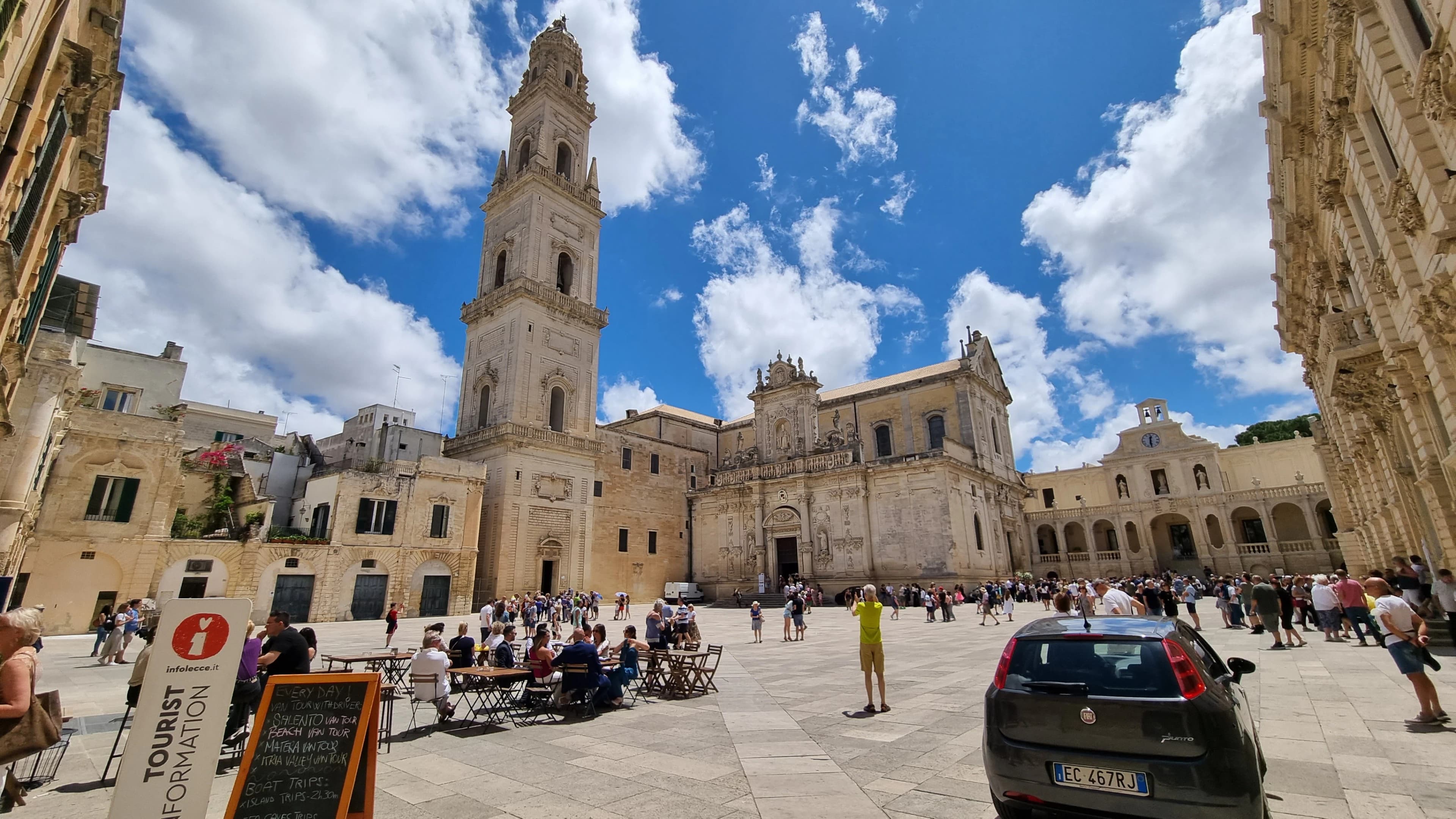
Lecce is the Florence of the South — a city located in the Italian province of Apulia (Puglia) on the Salento peninsula, known for its exuberant Baroque splendor and considered one of Italy's architectural jewels. The golden-yellow Pietra Leccese, a soft limestone that can be carved like butter and shines in the sun like warm honey, has inspired generations of stone masons to a true frenzy of sculpture: Every church facade, every palace, and every balcony railing is a work of art made of putti, fruits, mythical creatures, and floral ornaments. The Basilica di Santa Croce is the masterpiece of Lecce Baroque: For over 200 years (1549-1695), stone masons worked on the facade, which resembles a stone lacework — lions, griffins, angels, roses, and pomegranates wind through such a dense decor that not a square centimeter remains unworked. Inside, classical severity contrasts with the opulence of the facade. The Piazza del Duomo is one of the most beautiful enclosed squares in Italy: The cathedral (1144, Baroque style in the 17th century) with its 68-meter-high bell tower, the bishop's palace, and the seminary form a harmonious ensemble of golden-yellow stone that shines in warm light in the evening. The Roman amphitheater from the 2nd century on Piazza Sant'Oronzo reminds us that Lecce, as Lupiä, was already an important city under the Romans: It had space for 25,000 spectators, and today only half is uncovered, with the other half lying beneath the surrounding buildings. The Salento, the southernmost tip of Apulia between the Ionian and Adriatic Seas, offers some of the most beautiful beaches in Italy: Porto Cesareo, Torre dell'Orso, and the Grotta della Pösia (a natural rock bay) are only 30-40 minutes from Lecce. The nights in Lecce's old town are lively: Aperitivo on Piazza Mazzini, craft beer bars in vaulted cellars, and pizzerias under the open sky.

Matera
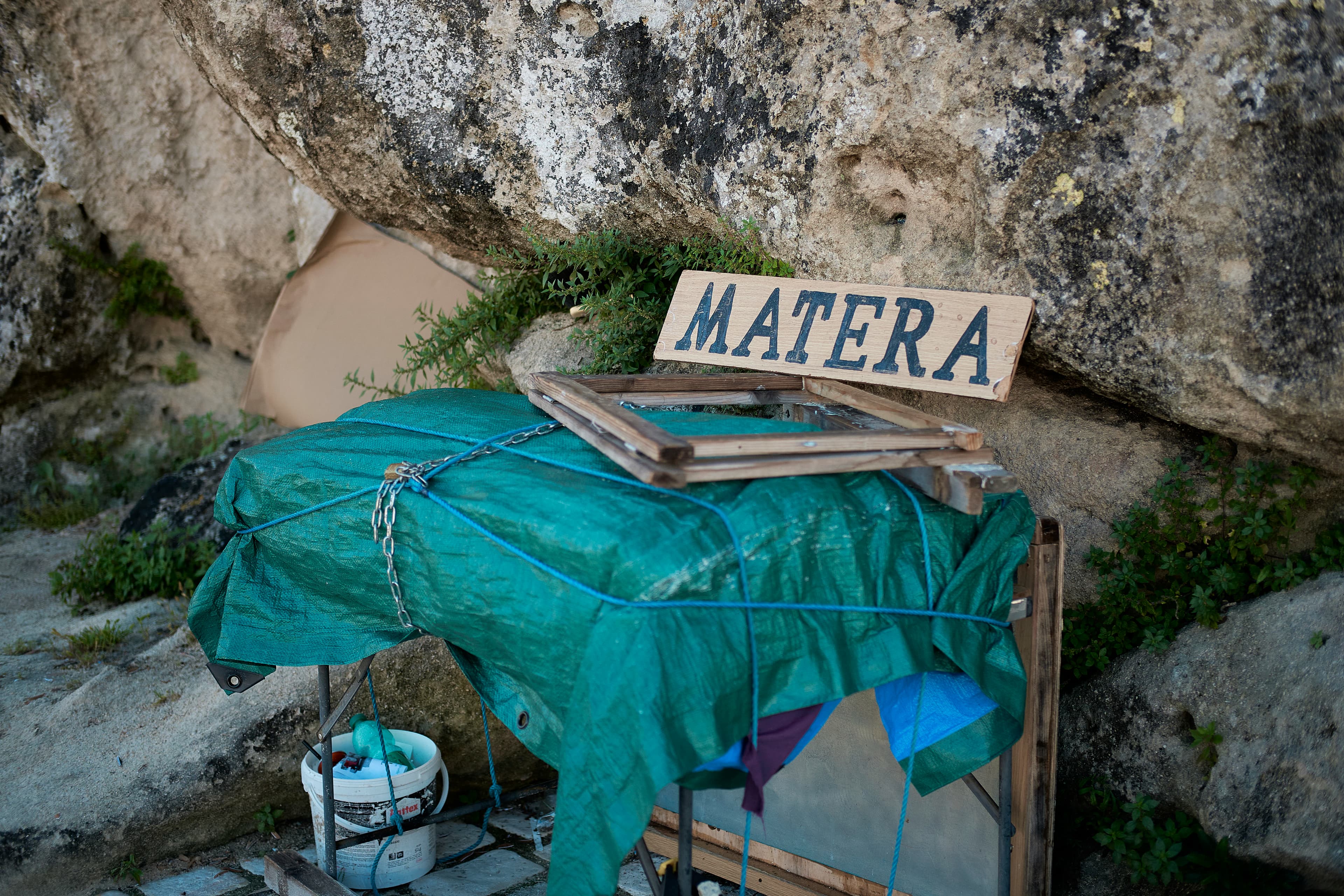
Matera is one of the oldest continuously inhabited cities in the world — a place that seems so prehistoric that Mel Gibson chose it as the backdrop for the crucifixion scenes in The Passion of the Christ. The Sassi di Matera, residential and church caves carved into the soft tuff stone, are a UNESCO World Heritage site and tell a human story that dates back 9,000 years: from the Neolithic period through antiquity to the 20th century, people lived here in the rocks. The Sasso Barisano and the Sasso Caveoso, the two historic districts, terrace down the steep canyon of the Gravina: caves overlap caves, stairs lead through rock openings, and churches with medieval frescoes hide behind unremarkable stone facades. The Chiese Rupestri (rock churches) — over 150 in the city area and the surrounding Murgia plateau — preserve Byzantine and medieval frescoes of astonishing beauty. Until the 1950s, the Sassi were a blemish on Italy: 15,000 people lived in the caves under miserable conditions, without sewage or electricity, with donkeys and goats in the living room. Carlo Levi's book Christ Stopped at Eboli (1945) made the misery of Matera world-famous. The government forcibly resettled the residents, and the Sassi stood empty for decades — a ghost town of stone. The rebirth came in the 1990s: UNESCO status in 1993, followed by a careful restoration that transformed the caves into boutique hotels, restaurants, and museums without destroying their character. In 2019, Matera was chosen as the European Capital of Culture — the triumph of a city that went from being a shame of Italy to a travel highlight. From the Belvedere della Murgia on the opposite side of the Gravina gorge, the most breathtaking view is offered: the entire city, layered like an organic relief grown from the rock, lies spread out before you — especially at sunrise and in the evening light, an unforgettable sight.

Meran
Meran (Merano) in South Tyrol combines alpine flair with a Mediterranean lifestyle like no other place in the Alps. Palms and cypress trees line the Passer promenade, while snow-capped peaks rise in the background. The Therme Meran designed by star architect Matteo Thun, the gardens of Trauttmansdorff Castle, and the historic spa town atmosphere make Meran the perfect place for enjoyment and relaxation. The South Tyrolean cuisine combines the best of Italy and Austria.

Monopoli
Monopoli is the best-kept secret of the Apulian Adriatic coast - an authentic, whitewashed harbor town that has largely escaped mass tourism despite its breathtaking beauty. While the nearby Polignano a Mare has long become an Instagram hotspot, Monopoli preserves its genuine Southern Italian charm with a lively fishing harbor, an atmospheric old town, and over 25 sandy beaches and rocky coves in the immediate vicinity. The old harbor of Monopoli is the pulsating heart of the city. Colorful fishing boats sway in the turquoise water, fishermen mend their nets on the pier, and the surrounding restaurants serve the catch of the day - it doesn't get any fresher than this. The old town behind it is a labyrinth of whitewashed alleys, baroque churches, and hidden piazzas where children play and grandmothers sit on chairs in front of their doors. This lived authenticity fundamentally distinguishes Monopoli from the more touristy coastal towns of Apulia. The beaches around Monopoli are among the most beautiful in the Adriatic. Cala Porto Bianco, Cala Porta Vecchia, and the many small coves along the rocky coast offer crystal-clear water in all shades from turquoise to emerald green. The Castello Carlo V., a mighty fortress from the 16th century right by the sea, now houses a museum and is a picturesque venue for evening events. The culinary experience in Monopoli is exceptional. The city is known for its fish markets, where the fresh catch is auctioned off in the morning, and for its trattorias that still serve at authentic prices. Raw seafood (Crudo) has a long tradition here and is offered with a freshness that is hard to find elsewhere. From Germany, Monopoli can be reached via Bari Airport, which is only 45 kilometers away. The Trenitalia connection takes travelers from Bari to Monopoli in 30-40 minutes. The best travel time is from May to October, with the height of summer being very hot. Compared to the more touristy coastal towns in Italy, Monopoli offers excellent value for money.

Orvieto
Orvieto is one of the most dramatic cities in Italy - a complete medieval town perched on a plateau of volcanic tuff stone that rises steeply up to 50 meters from the Umbrian plain. The city seems to float above the landscape, and the sight of the mighty cathedral on the cliff edge is one of the most unforgettable moments of a trip to Italy. Orvieto is located in the heart of Umbria, the green heart of Italy, between Rome and Florence, and combines Etruscan history, medieval splendor, and one of the best wine regions in the country. The Cathedral of Orvieto is the undisputed masterpiece of the city and one of the most beautiful Gothic cathedrals in Italy. The facade is a monumental work of art made of colored mosaics, sculptures, and reliefs, completed over three centuries and glowing golden in the afternoon sun. Inside, the Cappella di San Brizio impresses with Luca Signorelli's epochal frescoes of the Last Judgment, which served as inspiration for Michelangelo for the Sistine Chapel. Beneath the city lies a fascinating labyrinth of over 1,200 caves and tunnels that have been carved into the soft tuff stone since Etruscan times. The underground network, Orvieto Underground, can be explored through guided tours and reveals oil presses, dovecotes, wells, and even medieval pottery workshops. The Pozzo di San Patrizio, a 62-meter deep Renaissance well with a double spiral staircase, is a masterpiece of engineering. Orvieto is also home to Orvieto Classico, one of Italy's most famous white wines, which thrives in the volcanic soils around the city. The surrounding wineries invite tastings and offer panoramic views of the tuff stone cliffs with the city atop. From Germany, Orvieto is ideally reached by train - the city is directly on the high-speed train route from Florence to Rome and can be reached from the station by funicular in just a few minutes. The nearest airport is Rome-Fiumicino, about 120 kilometers to the south. The best time to visit is from April to October, but winter also has its charm with the famous Umbria Jazz Winter Festival and little tourism.
Ostuni
Ostuni is the white city of Apulia and one of the most photogenic places in southern Italy. Perched on three hills and completely painted in dazzling white, the city shines like a mirage over the endless olive groves of the Valle d'Itria. The lime plaster, with which the houses of the old town have been painted for centuries, originally served as a natural disinfectant against the plague and today gives Ostuni its distinctive, almost oriental character. The old town, the Centro Storico, is a fascinating maze of steep stairs, narrow alleys, vaulted passages, and small squares winding up the hill to the Gothic cathedral. The Cattedrale, with its round rose window from the 15th century, crowns the highest point and offers a panoramic view that, on clear days, reaches the sea. The alleys of the old town are lined with boutiques, artisan shops, small bars, and hidden restaurants that are concealed behind unremarkable doors. What sets Ostuni apart from other white towns in Apulia is its dual nature: the city is both a historical gem and a gateway to some of the most beautiful beaches of the Adriatic. The coast near Torre Guaceto, a marine protected area just 15 kilometers away, offers pristine dune beaches with crystal-clear water, among the cleanest in Italy. The Lido di Ostuni and Rosa Marina are also popular bathing destinations. The surroundings of Ostuni are characterized by ancient olive trees, some over 1,000 years old, whose gnarled trunks stand like sculptures in the landscape. The masserie, traditional Apulian farmhouses, have often been converted into stylish boutique hotels and restaurants, offering an authentic countryside experience with pools, cooking classes, and olive oil tastings. From Germany, one can fly to Brindisi (only 35 km) or Bari (80 km). Traveling by train to Ostuni is also straightforward. The best travel time is from May to October, with evenings in Ostuni being pleasantly cool even in the height of summer.
Otranto
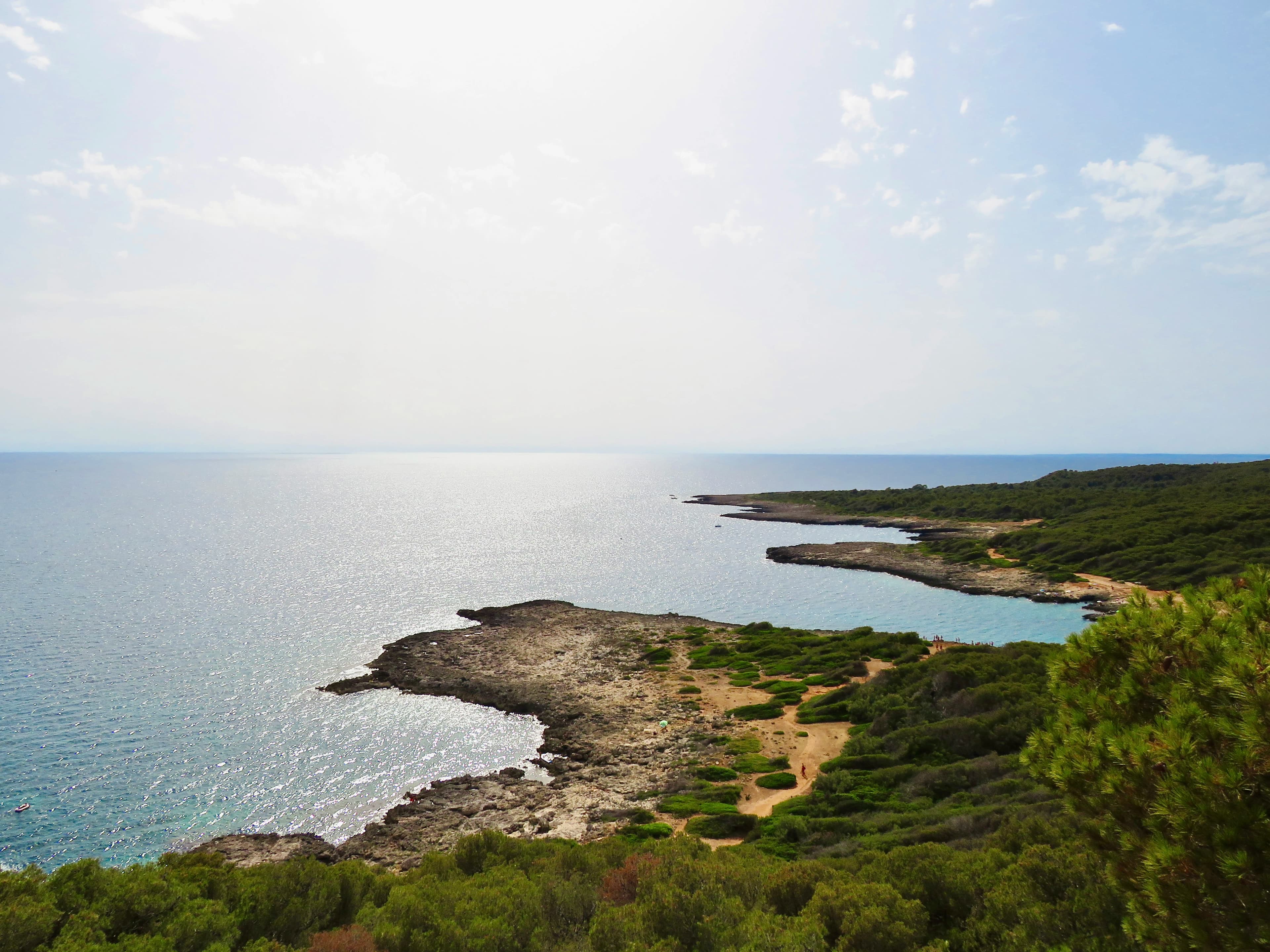
Otranto is the easternmost point of Italy and a sparkling jewel on the coast of Apulia, where the Adriatic meets the Ionian Sea. The small town on the Salento peninsula impresses with a powerful Aragonese fortress, a historic center made of white tuff stone, and one of the most fascinating mosaic floors in Christendom in its Romanesque cathedral. For centuries, Otranto was the gateway between East and West – Greek, Roman, Byzantine, Norman, and Aragonese influences have left a unique cultural layering here. The Cathedral of Otranto is worth the trip on its own: Its 12th-century mosaic floor, created by the monk Pantaleone, extends across the entire nave and depicts a fantastic tree of life with scenes from the Bible, mythology, and medieval daily life – a picture book in stone that is unparalleled. In the crypt with its 42 columns rest the bones of the 800 martyrs of Otranto, who lost their lives during the Ottoman siege in 1480. The coast around Otranto is among the most spectacular in all of Italy. The Baia dei Turchi north of the town offers Caribbean-like sandy beaches between white cliffs. South towards Santa Maria di Leuca, the rocky coast begins with dramatic caves, natural sea pools, and the famous Faraglioni di Sant'Andrea – rock formations in the turquoise sea. The Grotta della Poesia, a natural rock bay, is considered one of the most beautiful natural swimming spots in Italy. Otranto is best reached via Brindisi Airport (about 80 minutes) or Bari (about 2.5 hours). For German travelers, the journey by car and ferry is worthwhile: From Munich via the Brenner motorway to Ancona or Bari and from there along the coastal roads to Otranto. The ferry from Ancona to Igoumenitsa (Greece) also stops in Brindisi, making Otranto the perfect stopover on the way to Greece.
Perugia
Perugia is the secret queen of central Italy — a majestic hill town that stands as the capital of Umbria on a ridge 450 meters high, offering one of the best-kept alternatives to the crowded tourist streams of Tuscany. Those who discover Perugia find medieval splendor, a vibrant university town, and one of the most important chocolate traditions in Europe. Corso Vannucci leads from the Etruscan Arch (3rd century BC) to Piazza IV Novembre and the Palazzo dei Priori — one of the most imposing Gothic town halls in Italy. Inside, the Galleria Nazionale dell'Umbria houses masterpieces by Perugino, Pinturicchio, and Fra Angelico. The Fontana Maggiore (1275-1278) by Nicola and Giovanni Pisano, with 50 relief panels, is one of the most beautiful medieval fountains in Europe. In the evening light, when students sit on the steps, this is one of the most magical places in Italy. Eurochocolate, the largest chocolate festival in Europe, transforms Perugia into a land of plenty every October. Since 1907, Perugia has been home to Perugina and the legendary Baci chocolates — chocolate-hazelnut balls with love messages. The underground city: The Rocca Paolina, a papal fortress from the 16th century, was built over an entire medieval neighborhood. Today, escalators lead through the underground streets — a hauntingly fascinating time travel.

Polignano a Mare
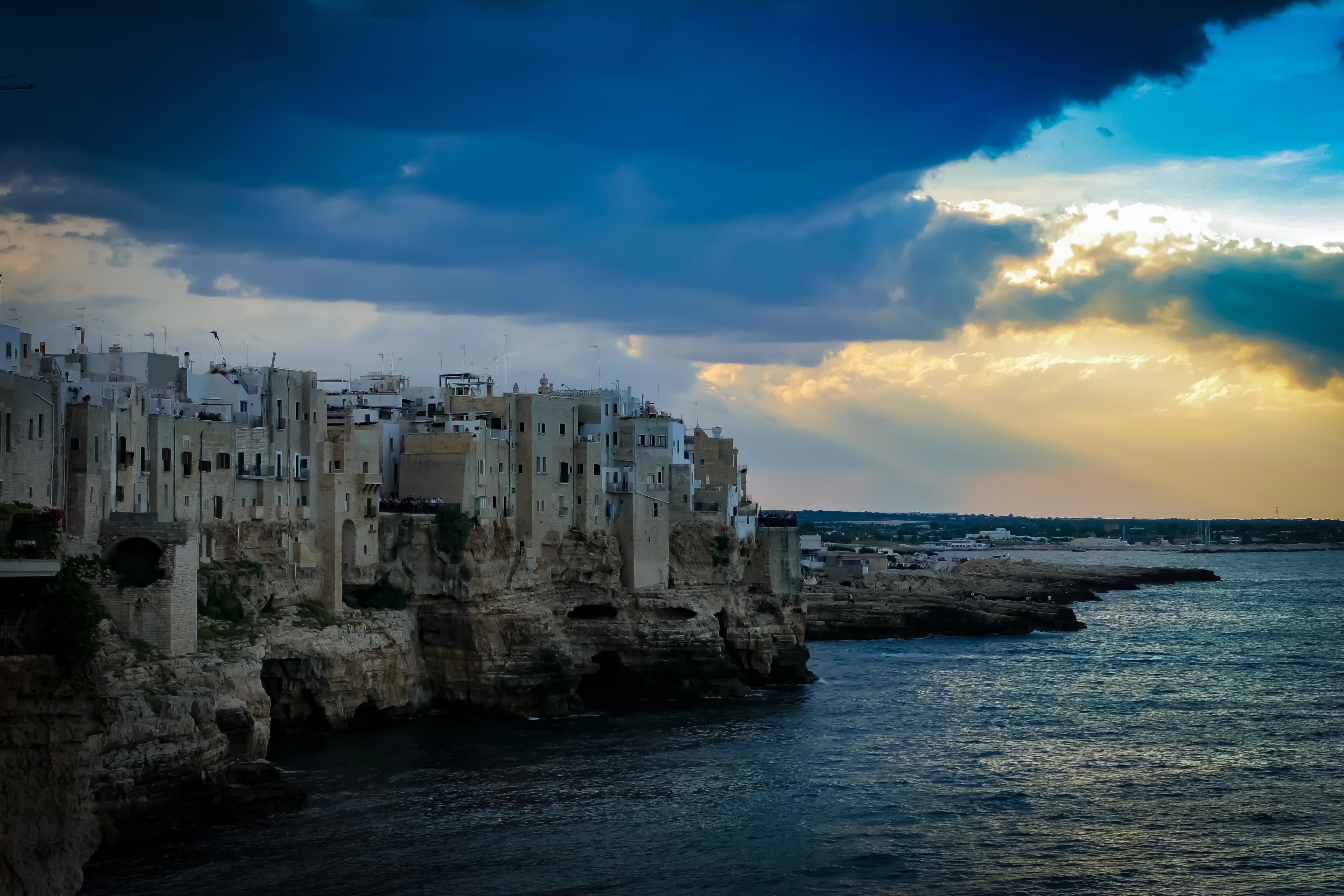
Polignano a Mare is one of the most spectacular coastal towns in Italy and the jewel of the Apulian Adriatic coast. The old town perches on rugged limestone cliffs that drop straight into the turquoise sea, offering breathtaking views. The place became famous as the birthplace of the legendary singer Domenico Modugno, whose song "Volare" echoes around every corner and whose statue with outstretched arms stands at the cliff's edge. The absolute highlight is Lama Monachile beach, also known as Cala Porto - a tiny cove between high rock walls, accessed via an old stone arch bridge. The image of this cove with its crystal-clear turquoise water, white cliffs, and the old town houses perched above is one of the most photographed motifs in Southern Italy and has made Polignano an Instagram phenomenon. In summer, the Red Bull Cliff Diving World Series takes place here, where cliff divers plunge into the sea from heights of up to 27 meters. The old town itself is a labyrinth of whitewashed alleys, where ceramic shops, small galleries, and traditional restaurants hide. The numerous terraces and balconies offer surprising views of the sea and the caves that have eroded into the cliffs below the town. Grotta Palazzese houses one of the most spectacular restaurants in the world - dining in the natural sea cave by candlelight is an unforgettable experience. From Germany, Polignano a Mare can be reached via Bari Airport, which is only 35 kilometers away. Regular trains from Bari take about 30 minutes. A rental car allows for exploration of the entire Apulian coast with its trulli villages, olive groves, and hidden coves. The best travel time is from May to October, with July and August being very crowded. Polignano offers moderate prices by Italian standards, except for upscale restaurants.
Portofino
Portofino is perhaps the most beautiful fishing village in the world and has been a synonym for Mediterranean elegance, jet-set glamour, and Ligurian lifestyle since the 1950s. Located at the tip of a small peninsula southeast of Genoa, the village with its pastel-colored facades hugs a tiny natural harbor where superyachts anchor alongside traditional fishing boats. Elizabeth Taylor, Humphrey Bogart, and Grace Kelly have stayed here, and to this day, Portofino attracts the rich and famous from all over the world. The charm of Portofino lies in its perfect miniature: the entire village consists of little more than a handful of houses around the Piazzetta, the legendary village square right by the harbor. Here, one sits with an espresso or Aperol Spritz and watches the hustle and bustle of yachts and passersby. The Church of San Giorgio towers on the hill above the village and offers a panoramic view of the Ligurian Sea, which is worth the trip alone. Even higher is Castello Brown, a medieval fortress with a lush garden and one of the best viewpoints along the entire Riviera. The nature reserve of Portofino surrounds the village with dense pine forests, macchia, and hidden coves. Hiking trails lead through the Parco Naturale Regionale di Portofino to the Abbey of San Fruttuoso, a Benedictine monastery from the 10th century, which can only be reached on foot or by boat. In front of the abbey lies the famous Christ statue Cristo degli Abissi on the seabed, a popular destination for divers and snorkelers. From Germany, Portofino is best reached via Genoa Airport (Cristoforo Colombo), which is about 35 kilometers away. Alternatively, Milan-Malpensa Airport is an option, from where it takes about two and a half hours by car to reach the Riviera. Portofino is not a destination for bargain hunters – prices are high even by Italian standards. However, those who want to experience authentic Dolce Vita in its purest form will find an unforgettable experience here. The best travel time is from May to October, with the high summer months of July and August being very crowded.
Positano
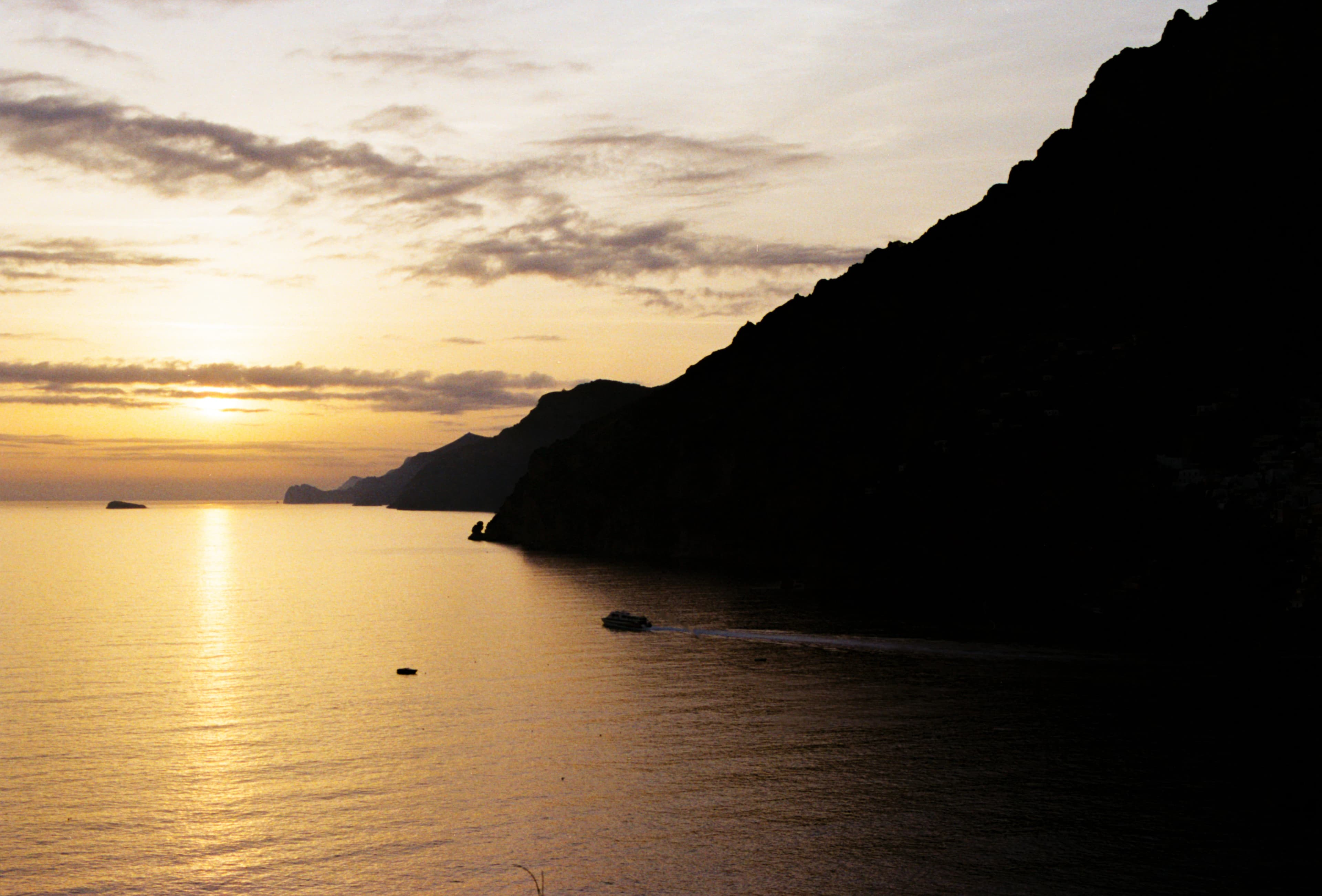
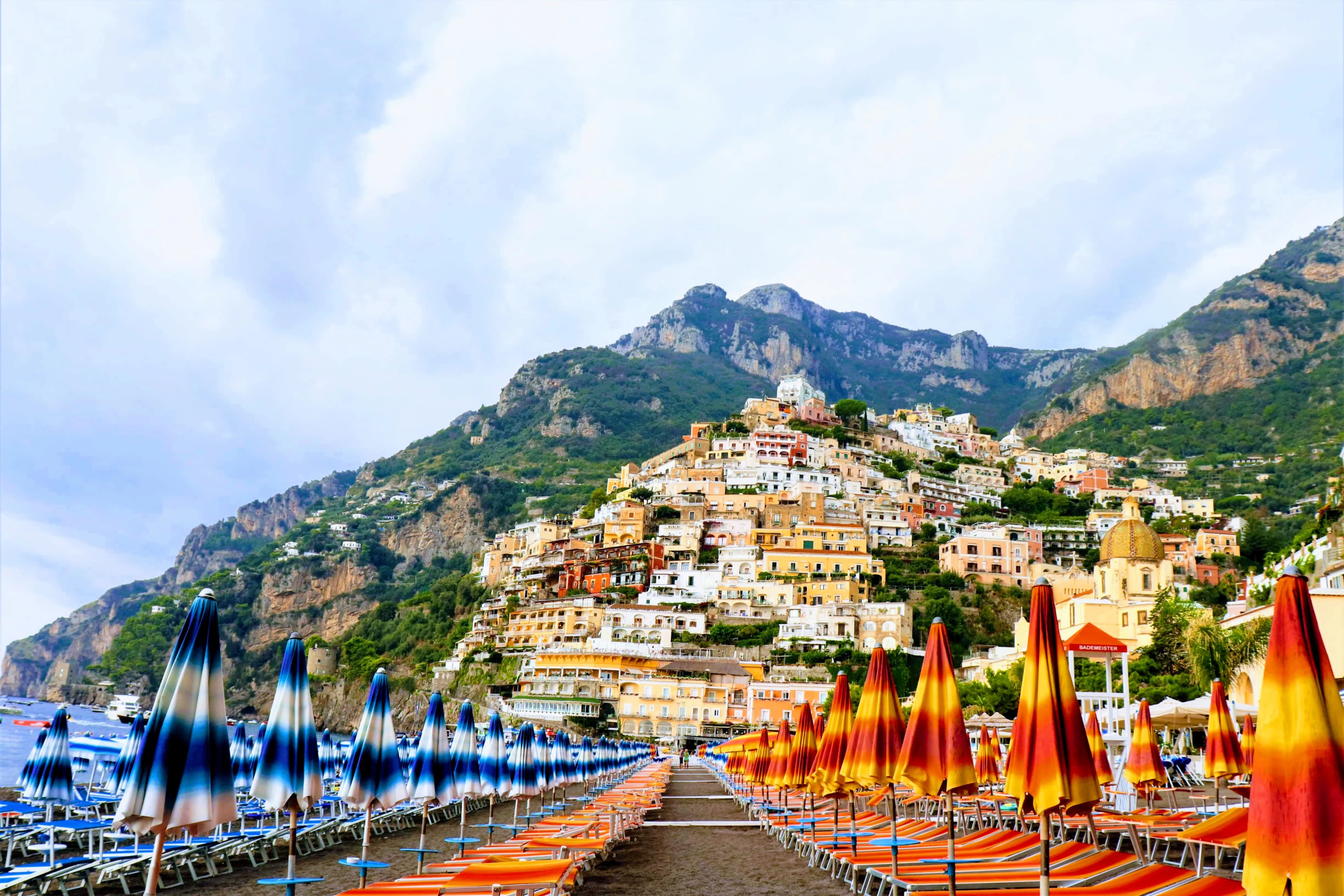
Positano is the epitome of Italian Dolce Vita on the Amalfi Coast — a village that hangs like a colorful painting on steep cliffs above the Tyrrhenian Sea. Pastel-colored houses in pink, peach, yellow, and white cascade down the slope to the dark pebble beach of Spiaggia Grande, while the majolica dome of the Chiesa di Santa Maria Assunta shines in the sun. John Steinbeck wrote in 1953: Positano is a dream place that doesn’t seem quite real while you are there, and becomes tangible only in memory. The narrow stairways (there are no real roads, only stairs) wind past boutiques with handmade fashion, ceramic workshops, and lemon gardens. Moda Positano — airy linen dresses and colorful sandals — has been a distinct fashion style since the 1960s when Brigitte Bardot and Jackie Kennedy made the place famous. The Sentiero degli Dei (Path of the Gods) is one of the most spectacular coastal hikes in Europe: From Agerola to Nocelle (7.8 km, 3-4 hours), the path leads high above the Amalfi Coast with breathtaking views of Positano, Capri, and the open sea. The descent from Nocelle to Positano is via 1,700 steps — or more conveniently by bus. Boat trips to the island of Capri (40 minutes), to the Emerald Grotto (Grotta dello Smeraldo) near Conca dei Marini, or along the entire Amalfi Coast are among the most beautiful experiences. In the evening, when the lights of the houses illuminate the steep slope and fishing boats sway on the dark sea, Positano reveals its full magic.

Ravello
Ravello sits 350 meters above the sea on a cliff of the Amalfi Coast and has been revered for centuries as the "City of Music." Richard Wagner composed parts of his Parsifal here, and to this day, the famous Ravello Festival attracts classical music lovers from all over the world every summer. German cultural travelers particularly appreciate the legendary gardens of Villa Rufolo and Villa Cimbrone, whose terraces offer a panoramic view that Gore Vidal once called "the most beautiful in the world." In contrast to the lively Amalfi or Positano, Ravello radiates an elevated tranquility - here one strolls through quiet alleys, listens to piano music from open windows, and enjoys the sunset with a glass of local wine. The seclusion on the mountain makes Ravello the perfect retreat for couples and those seeking peace.
Ravenna
Ravenna is the mosaic capital of the world — an unassuming city in Emilia-Romagna that hides the greatest early Christian and Byzantine mosaics of humanity behind plain brick facades. Eight buildings share the UNESCO World Heritage title, and anyone entering the Basilica of San Vitale for the first time experiences a breathtaking moment. The Basilica of San Vitale (547 AD) is the masterpiece of Byzantine art outside Istanbul: The octagonal nave is covered with mosaics depicting Emperor Justinian and Empress Theodora in their court — purple robes, jewels, and a golden background in a detail fidelity that surpasses any painting. The Mausoleum of Galla Placidia (5th century) appears unremarkable from the outside, but inside lies perhaps the most beautiful room of Western art: A night blue starry sky made of golden mosaics arches over the visitor, with light filtering through alabaster windows in warm amber tones. Sant'Apollinare Nuovo preserves two parallel mosaic processions: a procession of 26 martyrs and 22 virgins — 1,500 years old and in a color intensity that regularly leaves visitors speechless. Dante's tomb: Dante Alighieri died in exile in Ravenna in 1321. Despite centuries of attempts by Florence to reclaim his remains, he rests here. Florence sends olive oil every year for the eternal lamp at the grave — a silent gesture of remorse.
Rimini
Rimini is the undisputed capital of the Italian Adriatic coast and has been one of the most popular travel destinations for German tourists for decades. The city on the Romagna coast combines 15 kilometers of fine sandy beach with a surprisingly rich cultural history that dates back to Roman times. The Arch of Augustus and the Tiberius Bridge testify to the significance of the ancient colony of Ariminum, while the Renaissance splendor of the Tempio Malatestiano, designed by Leon Battista Alberti, is among the architectural jewels of Emilia-Romagna. But Rimini is above all one thing: a celebration of life by the sea. The kilometers of beaches are divided into numbered Bagni, each with its own umbrellas, sunbeds, and beach bar. The system may be unusual for first-time visitors, but it offers an unmatched comfort: showers, changing rooms, playgrounds, lifeguards, and fresh Piadina right by the water. In the evening, the promenade transforms into an endless promenade with gelaterias, restaurants, and live music. Federico Fellini, the legendary film director, was born in Rimini and paid an unforgettable tribute to his hometown in films like Amarcord. The FELLINI Museum, dedicated to him in the restored Castel Sismondo, is a must for culture enthusiasts. The old town around Piazza Cavour and the fish market surprises with elegant palaces, lively bars, and a culinary scene that goes far beyond beach pizza. For German tourists, getting there is quite simple: by car via the Brenner Pass and the A14, Rimini can be reached in about seven hours from Munich. Alternatively, low-cost airlines fly directly to Federico Fellini Airport. One should plan for toll fees on Italian highways – approximately €30-40 from the Austrian border to Rimini. The city is also a perfect starting point for day trips to San Marino, Ravenna, or the hills of Romagna.
San Gimignano
San Gimignano is the Manhattan of the Middle Ages and one of the best-preserved medieval towns in Italy. The small town in the Tuscan hillside is famous for its fourteen noble towers, which stretch like stone fingers into the sky and make the silhouette of the town unmistakable. In the Middle Ages, there were once 72 of these towers here - every wealthy family built their tower as a symbol of power and wealth. The UNESCO World Heritage site sits on a 334-meter-high hill between the Elsa and Elsa valleys and offers panoramas over the classic Tuscan landscape with cypress trees, vineyards, and olive groves. The Piazza della Cisterna, a triangular square with the medieval fountain at its center, is the heart of San Gimignano and one of the most atmospheric squares in all of Tuscany. Here is also the Gelateria Dondoli, which has been awarded the title of best ice cream parlor in the world multiple times, and its saffron-Vernaccia ice cream is one of the culinary pilgrimage sites of the region. The adjacent Piazza del Duomo houses the Collegiata, a Romanesque church whose interior walls are completely covered with 14th-century frescoes - a picture book of medieval painting. The tallest of the preserved towers, the Torre Grossa, can be climbed and offers a panoramic view that, on clear days, reaches as far as Siena and the coast. The Museo Civico in the Palazzo del Popolo showcases impressive paintings from the Sienese school alongside the Torre Grossa. San Gimignano is also famous for its Vernaccia white wine, the only DOCG white wine in Tuscany, which is grown in the surrounding vineyards. From Germany, San Gimignano is best reached via the airports of Florence or Pisa, both about 60-80 kilometers away. A rental car is essential, as San Gimignano has no train station. The best travel time is from April to October, with the summer months being very crowded. The most beautiful times are early morning or late afternoon when the day tourists have left and the golden sun bathes the towers in warm light.

Sorrento
Sorrento towers on dramatic cliffs above the Bay of Naples and offers one of Italy's most iconic views - across the deep blue sea to the mighty Vesuvius. The town has been a favorite destination for German tourists since the 19th century and has lost none of its charm. The lively Piazza Tasso, the winding alleys of the old town with their inlay workshops, and the enchanting scent of lemon blossoms and fresh pizza make Sorrento the perfect base for exploring Campania. From here, you can easily reach Pompeii and Herculaneum, the Amalfi Coast, Capri, and Ischia. The local Limoncello tradition is particularly vibrant here, and in the numerous trattorias, Gnocchi alla Sorrentina is served, which is among the best in all of Italy.

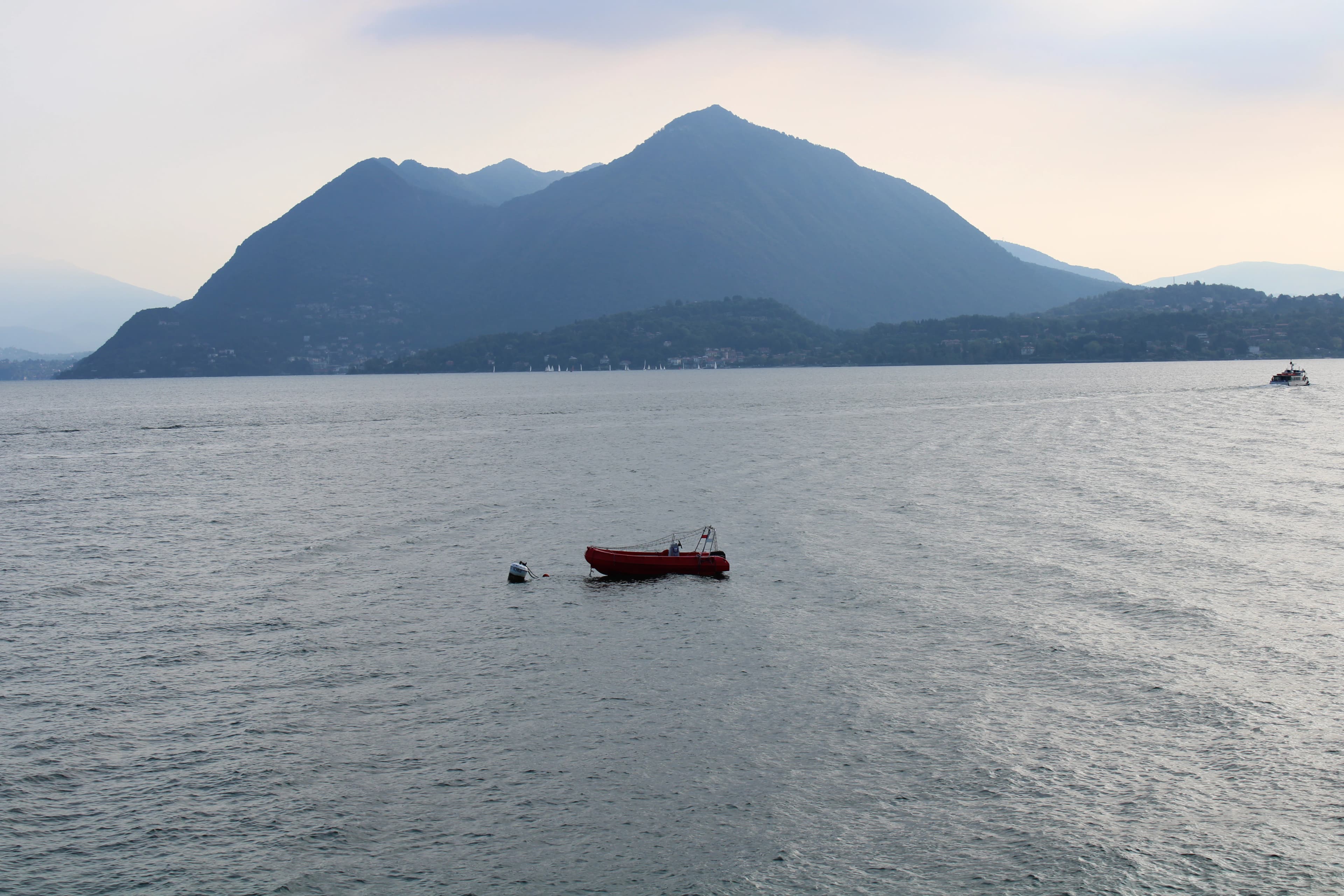
Stresa
Stresa on the western shore of Lake Maggiore is an elegant spa town of the Belle Époque and a starting point for the world-famous Borromean Islands. The magnificent lakeside promenade with its grand hotels, the exotic gardens of Isola Bella and Isola Madre, as well as the cable car to Monte Mottarone make Stresa one of the most romantic lake destinations in Italy. Hemingway wrote parts of "A Farewell to Arms" in Stresa — the charm of the Roaring Twenties is still palpable today.

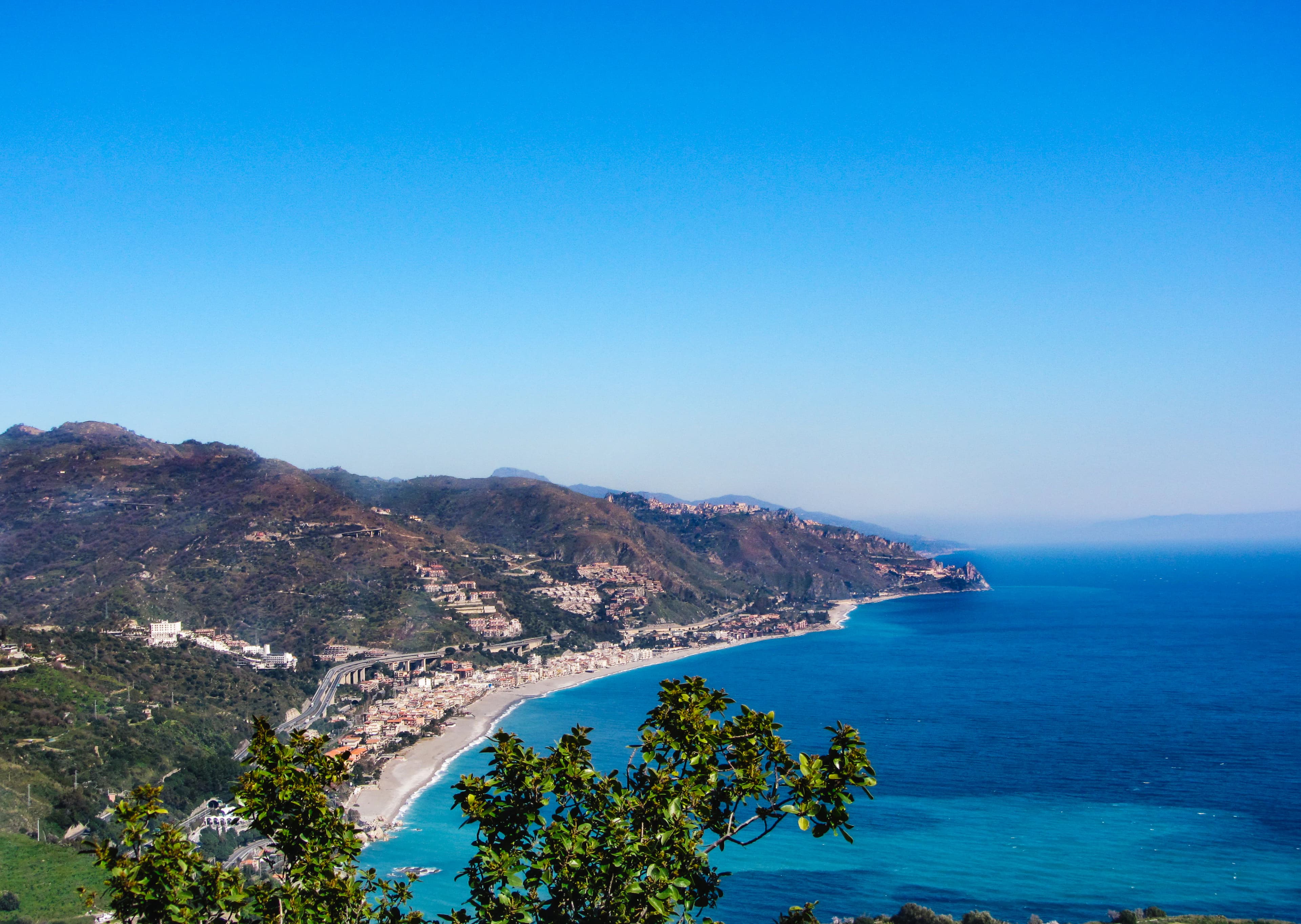
Taormina
Taormina, perched high on a rocky terrace on the east coast of Sicily, is the epitome of Mediterranean beauty. The combination of ancient ruins, the active volcano Etna as a backdrop, and the sparkling Ionian Sea at its feet makes this place one of the most photogenic spots in Italy — and that says a lot for Sicily. The Teatro Antico di Taormina is one of the most spectacularly located ancient theaters in the world. The Greek-Roman structure from the 3rd century BC accommodates 5,400 spectators, and from the upper tiers, the view sweeps over the Bay of Naxos and the snow-capped summit of Etna — a backdrop that no stage designer in the world could have crafted better. In summer, the Taormina Film Fest and high-profile concerts take place here. Corso Umberto, the promenade of Taormina, stretches from Porta Messina to Porta Catania through the historic center. Elegant boutiques, antique shops, pastry shops, and cafes with terraces line the pedestrian zone. Piazza IX Aprile, with its checkerboard pavement, offers one of the most legendary sunset spots in Italy — an Aperol Spritz with a view of Etna at sunset. Below the town lies Isola Bella, a tiny nature reserve connected to the mainland by a narrow strip of sand and one of the most beautiful bathing spots in Sicily. The bay, with its crystal-clear water and rocky caves, is accessible by cable car from Taormina. Taormina has an illustrious history as a destination for the rich and famous. From Goethe to Oscar Wilde to the film stars of the jet set era — and most recently as a filming location for the HBO series 'The White Lotus' — the place has attracted creative minds and connoisseurs for centuries. Excursions to Etna, Europe's highest and most active volcano, can be made from Taormina in an hour. Climbing to the craters offers an unforgettable experience among lava fields and steaming fumaroles.
Vieste
Vieste is the pearl of Gargano and one of the most beautiful seaside resorts on the Adriatic coast of Italy. Located at the very tip of the Gargano Peninsula, the spur of the Italian boot, the whitewashed old town sits on a dramatic cliff between two long sandy beaches. The Pizzomunno, a monumental white limestone rock on the southern beach, is the city's landmark, surrounded by a romantic legend of a couple separated by the gods. The two main beaches of Vieste are among the most beautiful in the entire Adriatic. The Spiaggia del Castello in the north and the Spiaggia di Pizzomunno in the south offer fine golden sand, crystal-clear water, and enough space even in the high summer. Along the rugged coast of Gargano, dozens of hidden coves are lined up, accessible only by boat or steep paths. The most famous is the Baia delle Zagare with its two white rock stacks rising like sculptures from the turquoise sea. The old town of Vieste is a labyrinth of narrow, whitewashed alleys, stairs, and small squares, dominated by the Norman-Swabian castle and the Romanesque cathedral. At the Chianca Amara, the Bitter Stone, a plaque commemorates a historical massacre by Ottoman pirates. In the evening, the old town transforms into a lively promenade with restaurants, ice cream parlors, and souvenir shops. The Trabucchi, the traditional wooden fishing platforms along the coast, are the cultural landmark of Gargano. These spectacular wooden constructions on stilts extend over the sea and are still partly used as fish traps, partly operated as atmospheric fish restaurants. Dining on a Trabucco at sunset is an unforgettable experience. The Gargano National Park in the hinterland offers dense forests, the Foresta Umbra (the shadow forest), and the Tremiti Islands off the coast, which are accessible by ferry and offer excellent diving and snorkeling spots. From Germany, Vieste can be reached via Bari Airport (180 km) or Foggia. The best travel time is from June to September, with the high season in August being very crowded.
Rome
Rome, the Eternal City, is a vibrant open-air museum with over 2,700 years of history, where ancient ruins, baroque splendor, and the pulsating life of a modern metropolis fascinatingly blend. The Colosseum, once the stage for bloody gladiatorial battles for 50,000 spectators, still majestically overlooks the Roman Forum — the political heart of the Roman Empire. Just a few minutes' walk away stands the Pantheon with its perfect dome, which has held without steel reinforcement for almost 2,000 years. The Vatican forms a state within a state: The Sistine Chapel with Michelangelo's ceiling fresco, the monumental St. Peter's Basilica with its 136-meter-high dome, and the endless corridors of the Vatican Museums attract millions of visitors each year. The Trevi Fountain, where one throws a coin to return to Rome, the Spanish Steps, and Piazza Navona with Bernini's Fountain of the Four Rivers are must-see attractions. However, Rome's true soul reveals itself away from the tourist hotspots: In Trastevere, cobblestone streets wind between ivy-covered facades, trattorias serve Cacio e Pepe from grandmother's recipe, and children play late into the night at Piazza Santa Maria. Testaccio is the culinary heart — here, Roman cuisine was born with Carbonara, Amatriciana, and Supplì. An espresso at the bar for €1.20, a tramezzino on the go, and an aperitivo at sunset on Pincio Hill: Rome is Dolce Vita in its purest form.

Florence
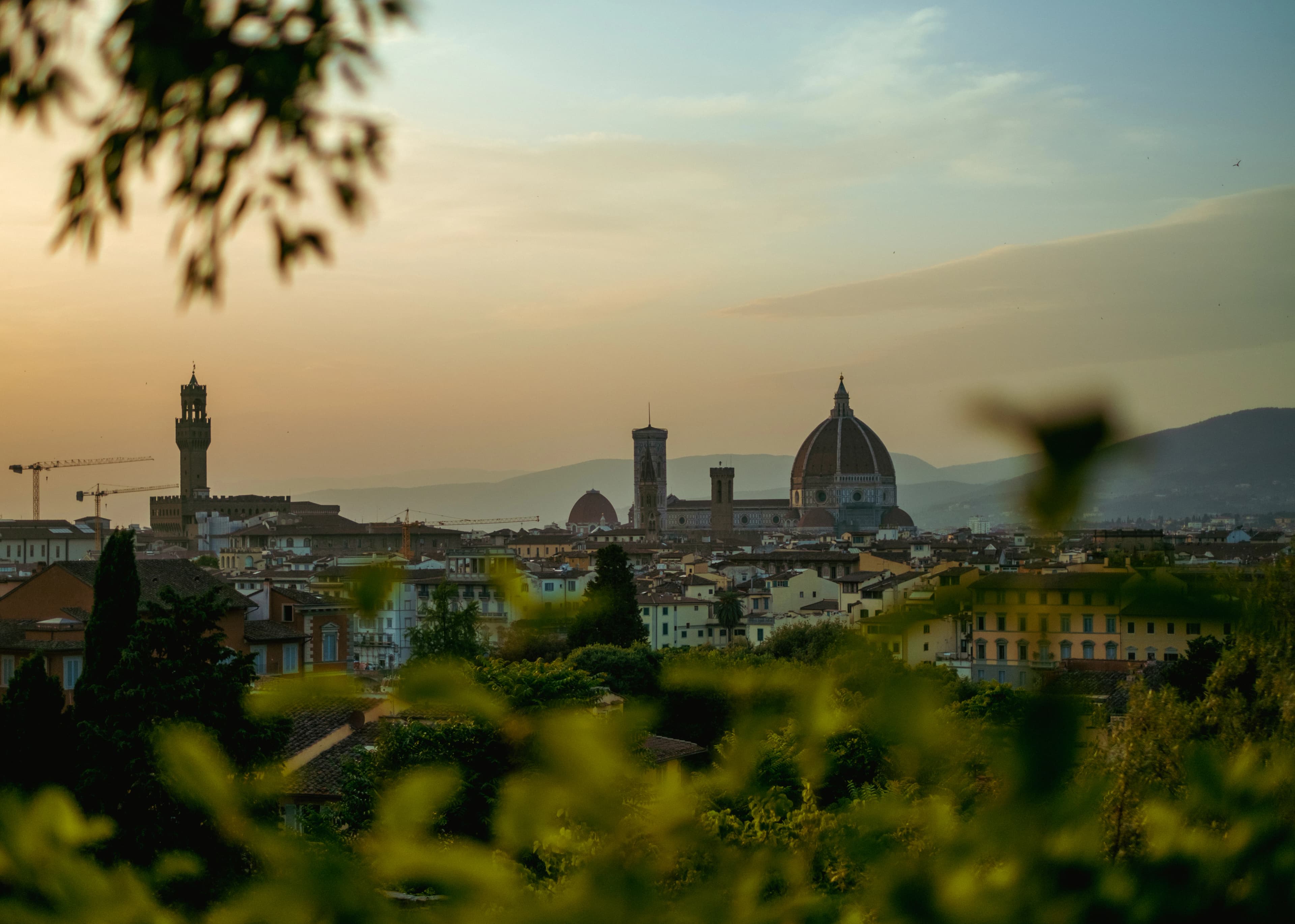
Florence is the cradle of the Renaissance and a city that resembles a walkable art museum. Beneath the massive dome of Brunelleschi's cathedral, which has dominated the skyline since 1436, lies a concentration of masterpieces that is unparalleled worldwide. In the Uffizi, Botticelli's 'Birth of Venus' and works by Leonardo, Raphael, and Caravaggio hang. In the Galleria dell'Accademia stands Michelangelo's David — over four meters of flawless marble that has amazed visitors since 1504. The Ponte Vecchio, the oldest bridge in the city, is lined with goldsmith shops and offers one of the most romantic views in Italy at sunset. The Palazzo Pitti with the Boboli Gardens, the Basilica of Santa Croce (the burial site of Michelangelo, Galileo, and Machiavelli), and the fairy-tale Biblioteca Medicea Laurenziana by Michelangelo showcase the incredible density of cultural treasures. Across the Arno lies Oltrarno — the authentic Florence with artisan shops, hidden trattorias, and the view from Piazzale Michelangelo, which encompasses the entire city with its dome and cypress hills. Tuscan cuisine shines with Bistecca alla Fiorentina, Ribollita, and Schiacciata. Florence is compact enough to explore on foot and large enough to always discover something new. Tip: The less visited Brancacci Chapel houses frescoes that even inspired Michelangelo.
Venice
Venice floats like a dream on 118 islands in the midst of a lagoon — a city without streets and cars, where gondolas and vaporetti are the means of transport and behind every bridge a new picture is revealed. St. Mark's Square with the Doge's Palace, the Basilica di San Marco with its golden mosaics, and the Campanile is the opulent centerpiece, but Venice's true magic lies in getting lost. Those who leave the main routes discover quiet canals, tiny bridges, and hidden campi (squares) where Venetians drink their Aperol Spritz. The Cannaregio district, where the Jewish Ghetto once was, is far less crowded than San Marco. Dorsoduro houses the Peggy Guggenheim Collection and the Accademia with Venetian masterpieces by Titian, Tintoretto, and Veronese. A trip to the lagoon islands is a must: Murano for blown glass, Burano for its rainbow-colored fishermen's houses and lace embroidery, Torcello for the oldest church in the lagoon. The best time for Venice is spring or late autumn — fewer tourists, mild light, and the mysterious atmosphere of fog over the canals. The Biennale (art in odd years, architecture in even years) makes Venice a meeting point for the international avant-garde. Cicchetti (Venetian tapas) with an Ombra (glass of wine) in a Bacaro bar is part of the authentic Venice experience.
Milan
Milan is Italy's secret capital — an economic powerhouse, fashion mecca, and cultural metropolis all in one. The Gothic cathedral, which took 600 years to build, is the city's landmark with its 3,400 statues and walkable rooftop terrace. Leonardo da Vinci's 'The Last Supper' is hidden in Santa Maria delle Grazie — one of the most famous paintings in the world (book tickets weeks in advance!). The Quadrilatero della Moda around Via Montenapoleone brings together the biggest names in the fashion world: Prada, Gucci, Versace, and Armani have their flagship stores here. The Galleria Vittorio Emanuele II, Europe's oldest shopping arcade with its cast-iron glass dome, connects the cathedral with La Scala — one of the most legendary opera houses in the world. But Milan has much more than luxury and business: The Navigli district with its canals (once designed by Leonardo da Vinci) is the liveliest nightlife area in the evenings with bars, restaurants, and vintage markets. Brera is the artists' district with the Pinacoteca di Brera, one of Italy's most important art museums. The modern side is showcased in the Porta Nuova district with the Bosco Verticale — two residential towers whose facades are covered by 900 trees and 20,000 plants. Milan's cuisine is hearty-elegant: Risotto alla Milanese with saffron, Ossobuco, and the famous Cotoletta.

Naples
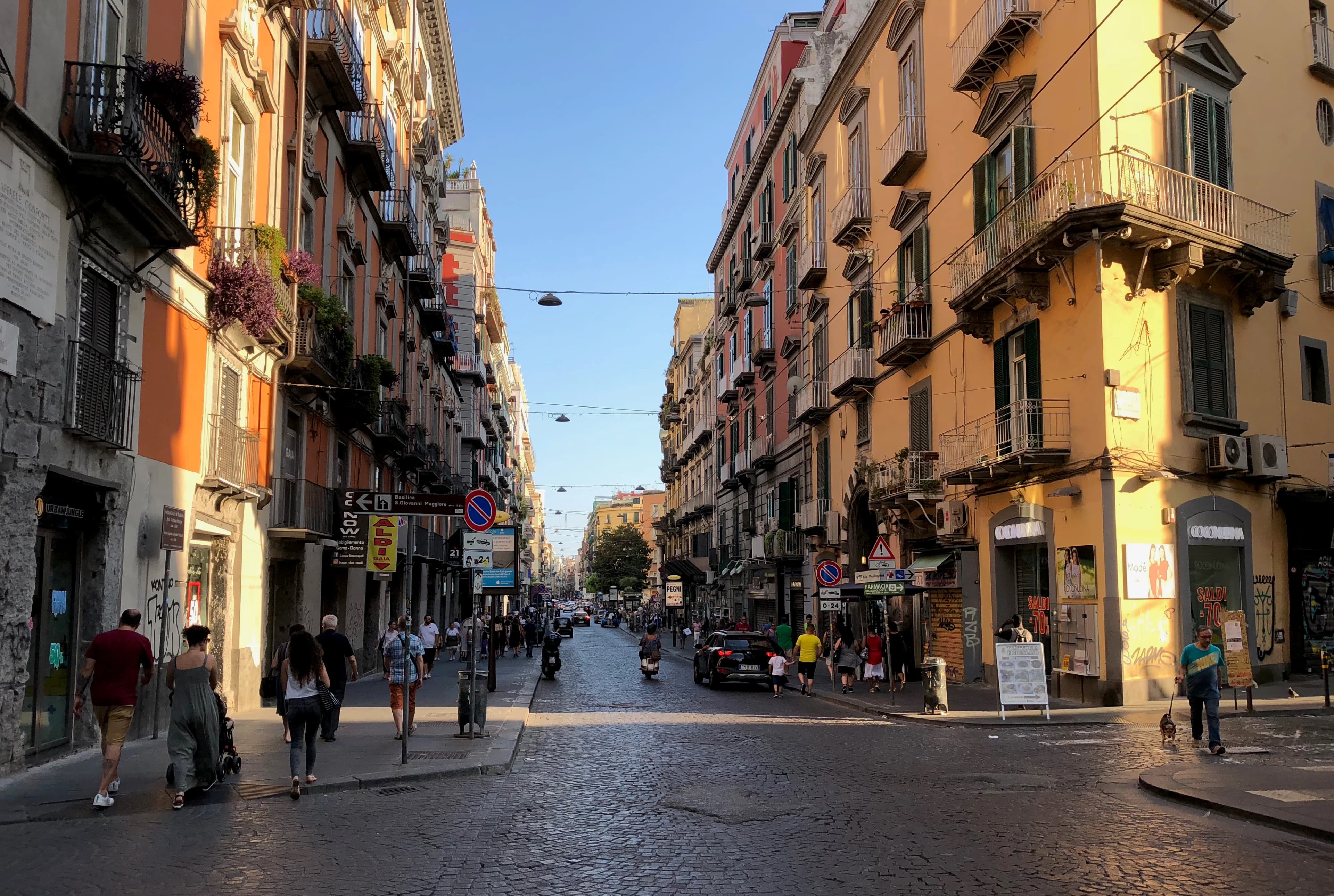
Naples is rough, chaotic, loud — and absolutely irresistible. The birthplace of pizza (the Margherita was created here in 1889 for Queen Margherita) pulses with an energy that can’t be found anywhere else in Italy. Spaccanapoli, the straight street that divides the old town, is a sensory overload: scooters weave through narrow alleys, laundry flutters between Baroque facades, and the smell of freshly baked pizza wafts from every second door. The National Archaeological Museum houses the most significant collection of Roman artifacts in the world, including mosaics and frescoes from Pompeii. The buried city itself is only 25 minutes away at the foot of Vesuvius — Europe’s most dangerous active volcano, which you can hike to the crater. Herculaneum, smaller but better preserved than Pompeii, is a hidden gem. Underground extends Napoli Sotterranea — a labyrinth of Greek and Roman tunnels, cisterns, and catacombs. The old town is a UNESCO World Heritage site with over 400 historic churches. The view from Castel Sant’Elmo over the city, Vesuvius, and the Bay of Naples is breathtaking. Ferries to Capri, Ischia, and Procida depart from here. Neapolitan cuisine thrives on simplicity and the best ingredients: Pizza Fritta, Sfogliatella, Babà al Rum, and of course the best pizza in the world at Da Michele or Sorbillo.

Bologna
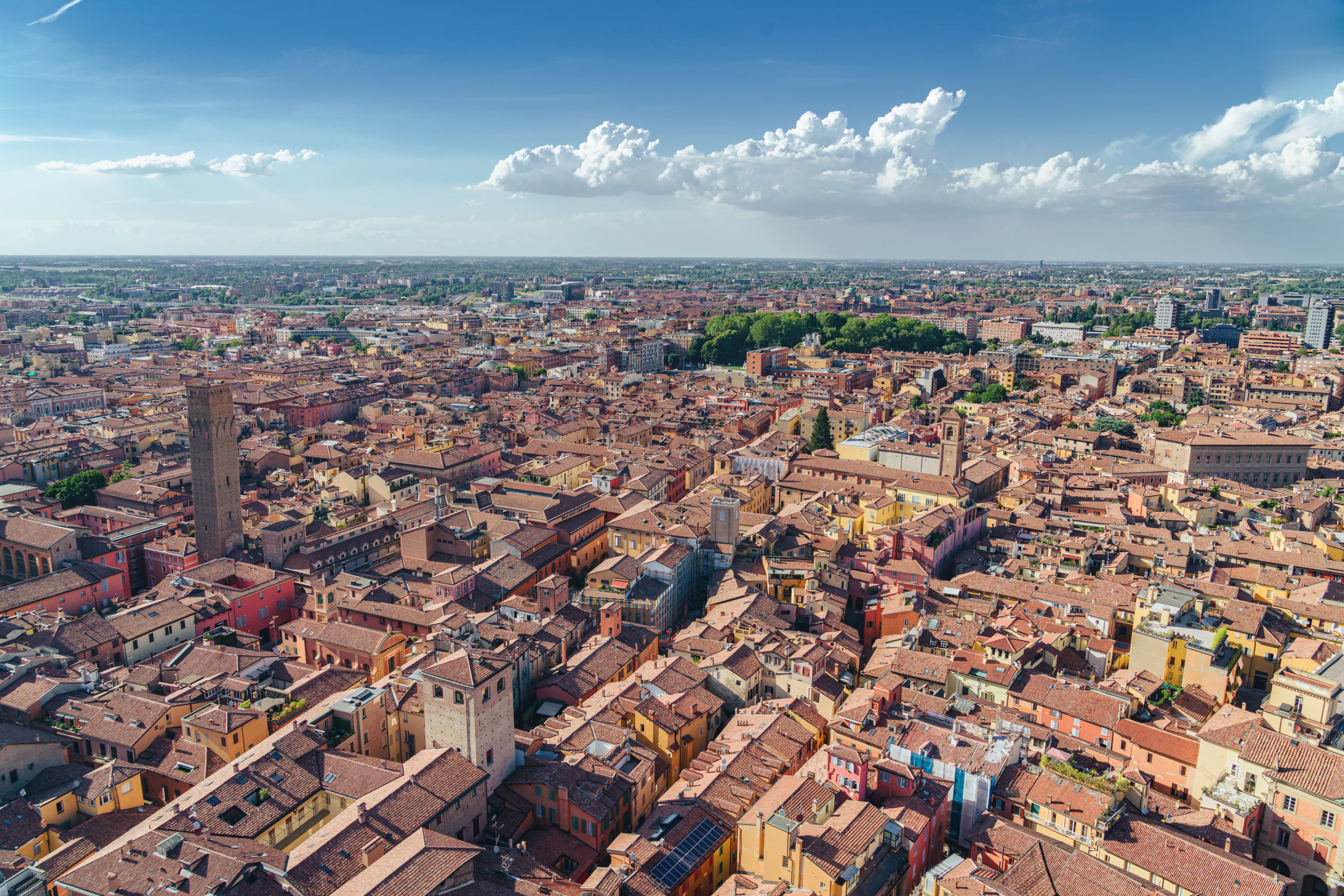
Bologna has three nicknames: La Grassa (the Fat) for its outstanding cuisine, La Dotta (the Learned) for the oldest university in Europe (founded in 1088), and La Rossa (the Red) for the ubiquitous red brick facades and its leftist political tradition. Each nickname hits the mark. Emilia-Romagna is Italy's culinary treasure chest, and Bologna is its capital: Tortellini in Brodo, Mortadella (the original, not cheap cold cuts), handmade Tagliatelle al Ragù (here no one says 'Bolognese'), Parmigiano Reggiano, and Prosciutto di Parma. The Mercato di Mezzo and the Quadrilatero district are foodie paradises. The city impresses with 40 kilometers of arcades, under which you can stroll dry-footed in any weather. The two leaning towers Asinelli (97 meters, climbable) and Garisenda are the landmarks. Piazza Maggiore with the unfinished Basilica of San Petronio (the fifth largest church in the world!) forms the center of city life. Shaped by the university, Bologna is a young, vibrant city with excellent nightlife and a cultural scene that ranges from avant-garde theater to jazz. The portico pilgrimage route to the Santuario di San Luca (3.8 kilometers, 666 arches) offers a magnificent panoramic view.

Turin
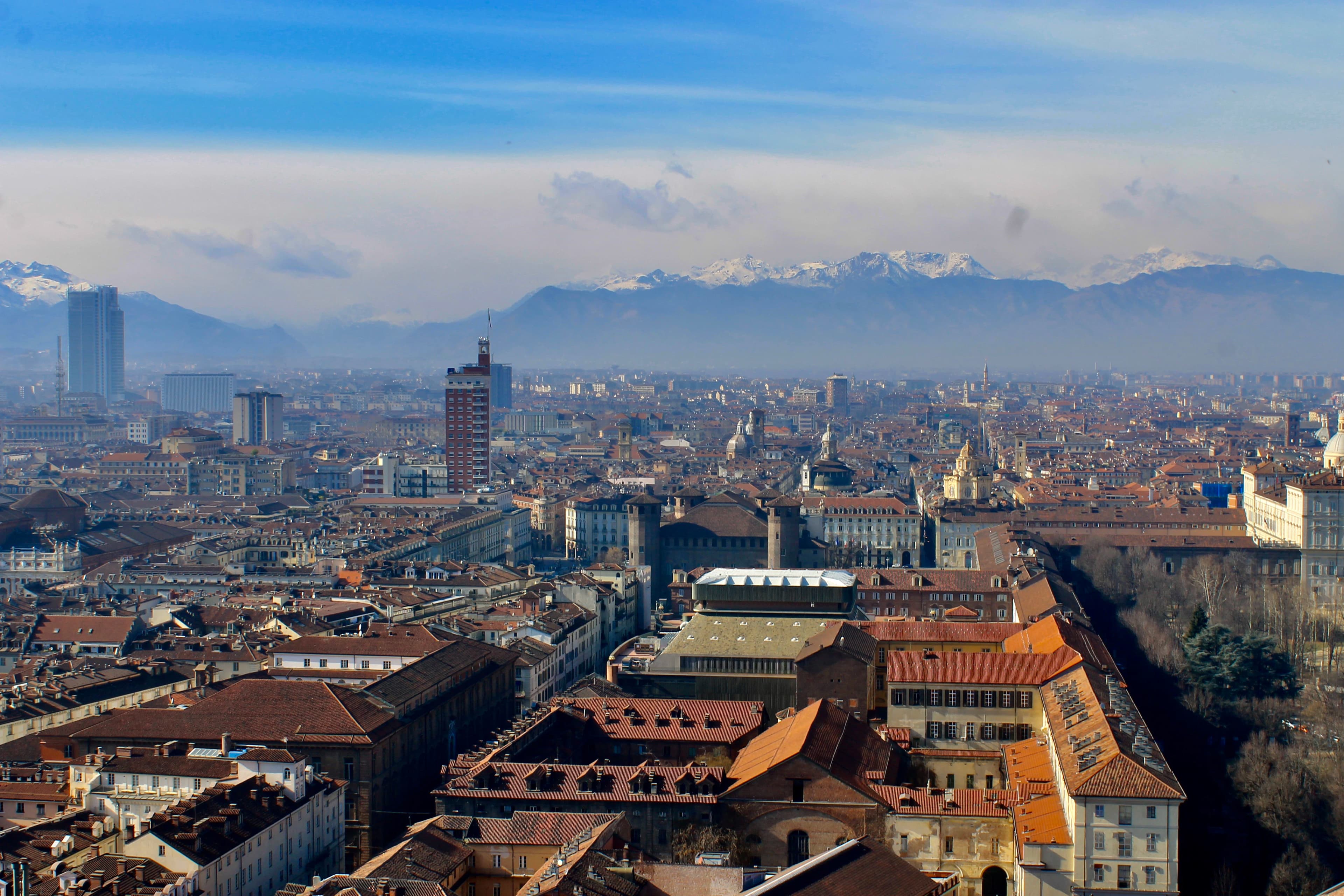
Turin surprises: The elegant Baroque city in Piedmont is much more than FIAT and Juventus. Strolling under the longest arcades in Europe (18 kilometers!), one passes magnificent cafés where Nietzsche and Cavour once sat. The Mole Antonelliana, originally planned as a synagogue and now home to the National Cinema Museum, is Turin's landmark — the glass elevator goes directly under the 167-meter-high dome. The Egyptian Museum (Museo Egizio) is the second most important in the world after Cairo and was spectacularly modernized in 2015. The Palazzo Reale, the residence of the Savoy kings, forms a counterpoint to the French Versailles with its UNESCO-protected complex. The Venaria Reale on the outskirts of the city is one of the largest royal palaces in Europe. Turin is Italy's chocolate capital: Here, the Gianduiotto (hazelnut chocolate) was invented, and historic chocolatiers like Guido Gobino and Peyrano keep the tradition alive. The Bicerin — a layered drink of espresso, chocolate, and cream — has been around since 1763. Piedmontese cuisine is among the best in Italy: Bagna Cauda, Vitello Tonnato, Agnolotti, and Barolo wine. In the background, the snow-capped Alps rise — Turin is perfect as a combination with a Piedmont road trip through the Langhe vineyards.

Verona
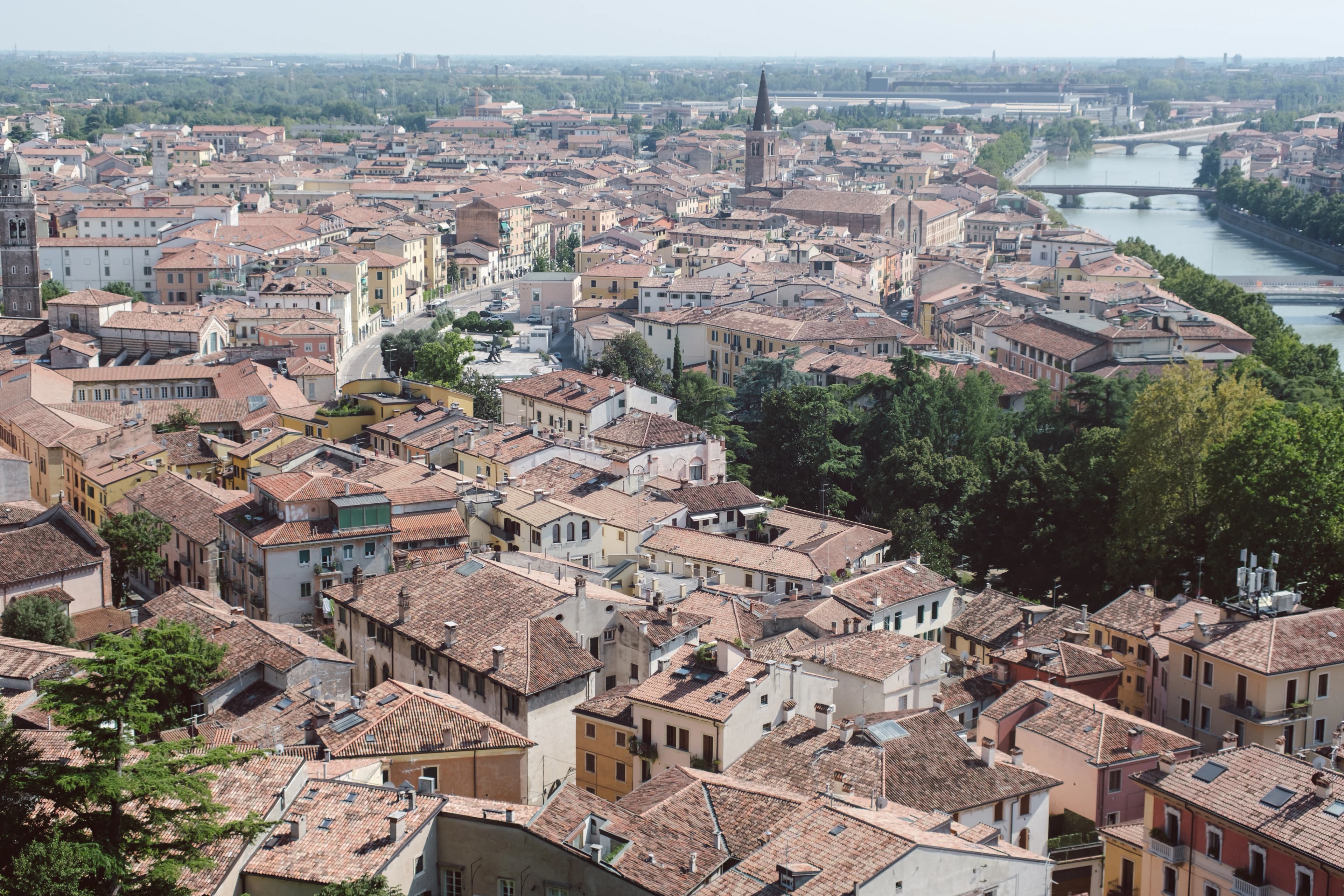
Verona, the city of Romeo and Juliet, has far more to offer than the legendary (albeit fictional) love story. The best-preserved Roman arena in Italy — an amphitheater for 22,000 spectators from the 1st century — now serves as a spectacular opera venue: The summer opera festival featuring Aida, Carmen, and La Traviata under the starry sky is one of the most impressive cultural experiences in Europe. The Piazza delle Erbe, the former Roman marketplace, is surrounded by medieval houses, frescoes, and the Lamberti Tower, from which one can overlook the entire city. The Piazza dei Signori with the Dante statue and the Gothic Scaliger tombs testify to Verona's glorious past as the capital of the powerful Scala dynasty. Juliet's House with the famous balcony (Via Cappello 23) is a tourist magnet — more authentic is a walk across the Ponte Pietra to Castel San Pietro, from where the view over the Adige River and the old town is breathtaking. The Basilica of San Zeno Maggiore is considered a masterpiece of Romanesque architecture. Verona is also a culinary discovery: Risotto all’Amarone, Pastissada de Caval, and the local Bardolino wine. Its location at the southern end of Lake Garda makes Verona the perfect starting point for lake excursions. With the high-speed train, you can reach here in 70 minutes from Milan or Venice.
Genoa
Genoa, the proud port city on the Ligurian coast, was once one of the most powerful maritime republics in the Mediterranean and the birthplace of Christopher Columbus. Today, the capital of Liguria surprises with a fascinating mix of winding old town, magnificent Renaissance palaces, and one of the largest aquariums in Europe. The Via Garibaldi, now a UNESCO World Heritage site, features splendid noble palaces: The Palazzo Rosso, Palazzo Bianco, and Palazzo Doria-Tursi house paintings by Rubens, Van Dyck, and Caravaggio. The old town (Centro Storico) is one of the largest medieval areas in Europe — a labyrinth of narrow alleys (Caruggi), where authentic Genoa thrives: Focaccia bakeries, pesto factories, and fish restaurants. The Porto Antico, redesigned by star architect Renzo Piano (a Genoese), houses the impressive Acquario di Genova with dolphins, sharks, and penguins — perfect for families. The city's panoramic elevators and funiculars offer spectacular views over the harbor. Genoa's cuisine is purely Ligurian: Pesto alla Genovese (only with a mortar!), Focaccia di Recco with Stracchino cheese, Trofie al Pesto, and fresh fish. From here, you can reach the Cinque Terre in an hour and Portofino in 40 minutes. Genoa is Italy's most underrated major city.
Palermo
Palermo is a kaleidoscope of cultures: Phoenicians, Greeks, Romans, Arabs, Normans, Hohenstaufen, and Spaniards have left their marks, giving the Sicilian capital a unique cultural complexity found nowhere else in the world. The Arab-Norman architecture is so significant that the Cathedral, Palazzo dei Normanni, and Cappella Palatina are UNESCO World Heritage Sites. The Cappella Palatina in the Norman Palace combines Byzantine gold mosaics, Islamic muqarnas ceilings, and Norman architecture — a space of overwhelming beauty. The Catacombe dei Cappuccini, with 8,000 mummified bodies, is not for the faint of heart, but offers a unique experience. The cathedral with the tomb of Emperor Frederick II showcases the power of the Hohenstaufen. Palermo's street markets are legendary: In Ballarò, Vucciria, and Il Capo, swordfish, artichokes, blood oranges, and spices are stacked high — accompanied by the calls of vendors and the aroma of street food. Arancine (fried rice balls), panelle (chickpea fritters), stigghiola (grilled intestines), and pane con la milza (spleen sandwich) are part of the street culture. The nearby beach of Mondello with its turquoise water, the Art Nouveau villas, and Monte Pellegrino complete the picture of a city that is raw and honest, unlike polished Northern Italy — and that is exactly why it fascinates.

Siena
Siena is a time capsule of the Middle Ages — a city that has remained virtually unchanged since the 14th century and transports visitors to another era with its unique shell-shaped Piazza del Campo, Gothic palaces, and passionate Contrade tradition. The entire old town is a UNESCO World Heritage site. The Palio, a breathtaking horse race on the Piazza del Campo (July 2 and August 16), is not a tourist event but a living tradition since the 13th century. The 17 Contrade (districts) with their own flags, churches, and rivalries still shape social life today — Sienese people define themselves first by their Contrada, then by the city. The Siena Cathedral is a masterpiece of Gothic architecture: the marble floor with 56 figurative scenes, the Piccolomini Library with Pinturicchio's vibrant frescoes, and the pulpit by Nicola Pisano are overwhelming. From the unfinished 'New Cathedral' (Facciatone), one has the best view over the city. The Museo dell’Opera houses Duccio's Maestà, a key work of Italian painting. Siena is also the gateway to the Crete Senesi — an almost surreal clay landscape south of the city — and to the vineyards of Brunello di Montalcino and Nobile di Montepulciano. The Sienese cuisine offers Pici (hand-rolled pasta), Ribollita, and Panforte, the dense spiced cake original.
Pisa
Pisa is much more than the Leaning Tower — although this naturally remains the highlight. The Torre Pendente has been leaning at an angle of 3.97 degrees since its completion in the 14th century and offers a surreal view from a slanted perspective after climbing the 251 steps. The entire Piazza dei Miracoli (Square of Miracles) with the marble-white cathedral, the baptistery with its legendary acoustics, and the Camposanto (cemetery with Roman sarcophagi and medieval frescoes) is a UNESCO World Heritage site. Away from the tourist square, the real Pisa reveals itself: a vibrant university city (founded in 1343), whose 50,000 students enliven the bars along the Arno and the Piazza dei Cavalieri. The Borgo Stretto with its arcades is the elegant shopping street, while the Lungarni — the waterfront promenades along the Arno — are bathed in golden light at sunset. Every year on June 16, the Luminara di San Ranieri transforms the city into a sea of lights: over 70,000 candles illuminate the buildings along the Arno, followed by a grand fireworks display. The Gioco del Ponte (Bridge Battle) in June is a medieval strength game between the districts. Culinary delights in Pisa include Cecina (chickpea flatbread), Mucco Pisano (local beef breed), and Cantucci with Vin Santo. From Pisa, you can reach the Cinque Terre, Lucca, and Florence in under an hour.

Lucca
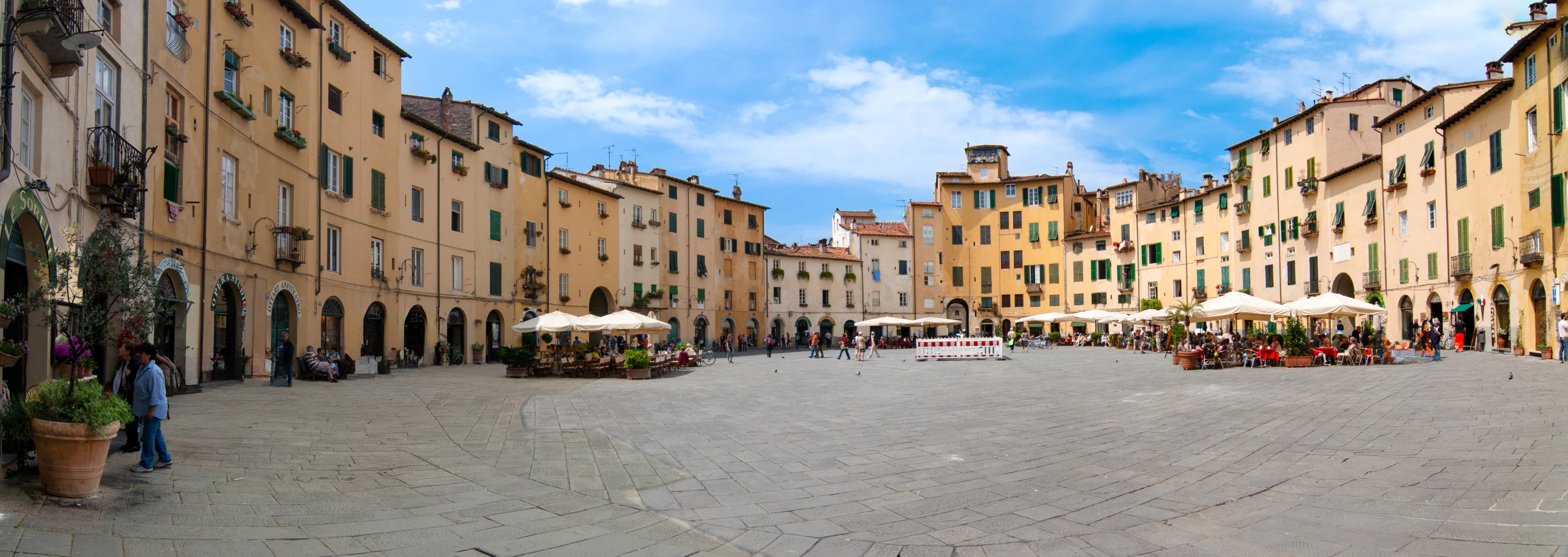
Lucca is perhaps the most charming city in Tuscany — a hidden gem away from the hustle and bustle of Florence and Siena. The fully preserved Renaissance city wall (4.2 kilometers) was transformed in the 19th century into a wide, tree-lined promenade where locals jog, cycle, and picnic — with views of church towers and the Apuan Alps in the background. The Piazza dell’Anfiteatro, built on the foundations of a Roman amphitheater, has retained its oval shape and is surrounded by pastel-colored houses — a square straight out of a picture book. The Torre Guinigi, a medieval tower with seven holm oaks on the roof, offers the best panoramic view. The Romanesque churches of San Michele in Foro and San Frediano impress with their intricate facades. Lucca is the birthplace of Giacomo Puccini: His birthplace is a museum, and every summer his operas resonate at the Pucciniano Festival near Torre del Lago. The city is remarkably bike-friendly — renting a bike on the wall and through the car-free alleys is the best way to discover Lucca. Culinary highlights include Tordelli alla Lucchese (stuffed pasta), Buccellato (sweet yeast wreath), and the olive oil of Lucchesia. It’s only a 20-minute train ride from Pisa — perfect for a day trip or a quiet Tuscan base.

Bergamo
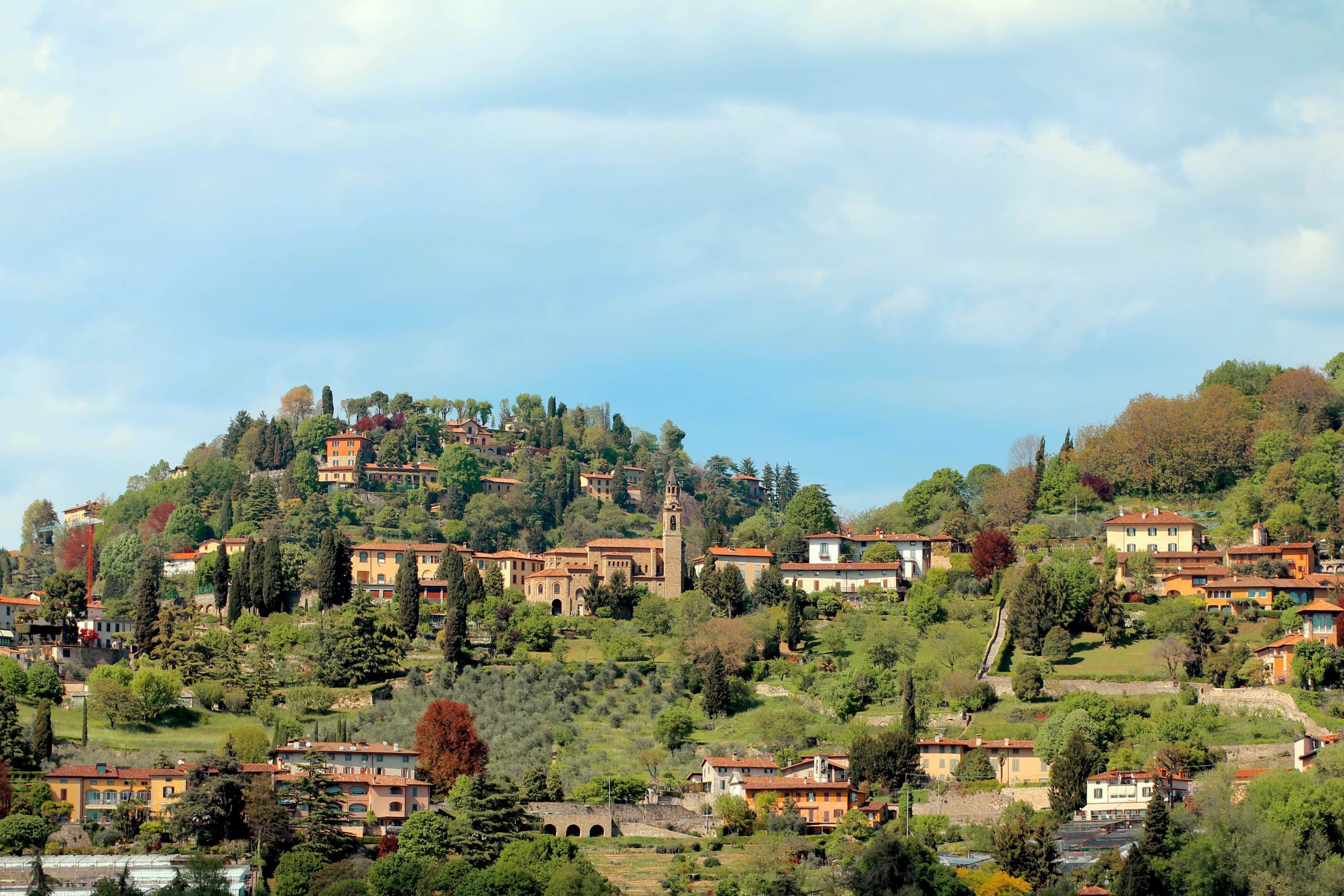
Bergamo is a city of two faces: The medieval Città Alta (Upper Town) sits atop a hill, surrounded by 16th-century Venetian fortress walls (UNESCO World Heritage), while the Città Bassa (Lower Town) serves as the economic center with elegant boulevards and the Sentierone. The historic funicular has connected both worlds since 1887. The Piazza Vecchia in the Upper Town is considered one of the most beautiful squares in Italy: The Palazzo della Ragione with its sundial, the Campanone (whose bell still rings 100 times in the evening), and the Cappella Colleoni with its colorful Renaissance façade create a perfect ensemble. The Basilica di Santa Maria Maggiore impresses with tapestries and magnificent inlays. Bergamo is also the city of composer Gaetano Donizetti — his birthplace and the theater dedicated to him keep the memory alive. The city shines culinarily with Casoncelli (stuffed pasta with butter and sage), Polenta Taragna with Taleggio cheese, and Stracciatella soup, which was invented here. The Venetian walls offer a three-kilometer walking path with panoramic views of the Po Valley and, on clear days, as far as the Milan Cathedral. Bergamo-Orio al Serio is the second most important airport in Lombardy — many travelers discover the city as a surprise during a Ryanair layover.

Trieste
Trieste, located at the northeastern tip of the Adriatic Sea, is a city of borders and contrasts — Italian at heart, Habsburg in architecture, and Slavic influenced in cuisine. As the former main port of the Austro-Hungarian Empire, the city exudes a grandeur reminiscent of Vienna: magnificent historic palaces line the wide boulevards, and the Piazza Unità d’Italia — Europe's largest open square to the sea — is a monument to imperial ambition. The Castello di Miramare, a white fairy-tale castle by the sea, was built for Archduke Maximilian and is set within a botanical park filled with subtropical plants. The Grotta Gigante, one of the largest walkable caves in the world, opens just a few kilometers outside the city into the karst rock. Trieste is a world-class literary city: James Joyce lived here for eleven years and wrote parts of Ulysses, Italo Svevo paid literary tribute to the city, and the historic Caffè San Marco, Caffè degli Specchi, and Antico Caffè Tommaseo breathe the spirit of a coffeehouse culture that rivals Vienna. Culinary-wise, Trieste connects Central Europe with the Mediterranean: Jota (sauerkraut soup), goulash, and fresh fish from the Adriatic share equal footing on the menu. The Bora, a cold fall wind from the karst, can sweep through the streets in winter at speeds exceeding 150 kilometers per hour. Trieste is easily accessible from Ljubljana, Venice, and Vienna and serves as an ideal starting point for trips to Istria and Slovenia.
Beaches
Alghero
Alghero on the northwest coast of Sardinia is affectionately called "Barceloneta" due to its Catalan heritage — a Catalan dialect is still spoken here today. The medieval old town on the peninsula offers streets full of coral jewelry shops, and the Neptune's Grotto on the nearby cliffs is one of the most spectacular stalactite caves in the Mediterranean. The beaches of Maria Pia and Le Bombarde are Sardinian dream beaches with a Caribbean flair.
Bibione
Bibione is the most family-friendly beach resort on the upper Adriatic coast and a true classic among holiday destinations for German and Austrian families. The eight-kilometer-long and up to 400-meter-wide sandy beach is one of the most extensive in Europe and offers such a gentle entry into the sea that even small children can splash around safely. Bibione has been awarded the Blue Flag multiple times and was one of the first smoke-free beaches in Italy. What sets Bibione apart from other Adriatic resorts is the successful combination of beach holiday and wellness: The Bibione Thermae utilizes natural thermal water from over 500 meters deep, which emerges at 52°C and is rich in minerals. Right on the beach, visitors can relax in warm thermal pools while the children play in the sand – a concept that exists only here. Inhalations, mud treatments, and thalasso therapies complement the offerings. The resort itself is spacious and green. Pine forests line the streets, the lagoon river Tagliamento forms the natural eastern border and hosts a diverse nature reserve. Cycling paths run throughout the entire area, connecting the beach, shopping streets, and thermal baths. The infrastructure is perfectly designed for families: playgrounds, children's animation on the beach, mini-golf, Luna Park, and the amusement park Gulliverlandia ensure that children are never bored. The journey from Bavaria and Austria is uncomplicated, taking about five hours by car. Bibione is located on the A4 between Venice and Trieste, with the nearest airports being Venice Marco Polo and Trieste. Most German guests travel by car and appreciate the generous parking spaces at the holiday resorts. A day trip to Venice (about 90 min.) or Trieste (about 75 min.) is definitely worthwhile.
Lignano Sabbiadoro
Lignano Sabbiadoro is the quintessential Italian family beach - an eight-kilometer long golden sandy beach on the upper Adriatic, which has been the favorite beach of German and Austrian families for decades. Ernest Hemingway once called Lignano the Florida of Italy, and indeed the peninsula between the Marano Lagoon and the sea, with its pine groves, fine sand, and gently sloping water, resembles the most beautiful beaches in the world. For families with small children, Lignano is hard to beat. The town is divided into three areas: Lignano Sabbiadoro in the center with the busiest beach section and pedestrian zone, Lignano Pineta with its elegant villas among fragrant pines and the spiral street layout designed by star architect Marcello D'Olivo in the 1960s, and Lignano Riviera in the east, the quietest and most family-friendly part with the shallowest water and the widest beach sections. Lignano offers an impressive infrastructure for families. Aquasplash, one of the largest water parks in Northern Italy, provides all-day entertainment with slides, wave pools, and children's areas. Parco Zoo Punta Verde is home to over 200 animal species in a beautifully landscaped area. Parco Junior, a lovingly designed amusement park right on the beach, and Luna Park with its Ferris wheel and carousels make Lignano a paradise for children of all ages. In the evenings, the promenade transforms into a lively promenade with ice cream parlors, pizzerias, and boutiques. Via Latisana, Lignano's shopping street, pulses late into the night. For adults, the beach bars and clubs along Lungomare offer a pleasant nightlife that swings between aperitivo culture and dancing fun. From southern Germany and Austria, Lignano is reachable in four to five hours by car - perfect for a trip with your own vehicle, which is practical for excursions to Venice (only 100 km away), Trieste, or Udine. The bathing season extends from May to September, with June and September being the best months for families due to more pleasant temperatures and lower prices.

Costa Smeralda
The Costa Smeralda in northeastern Sardinia owes its name to the emerald green water that washes over the granite rocks and white beaches. Since Aga Khan IV. developed this coastal strip as a luxury resort in the 1960s, Porto Cervo has become the epicenter of the Mediterranean jet set: mega yachts, designer boutiques, and beach clubs where a sunbed costs three digits. However, the true beauty lies away from the glamour: Spiaggia del Principe (Prince's Beach) offers a Caribbean flair with crystal clear water and fine sand — without resort infrastructure. Spiaggia di Capriccioli and Romazzino are among the most beautiful beaches in the Mediterranean. The hinterland surprises with cork oak forests, Nuraghe ruins, and authentic Sardinian villages. The Maddalena Archipelago off the coast is a national park with pink granite beaches (Spiaggia Rosa on Budelli) and turquoise water reminiscent of the South Seas. Boat trips through the archipelago are a must. Sardinian cuisine is hearty and honest: Porceddu (suckling pig on a spit), Fregola con Arselle (pasta with clams), Pane Carasau, and the robust Cannonau wine. In the off-season (May/June, September/October), prices are manageable and the beaches are deserted. Costa Smeralda is pure luxury — or, with some planning, also accessible for normal budgets.
Riviera di Ponente
The Riviera di Ponente stretches from Genoa westwards to the French border and offers over 150 kilometers of Ligurian coastline with a mild climate, colorful coastal towns, and a landscape where mountains and sea meet in close proximity. In contrast to the more famous Riviera di Levante (with Cinque Terre and Portofino), the western Riviera appears more authentic, less crowded, and surprisingly diverse. Sanremo, the "City of Flowers," is the most glamorous destination with its casino, Belle Époque promenade, and the famous music festival (Festival della Canzone Italiana). Alassio impresses with its two-kilometer-long sandy beach and the Muretto, a wall adorned with ceramic tiles from celebrities. Finale Ligure is a mecca for mountain bikers with top-notch trails in the coastal cliffs. Noli, one of the smallest historical maritime republics, enchants with medieval towers and narrow alleys. The hinterland holds surprising treasures: The mountain village of Apricale is among the "Borghi più belli d’Italia," and the Toirano Caves house 12,000-year-old footprints of Homo sapiens. Ligurian cuisine shines with Pesto alla Genovese, Focaccia di Recco (thinly filled with Stracchino cheese), fresh fish, and the white wine Pigato. The palm-lined promenades, mild winter climate, and lower prices compared to the Eastern Riviera make the Riviera di Ponente a hidden gem for lovers of Italy.

Tropea
Tropea sits atop a 50-meter-high cliff overlooking the Tyrrhenian Sea and is considered the pearl of Calabria. The small town on the Costa degli Dei (Coast of the Gods) enchants with its medieval town center, breathtaking sandy beaches, and a turquoise sea reminiscent of the Caribbean. From the viewpoint of the Affaccio, there is a postcard-perfect view of the white church Santa Maria dell’Isola, which sits on a rocky outcrop and is accessible by a staircase. The beaches below the old town are among the most beautiful in Southern Italy: fine white sand, crystal-clear water, and the dramatic backdrop of the cliffs make every beach day an experience. Boat tours depart from the harbor along the coast, passing caves and hidden coves, all the way to the Capo Vaticano peninsula, where granite cliffs shimmer in bright orange and gold tones. Tropea is famous for its red onions (Cipolla Rossa di Tropea), which have a sweet and mild taste and are ubiquitous in local cuisine — as onion jam, on bruschetta, or in Nduja (spicy spreadable salami). The narrow streets of the old town, with its noble palaces, boutiques, and gelaterias, invite an evening passeggiata. On clear days, the view extends over the sea to the Aeolian Islands and the smoking Stromboli. Tropea is accessible by train or car from Lamezia Terme (30 minutes) and is ideal as a base for exploring Calabria.
Islands
Aeolian Islands
The Aeolian Islands (Isole Eolie) are Sicily's volcanic jewel — seven UNESCO World Heritage islands north of Sicily, each with its own character. From the glowing Stromboli to the thermal baths of Vulcano to the white cliffs of Lipari, the islands offer a fascinating mix of active volcanoes, black beaches, and authentic Mediterranean flair. The islands are car-free, quiet, and not yet mass-touristically developed.
Favignana
Favignana is the main island of the Egadi Islands off the west coast of Sicily and a hidden gem of the Mediterranean that even many Italy enthusiasts are unaware of. The butterfly-shaped island was for centuries the center of the Mattanza — the traditional tuna fishing, whose history is kept alive in the former Stabilimento Florio, an impressive tuna factory from the 19th century. The bays of Favignana are legendary: Cala Rossa with its turquoise water over white tuff stone is one of the most beautiful bathing spots in Italy. The former tuff quarries, now filled with seawater, form surreal natural swimming pools with vertical rock walls — Bue Marino and Cala Azzurra are the most famous of these geological wonders. The island is small enough to cycle around in a day — the preferred means of transport for locals and visitors. No mass tourism, no hotel chains: Favignana offers authentic Sicilian island life with fishing boats in the harbor, trattorias with fresh catch, and dinners on the piazza under the starry sky. From Trapani, Favignana can be reached in just 25 minutes by hydrofoil — perfect for a day trip or for a multi-day island stay away from the beaten paths of Sicily.

Lampedusa
Lampedusa is Italy's southernmost point — geographically closer to Tunisia than to Sicily and home to a beach that is regularly voted the most beautiful in Europe. The Isola dei Conigli (Rabbit Island) with its offshore sandbank and crystal-clear, Caribbean turquoise water is the reason why travelers make the long journey. The Spiaggia dei Conigli is not only breathtakingly beautiful but also one of the most important nesting sites for the loggerhead turtle in the Mediterranean. Between June and August, the turtles dig their nests in the sand at night — a conservation project monitors the nests and organizes observations for visitors. Lampedusa itself is barren and wind-swept: flat, rocky terrain with low shrubbery that resembles North Africa more than Europe. However, the southern coast offers spectacular coves with crystal-clear water — Cala Pulcino, Cala Croce, and Cala Madonna are snorkeling paradises with an underwater world that is unmatched in the central Mediterranean. Via Roma, the main street of the town, comes alive in the evenings: fish restaurants, gelaterias, and the relaxed atmosphere of a small island community that has preserved its character despite media attention. The sunsets over the open Mediterranean towards Africa are of an intensity that one does not forget easily.
Pantelleria
Pantelleria is Italy's most African island — closer to Tunisia than to Sicily, shaped by volcanic activity and characterized by a rugged, wind-swept beauty that captivates instantly. The island has no sandy beaches, and that is its strength: instead of sunbed tourism, visitors are greeted by a rough, authentic Mediterranean island full of character. The Dammusi — traditional stone houses with white domed roofs that collect rainwater — shape the landscape and are now sought-after holiday accommodations. Giorgio Armani owns several here, and international celebrities appreciate Pantelleria's discreet elegance. The entire cultural landscape with its dry stone walls and caper fields is UNESCO-protected. The Specchio di Venere (Venus Mirror) is a volcanic crater lake with warm, mineral-rich water and natural healing mud on the shore — a thermal bath under the open sky. The Grotta di Sateria offers hot thermal springs right by the sea, where one can bathe in warm volcanic water while feeling the sea breeze. Pantelleria's capers are considered the best in the world, and the Passito di Pantelleria — a dessert wine made from dried Zibibbo grapes — is a protected masterpiece of wine culture. The island thrives on agriculture and fishing, not tourism, which preserves its authenticity.
Ponza
Ponza is the best-kept secret of the Roman upper class — a tiny volcanic island in the Tyrrhenian Sea off the coast of Lazio, hardly known outside Italy. The crescent-shaped harbor with its pastel-colored houses clinging to steep cliffs resembles a miniature Amalfi Coast without the mass tourism. The island was once a Roman place of exile — Emperor Augustus sent his daughter Julia here, and remnants of a Roman tunnel (Tunnel di Ponza) still traverse the rock from one side of the island to the other. The Grotte di Pilato, natural rock pools that the Romans used as fish farming ponds, are a fascinating testament to ancient engineering. Ponza's coastline is a masterpiece of volcanic tuff in all earth tones: white cliffs next to red rocks next to yellow stone. The Chiaia di Luna — a crescent-shaped beach under a 100-meter high white cliff wall — is one of the most spectacular natural backdrops in the Mediterranean (currently only accessible by sea due to rockfall risk). In summer, the harbor town pulses with Roman Dolce Vita: aperitivo on the terrace, fresh fish in the trattorias, boat trips to hidden coves. Ponza is the island where Romans go when they want to escape from Romans — and they are reluctant to share this secret with the world.

Capri
Capri, the glamorous rocky island in the Gulf of Naples, has fascinated since antiquity: Emperor Tiberius ruled the Roman Empire from here, and the Blue Grotto (Grotta Azzurra) — a sea cave where the water shines in surreal blue due to light refraction — is one of Italy's natural wonders. Entrance is only possible in calm seas, lying in a small rowboat. The Piazzetta, Capri's tiny main square, is the social heart — here people meet for espresso and watch the hustle and bustle. The Via Camerelle is lined with luxury boutiques, but Capri's true beauty reveals itself on the hiking trails: The Faraglioni rocks, three massive limestone pillars rising from the sea, offer the most iconic view from the Belvedere di Tragara. The Giardini di Augusto (Augustus Gardens) open up views of the steep Via Krupp, which winds down in serpentine curves to Marina Piccola. Anacapri, the quieter sister up on the mountain, houses the Villa San Michele of Swedish doctor Axel Munthe with one of the most beautiful viewpoints in the Mediterranean. The chairlift to Monte Solaro (589 meters) offers visibility to Vesuvius and the Amalfi Coast on clear days. Despite its luxury image, the best experiences are free: hiking, swimming, marveling.
Elba
Elba, the third largest island in Italy, is inextricably linked to Napoleon Bonaparte, who spent his short exile here in 1814/15 — his residences in Portoferraio are now museums. But Elba offers much more than history: crystal-clear water in over 150 coves and beaches, wild romantic mountain landscapes up to 1,019 meters high, and a mining tradition that dates back to the Etruscans. Portoferraio, the capital, welcomes visitors with a powerful Medici fortress and a charming harbor. The most beautiful beaches are Sansone and Sorgente (white pebbles, crystal-clear water), Cavoli and Fetovaia (sandy beaches), as well as the black Spiaggia di Terranera — a former ore mine, whose dark sand creates a surreal contrast in the turquoise water. The mining museum in Rio Marina and the mineral beaches showcase Elba's geological wealth: hematite, pyrite, and even tourmalines can be found. The Monte Capanne cable car takes hikers and nature lovers to the highest peak with panoramic views as far as Corsica. The island is a paradise for mountain bikers and divers. Culinary highlights include Cacciucco (fish stew), Schiaccia Briaca (cake with Aleatico wine), and the sweet Aleatico dell’Elba DOCG. The ferry from Piombino (Tuscany) takes only an hour.
Ischia
Ischia, the largest island in the Gulf of Naples, is Italy's volcanic wellness paradise. Beneath the surface, it bubbles: Over 100 hot springs, fumaroles, and thermal baths are fed by the volcanic activity of Monte Epomeo (789 meters). Since ancient times, people have come here to seek healing in the mineral-rich waters. The Poseidon Gardens in Forio are the most spectacular thermal facility: 22 pools with varying temperatures (up to 40°C), located right by the sea, with views of the sunset. The Negombo Thermal Baths in Lacco Ameno and the Castiglione Thermal Baths also offer top-notch wellness. The fumaroles at Maronti Beach heat the sand so much that you can literally dig in and sweat. Castello Aragonese, a mighty fortress on a rocky island accessible by a stone bridge, houses churches, monasteries, and a museum. Sant’Angelo in the south is a car-free fishing village with pastel-colored houses and two bays. The hike up Monte Epomeo rewards you with a 360-degree panorama over the Gulf, Capri, and the coast. Ischia is also a culinary discovery: Coniglio all’Ischitana (rabbit in a clay pot), fresh fish, and the local white wine Biancolella. Compared to Capri, Ischia is more authentic, cheaper, and more diverse.
Lipari
Lipari is the largest and liveliest of the seven Aeolian Islands off the northern coast of Sicily and the ideal starting point for exploring this volcanic archipelago, which is a UNESCO World Heritage site. The island offers a fascinating mix of Mediterranean charm, volcanic geology, and crystal-clear sea. The old town on the castle rock peninsula houses the excellent Archaeological Museum with one of the most significant collections of Greek theater masks and prehistoric finds from the Mediterranean region. Spiaggia Bianca with its white pumice stone beach and the black obsidian beaches of Canneto showcase the volcanic diversity. From Lipari, daily boat trips depart to the neighboring islands: Stromboli with its permanently active volcano, whose nighttime eruptions can be experienced up close during guided night hikes. Vulcano with its sulfur fumaroles, mud baths, and climbable crater. Salina, the greenest island, where sweet Malvasia wine and capers grow. Panarea, the smallest and most exclusive, with Bronze Age ruins. Aeolian cuisine is unique: pasta with capers, olives, and anchovies, granita for breakfast, and freshly caught swordfish. The islands can be reached by hydrofoil from Milazzo (Sicily) in 55 minutes.
Procida
Procida is the smallest and most authentic of the three islands in the Gulf of Naples — a hidden gem that came into the spotlight as the Italian Capital of Culture in 2022. The Marina Corricella, a fishing harbor with pastel-colored houses in pink, yellow, light blue, and terracotta that cling to the hillside, is one of the most photographed scenes in Italy and served as the backdrop for the film 'Il Postino' with Massimo Troisi. Unlike the glamorous Capri and the wellness-oriented Ischia, Procida has preserved its original character: fishermen mend their nets at the harbor, laundry flutters between the houses, and trattorias serve what came from the sea in the morning. The island is only four square kilometers in size and can be easily explored on foot or by scooter. The Spiaggia della Chiaia, accessible via a steep staircase, is the most beautiful beach with turquoise water and a view of the fortress. The Palazzo d’Avalos, a former prison at the highest point, offers a fantastic panoramic view. The Terra Murata, the walled upper town, houses the Abbey of San Michele with a golden ceiling fresco. Culinary highlights are dominated by fish: Insalata di Polpo, Linguine ai Ricci di Mare, and the sweet Lingua di Procida (puff pastry with lemon cream). Procida is reachable from Naples in 40 minutes by fast ferry.
Regions
Basilicata
Basilicata is Italy's wild south – a region that long stood in the shadow of its neighbors Apulia and Calabria and only came into the international spotlight with the designation of Matera as the European Capital of Culture in 2019. This sparsely populated, mountainous region between two seas has a fascination that leaves a deep impression: archaic landscapes, medieval ghost towns, lonely mountain forests, and one of the oldest continuously inhabited cities in the world. Matera is the heart of Basilicata and a place that leaves you speechless. The Sassi di Matera – a labyrinth of cave dwellings, rock churches, and winding alleys carved into the limestone gorges – is a UNESCO World Heritage Site and one of the oldest settlements of humanity. Even in the 1950s, families lived here under miserable conditions in the caves, as described by Carlo Levi in his book "Christ Stopped at Eboli." Today, the Sassi is a stylish district with boutique hotels in former caves, restaurants in grottos, and an exciting art scene. Beyond Matera, Basilicata unfolds its wild beauty. The Pollino National Park, the largest national park in Italy, extends across the border into Calabria and is home to the last specimens of the Bosnian pine (Pinus heldreichii), wolves, and eagles. The Dolomiti Lucane with their bizarre rock towers resemble the real Dolomites and offer spectacular hikes and via ferrata. The two coastal sections – the Tyrrhenian coast near Maratea and the Ionian coast near Metaponto – could not be more different: Maratea is a jewel with steep cliffs, hidden coves, and a giant statue of Christ, while Metaponto attracts visitors with wide sandy beaches and Greek temple ruins. Basilicata is best reached from Germany via Bari Airport (1.5 hours to Matera) or Naples (2.5 hours). By car, the journey takes about 13 hours via the Brenner Pass and the A3 – a long trip that is more than justified by the extraordinary reward at the destination.

Calabria
Calabria is the toe of the Italian boot and one of the last great secrets of the Mediterranean. While tourists crowd the Amalfi Coast and Sicily, Calabria offers endless beaches, authentic villages, and a cuisine that is among the spiciest and most honest in Italy – largely free from mass tourism. The region is surrounded by two seas: the Tyrrhenian Sea to the west and the Ionian Sea to the east, boasting over 800 kilometers of coastline. The absolute gem is Tropea – a picture-perfect town perched on a cliff above a white sandy beach. The Church of Santa Maria dell'Isola on its rock in the turquoise sea is one of the most photographed sights in Southern Italy. Capo Vaticano, a few kilometers to the south, delights with dramatic granite cliffs, hidden coves, and water that takes on a Caribbean blue. Along the Ionian coast stretches the kilometer-long sandy beach of Soverato, a paradise for families. In the interior, the Aspromonte National Park rises with its wild gorges, waterfalls, and mountain villages where time seems to stand still. The Sila plateau offers cool forests in summer and even ski areas in winter. Cosenza, the secret cultural capital, surprises with a vibrant old town and the spectacular open-air museum MAB. German travelers can reach Calabria via the airports of Lamezia Terme or Reggio Calabria, which are directly served from several German cities. The flight time is about two and a half hours. A rental car is almost indispensable in Calabria, as the most beautiful places are off the main roads. Prices are sensationally cheap by Italian standards – a dinner with fresh seafood, wine, and a sea view often costs under €25 per person.

Marche
The Marche – or Le Marche, as the Italians say – is Italy's best-kept secret. Nestled between the Adriatic coast and the Apennines, this region combines everything that makes Italy special: golden sandy beaches, medieval mountain villages, Renaissance art, outstanding cuisine, and a landscape that rivals Tuscany – just without the tourist crowds. Those who discover the Marche feel like time travelers to Italy in the 1960s. The Marche coast offers over 170 kilometers of Adriatic beach, including true gems like the Riviera del Conero south of Ancona. Here, forested limestone cliffs drop steeply into the turquoise sea, creating hidden coves reminiscent of Croatia or Sardinia. The beaches of Sirolo, Numana, and the only accessible by boat Spiaggia delle Due Sorelle are among the most beautiful along the entire Adriatic coast. Inland, Urbino sits atop two hills – the Renaissance city of Duke Federico da Montefeltro and the birthplace of Raphael. The Palazzo Ducale with its famous twin-tower facade is one of the most perfect examples of Renaissance architecture and houses the Galleria Nazionale delle Marche with works by Piero della Francesca and Raphael. The entire old town is a UNESCO World Heritage site. Further south, the Sibillini Mountains impress with a wild high mountain landscape, blooming plateaus, and the enchanting Piano Grande – a vast high plain that explodes in a sea of wildflowers in June. Ascoli Piceno in the southern part of the region is considered one of the most beautiful Renaissance cities in Italy, featuring one of the country's most elegant squares, the Piazza del Popolo. From Germany, the best way to reach the Marche is via the Brenner Pass and the A14 along the Adriatic coast – about eight hours from Munich. Ancona Falconara Airport offers limited connections; alternatively, one can fly to Bologna or Rome and continue by car. A rental car is essential in the Marche.

Trentino
Trentino is the perfect symbiosis of alpine grandeur and Italian lifestyle – a region where you can hike through mountain forests in the morning, enjoy polenta with wild boar ragù in a rifugio at noon, and sit in Trento with a glass of Trentodoc sparkling wine on the Piazza Duomo in the evening. The autonomous province of Trento, together with South Tyrol, forms the region of Trentino-South Tyrol, but has its own unmistakably Italian character. The mountains of Trentino are breathtaking. The western Brenta Dolomites, a UNESCO World Heritage site, offer some of the most spectacular via ferratas in the Alps. The Sentiero delle Bocchette, winding through the rock needles of Brenta, is one of the most famous high-altitude trails in Europe. Madonna di Campiglio is the elegant ski center of the region, a meeting point for the Italian high society in winter, and a starting point for hiking and mountain biking tours in summer. The lakes of Trentino are jewels. The northern Lake Garda with Riva del Garda and Torbole is Europe's windsurfing and climbing mecca. Lake Molveno, Lake Tovel (once famous for its red algae bloom), and Lake Tenno with its emerald green water are among the most beautiful mountain lakes in the Alps. The vineyards of Trentino rise in terraces on the slopes of the Etsch Valley and produce excellent white wines, foremost among them the Trentodoc – the Italian sparkling wine that rivals Champagne. Trento itself surprises as an elegant Renaissance city with the mighty Castello del Buonconsiglio and the innovative MUSE – Museo delle Scienze, designed by Renzo Piano, which is one of the most modern science museums in Europe. Trentino is accessible from southern Germany in just three to four hours via the Brenner Pass – perfect for extended weekends or as a stopover on the way further south.

Umbria
Umbria is the green heart of Italy – a hilly region in the center of the peninsula that has largely remained untouched by the mass enthusiasm for Tuscany. However, Umbria is in no way inferior to its famous neighboring region: medieval hill towns crown the hills above the valley, olive groves and vineyards cover the gentle slopes, and one of the richest spiritual and cultural traditions in Europe permeates every corner of this remarkable region. Assisi, the city of Saint Francis, is the spiritual center of Umbria and one of the most significant pilgrimage sites in Christendom. The Basilica of San Francesco, with its Giotto frescoes, is a UNESCO World Heritage site and leaves a deep impression even on non-religious visitors. Perugia, the capital, surprises as a lively university city with a vibrant cultural scene, the famous Umbria Jazz Festival in July, and the best chocolate in Italy – Perugina with its Baci pralines is based here. Spoleto enchants with its Roman and medieval architecture and the world-renowned Festival dei Due Mondi. Orvieto sits atop a tuff stone cliff overlooking the plain and houses one of the most beautiful cathedrals in Italy, with a façade that even casts a shadow over the Milan Cathedral. Norcia, the birthplace of Saint Benedict, is also the truffle capital of Italy – here you can find black truffles, which play a central role in Umbrian cuisine. For German travelers, Umbria is easily accessible by car: via the Brenner Pass and the A1 towards Florence, then continue on the E45 to Perugia – about eight hours from Munich. Alternatively, you can fly to Rome (2 hours) or Perugia (small airport) and explore the region by rental car. A car is essential in Umbria, as the most beautiful places are scattered across the hilly landscape.
Tuscany
Tuscany is the epitome of Italian lifestyle — a region where gentle hilly landscapes with cypress avenues, golden wheat fields with medieval Borghi, and world-famous art cities with quiet monasteries combine to create a picture that has enchanted artists, poets, and travelers for centuries. The heart of the Tuscan landscape is the Val d'Orcia, a UNESCO World Heritage site since 2004: Here, the iconic rows of cypress trees line up, gracing every Italy poster, the Renaissance city of Pienza overlooks sheep pastures, and winemakers produce the robust Brunello di Montalcino. Further north, the Chianti region stretches between Florence and Siena — a labyrinth of vineyards, olive groves, and stone estates where the famous Chianti Classico matures. San Gimignano with its medieval towers is the skyline of the Middle Ages, Volterra impresses with Etruscan roots and alabaster craftsmanship, and Cortona offers a panoramic view over Lake Trasimeno from its elevated position. Besides the art metropolises of Florence and Siena, Tuscany surprises with hidden thermal baths in Saturnia, the wild Maremma coast, and the marble-white quarries of Carrara. Culinarily, Tuscany is a feast of simplicity: Bistecca alla Fiorentina from Chianina beef, Panzanella with sun-ripened tomatoes, Ribollita as a hearty peasant soup, and Cantuccini with Vin Santo for dessert. Every bite tells of a cooking philosophy that creates masterpieces from just a few top ingredients.
Lombardy
Lombardy is Italy's economic powerhouse and at the same time a region of surprising scenic beauty — from the fashion empire of Milan to the romantic lakes of Northern Italy and the Alpine peaks in the north, it is a travel destination that combines glamour, culture, and nature in a compact space. Milan is much more than a fashion and financial metropolis: The Gothic cathedral with its 3,400 statues and 135 spires is the largest church in Italy, Leonardo da Vinci's The Last Supper in Santa Maria delle Grazie is a UNESCO World Heritage site, and the Galleria Vittorio Emanuele II — Europe's oldest shopping mall — impresses with its cast-iron glass dome. The Navigli district with its canals transforms into Milan's liveliest nightlife area in the evening. Lake Como has been a place of longing since Roman times: Villas and gardens like Villa del Balbianello and Villa Carlotta line the shores, Bellagio — the pearl of the lake — sits on the peninsula between the two southern branches, and the steep mountain slopes create a microclimate where camellias, azaleas, and citrus trees thrive. Lake Iseo with the floating island of Monte Isola and Lake Lugano also offer Alpine idyll away from the tourist crowds. Bergamo surprises with a spectacular division: The medieval Città Alta, accessible by funicular, towers with Venetian city walls (UNESCO) over the modern lower city. Brescia is home to the monastery complex of San Salvatore-Santa Giulia (UNESCO), one of the most important Lombard architectural monuments in Italy. Franciacorta, south of Lake Iseo, produces Italy's finest sparkling wine using the Champagne method — a hidden gem for wine lovers.
Veneto
Veneto is the region of a thousand faces — from the canals of Venice to the romantic streets of Verona, the Prosecco hills, and the peaks of the Dolomites, this northeastern Italian region unites a diversity that is unmatched. Venice, the Serenissima, needs little introduction: 118 islands, 150 canals, 400 bridges, and St. Mark's Square as the most magnificent salon in Europe create a city that has fascinated for over a thousand years. But away from the main routes between Rialto and San Marco, another Venice awaits: quiet canals in Dorsoduro, authentic Bacari (wine bars) in Cannaregio, the colorful fishing island of Burano, and the glassblowing workshops on Murano. Verona enchants not only as the city of Romeo and Juliet: The Arena di Verona, a Roman amphitheater from the 1st century, hosts one of the largest open-air opera festivals in the world every summer. The Piazza delle Erbe, the medieval city center, and the bridges over the Adige make Verona a gem often overlooked in the shadow of Venice. Padua is home to Giotto's frescoes in the Scrovegni Chapel (UNESCO), one of humanity's most significant artworks, the third-largest square in Europe — the Prato della Valle — and the venerable Basilica of Saint Anthony. The Prosecco hills of Conegliano and Valdobbiadene have been a UNESCO World Heritage site since 2019: steep vineyard terraces where the Glera grape for Italy's most famous sparkling wine grows. Along the eastern shore of Lake Garda, picturesque towns like Lazise, Bardolino, and Malcesine line up, where olive groves reach down to the water and the cable car to Monte Baldo offers an Alpine panorama over the lake.

Campania
Campania is the heart of southern Italy — a region where ancient world history, dramatic volcanic landscapes, the most famous coastline in Europe, and the birthplace of pizza merge into a travel destination that overwhelms all the senses. The Amalfi Coast between Positano and Vietri sul Mare is a UNESCO World Heritage site and is considered one of the most beautiful coastal roads in the world: pastel-colored houses cascade down steep cliffs, lemon groves scent terraced gardens, and the winding road offers a new postcard motif around every bend. Capri with the Blue Grotto and Ischia with its thermal springs lie as island paradises in the Gulf of Naples. Pompeii and Herculaneum are the most spectacular archaeological sites of antiquity: buried under ash during the eruption of Vesuvius in 79 AD, the buried cities preserved Roman daily life in a level of detail that does not exist anywhere else in the world — from frescoes and mosaics to bakeries and election slogans on house walls. Vesuvius itself offers a breathtaking view over the Gulf of Naples after the ascent to the crater rim. Naples is raw, loud, and overwhelmingly authentic: the UNESCO-protected old town Spaccanapoli pulses with the chaos and joy of life that make this city so unique. Here, Pizza Margherita was invented, here the friggitorie steam on every corner, and here stands the National Museum, home to the largest collection of Roman-Greek artifacts in the world. South of Salerno, the Cilento National Park stretches as a quiet counterpoint: Greek temples in Paestum, secluded bays, and mountain villages where time stands still.
Sicily
Sicily is the epicenter of Mediterranean culture — the largest island of Mare Nostrum, where Greek temples stand beside Arab domes, Mount Etna smokes over lemon groves as the highest active volcano in Europe, and the street food of Palermo could be considered a world heritage of taste. Mount Etna, at 3,357 meters, dominates the east coast and is much more than a volcano: Its lava landscapes, the fertile slopes with pistachios from Bronte, and the Nerello Mascalese wine that matures on volcanic soil create their own ecosystem. Taormina, perched on a rocky terrace above the sea, offers one of the most breathtaking views in the entire Mediterranean with its Greek-Roman theater and the panorama of Etna. In the south, the Valley of the Temples near Agrigento preserves the best-preserved Greek temple complexes outside of Greece — the Temple of Concordia has remained almost intact for 2,500 years. The baroque towns of Val di Noto in the southeast, rebuilt in lavish splendor after the earthquake of 1693, are part of the UNESCO World Heritage: Ragusa, Modica, and Noto shimmer in honey-colored sandstone. Palermo pulses with an energy that rivals Rome and Naples: The markets Ballarò and Vucciria steam with Arancini, Panelle, Sfincione, and Stigghiola, the Norman-Arab palace chapel Cappella Palatina sparkles in Byzantine gold, and in the alleys of the old town, 3,000 years of history merge into a vibrant mosaic. Off the coast, the Aeolian Islands with Stromboli and its nighttime lava fountain offer a natural spectacle of the highest order.
Sardinia
Sardinia is a world of its own — the second-largest Mediterranean island combines turquoise bays that overshadow any Caribbean beach with a millennia-old culture that continues to thrive in mysterious stone towers, archaic festivals, and a distinct language. The Costa Smeralda in the northeast is the glamorous showcase: Emerald green waters, granite rocks, and exclusive marinas between Porto Cervo and Baja Sardinia have attracted international celebrities since the 1960s. However, the true beauty of Sardinia lies away from the jet set: The La Maddalena Archipelago, with its seven main islands and countless rocky islets, offers some of the most beautiful bathing spots in Europe, Cala Goloritze on the east coast has been designated a natural monument, and the endless sandy beach of Is Arutas consists of millions of years old quartz grains that shimmer like rice grains. Sardinia's interior is rugged and wild: The Su Gorropu gorge is considered the Grand Canyon of Europe, the Gennargentu mountain range reaches almost 2,000 meters, and in the mountain villages of Barbagia, shepherds live according to traditions that have hardly changed since the Bronze Age. All over the island, around 7,000 Nuraghes — prehistoric tower structures from the Bronze Age — testify to a mysterious civilization that existed nowhere else in the world. The capital Cagliari in the south surprises with a lively old town on the hill, flamingos in the salt lagoons right in front of the city, and the expansive city beach Pötto. Culinary offerings range from Porceddu (suckling pig on a spit) to Fregola with seafood to Pecorino Sardo, which has been aged here for thousands of years.

Piedmont
Piedmont is Italy's culinary insider tip, which is no longer a secret — a region at the foot of the Alps, where Barolo wine matures in foggy hills, white truffles from Alba fetch record prices, and the world's first Slow Food movement originated. The Langhe, a UNESCO World Heritage site since 2014, are the heart of Piedmontese viticulture: Gentle hills with Nebbiolo vines, crowned by medieval castles, stretch south of Alba. Here, Barolo — the king of Italian wines — and Barbaresco mature in cellars that have been run by the same families for generations. The grape harvest in October and the truffle fair in Alba in November attract gourmets from all over the world. Turin, the elegant capital, was Italy's first capital after unification and surprises with a grandeur reminiscent of Paris: Baroque squares, 18 kilometers of arcades, the Egyptian Museum (the second most important in the world after Cairo), and the Mole Antonelliana with the National Cinema Museum offer a cultural experience that surpasses many major cities. Turin is also the birthplace of Italian chocolate culture — Gianduia, Bicerin, and the historic cafés under the arcades are legendary. Lake Maggiore offers a fairy-tale landscape with the Borromean Islands — Isola Bella, Isola Madre, and Isola dei Pescatori — nestled between baroque gardens and the backdrop of the Alps. To the north, the ski resorts of the Monte Rosa massif and the Aosta Valley with its Walser houses border Switzerland. Piedmontese cuisine is among the best in Italy: Agnolotti del Plin, Vitello Tonnato, Bagna Cauda, and the hazelnut cake Torta di Nocciole prove that enjoyment is a tradition here.
Liguria
Liguria is Italy's narrow coastal strip of superlatives — wedged between the Ligurian Alps and the deep blue Mediterranean, where pastel-colored villages cling to steep cliffs, lemon trees scent terraced gardens, and the mildest winters in Northern Italy prevail. The Cinque Terre are the region's landmark and UNESCO World Heritage Site: Five colorful fishing villages — Monterosso, Vernazza, Corniglia, Manarola, and Riomaggiore — nestle against steep coasts, connected by hiking trails with breathtaking views and centuries-old vineyard terraces that shape the landscape. The Sentiero Azzurro leads as a coastal path from village to village, while the higher Sentiero Rosso offers even more spectacular panoramas. Portofino, the world's most famous fishing village, is a gem on a sheltered bay: Luxury yachts, designer boutiques, and Castello Brown above the Piazzetta create a backdrop like something out of a Fellini film. Genoa, the underrated capital of Liguria, surprises with the largest historical old town center in Europe, the magnificent Rolli Palaces (UNESCO World Heritage) and one of the continent's most significant aquariums. The Riviera di Ponente in the west — also known as the Flower Riviera — stretches from Savona to the French border and is famous for its flower cultivation, mild temperatures, and the wide sandy beaches of Alassio and Finale Ligure. Culinary-wise, Liguria has gifted the world Pesto alla Genovese: fresh basil, pine nuts, Parmigiano, Pecorino, and Ligurian olive oil, prepared in a mortar — a dish that tastes incomparably different in its homeland than anywhere else.

South Tyrol
South Tyrol is the fascinating melting pot where alpine mountain scenery meets Mediterranean ease — a region where dumplings sit alongside pasta on menus, where apple orchards stretch up to the feet of snow-capped three-thousand-meter peaks, and where one can have breakfast in a mountain hut in the morning and drink cappuccino under palm trees in Merano in the afternoon. The Dolomites, a UNESCO World Heritage Site since 2009, are the scenic crown jewel: The Three Peaks rise like stone cathedrals above green high pastures, the Pragser Wildsee shimmers emerald green between rocky walls, and the Seceda plateau offers one of the most photographed mountain panoramas in the world with its bizarre rock pinnacles. Via ferratas, hiking trails, and in winter ski areas like Kronplatz, Alta Badia, and Gröden make the Dolomites a year-round mountain sports paradise. Bolzano, the capital, combines southern-style arcades with the Archaeological Museum, where Ötzi — the 5,300-year-old ice mummy — rests. Merano enchants with its Mediterranean promenade along the Passer, the Trauttmansdorff Gardens, and a spa with mountain views. Brixen delights as the oldest city in Tyrol with its cathedral, cloister, and bishop's palace. South Tyrol's wine culture is among the most exciting in Europe: Gewürztraminer from Tramin, Lagrein from Bolzano, and Vernatsch as an everyday classic thrive on steep terraced slopes between 200 and 1,000 meters in altitude. Additionally, there are farm-produced speck, Schlutzkrapfen filled with spinach, and apple strudel, which tastes better here than anywhere else — because South Tyrol is Europe's largest contiguous apple-growing region.

Apulia
Apulia is Italy's sun-kissed heel — a region that, with its white towns, ancient olive groves, turquoise coastal waters, and hearty cuisine, ranks among the most authentic travel destinations in the entire Mediterranean. The Trulli of Alberobello are Apulia's architectural wonder and UNESCO World Heritage site: Over 1,500 whitewashed limestone houses with pointed conical roofs create a unique cityscape that is unparalleled worldwide. The origins of this round construction method date back to the 14th century when farmers had to quickly dismantle their houses to avoid taxes — today, the Trulli are boutique hotels, restaurants, and vibrant witnesses of rural ingenuity. Lecce, the Florence of the South, is a baroque masterpiece: The soft Lecce limestone allowed for intricate decorations on churches, palaces, and balconies that glow golden in the evening sun. The Basilica di Santa Croce, the Roman Amphitheater, and the Piazza del Duomo form an ensemble that rivals the opulence of Roman baroque architecture. Ostuni, the white city, rises like a mirage above endless olive groves — its alleys, stairs, and terrace cafés offer panoramic views all the way to the sea. Polignano a Mare impresses with its old town houses perched directly on limestone cliffs above crashing waves and hidden rocky coves. The Grotta della Pösia, the Torre Guaceto Nature Park, and the sandy beaches of Salento make the coast a paradise for bathers. Apulia's cuisine thrives on olive oil, durum wheat, and vegetables: Orecchiette with Cime di Rapa, Focaccia Barese, Burrata from Andria, and Taralli as a crunchy snack — here you can taste why Italian Cucina Povera is part of world culture.

Emilia-Romagna
Emilia-Romagna is Italy's culinary epicenter — a region that has gifted the world Parmigiano Reggiano, Prosciutto di Parma, balsamic vinegar from Modena, and fresh pasta in a hundred varieties. Those who travel here journey through the paradise of Italian cuisine. Bologna, the capital, is aptly nicknamed La Grassa (the Fat): Among the nearly 40 kilometers of porticoes, which are a UNESCO World Heritage site, delicatessens, trattorias, and pastifici line the streets. The university founded in 1088 — the oldest in the Western world — ensures a young, vibrant nightlife, and from the Asinelli Tower, there is a panoramic view over the city's red rooftops. Parma combines culinary excellence with cultural sophistication: The ham production in Langhirano, the Parmigiano aging cellars, and the Teatro Regio, one of Italy's most important opera houses, create a unique blend. Modena is home to the world's oldest balsamic vinegar — some barrels have been aging for over 100 years in attics — as well as the Ferrari Museum in Maranello and the Romanesque cathedral with the Ghirlandina Tower (UNESCO). Ravenna surprises with the most magnificent early Christian mosaics in the world: In the Basilica di San Vitale and the Mausoleum of Galla Placidia, Byzantine gold mosaics from the 5th and 6th centuries sparkle with a brilliance that still takes your breath away after 1,500 years. Dante's tomb serves as a reminder that Italy's greatest poet spent his last years here. The Adriatic coast around Rimini and Riccione offers endless sandy beaches and a vibrant nightlife, while the hilly region of Romagna surprises with Sangiovese wines and medieval castles.
Lakes
Lake Como
Lake Como (Lago di Como) is the deepest lake in Italy and one of the most beautiful in the world — a dramatic Y-shaped body of water framed by steep mountains, magnificent villas, and charming villages that has attracted European elites, artists, and Hollywood stars for centuries. Bellagio — the "Jewel of Lake Como" — is located at the tip of the peninsula where the two arms of the lake meet. Cobblestone streets, blooming gardens, and views of the lake in both directions make it one of the most romantic places in Italy. Villa Melzi and Villa Serbelloni offer magnificent gardens with Mediterranean and tropical vegetation. Varenna on the east side is less touristy than Bellagio but equally enchanting: colorful houses on steep stairs, Villa Monastero with its botanical garden, and the romantic Passeggiata degli Innamorati (Lovers' Walk) right by the water. Menaggio and Tremezzo on the west side house Villa Carlotta, which has one of the most beautiful garden layouts in Europe. The town of Como at the southern end offers the Gothic cathedral, the Brunate funicular with panoramic views, and an elegant lakeside promenade. The entire lakeshore is connected by boat (ferries and hydrofoils) — the most beautiful way to experience the lake.
Pragser Wildsee
Pragser Wildsee (Lago di Braies) in South Tyrol is the lake that made the internet famous — and you can't blame it. The emerald green water, framed by the rugged Dolomite walls of Seekofel (2,810 m), the dark spruce forests along the shore, and the rustic boathouse with its wooden rowboats create a postcard image that looks so perfect that it's hard to believe. However, Pragser Wildsee was not always an Instagram hotspot: Until the Italian television series "Un Passo dal Cielo" was filmed here and the images went around the world, it was a quiet gem known mainly to locals and hikers. Today, the lake is one of the most photographed places in the Alps — but the good news is: In the early morning and late afternoon, when the tourist buses have disappeared, the magic returns. A walk around the lake on the well-maintained hiking trail takes about an hour and reveals the lake from constantly changing perspectives: Sometimes the Dolomite walls reflect perfectly in the smooth water, sometimes a ray of sunshine breaks through the clouds and makes the water glow in an unreal turquoise. The small pebble beach on the southern shore is a popular picnic spot in summer, and the rowboats on the lake are the absolute postcard motif. From the lake, more challenging hikes begin: The ascent to Seekofel (about 4-5 hours) rewards with a summit panorama that encompasses the entire Dolomites. The Dolomite High Trail No. 1 also starts here and leads over several stages to Belluno — one of the most legendary long-distance hikes in the Alps. In winter, the frozen lake transforms into a fairy-tale snow landscape, perfect for snowshoeing and cross-country skiing.

Lake Garda
Lake Garda, Italy's largest lake, stretches over 52 kilometers from the rugged foothills of the Dolomites in the north to the gentle hills of the Po Valley in the south. This diversity makes it unique: While Riva del Garda and Torbole, with their constant winds, are a paradise for surfers and sailors, Sirmione in the south attracts visitors with its peninsula old town, Roman ruins of the Grotte di Catullo, and hot thermal springs. Malcesine on the eastern shore enchants with a Scaliger castle and a cable car to Monte Baldo (1,760 meters), offering a panoramic view of the entire lake. Limone sul Garda, once only accessible by boat, impresses with its historic lemon groves and the spectacular bike bridge built into the rock face. Gardone Riviera is home to the Vittoriale degli Italiani — the eccentric villa of the poet Gabriele d’Annunzio. The cuisine reflects the regions: In the north, fish dishes like Lavarello or trout dominate, while in the south, Tortellini di Valeggio and the robust Bardolino wine are popular. Olive oil from Lake Garda (DOP) is considered one of the best in Italy. The amusement parks Gardaland and Movieland make the lake a family destination. Lake Garda is reachable from Munich in 4 hours — no wonder it has been magnetically attracting Germans since Goethe's 'Italian Journey.'

Lake Como
Lake Como, shaped like an inverted Y, has been a retreat for the wealthy and creative since ancient times. The steep shores, lined with magnificent villas featuring botanical gardens, Mediterranean vegetation, and snow-capped Alps in the background, create one of Europe's most romantic settings. George Clooney made the lake famous with his Villa Oleandra in Laglio, but Lake Como has fascinated travelers for centuries. Bellagio, the "Pearl of the Lake," is beautifully situated at the fork of the two lake arms: cobblestone stairs, blooming terraces, and Villa Melzi with its Japanese gardens make it a postcard motif. Varenna on the eastern shore impresses with Villa Monastero and the hiking trail to Castello di Vezio. Villa Carlotta near Tremezzo houses Canova's sculptures and one of Italy's most beautiful botanical gardens. Como itself, the silk city on the southwestern arm, surprises with a Gothic-Baroque cathedral, the funicular to Brunate (the "Balcony of the Alps"), and a lively lakeside promenade. The cuisine combines Lombard tradition with lake specialties: Missoltini (dried Agone fish), risotto with perch, and Polenta Uncia. Tip: A boat trip with the historic ferry line shows the most beautiful villas from the water — the best viewpoint.
Lago Maggiore
Lago Maggiore is shared between Italy and Switzerland, combining alpine drama with Mediterranean flair. The Borromean Islands in the center of the lake are the jewel: Isola Bella with its baroque palace and ten-tiered terraced gardens looks like a floating castle, Isola Madre houses the oldest botanical garden in the region, and Isola dei Pescatori enchants with its authentic fishing village. Stresa, the elegant main town on the western shore, serves as a base for island excursions and cable car rides to Monte Mottarone (1,491 meters). Verbania impresses with the Villa Taranto gardens, which are among the most beautiful in Europe with 20,000 plant species. Cannobio at the Swiss border is a picturesque harbor town with a Sunday market. The Swiss shore with Locarno and Ascona offers film festival glamour and Mediterranean atmosphere north of the Alps. The Santa Caterina del Sasso, a monastery built against a cliff, is accessible by boat or via a steep staircase. The lake is also a gateway to the wild and romantic side valleys: Val Grande is the largest wilderness national park in Italy. Culinary delights in the region include Ossobuco, Gorgonzola (from nearby Novara), and fish from the lake.
Lake Iseo
Lake Iseo is the hidden gem among the northern Italian lakes — smaller and quieter than Lake Garda and Lake Como, but with a trump card that no other can offer: Monte Isola, the largest inhabited island in Europe. The car-free island, with its olive groves, fishing villages, and a pilgrimage church on the 600-meter peak, can be wonderfully explored by bike or on foot. In 2016, the lake became world-famous through Christo and Jeanne-Claude's installation "The Floating Piers," where 200,000 bright yellow floating walkways connected the islands to the mainland. Even without the art installation, the atmosphere is impressive: Dark mountains reflect in the green-blue water, fishing boats sway in front of Sulzano and Sale Marasino, and Sarnico on the southern shore exudes Riviera flair. The adjacent Franciacorta region is Italy's answer to Champagne: sparkling wines made using classic bottle fermentation, which are regarded by connoisseurs as at least on par with their French counterparts. Wineries such as Bellavista, Ca’ del Bosco, and Berlucchi open their doors for tastings. The local cuisine offers Sardina essiccata (dried sardines from Monte Isola), Casoncelli, and excellent Taleggio cheese from the mountain valleys. Lake Iseo is quickly accessible from Bergamo (30 minutes) and Brescia (30 minutes).
Areas

Amalfi Coast
The Amalfi Coast is the epitome of Mediterranean drama — a UNESCO World Heritage site since 1997, the only 50-kilometer-long coastal road winds between Positano and Vietri sul Mare along vertical cliffs, where pastel-colored villages cling to the rocks like swallow nests and lemon terraces scent the air at dizzying heights. Positano is the glamour star of the coast: A waterfall of pink, white, and terracotta houses cascades down from the bell tower of Santa Maria Assunta to the dark pebble beach. In the 1960s, artists and writers discovered the village — John Steinbeck wrote that Positano is a dream that initially seems unreal until you realize you never want to leave. Ravello sits 350 meters above the sea and offers panoramic views from the gardens of Villa Rufolo and Villa Cimbrone that inspired Richard Wagner for the music of his Parsifal. The Ravello Festival brings world-class musicians to an open-air stage above the cliffs every summer. The town of Amalfi itself was once a powerful maritime republic, whose cathedral with its Moorish-inspired facade and the Cloister of Paradise recalls the Arab-Norman golden age. The winding SS163 road is an experience in itself: Each curve reveals a new panorama of turquoise sea, rocky cliffs, and terraced lemon groves, from which the famous Limoncello of the coast is produced. Between the main towns, quieter treasures hide: Furore with its dramatic fjord gorge, Praiano as a sunset hotspot, and Cetara, where the best anchovies in Italy are caught and fermented into Colatura di Alici. By water, the coast reveals its most magical side: Boat tours lead to hidden caves, secluded bathing bays, and the Emerald Grotto near Conca dei Marini, whose green glowing water resembles Capri's Blue Grotto.

Cinque Terre
The Cinque Terre, five colorful fishing villages on the rugged coast of Liguria, are among the most iconic landscapes in Italy and have been a UNESCO World Heritage Site since 1997. Riomaggiore, Manarola, Corniglia, Vernazza, and Monterosso al Mare cling to steep cliffs above the deep blue Ligurian Sea, surrounded by centuries-old vineyard terraces that are still cultivated by hand today. Vernazza is considered the most picturesque of the five villages: its natural harbor, medieval watchtower, and colorful houses clustered around the small piazza create a postcard-perfect scene. Manarola impresses with dramatically stacked houses above the sea and the best sunset views. Corniglia, the only village without direct sea access, sits atop a rocky promontory and maintains a quieter atmosphere. Riomaggiore captivates with the Via dell’Amore, the famously romantic coastal path, while Monterosso offers the only real sandy beach in the region. The hiking trail network (Sentiero Azzurro) connects all five villages along the coast and offers breathtaking views of the sea and terraced slopes. The local cuisine thrives on the sea and steep hills: fresh fish, anchovies from Monterosso, Pesto Genovese made in a mortar, and the rare dessert wine Sciacchetra made from sun-dried grapes. Regional trains and ferries operate between the villages — cars are prohibited in the town centers, preserving the timeless charm.

Dolomites
The Dolomites are one of the most spectacular mountain ranges on Earth — a UNESCO World Heritage Site since 2009, their pale rock towers, rugged ridges, and vertical walls rise like a cathedral of stone above green alpine meadows, dark coniferous forests, and turquoise-blue mountain lakes. The Tre Cime di Lavaredo are the landmark of the Dolomites: three massive rock pillars that rise up to 2,999 meters and whose north faces drop 500 meters vertically, forming one of the most famous mountain motifs in the world. The circuit around the Tre Cime is one of the most popular hikes in the Alps — about ten kilometers through a high mountain landscape that impresses in any weather. Lake Braies, nestled between steep Dolomite walls, shimmers in an unreal emerald green that changes from turquoise to dark green depending on the light. The Seceda plateau above the Val Gardena offers a view with its bizarre rock needles against the backdrop of the Geisler group that seems almost otherworldly. The Sella Ronda connects four valleys and four passes around the Sella massif as a legendary ski circuit — a paradise for road cyclists in summer. The via ferratas of the Dolomites have a long tradition: already in World War I, paths were carved into the rock walls, and today routes like the Ivano-Dibona or the Peace Paths form a network of secured routes for experienced mountaineers. In winter, the Dolomites transform into one of the largest ski areas in the world: Dolomiti Superski connects 12 ski regions with over 1,200 kilometers of slopes. The South Tyrolean huts are a chapter in themselves: over 1,700 alpine pastures and mountain huts serve speck, dumplings, Schlutzkrapfen, and Kaiserschmarrn — mountain cuisine that tastes twice as good after a summit tour.
Chianti
Chianti is the dream landscape of Tuscany in its purest form: Gentle hills with vineyards and olive groves, dark cypress avenues leading to stone villas, and medieval villages perched on hilltops. Located between Florence and Siena, the Chianti Classico region (recognizable by the Black Rooster on the label) is one of the most famous wine regions in the world. Greve in Chianti, the unofficial center, attracts visitors with its triangular main square and the Macelleria Falorni — a legendary butcher shop that has been producing wild boar salami and Finocchiona since 1729. Castellina in Chianti impresses with its Etruscan burial mound and panoramic views. Radda in Chianti, once the capital of the Chianti League, preserves its medieval character with intact city walls. Wine tourism is a way of life here: Hundreds of wineries (Cantine) offer tastings and tours, many with their own agriturismo for overnight stays. The Chianti Classico DOCG is predominantly made from Sangiovese grapes — the best Riserva wines can compete with Brunello. In addition to wine, the region produces top-quality olive oil, Pecorino cheese, and honey. The most beautiful country roads (Strade Bianche — white gravel roads) invite cycling and convertible excursions. Chianti is not a single destination — it is a way of life.

Prosecco Road
The Prosecco Road (Strada del Prosecco e Vini dei Colli Conegliano Valdobbiadene) winds through the picturesque hilly landscapes of Veneto between Conegliano and Valdobbiadene — an area that has been a UNESCO World Heritage Site since 2019. Over approximately 50 kilometers, one traverses a landscape of steeply terraced vineyards, medieval Borghi, and small wineries where the world-famous Prosecco DOCG is produced. The Glera grape, from which Prosecco is made, has thrived here for centuries on the calcareous soils of the Colline Trevigiane. Over 150 wineries and enotecas along the route offer tastings, often with views over the gently rolling landscape. Particularly recommended are the Cantine of Cartizze, whose eponymous location is considered a Grand Cru of Prosecco and commands bottle prices well above average. Coneglliano, the eastern starting point, is home to the oldest wine school in Italy (founded in 1876) and offers a charming introduction with its historic town crowned by a castle. Valdobbiadene at the western end is the heart of production with numerous wineries and the annual Prosecco Festival. Between the two towns lie villages like Fol, Rolle, and San Pietro di Feletto, which entice with Romanesque churches and panoramic trattorias. The Prosecco Road can be ideally explored by car, bicycle, or e-bike and is just an hour north of Venice.
Complete guide for Italy
Regions, attractions, food, routes, costs & practical tips — all in one digital guide.
Open guidePlan a holiday in Italy
Italy is one of the most popular travel destinations in Europe, offering Culture, Food, Romantic and much more. The best time to visit Italy is April–June, September–October, when the weather is ideal for exploration and relaxation. With a daily budget starting from 60–90€ (Budget) to 160–350€ (Luxury), Italy is suitable for various travel budgets.
From the capital Rome, Italy can be excellently explored. The official language is Italian, and the currency is Euro (€). From Germany, you can reach Italy in approx. 1.5–2.5 hours. Whether you want to try culinary highlights like Pizza Napoletana, Pasta Carbonara, Risotto, visit top attractions, or simply enjoy the atmosphere: Italy has something for every type of traveller.
Use our free travel tools to prepare your Italy holiday perfectly. With the holiday finder, you can discover if Italy is the right destination for you. The budget calculator helps you plan costs realistically, and with the packing list, you won't forget anything.
Suitable holiday types for Italy:
More travel destinations in Europe:
All countries in Europe