a view of a mountain with a train on the tracks
🇵🇱

Poland holiday

Travel tips, best time to visit & highlights for your Poland holiday in Europe

Poland surprises with a fascinating mix of medieval old towns, wild nature, and vibrant nightlife – all at prices significantly below Western European levels. Krakow's old town is a UNESCO World Heritage site, the High Tatras offer alpine hiking, and Gdańsk enchants with Hanseatic charm on the Baltic Sea.

Capital

Warsaw

Language

Polish

Currency

Złoty (PLN)

Time zone

UTC+1

Flight time from DE

approx. 1.5 hours

Entry requirements

EU identity card

Top hotels & accommodations in Poland

Selected hotels and holiday accommodations in Poland — with images, reviews, and direct booking links with our partners.

Top 5 highlights in Poland

The places you absolutely must not miss.

1

Krakow

Poland's cultural capital with the largest medieval market square in Europe, Wawel Castle, and the Jewish quarter Kazimierz.

2

Wieliczka Salt Mine

Underground cathedral and salt lake at a depth of 135 meters – in operation since the 13th century.

3

Warsaw

Old town rebuilt from ruins (UNESCO), modern skyline, and the vibrant Praga district.

4

Gdańsk

Hanseatic brick splendor on the Motława River, amber craftsmanship, and the legendary Long Market.

5

High Tatras

Poland's only high mountain range with peaks over 2,500m high – alpine hiking and Zakopane as a base camp.

Hotels in Poland

Vergleiche tausende Hotels, Apartments und Resorts auf Expedia – mit Bestpreis-Garantie, kostenloser Stornierung und Bonuspunkten.

Über 700.000 Hotels
Kostenlose Stornierung
Bestpreis-Garantie
Hotels in Poland vergleichen

* Weiterleitung zu Expedia.de. Es gelten die dortigen Nutzungsbedingungen.

Reise-SIM für Poland

Prepaid-SIM mit Datenvolumen für Poland. Einfach einlegen und sofort lossurfen – keine Roaming-Gebühren.

Sofort einsatzbereit
200+ Länder
Kein Roaming
SIM-Karte für Poland bestellen

* Weiterleitung zu travSIM.de. Es gelten die dortigen Nutzungsbedingungen.

Reiseversicherung abschließen

Rundum-Schutz ab 9,90 € auf TravelSecure.de

Pauschalreisen & Rundreisen

Berge & Meer – 170 Tage Cookie

Best time to visit Poland

Recommended travel time

May–September

Summer

20–28°C

Winter

-5–3°C

How much does a holiday in Poland cost?

Average cost per person per day (excluding flight)

🎒

Budget

30–50€

Hostel, street food, public transport

🏨

Mid-range

50–100€

Hotel, restaurant, excursions

🌟

Luxury

100–200€

Boutique hotel, fine dining

5 travel tips for Poland

Insider knowledge to make your holiday better.

Exchange Polish Złoty locally – exchange offices in the city offer better rates than airports

Milk bars (Bar Mleczny) serve traditional Polish cuisine for under 5€

Krakow and Gdańsk are most beautiful in early summer – fewer tourists, great weather

Memorial site Auschwitz must be booked online in advance

Polish beer (Żywiec, Tyskie) often costs under 2€ in restaurants

Food & drink in Poland

These dishes you must try!

Pierogi
Żurek
Bigos
Placki ziemniaczane
Oscypek
Pączki

Discover Poland

11 regions, cities and highlights in Poland

Cities

Wrocław (Breslau)

Wrocław, known in Polish as Breslau, is one of the most fascinating cities in Central Europe and surprises visitors with its diversity, vibrancy, and unique charm. The capital of Lower Silesia stretches across twelve islands on the Oder River and is crisscrossed by more than a hundred bridges — a labyrinth of water and history that has earned it the affectionate nickname "Venice of the East." The Market Square (Rynek), one of the largest medieval marketplaces in Europe, forms the pulsating heart of the city. Here, colorful townhouses from the Renaissance and Baroque periods line up, and the Gothic Town Hall with its astronomical clock is among the most beautiful secular buildings in Poland. Around the square, street cafés and restaurants invite visitors to linger, while street performers and musicians enrich the atmosphere. A special highlight is Wrocław's famous dwarfs — over 350 small bronze figures that have been scattered throughout the city since 2005. The search for the "Krasnale" has long become a popular pastime for visitors of all ages. Each dwarf tells its own little story, from the beer-drinking figure in front of the brewery to the scholar in front of the university. Ostrów Tumski is the spiritual center of the city. The Gothic Cathedral of St. John the Baptist rises majestically above the Oder, and in the evenings, the historical gas lanterns are still lit by hand — a romantic ritual that is rare in other European cities. In recent years, Wrocław has developed into one of Poland's trendiest cultural centers. The Centennial Hall, a UNESCO World Heritage site, the Four-Dome Pavilion as a center for contemporary art, and the modern National Forum of Music are just the tip of a rich cultural offering. The city was the European Capital of Culture in 2016 and has maintained this momentum. Culinary delights in Wrocław feature a mix of Polish tradition and international creativity. In the historic market hall, you can find everything from handmade pierogi to Silesian crumb cake, while hip bistros and craft beer bars have emerged in the side streets of the Nadodrze district.

Cultural CityArchitectureStudent City

Gdańsk

Gdańsk (Danzig) on the Polish Baltic coast is one of the most beautiful port cities in Europe and a place where history meets joy of life. The magnificent Hanseatic city was almost completely destroyed during World War II and has been faithfully rebuilt over decades — a masterpiece of reconstruction that now delights millions of visitors. Ulica Długa (Long Street) and Długi Targ (Long Market) form the heart of the Old Town: A splendid promenade lined with colorful patrician houses in Gothic, Renaissance, and Baroque styles. The Neptune Fountain, Artus Court, and the Golden Gate are architectural gems that testify to Gdańsk's heyday as the richest Hanseatic city. The European Solidarity Museum at the former Lenin Shipyard tells the story of the trade union movement that initiated the fall of communism in Europe in 1989. The modern, rusty building is an architectural statement, and the museum itself is gripping and emotional — a must-visit for anyone wanting to understand European history. The harbor on the Motława River with the medieval crane (Żuraw) — once the largest harbor crane in Europe — is the most photogenic spot in the city. The Warehouse Island is currently being transformed into a trendy cultural district, and the waterways invite boat tours. In the evenings, the illuminated facades reflect in the water, turning the harbor into a fairy-tale backdrop. Gdańsk is part of the "Tri-City" (Trójmiasto) with Sopot and Gdynia. The glamorous seaside resort Sopot with its 511-meter-long wooden pier — the longest in Europe — and vibrant nightlife is only 15 minutes away by train. The combination of culture in Gdańsk, beach in Sopot, and modern Gdynia makes the Tri-City one of the most versatile travel destinations in the Baltic Sea.

PolandBaltic SeaHanseatic
a view of a mountain with a train on the tracks

Kolberg

Kolberg (Polish: Kołobrzeg) is Poland's most popular Baltic Sea resort and a place of longing for German vacationers – a city that uniquely combines brine spas, a wide sandy beach, a lively promenade, and a tumultuous German-Polish history. As a former German Hanseatic city, Kolberg still bears traces of its past: The Gothic St. Mary's Cathedral, the lighthouse at the harbor entrance, and the remnants of the historic old town tell of a city history spanning over a thousand years. The beach in Kolberg stretches for several kilometers – broad, fine sand lined with a modern promenade featuring cafés, souvenir shops, and the iconic pier ensemble. The promenade has been extensively modernized in recent years and today offers a successful blend of Polish seaside charm and contemporary architecture. In summer, life pulses here, with street performers, open-air concerts, and the ever-present scent of smoked fish and fresh waffles. What makes Kolberg particularly attractive for German visitors is its excellent spa and wellness tradition. The city has natural brine and peat spa resources, and numerous spa houses and wellness hotels offer professional spa treatments at prices that are significantly lower than in Germany. Many Germans regularly come to Kolberg for spa treatments – the combination of medical expertise, sea air, and affordable prices is unbeatable. Getting there is very easy for German vacationers: It takes only about 4 hours by car from Berlin via the highway, and the German-Polish border at Pomellen is hardly an hour away. Many hotels and restaurants speak German, making the stay particularly uncomplicated. The season runs from May to September, with Kolberg also being visited as a spa resort in autumn and winter.

Baltic SeaBeachSpa

Krakow

Krakow is the secret capital of Poland and one of the most beautiful cities in Europe — a metropolis that fascinatingly combines medieval splendor, Jewish history, vibrant student culture, and an emerging gastronomy scene. The Main Market Square (Rynek Glowny) is the largest medieval marketplace in Europe at 40,000 square meters and the pulsating heart of the city, surrounded by magnificent townhouses, church towers, and the Gothic Cloth Hall (Sukiennice). Wawel Castle sits atop a limestone rock above the Vistula River and was the residence of Polish kings for over 500 years. The adjacent Wawel Cathedral is the coronation church and burial place of Polish monarchs, featuring the Sigismund Bell from 1520, whose deep tolling resonates over the city during national events. The Dragon's Wall of Wawel Hill houses the legendary Smok Wawelski — the Wawel Dragon, whose fire-breathing bronze sculpture delights both children and adults alike at the riverbank. St. Mary's Basilica (Kosciol Mariacki) at the Rynek houses the famous Veit Stoss altar, the largest Gothic wooden altar in the world (13 x 11 meters, carved from 1477-1489). Every hour, the Hejnal — a trumpet melody that abruptly stops — sounds from its higher tower, commemorating the trumpeter who was struck by an arrow during the Mongol invasion in 1241. Kazimierz, the historic Jewish quarter, is now Krakow's most creative district: synagogues, Jewish bookstores, and kosher restaurants stand alongside craft beer bars, vintage shops, and galleries. Steven Spielberg's Schindler's List was filmed here, and Oskar Schindler's enamel factory is now an impressive museum about the Nazi occupation of Krakow. The Wieliczka Salt Mine, just 14 kilometers southeast, is an underground wonder: at a depth of 135 meters, a labyrinth of chambers, chapels, and lakes carved entirely from salt extends — including the breathtaking Chapel of St. Kinga with chandeliers made of salt crystals. It has been a UNESCO World Heritage Site since 1978.

MedievalUNESCOOld Town

Poznan

Poznan is one of the liveliest and most underrated cities in Poland – a vibrant university metropolis in Greater Poland, known for one of the most beautiful marketplaces in Europe, a rich history, and a surprisingly dynamic gastronomy and cultural scene. The Stary Rynek, the old marketplace, is the heart of the city and is considered one of the most photogenic places in Central Europe with its colorful Renaissance townhouses, the historic town hall, and cozy street cafés. Every day at noon, a mechanical clock opens at the town hall tower, from which two goats appear and butt heads – a spectacle that has attracted onlookers since the 16th century. Poznan was the first capital of Poland and is regarded as the cradle of the Polish nation. On the Cathedral Island (Ostrów Tumski), an island in the Warta River, stand the oldest sacred buildings in the country, including the Gothic cathedral with the graves of the first Polish rulers. The island exudes a calm, almost mystical atmosphere and is particularly atmospheric at dusk. At the same time, Poznan is a young city: Over 100,000 students contribute to a vibrant nightlife, creative cafés, and a flourishing street art scene in the Śródka district. For German travelers, Poznan is easily accessible – the city is located about 270 kilometers east of Berlin and can be reached quickly by train, car, or budget airline. Prices are significantly lower than in Western Europe, making Poznan an excellent destination for a long weekend. The local specialty, the Świętomarciński Rogal (Martin's croissant), has been EU-protected since 2012 and is a must-try on every visit.

City tripHistoryUniversity

Swinemünde

Swinemünde (Polish: Świnoujście) is Poland's westernmost Baltic Sea resort and is located in a unique geographical situation: The city spans three islands, one of which – Usedom Island – mostly belongs to Germany. Since the opening of the Usedom Tunnel and the good border connection, Swinemünde has become more accessible than ever for German holidaymakers – one can literally walk from the German side of Usedom across the border into Polish Swinemünde and find one of the widest and most beautiful Baltic Sea beaches overall. The beach of Swinemünde is legendary: Over 100 meters wide, fine sandy, and bordered by a wide dune landscape, it stretches for kilometers along the coast. The beach promenade seamlessly connects the German imperial spas Ahlbeck, Heringsdorf, and Bansin across the border to Swinemünde – one of the longest beach promenades in Europe. On the Polish side, prices in restaurants, cafés, and shops are significantly lower, making the border crossing particularly attractive. The city has much more to offer than just the beach: The historic fortifications – particularly Fort Aniola (Engelsburg) and the West Fort – are among the best-preserved Prussian coastal fortresses and tell of the strategic importance of the Swine estuary. The Mühlenbake, a distinctive windmill-like sea marker on the beach, is the city's landmark. In the center, elegant spa architecture villas and a charming spa district with parks surprise visitors. The wellness and spa offerings are excellent: Numerous Polish spa hotels offer brine treatments, mud baths, and wellness packages at prices that often amount to only a third of those in German spa resorts. The iodine-rich sea air and natural brine deposits make Swinemünde a recognized health resort. The combination of German Usedom and Polish Swinemünde creates a cross-border holiday experience that is unparalleled in Europe.

Baltic SeaBeachUsedom

Toruń

Toruń is one of the best-preserved medieval cities in Europe and a UNESCO World Heritage site – a Gothic gem on the Vistula River, world-famous as the birthplace of Nicolaus Copernicus and the gingerbread capital of Poland. The Old Town of Toruń survived World War II almost unscathed and today presents a cohesive ensemble of Gothic brick churches, medieval townhouses, a mighty city wall, and winding alleys, unmatched in Northern Europe. The Rynek Staromiejski, the old marketplace, is dominated by the imposing Gothic Town Hall, whose tower offers a spectacular panoramic view over the red-tiled roofs of the city and the Vistula valley. Around the square, restaurants, cafés, and the famous gingerbread shops line up – for Toruń has been known for its Piernik (gingerbread) since the Middle Ages, made according to secret recipes and considered among the best in the world. In the Gingerbread Museum, visitors can bake gingerbread using medieval methods. The Copernicus House, where the great astronomer was born in 1473, is now a fascinating museum documenting his life and his revolutionary discovery of the heliocentric worldview. The Gothic St. Mary's Church and St. John's Church impress with their massive brick vaults and medieval wall paintings. Along the banks of the Vistula River stretches a picturesque promenade, from which one can admire the silhouette of the Old Town with its towers and gables in all its glory. For German travelers, Toruń is an ideal day trip from Gdańsk or a standalone weekend destination. The journey is straightforward by train from Gdańsk (2.5 hours) or Warsaw (2.5 hours). Prices are affordable even by Polish standards, and the atmosphere of the medieval Old Town illuminated in the evening is simply magical.

UNESCOGothicCopernicus
a city street filled with lots of traffic

Warsaw

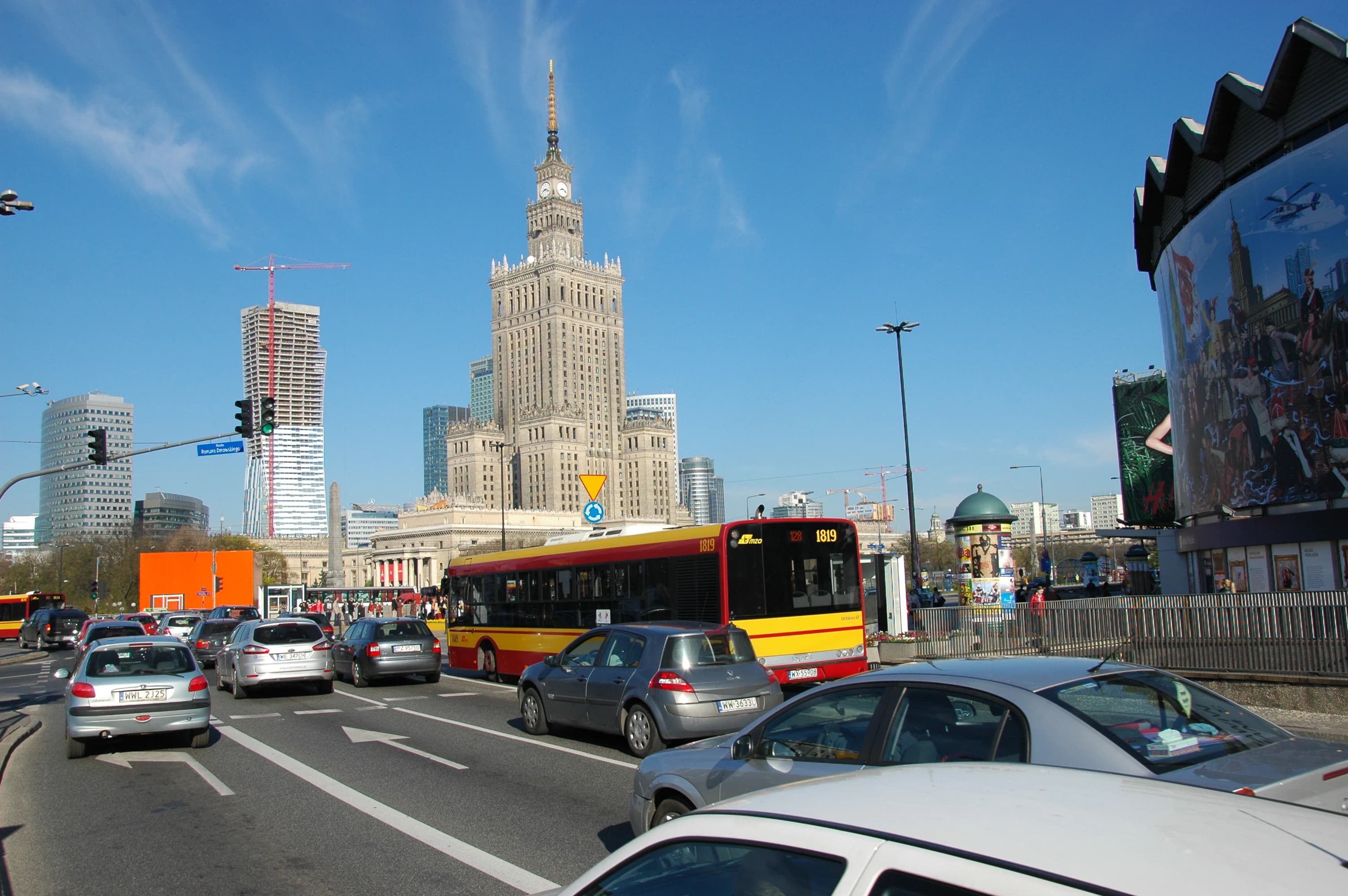
Warsaw, Poland's capital, is a city of resilience. Destroyed by 85% during World War II, the Old Town was rebuilt so faithfully that UNESCO declared it a unique example of reconstruction as a World Heritage site. Today, Warsaw is a vibrant metropolis that combines historical heritage with a dynamic startup scene and exciting nightlife. The Palace of Culture and Science — Stalin's "gift" and the tallest building in Poland — overlooks a skyline that can compete with any European metropolis. The POLIN Museum tells the thousand-year history of Polish Jews. In the trendy Praga district on the eastern bank of the Vistula, you can find street art, neon museums, and industrial ruin bars. Łazienki Park, with its palace on the water, is one of the most beautiful city parks in Europe. Warsaw combines tragedy and triumph, history and innovation into one of the most exciting capitals in Europe.

HistoryResurrectedUNESCO

Zakopane

Zakopane is the winter capital of Poland and the heart of the High Tatras — a charming mountain resort at the foot of the highest mountains between the Alps and the Caucasus, captivating skiers, hikers, and food lovers alike. The town, situated at an altitude of 800-1,000 meters, is the gateway to the Tatra National Park and offers spectacular mountain panoramas, traditional wooden architecture in the Zakopane style, and the vibrant culture of the Gorals, the mountain people of the Polish Carpathians. Krupowki, Zakopane's legendary pedestrian zone, is a one-and-a-half-kilometer-long boulevard filled with restaurants, cheese shops, souvenir stores, and street musicians: Here you can try Oscypek (smoked sheep cheese), drink hot Grzaniec (mulled wine), and buy hand-carved wooden figures from Goral tradition. In winter, the street transforms into a snowy winter wonderland. Morskie Oko (Sea Eye), an emerald green glacial lake at an altitude of 1,395 meters, is the most beautiful lake in the Tatras and one of Poland's most popular excursion destinations: The path leads 9 kilometers through dense spruce forests, past waterfalls, and at the end, a breathtaking panorama of steep rock walls reflecting in the crystal-clear water unfolds. The cable car to Kasprowy Wierch (1,987 m) offers the most spectacular mountain panorama in the region: At the top, you stand on the Polish-Slovak border with views into both countries, and in winter, challenging ski slopes start here. Gubalowka Hill (1,126 m) is accessible by funicular and offers a 180-degree panorama over the entire High Tatras. In summer, Zakopane is the starting point for hikes to the highest peaks of the Tatras: Rysy (2,499 m, the highest mountain in Poland), Swinica, and Giewont with its distinctive summit cross. In winter, Kasprowy Wierch, Nosal, and Bialka Tatrzanska offer skiing fun for all skill levels.

TatraSkiingHiking

Regions

Masuria

Masuria is Poland's enchanted lake district – a vast region in the northeast of the country with over 2,000 lakes, endless forests, gentle hills, and a tranquility unmatched in Europe. The Great Masurian Lake District (Kraina Wielkich Jezior Mazurskich) spans a massive area and connects the largest lakes – Śniardwy and Mamry – through a network of canals, rivers, and waterways, making Masuria a paradise for sailors, canoeists, and houseboat enthusiasts. What makes Masuria so unique is the combination of unspoiled nature and melancholic history. The region, once part of East Prussia, still bears traces of its German past: abandoned manor houses, Protestant brick churches, cobblestone alleys, and German place names that appear alongside Polish ones on signposts. For many German visitors, a trip to Masuria is also an emotional journey into family history. The Wolf's Lair (Wilczy Szaniec), Hitler's former headquarters in the forest near Kętrzyn, is one of the most visited memorial sites in the region. The nature of Masuria is overwhelming: sea eagles circle over the lakes, storks nest on every second chimney, and moose, beavers, and lynxes inhabit the forests. The Masurian Landscape Park and the Biosphere Reserve at Lake Łuknajno (UNESCO) protect this unique fauna. The silence on the water, the splashing of paddles, and the vast sky over the lakes convey a sense of freedom that is rarely found in Central Europe. For German holidaymakers, Masuria is an excellent holiday home destination: idyllic wooden houses right by the lake, often with their own jetty and boat, are numerous and affordable. The best way to get there is by car (about 8 hours from Berlin) or by flight to Gdańsk with subsequent travel. The best travel time is from June to September, with July and August being particularly busy at the most popular lakes.

LakesSailingNature

Package holiday to Poland

Compare flight & hotel at the best price.

Package holidays

Holiday apartment in Poland

Holiday homes with more space and privacy.

Holiday flats

All accommodations

Map, package holidays & holiday homes at a glance.

All options

Complete guide for Poland

Regions, attractions, food, routes, costs & practical tips — all in one digital guide.

Open guide
Suitable for:BudgetCultureHistoryCity tripsHiking

Ready for Poland?

Plan your Poland holiday now with our free tools.

Plan a holiday in Poland

Poland is one of the most popular travel destinations in Europe, offering Budget, Culture, History and much more. The best time to visit Poland is May–September, when the weather is ideal for exploration and relaxation. With a daily budget starting from 30–50€ (Budget) to 100–200€ (Luxury), Poland is suitable for various travel budgets.

From the capital Warsaw, Poland can be excellently explored. The official language is Polish, and the currency is Złoty (PLN). From Germany, you can reach Poland in approx. 1.5 hours. Whether you want to try culinary highlights like Pierogi, Żurek, Bigos, visit top attractions, or simply enjoy the atmosphere: Poland has something for every type of traveller.

Use our free travel tools to prepare your Poland holiday perfectly. With the holiday finder, you can discover if Poland is the right destination for you. The budget calculator helps you plan costs realistically, and with the packing list, you won't forget anything.

Suitable holiday types for Poland:

More travel destinations in Europe:

All countries in Europe

All destinations in Europe