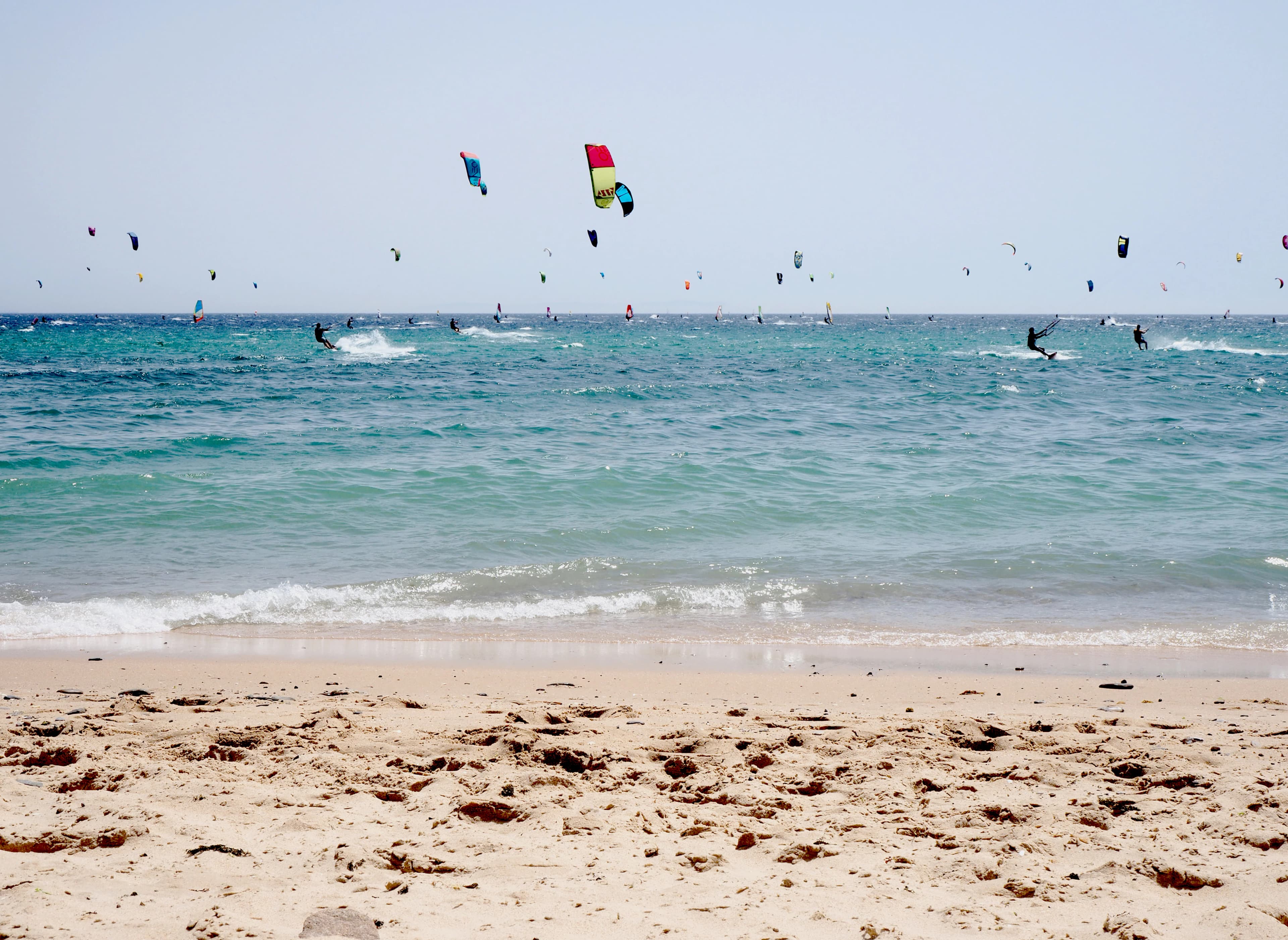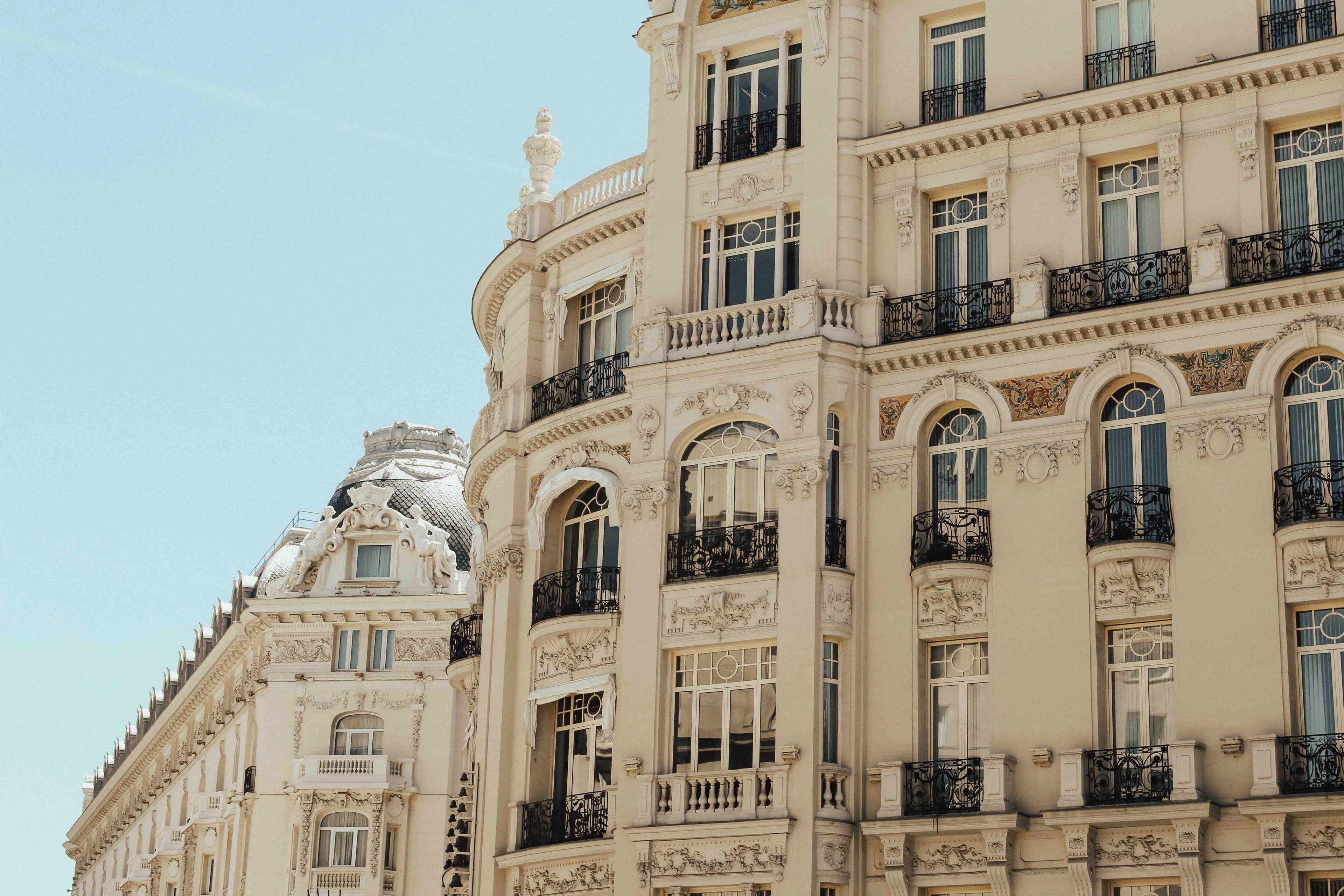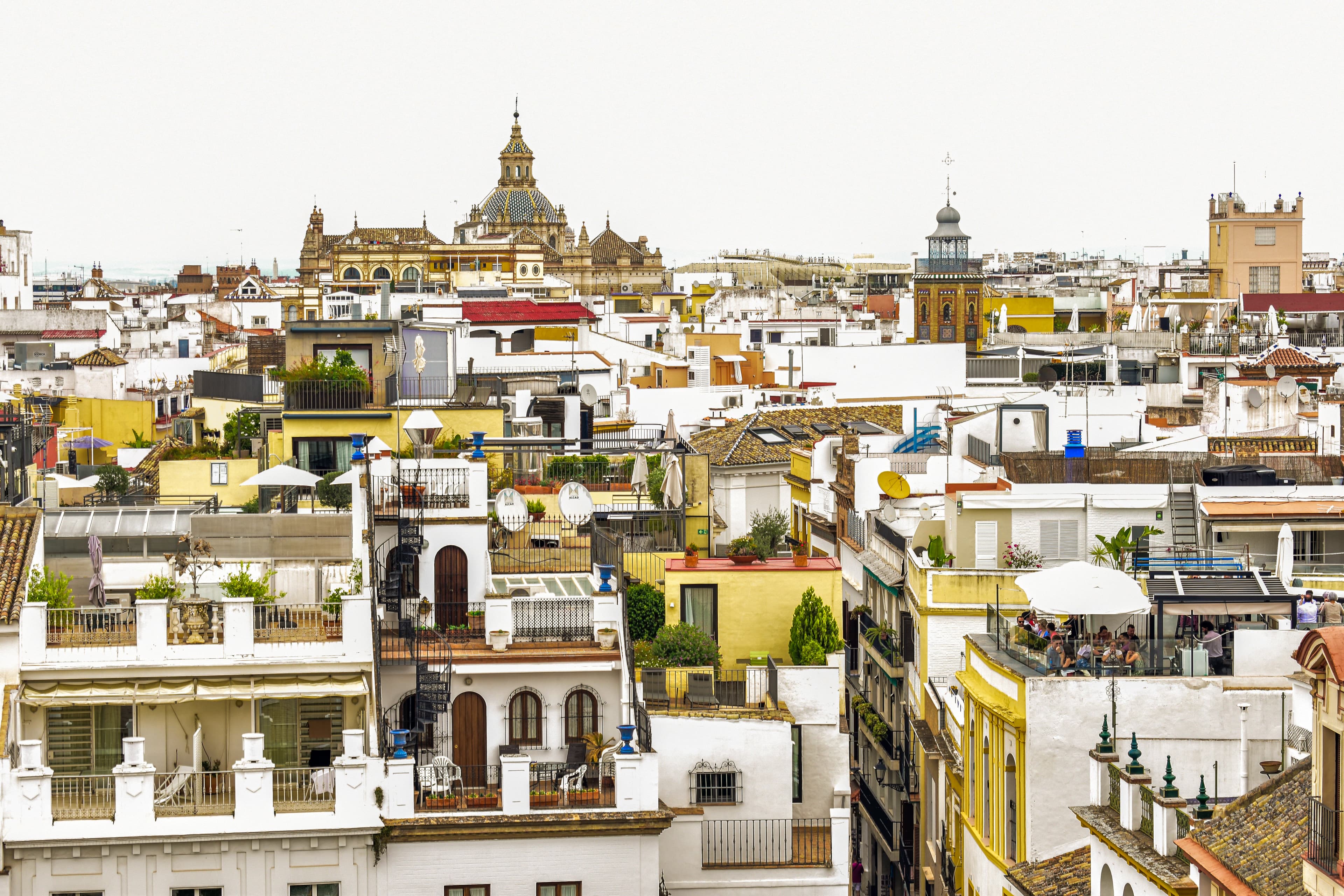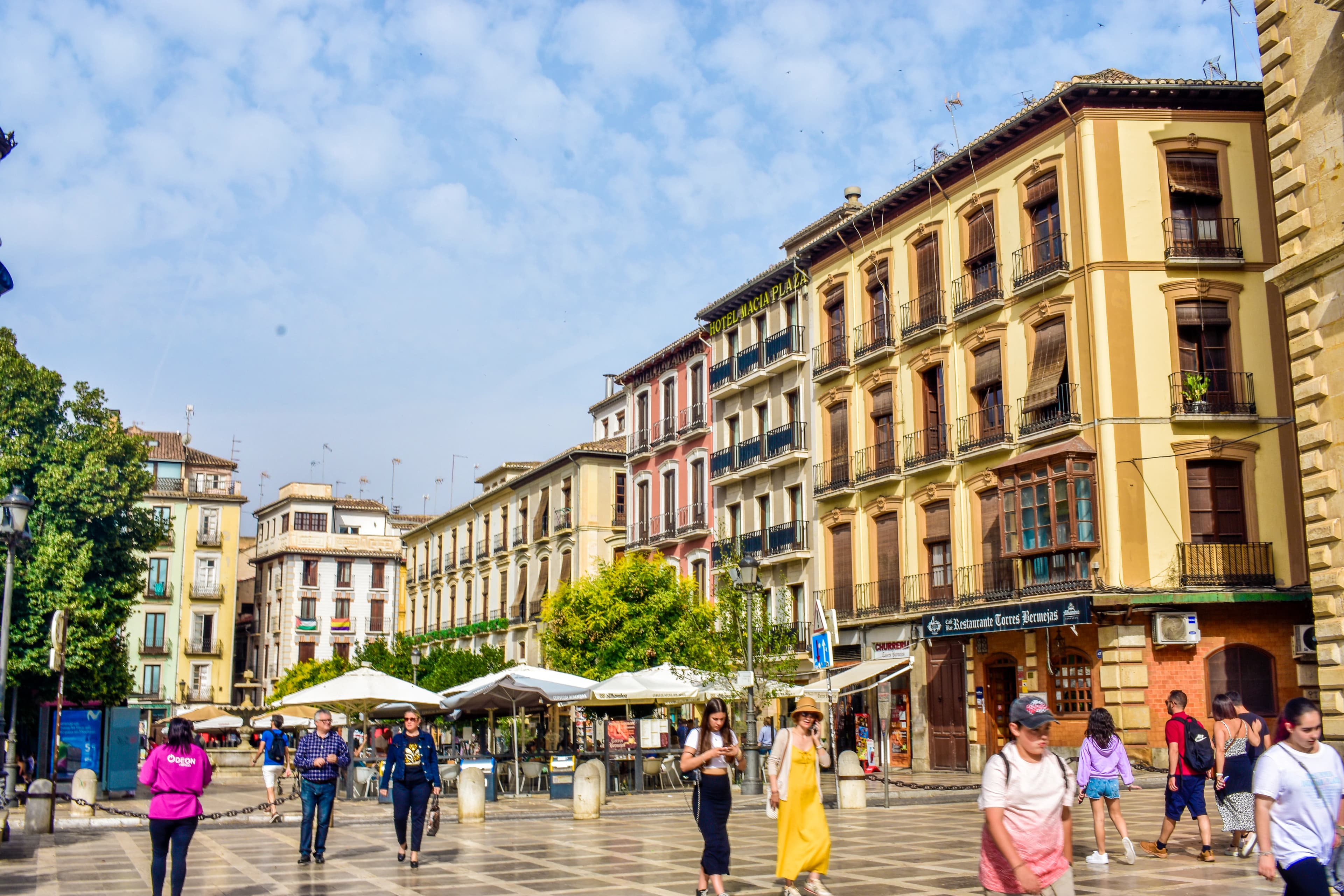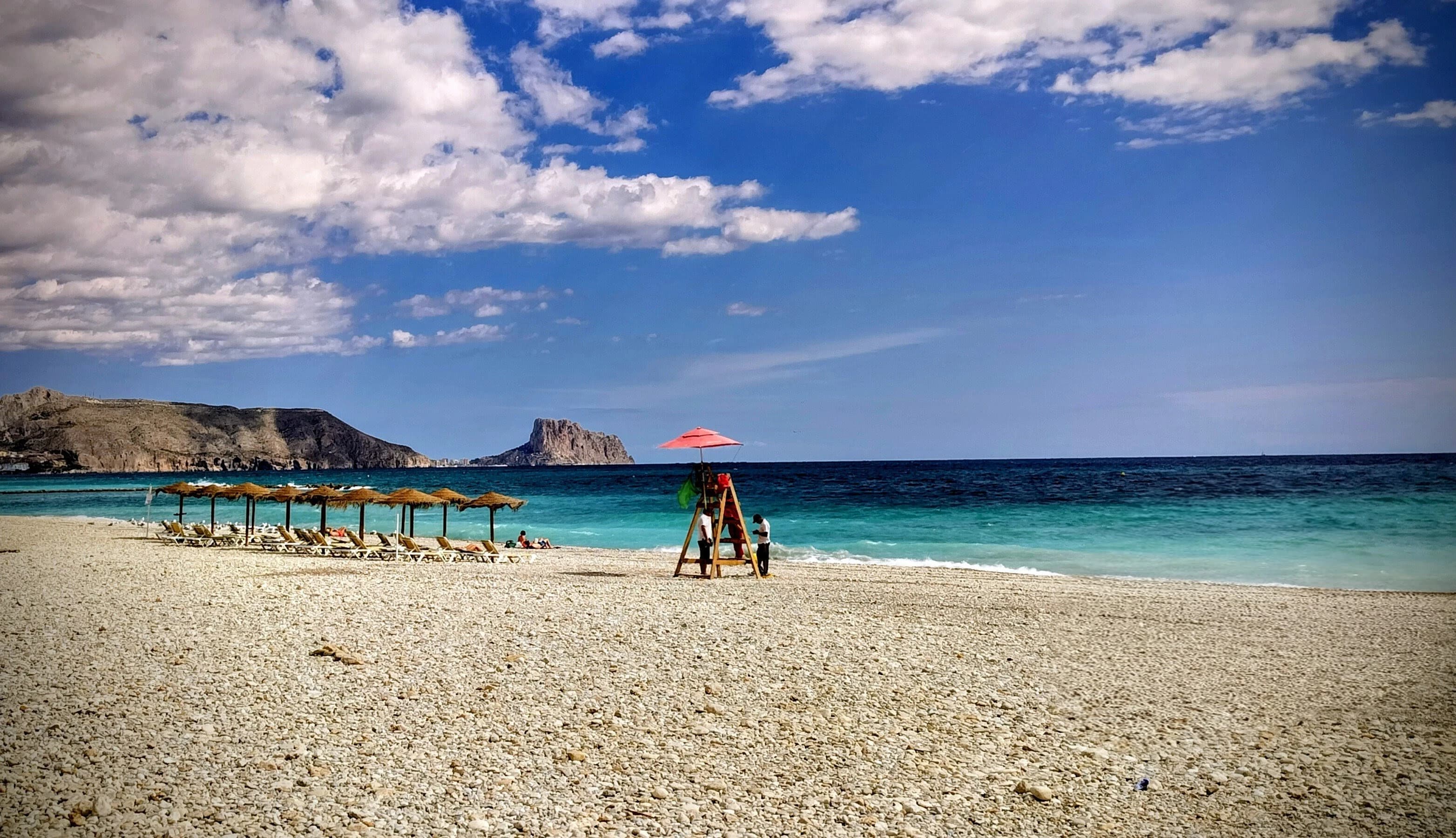
White pebble beach with turquoise water and distant cliffs.
🇪🇸

Spain holiday

Travel tips, best time to visit & highlights for your Spain holiday in Europe

Spain is the most popular holiday destination for Germans – and for good reason. From the Balearic Islands to the Costa Brava and the Canary Islands, the country offers endless beaches, vibrant nightlife, fascinating culture, and a cuisine that is unmatched worldwide. Additionally, there are short flight times and excellent value for money.

Capital

Madrid

Language

Spanish

Currency

Euro (€)

Time zone

UTC+1

Flight time from DE

approx. 2–3 hours (mainland), 4h Canary Islands

Entry requirements

EU identity card

Top hotels & accommodations in Spain

Selected hotels and holiday accommodations in Spain — with images, reviews, and direct booking links with our partners.

Top 5 highlights in Spain

The places you absolutely must not miss.

1

Mallorca

Much more than Ballermann: Serra de Tramuntana, hidden coves, charming villages, and wineries.

2

Barcelona

Gaudí's masterpieces, La Rambla, the beach, and the best tapas scene in Spain.

3

Andalusia

Granada, Seville, and Córdoba – Moorish palaces, flamenco, and endless olive groves.

4

Canary Islands

Year-round destination: Tenerife, Gran Canaria, Lanzarote, and Fuerteventura.

5

Ibiza

World-famous clubs, but also quiet hippie beaches and a beautiful old town (UNESCO).

Hotels in Spain

Vergleiche tausende Hotels, Apartments und Resorts auf Expedia – mit Bestpreis-Garantie, kostenloser Stornierung und Bonuspunkten.

Über 700.000 Hotels
Kostenlose Stornierung
Bestpreis-Garantie
Hotels in Spain vergleichen

* Weiterleitung zu Expedia.de. Es gelten die dortigen Nutzungsbedingungen.

Kurzurlaub: Kurzurlaub

Handverlesene Hoteldeals, Kurztrips und Erlebnisgutscheine zu Sparpreisen. Perfekt zum Verschenken oder selbst Genießen.

Bis zu 60 % Ersparnis
Auch als Geschenk
DACH & Südeuropa
Angebote entdecken

* Weiterleitung zu we-are.travel. Es gelten die dortigen Nutzungsbedingungen.

Reiseversicherung abschließen

Rundum-Schutz ab 9,90 € auf TravelSecure.de

Hotelgutscheine & Kurzreisen

Deals ab 29 € p.P. auf touriDat.com

Pauschalreisen & Rundreisen

Berge & Meer – 170 Tage Cookie

Best time to visit Spain

Recommended travel time

April–October

Summer

28–38°C

Winter

10–18°C

How much does a holiday in Spain cost?

Average cost per person per day (excluding flight)

🎒

Budget

50–70€

Hostel, street food, public transport

🏨

Mid-range

70–130€

Hotel, restaurant, excursions

🌟

Luxury

130–250€

Boutique hotel, fine dining

5 travel tips for Spain

Insider knowledge to make your holiday better.

Dinner in Spain starts no earlier than 9 PM

Tapas bars: Eating at the counter is often cheaper than at a table

The siesta (2–5 PM) is real – many shops close

Car rental in Mallorca and the Canary Islands is highly recommended

Beach chiringuitos offer good, inexpensive food

Food & drink in Spain

These dishes you must try!

Paella
Tapas
Jamón Ibérico
Gazpacho
Churros con Chocolate
Patatas Bravas

Discover Spain

112 regions, cities and highlights in Spain

Beaches

Alcúdia

Alcúdia uniquely combines history and beach enjoyment on Mallorca's northern coast — the fully preserved medieval city wall from the 14th century encloses a labyrinth of narrow streets with cafés, boutiques, and the best market on the island, while just a few minutes' walk away lies one of the longest and flattest sandy beaches in Mallorca. Platja d'Alcúdia stretches over seven kilometers from the old town to Can Picafort and is considered an ideal family beach due to its extremely shallow water entry — children can wade meters into the sea without the water reaching their knees. The bay of Alcúdia is sheltered from the wind, and the water shimmers in Caribbean tones over the bright sand. In the hinterland of the city lie the Roman ruins of Pollentia with a well-preserved theater — Mallorca's most significant archaeological site. The S'Albufera Nature Park, the largest wetland in the Balearics, is a paradise for birdwatchers and offers hiking trails through reed landscapes and pine forests, right behind the beach dunes. In recent years, Alcúdia has transformed from a classic package holiday destination to a versatile travel destination with upscale gastronomy, cycling infrastructure, and cultural events in the old town — all while maintaining its relaxed charm.

BeachOld TownFamily

Cala d'Or

Cala d'Or on the southeast coast of Mallorca is a true paradise of coves that has captivated German holidaymakers for decades. The charming resort combines five picturesque calas - from Cala Gran to Cala Esmeralda to the hidden Cala Serena - which, with their crystal-clear turquoise waters and pine-fringed cliffs, remind one of the Caribbean. The low, white architecture in Ibiza style gives the place a special flair that pleasantly distinguishes it from the hotel complexes of other coastal towns. The car-free pedestrian zone with boutiques, restaurants, and cozy cafés invites leisurely strolls, while the Cala d'Or marina exudes a touch of exclusivity. Families appreciate the gently sloping, sheltered coves, couples enjoy the romantic sunsets over the sea, and active vacationers take advantage of the fantastic snorkeling and kayaking opportunities along the rugged coastline.

covesmallorcasnorkeling

Cala Galdana

Cala Galdana is the dream bay of Menorca - a perfect semicircle of the finest white sand, framed by densely forested cliffs and washed by water in unreal shades of turquoise. The bay on the southern coast of the island is often referred to as the most beautiful beach in Menorca, and anyone standing in front of this panorama for the first time immediately understands why. The harmonious combination of nature, sheltered location, and just enough infrastructure makes Cala Galdana the ideal destination for families and nature lovers. The bay is embraced by steep, pine-covered cliffs that protect the beach from wind and waves, ensuring calm, warm water. At the eastern end, the Algendar River flows into the bay and has carved a dramatic gorge - the Barranc d'Algendar - into the limestone over thousands of years. This wooded canyon is a paradise for hikers and birdwatchers and extends several kilometers into the island's interior. From Cala Galdana, some of the most beautiful coastal hikes in Menorca begin. The Camí de Cavalls, a historic coastal path that circles the entire island, leads from the eastern cliff edge of the bay to the uninhabited dream beaches Cala Macarella and Cala Macarelleta - two of the most photogenic bays in the entire Mediterranean region. The hike takes about 30 minutes and passes through fragrant pine forests along the cliffs with breathtaking views. The infrastructure in Cala Galdana is family-friendly: there are sun loungers, umbrellas, pedal boat rentals, kayaks, and several restaurants right on the beach. A small supermarket and additional restaurants are located in the village above the bay. Nevertheless, Cala Galdana has retained the charm of a natural bay - there are no large hotel complexes, but rather low-rise hotels and apartment buildings that blend discreetly into the landscape. From Germany, it takes just under 2.5 hours to fly to Menorca (Mahón) and about 35 minutes by rental car to reach Cala Galdana.

MenorcaDream BayTurquoise

Cala Millor

Cala Millor is one of the most popular beach resorts on Mallorca's east coast and owes its name to the 'best beach' — a designation that the nearly two-kilometer-long, fine sandy coastline with its gentle entry into the turquoise Mediterranean absolutely deserves. German families have appreciated the place for decades for its perfect mix of beach comfort, short distances, and a wide gastronomic offering that ranges from traditional Mallorcan cuisine to German bakeries. The car-free promenade connects Cala Millor with the neighboring town of Cala Bona and its picturesque fishing harbor, where boats sway in the sunset in the evening and fresh fish goes directly to the harbor restaurants. In the hinterland rises the Punta de n'Amer — a protected peninsula with an old watchtower, hiking trails through fragrant maquis, and secluded rocky coves. The town offers everything families and couples need for a carefree beach holiday: water sports rentals, playgrounds, a weekly market on Mondays, and a lively but not overly intense nightlife with bars and live music along the main street. The connection to Mallorca's highlights is excellent — the Artà Caves and the Dragon Caves of Porto Cristo are just a few minutes by car away.

BeachFamilyMallorca
a black and green sign hanging from the side of a wall

Cala Ratjada

Cala Ratjada at the northeastern tip of Mallorca has been one of the most popular holiday destinations for German tourists since the 1970s — and despite its popularity, it has retained an authentic charm that goes far beyond the typical tourist spot. The active fishing port gives the place soul: boats set out in the morning, and the catch is served in the harbor restaurants at noon. The beaches around Cala Ratjada are among the most beautiful in Mallorca — Cala Agulla with its wide sandy beach in front of a pine forest, the small Cala Gat with crystal-clear water between rocks, and the only accessible by foot Cala Mesquida with its impressive dunes offer something for every type of beachgoer. Over the town towers the garden of the March family — the Jardí de Sa Torre Cega — with a remarkable collection of sculptures amidst botanical splendor and sea views. The lighthouse at Cap de Capdepera marks the easternmost point of Mallorca, and on clear days, one can see all the way to Menorca from here. Cala Ratjada has a lively nightlife with bars and clubs that pulse into the early morning hours in summer, but also quiet corners for families and those seeking relaxation — this versatility makes the place a perennial favorite in German tourism to Spain.

BeachNightlifeMallorca

Cala Tarida

Cala Tarida is one of the most beautiful bays on Ibiza's wild west coast and a must for anyone wanting to experience the island's legendary sunset in all its glory. The wide, golden sandy beach is framed by dramatic cliffs and gently slopes into the turquoise Mediterranean Sea. Unlike the crowded party beaches in the south, Cala Tarida has retained a relaxed, almost family-friendly atmosphere that attracts sunbathers, snorkelers, and romantics alike. The bay is divided into two sections: the main beach with sunbeds, chiringuitos, and water sports rentals, and a smaller, quieter rocky section to the north, accessible via rocks, where nudists can find their peace. The water here is almost always calm and crystal clear due to the sheltered location - perfect for snorkeling along the rock formations, where colorful fish and seagrass can be discovered. The absolute highlight is the sunset. Cala Tarida is ideally oriented to the west, and when the sun sinks behind the offshore rocky islands in the sea, the sky transforms into a spectacle of gold, orange, and violet. The chiringuitos on the beach then play chillout music, cocktails are served, and the atmosphere is magical. The famous Cotton Beach Club right on the beach has perfected this sunset culture. Cala Tarida is about a 25-minute drive from the island's capital, Ibiza Town. The west coast around the bay offers numerous other hidden coves like Cala Conta and Cala Bassa, which can be discovered by boat or on hiking trails. Holiday homes and small hotels in the hills above the bay offer privacy and panoramic views of the sea.

Ibizasunsetbay

Calella

Calella is the unofficial capital of the German Spain holiday and has been one of the most popular destinations for German tourists on the Costa del Maresme north of Barcelona since the 1960s. The lively seaside resort has developed over the decades from a simple beach village to a fully-fledged holiday destination that combines sun, beach, nightlife, and Catalan culture in a compact space. For German holidaymakers seeking sociability, beach life, and good value for money, Calella has been the top choice for generations. The main beach of Calella stretches over two kilometers and offers fine, golden sand, crystal-clear Mediterranean waters, and a lively promenade with Chiringuitos (beach bars), restaurants, and shops. The beach gently slopes into the water, making it ideal for families and swimmers. South of the main beach are smaller, quieter coves protected by rocks, inviting for snorkeling. The old town of Calella surprises with its Catalan charm. Narrow alleys, colorful facades, small squares, and the imposing church of Santa Maria create a delightful contrast to the tourist beach life. The lighthouse at the southern end of the town offers a spectacular view of the coast and is a magical place at sunset. Parc Dalmau, a shady pine park above the town, is Calella's green oasis with playgrounds, walking paths, and viewpoints. What particularly distinguishes Calella is its proximity to Barcelona. In just one hour, you can reach Sants Station in the heart of the Catalan metropolis by regional train Rodalies and explore the Sagrada Familia, the Ramblas, and the Gothic Quarter before returning to the beach in Calella in the evening. This combination of affordable beach holiday and big city culture makes Calella unique. From Germany, it takes just over two hours to fly to Barcelona, and from there it is only 50 kilometers to Calella. Package holidays are often surprisingly affordable and offer excellent value for money. The season runs from May to October, with the high season in July and August.

SpainBeachBarcelona

Calpe

Calpe on the Costa Blanca is dominated by the Penón de Ifach, a 332-meter-high limestone rock that rises from the Mediterranean like a guardian over the city and has been declared a nature park. This iconic rock is the unmistakable landmark of the entire coastal region and offers one of the most spectacular 360-degree views in Spain after a challenging ascent. German tourists appreciate Calpe for its exceptional combination of long sandy beaches, dramatic rocky coastline, and a vibrant international atmosphere. The Playa de la Fossa and Playa Arenal offer fine sand and calm, clear water, while the historic old town with its remnants of the Moorish city wall and picturesque fishing district invites exploration. The large salt lagoon Las Salinas in the middle of the city is home to a colony of flamingos - an unusual sight right next to the bathing beach.

rockcosta-blancabeach

Camp de Mar

Camp de Mar is a quiet and well-maintained bathing bay in the southwest of Mallorca, particularly popular with couples and families seeking tranquility. The sheltered bay offers fine sand, a shallow entry, and crystal-clear water, framed by wooded hills. The distinctive landmark is a small fish restaurant on a rocky island, accessible via a wooden bridge. With its top-notch golf course, elegant hotels, and proximity to the Sierra de Tramuntana mountains, Camp de Mar combines a relaxed beach holiday with sporting opportunities in a luxurious atmosphere.

BeachTranquilityMallorca

Can Picafort

Can Picafort is located on the expansive Bay of Alcúdia in the northeast of Mallorca and is one of the island's most popular family beaches. The kilometer-long, gently sloping sandy beach is perfect for children and non-swimmers. The lively promenade offers numerous restaurants, ice cream parlors, and shops with a relaxed holiday atmosphere. The former fishing village has developed into a well-maintained resort, particularly appreciated by German families for its safe beach and good tourist infrastructure.

BeachFamilyMallorca

Canyamel

Canyamel is located on the quiet northeast coast of Mallorca and captivates with its dreamy sandy bay, framed by untouched hills and the distinctive Torre de Canyamel. The approximately 300-meter-long beach gently slopes into the crystal-clear water and is significantly quieter than the large tourist beaches on the island. Above the village are the impressive Coves d'Artà, which, with their massive stalactites and the 25-meter-high entrance hall, are among the most beautiful caves in Mallorca. Canyamel is ideal for travelers seeking a relaxed beach holiday in a natural setting away from mass tourism.

BeachCalmMallorca

Colònia de Sant Jordi

Colònia de Sant Jordi in the south of Mallorca is the gateway to the famous Es Trenc, one of the most beautiful natural beaches in the entire Mediterranean region. The Caribbean-like beach with its white sand and crystal-clear turquoise water stretches for several kilometers and is largely undeveloped. The small harbor town itself impresses with its authentic charm, featuring fishing boats, good fish restaurants, and the relaxed atmosphere of a true Mallorcan coastal village. From here, boat tours to the offshore island of Cabrera, a protected national park, also depart.

BeachNatural beachMallorca

Corralejo

Corralejo is the lively surf and beach paradise at the northern tip of Fuerteventura and the perfect place for those seeking endless sandy beaches, turquoise waters, and a relaxed surfer atmosphere. The former fishing village has developed into the island's most popular holiday resort without losing its laid-back Canarian charm. For German holidaymakers, Corralejo is a dream destination that combines Sahara vibes with European comfort. The absolute highlight is the Grandes Playas de Corralejo - an eleven-kilometer stretch of the finest white sand and crystal-clear turquoise water that extends south of the town and belongs to the Corralejo Dunes Natural Park. The wandering Sahara dunes that border the sea create a surreal landscape reminiscent of a desert by the ocean. The natural park protects this unique ecosystem and prevents any construction - here there is only sand, sea, and wind. Corralejo itself is a charming small town with a lively pedestrian zone, colorful houses, surf shops, and a restaurant scene that offers everything from fresh fish to international cuisine. The old harbor is the heart of the town, from where ferries depart to the neighboring island of Lanzarote and the nearby Isla de Lobos, an uninhabited islet with a crystal-clear lagoon, which can be reached by boat in just 15 minutes. Fuerteventura is the windsurfing and kitesurfing island of the Canaries, and Corralejo is right in the action area. Flag Beach directly in the dunes is one of the best kitesurfing spots in Europe, while the northern coast provides consistent waves for surfers. From Germany, it takes about four and a half hours to fly to Fuerteventura, and the airport is 40 minutes from Corralejo. Prices are moderate, the infrastructure is excellent, and the climate makes Corralejo a year-round destination.

CanariesFuerteventuraSurfing
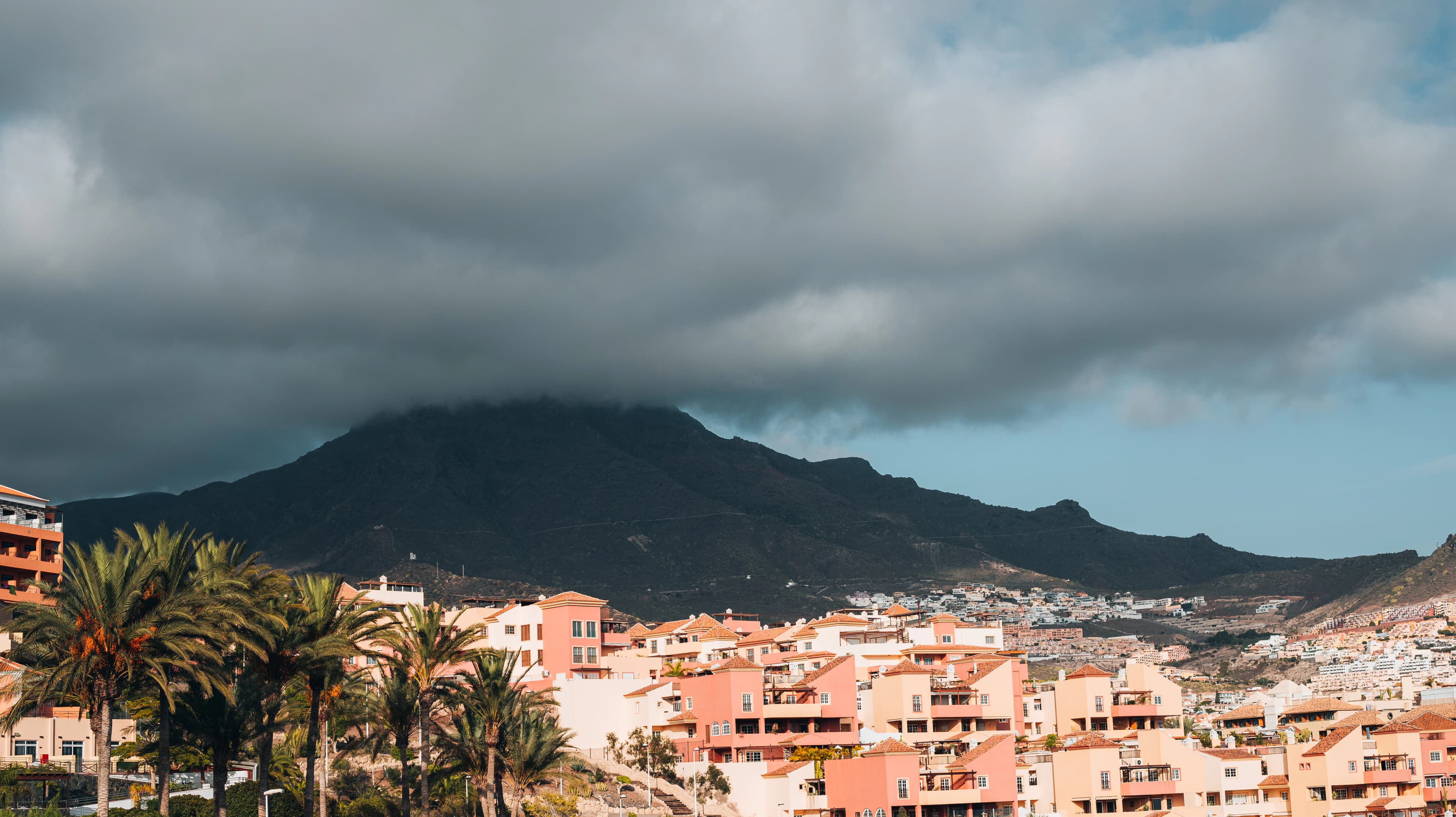
a city with trees and mountains in the background

Costa Adeje

Costa Adeje is the elegant big sister of Playa de las Américas and has developed into a premium destination on the southern coast of Tenerife over the last two decades. While the hustle and bustle reigns next door, Costa Adeje focuses on upscale hotels, well-maintained beach promenades, and an atmosphere that emphasizes luxury and relaxation. For German families and couples seeking sun and comfort without the party scene, Costa Adeje is the top choice in the Canary Islands. The beaches of Costa Adeje are among the best in the entire Canary Islands. Playa del Duque, often referred to as the most beautiful beach in Tenerife, impresses with fine light sand, crystal-clear water, and an elegant promenade with designer boutiques and restaurants. Playa de Fandabe and Playa de Torviscas offer wider sandy areas and are popular with families. La Caleta Bay, a former fishing village, has retained its authentic charm and is home to some of the best fish restaurants on the island. Costa Adeje is the center of upscale tourism in Tenerife. Several five-star resorts with extensive spa areas, infinity pools, and gourmet restaurants line the coast. Siam Park, located at the border with Playa de las Américas, is easily accessible. The Barranco del Infierno, the Hell Gorge, offers a spectacular hike through a deep volcanic gorge with a waterfall at the end - a welcome contrast to beach life. The whale-watching tours from Costa Adeje are among the most reliable in the world. In the waters off the coast live around 500 pilot whales and several species of dolphins year-round - the sighting rate is over 95 percent. From Germany, Costa Adeje can be reached in under five flight hours, and the tourist infrastructure is perfect: German-speaking service, well-known brands, and a climate that allows for beach holidays year-round.

Canary IslandsTenerifeLuxury
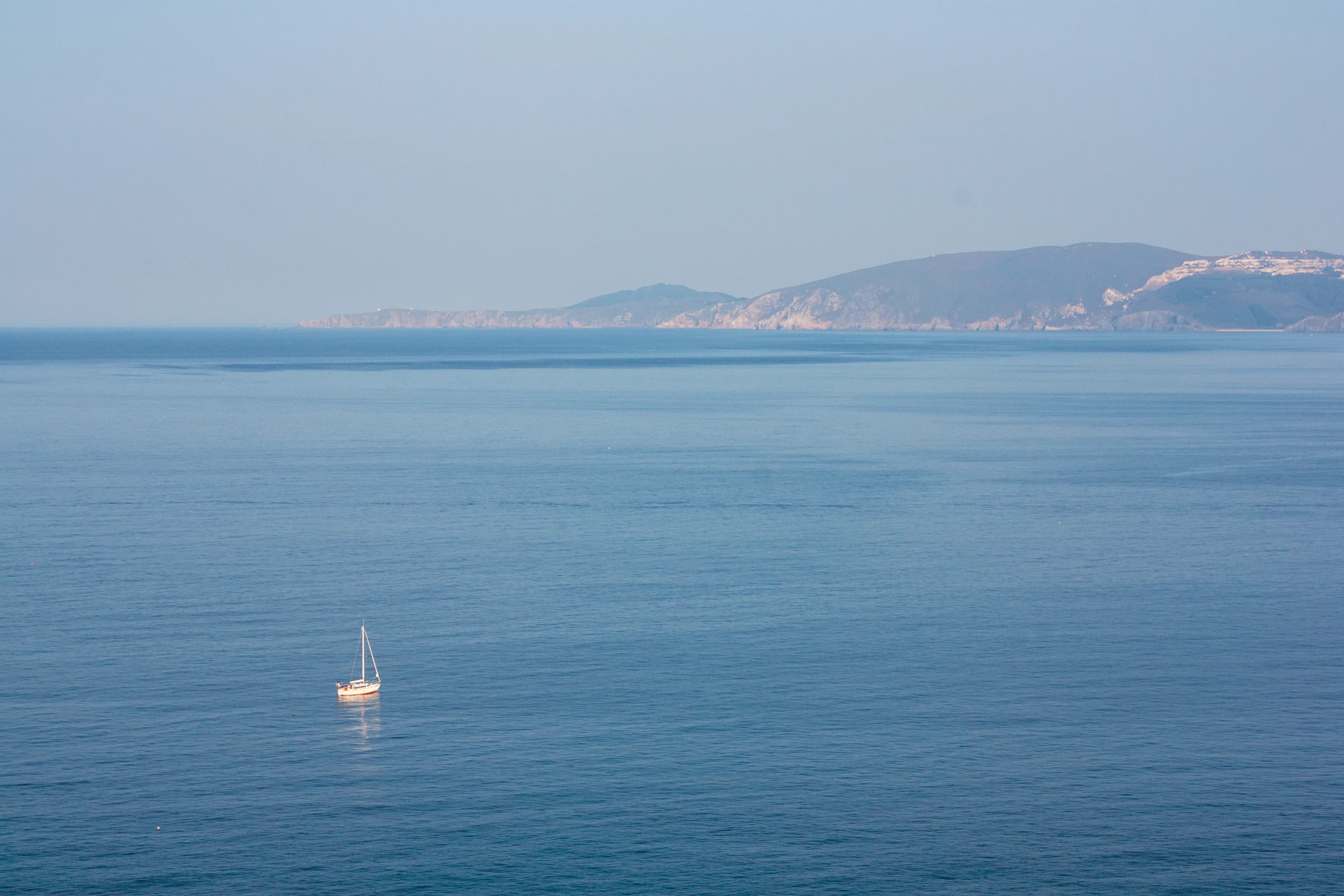
a boat floating in the middle of a large body of water

Costa Calma

Costa Calma is located on the southeast coast of Fuerteventura and rightly bears its name — the "calm coast" offers kilometers of wind-sheltered sandy beaches in a vast semi-desert landscape reminiscent of the Sahara. While the northern coast of the island is exposed to the Atlantic waves and trade winds, the Jandía Peninsula protects the coastal section near Costa Calma, creating ideal conditions for families and windsurfers alike. Playa de Sotavento de Jandía beach is the flagship of the region: at low tide, a huge, shallow lagoon forms between the sandbank and the coast, where the water is ankle-deep and the wind creates perfect conditions for windsurfers and kitesurfers. The Windsurfing & Kiteboarding World Cup takes place here annually — a spectacle that attracts professional athletes and spectators from all over the world. The hinterland surprises with the Oasis Park — a vast zoo and botanical garden in a gorge, where camel caravans wander through the desert landscape and lemurs climb among cacti. The barren volcanic landscape of Fuerteventura, the oldest island of the Canary Islands, radiates a meditative calm that forms the perfect contrast to the active offerings at the beach. Costa Calma is not a place for culture tourists or night owls — it is a refuge for those seeking endless beaches, constant sunshine, and the soothing expanse of the Atlantic.

BeachWindsurfingFuerteventura

Es Pujols

Es Pujols is the only real holiday resort on Formentera — the smallest inhabited Balearic island, accessible by ferry from Ibiza, boasting beaches that can rival those of the Caribbean. The water shimmers in an unreal turquoise over dazzling white sand, and the Posidonia seagrass meadows off the coast keep it crystal clear — for this, UNESCO has declared it a World Heritage Site. The small village is centered around two sandy beaches, separated by a rocky promontory: the main beach Es Pujols and the more intimate Platja de Sa Roqueta. Along the promenade, boutiques, restaurants, and cocktail bars line up — relaxed and bohemian instead of flashy and loud, very much in the spirit of Formentera. From Es Pujols, Formentera can be perfectly explored by bike or scooter: the famous beach Ses Illetes, regularly ranked among the top 10 in Europe, is only four kilometers to the north; the lighthouse La Mola at the southern end of the island offers the most dramatic sunset in the Mediterranean over a 120-meter-high cliff. Formentera is the counter-program to Ibiza's party scene — here it’s about slowing down, enjoying nature, and the beauty of simplicity. The hippie tradition of the 1960s lives on in the craft markets and sunset bars, and the island has consciously opted against mass tourism.

BeachIslandFormentera

Estepona

In recent years, Estepona has quietly transformed into one of the most charming coastal towns on the Costa del Sol and is affectionately referred to as the "Garden of the Costa del Sol." The old town has been lavishly adorned with over 50 large-scale murals, thousands of flower pots, and an orchid house, providing a colorful contrast to the white facades of the houses. German tourists seeking authentic Andalusia will find a place here that, despite its location between Marbella and Gibraltar, has preserved its Spanish character. The 21-kilometer coastline offers both lively city beaches and quiet, unspoiled sections, while the new beach promenade "Senda Litoral" invites for extensive walks along the sea. The modern marina, the lively tapas bars in the old town, and the proximity to the Sierra Bermeja mountains complete the offering.

flower villagecosta-del-solstreet-art

Jandía

Jandía is the beach paradise at the southernmost tip of Fuerteventura and is home to one of the longest and most beautiful beaches in Europe. The Playa de Sotavento stretches for almost 30 kilometers along the southern coast of the peninsula and is an endless strip of golden-white sand, turquoise shallow water, and shifting sandbanks that form huge lagoons at low tide. For German beach lovers seeking space and tranquility instead of hotel complexes, Jandía is a dream. The Jandía Peninsula was declared a nature park in 1987, protecting a unique landscape of desert plains, rugged mountains, and unspoiled coast. The Pico de la Zarza, at 807 meters the highest mountain in Fuerteventura, offers a spectacular hike with panoramic views over the entire peninsula and, on clear days, all the way to Gran Canaria. On the wild west coast, the Playa de Cofete stretches for almost 14 kilometers of deserted beach, accessible only via an adventurous gravel road - a place of overwhelming solitude and beauty. Jandía is also one of the most important windsurfing and kitesurfing spots in the world. Every July, the Windsurf and Kitesurf World Cup takes place here, attracting the international surfing elite to Sotavento Beach. The conditions are perfect: constant trade winds, warm shallow water in the lagoons for beginners, and powerful waves on the outer coast for professionals. The tourist infrastructure is concentrated in the towns of Costa Calma and Morro Jable. Both offer a good selection of hotels, restaurants, and supermarkets but remain pleasantly manageable. From Germany, it takes about four and a half hours to fly to Fuerteventura, and the drive to Jandía takes about an hour from the airport. The region is significantly quieter than Corralejo in the north and ideal for travelers seeking beach, nature, and peace.

CanariesFuerteventuraEndless beach

Jávea

Jávea, in Valencian Xàbia, is considered one of the most climatically favored places in Europe and has been awarded by the WHO for its ideal microclimate. The charming coastal town on the Costa Blanca surprises with three completely different beach worlds: the fine sandy Platja de l'Arenal in the south, the dramatic rocky coves of La Granadella, and the expansive pebble beach near the old town. German residents and tourists particularly appreciate the authentic Spanish way of life, which has been preserved here despite international popularity. The medieval old town with the fortress-like church of San Bartolomé, the lively fishing port with its restaurants, and the wild, rugged coastline with hidden bathing coves make Jávea one of the most versatile holiday destinations along the entire Spanish Mediterranean coast. Cala Granadella is regularly chosen as one of the most beautiful beaches in Spain.

covescosta-blancamediterranean

Los Cristianos

Los Cristianos on the southwest coast of Tenerife is the cozier, family-friendly neighbor of the livelier Playa de las Américas — a former fishing village that has preserved its core and is now one of the most popular holiday destinations for German families in the Canary Islands. The sheltered town beach with its golden sand and calm waters is located directly on the harbor promenade, from where ferries to La Gomera depart daily. The old village center around the church Nuestra Señora del Carmen has retained its charm: here you can find small tapas bars, the Sunday market, and fishermen selling their catch at the pier in the morning. The promenade connects Los Cristianos with Playa de las Américas and offers three kilometers of restaurants, ice cream parlors, and street musicians — a relaxed stroll with sea views until sunset. What makes Los Cristianos special is its location as a gateway to Teide National Park — Spain's highest mountain (3,718 m) towers over the island and offers one of the most impressive natural spectacles in Europe with its lunar landscape of lava rocks and pumice stone. The cable car to the summit and the hiking trails through the Cañadas are a must for every Tenerife holidaymaker. The climate in southern Tenerife is legendary stable: 300 sunny days a year, temperatures between 20 and 28 degrees, practically no rain — Los Cristianos is the place where German retirees winter and families lie on the beach in February while snow falls at home.

BeachFamilyTenerife
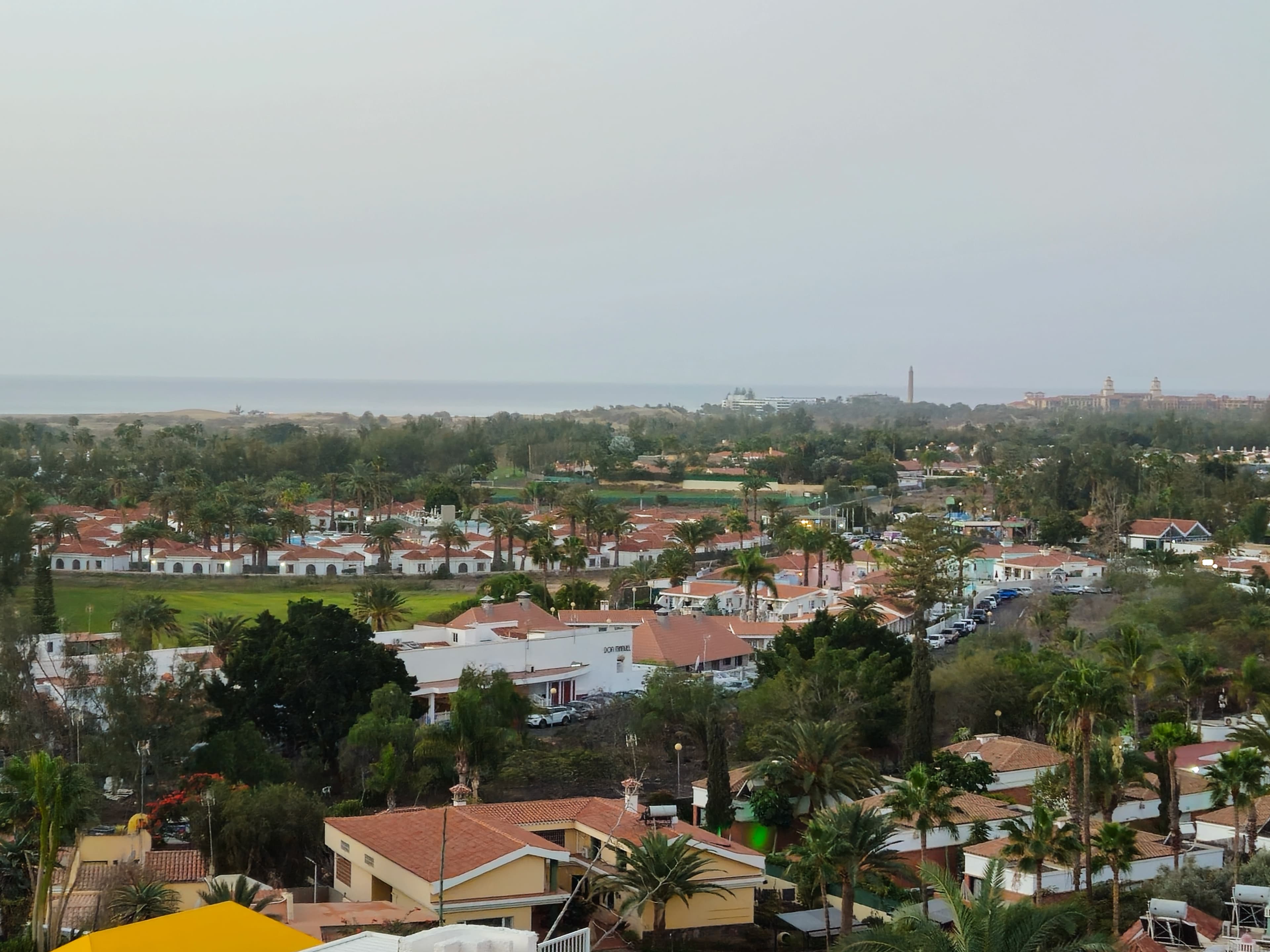
a view of a city with lots of palm trees

Maspalomas

Maspalomas at the southern tip of Gran Canaria is the crown jewel of the Canary Islands' tourism world — the monumental sand dunes stretching from the Faro de Maspalomas lighthouse to Playa del Inglés are a natural landscape of surreal beauty: 400 hectares of Sahara feeling in the middle of the Atlantic, protected as a nature reserve and crisscrossed by hiking trails. The beach of Maspalomas extends over six kilometers and seamlessly merges into that of Playa del Inglés — an endless golden strip, at one end of which stands the iconic lighthouse from 1890. The dune landscape behind it is not static: the wind constantly reshapes it, and a hike through the golden hills feels like a miniature desert expedition that ends at the sea. The hinterland of Maspalomas surprises with the Palmitos Park — a botanical garden and zoo in a subtropical gorge — and Aqualand, one of the largest water parks in Europe. The Campo Internacional area offers top-notch golf courses, and in San Fernando, the neighboring town, one of the most authentic markets in Gran Canaria takes place on Wednesdays and Saturdays. In recent years, Maspalomas has also made a name for itself internationally as an LGBTQ+-friendly travel destination — the Yumbo shopping complex in Playa del Inglés is the center of a cosmopolitan scene that enlivens the south of Gran Canaria year-round.

BeachDunesGran Canaria
a red and yellow flag on a flagpole

Morro Jable

Morro Jable is the southernmost holiday resort of Fuerteventura and combines one of the most beautiful beaches in the Canary Islands with the charm of an authentic Canarian fishing village. While the hotel zone at the expansive Playa del Matorral caters to sun-hungry tourists, the old town center above the fishing harbor has preserved its original character. For German holidaymakers who want to combine beach and real island life, Morro Jable is the perfect choice. The Playa del Matorral is the jewel of the place - a four-kilometer stretch of the finest golden sand that transitions into crystal-clear turquoise water. The beach slopes gently, the water is calm and warm, ideal for families and relaxed beach days. At the eastern end, Playa del Matorral seamlessly merges into the endless Playa de Sotavento, and one can literally walk along the water for hours without encountering an end. The old fishing harbor of Morro Jable is the heart of the place. Here, fishermen still land their catch daily, which goes directly to the surrounding restaurants. The cobbled streets above the harbor are lined with whitewashed houses, small shops, and tapas bars, where one can enjoy the sunset over the Atlantic with a glass of Canarian wine in the evening. The lighthouse at Punta de Jandía, the southwesternmost point of the island, is a worthwhile excursion. Boats to Playa de Cofete, the legendary wild beach on the west coast, also depart from Morro Jable. The ferry to Gran Canaria operates regularly from the harbor. From Germany, Morro Jable can be reached in four and a half flight hours plus a short hour's drive from the airport. The longer journey rewards with noticeably more tranquility and authenticity than the more touristy places in the north.

Canary IslandsFuerteventuraFishing harbor

Paguera

Paguera in the southwest of Mallorca is one of the most German holiday resorts on the island, offering three fine sandy beaches: Playa Palmira, Playa Torà, and Playa La Romana, perfect for swimming for every taste. The car-free promenade connects all three bays and is lined with restaurants, cafés, and shops. The pine-fringed beaches with their clear water are sheltered in a bay and are ideal for families. German tourists feel particularly comfortable here, as menus, newspapers, and even the signage in many shops are in German.

BeachFamilyMallorca

Playa Blanca

Playa Blanca is the sunniest and quietest holiday resort in Lanzarote and is located at the sheltered southern tip of the island, where the mild climate, low rainfall, and lack of trade wind clouds provide nearly perfect holiday conditions. For German travelers who want to combine beach, tranquility, and the unique volcanic landscape of Lanzarote, Playa Blanca is the ideal base. The absolute highlight is the Playas de Papagayo - a chain of six small natural beaches hidden in golden coves between dramatic volcanic cliffs. The water shimmers in all shades from emerald to turquoise, the sand is fine and golden, and the seclusion gives you the feeling of having discovered a Caribbean secret. The beaches are located in the Los Ajaches Natural Park and can be reached via a gravel path or on foot - the small effort is rewarded with some of the most beautiful beaches in Europe. The town of Playa Blanca itself is pleasantly manageable. The promenade connects the old town center with the elegant Marina Rubicón, a modern marina with upscale restaurants, boutiques, and a weekly market. The main beach, Playa Flamingo, offers fine white sand and calm waters, ideal for families. From the promenade, you can look across the narrow strait to the neighboring island of Fuerteventura, which appears almost within reach on clear days. Lanzarote's unique volcanic landscape, shaped by the visionary artist César Manrique, can be excellently explored from Playa Blanca. The Timanfaya National Park with its still-active volcanoes, the Jameos del Agua, and the Cueva de los Verdes are world-class attractions. From Germany, it takes about four and a half hours to fly to Lanzarote, and Playa Blanca is 35 minutes from the airport. Prices are more moderate than in Tenerife or Gran Canaria, and the island is a UNESCO Biosphere Reserve.

Canary IslandsLanzarotePapagayo

Playa de las Américas

Playa de las Américas is the vibrant epicenter of South Tenerife tourism and the undisputed party and beach capital of the Canary Islands. The resort on the sun-drenched southwest coast of Tenerife was built from scratch in the 1970s and has since become one of the most popular destinations for German tourists. With over 300 sunny days a year, a mild climate year-round, and an endless selection of hotels, restaurants, and nightlife, Playa de las Américas is the destination for those seeking sun, beach, and entertainment in one package. The beaches of Playa de las Américas consist of volcanic dark sand and imported light sand, protected by artificial breakwaters that ensure calm bathing waters. Playa de Troya is the most popular section with fine golden sand, sun loungers, and chiringuitos right by the water. For surfers, Playa de las Américas is a mecca - the winter waves along the coast are among the best in Europe, and the surf school on the beach offers courses for beginners and advanced surfers. The nightlife is legendary and focuses on Avenida de las Américas and the Veronicas district, where dozens of clubs, bars, and discos are open until the early morning hours. The shopping mile along the promenade seamlessly connects Playa de las Américas with the neighboring Costa Adeje, where the hustle and bustle gradually gives way to a more upscale atmosphere. Water parks like Siam Park, repeatedly voted the best water park in the world, and Aqualand offer families and adrenaline junkies spectacular attractions. From Germany, it takes about five hours to fly to Tenerife South, with the airport just 15 minutes from the resort. The infrastructure is perfectly tailored to German tourists - from German-speaking doctors to well-known supermarket chains to restaurants with German menus. Prices are moderate, all-inclusive hotels are available in every category, and the climate makes Playa de las Américas the ideal winter escape destination when it is gray and cold in Germany.

CanariesTenerifeParty
a flag sticking out of the sand on a beach

Playa del Inglés

Playa del Inglés is the largest and most famous tourist resort in Gran Canaria and has been one of the most popular destinations for German sun worshippers for decades. The extensive holiday resort on the southern coast of the island offers an almost inexhaustible combination of beach, nightlife, shopping, and entertainment, attracting millions of visitors each year. Those looking for all-inclusive sun, a party atmosphere, and a perfectly developed tourist infrastructure will find it here. The beach of Playa del Inglés is an impressive, nearly three-kilometer-long stretch of golden sand that seamlessly transitions to the legendary dunes of Maspalomas in the west. These wandering Sahara dunes, a nature reserve of six square kilometers, create a breathtaking desert landscape right by the ocean and are among the most iconic landscapes of the Canary Islands. At the end of the dunes, the lighthouse of Maspalomas awaits, surrounded by an oasis of palm trees and a lagoon. The nightlife of Playa del Inglés is legendary and the liveliest in the entire Canary Islands. The Yumbo Center is the heart of the scene - a huge complex with hundreds of bars, restaurants, clubs, and shops, which is particularly a European hotspot for the LGBTQ+ community. The Avenida de Tirajana and the surrounding streets offer more bars, nightclubs, and live music venues for every taste. Shopping options are excellent - from the Faro 2 shopping center to local markets and souvenir shops, you can find everything. Camel riding tours through the dunes are a classic for families, and the Palmitos Park with exotic birds and dolphin shows is just a few kilometers away. From Germany, it takes about five hours to fly to Gran Canaria, and Playa del Inglés is only 25 minutes from the airport. The tourist infrastructure is perfectly tailored to German guests - from German-speaking service to well-known hotel chains to German bakeries.

CanariesGran CanariaDunes

Playa de Muro

Playa de Muro is the beach you don't expect in Mallorca — six kilometers of white, fine sand, turquoise water so shallow that you can wade out a hundred meters, and behind it a pine forest that provides natural shade: a Caribbean backdrop in the western Mediterranean that captivates year after year. The beach is divided into four sections: Sector I to IV, with the first two being touristically developed and the back sectors III and IV becoming wilder and more natural — here, the nature park S'Albufera borders directly on the beach, and flamingos wade in the lagoons behind the dunes. This combination of dream beach and nature reserve is unique in the Balearic Islands. The water quality is consistently awarded the Blue Flag, and the extremely shallow water makes Playa de Muro the safest bathing beach for families in all of Mallorca. Even in the height of summer, visitors are spread out over the enormous area, so it never feels overcrowded — quite the opposite of Palma's city beaches. The hotels along the beach have massively upgraded in recent years: several adults-only resorts and boutique hotels now offer a level that competes with the best addresses on the island. At the same time, the typical Mallorcan chiringuitos remain on the beach, where you can eat paella barefoot and daydream the afternoon away.

BeachCaribbean feelingMallorca
Coastal town with buildings overlooking the water.

Port de Sóller

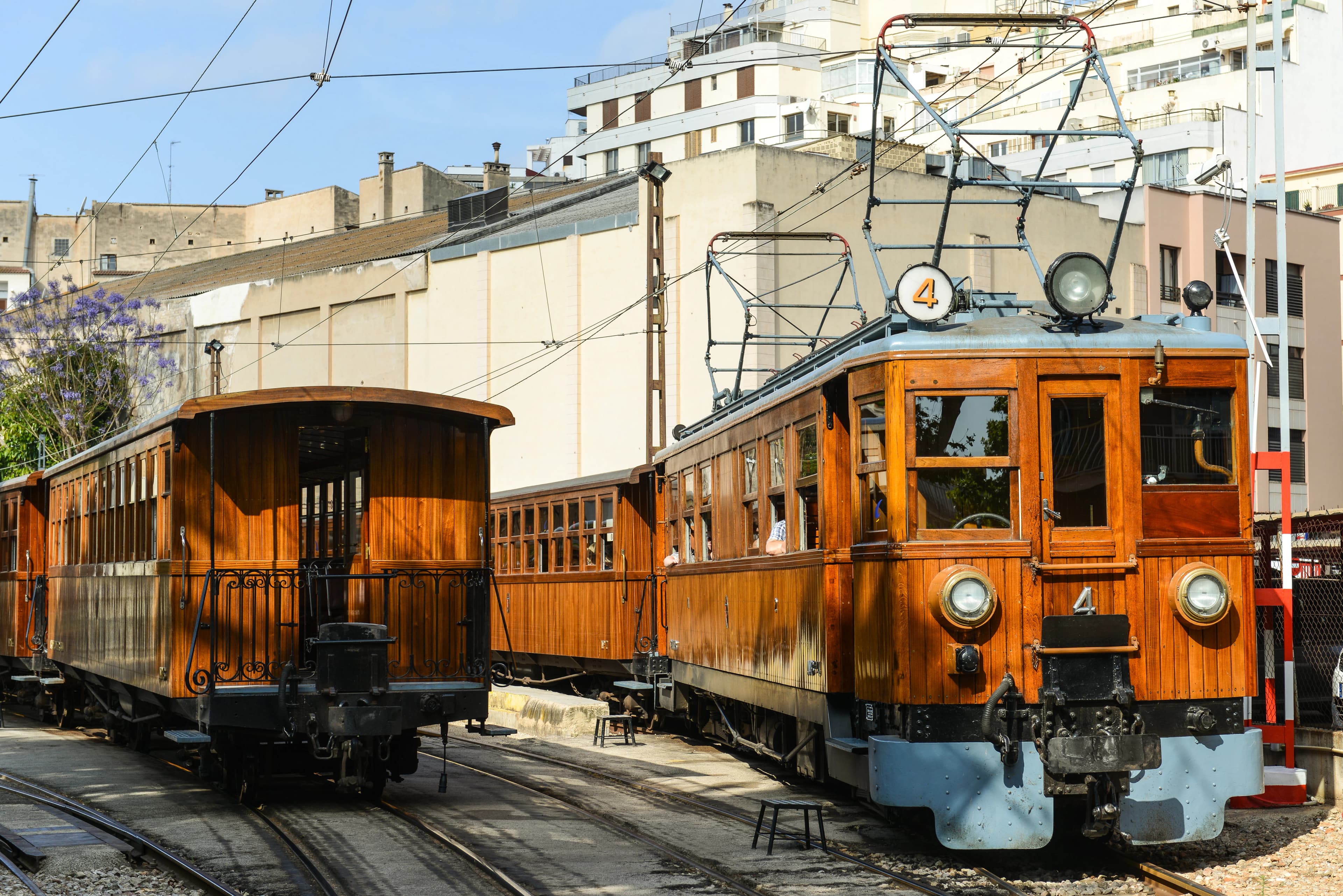
Port de Sóller is the only natural harbor bay on the spectacular northwest coast of Mallorca and serves as the maritime gateway to the Serra de Tramuntana, the UNESCO-protected mountain range of the island. The horseshoe-shaped bay, framed by mountains up to 1,000 meters high, offers a unique panorama that is unparalleled. German tourists love the combination of relaxed beach life at the local beach, nostalgic rides on the historic tram to Sóller, and challenging hikes in the Tramuntana mountains. The lively promenade with its fish restaurants, the charming streets of the small harbor town, and the daily arrival of the historic wooden train from Palma de Mallorca give Port de Sóller a special charm that is far removed from mass tourism.

harbormallorcatramuntana

Porto Colom

Porto Colom is one of the most authentic fishing ports on the east coast of Mallorca and has largely preserved its original character. The large natural harbor bay with colorful Llaüts fishing boats, the historic lighthouse, and the pastel-colored boathouses along the shore give the place a special atmosphere. To the south of the harbor are the two sandy beaches Cala Marçal and Cala S'Arenal, which invite you to swim with fine sand and clear water. Porto Colom is considered the birthplace of Christopher Columbus according to Mallorcan legend and offers the perfect mix of authentic island life, good fish restaurants, and a relaxed beach holiday.

HarborFishing villageMallorca

Puerto del Carmen

Puerto del Carmen is the largest and oldest holiday resort in Lanzarote and the tourist heart of the volcanic island — six kilometers of golden sandy beach, the legendary Avenida de las Playas as a promenade, and the old fishing port El Varadero form the triangle where millions of vacationers have felt at home since the 1970s. The town stretches along the coast in three zones: Playa Grande with the main beach and hotel area, the Avenida de las Playas with its countless restaurants and shops, and the old harbor in the west, where fishermen still land their catch today and the most authentic fish restaurants on the island set their tables by the water. The nightlife is concentrated around the Centro Comercial Biosfera — lively, but not excessive. What sets Puerto del Carmen apart from other resorts is its location: The fire mountains of Timanfaya National Park are just 20 minutes away, the surreal lava caves and artworks by César Manrique are scattered across the island, and the bizarre moon landscape of La Geria with its vineyards in volcanic craters is unique in the world. The airport is literally around the corner — just a five-minute drive — making Puerto del Carmen the most straightforward destination in the Canary Islands: land, arrive, beach.

BeachVolcanoLanzarote

Puerto Rico

Puerto Rico is the sunniest place in Gran Canaria and a true family paradise on the southwest coast of the island. Nestled in a sheltered bay between steep mountain slopes, the resort enjoys a microclimate that is outstanding even by Canarian standards: over 340 sunny days a year and virtually no wind or rain. For German families with children, Puerto Rico has been one of the most popular destinations in the Canaries for decades. The beach of Puerto Rico lies in a semi-circular bay, protected from wind and waves, with fine golden sand and calm, gently sloping water. For children, the bathing enjoyment here is ideal - the water is warm, the current minimal, and the bay manageable. In addition to the main beach, the nearby Playa de Amadores offers a wider, artificially created dream beach with light sand and turquoise water, regularly counted among the most beautiful beaches in the Canaries. Puerto Rico is also a hotspot for water sports and boat tours. The harbor is the starting point for deep-sea fishing tours, where marlin and tuna fight on the line, as well as for dolphin-watching trips in the fish-rich waters off the coast. Jet skiing, parasailing, and banana boat rides provide action on the water. The Angry Birds Activity Park and various mini-golf courses make Puerto Rico the perfect family destination. The terraced buildings on the steep mountain slopes give the place its characteristic appearance - an amphitheater of white and colorful buildings that stretches from the bay to the heights. In the evening, the place shines like a sea of lights. The shopping centers and promenade offer a good selection of restaurants and shops. From Germany, it takes just under five hours to fly to Gran Canaria, and Puerto Rico is reachable from the airport in 35 minutes.

CanariesGran CanariaFamily
a screen shot of a website with spanish and spanish words

Sa Coma

Sa Coma on the east coast of Mallorca is a popular family beach resort with a long, wide sandy beach and gently sloping waters. The town borders the Punta de n'Amer nature reserve, an untouched peninsula with a historic watchtower and beautiful hiking trails through pine trees and maquis. The modern holiday complex offers numerous hotels, restaurants, and entertainment options for families with children. The combination of a safe beach, nature right at your doorstep, and good tourist infrastructure makes Sa Coma one of the most reliable package holiday destinations in Mallorca.

BeachFamilyMallorca
A water fountain with palm trees in the background

Salou

Salou is the ultimate family beach destination on the Catalan Costa Dorada, and owes its reputation to two unbeatable advantages: kilometers of golden sandy beaches with a gentle entry into the warm Mediterranean Sea and its close proximity to PortAventura World, one of the largest and best amusement parks in Europe. The city south of Tarragona is fully geared towards families and beach-loving holidaymakers, offering a relaxed, safe, and excellently organized holiday atmosphere. The main beach, Platja de Llevant, is the heart of Salou - a wide, golden sandy beach that stretches over more than a kilometer and is lined with an elegant palm promenade. The water is shallow and calm, ideal for small children, and the beach infrastructure with sunbeds, showers, lifeguards, and playgrounds leaves nothing to be desired. The Platja de Ponent on the other side of Cap de Salou is a bit quieter and shaded by pines. PortAventura World, just a few minutes' drive from the center, is the real magnet of the region. The amusement park, with its six themed areas, including the spectacular Ferrari Land with Europe's highest and fastest roller coaster, and the water park Caribe Aquatic Park, offers entertainment for several days. Many hotels in Salou offer combo tickets, and a free shuttle bus connects the city with the park. Beyond the beach and amusement park, a trip to Cap de Salou is worthwhile, a rocky cape with a coastal hiking trail leading to hidden coves and viewpoints. The nearby city of Tarragona, just 10 kilometers away, impresses with its Roman heritage - the amphitheater right by the sea is a UNESCO World Heritage site. In the evenings, Salou's promenade comes alive with a light fountain spectacle, street performers, and family-friendly restaurants. From Germany, you can fly to Barcelona or Reus, with Reus being only 10 kilometers from Salou. The train connection from Barcelona takes about one and a half hours. The season runs from May to October, with PortAventura opening as early as Easter.

Costa DoradaPortAventuraFamily
people walking on street near brown concrete building during daytime

Santa Ponsa

Santa Ponsa is located in a sheltered bay on Mallorca's southwest coast and has transformed from a former fishing village into one of the island's most well-maintained resorts — quieter and more elegant than the party hotspots, but lively enough for varied holiday days. The wide sandy beach with its gentle entry and calm, clear water is perfect for relaxed beach days with family. The town has special historical significance: in 1229, King Jaume I landed here with his fleet to reclaim Mallorca from the Moors — a stone cross on the beach commemorates this event, which forever changed the history of the Balearic Islands. The annual Fiesta del Rei en Jaume in September is a colorful spectacle with parades and reenactments of battles. Santa Ponsa is surrounded by three top-notch golf courses — Golf de Poniente, Golf Santa Ponsa I and II — and has established an international reputation as a golf destination. The lush vegetation with pines and palms extending to the water gives the place an almost tropical atmosphere. The proximity to Palma (only 20 minutes) makes Santa Ponsa an ideal location for vacationers who want to combine beach relaxation with city culture — in the evenings, the Paseo invites you to stroll with restaurants, ice cream parlors, and cocktail bars.

BeachGolfQuiet

Sa Ràpita

Sa Ràpita is a sleepy coastal village in the south of Mallorca, appreciated by locals as a hidden gem for unspoiled beaches. The expansive Es Rapita beach, with its fine white sand and shallow turquoise water, is far less crowded than the neighboring Es Trenc and offers a wonderful tranquility. The village itself mainly consists of holiday homes and small villas, giving it a private and exclusive character. Those seeking an authentic, peaceful beach holiday in Mallorca, away from large hotels and party areas, will find the perfect alternative in Sa Ràpita.

BeachHidden gemMallorca

Sitges

Sitges is an elegant coastal town 35 km south of Barcelona and one of the most cosmopolitan beach resorts on the Mediterranean. Famous as Spain's most LGBTQ-friendly travel destination, Sitges combines beautiful beaches, a vibrant nightlife scene, and a rich cultural program. The old town with the church of Sant Bartomeu overlooking the sea, the museums of Santiago Rusinol, and the legendary film festival in October make Sitges a cultural jewel of the Catalan coast.

Near BarcelonaLGBTQBeach

Son Bou

Son Bou is Menorca's longest beach - over two kilometers of fine, golden sand that gently curves along the southern coast and transitions into crystal clear, turquoise water. This size is unique to Menorca and makes Son Bou a beach where there is enough space for everyone, even in high season. Families love the shallow entry and the sheltered location, while nature lovers can discover a wetland at the western end that is protected as a bird paradise. The beach divides into two worlds: at the eastern end are the hotels, sunbeds, water sports providers, and restaurants - here, beach life pulses with pedal boats, jet skis, and beach bars. The further west you walk, the quieter and more natural it becomes. At the western end lies a protected dune area with reeds, and behind it is the Marjal de Son Bou, a wetland where flamingos, herons, and rare migratory birds can be observed. Directly behind the beach are the ruins of an early Christian basilica from the 5th century - one of the oldest Christian buildings in the Balearic Islands. The three naves and the baptismal font are still recognizable and form a fascinating contrast to the beach life just a few meters away. In the cliffs above the western beach are the Coves de Son Bou, prehistoric caves that once served as dwellings and later as livestock stalls. Son Bou is also the starting point for hikes on the Camí de Cavalls, the historic coastal path. Heading east, the path leads along the cliffs to Cala en Porter and the spectacular rock cave Cova d'en Xoroi, which is built into the cliffs and serves as a bar and nightclub in the evenings. From Germany, it takes about 2.5 hours to fly to Menorca, and you can reach Son Bou in 25 minutes from Mahón Airport.

MenorcaBeachFamily

Torremolinos

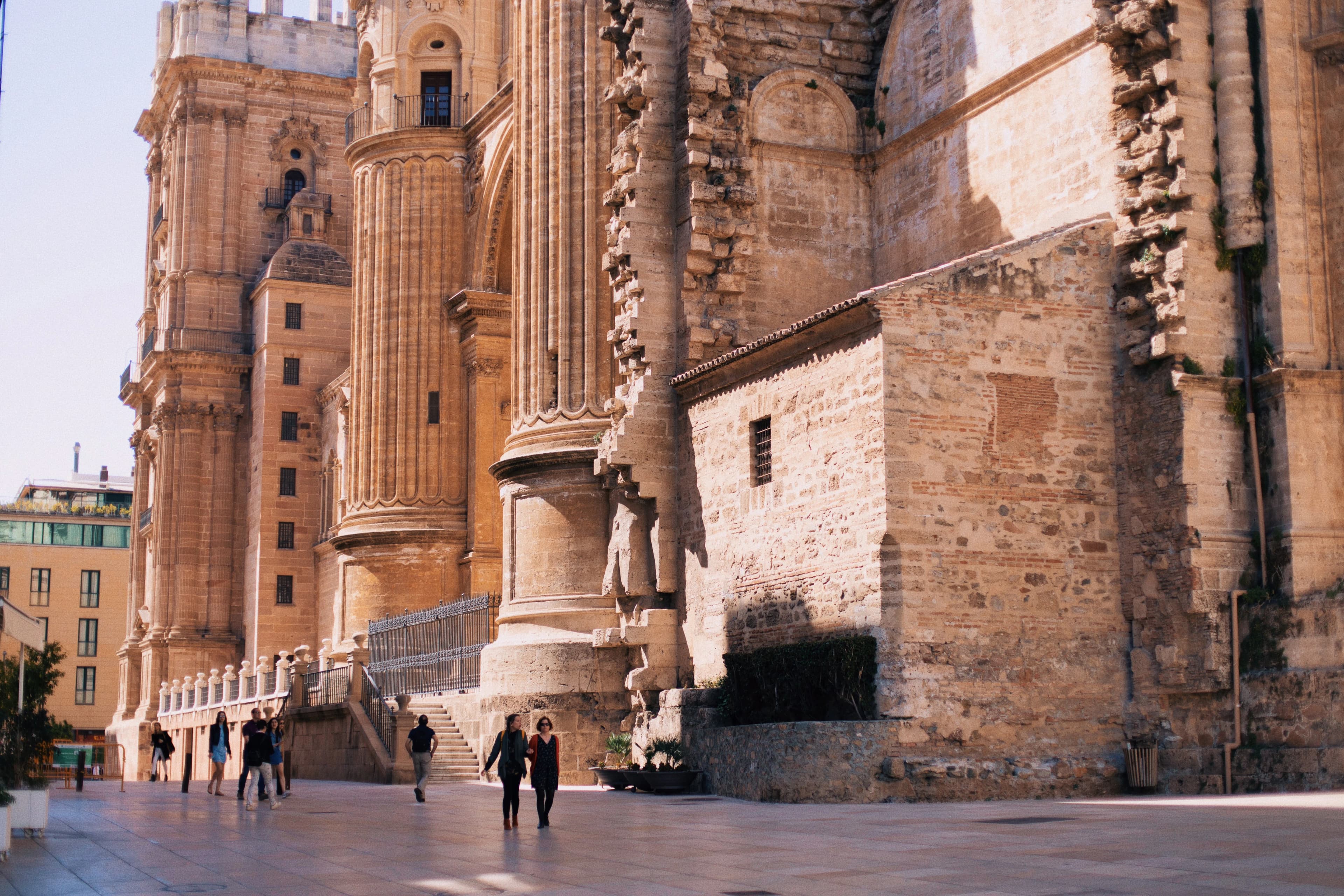
Torremolinos is the classic beach resort on the Costa del Sol and the place where mass tourism on the Mediterranean first began. In the 1960s, this city west of Málaga was the destination of the first generation of charter flights from Northern Europe, and to this day it has retained its uncomplicated, joyful charm. Those seeking authentic Costa del Sol atmosphere without pretension will find in Torremolinos an honest beach resort with excellent beaches, a lively center, and surprisingly much character. The seven-kilometer-long coastline is the capital of Torremolinos. The Playa de la Carihuela, once a fishing district and today one of the most beautiful promenades on the Costa del Sol, impresses with golden sand, calm waters, and a variety of Chiringuitos - the typical beach restaurants where sardine skewers are grilled over an open fire. The El Bajondillo beach in the center is wide and well-equipped, while the Playa de los Álamos in the east offers more space and tranquility. The old town of Torremolinos surprises with winding alleys that steeply lead down from the center to the sea. Calle San Miguel, a pedestrian-friendly shopping street, pulses from morning until late at night. In the Barrio La Carihuela, the former fishing district, some of the old white houses still stand next to the Chiringuitos, and here you can feel the soul of the place most clearly. The Botanical Garden Jardín Botánico Molino de Inca with its historic water mills is a green oasis in the middle of the city. Torremolinos is also known for its openness and tolerance - the city has one of the liveliest LGBTQ+ scenes in Spain with its own district, bars, and the annual Pride festival. The nightlife is diverse, ranging from traditional flamenco tablaos to modern clubs. The location is strategically convenient: Málaga Airport is only 8 kilometers away, and the Cercanías train connects Torremolinos to Málaga in 12 minutes, home to the world-famous Picasso Museum. Granada with the Alhambra is two hours away, and Ronda is an hour and a half. The Costa del Sol enjoys over 300 sunny days a year, and even in winter, temperatures rarely drop below 15 degrees.

Costa del SolBeachChiringuito
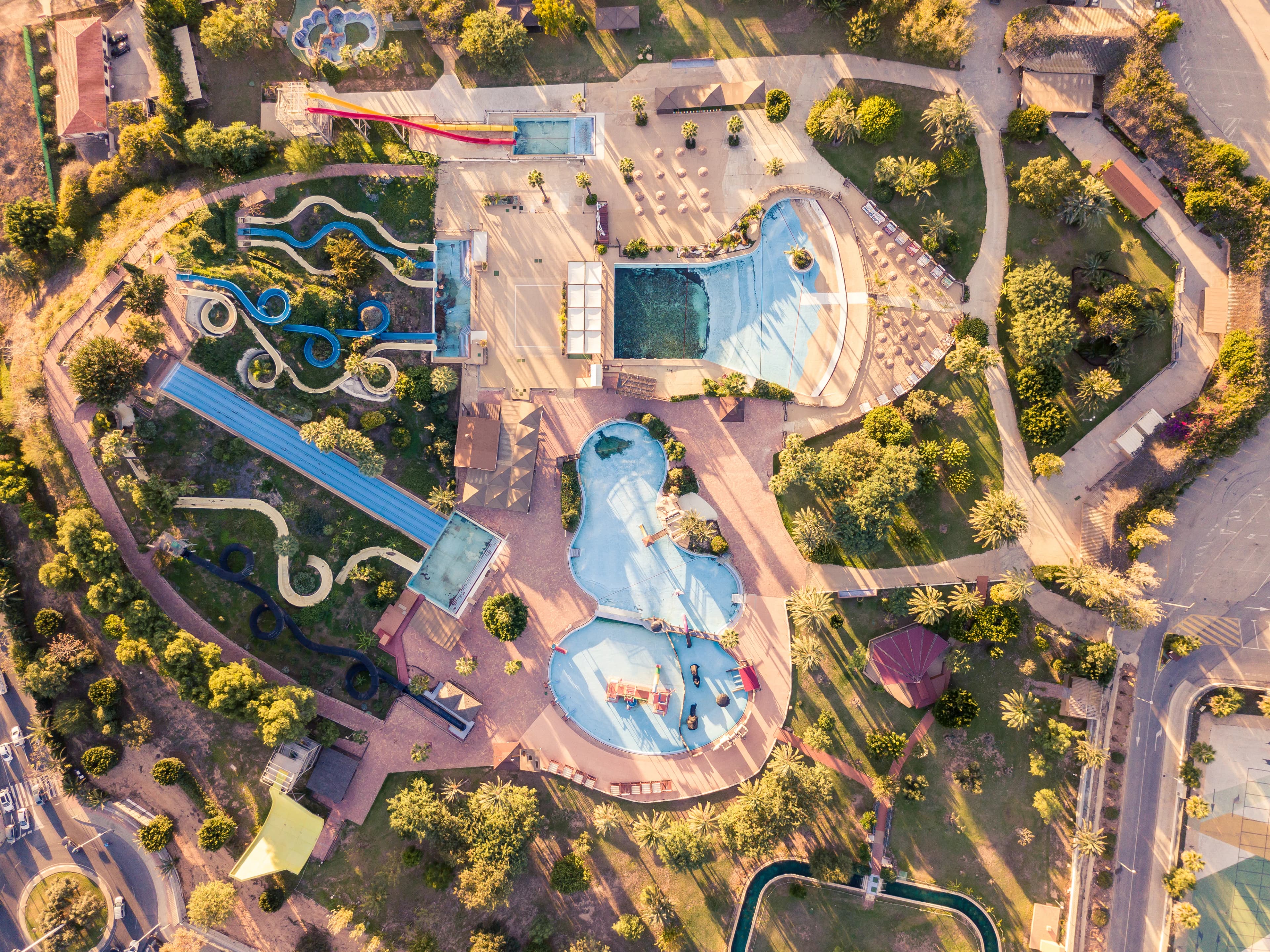
aerial view of park with swimming pools

Torrevieja

Torrevieja on the Costa Blanca is a popular beach resort and long-term residence for Northern Europeans with over 300 sunny days a year. The city is famous for its pink lagoon — the Salinas de Torrevieja — whose intense pink color is created by algae and bacteria. The expansive beaches, mild winter climate, and low cost of living make Torrevieja the ideal place for long-term vacations and wintering by the Mediterranean.

Costa BlancaPink LagoonWintering

Tossa de Mar

Tossa de Mar on the Costa Brava is one of the most picturesque coastal towns in Spain and was referred to by Marc Chagall as the "blue paradise." The medieval old town Vila Vella sits atop a rocky cliff overlooking the turquoise Mediterranean — the only fortified medieval town along the entire Catalan coast. The sheltered bays with crystal-clear water, the pine forests, and the lively old town make Tossa a gem between Barcelona and the wildness of the northern Costa Brava.

Costa BravaMedievalBeach
Rocky coastline with pine trees and blue ocean

Costa Brava

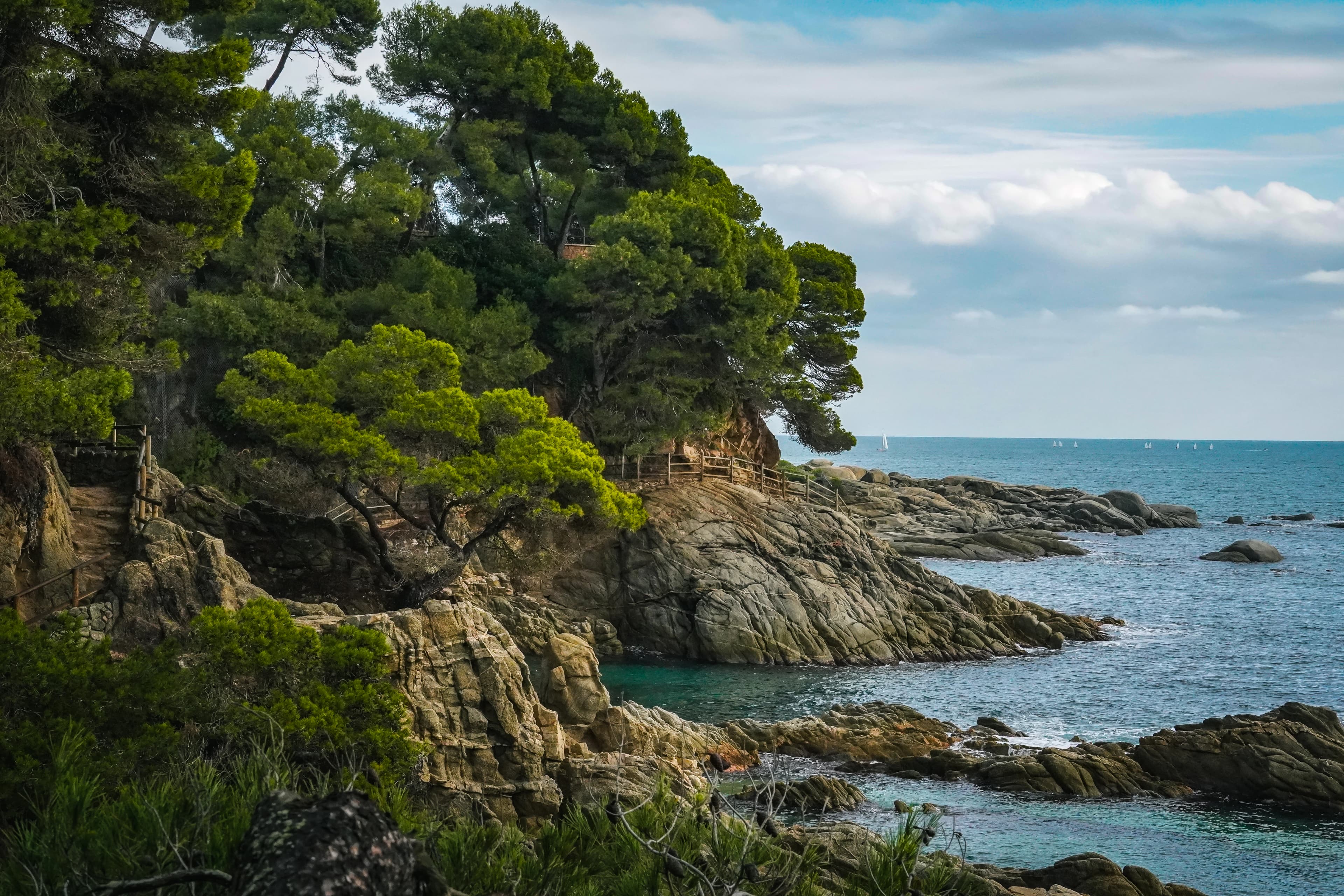
The Costa Brava in northeastern Catalonia stretches from Blanes to the French border and is much more than a typical beach destination: rugged rocky coastlines, hidden coves with crystal-clear water, medieval villages, and the artistic legacy of Salvador Dalí make it one of the most fascinating coastal regions in Europe. The Teatre-Museu Dali in Figueres is the most visited museum in Spain after the Prado — a surrealist total work of art that Dali himself considered his greatest work. In Cadaqués, the picturesque fishing village that inspired Dali throughout his life, stands his home Port Lligat (reservation required). The combination of Mediterranean light, bizarre rock formations, and deep blue sea is immediately understood here. Tossa de Mar delights with its medieval fortress Vila Vella right above the beach — one of the few fortified old towns on the Mediterranean. The Cami de Ronda, a historic coastal path, connects the coves and villages along the entire coast and offers spectacular views of hidden calas where one can descend to swim. Medieval villages like Pals, Peratallada, and Besalú in the hinterland surprise with Romanesque bridges, Jewish quarters, and excellent Catalan cuisine. The region is known for its Michelin-starred restaurants — foremost among them El Celler de Can Roca in Girona, repeatedly voted the best restaurant in the world. The best travel time is from May to October, with September particularly recommended for its warm sea and fewer guests.

CoastDalíCoves

Costa del Sol

The Costa del Sol, Spain's sunny coast on the southern Mediterranean flank of Andalusia, delights with over 320 sunny days a year and a perfect mix of beach life, white villages, and an astonishingly diverse cultural landscape. Malaga, the capital of the region and Picasso's birthplace, has transformed from a mere airport town into one of Spain's most exciting cultural destinations — featuring the Museo Picasso, the Centre Pompidou, the Russian Museum, and a vibrant tapas scene in the old town. Marbella combines glamour and Andalusian charm: Puerto Banus attracts yacht owners and luxury lovers, while the old town (Casco Antiguo) with its whitewashed alleys, orange trees, and the Plaza de los Naranjos appears surprisingly tranquil. Nerja on the eastern Costa del Sol enchants with the Balcon de Europa, a viewpoint high above the sea, and the massive caves where concerts are held in summer. The white mountain village of Frigiliana, regularly awarded the title of the most beautiful village in Andalusia, overlooks the coast with its Moorish streets and breathtaking views. The entire coast offers excellent golf courses (over 70 in total), which is why it is also known as the "Costa del Golf." Chiringuitos, the typical beach restaurants, serve freshly grilled fish and Espetos (sardines on skewers over open charcoal fire). The Costa del Sol is suitable as a travel destination year-round: in winter, long-term vacationers enjoy temperatures around 17°C, while in summer, the Mediterranean refreshes at a pleasant 24°C. Day trips to Granada (Alhambra), Ronda (spectacular gorge town), or Cordoba (Mezquita) expand the program. The region is a classic — and has much more to offer than just package hotels.

Sunny daysBeachGolf
A row of beach chairs sitting on top of a sandy beach

Costa Blanca

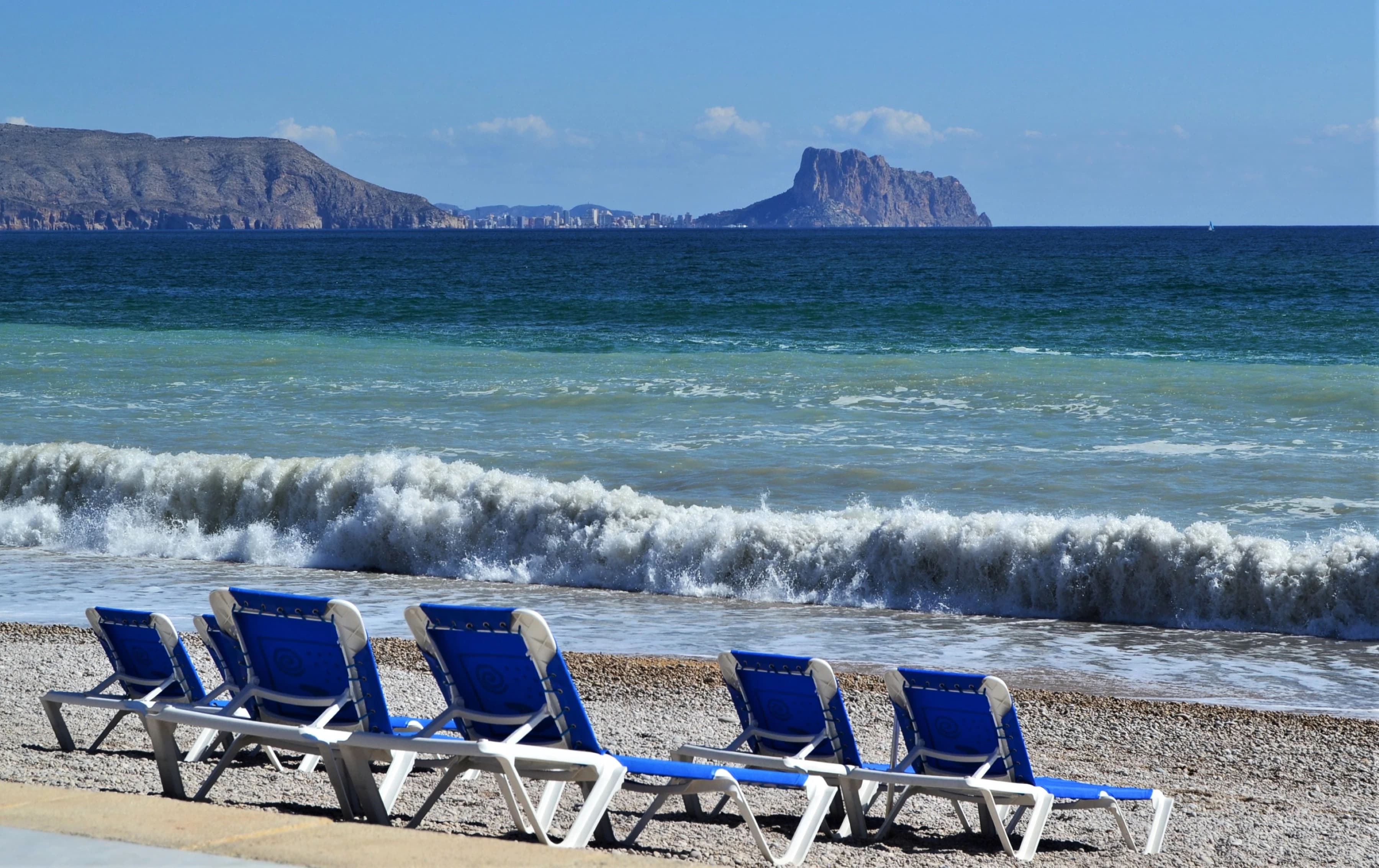
The Costa Blanca, the 'White Coast', stretches along the province of Alicante and is famous for its white sandy beaches, the mildest climate in Europe, and a diverse mix of lively seaside resorts and sleepy fishing villages. With over 300 sunny days a year, water temperatures ranging from 16 to 27°C, and over 200 kilometers of coastline, the Costa Blanca is a year-round destination for beachgoers and long-term winter visitors. Benidorm is the vibrant heart of the coast — skyscrapers by the beach, a lively nightlife, and two wide sandy beaches contrast with the old town on the cliff of Balcón del Mediterráneo. In the south, Torrevieja offers salt lagoons with pink shimmering water, while Dénia and Jávea in the north attract visitors with rocky coves and an upscale vibe. The Peñón de Ifach in Calpe, a 332-meter-high limestone rock directly by the sea, is the landmark of the Costa Blanca. Away from the coast, the hinterland surprises: Guadalest, a mountain village on a cliff with a reservoir, is a popular day trip. The Caves of Canelobre near Busot and the Sierra de Aitana offer pure nature. The region shines culinarily with Arroz a Banda (rice in fish broth), Fideuà (noodle paella), and Turrón from Jijona — the famous Spanish almond nougat. The Isla de Tabarca off Alicante, Spain's smallest inhabited marine reserve, attracts snorkelers with crystal-clear water.

BeachMild ClimateWintering
a couple of lights that are on a pole

Costa de la Luz

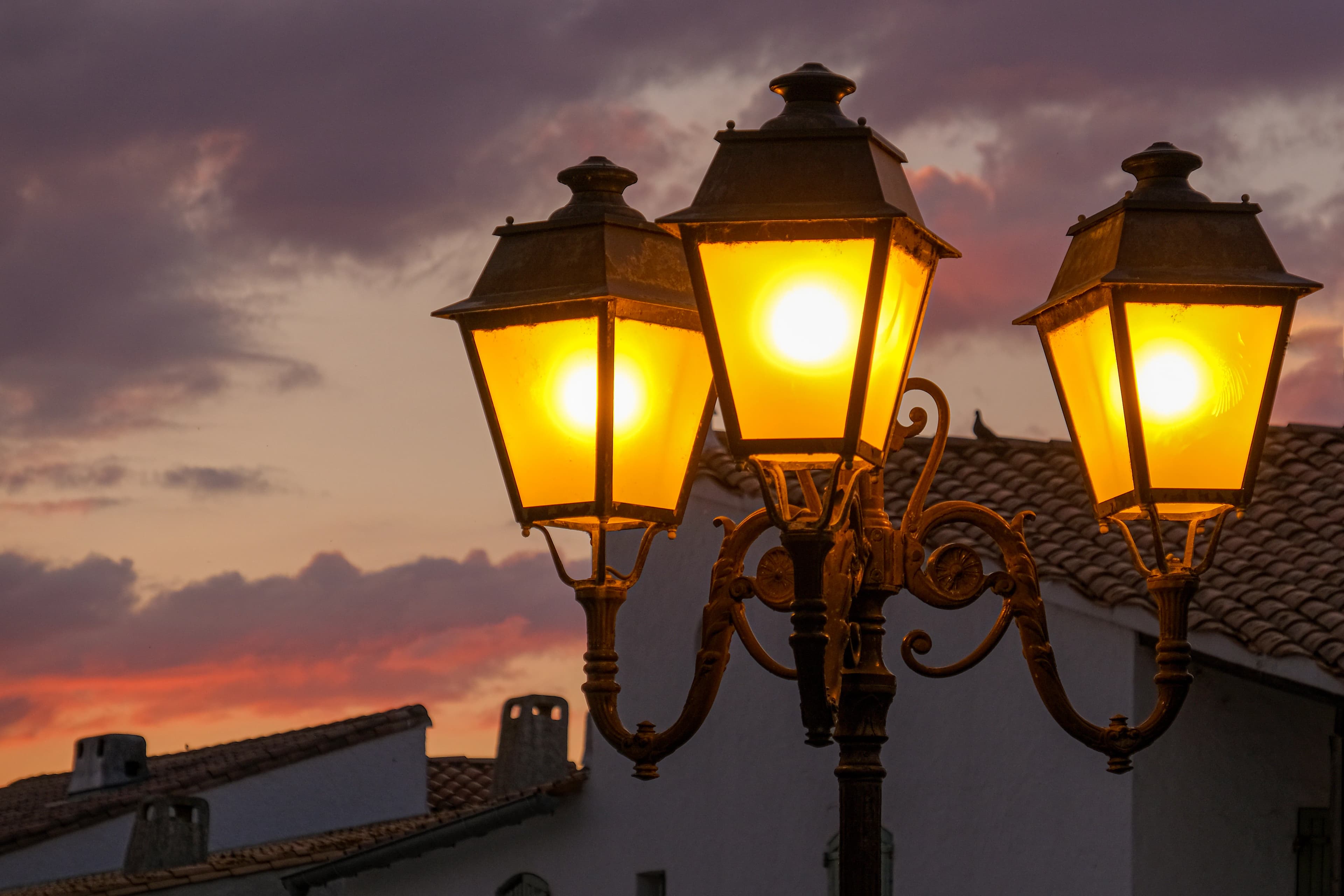
The Costa de la Luz, "Coast of Light", stretches along the Andalusian Atlantic coast from Tarifa to Huelva. In contrast to the touristy Costa del Sol on the Mediterranean, the Atlantic side offers endless, unspoiled sandy beaches, consistent winds, and a light that has fascinated artists and photographers for generations. The coast is significantly less developed than the Mediterranean side and has retained its original character. Tarifa at the southern tip is the southernmost point of the European mainland and Europe's windsurfing and kitesurfing capital. On clear days, you can see the coast of Morocco, just 14 kilometers away. Conil de la Frontera and Vejer de la Frontera connect wide beaches with charming white old towns. Zahara de los Atunes was once a tuna fishing village and now offers some of the best seafood restaurants in Andalusia. To the north lies the Doñana National Park — one of the most important wetlands in Europe and a breeding ground for flamingos, imperial eagles, and the endangered Iberian lynx. Sanlúcar de Barrameda at the mouth of the Guadalquivir is famous for its Manzanilla sherries and beach horse races in August. Cádiz, the oldest continuously inhabited city in Europe (founded around 1100 BC), crowns the coast with its baroque old town on a peninsula. The cuisine revolves around the Atlantic: Atun Rojo (Red Tuna), Gambas de Huelva, and Tortillitas de Camarones.

AtlanticWindSurfing
two people standing in front of a large building

Playa de las Catedrales

The Playa de las Catedrales (Beach of the Cathedrals) on the Galician north coast is one of the most spectacular beaches in the world. At low tide, up to 30-meter-high rock arches reveal themselves, reminiscent of Gothic cathedral vaults, giving the beach its name. The roaring waves of the Atlantic have shaped these natural cathedrals, caves, and tunnels in the slate over thousands of years — a geological masterpiece that is re-staged with every tide. The official name is Praia de Augas Santas (Beach of the Holy Waters), and it is located near Ribadeo in the province of Lugo. During the summer months (July to September), a free advance reservation is required, as access is limited to a maximum of 4,812 visitors per day. The ideal time to visit is two hours before and after low tide when the complete rock formation becomes accessible. At high tide, the beach almost completely disappears underwater. The surrounding coast of Galicia offers further natural spectacles: right next door is Praia de Esteiro with similar formations, and the entire Rasa Cantábrica coastline up to Foz boasts dramatic cliffs and secluded coves. The nearest town, Ribadeo, offers charming old town streets and Galician cuisine with fresh seafood. Tip: Even at low tide in the winter months, the beach is impressive and almost deserted — the backdrop appears particularly dramatic then.

Natural WonderRocksTides

Cities

Alicante

Alicante is the sun-drenched capital of the Costa Blanca, combining Mediterranean beach life with a vibrant old town at the foot of the Castillo de Santa Bárbara fortress. The fortress towers over the 166-meter-high Benacantil mountain and offers one of the most impressive panoramic views of the Spanish Mediterranean coast — from here you can overlook the city, the harbor, and the island of Tabarca on the horizon. A free elevator takes you up through the rock. The Explanada de España, a palm-lined promenade with 6.5 million colored marble stones in a wave pattern, is the heart of urban life and the scene of the evening Paseo. The Barrio de Santa Cruz, the old town below the castle, enchants with colorful houses, steep alleys, and viewpoints. The Archaeological Museum MARQ was awarded European Museum of the Year in 2004. Alicante is also the gateway to Isla de Tabarca — Spain's smallest inhabited marine reserve, reachable in 45 minutes by boat, with crystal-clear waters for snorkeling and a single excellent fish restaurant. The Hogueras de San Juan in June is Alicante's biggest festival: giant papier-mâché figures are burned, fireworks light up the sky, and the city celebrates for a week. Culinary highlights include Arroz a Banda, Turrón de Jijona (almond nougat, since the 15th century), and the wines of D.O. Alicante. The climate with over 300 sunny days makes the city a year-round travel destination.

Costa BlancaBeachCastle
White pebble beach with turquoise water and distant cliffs.

Altea

Altea is the white artist village of the Costa Blanca, offering one of the most picturesque views along the entire Spanish Mediterranean coast with its radiant white old town high above the sea and the distinctive blue-and-white tiled church dome. The winding cobblestone streets of the old town, lined with galleries, studios, and pottery workshops, have attracted artists and bohemians from around the world since the 1960s. German tourists discover an authentic Spain here that stands in pleasant contrast to the tourist hotspots of neighboring towns. From the church square, a breathtaking panoramic view opens up over the bay of Altea, the striking Penón de Ifach near Calpe, and the mountains of the Sierra de Bernia. The promenade with its pebble beaches, fish restaurants, and cafés forms a lively contrast to the quiet old town, while the vibrant Tuesday market exudes genuine Mediterranean flair.

artist villagecosta-blancaold town
a view of a city from a distance

Benidorm

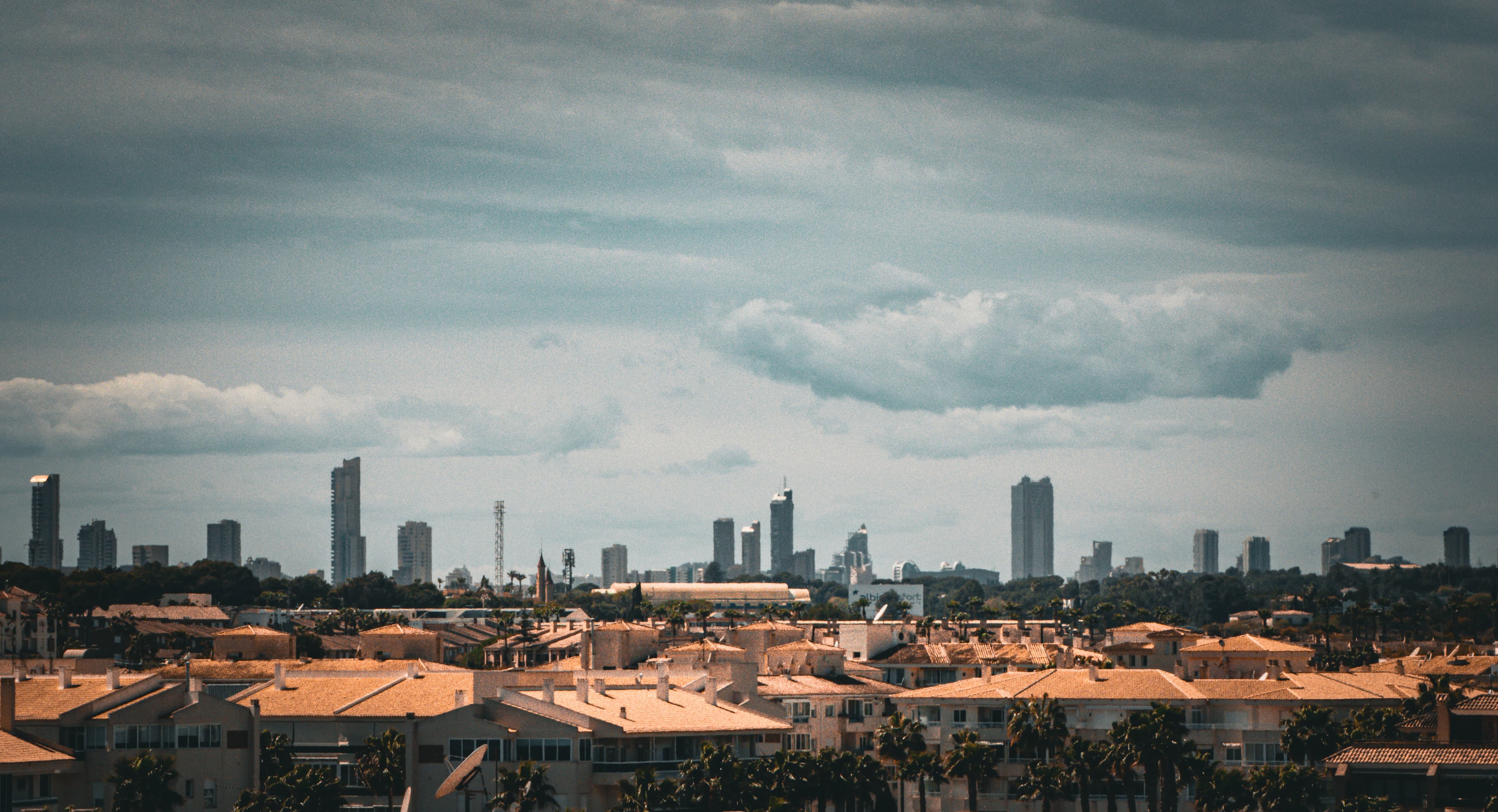
Benidorm is a city of superlatives and contradictions - a skyscraper Manhattan by the Mediterranean, it polarizes like hardly any other holiday destination in Europe. The city on the Costa Blanca has more high-rise buildings per square kilometer than New York, welcomes over ten million visitors annually, and despite all its urbanity, offers two of the best city beaches in Spain. Those who dismiss Benidorm as just a mass of hotel complexes have never experienced the fascination of this unique place. The two main beaches are the heart of Benidorm and explain why the city is so successful. The Playa de Levante in the east is a wide, golden crescent with fine sand and crystal-clear water, lined with hotels, restaurants, and a vibrant beach promenade. The Playa de Poniente in the west is broader, quieter, and popular with families. Between the two lies the Balcón del Mediterráneo, a viewpoint on the cliff of the old town, from which one can overlook both bays and the skyline - one of the most iconic viewpoints on the Spanish Mediterranean coast. The old town on the ridge between the beaches is Benidorm's best-kept secret. Here, in the narrow white alleys around the church of San Jaime, you suddenly feel transported to an Andalusian village. Tapas bars serve excellent pinchos, cats nap in the sun, and the view from the church terrace over the turquoise bay is simply stunning. In the evening, the old town transforms into a lively mile with live music, flamenco, and street performers. Benidorm is also the entertainment center of the Costa Blanca. Theme parks like Terra Mítica, Aqualandia, and Mundomar are right at the city's doorstep. The Isla de Benidorm, a distinctive rocky cone in the sea off the coast, is accessible by excursion boat and offers snorkeling opportunities in a marine reserve. The Sierra Helada, a nature park east of the city, surprises with dramatic cliffs and hiking trails high above the sea. From Germany, you can fly to Alicante in just under three hours and reach Benidorm in 40 minutes by car. The TRAM train connects Benidorm directly with Alicante. The climate is one of the mildest in Europe with over 300 sunny days, making Benidorm a popular winter destination for seniors from Northern Europe.

Costa BlancaSkylineBeach
white and brown mosque near body of water

Cádiz

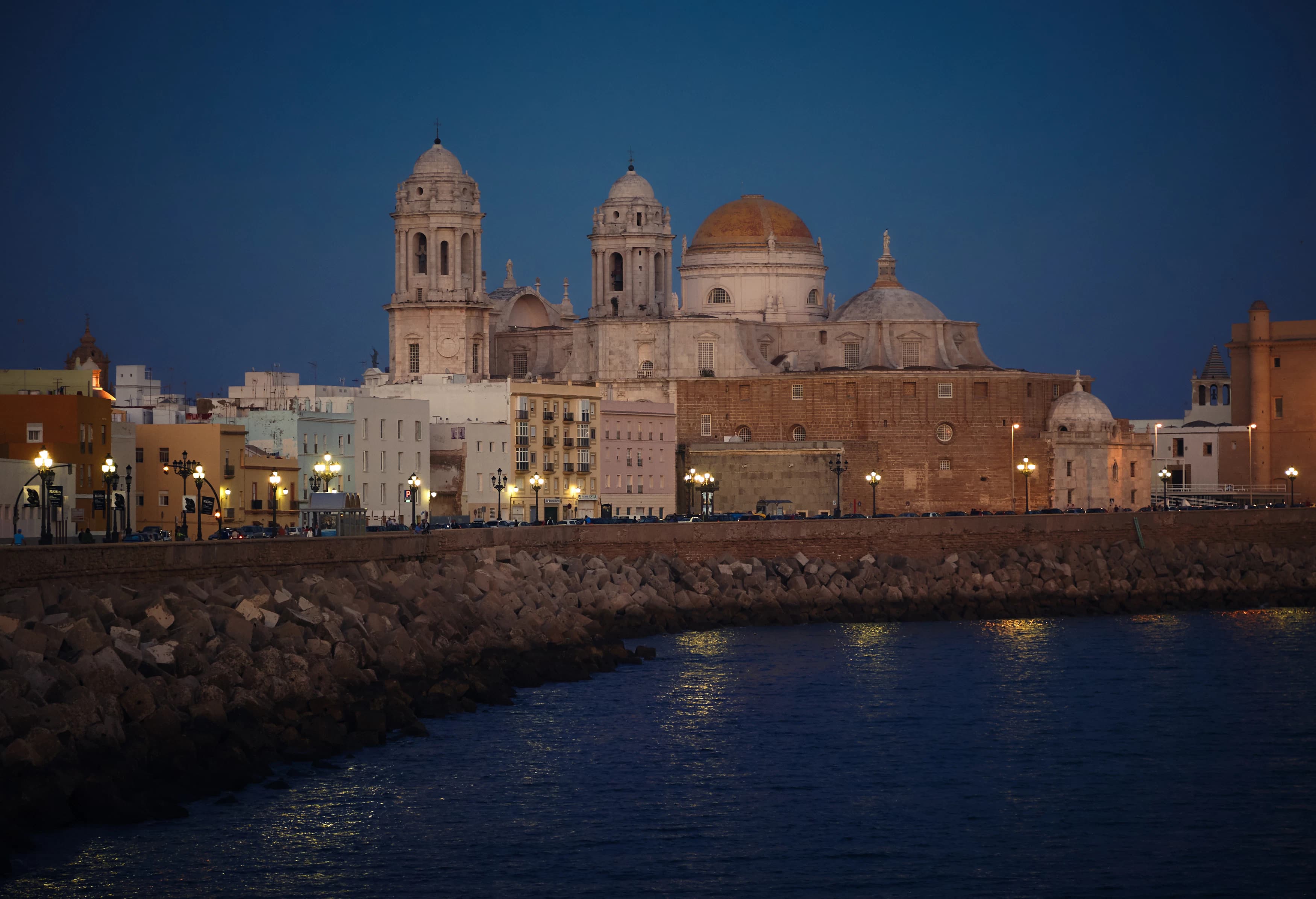
Cádiz, the oldest city in Western Europe, sits on a narrow peninsula by the Atlantic and captivates with an authenticity that has long been lost in Spain's tourist hotspots. While the Costa del Sol and Barcelona groan under the weight of mass tourism, Cádiz preserves its Andalusian soul — unfiltered, passionate, and free. The old town is a labyrinth of narrow streets, squares with palm trees, and church tower views of the sea. The golden dome of the Catedral Nüva glows at sunset like a beacon over the city, and the ascent to the Torre Tavira, the highest point of the old town with its Camera Obscura, offers a panoramic view of white rooftops, turquoise sea, and the vast Atlantic. The Carnival of Cádiz is the most famous in Spain and one of the wildest in the world. For two weeks in February, the streets transform into a single stage for satirical songs (Chirigotas), costumes, and exuberant celebrations. Unlike Rio or Venice, the Carnival of Cádiz is not a spectacle for tourists, but a festival of the Gaditanos for the Gaditanos. The Playa de la Victoria, a three-kilometer-long city beach, is one of the best city beaches in Europe. Golden sand, clean water, and a lively promenade with Chiringuitos (beach bars) make it the living room of the city. The Playa de la Caleta in the old town, framed by two fortresses, offers a more intimate bathing experience with a historical backdrop. Cádiz' tapas culture is exceptional even by Andalusian standards. In the Barrio de la Viña and around the Mercado Central, one tapas bar follows another: Tortillitas de Camarones (shrimp pancakes), Pescaíto Frito (fried fish), and Atún Rojo (red tuna from Almadraba fishing) are the stars of Gaditan cuisine. The Phoenician and Roman history of the city is reflected in the archaeological sites. The Roman Theater, one of the largest in Spain, and the underwater excavation sites off the coast tell of 3,000 years of uninterrupted settlement.

CarnivalTapasBeach
a lighthouse on top of a cliff under a blue sky

Ciutadella

Ciutadella de Menorca is the secret capital of the island and an architectural gem that captivates every visitor with its honey-colored old town, dramatic natural harbor, and vibrant gastronomy scene. Until 1722, Ciutadella was actually the capital of Menorca before the British moved the seat of government to Mahón. The noble charm and aristocratic heritage of the city at the western tip of the island have been preserved to this day. The old town of Ciutadella is a labyrinth of narrow streets winding between magnificent palaces, Gothic churches, and noble houses from the 17th and 18th centuries. The Cathedral of Santa María, built on the foundations of a Moorish mosque in the 14th century, towers over the old town with its imposing bell tower. The Plaça des Born, the main square with the obelisk and the flanking palaces, is one of the most beautiful squares in the entire Balearic Islands and is often praised as the most beautiful square in Spain. The natural harbor of Ciutadella is a narrow fjord cut deep into the rock, lined with restaurants, bars, and fishing boats. In the evening, when the lanterns illuminate the honey-colored facades and the scent of grilled fish wafts through the streets, the harbor transforms into one of the most romantic backdrops in the Mediterranean. From here, boat tours to the dream beaches of the southwest coast also depart. The Fest de Sant Joan at the end of June is Ciutadella's biggest event and one of the most spectacular festivals in Spain. Riders in historical costumes gallop through the crowd, the horses rear up on their hind legs, and the crowd tries to touch the animals - an adrenaline rush like no other. The festival lasts several days and transforms the entire city into a state of emergency. From Germany, you can fly to Menorca (Mahón) in 2.5 hours and reach Ciutadella in 45 minutes by car or bus.

MenorcaOld TownHarbor

Deià

Deià is a fairy-tale artist village that clings to the steep slopes of the Serra de Tramuntana and has attracted writers, painters, and musicians from all over the world for decades. The British poet Robert Graves made the place famous in the 1930s, and to this day, Deià has preserved its bohemian spirit. German cultural vacationers find here a unique blend of Mallorcan village idyll, international artist flair, and breathtaking nature. The honey-colored stone houses with their green shutters cascade down the mountainside, surrounded by olive groves and terraced gardens, while the small rocky cove Cala Deià with its crystal-clear water offers one of the island's most romantic bathing spots. The village has intentionally remained small and has preserved its exclusive, tranquil character - here, celebrities and art lovers vacation away from the mainstream.

artist villageMallorcaTramuntana

Dénia

Dénia is a charming port city on the Costa Blanca, recognized by UNESCO as a Creative City of Gastronomy, placing it in a league with cities like Lima, Tucson, and Östersund. Dominated by a Moorish castle on the hill and framed by the impressive Montgo massif, this city on the northern Costa Blanca offers a unique duality: to the north of the port, miles of sandy beaches with gently sloping waters stretch out, ideal for families, while to the south of the cape, rocky coves with crystal-clear waters invite snorkeling and diving. The port of Dénia is the starting point for ferries to Ibiza, Mallorca, and Formentera, making the city an ideal springboard for island hopping. The old town below the castle exudes Mediterranean flair with its narrow streets, small boutiques, and fish restaurants, without the mass tourism that characterizes other places on the Costa Blanca. The Montgo Natural Park behind the city offers hiking trails with panoramic views over the entire coast and is home to rare orchids and Mediterranean flora. What makes Dénia truly special is the shrimp - the Gamba Roja de Dénia is one of the most sought-after and expensive delicacies of Spanish cuisine, caught in the deep waters off the coast and served fresh in the harbor restaurants. The city has preserved an authenticity that many other coastal towns have lost, attracting increasingly discerning travelers who appreciate good food, culture, and nature equally.

gastronomyunescoshrimp

Frigiliana

Frigiliana has been voted the most beautiful village in Andalusia multiple times and enchants visitors with its flower-adorned, bright white streets that cling to a steep hillside above the coast. The Moorish heritage is omnipresent: The old town Barribarto, with its winding alleys, colorful ceramic tiles on the house walls, and Arabic arches, tells the story of the last Moorish rebellion in the 16th century. German tourists often discover Frigiliana as a day trip from nearby Nerja, but often stay longer than planned because the atmosphere is so irresistible. From the viewpoints, there is a magnificent view over the subtropical terraced gardens down to the Mediterranean Sea and the mountains of the Sierras de Tejeda Natural Park. The village is famous for its sugar cane syrup, which is still produced today in the last sugar cane factory in Europe, and for its lively Festival of Three Cultures, which celebrates the Christian, Moorish, and Jewish heritage.

white-villageandalusiamoorish

Girona

Girona is Catalonia's best-kept secret — a medieval city of breathtaking beauty that often stands in the shadow of Barcelona, but impresses just as much with its charm, history, and gastronomy. The colorful houses along the Onyar River, reminiscent of a Catalan version of Florence, are the postcard image of the city and became world-famous as a filming location for Game of Thrones. The old town of Girona, the Barri Vell, is a labyrinth of narrow streets, Romanesque churches, and Gothic palaces. The imposing cathedral towers over the city and is reached via a monumental Baroque staircase with 86 steps — the widest Gothic nave in the world awaits at the top. The Jewish quarter El Call is one of the best-preserved in Europe and tells the rich history of the Sephardic community. Girona is a paradise for food lovers. The restaurant El Celler de Can Roca, repeatedly voted the best restaurant in the world, has put Girona on the culinary world map. But the market hall, the tapas bars on the Rambla de la Llibertat, and the traditional bakeries with Xuixos make every visit a delight. Girona-Costa Brava Airport is served by many low-cost airlines and is also the gateway to the Costa Brava. Girona is only 40 minutes from Barcelona by high-speed train.

MedievalGastronomyCatalonia

Lloret de Mar

Lloret de Mar is the vibrant heart of the Costa Brava and has been one of the most visited beach resorts on the western Mediterranean for decades. The town on the Catalan coast has transformed from a former fishing village into an international party and beach mecca, without losing its spectacular natural backdrop. Between the wild cliffs of the Costa Brava and the expansive sandy beaches, Lloret de Mar offers a mix of unrestrained nightlife, family-friendly beaches, and surprisingly rich culture that few other Mediterranean destinations combine with such intensity. The main beach, Platja de Lloret, stretches over one and a half kilometers and is the center of beach activities. The golden sand gently slopes into the turquoise water, pedal boats and jet skis are ready, and the promenade behind it buzzes with life. Much quieter and scenically breathtaking is Cala Sa Boadella, a crescent-shaped cove nestled in pine forests and rocks, accessible via a forest path and considered one of the most beautiful coves on the entire Costa Brava. Away from the beach life, Lloret surprises with the Gardens of Santa Clotilde, one of the most elegant garden complexes on the Mediterranean. The terraced gardens in the style of the Italian Renaissance seem to float over the cliffs and offer a sea view reminiscent of the Amalfi Coast. The 11th-century Castle of Sant Joan stands on a rocky outcrop between the main beach and the cove of Sa Caleta, marking the historical core of the town with its ruins. The nightlife of Lloret de Mar is legendary and attracts mainly young travelers from all over Europe. The nightclubs along Avenida Just Marlès and at the beach open until the early morning hours, and in summer, the entire city center transforms into a single party mile. Those who prefer a quieter atmosphere can find authentic tapas bars and Catalan restaurants in the side streets, serving excellent seafood dishes at moderate prices. From Germany, Lloret de Mar can be reached via Barcelona-El Prat Airport in just over one and a half hours or via the closer Girona-Costa Brava Airport in just 30 minutes. The best travel time is from June to September, while the shoulder months of May and October offer pleasant temperatures with significantly less hustle and bustle.

Costa BravaPartyBeach

Marbella

Marbella is the most glamorous beach resort on the Spanish Costa del Sol and the European counterpart to Saint-Tropez. The city on the southern coast of Andalusia combines kilometers of sandy beaches, an elegant old town, top-notch gastronomy, and a nightlife that attracts international jet-setters and celebrities. Puerto Banús — Marbella's legendary marina — is the place to see and be seen: superyachts, Ferraris, designer boutiques, and beach clubs. The old town (Casco Antiguo) is the charming counterpoint: whitewashed houses, narrow streets lined with orange trees, and the Plaza de los Naranjos — one of the most beautiful squares in Andalusia. The Golden Mile (Milla de Oro) between Marbella and Puerto Banús is lined with luxury villas, five-star hotels, and the famous Nikki Beach Club. But Marbella also has its down-to-earth side: the Mercado Central offers fresh fish and Andalusian specialties at local prices. The Sierra Blanca — the mountain range directly behind the city — offers hikes with views of the coast and, on clear days, all the way to Africa. The white villages of the hinterland (Ojén, Istán) are perfect half-day trips.

BeachGlamourAndalusia

Mijas Pueblo

Mijas Pueblo perches as a dazzling white mountain village at an altitude of 430 meters above the Costa del Sol and offers breathtaking panoramic views of the entire coast all the way to Africa. The picturesque Pueblo Blanco is famous for its charming donkey taxis that transport visitors through the winding streets, combining Andalusian village romance with the convenience of a well-developed tourist infrastructure. German tourists often use Mijas as a day trip from the coast, but the place deserves a longer stay: the numerous small museums, the craft shops with traditional ceramics and leather goods, the picturesque plazas with their tapas bars, and the beautiful hiking trails in the surrounding mountains make Mijas one of the highlights of Andalusia. The mix of authentic village life and viewing terraces overlooking the sparkling Mediterranean is simply irresistible.

white-villagecosta-del-solandalusia

Nerja

Nerja is the jewel of the eastern Costa del Sol and a coastal town that has managed to preserve its Andalusian charm, while just a few kilometers to the west, the high-rises of Torremolinos and Benalmádena rise into the sky. The city's landmark is the Balcón de Europa, a palm-lined promenade on a cliff high above the sea, which once served as a viewpoint for a Moorish fortress and today offers spectacular panoramic views over the Mediterranean and the coast. Below the balcony, small sandy beaches hide in rocky coves, which are among the most beautiful on the entire Costa del Sol. The Cueva de Nerja, a massive stalactite cave on the outskirts of the town, houses the largest known stalagmite in the world and prehistoric rock paintings that could be over 40,000 years old. In summer, concerts with unique acoustics take place in the cave. The whitewashed old town with its bougainvillea-adorned streets, small squares, and fish restaurants resembles a traditional Andalusian pueblo, and the locals proudly maintain their traditions. Nerja is a starting point for hikes in the Sierra de Almijara and the gorges of the Río Chillar, where one walks through shallow river water - an unforgettable experience, especially in the hot summer months. The town became famous through the Spanish television series Verano Azul in the 1980s and has since attracted visitors from all over Europe. For German holidaymakers, Nerja offers the perfect balance of beach vacation, nature, and Andalusian culture, without the commercialization of large coastal resorts.

beachcavewhite-village
Two vintage wooden trams on railway tracks.

Palma de Mallorca

Palma de Mallorca is the vibrant capital of the Balearic Island and combines Mediterranean flair with an impressive old town centered around the Gothic cathedral La Seu. The city offers top-notch restaurants, stylish boutiques, and a lively culinary scene along the Paseo Maritimo. In addition to the historic center with Arab baths and the Almudaina Palace, the modern harbor and nearby beaches like Playa de Palma attract visitors. For German tourists, Palma is the ideal starting point to combine culture, shopping, and beach holidays in Mallorca.

City tripCultureMallorca
a table with two drinks and a hat on it

Pollenca

Pollenca in the north of Mallorca is a charming small town at the foot of the Serra de Tramuntana and one of the culturally richest places on the island. The 365 steps to the Calvary Mountain, the Sunday market days, and the annual Jazz Festival make Pollenca a favorite among Mallorca connoisseurs. The port of Port de Pollenca offers one of the most beautiful bays on the island with views of the Formentor Peninsula. Far removed from the Ballermann image, Pollenca combines Mallorcan authenticity with international culture.

MallorcaCultureCalvary Mountain

Porto Cristo

Porto Cristo on the east coast of Mallorca is an authentic harbor town, known primarily for the spectacular Coves del Drac, the most visited stalactite cave in Europe with an underground lake and classical music concerts. The natural harbor inlet with its colorful fishing boats, the promenade, and the good fish restaurants give the place a charming, unspoiled character. Unlike many coastal towns, Porto Cristo has preserved its Mallorcan identity and is popular with both locals and tourists. The sandy beach right by the harbor offers sheltered swimming, and the nearby caves make the place a must-visit on any Mallorca trip.

HarborCavesMallorca
a yellow house on a hill with a palm tree in front of it

Puerto de la Cruz

Puerto de la Cruz is the historical heart of tourism in Tenerife and a charming harbor town on the green, lush northern coast of the island. Long before the concrete resorts in the south were built, Puerto de la Cruz was already the preferred destination for European travelers - and it has preserved its authentic Canarian character to this day. For German holidaymakers who prefer culture, nature, and Canarian lifestyle over mass tourism, Puerto de la Cruz is the ideal choice. The city's landmark is Loro Parque, one of the best zoos in the world and Tenerife's most visited attraction. With over 700 species of parrots, a spectacular orca show pool, penguins, gorillas, and an impressive aquarium, the park attracts millions of visitors each year. But Puerto de la Cruz has much more to offer than Loro Parque. The historic old town, with its colonial houses, small squares, and traditional bodegas, is a labyrinth of Canarian culture and atmosphere. Lago Martíanez, a seawater bathing complex designed by the legendary architect César Manrique, is a work of art in itself. The extensive facility with several pools, volcanic rock sculptures, and subtropical gardens harmoniously blends into the volcanic coastal landscape and is the perfect place to spend the day swimming and sunbathing. At Playa Jardín, a beach designed by Manrique with black volcanic sand and tropical gardens, one experiences the rugged beauty of the Atlantic coast. The northern coast around Puerto de la Cruz is dramatically different from the dry south. Lush laurel forest remnants, banana plantations, deep ravines, and spectacular coastal formations shape the landscape. The Botanical Garden, founded in 1788, houses exotic plants from around the world. The Orotava Valley, which rises behind the city up to Teide, is one of the most beautiful landscapes in the Canary Islands. From Germany, it takes about five hours to fly to Tenerife North, whose airport is only 25 minutes from Puerto de la Cruz.

Canary IslandsTenerifeLoro Parque

Ronda

Ronda is the city that balances on a cliff above the abyss — dramatically located on a rock plateau divided by the 100-meter-deep El Tajo gorge, connected by the legendary Puente Nuevo, one of the boldest bridge constructions of the 18th century. Ernest Hemingway and Rainer Maria Rilke loved this city, and anyone standing at the railing looking into the abyss immediately understands why. The Puente Nuevo is Ronda's landmark and architectural masterpiece: 98 meters high, the stone bridge spans the Tajo gorge and connects the Moorish old town (La Ciudad) with the newer district (El Mercadillo). The construction took 42 years (1751-1793), and the architect José Martín de Aldehüla allegedly fell to his death while trying to attach the year of construction to the bridge. Inside the bridge, there is a small museum documenting the construction history. The Plaza de Toros, built in 1785, is one of the oldest bullfighting arenas in Spain and is considered the cradle of modern bullfighting: Here, the Romero dynasty developed foot bullfighting (previously, fighting was done from horseback). Pedro Romero is said to have killed over 5,600 bulls without ever being injured. Today, historical bullfights in traditional costumes only take place in September during the Corrida Goyesca. The attached museum displays Hemingway's personal bullfighting collection. The Moorish old town La Ciudad preserves centuries of Islamic architecture: The Baños Árabes (Arab baths) from the 13th century with their star-shaped light openings in the dome are among the best-preserved in all of Spain. The Palacio de Mondragón, once the residence of the Moorish king Abomelic, offers gardens with views of the gorge. Ronda is the heart of the Ruta de los Pueblos Blancos — the route of the white villages that winds through the Andalusian hinterland: Setenil de las Bodegas (with houses under overhanging rocks), Zahara de la Sierra (perched above a reservoir), and Grazalema (the rainiest place in Spain) are all within an hour's drive.

BridgeGorgeBullfighting

San Antonio

San Antonio de Portmany is Ibiza's vibrant sunset capital on the west coast and a place that stands like no other for the island's legendary nightlife. What was once a sleepy fishing village has transformed into one of the world's most famous party and sunset destinations. The Sunset Strip, a series of bars and cafés along the bay, offers a natural spectacle every evening that magically attracts thousands of visitors. The Sunset Strip is the heart of San Antonio. Here, legendary bars like Café del Mar and Café Mambo line up, having co-invented the chillout culture since the 1990s. As the sun sets over the Mediterranean, DJs play their sets, cocktails flow, and an electrifying energy engulfs the entire bay. These sunset sessions are free and are a must-do on every Ibiza visit. However, San Antonio has changed significantly in recent years. Alongside the party mile at the West End, a renovated beach promenade, new boutique hotels, and a flourishing culinary scene have emerged, impressing even discerning visitors. The city beach has been upgraded, and the bay of San Antonio offers the Passeig de ses Fonts, an elegant promenade with fountains, sculptures, and palm trees. The club scene around San Antonio is legendary. The famous Eden and Es Paradís have been institutions for decades, and during the summer, the biggest DJs from the electronic music scene perform here. The pre-party bars at the West End heat up the atmosphere after midnight before the clubs continue the party until the early morning hours. But San Antonio is also worth visiting during the day: boat tours to the turquoise bays of Cala Bassa and Cala Conta depart from the harbor, and the cave Ses Fontanelles with prehistoric rock paintings is just a few minutes away. From Germany, it takes about 2.5 hours to fly to Ibiza, and San Antonio is reached in 20 minutes from the airport.

IbizaSunset StripClubs

Santa Eulalia

Santa Eulalia del Río is Ibiza's quiet family resort on the east coast - a charming small town that proves the Balearic island has much more to offer than clubbing and party excesses. As the third largest town in Ibiza, Santa Eulalia has developed its own identity: cultured, family-friendly, and with one of the most beautiful promenades on the entire island. Here, families stroll with strollers, while partygoers stumble elsewhere on Ibiza. The elegant promenade stretches for several kilometers along the coast and is lined with palm trees, restaurants, and small boutiques. The town beach itself is wide, sandy, and equipped with all amenities - lifeguards, playgrounds, sun loungers, and a gentle entry into the sea, ideal for children. Within walking distance are other beaches like Cala Llonga and Es Canar, known for its legendary hippie market. On Puig de Missa, the hill above the town, stands a white fortified church from the 16th century, watching over Santa Eulalia like a fortress. The ascent through narrow streets with whitewashed houses rewards visitors with a panoramic view over the red roofs of the town, the harbor, and the sparkling Mediterranean Sea. The ethnographic museum next to the church showcases the rural life of Ibiza in past centuries. Santa Eulalia is the only place in Ibiza with a real river - the Río de Santa Eulalia, which is usually dry in summer. The marina is a popular meeting point with top-notch fish restaurants, and it hosts elegant sailboats and catamarans offering day trips to the surrounding coves. From Santa Eulalia, you can reach the most beautiful coves on the east coast within a few minutes by car. From Germany, it takes about 2.5 hours to fly to Ibiza, and Santa Eulalia is a 20-minute drive from the airport. The best travel time is from May to October, although the town is pleasantly mild even in the off-season due to its Mediterranean climate.

IbizaFamilyPromenade

Segovia

Segovia is one of the most spectacular small towns in Spain — a UNESCO World Heritage site on a rocky plateau, dominated by the fairy-tale Alcázar and intersected by the most impressive Roman aqueduct in the world. Just an hour from Madrid, Segovia offers a concentration of monumental architecture that is unmatched. The aqueduct of Segovia is the city's landmark and one of the best-preserved Roman structures worldwide. The 167 arches made of unhewn granite blocks, held together without mortar, span 28 meters high over the Plaza del Azoguejo — still intact after nearly 2,000 years. The Alcázar of Segovia sits on a rocky outcrop and looks like a fairy-tale castle — in fact, it served as inspiration for Walt Disney's Snow White castle. The cathedral, affectionately called the Lady of Cathedrals, is the last great Gothic building in Spain. The old town in between is a maze of squares, Romanesque churches, and restaurants where the famous Cochinillo — roast suckling pig from the wood oven — is celebrated.

UNESCORomansAqueduct

Sóller

Sóller is nestled in a wide, fertile valley of the Serra de Tramuntana, surrounded by orange groves and citrus gardens, which has earned the town its nickname "Valley of Gold." The historic small town enchants German visitors with its authentically Mallorcan atmosphere: The modernist parish church of Sant Bartomeu dominates the central Plaça Constitució, where village life unfolds in the shady street cafés. The absolute highlight is the ride on the historic wooden train "Tren de Sóller" from 1912, which rattles on its one-hour route from Palma through 13 tunnels and over a spectacular viaduct to Sóller. From here, the equally nostalgic tram continues to the port of Port de Sóller. Sóller is the perfect starting point for hikes in the Tramuntana, bike tours through the mountainous landscape, and culinary discoveries of authentic Mallorcan cuisine.

orangentalmallorcatramuntana
a group of people flying kites on top of a sandy beach

Tarifa

Tarifa is the southernmost point of the European mainland and a place where the Atlantic and the Mediterranean meet, Africa shimmering just 14 kilometers away on the horizon, and the wind never stops blowing. It is this legendary wind - the Levante from the east and the Poniente from the west - that has made Tarifa the world capital of kitesurfing and windsurfing. The endless sandy beaches between Tarifa and Bolonia attract water sports enthusiasts from all over the world, and the colorful scene of surfers, artists, and free spirits gives the city a unique atmosphere that resembles more of Essaouira or Byron Bay than the typical Costa de la Luz. The walled old town is a labyrinth of whitewashed alleys with Moorish arches, independent boutiques, vegan cafés, and surf shops. Playa de Bolonia, about 20 kilometers to the west, is considered one of the most beautiful natural beaches in Europe - a wide arc of white sand, behind it a massive dune, and the ruins of the Roman city of Baelo Claudia. From Tarifa, you can take a ferry to Tangier in Morocco in just 35 minutes, experiencing two continents in one day. The Strait of Gibraltar is also one of the best places in the world for whale watching - orcas, sperm whales, pilot whales, and dolphins regularly pass through the strait. For German travelers seeking wind, waves, and an alternative atmosphere, Tarifa is a magical place at the far edge of Europe, where the energy of the ocean and the proximity to Africa create a very special vibe.

kitesurfingwindsurfingwind
a screen shot of a website with spanish and spanish words

Valldemossa

Valldemossa, nestled in the Serra de Tramuntana on Mallorca, is one of the most picturesque villages in the entire Mediterranean region. At an altitude of 400 meters, it overlooks a valley filled with olive groves and almond trees, surrounded by the rugged limestone peaks of the UNESCO World Heritage mountains. The village gained worldwide fame due to the winter of 1838/39, which the Polish composer Frédéric Chopin and the French writer George Sand spent here. The Charterhouse of Valldemossa, a former 14th-century monastery where the couple stayed, is now a museum and pilgrimage site for music lovers. Chopin's piano still stands in the cell, and concerts featuring his works are regularly held. However, Valldemossa captivates even without its famous guests. The narrow, cobblestone streets wind between natural stone houses with green shutters, flower pots adorn the facades at every corner, and bougainvillea and jasmine hang from small balconies. In front of each house, a ceramic tile displays the image of the village saint Santa Catalina Thomás — a tradition that gives the place a unique character. The surrounding area invites hiking in the Serra de Tramuntana. The old pilgrimage path from Valldemossa to Deià, the Camí de s'Arxiduc, offers spectacular views of the cliffs and the deep blue Mediterranean Sea. The port of Port de Valldemossa, accessible via a winding road, features a small pebble beach and restaurants serving freshly caught fish. Valldemossa is particularly enchanting in February and March when millions of almond trees bloom in delicate pink and white, transforming the entire landscape into a fragrant sea of blossoms. In autumn, the forests glow in warm colors, and the olive harvest fills the air with a spicy aroma. The culinary specialty of the village is the Coca de Patata, a sweet potato pastry best enjoyed fresh and warm from the bakery — a simple yet unforgettable taste experience that can only be found in Valldemossa.

VillageChopinHiking

Barcelona

Barcelona is a city that unites art, architecture, and zest for life like no other. Antoni Gaudí's imaginative buildings shape the cityscape, from the unfinished Sagrada Família (under construction since 1882, completion planned for 2026) to the colorful Park Güell and the wavy facades of Casa Batlló and Casa Milà. Seven of Gaudí's works are UNESCO World Heritage sites — no other architect has shaped a city so sustainably. The Gothic Quarter (Barri Gòtic) with its cathedral, medieval alleys, and hidden squares forms the historical heart. El Born houses the Picasso Museum and the liveliest bar scene. El Raval is the multicultural district with the MACBA (Museum of Contemporary Art) and the iconic Rambla del Raval. The Ramblas, Barcelona's most famous promenade, lead from Plaça de Catalunya down to the harbor and the Columbus Monument. Barceloneta, the former fishing district, offers city beach vibes and top-notch seafood restaurants. Above the city lie Tibidabo with its nostalgic amusement park and Montjuïc with the Fundació Joan Miró, the 1992 Olympic Stadium, and the Magic Fountain. Catalan cuisine is a world of its own: La Boqueria, one of the best food markets in the world, offers everything from Jamón Ibérico to freshly squeezed juices. In the evenings, the city pulses until the early morning hours — Barcelona lives to a rhythm that leaves Central Europeans in awe.

GaudíArchitectureBeach
beige concrete building

Madrid

Madrid, the vibrant capital of Spain, combines world-class museums, royal palaces, and an unparalleled nightlife. The golden triangle of art consisting of the Prado, Reina Sofía, and Thyssen-Bornemisza houses masterpieces by Velázquez, Goya, and Picasso — the Prado alone displays over 8,000 paintings and is one of the most significant art museums in the world. Picasso's Guernica in the Reina Sofía is one of the most powerful anti-war images in history. The Palacio Real, Europe's largest royal palace with over 3,400 rooms, overlooks the Manzanares Valley and is surrounded by the Sabatini Gardens and Campo del Moro. The Gran Vía pulses day and night with cinemas, theaters, and shops, while the Plaza Mayor invites you to linger as the centerpiece of the old town. The La Latina district transforms into a colorful spectacle on Sundays with the Rastro flea market. Madrid's true soul reveals itself after 10 PM: The nightlife in Malasaña, Chueca, and Lavapiés is among the best in Europe — Madrileños rarely eat dinner before 10 PM, and clubs fill up only around 2 AM. Culinary highlights include the Mercado de San Miguel, the Chocolatería San Ginés (Churros con Chocolate since 1894), and the tradition of Cocido Madrileño. The Retiro Park offers a green oasis with rowboats, a crystal palace, and a rose garden in the heart of the metropolis. Rooftop bars (Azoteas) provide spectacular city panoramas at sunset.

CapitalArtMuseums
A city filled with lots of tall buildings

Sevilla

Sevilla, the passionate capital of Andalusia, pulses with flamenco rhythms, scents of orange blossoms, and shines with an architecture that uniquely blends Moorish heritage and Spanish Baroque. The Real Alcázar, a royal palace with over a thousand years of construction history, combines Islamic mosaics, Mudejar stucco, and Renaissance gardens into a place of fairy-tale beauty — it is no wonder it served as a filming location for Game of Thrones. The Cathedral of Sevilla, the largest Gothic church in the world, houses the tomb of Christopher Columbus and the Giralda, a former minaret that serves as a bell tower with 35 ascending ramps (instead of stairs, so one could ride up) offering a grand view over the city. The Plaza de España, built for the Ibero-American Exhibition in 1929, is a semi-circular masterpiece with tiled niches for each Spanish province, bridges, and a boating canal. In the Triana district, across the Guadalquivir, lives the soul of flamenco: In Peñas and Tablaos, visitors experience the raw emotion of Cante Jondo and Zapateado. The Barrio Santa Cruz, the former Jewish quarter, enchants with shady courtyards, jasmine scent, and hidden plazas. Semana Santa (Holy Week) and the Feria de Abril are among the most impressive festivals in Spain. Culinary delights shine in Sevilla with a tapas culture: Salmorejo, Jamon Iberico, Espinacas con Garbanzos, and a cool Cruzcampo beer in a riverside bar are a must.

FlamencoMoorishSemana Santa
A group of people walking down a street next to tall buildings

Granada

Granada is spectacularly located at the foot of the Sierra Nevada and is dominated by the Alhambra, arguably the most beautiful Moorish palace in the world. This masterpiece of Islamic architecture, with its intricate stucco work, the water features of the Generalife gardens, and the Nasrid palaces, attracts over 2.7 million visitors annually — tickets often need to be booked weeks in advance. The view from the Alhambra of the snow-capped Sierra Nevada is one of the most iconic panoramas in Spain. The Albaicín neighborhood opposite the Alhambra is a labyrinth of white alleys, Carmén houses (villas with hidden gardens), and viewpoints like the Mirador de San Nicolás, where the sunset behind the Alhambra is an unforgettable experience. The Sacromonte neighborhood in the caves above the city is the cradle of Granada Flamenco — intimate Zambra shows take place in whitewashed caves here. Granada is one of the last major cities in Spain where a free tapa is served with every drink. The student scene of the historic university (founded in 1531) contributes to a vibrant nightlife along Calle Elvira and around Plaza Nueva. In winter, the Sierra Nevada attracts visitors with the southernmost ski resort in Europe, just 30 minutes from the city. In summer, the renowned International Music and Dance Festivals take place at the Generalife.

AlhambraMoorishFlamenco

Málaga

Málaga, the birthplace of Pablo Picasso, has transformed from a sleepy harbor stop to one of the most exciting cultural metropolises in southern Spain. The Museo Picasso, located in a Renaissance palace, showcases over 200 works by the master, while the Centre Pompidou Málaga presents contemporary art at a world-class level in its colorful glass cube by the harbor. The Alcazaba, an 11th-century Moorish fortress, and the Castillo de Gibralfaro, which towers above, together offer a fascinating tour through the Arab history of Andalusia. The Muelle Uno promenade has revolutionized the cityscape: Elegant restaurants, design shops, and palm gardens stretch along the Mediterranean. The Mercado Central de Atarazanas, housed in a former shipyard with magnificent Art Nouveau glass windows, is a feast for the senses — fresh fish, olives, Iberico ham, and local wines at unbeatable prices. At the beach of La Malagüta and in the Chiringuitos (beach restaurants) along the coast, one enjoys freshly grilled sardines (Espetos), skewered on wooden sticks over an open fire — the culinary landmark of the city. The old town, with its impressive cathedral (affectionately called La Manquita, because one tower was never completed), Calle Larios, and countless tapas bars, pulsates late into the night. Málaga is the perfect gateway to the Costa del Sol, Granada (1.5 hours), and Ronda — and has long deserved to be more than just a stopover.

PicassoBeachMuseums
pink flowers near body of water during daytime

Valencia

Valencia, Spain's third-largest city, surprises as a perfect blend of avant-garde architecture, Mediterranean lifestyle, and culinary excellence. The Ciudad de las Artes y las Ciencias (City of Arts and Sciences) by Santiago Calatrava is a futuristic complex of white, shell-shaped buildings in the drained riverbed of the Turia: oceanarium, planetarium, science museum, and opera house form one of the most impressive modern architectural landscapes in Europe. The Barrio del Carmen in the old town is the vibrant counterpart: medieval alleys with street art, vintage shops, tapas bars, and flamenco bars. The Mercado Central, housed in an Art Nouveau building from 1928, is one of the largest fresh markets in Europe with over 1,000 stalls. Here, Valencians buy their ingredients for paella — because Valencia is the birthplace of this world-famous rice dish, traditionally prepared over orange wood fires outdoors. The Jardines del Turia, a nine-kilometer-long park in the former riverbed, are the green lung of the city — perfect for jogging, cycling, and picnicking. Las Fallas in March is one of the most spectacular festivals in Europe: huge papier-mâché figures (up to 30 meters high) are artistically constructed and burned on the night of March 19. The city beach Malvarrosa and the nearby Albufera lagoon with its rice fields and boat trips complete the picture of a city that combines sun, culture, and enjoyment as relaxed as hardly any other in Europe.

PaellaFuturismLas Fallas
water fountain in the middle of the river

Bilbao

Bilbao has transformed from a gray industrial city into one of Europe's most exciting cultural destinations, thanks to the iconic Guggenheim Museum. Frank Gehry's titanium-clad museum building (opened in 1997) marked the beginning of one of the most successful urban transformations in the world — the 'Bilbao Effect' has since become a fixed term in urban planning. Jeff Koons' giant flower dog 'Puppy' and Louise Bourgeois' spider 'Maman' in front of the museum are iconic photo motifs. The Old Town (Casco Viejo) with its Siete Calles (seven streets) forms the historical core and is the center of Basque pintxos culture. In the narrow alleys, bars with artfully topped snacks line up — a pintxos tour through Plaza Nüva and along Calle Ledesma is one of the best culinary experiences in northern Spain. The Mercado de la Ribera is the largest covered market hall in Europe. Beyond the Guggenheim, Bilbao surprises with the Zubizuri Bridge by Santiago Calatrava, the Azkuna Zentroa (a converted wine warehouse by Philippe Starck), and the elegant Artxanda funicular with panoramic views. The city lies on the Río Nervión and is surrounded by green mountains. The Museum of Fine Arts has an impressive collection from El Greco to Francis Bacon. From Bilbao, you can reach the dramatic coast of Gaztelugatxe (filming location of Dragonstone in Game of Thrones) and the Rioja Alavesa wine region in under an hour.

GuggenheimArchitecturePintxos
a large body of water surrounded by mountains

San Sebastián

San Sebastián (Basque: Donostia) is considered the culinary capital of Europe with the highest density of Michelin stars per capita in the world. The shell-shaped beach La Concha, framed by green hills and an elegant Belle Époque promenade, is regarded as one of the most beautiful city beaches in Europe. However, San Sebastián is much more than just a beach and gourmet cuisine — it is a city with its own atmosphere between elegance and Basque passion. The Old Town (Parte Vieja) is the epicenter of the Pintxos culture: In the narrow streets, bars line up, their counters bending under artfully prepared bites. A Pintxos crawl through Calle Fermín Calbeton is one of the best culinary experiences in Spain. Three restaurants hold three Michelin stars: Arzak, Mugaritz, and Martín Berasategui (in the hills outside the city). The Basque Culinary Center has made San Sebastián an international center of culinary arts. Monte Urgull offers panoramic views over the bay, while Monte Igüldo attracts visitors with a nostalgic funicular and a charming amusement park from the 1910s. Zurriola Beach on the other side of the city is a surfer hotspot and a meeting point for the young scene. In September, the city transforms during the San Sebastián International Film Festival (since 1953) into a gathering place for the film world. Its location by the Cantabrian Sea provides a mild climate, dramatic cloud formations, and spectacular sunsets.

CulinaryMichelin starsBeach
A stork's nest stands before a mountain.

Salamanca

Salamanca, the golden university city, shines in warm sandstone and pulses with the energy of thousands of students. Founded in 1218, the university is the oldest in Spain and one of the oldest in Europe — it has shaped the city so profoundly that Salamanca remains Spain's most important center for Spanish as a foreign language. Thousands of international language students give the city a cosmopolitan flair. The Plaza Mayor, designed by Alberto Churrigüera and completed in 1755, is considered the most beautiful baroque square in Spain and one of the most impressive squares in the world. In the evening, the lights bathe the arcades in golden light, and the city gathers here for the Paseo. The old and new cathedrals stand side by side, spanning styles from the Romanesque 12th century to the baroque 18th century — on the facade of the new cathedral, one can discover an astronaut relief added by restorers. The Casa de las Conchas with its shell-adorned facade, the Palacio de Monterrey, and the Universidad Pontificia showcase the distinctive Plateresque style — a delicate Spanish variant of Renaissance architecture. Student life concentrates around the Gran Vía and Calle Van Dyck with countless bars and tapas restaurants. From Salamanca, one can reach the Sierra de Francia with the picturesque mountain village of La Alberca and the Roman Silver Road (Vía de la Plata). The city is compact enough to explore on foot and enchants especially at sunset when the sandstone glows golden.

UniversityGolden CityNightlife
white and brown concrete buildings near body of water during daytime

Toledo

Toledo, the "City of Three Cultures," majestically rises on a hill above the Tagus River and unites Christian, Jewish, and Moorish history in a compact space. The entire old town is a UNESCO World Heritage site and feels like a walkable history book, where every alley, every church, and every mosque tells stories of centuries of coexistence and conflict. Toledo was the capital of the Visigothic Kingdom and later of Castile before Madrid took over this role. The Gothic cathedral, one of the largest in Spain, houses El Greco's masterpiece "The Disrobing of Christ" and an overwhelming baroque high altar. The synagogue Santa María la Blanca and the synagogue del Tránsito (now the Sephardic Museum) testify to the once-thriving Jewish community. The mosque Cristo de la Luz, a small gem of Islamic architecture from the 10th century, represents the Moorish heritage. El Greco made Toledo the subject of his visionary paintings in the 16th century — the Museo del Greco, the church Santo Tomé (with the famous "Burial of the Count of Orgaz"), and numerous churches preserve his works. Toledo is also known for its sword-making craftsmanship (since Roman times) and marzipan. The view of the city from the opposite bank of the Tagus, especially at sunset, is one of the most iconic panoramas in Spain. From Madrid, Toledo can be reached in just 30 minutes by the high-speed train AVE.

Three CulturesEl GrecoUNESCO

Córdoba

Córdoba was once the largest and most advanced city in Europe — capital of the Caliphate of Córdoba in the 10th century with over 500,000 inhabitants, hundreds of mosques, libraries, and public baths. The Mezquita-Catedral with its 856 columns of jasper, onyx, and marble — a forest of red-and-white striped arches — is an architectural wonder that uniquely blends Islamic and Christian architecture. In the 16th century, a Gothic-Baroque cathedral was built right in the middle of the mosque, which Charles V later regretted. The Judería (Jewish Quarter) with its flower-adorned courtyards, the small synagogue (one of only three preserved medieval synagogues in Spain), and the Calleja de las Flores is part of the UNESCO World Heritage. In May, Córdoba transforms into a sea of blossoms during the Festival de los Patios when residents open their courtyards to visitors — this festival is also UNESCO Intangible Cultural Heritage. The Roman Bridge over the Guadalquivir, the Alcázar de los Reyes Cristianos with its gardens, and the ruins of Medina Azahara (the sunken palace city of the caliph, also a UNESCO World Heritage site) complete the historical panorama. Córdoba is one of the hottest cities in Europe in summer — regularly over 40°C — which is why the cuisine has produced refreshing dishes like Salmorejo and Gazpacho. Flamenco tablaos, tapas bars in the old town, and the relaxed pace make Córdoba one of the most authentic destinations in Andalusia.

MezquitaMoorishPatios
a backpack sitting on the steps of a building

Santiago de Compostela

Santiago de Compostela is the spiritual destination for hundreds of thousands of pilgrims who walk the Camino de Santiago each year. The magnificent baroque cathedral with the Pórtico de la Gloria and the legendary Silver Facade houses the relics of the Apostle James and has been one of the three major Christian pilgrimage sites alongside Rome and Jerusalem since the Middle Ages. When the Botafumeiro, the largest censer in the world, swings through the nave, it is an overwhelming experience. The old town (UNESCO World Heritage since 1985) is a total work of art made of granite architecture, arcades, and winding alleys, where rain glistens on the cobblestones — for Santiago is one of the rainiest cities in Spain, giving it a unique atmosphere. Surrounding the cathedral are the Plaza del Obradoiro, the Plaza de la Quintana, and the Plaza de Platerías, each with its own character. The city thrives on the mix of pilgrims, university students (founded in 1495), and Galician lifestyle. Culinary Santiago shines with Pulpo à Feira, Empanada Gallega, Pimientos de Padrón (“some are spicy, others are not”), and the Tarta de Santiago — an almond cake with the cross of Saint James. The Mercado de Abastos is the second most important attraction after the cathedral, where you can buy fresh seafood and have it prepared in the surrounding bars. In the evening, Rua do Franco transforms into a lively tapas street.

Camino de SantiagoPilgrimageUNESCO

Regions

Aragon

Aragon is the wild heart of northeastern Spain and a region that is largely overlooked by most international tourists. This historic landscape between the Pyrenees in the north and the barren plains of the Ebro Valley in the south contains some of the most spectacular natural landscapes and best-preserved medieval villages on the entire Iberian Peninsula. The Ordesa y Monte Perdido National Park in the Central Pyrenees is a UNESCO World Heritage site and the Yosemite of Europe - massive canyons, roaring waterfalls, and peaks over 3,000 meters rise into the deep blue sky. In winter, the Pyrenean ski resorts of Formigal, Cerler, and Candanchú transform into top-notch winter sports areas that are significantly cheaper than the Alps. The capital, Zaragoza, surprises as an underrated city with the Moorish Aljafería, the impressive Basílica del Pilar on the banks of the Ebro, and a vibrant tapas scene. In the Aragonese hinterland, villages like Albarracín, known for its red stone walls and medieval alleys, are considered among the most beautiful villages in Spain, and Sos del Rey Católico, which has hardly changed since the Middle Ages. The Mudéjar architecture of Aragon, a unique blend of Islamic and Christian building styles, is also a UNESCO World Heritage site and is showcased in colorful brick towers in Teruel and Zaragoza. For German hikers and winter sports enthusiasts, Aragon offers excellent value for money and a wilderness that has become rare in Europe. The region is also a paradise for canyoning, rafting, and climbing in one of the least populated areas of Western Europe.

mountainshikingskiing
A city with a mountain in the background

Asturias

Asturias is the green heart of northern Spain and a region that does not conform to the typical Spain cliché. Instead of sunburnt plains, visitors can expect emerald green valleys, dramatic cliffs, and the snow-capped peaks of the Picos de Europa, which rise immediately behind the coast. This autonomous community on the Cantabrian Sea has preserved its original character - mass tourism has never arrived here, making Asturias a hidden gem for nature lovers and culture enthusiasts. The pre-Romanesque churches from the 9th century are part of the UNESCO World Heritage and testify to the time when Asturias was the last Christian kingdom on the Iberian Peninsula. The capital, Oviedo, enchants with its elegant old town, the magnificent cathedral complex, and the lively sidra culture. Cider is served here in a unique way: poured from a great height into the glass to create the right carbonation. The coast offers hidden coves, wild surf beaches, and picturesque fishing villages like Cudillero and Luarca. In the hinterland, hiking trails lead through the Desfiladero del Cares, one of the most spectacular gorges in Europe. Asturias is also a paradise for gourmets - Fabada Asturiana, Cabrales cheese, and fresh fish characterize one of the best regional cuisines in Spain. For German travelers seeking an authentic and unspoiled Spain away from the tourist trails, Asturias is a revelation.

naturemountainshiking

Costa Dorada

The Costa Dorada stretches south of Barcelona along the Catalan coast and owes its name to the golden sandy beaches that extend over more than 200 kilometers. Unlike the often overcrowded Costa Brava, this coastal region in the province of Tarragona offers a successful mix of family vacations, culture, and nature experiences. The Roman heritage of the provincial capital Tarragona is a UNESCO World Heritage site and impresses with an ancient amphitheater overlooking the Mediterranean, the medieval old town, and the remains of the Circus Maximus. Families with children are particularly drawn to PortAventura World, one of the largest amusement parks in Europe with several themed areas and its own water park. The coastal towns of Salou, Cambrils, and Sitges offer gently sloping beaches that are ideal for children, while the hinterland surprises with the Priorat wine region and the Delta de l'Ebre nature park. Thousands of migratory birds rest in the Ebro Delta, flamingos wade through the rice fields, and boat tours lead through the unique lagoon landscape. The local cuisine benefits from its proximity to the sea and fertile hinterland - fresh fish, Romesco sauce, and the famous Calçots make every restaurant visit an experience. From Germany, the Costa Dorada can be reached via Barcelona-El Prat Airport in about two hours.

beachfamilyamusement park

Costa Tropical

The Costa Tropical is Granada's hidden coast and one of the best-kept secrets of Andalusia. Nestled between the Sierra Nevada in the north and the Mediterranean Sea in the south, this 73-kilometer stretch of coastline enjoys a unique subtropical microclimate that allows for the cultivation of mangos, avocados, cherimoyas, and papayas - right in the middle of Europe. The main towns of Almuñécar, Salobreña, and Motril have preserved their authentic Spanish character and offer a welcome alternative to the overdeveloped coasts further west and east. Almuñécar sits on a rocky outcrop with its Moorish castle San Miguel overlooking the old town, while the white Salobreña dramatically rises on a rock above sugarcane fields and the sea. The beaches are mostly made up of dark pebbles and sand, nestled in small coves between rocky cliffs. The crystal-clear water invites snorkeling and diving, and the underwater world is significantly more diverse than at the sandy beaches. The proximity to Granada makes day trips to the Alhambra possible, and the Sierra Nevada offers ski slopes just an hour's drive away in winter. German tourists appreciate the Costa Tropical for its tranquility, affordable prices, and the opportunity to combine beach holidays with culture and mountains. The region is ideal for travelers seeking authentic Andalusia without sacrificing proximity to the sea. Tropical fruits directly from the producer, freshly caught fish in the chiringuitos, and Moorish history make this coast a versatile travel destination.

beachtropicalhidden gem
A river running through a lush green countryside

La Rioja

La Rioja is Spain's most famous wine region and a paradise for culinary travelers, stretching along the Ebro Valley between the Basque Country and Navarra. This smallest autonomous community in Spain is entirely dedicated to wine, and the endless rows of vines that stretch over gentle hills to the horizon shape the landscape like nowhere else on the Iberian Peninsula. The capital, Logroño, is the epicenter of Rioja wine culture and offers one of the best tapas streets in Spain on Calle del Laurel - in just 200 meters, over 60 bars line up, each with its own specialty. The wineries in the region range from centuries-old bodegas in rock cellars to spectacular new buildings by international star architects. The Ciudad del Vino by Marqués de Riscal, designed by Frank Gehry, is a titanium-gloss masterpiece that houses not only a bodega but also a luxury hotel and a Michelin-starred restaurant. In the High Middle Ages, La Rioja was an important section of the Camino de Santiago, and monasteries like San Millán de la Cogolla preserve the cradle of the Spanish language - the first sentences in Castilian were written here, a UNESCO World Heritage site. The dinosaur footprints in Enciso delight families, while the Sierra de la Demanda in the south offers hiking trails through untouched nature. La Rioja is also a land of festivals - the Wine Battle in Haro on June 29, where thousands splash each other with red wine, is one of the quirkiest festivals in Spain. For German wine lovers, La Rioja is a revelation: top-quality wines, excellent cuisine, and hospitality that is Spanish in the best sense.

winegastronomytapas

Murcia

Murcia is the warm soul of southeastern Spain and a region that remains largely under the radar for German tourists. This autonomous community between Andalusia and the Comunidad Valenciana offers a fascinating combination of Europe's largest saltwater lagoon, fertile orchards, and one of the sunniest coastlines on the continent. The Mar Menor, an inland sea separated from the Mediterranean by a narrow strip of sand, is a natural wonder with warm, extremely salty water that is only a few meters deep - ideal for families with small children and for water sports enthusiasts wanting to learn kitesurfing, sailing, and stand-up paddling. The Costa Cálida, the warm coast, lives up to its name with water temperatures inviting for swimming from May to November. The capital, Murcia, surprises with a magnificent Baroque cathedral, one of the most beautiful in all of Spain, vibrant tapas districts, and a university that gives the city youthful energy. The hinterland is Spain's vegetable garden - artichokes, lemons, oranges, and peppers are grown here in vast quantities and shape the excellent local cuisine. Cartagena, the port city on the coast, impresses with a restored Roman theater, modernist architecture, and a freshly renovated waterfront promenade. For divers, the Islas Hormigas offers one of the best diving spots in the western Mediterranean with barracudas and grouper. German retirees and families have discovered the region as a winter retreat and summer holiday destination, creating a small but growing German-speaking community.

beachlagoonfamily

Navarra

Navarra is one of the most diverse regions of Spain, stretching from the snow-covered Pyrenees in the north to the semi-desert of Bardenas Reales in the south - on an area barely larger than Schleswig-Holstein, it unites completely different landscapes and climate zones. The capital, Pamplona, is world-famous for the San Fermin festival in July, during which the running of the bulls through the narrow streets attracts millions of viewers to their screens. However, aside from this spectacular week, Pamplona offers a beautiful old town with city walls, green parks, and an excellent pintxo scene that can compete with San Sebastian. The Bardenas Reales in the southeast are a surreal semi-desert landscape reminiscent of the American West - bizarre erosion formations, table-like rocks, and a silence that is unmatched in Europe. This UNESCO Biosphere Reserve was used as a film set for Game of Thrones. In the north lies the Irati Forest, one of the largest beech forests in Europe, which shines in a frenzy of gold and red in autumn. Navarra is also on the Camino de Santiago, and the medieval bridges and pilgrim hostels along the route tell stories from centuries past. The Navarra wine region is overshadowed by the neighboring Rioja but offers excellent rosados and red wines at significantly lower prices. For German travelers looking to discover unknown Spain, Navarra is a treasure full of contrasts that can still be experienced without tourist crowds.

naturedesertcamino

Andalusia

Andalusia in southern Spain is the land of Flamenco, white villages, and Moorish palaces. The region combines the cultural splendor of Seville, Granada, and Córdoba with wild coastlines, the Tabernas Desert, and the snow-capped peaks of the Sierra Nevada. Andalusia is the Spain of imagination — here, 800 years of Moorish history merge with passionate Flamenco, bullfighting tradition, and a joy of life that is contagious. Seville enchants with its cathedral (the largest Gothic church in the world), the Real Alcázar, and the Metropol Parasol. Granada's Alhambra is the crown jewel of Moorish architecture. Córdoba's Mezquita combines mosque and cathedral in a single breathtaking structure. The white villages (Pueblos Blancos) like Ronda, Arcos de la Frontera, and Frigiliana cling to cliff walls and offer postcard-worthy views at every corner. The Costa del Sol lures with year-round sunshine and resorts like Málaga, which has transformed into a cultural capital with the Museo Picasso. The Costa de la Luz on the Atlantic offers endless sandy beaches and wind for surfers. The Sherry Triangle around Jerez de la Frontera is home to Fino and the equestrian art of the Andalusian Royal Riding School. Culinary highlights of Andalusia include Gazpacho, Salmorejo, Pescaito Frito, and Jamón Ibérico. The Semana Santa (Holy Week) and the Feria de Abril in Seville are among the most impressive festivals in Europe.

FlamencoMoorishWhite Villages

Catalonia

Catalonia in northeastern Spain captivates with the cosmopolitan metropolis of Barcelona, the wild Costa Brava, and the Pyrenees in the hinterland. The region has a distinct identity with its own language (Catalan), its own cuisine, and a culture that consciously distinguishes itself from the rest of Spain. Gaudí's Sagrada Família, Dalí's dream world in Figueres, and the Romanesque churches in the Vall de Boí (all UNESCO World Heritage sites) showcase the cultural diversity. The Costa Brava in the northeast is the rugged counterpart to the Costa Blanca: Jagged rocky coves with crystal-clear water, medieval coastal villages like Tossa de Mar and Cadaqués (where Dalí lived), and diving hotspots around the Medes Islands. The hinterland surprises with the volcanic landscape of La Garrotxa, the medieval jewel of Besalú with its Romanesque bridge, and the gourmet capital of Girona. The Catalan Pyrenees offer top-notch skiing in Baqueira-Beret, the Romanesque church treasures in the Vall de Boí, and the Aigüestortes National Park with its over 200 mountain lakes. Tarragona on the southern coast shines with Roman ruins (UNESCO) and the spectacular Castell Festival, where human towers of up to ten stories are built — also a UNESCO cultural heritage. Catalan cuisine combines sea and mountains: Mar i Muntanya (Surf and Turf), Escudella, Crema Catalana, and Cava from the Penedès form a unique gastronomic tradition.

GaudíBarcelonaCosta Brava

Valencia (Region)

The Valencia region on the eastern coast of Spain is home to paella, orange groves, and the Costa Blanca. From the futuristic Ciudad de las Artes y las Ciencias in the capital Valencia to the endless sandy beaches of Benidorm and the mountains in the hinterland, the Comunitat Valenciana offers a surprising variety in a compact space. The capital Valencia impresses with its old town around the cathedral, the former silk exchange La Lonja (UNESCO World Heritage) and the Mercado Central — one of the largest market halls in Europe with over 1,000 stalls. The climate is among the mildest in the Mediterranean: Over 300 sunny days a year and average temperatures of 18°C make the region a year-round destination. In spring, the Fallas Festival transforms Valencia into a sea of giant papier-mâché figures, fireworks, and music — a UNESCO World Heritage that attracts millions of visitors. The Albufera lagoon south of the city is home to the authentic paella Valenciana. Away from the coast, the hinterland surprises with the mountain village of Guadalest, the Sierra de Espadán Natural Park, and the wine regions of Utiel-Requena. The Costa Blanca in the south offers kilometers of beaches and hidden coves, while the Costa del Azahar in the north lures with orange blossom scents and quieter places like Peñíscola — a medieval fortress town right by the sea.

PaellaBeachFuturism

Basque Country

The Basque Country on the northern coast of Spain is a world of its own — with its own language, one of the best cuisines in the world, and a dramatic coastal landscape. Basque culture, one of the oldest in Europe with the mysterious language Euskara (which is not related to any other language), influences every aspect of life — from pintxos bars to pelota games to festivals. San Sebastián, the culinary capital, combines three Michelin three-star restaurants with a pintxos culture that is unparalleled. Bilbao has transformed into a cultural metropolis thanks to the Guggenheim Museum. Vitoria-Gasteiz, the green capital, surprises with a medieval almond-shaped old town and was awarded the title of European Green Capital in 2012. Smaller towns like Hondarribia and Getaria (the birthplace of fashion designer Balenciaga and circumnavigator Elkano) offer authentic Basque life. The Basque coastline is dramatic: the rocky island of San Juan de Gaztelugatxe (filming location for Game of Thrones), the surf beach of Mundaka with one of the longest left-hand waves in Europe, and the steep cliffs of the Flysch route between Zumaia and Deba, which reveal 60 million years of geological history, are natural highlights. Basque cuisine (Nüva Cocina Vasca) combines tradition and innovation: Bacalao al Pil-Pil, Marmitako (tuna stew), Txuletón (T-bone steak), and the sparkling Txakolí white wine are culinary musts.

CulinaryGuggenheimPintxos
a scenic view of a mountain range with clouds in the sky

Galicia

Galicia in the northwest of Spain is the green, Celtic Spain — a region with rugged Atlantic coasts, mystical forests, and the famous Camino de Santiago, which ends in Santiago de Compostela. It rains more often here than in the rest of Spain, but that is exactly what gives Galicia its lush green landscapes, reminiscent more of Ireland than the Iberian Peninsula. The Rías, fjord-like inlets, cut deep into the land, creating one of the most spectacular coastal landscapes in Europe. The capital, Santiago de Compostela, with its baroque cathedral, has been a destination for pilgrims from all over the world for over 1,000 years. The old town is a UNESCO World Heritage site and enchants with granite buildings, arcades, and a vibrant student scene. A Coruña boasts the oldest still-functioning lighthouse in the world (Torre de Hércules, UNESCO) and elegant glass facades along the promenade. Lugo impresses with a fully preserved Roman city wall (UNESCO). Galicia's cuisine is legendary and revolves around the sea: Pulpo à Feira (Galician-style octopus), Percebes (goose barnacles — the most expensive delicacy in Spain), empanadas, and the fresh Albariño white wine from the Rías Baixas. The Islas Cíes off the coast of Vigo have been named the most beautiful beach in the world by The Guardian. The Costa da Morte (Coast of Death) in the west offers dramatic cliffs and wild surf — a paradise for nature lovers and photographers.

Camino de SantiagoSeafoodCeltic

Castile

Castile, the heart of Spain, encompasses the vast plateaus of the Meseta with its medieval towns, imposing castles, and golden grain fields. This region in the center of the country was the driving force behind the Reconquista and the discovery of the New World — the Castilian language became the global language Spanish. Castile is divided into two parts: Castile and León in the north (Spain's largest region) and Castile-La Mancha in the south, the home of Don Quixote. The cities of Castile read like a UNESCO catalog: Segovia with its Roman aqueduct and fairy-tale castle Alcázar, Ávila with its completely preserved medieval city wall (2.5 km, walkable), Burgos with its majestic Gothic cathedral, León with the vibrant stained glass windows of its cathedral, and Salamanca with the golden Plaza Mayor — one of the most beautiful squares in Spain. Castile-La Mancha in the south is the landscape of Don Quixote: windmills on hilltops in Consuegra and Campo de Criptana, the fortified town of Almagro with its unique 17th-century Corral de Comedias theater, and endless vineyards of the D.O. La Mancha — the largest wine-growing region in the world by area. Culinary-wise, Castile is home to Cochinillo (suckling pig) from Segovia, Lechazo (milk lamb), and Manchego cheese. The vastness of the Meseta, the clear air, and the dramatic sunsets over the grain fields have a meditative quality.

HistoryCastlesMedieval
A city square with a clock tower in the background

Extremadura

Extremadura in western Spain is one of the least visited regions of the country and is therefore a hidden gem. Here, Iberian pigs graze under centuries-old holm oaks (Dehesas), stork nests crown medieval church towers, and two UNESCO World Heritage cities — Cáceres and Mérida — are among the best-preserved historical ensembles on the Iberian Peninsula. Cáceres has a historic center that resembles an open history book: Roman, Moorish, and medieval buildings stand side by side, making the city a popular filming location for series like Game of Thrones. Mérida, known as Emerita Augusta, was the capital of the Roman province of Lusitania and boasts the most impressive Roman heritage in Spain with its amphitheater, the Aqueduct of Los Milagros, and the Temple of Diana — in summer, the renowned Festival de Teatro Clásico takes place in the ancient theater. The cuisine of Extremadura is rustic and outstanding: The Jamón Ibérico de Bellota from acorn-fed pigs is considered the best ham in the world, the Torta del Casar is a creamy sheep cheese of incomparable taste, and the Pimentón de la Vera (smoked paprika) spices kitchens worldwide. The Monfragüe National Park is home to the largest colony of griffon vultures in Europe and rare black storks. The Jerte Valley transforms into a sea of cherry blossoms in spring — a sight that rivals the Japanese Hanami.

Hidden gemRomansMedieval

Cantabria

Cantabria on the northern coast of Spain surprises with green coastal landscapes, prehistoric cave paintings, and elegant seaside resorts. The region between the Cantabrian Sea and the Picos de Europa combines dramatic coastlines, lush meadows, and a cultural heritage that dates back to the Stone Age in a small area. Cantabria is the green Spain par excellence and a hidden gem for nature lovers. The Cave of Altamira, the "Sistine Chapel of Stone Age Art," houses 15,000-year-old paintings of bison, horses, and deer in astonishing detail (UNESCO World Heritage). The original is closed for protection, but the Neocueva replica in the museum is impressively authentic. In the province, there are over 60 other caves with prehistoric art, including El Soplao with its spectacular stalactite formations. The capital, Santander, impresses with the peninsula beach El Sardinero, the Palacio de la Magdalena (summer residence of the Spanish kings), and the modern Botín center by Renzo Piano. Comillas enchants with Gaudí's El Capricho, a colorful summer palace, and the neo-Gothic palace Sobrellano. Santoña is the center of Spanish anchovy production — the Anchoas de Santoña are among the best in the world. Cantabrian cuisine offers Cocido Montañés (mountain stew), fresh seafood, and Sobaos Pasiegos (butter cakes from the Pas Valley).

Cave PaintingCoastGreen Spain

Islands

El Hierro

El Hierro is the smallest and westernmost of the Canary Islands — and a hidden gem for those looking to escape mass tourism. In 2000, UNESCO declared the entire island a biosphere reserve, and since 2014, El Hierro has been almost entirely powered by renewable energy (wind and water) as the first island in the world. There are no hotel complexes, no promenades, and no souvenir shops — just pure, unspoiled nature. The landscape is of extreme diversity: In the west, the El-Golfo valley drops 1,500 meters to the sea in a massive cliff — the result of a prehistoric landslide. The Sabinar forest, with its bizarrely twisted juniper trees shaped by the wind, is a landmark of the island. In the center, the misty forest of El Brezal surprises with moss-covered laurel trees, while the coast offers black lava beaches and natural seawater pools (Charcos). El Hierro is a world-class diving paradise: The marine reserve Mar de las Calmas on the south coast offers crystal-clear visibility (up to 50 meters), encounters with manta rays, whale sharks, and giant groupers. The lighthouse Faro de Orchilla marked the westernmost point of the known world until the discovery of America — the prime meridian of antiquity. The island has only 11,000 inhabitants, a few hundred tourist beds, and a pace that forces you to slow down. The local cuisine is based on Quesadillas (sweet fresh cheese flatbreads), fresh fish, and the rare Vino de El Hierro.

CanariesDivingVolcanic Island

Mallorca

Mallorca is much more than the 'island of cleaning ladies' from past decades — the largest Balearic island delights with the Serra de Tramuntana (UNESCO), hidden coves, charming mountain villages, and a blossoming gastronomy. In recent years, the island has transformed into a versatile travel destination that combines luxury resorts, a cyclist's paradise, and an authentic Mediterranean experience. The Serra de Tramuntana in the northwest stretches over 90 kilometers and offers spectacular coastal roads, terraced fields from Moorish times, and villages like Valldemossa (where Chopin and George Sand wintered), Deíà, and Sóller. The bay of Sa Calobra, accessible via a winding mountain road, is breathtaking. Palma de Mallorca surprises as a cosmopolitan capital with the Gothic cathedral La Seu right by the sea, the old town district, and a vibrant gastronomy scene. The east coast features the famous Calas — turquoise bays between pine cliffs that are among the most beautiful in the Mediterranean: Cala Varques, Cala Llombards, and Cala Mondragó are highlights. In the south lies the endless beach of Es Trenc, Mallorca's most beautiful natural beach. The island is also Europe's most popular cycling destination: professional teams train here in spring on the mountain roads of the Tramuntana. Culinary delights include Ensaimada (sweet pastry), Sobrassada (spreadable sausage), Pa amb Oli, and the wine from D.O. Binissalem.

Balearic IslandsBeachHiking

Ibiza

Ibiza is the island of contrasts — world-famous clubs and DJs on one side, hippie markets and untouched pine coves on the other. The third-largest Balearic island has transformed since the 1960s from a hippie meeting point to a global party capital, but those who only think of nightclubs miss the true Ibiza. The UNESCO-protected old town Dalt Vila with its powerful 16th-century fortress walls overlooks the harbor and offers a breathtaking view of the city and the sea. The northern side of the island is the counter-program to the south: Hidden coves like Cala Benirrass with live drumming at sunset, the hippie markets of Las Dalias and Es Canar, the sleepy village of San Juan with its Sunday market, and the mystical island Es Vedrà — a 382-meter-high rock that rises from the sea and has inspired countless legends. The salt flats of Ses Salines in the south are a nature reserve and home to flamingos. Culinary-wise, Ibiza has experienced a renaissance: In addition to traditional island cuisine with Bullit de Peix (fish stew), Flaons (cheesecake with anise flavor), and Hierbas Ibicencas (herbal liqueur), there are now several Michelin-starred restaurants. The club scene is concentrated in the south — Pacha, Amnesia, Privilege, and DC10 are legends of electronic music. The best travel time is from May to June or September to October, when the heat subsides and the island becomes quieter.

PartyClubsBeach

Menorca

Menorca, the easternmost and quietest of the Balearic Islands, is a UNESCO Biosphere Reserve and the exact opposite of Mallorca's party scene. Here, untouched nature, archaeological treasures, and a deceleration rarely found in the Mediterranean dominate. The Talayotic culture, Menorca's prehistoric civilization with over 1,500 archaeological sites, was declared a UNESCO World Heritage Site in 2023 — Taulas (T-shaped stone pillars) and Navetas (tombs) testify to a high culture that is around 4,000 years old. Cala Macarella and its little sister Macarelleta, with their turquoise blue water and pine-lined cliffs, are among the most beautiful bays in the entire Mediterranean. Overall, Menorca offers over 200 beaches and coves, many of which are only accessible on foot or by boat. The Cami de Cavalls, a historic riding path, circles the entire island over 185 kilometers and is now a long-distance hiking trail with spectacular coastal sections. Mahon (Mao) in the east has the second-largest natural harbor in the Mediterranean and is famous for its Mahon cheese (Queso de Mahon), which has been traditionally produced since the British colonial period. Ciutadella in the west captivates with its Gothic cathedral, narrow streets, and palatial charm. The Fest de Sant Joan in June, featuring breathtaking horse shows, is Menorca's most spectacular folk festival. The island is ideal for families, nature lovers, and anyone seeking the authentic Mediterranean.

Biosphere ReserveCovesNature

Tenerife

Tenerife, the largest Canary Island, impresses with Teide — Spain's highest mountain (3,718 m) and UNESCO World Heritage site — as well as an incredible diversity of landscapes ranging from lunar-like volcanic terrains to subtropical laurel forests and black lava beaches. The island is a miniature continent: the green, humid north differs drastically from the sun-drenched, dry south. Teide National Park (Spain's most visited national park) offers surreal volcanic landscapes that have served as filming locations for science fiction movies. A cable car ascends to 3,555 meters, and those wishing to summit need a special permit. In the northwest, the Anaga Mountains attract visitors with ancient laurel forests (UNESCO Biosphere Reserve), hiking trails through misty forests, and remote villages. The coastal towns of La Orotava and Garachico in the north showcase Canarian colonial architecture with wooden balconies and courtyards, while the south (Los Cristianos, Playa de las Américas, Costa Adeje) offers classic beach resorts. Santa Cruz de Tenerife celebrates one of the largest carnivals in the world in February — the second largest after Rio de Janeiro. Whale watching off the southwest coast, where pilot whales and dolphins live year-round, is an unforgettable experience. Culinary highlights include Papas Arrugadas con Mojo, fresh fish, and local wines from volcanic soil.

CanariesVolcanoTeide
Sunset through silhouetted palm tree fronds

Gran Canaria

Gran Canaria, the third largest of the Canary Islands, rightfully bears the nickname miniature continent: on just 1,560 square kilometers, it combines Sahara-like dune landscapes, subtropical laurel forests, rugged volcanic mountains, and kilometers of sandy beaches. The spring-like climate year-round with average temperatures between 20 and 26°C makes the island a perfect travel destination in any season. The dunes of Maspalomas in the south stretch over six kilometers in length and resemble a piece of desert by the Atlantic — a nature reserve with its own ecosystem of wandering dunes, an oasis, and a lighthouse from the 19th century. The Roque Nublo, an 80-meter-high basalt monolith at 1,813 meters altitude, is the island's landmark and offers a panorama over the entire island up to Teide on Tenerife after a one-hour hike. Las Palmas de Gran Canaria, the lively island capital, surprises with the historic district Vegüta, where Columbus stopped before his Atlantic crossing, the magnificent Cathedral of Santa Ana, and the Museo Canario. The city beach Las Canteras is considered one of the best city beaches in Europe. The mountain village of Teror with its pilgrimage church is the spiritual heart of the island, while the Cüva Pintada in Galdar fascinates with pre-Hispanic wall paintings of the indigenous people. The Canarian cuisine offers Papas Arrugadas with Mojo sauce, fresh fish, and local cheese.

CanariesDunesMiniature continent

Fuerteventura

Fuerteventura, the second largest Canary Island, is a paradise for beach lovers and water sports enthusiasts. Endless white sandy beaches, constant winds for surfers and kiters, as well as a desert-like landscape characterize this oldest island of the Canary archipelago. The entire island is a UNESCO Biosphere Reserve, and with over 150 kilometers of beach, Fuerteventura has the longest coastline of all the Canaries. The Jandía Peninsula in the south is home to the iconic Playa de Cofete — a kilometer-long, almost deserted beach set against a dramatic mountain backdrop, regularly voted one of the most beautiful beaches in Europe. On the north coast lie the Corralejo Dunes, a miniature Sahara right by the turquoise sea. El Cotillo offers protected lagoons with crystal-clear water, ideal for snorkeling. Surfers from all over the world pilgrimage to Fuerteventura: The northwest coast near El Cotillo and La Pared on the west coast offer world-class waves, while beginners find ideal conditions in Corralejo or Caleta de Fuste. The island capital, Betancuria, located inland, surprises with its picturesque colonial town center and the oldest church in the Canaries (built in 1410). The volcanic landscape offers impressive hikes, such as to Pico de la Zarza (807 m), Fuerteventura's highest point. The island is known for its Majorero goat cheese (D.O.P.) — one of the best in Spain.

CanariesBeachSurfing

Lanzarote

Lanzarote, the northeasternmost of the Canary Islands, is a volcanic landscape of extraterrestrial beauty, significantly shaped by the visionary artist Cesar Manrique. His philosophy of harmonizing art and nature has transformed the entire island into a total work of art: no high-rise buildings, no billboards, but a harmonious connection between architecture and lava rocks. Lanzarote has been a UNESCO Biosphere Reserve since 1993. The Timanfaya National Park in the west was formed by devastating volcanic eruptions between 1730 and 1736, which buried a quarter of the island under lava. Today, a bus tour takes you through the Fire Mountains (Montanas del Fuego), where just a few centimeters below the surface, temperatures exceed 400°C — the restaurant El Diablo grills meat over natural volcanic heat. The Cueva de los Verdes and Jameos del Agua, masterfully integrated into a lava cave by Manrique, combine nature with art, a concert hall, and an underground lake. The wine region La Geria is unique in the world: Malvasia vines grow in semicircular lava depressions (Zocos), protected from the constant trade winds. The sight of the black lava fields with thousands of green vines is one of the most impressive agricultural landscapes in Europe. The Route of the Volcanoes, the Jardin de Cactus (Manrique's last work with over 1,100 species of cacti), and the beaches of Papagayo in the south complete the experience. Lanzarote is an island that shows how creatively humans and nature can work together.

Canary IslandsVolcanoCésar Manrique

La Palma

La Palma, the northwesternmost of the Canary Islands, is nicknamed "La Isla Bonita" — and the name is fitting. The steepest island in the world rises to over 2,400 meters in its center and houses the Caldera de Taburiente, a massive erosion crater with an eight-kilometer diameter, whose walls drop vertically by up to 1,500 meters. Hiking through the Caldera is one of the most impressive natural experiences in the Canaries. La Palma is one of the best destinations in the world for astrotourism: The Roque de los Muchachos Observatory on the highest peak hosts some of the most powerful telescopes in the world. A dedicated light protection law keeps the night sky dark, and on clear nights, the Milky Way reveals itself in a brilliance rarely found elsewhere in Europe. Guided stargazing tours are a must for every visitor. The Ruta de los Volcanes leads over the volcanic ridge in the south of the island, past solidified lava fields, craters, and volcanic cones, with panoramic views of both coasts at the same time. The laurel forest of Los Tilos, a UNESCO Biosphere Reserve, transports hikers into a primeval misty forest landscape with giant ferns, moss carpets, and babbling brooks — a relic from the Tertiary period. Santa Cruz de La Palma, the charming island capital, impresses with its brightly painted balconies in the Canarian colonial style and its car-free pedestrian zone. In the south, the volcanic eruptions of 1971 and 2021 have created surreal lava landscapes that can be explored on foot. La Palma is not a destination for beach vacationers — it is a paradise for hikers, stargazers, and nature lovers seeking the original.

CanariesHikingVolcano

Formentera

Formentera is the Caribbean of Europe — the smallest inhabited Balearic island captivates with crystal-clear water over white sandbanks, a relaxed atmosphere, and a rhythm that makes you forget time. The island is only accessible by ferry from Ibiza (30 minutes), which protects it from mass tourism and preserves its unique character. The Ses Illetes peninsula in the north is regularly chosen among the most beautiful beaches in the world. Formentera is flat (highest point only 192 meters) and can be perfectly explored by bicycle — the green network of paths leads through pine forests, past vineyards, fig orchards, and old watchtowers. The Far de la Mola lighthouse on the eastern cliffs inspired Jules Verne for his novel "Around the World in 80 Days." The underwater Posidonia seagrass meadow between Ibiza and Formentera is a UNESCO World Heritage site and responsible for the incredible water clarity. The few towns on the island — Sant Francesc Xavier, Es Pujols, La Savina — offer cozy restaurants with fresh fish, paella, and the local Flaons cheesecake. In Es Pujols, the modest nightlife is concentrated. Formentera attracts artists, dropouts, and those seeking peace — the light moods at sunrise and sunset are picturesque. The best travel times are June or September, when the turquoise sea shines most intensely and the island is not yet overcrowded.

Balearic IslandsCaribbean of EuropeBeach
Sunbeams breaking through clouds over ocean and island.

La Gomera

La Gomera is the most mystical of the Canary Islands — a densely forested natural paradise with the UNESCO World Heritage Garajonay National Park at its center. The ancient laurel forests, which have existed since the Tertiary period, shroud the mountains in mist and create an atmosphere from another time. The island has no beaches in the classical sense, but it possesses a wildness that magnetically attracts hikers, nature lovers, and those seeking tranquility. The Garajonay National Park covers one-tenth of the island and is home to the best-preserved laurel forest (Laurisilva) in the world — a relic from the Tertiary period when such forests covered much of Southern Europe. The hiking trails lead through moss-covered tree tunnels, past giant ferns, and through misty forests of overwhelming beauty. La Gomera is also home to the Silbo Gomero, a unique whistled language that communicates across deep valleys and is recognized by UNESCO as an intangible cultural heritage. The island is of volcanic origin and is crisscrossed by deep barrancos (gorges) that radiate from the central high plateau to the sea. Valle Gran Rey on the west coast is the main town with small beaches and a relaxed, alternative lifestyle — many dropouts and artists live here. San Sebastián de la Gomera, the island's capital, was Christopher Columbus's last stop before crossing to America in 1492. La Gomera can be reached by ferry from Tenerife in about an hour.

Canary IslandsHikingUNESCO

Areas

a road with a bridge in the distance

Jakobsweg (Camino de Santiago)

The Jakobsweg is one of the oldest and most famous pilgrimage routes in the world — a network of paths that all lead to Santiago de Compostela. The Camino Francés, the classic route from Saint-Jean-Pied-de-Port over the Pyrenees through Navarra, La Rioja, Castile, and Galicia, is the most popular path with 800 kilometers and about 30 stages. Over 400,000 pilgrims arrive in Santiago each year — on foot, by bike, or on horseback. The Camino is more than a hike: it is a transformative experience that brings together people of all nationalities, ages, and motivations. The network of Albergüs offers affordable accommodations (€5–15), and the pilgrim community along the way fosters lifelong friendships. Those who walk at least the last 100 kilometers on foot (or 200 km by bike) receive the Compostela certificate in Santiago. In addition to the Camino Francés, there are numerous alternatives: the Camino del Norte along the coast is scenically spectacular, the Camino Portugués from Lisbon or Porto goes through Portugal, the Vía de la Plata starts in Seville, and the Camino Primitivo (the oldest route) begins in Oviedo. The route passes through breathtaking landscapes — from the Pyrenees over the Meseta to the green hills of Galicia — and through historic cities like Pamplona, Burgos, and León. The best travel time is May/June or September/October when the weather is mild and the paths are less crowded.

PilgrimageHikingSpiritual

Sierra Nevada

The Sierra Nevada in Andalusia is the southernmost ski resort in Europe and is home to Mulhacén (3,482 m), the highest mountain on the Spanish mainland. The mountain range extends over 80 kilometers and forms a dramatic contrast to the Mediterranean Andalusia at its feet. The ski resort of Pradollano is located at altitudes of 2,100 to 3,300 meters and offers over 100 kilometers of slopes — where else can you ski in the morning and enjoy a Café con Leche under palm trees in Granada in the afternoon? The Sierra Nevada National Park (UNESCO Biosphere Reserve since 1986) is the most biodiverse mountain range in Europe: Over 2,100 plant species, of which 80 are endemic, and rare animals such as the ibex thrive at various altitudes. In summer, the high plateaus transform into blooming alpine meadows, and hikes to the summit of Mulhacén reward with panoramic views extending to North Africa on clear days. On the southern slopes of the Sierra Nevada lie the Alpujarras — a chain of white mountain villages with North African flair, which were once the last refuge of the Moors after the fall of Granada. Pampaneira, Bubión, and Capileira, with their flat roofs, terraced gardens, and irrigation channels from the Moorish era, are both a hiking paradise and a cultural gem. The Alpujarras are famous for Jamón Serrano, goat cheese, and handwoven carpets in the traditional Jarapas style.

SkiingHikingMountains

Pyrenees (Spanish Side)

The Spanish Pyrenees stretch over 430 km from Catalonia to the Basque Country and offer an impressive mix of high mountains, green valleys, and medieval villages. Unlike the French side, the Spanish Pyrenees are less crowded and surprise with an enormous variety of landscapes — from the rugged three-thousand-meter peaks of Aragon to the green alpine meadows of Navarre and the Catalan Pyrenees with the Vall d'Aran. The Ordesa National Park in Aragon (UNESCO World Heritage) is one of the most spectacular natural areas in Europe, featuring deep gorges, waterfalls, and Monte Perdido (3,355 m). The Aran Valley, with its Occitan culture and the ski resort Baqueira-Beret (a favorite destination of the Spanish royal family), offers top-notch skiing. Aínsa, a medieval mountain village with one of the most beautiful plazas in Spain, has been chosen as a member of the "most beautiful villages in Spain." The Pyrenees are a hiker's paradise: the GR11, Spain's long-distance trail through the Pyrenees, crosses the entire range from the Atlantic coast to the Mediterranean. In summer, canyoning in Sierra de Guara, rafting on the Río Gallego, and via ferratas in the Escuain Valley are popular activities. The Romanesque churches in the Vall de Boí (UNESCO World Heritage) with their perfectly preserved frescoes date back to the 11th and 12th centuries. Aragonese cuisine offers hearty delights such as Migas, Ternasco (lamb roast), and the robust Somontano wine.

MountainsHikingSkiing

Rías Baixas

The Rías Baixas, the "deep inlets" of Galicia, are fjord-like sea arms on the Atlantic coast that carry the sea deep into the land. Here, the best Albariño wine in Spain is grown, mussel farming produces Europe's finest mejillones, and the Cíes Islands are considered one of the most beautiful beaches in the world. The four rías — Ría de Vigo, Ría de Pontevedra, Ría de Arousa, and Ría de Muros e Noia — form a coastal landscape of unique beauty. The Islas Cíes, a nature reserve off the Ría de Vigo, impress with powdery white sand, turquoise water, and a visitor limit that protects the paradise. Playa de Rodas has been named the most beautiful beach in the world by The Guardian. Only 2,200 visitors per day are allowed — early reservation is mandatory in summer. The islands are car-free and offer hiking trails through dunes and pine forests with sea views. The city of Pontevedra enchants with a completely pedestrian-friendly old town and a lively tapas scene, while Vigo, as the largest city in Galicia, offers the bustling fishing port and Ostra Street (Oyster Street) on Rua Pescadería, where freshly opened oysters can be enjoyed for just a few euros. The Albariño wine route leads through wineries between Cambados and O Grove, where the seafood festival takes place in October. The region is perfect for nature lovers, foodies, and anyone looking to discover the unknown Spain away from the Mediterranean coast.

SeafoodWineAlbariño
a view of a mountain range with a lake in the foreground

Picos de Europa

The Picos de Europa are Spain's oldest national park and a spectacular limestone mountain range between Asturias, Cantabria, and León. Deep gorges like the Garganta del Cares, peaks over 2,600 meters, and emerald-green mountain lakes make this mountain range one of the most impressive hiking areas in Europe. The Picos are only 20 kilometers from the coast — nowhere else in Spain do high mountains rise so close to the sea. The Cares Gorge is the park's most famous hiking trail: A path carved into the rock leads 12 kilometers through a limestone gorge up to 200 meters deep between Poncebos and Caín — an experience referred to as the “Divine Gorge.” The cable car from Fuente Dé takes visitors to an altitude of 1,823 meters in just four minutes, from where hikes to the Hotel de Áliva or the summit of Peña Vieja begin. The mountain lakes Lagos de Covadonga (Enol and Ercina) are nestled in a pastoral landscape and are among the most photographed sights in northern Spain. The Basilica of Covadonga, built into a natural rock cave, marks the site of the first Christian battle against the Moors in 722. The surrounding villages such as Potes, Sotres, and Bulnes (accessible only on foot or by funicular) preserve a traditional mountain culture. The region's cuisine features Cocido Lebaniego (mountain stew), Cabrales cheese (aged in caves), and Asturian Sidra (apple cider).

National ParkHikingMountains

Package holiday to Spain

Compare flight & hotel at the best price.

Package holidays

Holiday apartment in Spain

Holiday homes with more space and privacy.

Holiday flats

All accommodations

Map, package holidays & holiday homes at a glance.

All options

Complete guide for Spain

Regions, attractions, food, routes, costs & practical tips — all in one digital guide.

Open guide
Suitable for:BeachPartyCultureFamilyFood

Ready for Spain?

Plan your Spain holiday now with our free tools.

Plan a holiday in Spain

Spain is one of the most popular travel destinations in Europe, offering Beach, Party, Culture and much more. The best time to visit Spain is April–October, when the weather is ideal for exploration and relaxation. With a daily budget starting from 50–70€ (Budget) to 130–250€ (Luxury), Spain is suitable for various travel budgets.

From the capital Madrid, Spain can be excellently explored. The official language is Spanish, and the currency is Euro (€). From Germany, you can reach Spain in approx. 2–3 hours (mainland), 4h Canary Islands. Whether you want to try culinary highlights like Paella, Tapas, Jamón Ibérico, visit top attractions, or simply enjoy the atmosphere: Spain has something for every type of traveller.

Use our free travel tools to prepare your Spain holiday perfectly. With the holiday finder, you can discover if Spain is the right destination for you. The budget calculator helps you plan costs realistically, and with the packing list, you won't forget anything.

More travel destinations in Europe:

All countries in Europe

All destinations in Europe