a grassy hill with trees and a house on it
🇦🇹

Austria holiday

Travel tips, best time to visit & highlights for your Austria holiday in Europe

Austria combines alpine adventures with Viennese coffee house culture, Mozart's legacy, and top-notch skiing. In summer, hiking and lakes attract visitors, while winter offers world-class ski resorts.

Capital

Vienna

Language

German

Currency

Euro (€)

Time zone

UTC+1

Flight time from DE

approx. 1 hour (or 4h by train)

Entry requirements

EU Identity Card

Top hotels & accommodations in Austria

Selected hotels and holiday accommodations in Austria — with images, reviews, and direct booking links with our partners.

Top 5 highlights in Austria

The places you absolutely must not miss.

1

Vienna

Imperial palaces, coffee houses, opera, and the MuseumsQuartier.

2

Salzburg

Mozart's birthplace, Hohensalzburg Fortress, and Sound of Music settings.

3

Hallstatt

The "most beautiful village in the world" on Hallstätter See – UNESCO World Heritage.

4

Tyrol

Innsbruck, Stubai Valley, and some of the best ski resorts in the Alps.

5

Wachau

Vineyards, castle ruins, and Danube cycling paths – enjoying cycling through Austria.

Hotels in Austria

Vergleiche tausende Hotels, Apartments und Resorts auf Expedia – mit Bestpreis-Garantie, kostenloser Stornierung und Bonuspunkten.

Über 700.000 Hotels
Kostenlose Stornierung
Bestpreis-Garantie
Hotels in Austria vergleichen

* Weiterleitung zu Expedia.de. Es gelten die dortigen Nutzungsbedingungen.

Kurzurlaub: Kurzurlaub

Handverlesene Hoteldeals, Kurztrips und Erlebnisgutscheine zu Sparpreisen. Perfekt zum Verschenken oder selbst Genießen.

Bis zu 60 % Ersparnis
Auch als Geschenk
DACH & Südeuropa
Angebote entdecken

* Weiterleitung zu we-are.travel. Es gelten die dortigen Nutzungsbedingungen.

Reiseversicherung abschließen

Rundum-Schutz ab 9,90 € auf TravelSecure.de

Hotelgutscheine & Kurzreisen

Deals ab 29 € p.P. auf touriDat.com

Pauschalreisen & Rundreisen

Berge & Meer – 170 Tage Cookie

Best time to visit Austria

Recommended travel time

June–Sep (hiking), Dec–Mar (skiing)

Summer

20–30°C

Winter

-5–5°C

How much does a holiday in Austria cost?

Average cost per person per day (excluding flight)

🎒

Budget

60–85€

Hostel, street food, public transport

🏨

Mid-range

85–150€

Hotel, restaurant, excursions

🌟

Luxury

150–300€

Boutique hotel, fine dining

5 travel tips for Austria

Insider knowledge to make your holiday better.

Try Sachertorte at Hotel Sacher Vienna – the original

ÖBB Nightjet connects many German cities affordably

Buy ski passes online in advance – often cheaper

Heuriger (wine tavern): food and wine directly from the winemaker

Semmering Railway is one of the most beautiful train routes in Europe

Food & drink in Austria

These dishes you must try!

Wiener Schnitzel
Sachertorte
Tafelspitz
Kaiserschmarrn
Apfelstrudel
Kasnocken

Discover Austria

42 regions, cities and highlights in Austria

Lakes

a grassy hill with trees and a house on it

Achensee

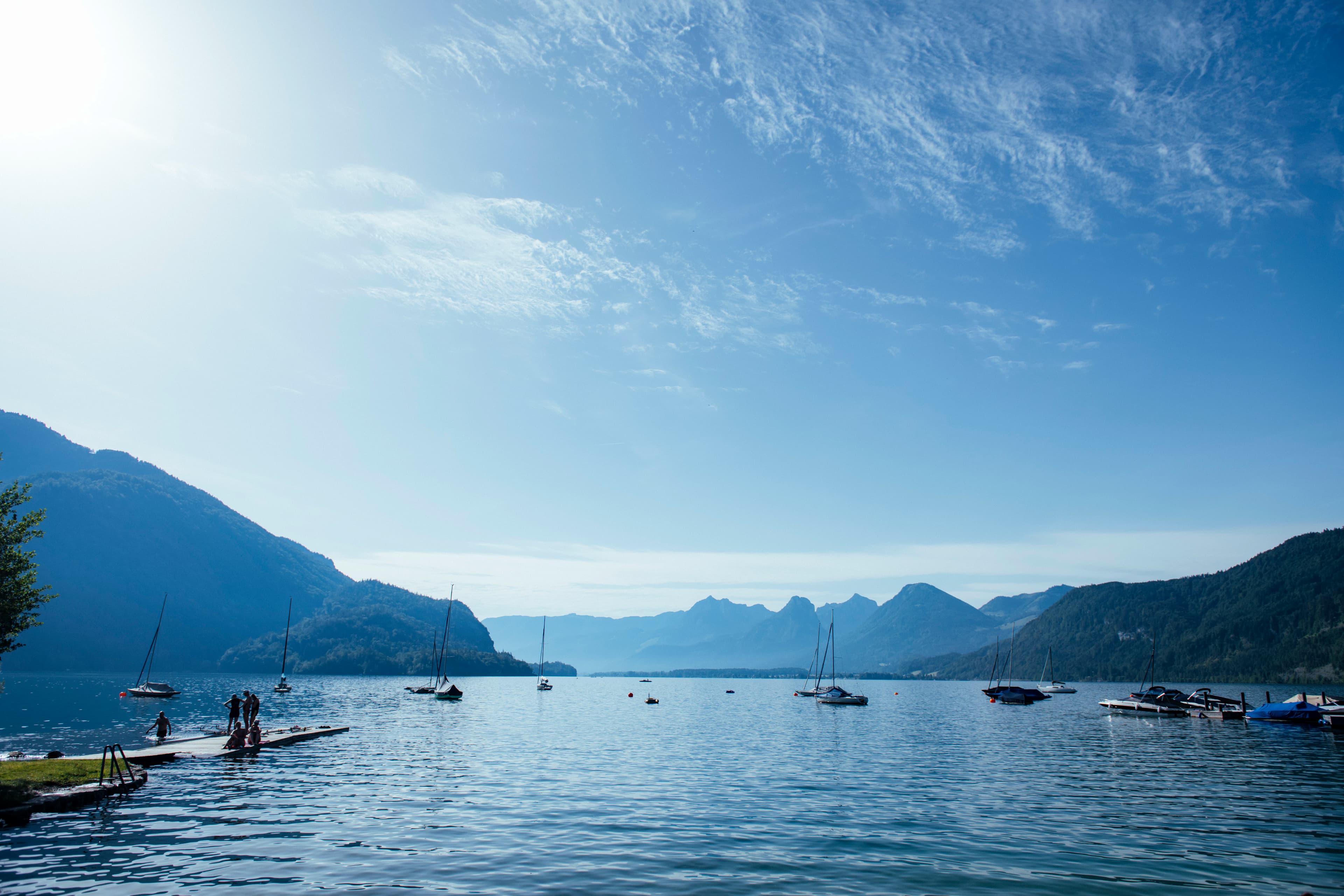
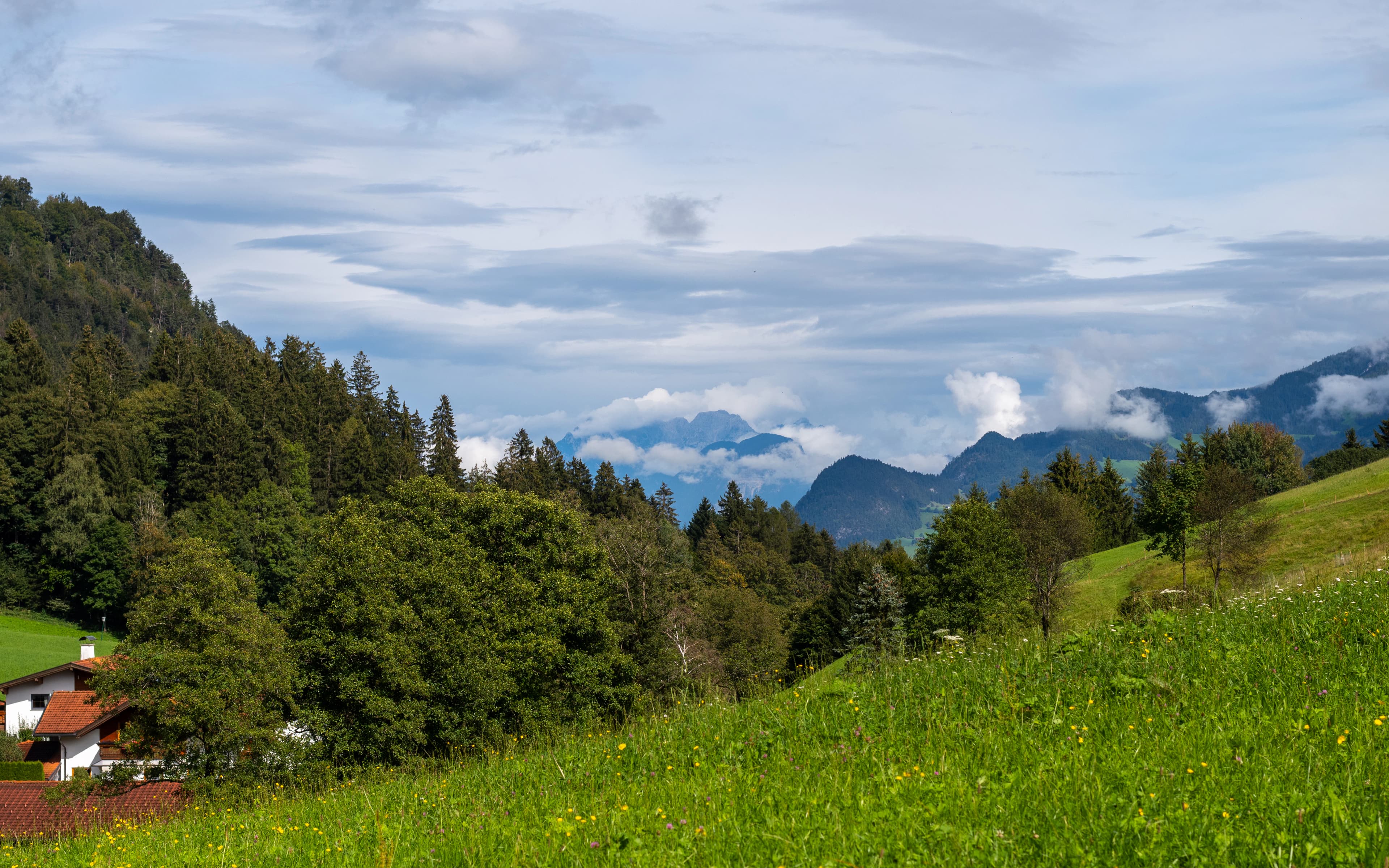
Achensee is the largest lake in Tyrol and is rightly referred to as the "Sea of the Tyroleans." Nestled between the Karwendel Mountains and the Brandenberger Alps, the fjord-like lake extends over 900 meters in altitude and impresses with its bright turquoise water, which achieves remarkable clarity in summer. For German vacationers, Achensee is a dream destination that can be reached in just a few hours by car from Munich, yet still conveys a sense of complete seclusion. The region offers a diverse activity program: In summer, hiking trails of all difficulty levels lure through the Karwendel Nature Park, mountain biking trails with breathtaking panoramas, and water sports such as sailing, surfing, and stand-up paddling on the crystal-clear lake. The historic Achensee Railway, a steam-powered cog railway from 1889, connects Jenbach in the Inn Valley with the lakeshore and is an attraction in itself. In winter, the region transforms into a cross-country skiing and winter hiking paradise, while the nearby ski areas Christlum and Rofan offer family-friendly slopes. The five towns by the lake – Achenkirch, Maurach, Pertisau, Steinberg, and Wiesing – combine Tyrolean coziness with modern infrastructure. Numerous alpine huts serve hearty Tyrolean cuisine with a view of the mountain panorama, and the Atoll Achensee adventure spa provides entertainment even in rainy weather. Achensee is the perfect place for those who love both mountains and water.

lakemountainstyrol
an empty road with a mountain in the background

Attersee

Attersee is the largest lake entirely located in Austria and the crown jewel of the Salzkammergut - a massive alpine lake that stretches over 20 kilometers in length and reaches depths of up to 169 meters, with its incredibly clear turquoise water reminiscent of a Caribbean lagoon, framed by the snow-capped peaks of the Northern Limestone Alps. Gustav Klimt, Austria's most famous painter, spent his summers here and immortalized the light and colors of Attersee in some of his most famous landscape paintings. The water quality of Attersee is legendary - visibility of up to 25 meters makes it one of the clearest lakes in Europe. The turquoise-green water, which reaches a pleasant 24 degrees in summer, is excellent for swimming, diving, and sailing. Attersee is one of the best sailing areas in the Alps, and regularly blowing thermal winds also make it a paradise for surfers and kitesurfers. Divers find submerged tree trunks, steep walls, and freshwater fauna in an underwater world of almost maritime clarity. On the western shore of the lake lies the charming village of Nussdorf, where Gustav Klimt painted his famous lake pictures during the summer months from 1900 to 1916. The Klimt theme trail leads to the original painting locations, where today reproductions of the paintings stand next to the real landscape - a fascinating comparison between art and nature. The Villa Paulick in Seewalchen, where Klimt stayed, is now a museum. Further south, Schloss Kammer, also a Klimt motif, delights with its picturesque location directly on the lake shore. The hiking opportunities around Attersee are diverse. The Attersee circular hiking trail leads around the entire lake over 56 kilometers and can be hiked in stages. The peaks of the Höllengebirge on the eastern shore offer challenging mountain tours with spectacular views of the turquoise water. At the southern shore, the Weißenbach flows into the lake, and here one can hike in the footsteps of the saltworks to the historic salt storage sites of the region. From Germany, Attersee can be reached via the highway from Munich in just over two and a half hours. Salzburg is just under an hour away, and Linz Airport can be reached in 40 minutes. The region offers an excellent tourist infrastructure with guesthouses, hotels, and holiday apartments directly by the lake, without the over-commercialization of some Tyrolean tourist hotspots.

SalzkammergutKlimtAlpine Lake
black and white motorcycle parked beside the building

Millstätter See

The Millstätter See is Carinthia's tranquil gem - a deep blue alpine lake that majestically stretches between the Nock Mountains and the Millstätter Alps. With a length of almost 12 kilometers, a depth of up to 141 meters, and summer water temperatures of up to 26°C, it is one of the warmest and simultaneously deepest alpine lakes in Austria. Its water shimmers in an almost surreal deep blue reminiscent of Scandinavian fjords. Unlike the bustling Wörthersee or the party-loving Faaker See, the Millstätter See has preserved its serenity. Here, there are no party miles and no jet ski armadas - instead, one swims in crystal-clear water, paddles silently on a stand-up board over the mirror-like lake, or hikes along the scenic trails with views of the mountain backdrop. The south-facing location ensures particularly many hours of sunshine and an almost Mediterranean flair. The town of Millstatt, which gives the lake its name, enchants with its historic center around the Benedictine monastery from the 11th century. The Romanesque cloister is one of the most impressive in all of Austria. In the summer months, the Millstätter Music Weeks take place, bringing high-profile classical concerts to the historic backdrop of the monastery. The Granatweg on the Millstätter Alpe offers a unique hiking experience - here, one can search for and find the red semi-precious stone, the region's landmark. From Germany, the Millstätter See can be reached via the Tauern Autobahn in about four to five hours. The nearest airports are Klagenfurt (80 km) and Salzburg (180 km). The bathing season lasts from June to September, with the lake already reaching pleasant temperatures from May. Holiday apartments and guesthouses by the lake offer excellent value for money compared to the more famous Carinthian lakes.

Alpine LakeCarinthiaSwimming
Turquoise lake surrounded by green mountains at sunset

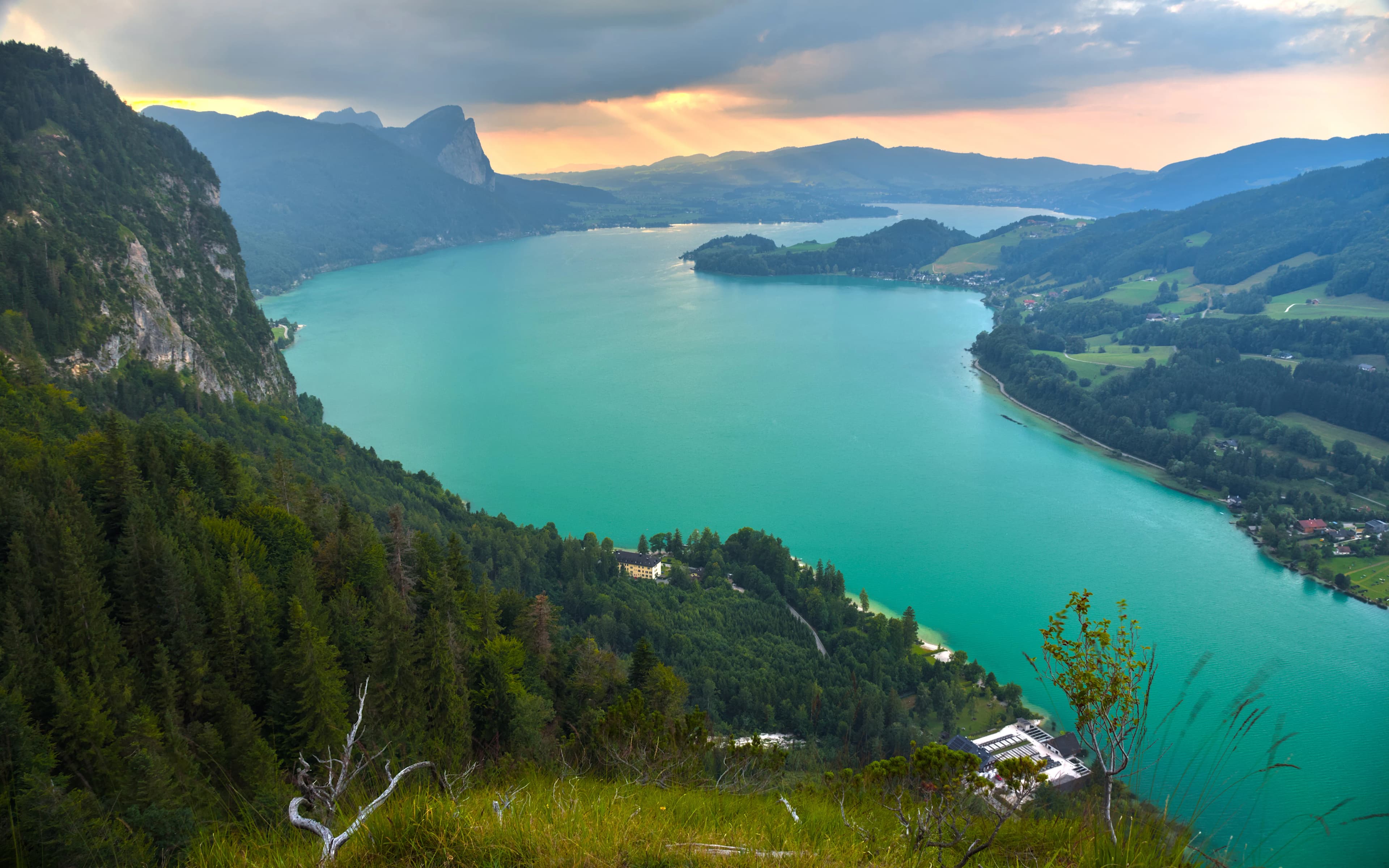
Mondsee

Mondsee is one of the warmest bathing lakes in the Salzkammergut and a place that gained worldwide fame through the film The Sound of Music - the famous wedding scene was filmed in the magnificent Basilica of St. Michael on the shores of the lake. However, even without Hollywood glamour, Mondsee is a gem: a deep blue alpine lake framed by the mighty cliffs of Drachenwand and Schafberg, stretching 11 kilometers through a sun-drenched valley and reaching water temperatures of up to 27°C in summer. The town of Mondsee, located on the northeast shore, enchants with its historic town center dominated by the imposing Basilica of St. Michael. The former collegiate church from the 15th century impresses with its seven baroque side altars and the Gothic portal, and visitors from all over the world pilgrimage here to see the site of the cinematic dream wedding. The marketplace in front, with its cafés and shops, has a relaxed, almost Mediterranean atmosphere, especially noticeable on warm summer evenings. The Drachenwand, which rises almost vertically 1,060 meters on the western shore of Mondsee, is one of the most spectacular via ferrata destinations in the Eastern Alps. The via ferrata leads over exposed rock bands and a rope bridge to a summit with panoramic views over Mondsee and the neighboring Attersee. For those less adventurous, the lakeside round offers a leisurely bike ride through picturesque villages, orchards, and bathing spots. The pile dwelling museum on the shores of Mondsee documents a fascinating archaeological discovery: the UNESCO World Heritage pile dwellings, whose remains were found on the lakeshore, prove that people settled here over 5,000 years ago. The Mondsee culture, one of the oldest cultures in Central Europe, takes its name from this lake. From Germany, Mondsee can be reached in just over three hours from Munich via the highway. Salzburg is only 30 kilometers away and can be reached by bus or car in 30 minutes. The bathing season lasts from June to September, and the lake is also an excellent sailing area. In winter, the surrounding ski areas at Wolfgangsee and in the Fuschlsee region offer snow reliability and slopes for all skill levels.

SalzkammergutSound of MusicAlpine Lake
green trees near blue sea under blue sky during daytime

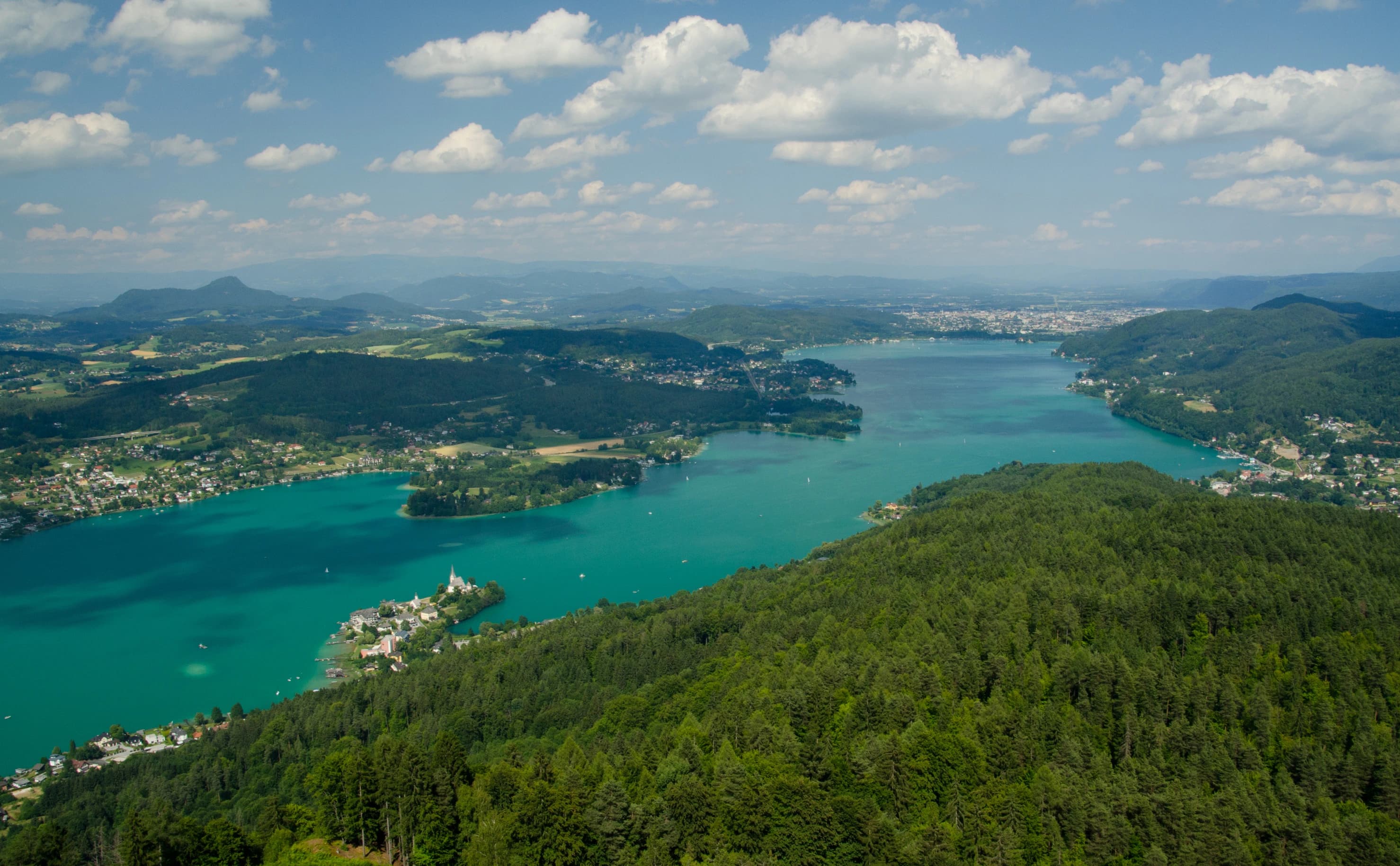
Wörthersee

Lake Wörthersee in Carinthia is one of the warmest bathing lakes in the Alps, reaching water temperatures of up to 27°C in summer. With its bright turquoise color, surrounded by gentle hills and elegant villas from the Belle Époque, the lake has exuded a glamorous flair for over 150 years. Even during the Austro-Hungarian monarchy, Lake Wörthersee was a summer retreat for the nobility and artists — Johannes Brahms, Gustav Mahler, and Hugo Wolf composed some of their greatest works here. Velden on the western shore is the most glamorous spot on the lake, known for its casino and the TV series “A Castle on Lake Wörthersee.” Pörtschach enchants with its blooming peninsula and elegant beach promenades. Klagenfurt, the Carinthian capital on the eastern shore, surprises with its charming old town and the Europapark. The historic beach facilities with their wooden piers and cabins are architectural gems and shape the image of the lake. Sports enthusiasts can enjoy sailing, wakeboarding, stand-up paddling, and diving. The Wörthersee cycling path leads around the entire lake for 42 kilometers, and the surrounding hills offer wonderful hiking opportunities with lake panoramas. Culinary delights include fish specialties like Wörthersee whitefish, Carinthian cheese noodles, and excellent wines from the nearby southern slopes. The Wörthersee shipping service connects the lakeside towns and offers stylish evening cruises at sunset.

bathing lakesummernightlife
a group of people rowing boats

Wolfgangsee

The Wolfgangsee is one of the most beautiful lakes in the Salzkammergut and became world-famous through the operetta "Im Weißen Rössl" — the hotel of the same name actually exists and is located directly on the shore in St. Wolfgang. With its crystal-clear, turquoise-green water and a length of about ten kilometers nestled between gentle mountains, the Wolfgangsee is the epitome of Austrian summer freshness, which already attracted Emperor Franz Joseph and the Viennese society. The Schafbergbahn, Austria's steepest cog railway since 1893, steams from St. Wolfgang up to the 1,783-meter-high Schafberg. Upon arrival at the top, one of the most magnificent views of the entire Salzkammergut awaits: up to 13 lakes can be seen simultaneously in clear weather. The pilgrimage site of St. Wolfgang houses one of the most significant late Gothic artworks in Europe, the Pacher altar in the pilgrimage church. On the opposite shore, St. Gilgen, the birthplace of Mozart's mother, attracts visitors with its charming town center and the Zwölferhorn cable car. In summer, beach facilities, sailing schools, and SUP rental stations invite water sports enthusiasts, while hikers can enjoy the landscape on the pilgrimage path from St. Wolfgang or the panoramic path around the lake. The annual Wolfgangsee Advent with illuminated ships on the lake is one of the most atmospheric Advent experiences in all of Austria.

RomanticLakesTradition
black and white motorcycle parked beside the building

Neusiedler See

Lake Neusiedl is Europe's second-largest steppe lake and the only one of its kind in Central Europe — a UNESCO World Heritage site on the Austrian-Hungarian border. With an area of 315 square kilometers but an average depth of only 1.8 meters, it is an unusual body of water: windy, warm, and surrounded by a vast reed belt, which is the second largest in Europe after the Danube Delta. The Pannonian climate with hot summers and mild autumns makes Lake Neusiedl the northernmost steppe lake in Europe and creates ideal conditions for viticulture. The wine towns of Rust, Podersdorf, Illmitz, and Oggau line the shore and invite visitors to wine tastings in historic cellars. The Neusiedler See-Seewinkel National Park protects a unique landscape of salt lakes, pasture lands, and reed beds, which is home to over 340 bird species — including herons, spoonbills, and great bustards. For water sports enthusiasts, the lake offers perfect conditions for sailing, surfing, and kiting due to its shallow depth and steady winds — Podersdorf is the center of the scene. The approximately 135-kilometer-long Neusiedler See cycling path circles the entire lake (including the Hungarian side) and is one of Austria's most popular cycling tours. The lake festival in Mörbisch and the steppe animal park are additional attractions. In autumn, when the grape harvest begins and migratory birds rest at the lake, the region reveals its special charm.

UNESCOCyclingWine

Regions

fog covered forest

Arlberg

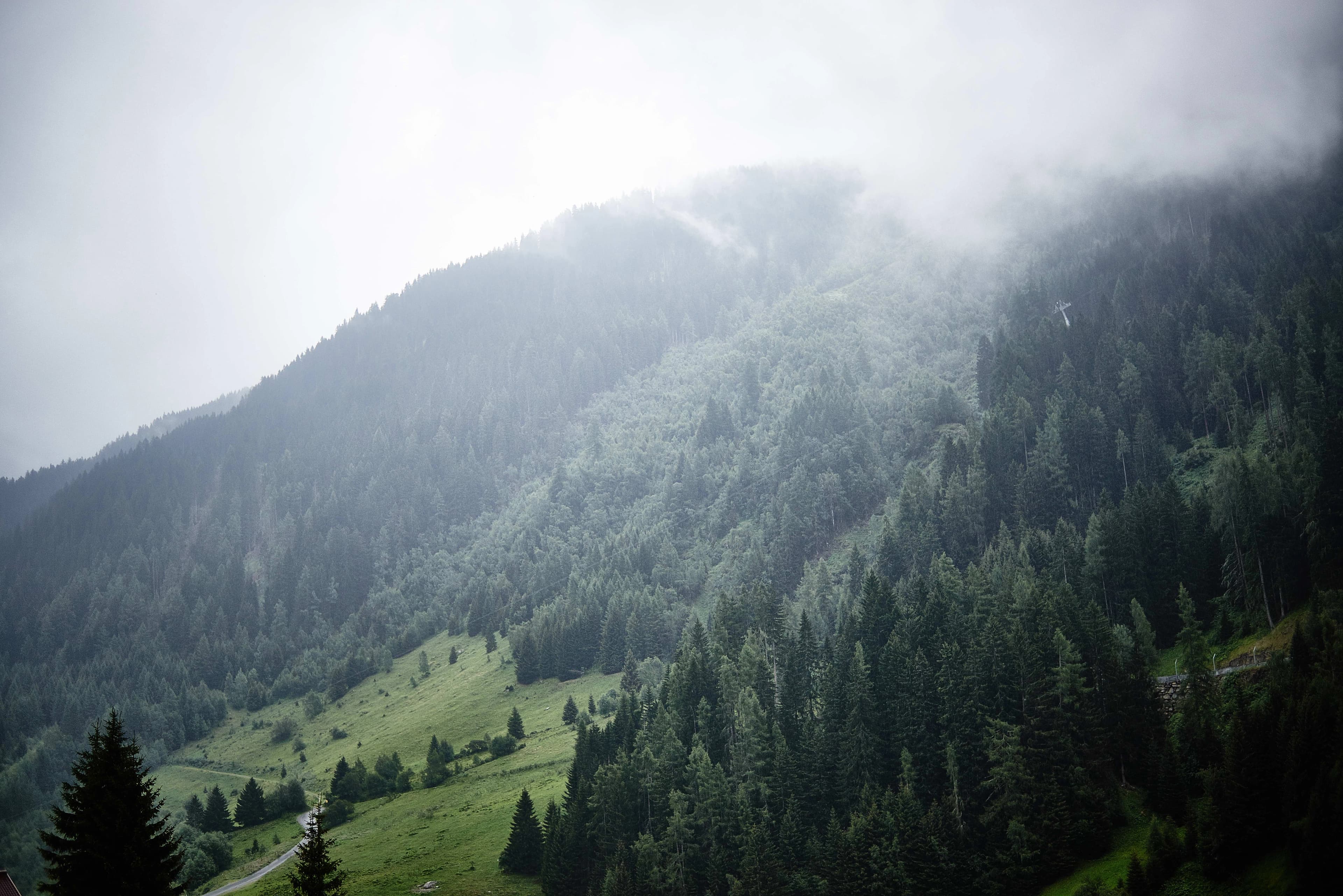
The Arlberg is the cradle of alpine skiing and one of the most legendary winter sports regions in the world. Here, on the mountain pass between Tyrol and Vorarlberg, the first ski club in the Alps was founded in 1901, and in 1922 Hannes Schneider developed the Arlberg technique, which revolutionized modern skiing. Today, the Ski Arlberg area connects the towns of St. Anton, St. Christoph, Stuben, Lech, Zürs, Warth, and Schröcken into one of the largest interconnected ski areas in the world with 305 kilometers of slopes and 200 kilometers of variant runs. St. Anton am Arlberg is the vibrant heart of the region – known for challenging slopes, legendary après-ski at the Mooserwirt bar, and an international atmosphere. Lech and Zürs, on the other hand, exude refined elegance: here, the Dutch royal family vacations, and the gourmet offerings with several award-winning restaurants are unmatched in the Alps. Warth-Schröcken on the Vorarlberg side is considered the snowiest place in Austria. In summer, the Arlberg reveals another side: blooming alpine meadows, crystal-clear mountain lakes, and challenging via ferratas attract hikers and climbers. The Grüne Ring in Lech is a scenic circular hiking trail, and the Formarinsee hike leads to the most beautiful place in Austria (voted in 2015). The Arlberg combines sporting challenge, luxury, and nature experience like hardly any other Alpine region – and is reachable from southern Germany in under three hours.

skiingaprès-skiluxury
a mountain range with trees and clouds

Kleinwalsertal

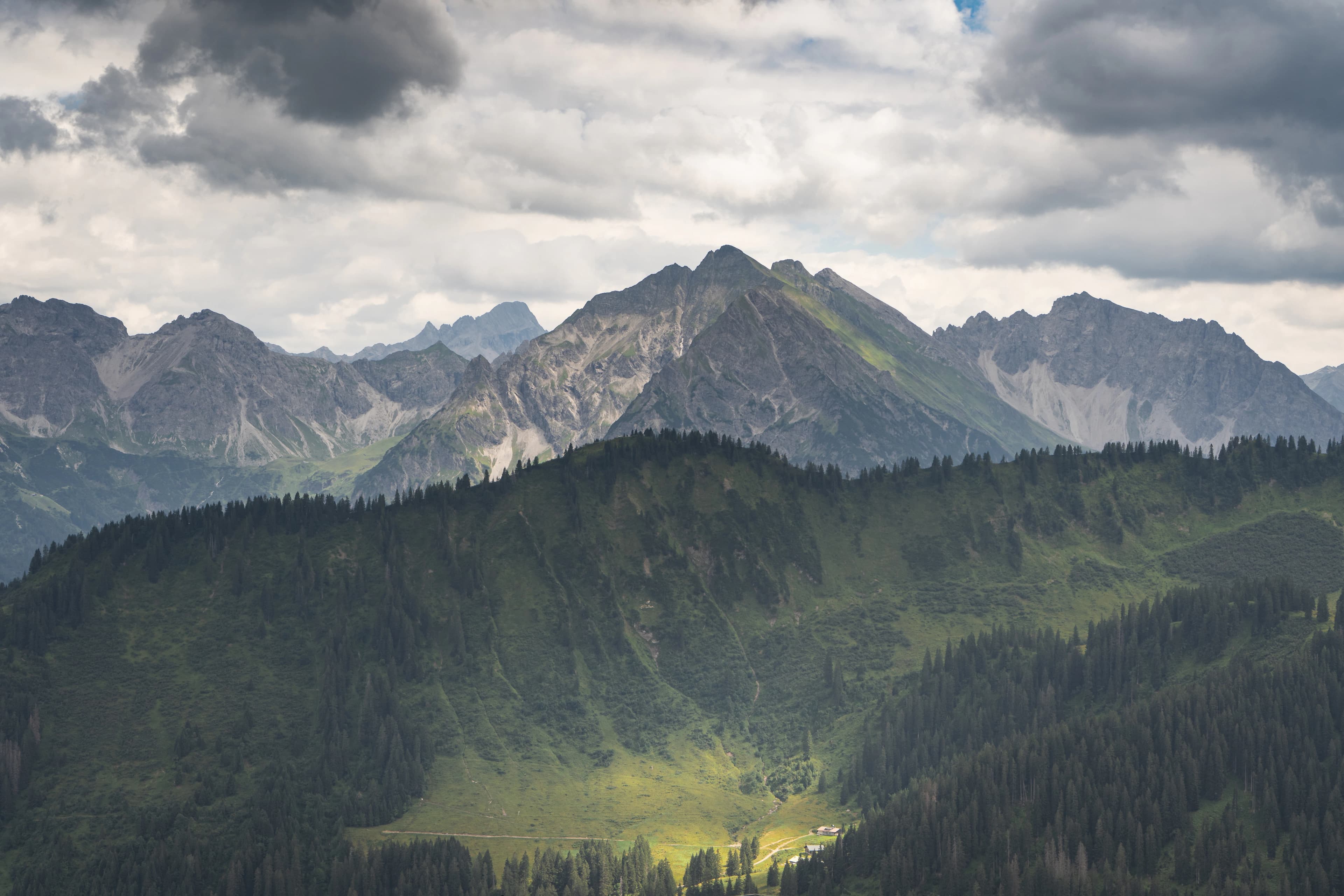
The Kleinwalsertal is a geographical curiosity of the first order: an Austrian high valley that can only be accessed from Germany. The municipality of Mittelberg, with its villages of Riezlern, Hirschegg, and Baad, politically belongs to Vorarlberg in Austria, but is cut off from Austria by high mountains and can only be reached via the road from Oberstdorf in the Allgäu — a customs exclusion area with its own character. This unique location between two nations has created a valley that combines the best of both worlds: Austrian coziness and hospitality with German accessibility and infrastructure. You pay in euros, use the German mobile network, and still enjoy Austrian cuisine and Walser culture. The Walserhaus in Riezlern documents the history of the Walser, a Alemannic ethnic group that emigrated from Valais to the high Alps in the 13th century, bringing their own culture, language, and architecture. The typical Walser wooden houses with their wide shingle roofs still shape the valley today. In winter, the Kleinwalsertal, together with Oberstdorf, forms the Oberstdorf-Kleinwalsertal ski area with 130 kilometers of slopes and the famous ski flying area at Nebelhorn. In summer, the valley is a hiker's paradise with over 185 km of marked trails, the Gottesacker plateau — a moon-like karst formation — and crystal-clear mountain streams.

MountainsSkiingHiking

Montafon

The Montafon is a 39-kilometer-long valley in southern Vorarlberg, stretching from Bludenz to the Silvretta Bielerhöhe, framed by the impressive backdrop of the Silvretta, Rätikon, and Verwall mountain ranges. Eleven charming mountain villages – including Schruns, Tschagguns, Gaschurn, and St. Gallenkirch – line the Ill like pearls and preserve a unique Montafon culture with traditional dialect, ancient customs, and characteristic wooden architecture. In winter, the ski areas Silvretta Montafon, Golm, and Gargellen combine to form one of the largest ski associations in Vorarlberg with 295 kilometers of slopes. Silvretta Montafon is particularly popular among sporty skiers due to its steep slopes, while Golm delights families with its Alpine Coaster and forest rope park. Ernest Hemingway spent two winters in Schruns in the 1920s and incorporated the Montafon mountain world into his novel Fiesta. In summer, the Silvretta High Alpine Road, one of the most spectacular panoramic roads in the Alps, leads to the Silvretta reservoir at 2,030 meters, while the Montafon hut circuit takes you through the three mountain ranges in six stages. The Montafon Activity Park offers via ferratas, canyoning, and rafting on the Ill. The Montafon stone sheep and the traditional Sura Kees cheese production make the region unique in culinary terms. From southern Germany, Montafon can be reached via the A14 and the Arlberg Tunnel or the scenic route over the Arlberg Pass.

skiingvorarlbergsilvretta
black and white motorcycle parked beside the building

Stubaital

The Stubaital south of Innsbruck is one of the most impressive high valleys in the Alps, combining everything that mountain and winter sports enthusiasts could wish for in a compact area. From the gentle alpine meadows at Schönberg to the eternal ice of the Stubaier Glacier at over 3,200 meters, a landscape of breathtaking diversity unfolds, allowing glacier skiing from October to June. The Stubaier Glacier is Austria's largest glacier ski area and offers the highest viewing platform in Tyrol – the "Top of Tyrol" – at 3,333 meters. In summer, the valley transforms into a hiking paradise with the famous Stubaier Höhenweg, one of the most beautiful high-altitude hiking trails in the Alps, which leads from hut to hut over seven stages through the fascinating high mountain world. The four towns in the valley – Schönberg, Mieders, Telfes, and Neustift – maintain their authentic Tyrolean character with traditional farms, cozy inns, and warm hospitality. The Stubaier WildeWasserWeg trilogy leads along spectacular waterfalls and gorges, while the bird of prey park at the Elferbergbahn showcases eagles, vultures, and owls in free flight. The Serlesbahnen in Mieders offers pure family fun with the longest summer toboggan run in Tyrol. For German holidaymakers, the Stubaital is particularly conveniently accessible due to its proximity to Innsbruck and excellent motorway connections.

glacierskiinghiking

Tyrol

Tyrol is the heart of the Austrian Alps and one of the most famous holiday regions in Europe. The federal state stretches from the Arlberg in the west to the Wilder Kaiser in the east and includes some of the most spectacular mountain landscapes of the entire Alpine arc — with over 500 peaks exceeding 3,000 meters, five glaciers, and countless crystal-clear mountain lakes. In winter, Tyrol is one of the best ski regions in the world: Legendary areas such as St. Anton am Arlberg (the cradle of alpine skiing), Kitzbühel, Ischgl, Sölden, and the Stubai Valley together offer thousands of kilometers of slopes in all difficulty levels. The Hintertux Glacier enables year-round skiing, and the après-ski culture in Ischgl and St. Anton is world-famous. In summer, the mountains transform into a paradise for hikers, climbers, and mountain bikers: The Adlerweg, Tyrol's most famous long-distance hiking trail, leads across the country in 33 stages over 413 kilometers. Innsbruck, the state capital, combines urban flair with alpine panorama like hardly any other city in the world. Tyrolean hospitality is legendary — over 1,500 managed alpine huts invite visitors to stop by, where Kasspatzln, Tiroler Gröstl, and Kaiserschmarrn are served. Culturally, the Kufstein Fortress, the Swarovski Crystal Worlds in Wattens, the baroque monasteries of Stams and Fiecht, as well as the vibrant traditions of Almabtrieb, marksmanship, and Perchten runs impress. Tyrol is the Austrian alpine experience in its most concentrated form.

AlpsSkiingHiking

Salzburger Land

The Salzburger Land combines cultural world heritage with spectacular alpine landscapes and is one of the most diverse holiday regions in Austria. At its center is the city of Salzburg, whose baroque old town has been a UNESCO World Heritage site since 1996 and attracts millions of visitors each year. However, the true Salzburger Land extends far beyond the city limits — from the gentle hills of Flachgau to the lakes of Salzkammergut and the glaciated peaks of the Hohe Tauern. In winter, the ski resorts of Obertaürn, Saalbach-Hinterglemm, and the Ski Circus Saalbach-Hinterglemm-Leogang-Fieberbrunn are among the best in the Alps. In summer, the Hohe Tauern National Park, the Grossglockner High Alpine Road, and the Krimml Waterfalls — with a drop of 380 meters, the highest waterfalls in Austria — beckon. Lake Wolfgang, Lake Fuschl, and Lake Zell offer crystal-clear bathing enjoyment against an alpine backdrop. Culinary delights abound in Salzburger Land: Salzburger Nockerln, Pinzgauer Kaspressknödel, and Kasnocken are regional classics. Over 70 managed alpine huts invite visitors to stop by. The Salzburg Festival, Advent at the Cathedral, and the traditional Perchtenlaufen provide a year-round cultural program. For families, the Eisriesenwelt in Werfen, the largest accessible ice cave in the world, and the Erlebnisburg Hohenwerfen offer unforgettable excursion destinations.

CultureAlpsLakes

Carinthia

Carinthia, Austria's southernmost province, is a sun paradise between the Alps and Mediterranean flair. With over 200 bathing lakes, including some of the warmest alpine lakes in Europe, as well as a mild climate, the region offers perfect conditions for families, active vacationers, and nature lovers alike. Lake Wörthersee is the heart of Carinthia: With water temperatures of up to 27°C in summer and its turquoise color, it resembles southern regions. The elegant resorts of Velden, Pörtschach, and Maria Wörth line the shore, combining imperial charm with modern lifestyle. Lake Faak impresses with its Caribbean turquoise and views of Mittagskogel, while Lake Millstätter boasts crystal-clear drinking water and forested shores. The state capital Klagenfurt enchants with its Renaissance city center, the Lindwurm Fountain — the city's landmark, which is based on an old dragon legend — and the picturesque Europapark by Lake Wörthersee. Minimundus, the miniature world with over 150 models of famous buildings, is a highlight for families. For mountain enthusiasts, the Grossglockner High Alpine Road is a must: The 48-kilometer panoramic road leads to an altitude of 2,504 meters and offers views of Austria's highest mountain (3,798 m) and the Pasterze, the largest glacier in the Eastern Alps. The Nockalmstraße and the via ferrata at the Großen Kinigat complement the alpine offerings. Carinthia is also a culinary insider tip: Carinthian cheese noodles, Reindling, and fish straight from the lake shape the regional cuisine.

bathing lakesnaturesummer
a city with many buildings and mountains in the background

Vorarlberg

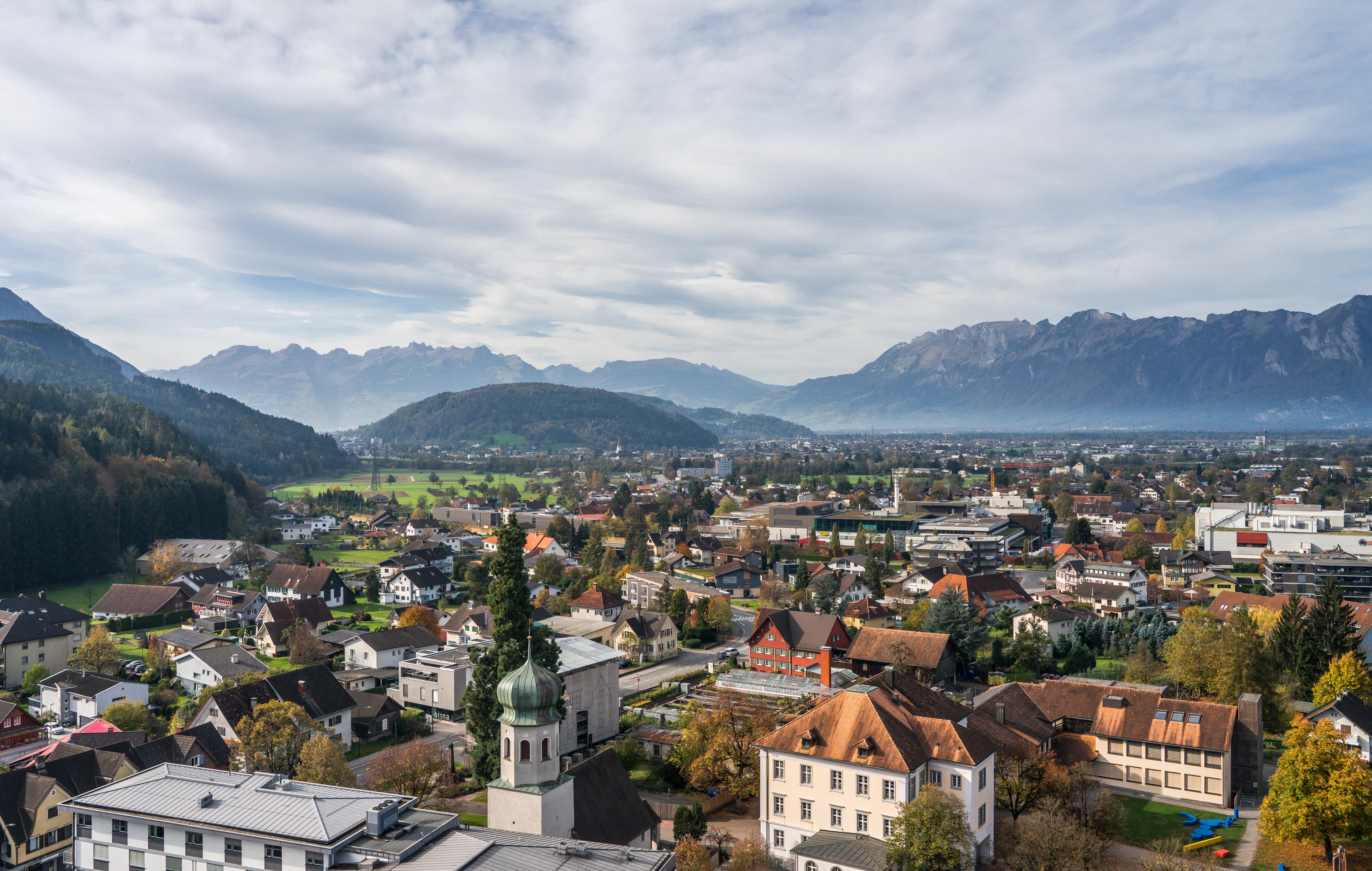
Vorarlberg, Austria's westernmost and smallest federal state, surprises with a fascinating mix of alpine natural beauty, contemporary architecture, and a vibrant cultural scene. The Bregenz Festival, where a spectacular floating stage is erected on Lake Constance every summer, is one of the most significant cultural festivals in Europe. Up to 7,000 spectators experience opera and music performances against the unique backdrop of the lake and the Swiss Alps — a cultural experience that is unmatched worldwide. The Bregenzerwald, just a few kilometers from the state capital, uniquely combines traditional wooden construction with modern architecture. The Werkraumhaus exhibition in Andelsbuch shows how contemporary design and craftsmanship tradition merge. The Cheese Road leads through 22 dairies, where mountain cheese, alpine cheese, and the spicy Vorarlberger Sura Kees are produced according to ancient traditions — a paradise for gourmets. At Arlberg, the cradle of alpine skiing, world-class ski resorts like Lech, Zürs, and Stuben, together with St. Anton, form the largest contiguous ski area in Austria. Over 300 kilometers of slopes, legendary powder snow, and elegant huts make Arlberg a dream destination for winter sports enthusiasts. In summer, the slopes transform into a hiking paradise with panoramic trails like the Grünen Ring or the Lechweg. The Montafon Valley in the south impresses with the Silvretta High Alpine Road and Piz Buin, Vorarlberg's highest peak at 3,312 meters. On Lake Constance, Bregenz and the island town of Lindau invite you to stroll, while cyclists enjoy the Lake Constance Cycle Path. Vorarlberg proves that great experiences do not always require great distances — everything is close together here.

Lake ConstanceCultureArchitecture

Styria

Styria, affectionately known as the Green Heart of Austria, is the second-largest federal state of the Alpine Republic and combines alpine mountain worlds, gentle wine hills, historic cities, and soothing thermal springs into a versatile travel destination. Graz, the state capital and second-largest city in Austria, delights with its UNESCO-protected old town, where Renaissance courtyards, baroque facades, and medieval alleys form a harmonious ensemble. The futuristic Kunsthaus Graz, affectionately called Friendly Alien due to its organic shape, and the Murinsel set bold architectural accents. The Schlossberg, Graz's landmark with its iconic clock tower, offers a magnificent view over the red roofs of the city to the foothills of the Alps. Graz was designated a UNESCO City of Design in 2008 and surprises with a vibrant gastronomy and creative scene. The Baürnmarkt at Kaiser-Josef-Platz is one of the most beautiful markets in Austria. Southern Styria, often referred to as the Styrian Tuscany, enchants with gently rolling vineyards, where top-quality Sauvignon Blanc, Gelber Muskateller, and Welschriesling ripen. Along the Southern Styrian Wine Road, Buschenschenken (Heurige) invite you to taste, accompanied by Brettljause and the famous Styrian pumpkin seed oil — the liquid gold of the region, which shimmers dark green and tastes nutty and intense. The Dachstein Glacier in the north of Styria offers year-round skiing and snow experiences, while the suspension bridge and the skywalk at 2,700 meters provide breathtaking views into the depths. The thermal region in the east with Bad Blumau (designed by Friedensreich Hundertwasser), Loipersdorf, and Bad Radkersburg invites relaxation. Styria is a land of pleasures — from pumpkin seed oil to apple cider to Vulcano ham.

WineGastronomyThermal Spas
green mountain beside body of water during daytime

Upper Austria

Upper Austria, the fourth largest federal state of Austria, combines the Salzkammergut, the cultural city of Linz, and the idyllic Mühlviertel, offering a variety of landscapes and experiences. In the south, the Salzkammergut shines with its world-famous lakes — Traunsee, Attersee, Hallstätter See — and the UNESCO World Heritage site Hallstatt-Dachstein, making it one of the most photogenic regions in Europe. Linz, the state capital, has undergone a remarkable transformation: from an industrial site to the European Capital of Culture in 2009. The Ars Electronica Center, an internationally leading museum for digital art and future technology, the Lentos Art Museum on the Danube, and the vibrant street art scene showcase the creative side of the city. The main square, one of the largest enclosed squares in Europe, the baroque old town, and the Linzer Torte — the oldest known cake recipe in the world (1653) — represent the traditional side. The Mühlviertel north of the Danube surprises with gentle granite hills, dense forests, a tradition of linen weaving, and a burgeoning craft beer scene. The Schlögen Oxbow, a dramatic river bend of the Danube, and the treetop walkway in Kopfing are spectacular nature experiences. The Dachstein with its ice cave, the Mammoth Caves, and the Skywalk are among the most impressive excursion destinations in the federal state. Upper Austria is also a paradise for cyclists: the Danube Cycle Path, one of the most popular long-distance cycle paths in Europe, runs right through the region.

LakesCultureUNESCO
green grass field near lake under blue sky during daytime

Lower Austria

Lower Austria, the largest federal state of Austria, encompasses the capital Vienna and offers an astonishing landscape and cultural diversity. The centerpiece is the Wachau, a 36-kilometer stretch of the Danube between Melk and Krems, which has been a UNESCO World Heritage site since 2000. Steep vineyard terraces, medieval castle ruins like Dürnstein and Aggstein, as well as the magnificent monasteries of Melk and Göttweig — both masterpieces of Baroque architecture — shape this unique cultural landscape. The Weinviertel in the northeast is Austria's largest wine-growing region and delights with gentle hilly landscapes, idyllic wine cellar lanes, and the characteristic Grüner Veltliner. In the south, the Vienna Woods impress as the green lung at the gates of Vienna, while the Mostviertel offers a natural spectacle with its blooming pear tree avenues in spring. The thermal spa line on the eastern edge of the Alps attracts with wellness and enjoyment. For nature lovers, the Danube-Auen National Park is a paradise — one of the last large river floodplain landscapes in Central Europe with beavers, sea eagles, and primeval forest-like woods. The Danube Cycle Path runs through the entire federal state as one of Europe's most popular long-distance cycling routes. Culturally, the Festspielhaus St. Pölten, the Kunstmeile Krems, and numerous castle concerts set accents throughout the year. Lower Austria combines nature experiences, wine culture, and Baroque splendor in a compact space.

WineDanubeUNESCO

Burgenland

Burgenland, Austria's easternmost and youngest federal state, surprises with its own unique character: Here, Pannonian expanses meet Austrian coziness, Hungarian influence meets Viennese culture. With over 300 sunny days a year, Burgenland is the sunniest region in Austria and a paradise for wine lovers, cyclists, and nature enthusiasts. Lake Neusiedl, a unique steppe lake and UNESCO World Heritage site, forms the heart of the country. Its vast reed belt — the second largest in Europe — is home to over 340 bird species and makes the Neusiedler See-Seewinkel National Park one of the most important bird protection areas on the continent. Around the lake, a well-developed network of cycling paths of over 500 kilometers leads through vineyards, idyllic villages, and Puszta steppes. The Burgenland wine region is famous for its robust red wines — Blaufränkisch from Mittelburgenland, Zweigelt from Lake Neusiedl, and the noble sweet Ausbruch wines from Rust enjoy an international reputation. The thermal region around Bad Tatzmannsdorf and Lutzmannsburg invites relaxation. Culturally, Burgenland shines with the Lake Festival in Mörbisch, the Opera Festival in the St. Margarethen quarry, and the Forchtenstein Castle, which houses one of the largest private weapon collections in Europe. The Burgenland cuisine with Pusztasuppe, Krautfleckerln, and Uhudler wine reflects the unique location between East and West.

WineLakeCycling

Cities

Misty mountains with evergreen forest and blue sky

Bad Gastein

Bad Gastein is one of the most unusual mountain towns in the Alps: Like an amphitheater, the Belle Époque grand hotels rise up the steep rock faces, while a powerful waterfall thunders through the town center, creating an almost surreal backdrop. Once, the European haute volée strolled through the streets – Emperor Franz Joseph, Bismarck, and Thomas Mann were among the illustrious spa guests seeking the healing radon thermal water and the mountain air. Today, Bad Gastein is experiencing a fascinating renaissance: Alongside the historic grand hotels, creative minds and young hoteliers have settled, combining the morbid charm of the Gründerzeit with contemporary design. The Felsentherme offers spectacular bathing in thermal pools carved directly into the rock, with views of the mountains. The Gasteiner Heilstollen – a former mine – is used for radon thermal therapy and helps with respiratory and joint diseases. As part of the Ski amadé ski area, 760 kilometers of slopes are available in winter, while the Graukogel is considered a snow-safe insider tip for freeriders. In summer, the Gastein Valley transforms into a paradise for hikers and mountain bikers, and the 75-kilometer Gasteiner Höhenweg offers breathtaking panoramas. The Sound & Snow Festival and various cultural festivals make Bad Gastein a year-round destination. For German guests, the journey via Salzburg and the Tauernautobahn is comfortable, and the Gasteiner Bundesstraße leads directly into the valley.

thermebelle-epoquewasserfall

Ischgl

Ischgl in the Paznaun Valley is one of the most legendary ski resorts in the Alps and is known as the "Ibiza of the Alps." The Silvretta Arena ski area connects Ischgl with the Swiss Samnaun over 239 kilometers of slopes and is among the best in the world. The notorious après-ski scene in the Trofana Arena and the huts is legendary, and the Top of the Mountain concerts for the season opening with world stars like Elton John or Robbie Williams are unique. In summer, Ischgl offers excellent mountain biking trails and hiking paths.

SkiingAprès-SkiConcerts
A mountain covered in snow under a cloudy sky

Lech am Arlberg

Lech am Arlberg is the most exclusive ski resort in Austria and has been attracting royals, celebrities, and ski enthusiasts from around the world for decades. The village at 1,450 meters impresses with its perfect combination of luxurious hotels, authentic Vorarlberg architecture, and one of the snowiest ski areas in the Alps, with an average of 7 meters of snowfall per season. The legendary White Ring — a 22-kilometer ski circuit over four villages — is considered one of the most beautiful ski circuits in the world. In summer, Lech transforms into a hiking paradise with the famous Green Ring and the Skyspace by James Turrell.

SkiLuxuryArlberg
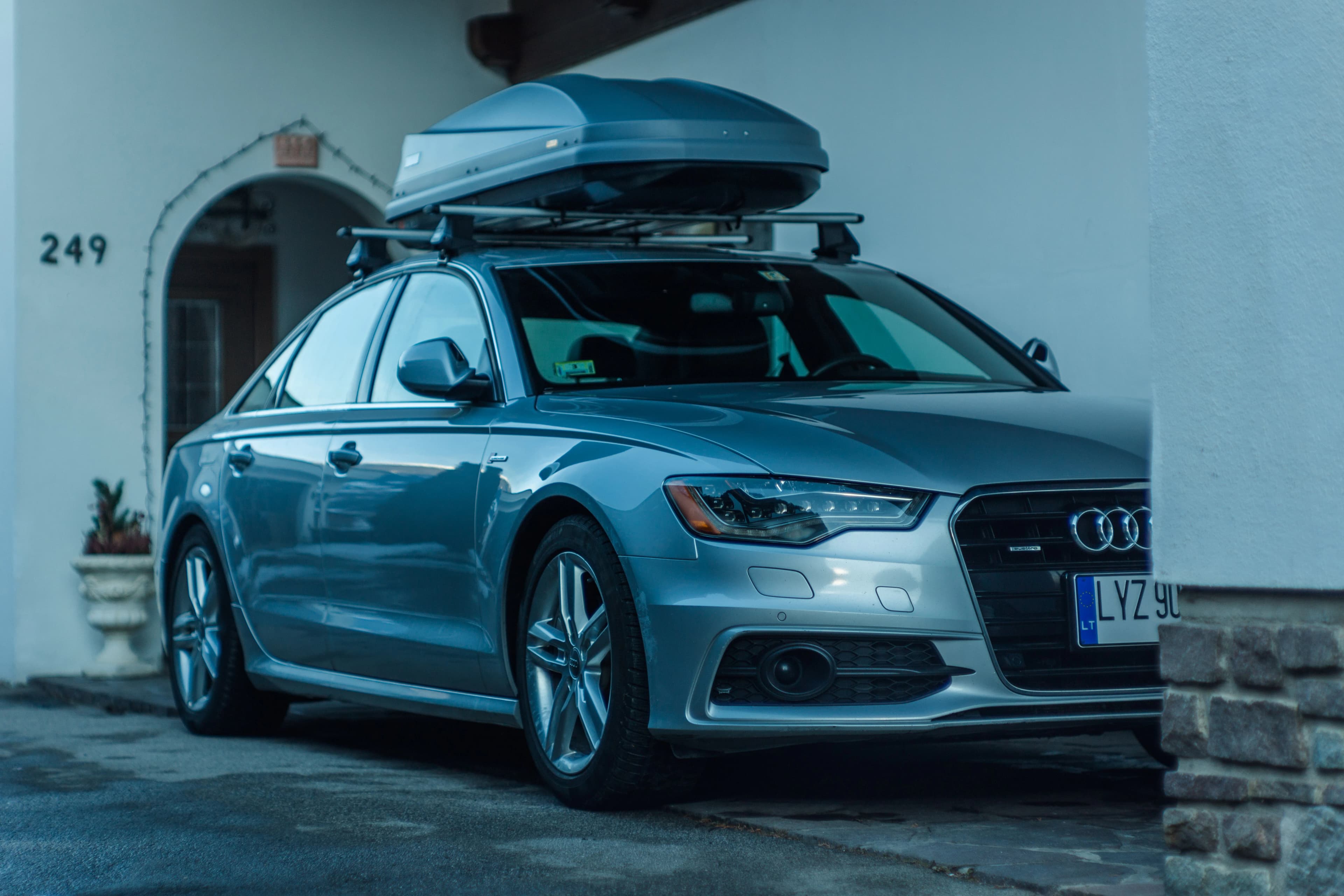
a silver car with a surfboard on top of it

Mayrhofen

Mayrhofen in the back Zillertal is the action hotspot of the Tyrolean Alps, combining top-notch winter sports with a lively après-ski scene. The Penken gondola quickly takes skiers to 142 kilometers of slopes, while the Harakiri slope, with a 78% gradient, attracts adrenaline junkies as the steepest groomed slope in Austria. In summer, the hike to the Berliner Höhenweg, one of the most beautiful high-altitude trails in the Alps, starts here. The Hintertux Glacier at the end of the valley guarantees year-round skiing enjoyment at over 3,000 meters.

SkiZillertalAction

Salzburg

Salzburg is Mozart's birthplace, a UNESCO World Heritage site, and one of the most beautiful Baroque cities in Europe. Nestled between the foothills of the Alps and the Salzach River, the city offers a backdrop that seems made for an opera — a mighty fortress, opulent churches, winding alleys, and the majestic mountain silhouette in the background. The Hohensalzburg Fortress — one of the largest medieval castle complexes in Europe — towers 120 meters above the old town and offers a breathtaking panoramic view of the city, the Salzburg lakes, and the Alps. The Getreidegasse — Salzburg's most famous shopping street — is a narrow alley adorned with wrought-iron guild signs, where Mozart's birthplace (No. 9) is located. The Salzburg Festival — one of the most significant music and theater festivals in the world — transforms the city every summer (July/August) into a stage for world-class operas, concerts, and theater performances. The Mirabell Garden, with its Baroque figures, became world-famous through the film 'Sound of Music'. The Salzburg region offers fantastic day trips: the Salzkammergut with Lake Wolfgang and Hallstatt, the Eisriesenwelt (largest ice cave in the world), the Krimml Waterfalls, and Berchtesgaden with Lake Königssee just behind the German border.

MozartFestivalBaroque

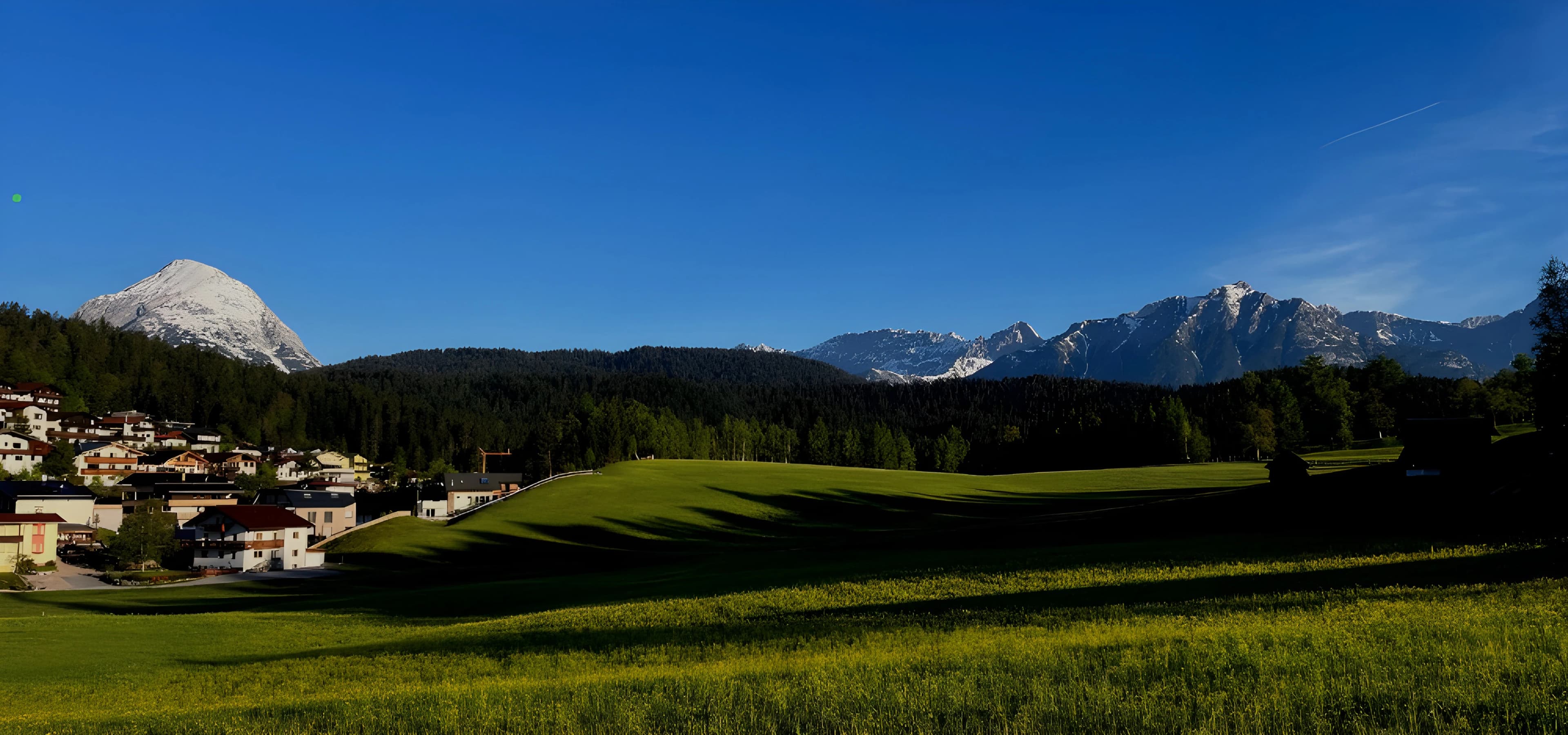
Seefeld

Seefeld in Tirol sits on a sun-drenched plateau at 1,200 meters between the Wetterstein Mountains and the Hohe Munde and has been world-famous since the Olympic Winter Games of 1964 and 1976 as a mecca for Nordic skiing. However, the charming small town with its elegant pedestrian zone, lovingly painted house facades, and mild climatic appeal is much more than a cross-country skiing paradise. In winter, 279 kilometers of well-prepared cross-country ski trails stretch across the snowy high plateau and the surrounding valleys – a paradise for both skating and classic styles. For alpine skiers, the Rosshütte and Gschwandtkopf cable cars offer clear, family-friendly slopes with views of the Zugspitze. The Nordic Academy offers professional cross-country skiing courses for beginners, and the biathlon taster course at the World Championship stadium allows vacationers to try their hand at shooting. In summer, visitors hike through lush alpine meadows to the Wildmoossee, a mysterious lake that only holds water every few years, or enjoy breathtaking views on the panoramic trail to the Reither Spitze. The Casino Seefeld brings a touch of glamour to the mountains, while the Olympia Sports and Congress Center spa offers relaxation. Its central location between Innsbruck and Garmisch-Partenkirchen makes Seefeld an ideal base for day trips in both directions. For German guests, the journey via Mittenwald or the Inn Valley motorway is quite simple.

cross-country skiingnordicolympics
A small village in the middle of a green field

Seefeld in Tirol

Seefeld in Tirol is the Olympic region for Nordic disciplines and is located on a sunny high plateau at 1,200 meters between the Karwendel and Wetterstein mountains. Twice the host of the Olympic Winter Games, Seefeld offers 279 kilometers of cross-country ski trails and is among the world's elite in Nordic skiing. The elegant town center with pedestrian zones and Belle Époque hotels exudes a refined charm. In summer, the high plateau invites golfing, the Wildsee for swimming, and the Leutaschklamm for spectacular hikes.

cross-country skiingOlympicsTyrol

Sölden

Sölden in the Ötztal is the ski resort of superlatives: three peaks over 3,000 meters with cable car access, two glaciers, and the legendary BIG3 Rallye across all summits. World-renowned for the Ski World Cup opening in October and as the filming location of the James Bond movie 'Spectre', the town attracts winter sports enthusiasts from all over Europe. The Gaislachkogl gondola takes guests to the ICE Q restaurant, which spectacularly crowns the summit. In summer, the Ötztal offers top-notch mountain bike trails, the Area 47 outdoor park, and the path to the famous discovery site of Ötzi.

SkiGlacierJames Bond
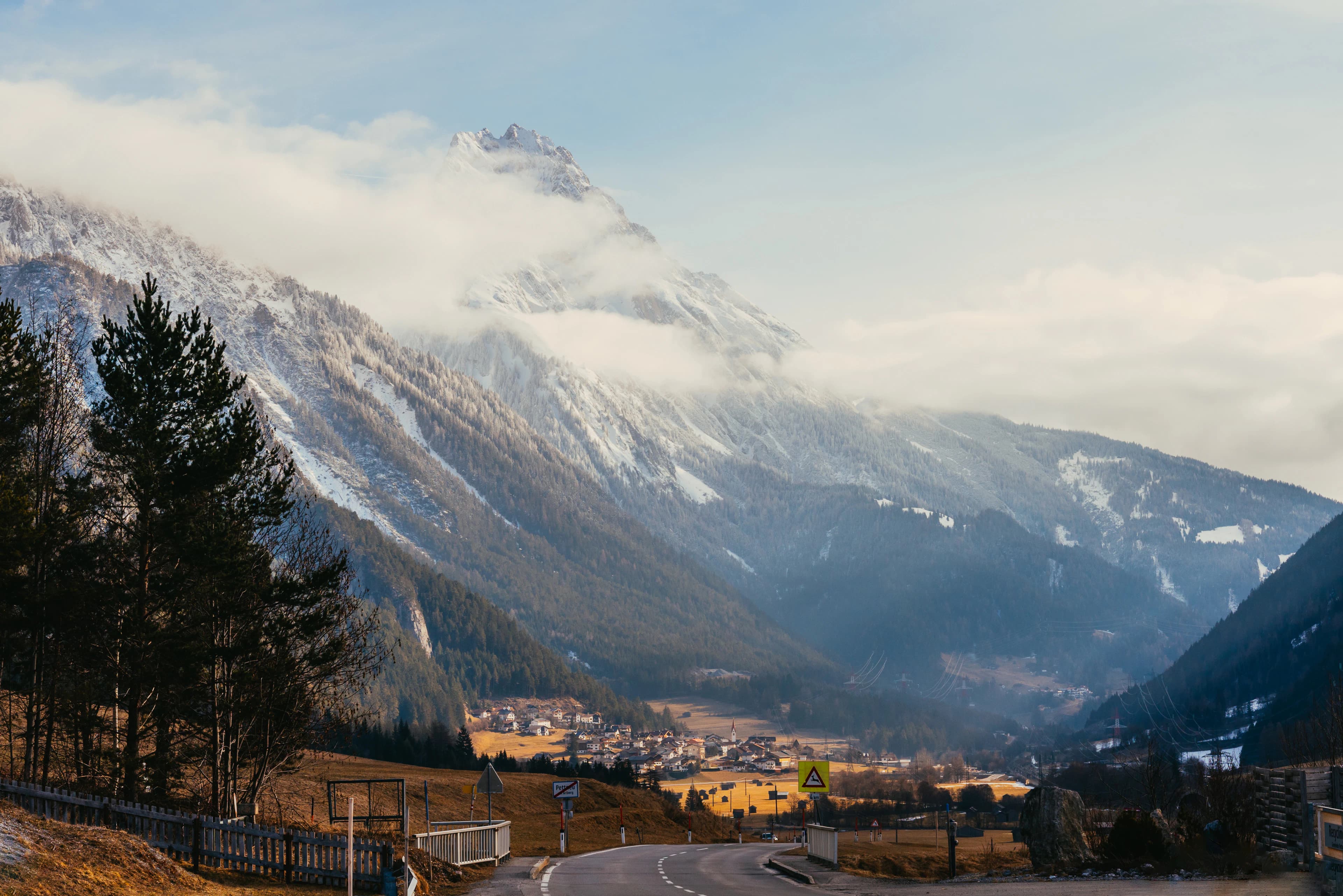
a road with a mountain in the background

St. Anton am Arlberg

St. Anton am Arlberg is the cradle of alpine skiing and one of the most legendary ski resorts in the world. In 1901, the first ski club in Austria was founded here, and to this day, the Arlberg area, with 305 kilometers of slopes, is one of the top destinations for demanding skiers. Notorious for its freeride slopes, the powder snow paradise Valluga, and the wildest après-ski scene in the Alps, St. Anton attracts winter sports enthusiasts from all over the world. In summer, the Arlberg offers top-notch mountain biking trails and alpine long-distance hiking paths.

SkiArlbergFreeride

Vienna

Vienna, the capital of Austria, is a metropolis of imperial splendor, cultural depth, and contemporary joy of living. The city on the Danube has repeatedly been voted the most livable city in the world, combining Habsburg heritage with modern cosmopolitanism. Schönbrunn Palace, with its 1,441 rooms and extensive Baroque garden, the magnificent Hofburg, and the Ringstrasse with the State Opera, the Kunsthistorisches Museum, and the Parliament form an ensemble that is unparalleled. The Viennese coffee house culture has been UNESCO Intangible Cultural Heritage since 2011: At Cafe Central, where Trotsky once played chess, at Cafe Hawelka, or at Demel, one experiences the tradition of Melange, apple strudel, and hours spent reading newspapers. Viennese cuisine — from Wiener Schnitzel to Tafelspitz to Sachertorte — is legendary, and the Heurigen in Grinzing and on Nussberg invite you to enjoy wine and views over the city. Musically, Vienna is the world capital of classical music: Mozart, Beethoven, Schubert, Brahms, and Strauss lived and worked here. The Vienna Philharmonic, the State Opera, and the Musikverein with its Golden Hall (New Year's Concert!) continue this tradition. The MuseumsQuartier, the Albertina, and the Secession with Klimt's Beethoven Frieze showcase world-class art. The Prater with its Ferris wheel, the Naschmarkt, and the vibrant scene in the Freihausviertel reveal the modern, cosmopolitan Vienna.

CultureMusicCoffee Houses

Salzburg

Salzburg, the birthplace of Wolfgang Amadeus Mozart, is a baroque masterpiece of world significance. The compact old town, a UNESCO World Heritage site since 1996, is dominated by the mighty Hohensalzburg Fortress — one of the largest fully preserved castle complexes in Europe, which has loomed over the city for over 900 years. The Cathedral, the Residence, the Franciscan Church, and the University Church form an ensemble of baroque architecture that is unique in its density. The Getreidegasse with its wrought-iron guild signs and Mozart's birthplace (No. 9) is Salzburg's most famous street and an experience for all senses. On the other side of the Salzach River, the Mirabell Garden entices with its geometric flower beds and views of the fortress — a backdrop that gained worldwide fame through the film 'The Sound of Music'. Hellbrunn Palace, with its surprising water features, has been a delightful excursion destination for 400 years. The Salzburg Festival, founded in 1920 by Max Reinhardt, Hugo von Hofmannsthal, and Richard Strauss, is the world's most significant festival for opera, drama, and concert. For six weeks in summer, the entire city transforms into a stage — the 'Jedermann' in the Cathedral Square is one of the most iconic theater performances in the world. Culinary delights include the Salzburger Nockerln, Mozartkugeln, and the Stiftsbäckerei St. Peter (since 803, the oldest bakery in Europe). The surrounding area with lakes and mountains makes Salzburg the perfect starting point for excursions into the Salzkammergut.

CultureMozartUNESCO
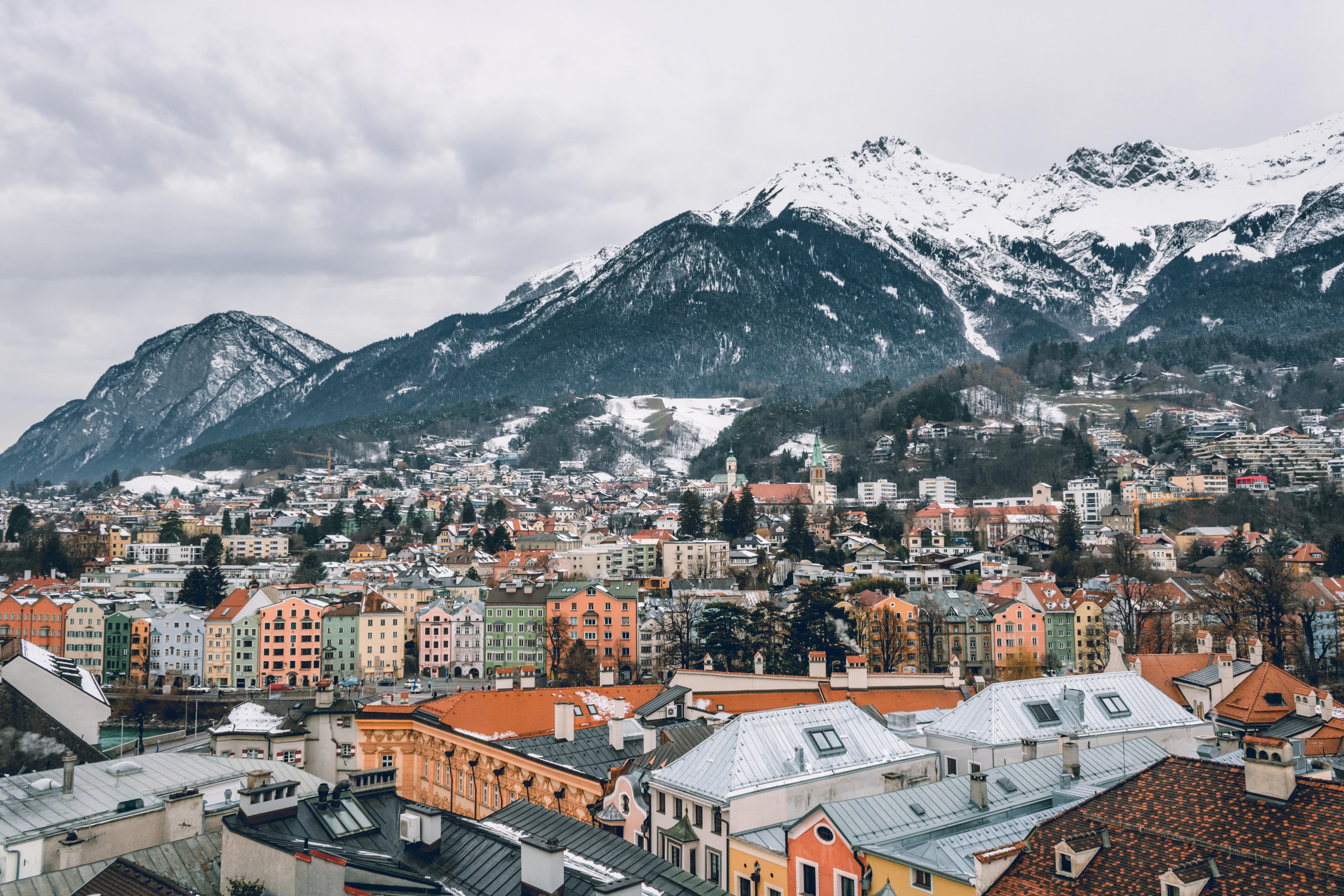
a view of a city with mountains in the background

Innsbruck

Innsbruck, the capital of Tyrol, is nestled between the impressive Nordkette and the Patscherkofel — a city where alpine panorama and imperial history uniquely combine. Innsbruck hosted the Olympic Winter Games twice (1964 and 1976), and the Bergisel ski jump designed by Zaha Hadid is now both an architectural landmark and a ski jumping arena. The Golden Roof with its 2,657 fire-gilded copper shingles, the Hofburg, and the Hofkirche with its life-sized bronze figures testify to its glorious past as a Habsburg residence city. With the Hungerburgbahn, designed by star architect Zaha Hadid, you can reach the Seegrube in just a few minutes from the old town via four futuristic stations and continue to the Hafelekar at 2,334 meters. From there, a 360-degree panorama of the Tyrolean Alps unfolds, unmatched by any other. Maria-Theresien-Straße, with a view of the Nordkette, is considered one of the most beautiful streets in Europe. Innsbruck is also a top-notch base camp for outdoor adventures: nine ski areas are within a 30-minute radius, and in summer, over 500 kilometers of hiking trails and challenging via ferratas beckon. The old town surprises with a vibrant gastronomy scene, charming cafes, and the historic Tyrolean Folk Art Museum. Whether winter sports, cultural enjoyment, or alpinism — Innsbruck combines everything in a compact space.

AlpsOlympicsArchitecture

Graz

Graz, Austria's second-largest city and the capital of Styria, is a UNESCO World Heritage site and captivates with a fascinating mix of medieval old town, avant-garde architecture, and Mediterranean flair. The historic city center, with its Renaissance courtyards, Baroque facades, and winding alleys, is among the best-preserved old town ensembles in Central Europe. The Schlossberg, the city's landmark, rises 123 meters above the center and features the famous clock tower, whose hands are unusually swapped — the large hand indicates the hours, while the small hand shows the minutes. You can reach the summit with panoramic views over the red rooftops to the Styrian vineyards via the Schlossberg funicular, an elevator through the rock, or by climbing the 260 steps of the War Path. Right on the banks of the Mur floats the Kunsthaus, affectionately called the "Friendly Alien" by the locals — a biomorphic building by Peter Cook and Colin Fournier, which was created as a landmark of the European Capital of Culture in 2003. Graz is Austria's capital of enjoyment: The South Styrian region outside the city provides excellent wines (Sauvignon Blanc, Welschriesling) and pumpkin seed oil is culinary gold. The market life pulses at Kaiser-Josef-Markt and Lendplatz, and the student scene (six universities with 60,000 students) ensures vibrant bars, cafes, and cultural initiatives. The Zeughaus with its collection of 32,000 weapons, Schloss Eggenberg (UNESCO World Heritage), and the Joanneum, the oldest public museum in the world, round off the cultural offerings.

UNESCODesignGastronomy
a white building with a brown roof under a cloudy blue sky

Linz

Linz, the capital of Upper Austria on the Danube, has undergone a remarkable transformation from an industrial site to a creative cultural city over the past decades. The designation as European Capital of Culture in 2009 marked the peak of this transformation and brought forth numerous new cultural institutions, making Linz one of the most exciting cities in Austria today. The Ars Electronica Center, internationally known as the "Museum of the Future," is a world leader at the intersection of art, technology, and society. At the Lentos Art Museum, a luminous glass cube directly on the Danube, one encounters works by Klimt, Schiele, and Kokoschka. The Tobacco Factory, a listed industrial building, has been transformed into a creative hub with start-ups, studios, and event spaces. At the same time, the main square impresses as one of the largest enclosed squares in Europe with its baroque Trinity Column. Culinary-wise, Linz has made history: The Linzer Torte, first mentioned in a recipe in 1653, is considered the oldest known cake recipe in the world and is a must-try in the city's traditional confectioneries. The Pöstlingberg, accessible by the nostalgic Pöstlingberg railway, offers a magnificent view over the city and the Danube Valley and is home to the pilgrimage church and the Grottenbahn, a popular family excursion destination. The long-distance cycling path runs through the city along the Danube, and the Pflasterspektakel transforms Linz into a huge street artist stage every summer.

TechnologyArtDanube
white concrete building near body of water during daytime

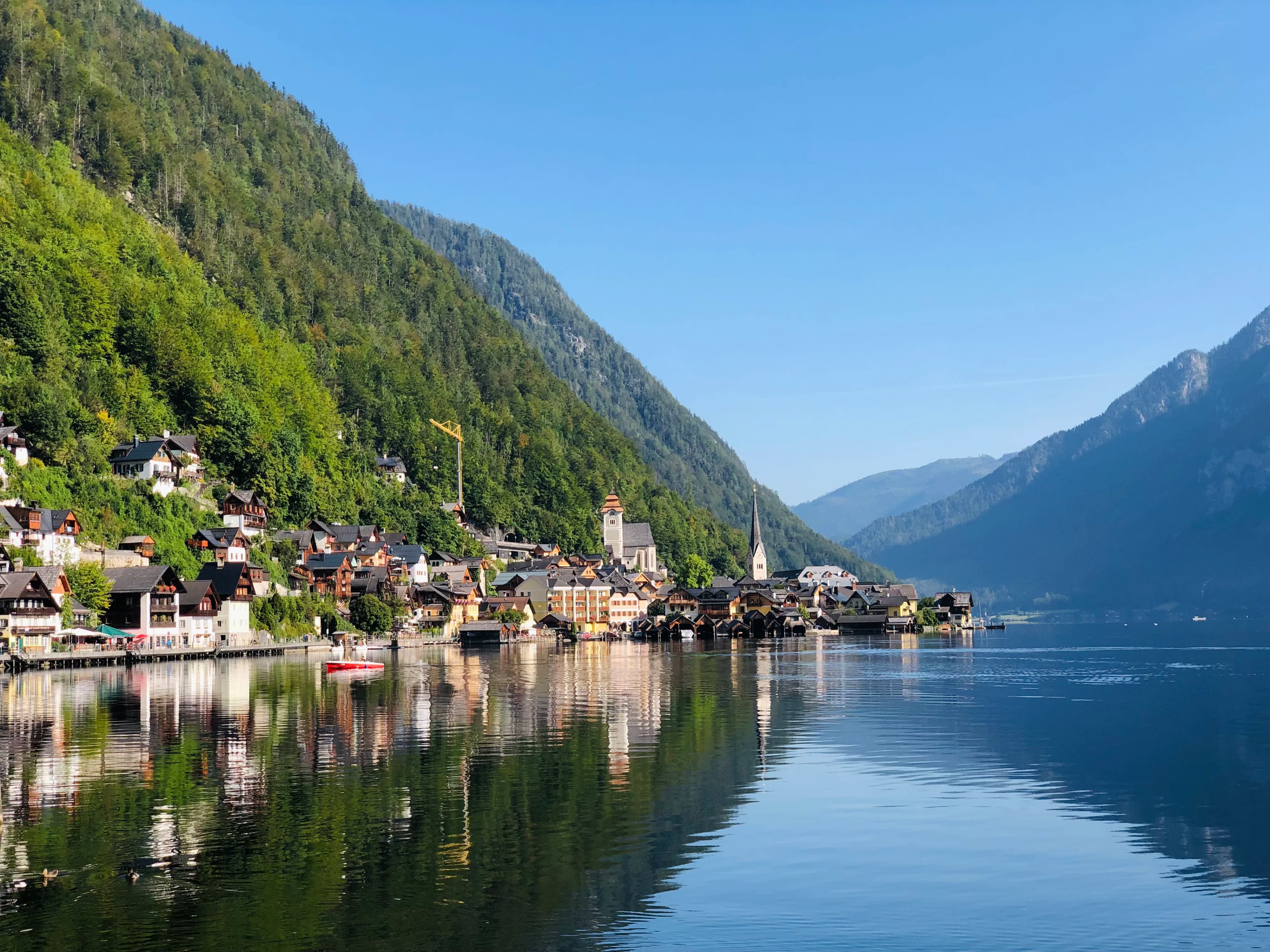
Hallstatt

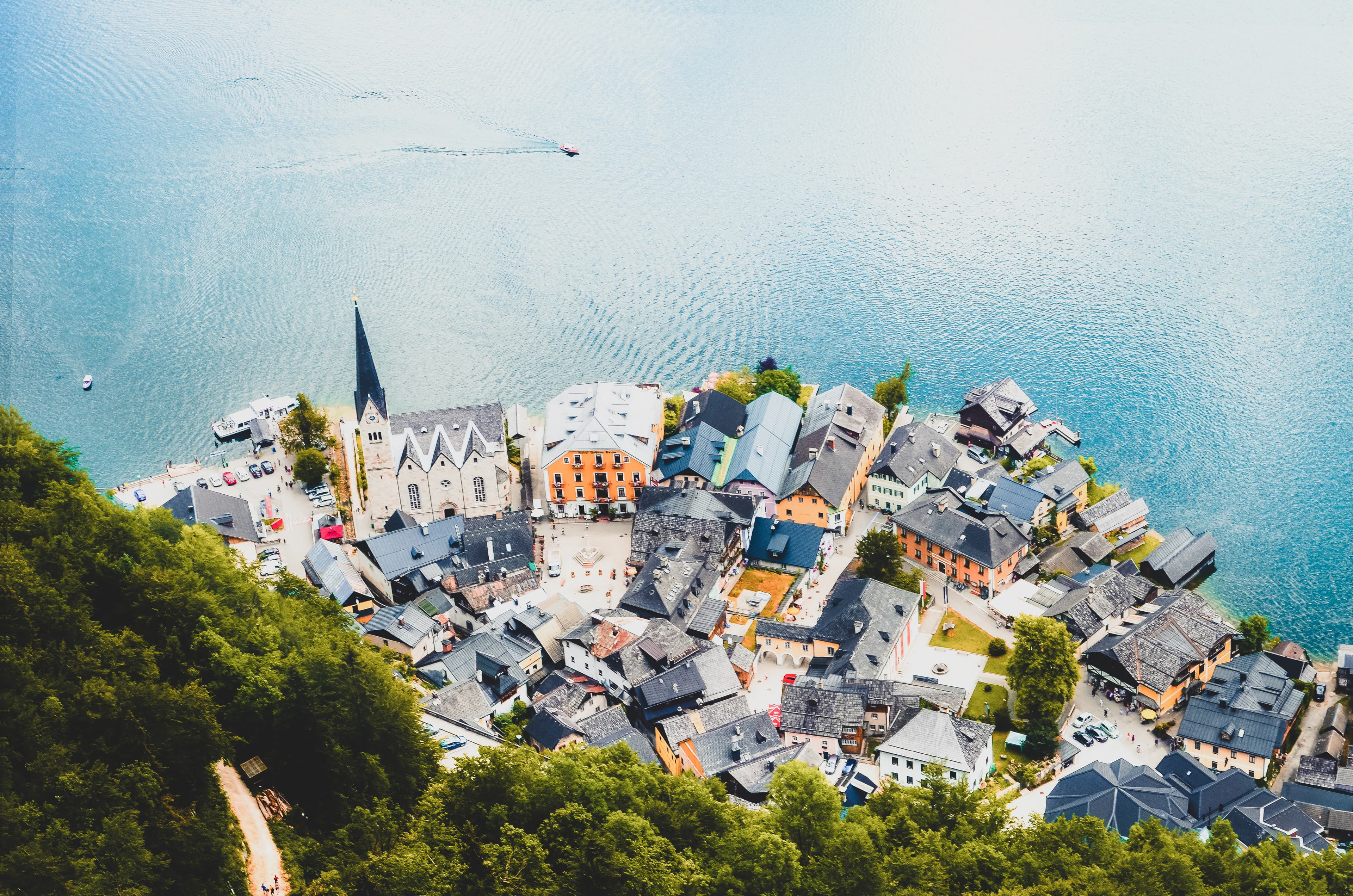
Hallstatt, a tiny village on the western shore of Lake Hallstatt in Upper Austria's Salzkammergut, is one of the most photographed places in the world. The pastel-colored houses that cling to the steep mountainside and reflect in the emerald green lake water create a postcard idyll that has been part of the UNESCO World Heritage since 1997 as part of the Hallstatt-Dachstein/Salzkammergut cultural landscape. The history of Hallstatt dates back over 7,000 years — it houses the oldest salt mine in the world, which can still be visited today. An underground slide and a salt lake deep in the mountain make the visit an experience for families as well. The finds from the Iron Age were so significant that an entire cultural epoch — the Hallstatt culture (800–450 BC) — was named after the place. The ossuary in the Michaël Chapel with over 600 artistically painted skulls is a unique sight. The Skywalk 'Welterbeblick' on the observation platform high above the village offers a breathtaking view of the lake and the Dachstein massif. The Dachstein Ice Cave, a few kilometers away, fascinates with fairy-tale ice formations. The Hallstätter See can be explored by boat, and the brine pipeline to the nearby saltworks in Ebensee is a monument to early engineering. Hallstatt is most beautiful in the early morning or late afternoon when the day visitors have departed and the village unfolds its magical silence.

UNESCOLakesMountains
a person standing next to a tree on a beach

Bregenz

Bregenz, the capital of Vorarlberg, is picturesque located on the eastern shore of Lake Constance and serves as a starting point for discoveries in the tri-border area of Austria, Germany, and Switzerland. The Bregenz Festival, which takes place every summer on the spectacular floating stage — the largest open-air stage in the world — is world-famous for staging operas against the backdrop of Lake Constance. Over 200,000 visitors annually experience performances that attract international attention due to their monumental stage constructions. The Upper Town, the medieval heart of Bregenz, sits atop a hill overlooking the lake and enchants with narrow alleys, the Martinsturm with its baroque onion dome, and historic half-timbered houses. The Kunsthaus Bregenz (KUB) by star architect Peter Zumthor is considered one of the most significant museum buildings of contemporary architecture — a luminous glass cube that showcases changing exhibitions by international artists. The Pfänder (1,064 meters), Bregenz's local mountain, can be reached by cable car in just a few minutes and offers a breathtaking panorama over the entire Lake Constance, 240 Alpine peaks, and, in Föhn weather, as far as the Black Forest. At the top, an alpine wildlife park, the cheese trail hiking path, and one of the most beautiful viewing terraces in the region await. The Bregenz lakeside parks invite you to stroll, swim, and cycle, and the Lake Constance shipping connects the city with Lindau, Constance, and the flower island of Mainau.

Lake ConstanceFestivalCulture

Zell am See

Zell am See is picturesque, located on the emerald green Zeller See, nestled between the gentle slopes of Schmittenhöhe and the glaciated peaks of the Hohe Tauern in the Salzburg Pinzgau. The unique combination of lake and high mountains makes the place one of the most versatile year-round destinations in the Alps — a summer bathing paradise and a winter snow sports mecca. In winter, the Schmittenhöhe-Zell am See ski area connects 77 kilometers of slopes with magnificent panoramic descents and views of the lake. Just a few minutes away, the Kitzsteinhorn near Kaprun, as the only glacier ski area in Salzburg, offers skiing fun up to 3,029 meters — from October to June. The Ice Arena at the summit, a panoramic platform above the eternal ice, provides an overwhelming view of over 30 three-thousanders. Together, Schmittenhöhe and Kitzsteinhorn form the Zell am See-Kaprun ski area with over 140 kilometers of slopes. In summer, the crystal-clear Zeller See invites swimming, sailing, and stand-up paddling, while the Grossglockner High Alpine Road and the Hohe Tauern National Park are just a short drive away. The Sigmund-Thun-Klamm, the Kaprun reservoirs, and the hike to Schmittenhöhe with views of Grossglockner and Kitzsteinhorn are popular summer excursions. The historic town center of Zell am See impresses with the Kastnerturm, the parish church, and cozy restaurants along the lakeshore.

lakeskiingglacier
a large building with a gate and a light on top of it

Kitzbühel

Kitzbühel, the glamorous alpine town in Tyrol's Unterland, is world-famous for the legendary Hahnenkamm race — the most dangerous and prestigious ski race in the world. Every January, the best downhill skiers in the world race down the Streif at speeds of up to 140 km/h on the steepest section of the slope (85% gradient), while 100,000 spectators put the town in a state of emergency. The Streif can be hiked in summer — only then do you truly understand the steepness. The medieval old town with its colorful facades, narrow streets, exclusive boutiques, and top-notch restaurants exudes alpine luxury with character. Unlike artificial ski resorts, Kitzbühel has a rich history that dates back to the 12th century. The parish church, the mining museum, and the historical fortifications testify to a rich past as a mining town for silver and copper. The Kitzbühel-Kirchberg ski area offers 170 kilometers of slopes and is part of the cross-border ski circus Saalbach-Hinterglemm-Leogang-Fieberbrunn. In summer, Kitzbühel transforms into a paradise for golfers (four top-class courses), hikers, and mountain bikers. The Kitzbühel Alps offer over 1,000 kilometers of marked hiking trails and numerous managed alpine huts. The Schwarzsee near the town is one of the warmest swimming lakes in Tyrol. Year-round, the casino, wellness hotels, and vibrant gastronomy attract visitors — Kitzbühel combines sportiness with elegance.

LuxurySkiingGlamour

Areas

Tree-lined path along river with distant castle on hill.

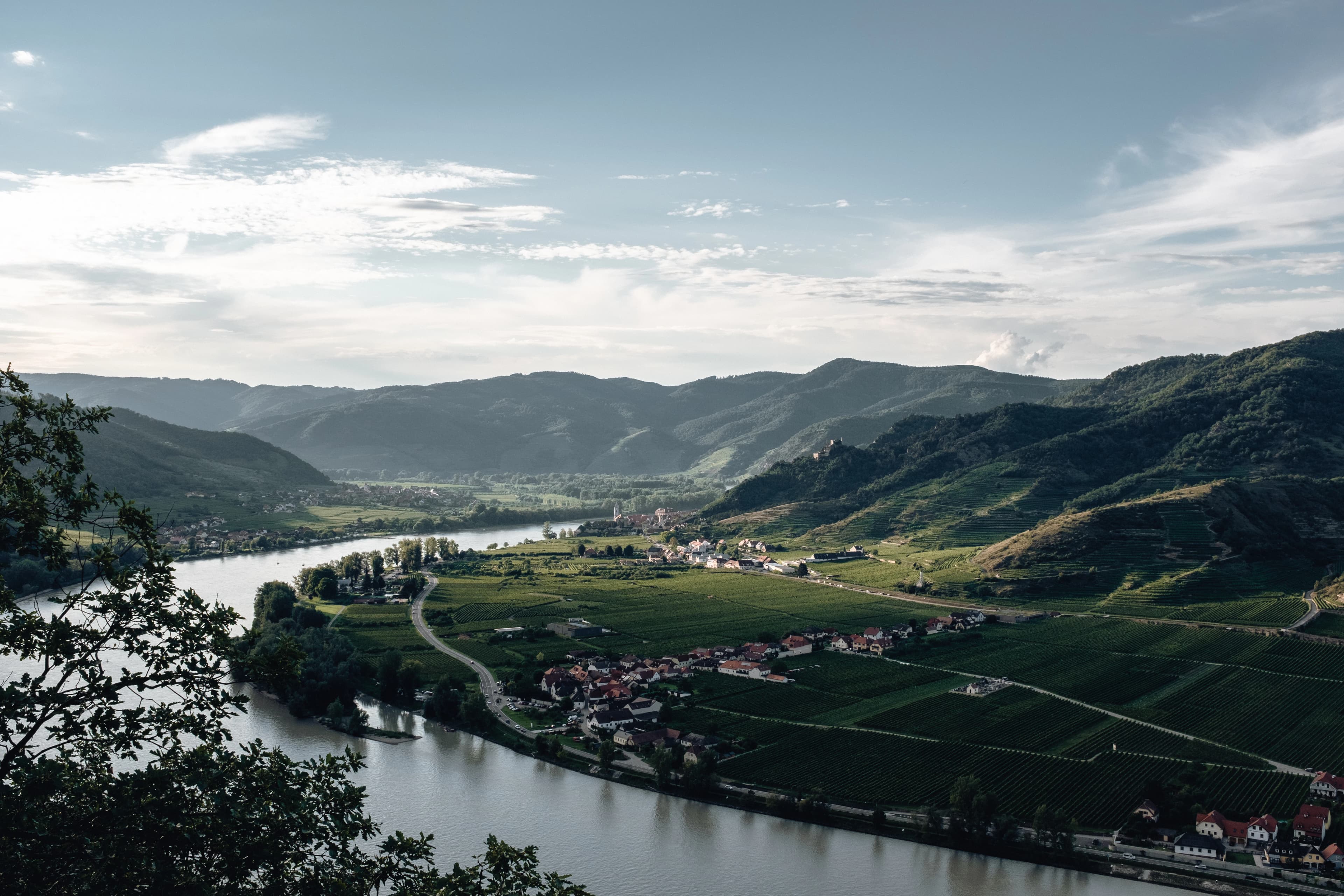
Wachau

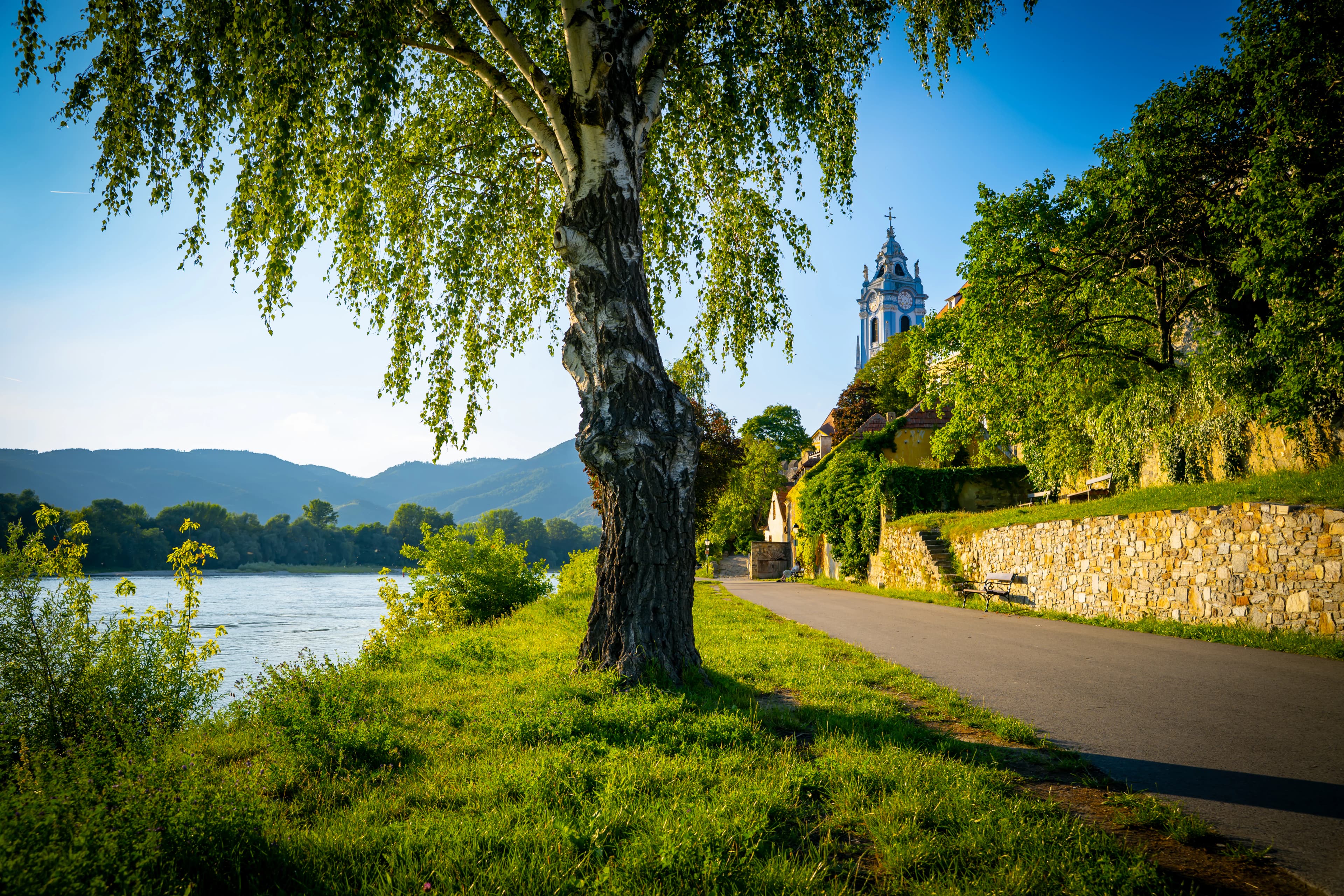
The Wachau, a 36-kilometer stretch of the Danube between Melk and Krems, has been a UNESCO World Heritage Site since 2000 and is considered one of the most beautiful river landscapes in Europe. Steep vineyard terraces, cultivated by hand for centuries, rise above the river, while picturesque wine villages, castle ruins, and blooming apricot orchards shape the landscape. The Melk Abbey, a magnificent Baroque building high above the Danube, forms the western entrance to the Wachau and houses one of the oldest monastery libraries in the world. Downstream stands the Dürnstein ruin, where, according to legend, Richard the Lionheart was held captive on his return from the Crusades. The blue tower of the Dürnstein Abbey Church is one of the most photographed motifs in Austria. In Krems and Stein, the eastern gateway to the Wachau, medieval townscapes blend with a vibrant art scene. The Wachau is one of the most renowned wine regions in Europe — particularly the Grüner Veltliner and Riesling from wineries such as Nikolaihof, Domaine Wachau, and F.X. Pichler enjoy a worldwide reputation. In spring, the apricot blossoms transform the slopes into a sea of white flowers. The Danube Cycle Path, one of the most popular long-distance cycling routes in Europe, runs directly through the Wachau, and excursion boats operate regularly between Melk and Krems. The Wachau apricot dumpling, the apricot schnapps, and the Heurigen culture make every visit a culinary experience.

WineUNESCODanube

Salzkammergut

The Salzkammergut, one of the most picturesque regions in Europe, extends across three federal states (Upper Austria, Salzburg, Styria) and impresses with 76 crystal-clear lakes, surrounded by rugged limestone mountains and dense forests. Since the days of the Habsburgs, the region has been considered a favored summer retreat — Emperor Franz Joseph spent 60 summers in his villa in Bad Ischl, and the Salzburg Festival has its cultural roots here. Hallstatt, the jewel of the Salzkammergut, with its 7,000-year history of salt mining, is a UNESCO World Heritage site. Lake Wolfgang with the Schafbergbahn, Lake Traun as Austria's deepest lake (191 meters), and Lake Attersee, where Gustav Klimt created his famous landscape paintings, are just three of the many highlights. Bad Ischl impresses as a former imperial residence with the Kaiservilla, the traditional pastry shop Zauner, and as the European Capital of Culture 2024. The region is a paradise for active travelers: The Salzkammergut Cycle Path connects the most beautiful lakes over 345 kilometers, the Dachstein offers climbing routes and a spectacular skywalk, and the boat trips on Lake Traun and Lake Wolfgang are among the most stylish excursions in Austria. In winter, the heights around Obertraun, Gosau, and Bad Goisern transform into quiet ski areas away from mass tourism. Culinary specialties include char, whitefish, dumplings, and the Ischler gingerbread.

LakesMountainsUNESCO
woman in red jacket and black pants standing on gray concrete road during daytime

Großglockner

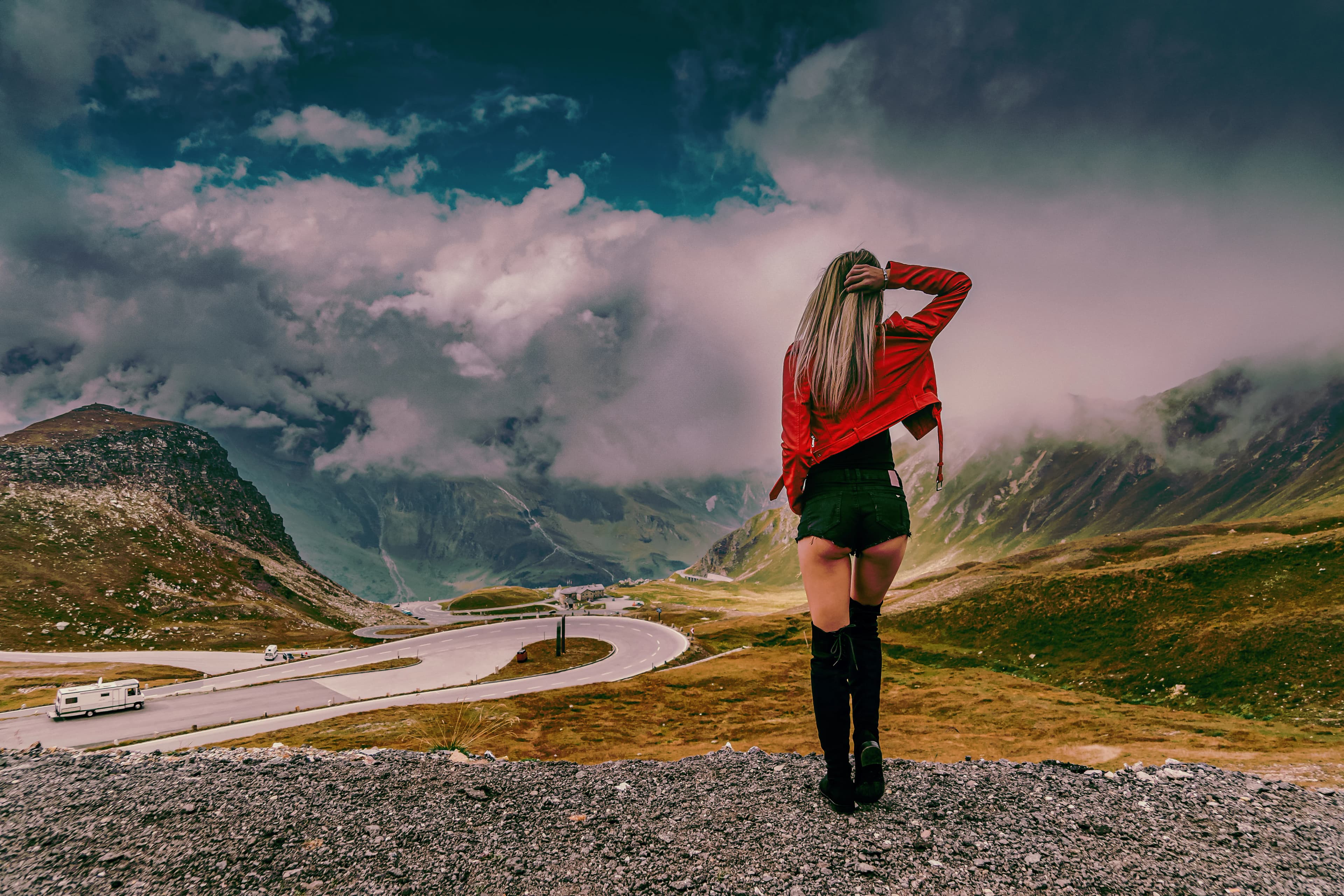
The Großglockner, at 3,798 meters, is the highest mountain in Austria and majestically towers in the heart of the Hohe Tauern National Park — the largest protected area in the Alps, covering 1,856 square kilometers. Its distinctive double peak with the glaciated Glocknerkees and the Pasterze, Austria's longest glacier, make the Großglockner a symbol of the Austrian Alps. The Großglockner High Alpine Road, opened in 1935, is one of the most famous panoramic roads in the world. Over 48 kilometers, it overcomes 36 hairpin turns and leads over the 2,504-meter-high Hochtor Pass. At the Kaiser-Franz-Josefs-Höhe at 2,369 meters, there is a breathtaking direct view of the Pasterze and the Großglockner summit. Along the route, exhibitions such as the 'Alpine Nature Show' and the 'Wilhelm Swarovski Observatory' provide information about the flora, fauna, and geology of the high mountains. The Hohe Tauern National Park is home to over 10,000 species of animals and plants, including ibex, bearded vultures, marmots, and edelweiss. Hikers will find marked trails for every level — from the Gamsgrubenweg right by the Pasterze to the challenging ascent of the Glockner, which requires alpine experience and guidance. The Krimml Waterfalls, at 380 meters the highest waterfalls in Austria, are also located in the national park. The High Alpine Road is open from May to October, with early summer being particularly impressive with snow-covered peaks and blooming alpine meadows.

MountainsPanoramic RoadNational Park
body of water between mountain range at daytime

Zillertal

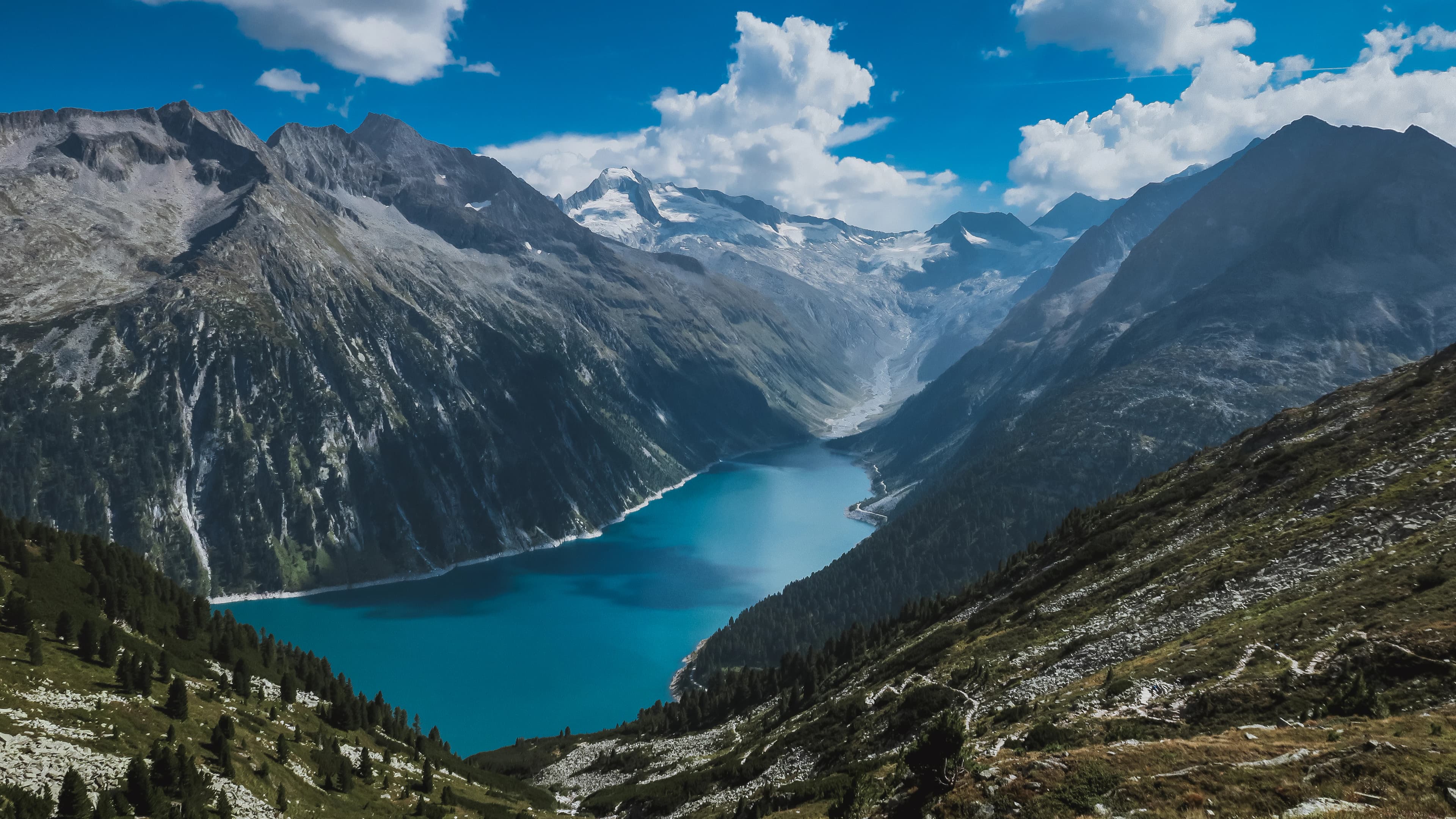
The Zillertal, located southeast of Innsbruck, is one of the most famous and frequently visited alpine valleys in Tyrol. Stretching approximately 30 kilometers from Strass im Inntal to the Hintertux Glacier, it offers an overwhelming year-round program for mountain enthusiasts, families, and connoisseurs. In winter, four major ski areas — the Zillertal Arena, Mayrhofen-Hippach, Spieljoch, and the Hintertux Glacier ski and glacier area — together provide over 530 kilometers of slopes, making the Zillertal the largest ski association in the country. The Hintertux Glacier, as Austria's only year-round ski area, allows skiing even in high summer at altitudes over 3,000 meters. The après-ski scene, especially in Mayrhofen and Gerlos, is legendary. In summer, the Zillertal unfolds its full hiking potential: The Berliner Höhenweg, one of the most beautiful multi-day tours in the Alps, leads through the Zillertal Alps from hut to hut over six to eight days. The Zillertal Alps Nature Park protects an untouched mountain world with glaciers, waterfalls, and a rich wildlife. The Zillertalbahn, a historic steam narrow-gauge railway from 1902, nostalgically chugs through the entire valley. Culinary delights in the Zillertal include over 150 managed alpine huts, Zillertaler Graukäse, and Zillertaler Krapfen. The annual Gauder Fest in Zell am Ziller is Tyrol's largest spring festival.

SkiingHikingGlacier

Ötztal

The Ötztal is the longest side valley of Tyrol at 65 kilometers, stretching from the Inn Valley mouth near Oetz up to the glaciated three-thousanders around the Wildspitze (3,768 m), the highest mountain in Tyrol. The valley gained fame in 1991 when the 5,300-year-old "Ötzi" was found at the Tisenjoch — the oldest glacier mummy in the world. Sölden, the largest town in the valley, is a world-class ski resort with three three-thousanders (Big 3: Gaislachkogl, Tiefenbachkogl, Schwarze Schneid) and was a filming location for the James Bond movie "Spectre" — the futuristic ice Q mountain station and the 007 Elements exhibition attract film fans from all over the world. The Rettenbach Glacier allows skiing until early summer, and the ski area connection with Hochgurgl offers over 140 kilometers of slopes. In summer, the Ötztal transforms into a paradise for outdoor enthusiasts: The Stuibenfall, at 159 meters, is the highest waterfall in Tyrol and can be reached via a spectacular via ferrata. AREA 47, Austria's largest outdoor recreation park, offers canyoning, rafting, wakeboarding, and high ropes courses. Hikers appreciate the Ötztaler Urweg, the Hochstubaihütte, and the numerous alpine trails. Obergurgl, at 1,930 meters, is the highest church village in Austria and a starting point for high alpine tours. The Aqua Dome in Längenfeld surprises as a futuristic thermal spa amidst the mountains.

AdventureSkiingGlacier

Package holiday to Austria

Compare flight & hotel at the best price.

Package holidays

Holiday apartment in Austria

Holiday homes with more space and privacy.

Holiday flats

All accommodations

Map, package holidays & holiday homes at a glance.

All options

Complete guide for Austria

Regions, attractions, food, routes, costs & practical tips — all in one digital guide.

Open guide
Suitable for:AlpsCultureSkiingHikingFood

Ready for Austria?

Plan your Austria holiday now with our free tools.

Plan a holiday in Austria

Austria is one of the most popular travel destinations in Europe, offering Alps, Culture, Skiing and much more. The best time to visit Austria is June–Sep (hiking), Dec–Mar (skiing), when the weather is ideal for exploration and relaxation. With a daily budget starting from 60–85€ (Budget) to 150–300€ (Luxury), Austria is suitable for various travel budgets.

From the capital Vienna, Austria can be excellently explored. The official language is German, and the currency is Euro (€). From Germany, you can reach Austria in approx. 1 hour (or 4h by train). Whether you want to try culinary highlights like Wiener Schnitzel, Sachertorte, Tafelspitz, visit top attractions, or simply enjoy the atmosphere: Austria has something for every type of traveller.

Use our free travel tools to prepare your Austria holiday perfectly. With the holiday finder, you can discover if Austria is the right destination for you. The budget calculator helps you plan costs realistically, and with the packing list, you won't forget anything.

Suitable holiday types for Austria:

More travel destinations in Europe:

All countries in Europe

All destinations in Europe