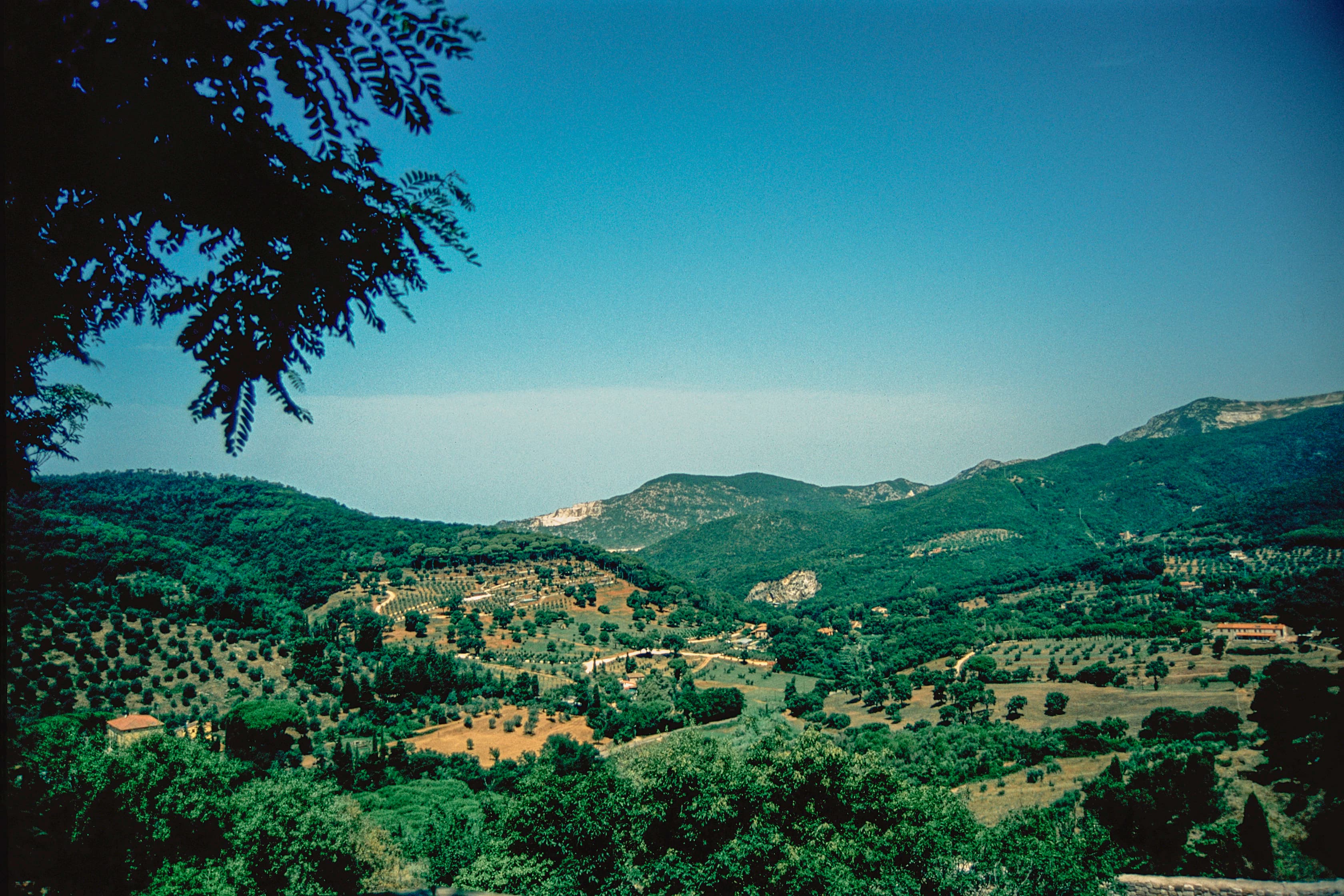
a view of a valley with trees and mountains in the background
🇹🇷

Turkey holiday

Travel tips, best time to visit & highlights for your Turkey holiday in Europe

Turkey unites East and West like no other country. All-inclusive resorts on the Riviera, the magical scenery of Cappadocia, the splendor of Istanbul between two continents, and unbeatable prices make Turkey a perennial favorite.

Capital

Ankara

Language

Turkish

Currency

Turkish Lira (₺)

Time zone

UTC+3

Flight time from DE

approx. 3–3.5 hours

Entry requirements

Identity card/passport

Top hotels & accommodations in Turkey

Selected hotels and holiday accommodations in Turkey — with images, reviews, and direct booking links with our partners.

Top 5 highlights in Turkey

The places you absolutely must not miss.

1

Istanbul

Hagia Sophia, Blue Mosque, Grand Bazaar, and Bosphorus – a city on two continents.

2

Cappadocia

Fairy chimneys, underground cities, and hot air balloon rides at sunrise.

3

Antalya & Side

Dreamy all-inclusive resorts, long beaches, and ancient ruins.

4

Pamukkale

Snow-white travertine terraces with warm thermal water – a natural wonder.

5

Ephesus

One of the best-preserved ancient cities in the world – the Library of Celsus impresses.

Hotels in Turkey

Vergleiche tausende Hotels, Apartments und Resorts auf Expedia – mit Bestpreis-Garantie, kostenloser Stornierung und Bonuspunkten.

Über 700.000 Hotels
Kostenlose Stornierung
Bestpreis-Garantie
Hotels in Turkey vergleichen

* Weiterleitung zu Expedia.de. Es gelten die dortigen Nutzungsbedingungen.

Reise-SIM für Turkey

Prepaid-SIM mit Datenvolumen für Turkey. Einfach einlegen und sofort lossurfen – keine Roaming-Gebühren.

Sofort einsatzbereit
200+ Länder
Kein Roaming
SIM-Karte für Turkey bestellen

* Weiterleitung zu travSIM.de. Es gelten die dortigen Nutzungsbedingungen.

Reiseversicherung abschließen

Rundum-Schutz ab 9,90 € auf TravelSecure.de

Pauschalreisen & Rundreisen

Berge & Meer – 170 Tage Cookie

Best time to visit Turkey

Recommended travel time

May–October (coast), April–June, September–November (Istanbul)

Summer

30–38°C

Winter

5–15°C

How much does a holiday in Turkey cost?

Average cost per person per day (excluding flight)

🎒

Budget

30–50€

Hostel, street food, public transport

🏨

Mid-range

50–100€

Hotel, restaurant, excursions

🌟

Luxury

100–200€

Boutique hotel, fine dining

5 travel tips for Turkey

Insider knowledge to make your holiday better.

All-inclusive in Turkey is often unbeatable in price

Bargaining at the bazaar is expected and part of the experience

Dolmuş minibuses are cheap and connect all coastal towns

Hot air ballooning in Cappadocia should be booked in advance

Turkish tea is offered everywhere – never decline!

Food & drink in Turkey

These dishes you must try!

Kebab
Lahmacun
Börek
Baklava
Manti
Turkish tea

Discover Turkey

44 regions, cities and highlights in Turkey

Cities

a view of a valley with trees and mountains in the background

Adana

Adana is the fifth largest city in Turkey and is located in the fertile Cukurova plain along the Seyhan River. The city is especially famous as the Kebab capital of Turkey — the Adana Kebab, a spicy minced meat skewer from the charcoal grill, is known far beyond the country's borders and proudly bears the name of the city. The stone bridge (Taskopru) over the Seyhan is one of the oldest still-used structures in the world: built by the Romans in the 2nd century AD and restored several times since, it has connected the two banks of the city for almost 2,000 years. Illuminated in the evening, it is the landmark of the city. The Sabanci Mosque on the riverbank is the largest mosque in Turkey and one of the largest in the world: six minarets (each 99 m high) and a massive dome dominate the skyline. It accommodates over 28,000 worshippers and is architecturally inspired by the Blue Mosque in Istanbul. The Cukurova plain around Adana is one of the most fertile areas in Turkey, producing cotton, citrus fruits, and vegetables. The cuisine of Adana reflects this abundance: fresh ingredients, spicy seasonings, and a grilling culture make the city a culinary pilgrimage destination. The Roman ruins of Anavarza (ancient city of Anazarbus), 80 km to the east, and the Crusader castle Yilankale (Snake Castle) above the Ceyhan River offer fascinating day trips into the rich history of the region, shaped by Hittites, Romans, Byzantines, and Crusaders.

KebabRomanMosque

Alacati

Alacati is the charming coastal town of the Turkish Aegean and has transformed from a sleepy fishing village to the trendiest lifestyle travel destination in Turkey. The cobblestone streets are lined with lovingly restored Greek stone houses, their facades overgrown with bougainvillea, and around every corner awaits a new boutique hotel, a designer gallery, or an Instagram-worthy cafe. German individual tourists discover a very different Turkey here: stylish, relaxed, and culinary at the highest level. At the same time, Alacati is one of the best windsurfing and kitesurfing spots in Europe thanks to its constant winds. The flat, sheltered bay with its shallow water makes the place ideal for beginners to learn. In the evenings, the old town transforms into a lively nightlife area with live music and excellent Aegean restaurants.

windsurfkitesurfstone houses
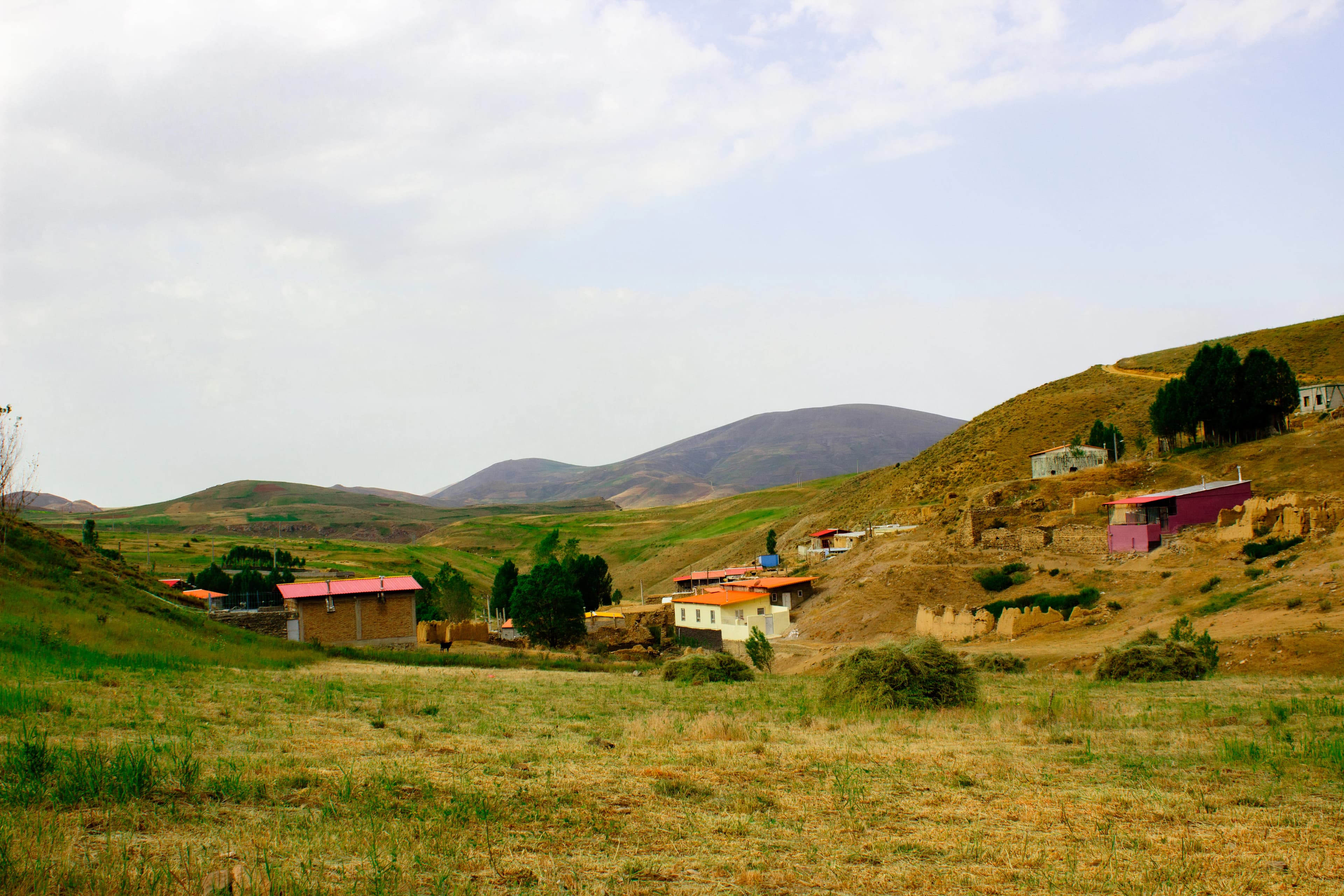
Rural village nestled in rolling hills under a cloudy sky.

Belek

Belek is the undisputed golf and luxury capital of the Turkish Riviera. Located about 30 kilometers east of Antalya, this former fishing village has developed into one of the most exclusive holiday destinations in Turkey. Over 15 world-class championship golf courses – including the legendary Carya Golf Club and the Montgomerie Maxx Royal – make Belek a paradise for golfers from all over Europe. The expansive sandy beaches stretch for miles and are directly managed by most hotels, offering sun loungers, water sports, and crystal-clear Mediterranean waters. But Belek offers much more than golf and beach. The ancient amphitheater of Aspendos, just 25 kilometers away, is one of the best-preserved Roman theaters in the world and hosts an international opera and ballet festival in the summer. The ruins of Perge, with their impressive stadium and colonnaded streets, transport visitors back to antiquity. The Köprülü Canyon National Park invites visitors to enjoy white-water rafting and hiking through fragrant pine forests. The all-inclusive resorts in Belek set standards: huge pool landscapes, spa areas with traditional hammam, kids' clubs, and gourmet restaurants are the norm. For families with children, The Land of Legends is a highlight – an amusement park with water slides and shows right at the hotel gates. From Germany, Belek can be easily reached by direct flight to Antalya in about three hours. A shuttle bus or taxi takes guests to the hotel in 30 minutes. The best travel time is between April and November, with golfers particularly appreciating the mild spring and autumn. In the peak summer, temperatures rise above 35 degrees, perfect for beach lovers. A budget holiday in Belek is more challenging than elsewhere on the Riviera, but the all-inclusive packages offer excellent value for money despite higher prices.

GolfAll-InclusiveBeach

Bursa

Bursa is the fourth largest city in Turkey with over 3 million inhabitants and is located at the foot of the 2,543-meter-high Uludag Mountains, just 150 km south of Istanbul. As the first capital of the Ottoman Empire (1326-1365), Bursa has a rich historical heritage and is also the birthplace of the Turkish Döner Kebab and Iskender Kebab. The Great Mosque (Ulu Cami), built in 1399, is one of the most significant works of early Ottoman architecture: 20 domes, an interior fountain, and masterful calligraphy on the walls make it unique. The Green Mosque (Yesil Cami) and the Green Mausoleum (Yesil Türbe) are adorned with turquoise Iznik tiles, which gave them their name — masterpieces of Ottoman tile art. The silk bazaars Koza Han and Pirinc Han from the 15th century are historic caravanserais where silk is still traded today. Bursa was a hub of the Silk Road, and silk worm breeding has a centuries-old tradition here. Uludag is the most famous ski resort in Turkey and can be reached by cable car (Teleferik) just 22 km from the city center. In winter, Turkish and international skiers flock to the slopes, while in summer the national park offers hiking trails and alpine scenery. Bursa's thermal baths in the Cekirge district utilize hot springs that were already appreciated by the Romans and later by the Ottomans. The Old Bath (Eski Kaplica) dates back to the 14th century. Cumalikizik, a 700-year-old Ottoman village on the outskirts, is a UNESCO World Heritage site and features cobbled streets and wooden houses like something out of a storybook.

OttomansIskenderSki

Çeşme

Çeşme is the Saint-Tropez of Turkey – an elegant seaside resort at the westernmost tip of the Turkish Aegean coast, considered the trendiest beach destination in the country by the Turkish upper class and increasingly by European travelers. The Çeşme Peninsula, located just 80 kilometers west of Izmir, surprises with a scenic diversity ranging from fine sandy beaches to turquoise bays and natural thermal springs. The most famous beach is Ilıca, a kilometer-long sandy beach with naturally warm water fed by underground thermal springs. Here, you can feel warm currents under your feet in some places – a unique phenomenon. Alaçatı, the neighboring village of Çeşme, has developed into an international windsurfing mecca: The constant Meltemi winds and the shallow standing area make it an ideal spot for both beginners and professionals. At the same time, Alaçatı has become a lifestyle hotspot with its restored Greek stone houses, boutique hotels, and Instagram-worthy streets. The old town of Çeşme is dominated by a Genoese fortress from the 16th century, which now houses a museum and offers a dreamy view of the sunset over the Greek island of Chios – which is only eight kilometers away. Those who wish can take a ferry for a day trip to Greece. For German vacationers, Çeşme is easily accessible via Izmir Airport. The region offers a significantly higher price level than the southern coast, but also less mass tourism and a cosmopolitan atmosphere reminiscent of Mediterranean hotspots in Greece or southern France. The thermal springs in the city center and in Şifne invite you to a wellness experience.

WindsurfingAlaçatıAegean

Didim

Didim on the Turkish Aegean coast is a hidden gem that is no longer a secret among German and British expatriates. The small town combines one of the most beautiful sandy beaches in Turkey – the golden Altınkum Beach – with one of the most significant ancient sites in Asia Minor, the Temple of Apollo at Didyma. This unique blend of beach holiday and ancient cultural heritage makes Didim one of the most versatile travel destinations on the Aegean. Altınkum Beach, whose name translates to "Golden Sand," consists of three adjacent bays with fine, light golden sand and shallow, warm water. In contrast to the often crowded beaches of the Turkish southern coast, it is much more relaxed here. The promenade behind the beach is lined with restaurants, bars, and cafés offering fresh fish and Turkish meze at moderate prices. A large international expat community, including many Germans, has settled in Didim and shapes the cosmopolitan atmosphere of the place. The Temple of Apollo at Didyma, just three kilometers from the beach, was one of the most important oracle sites of the Greek world in antiquity – comparable to Delphi. The massive remains of the columns and the still remarkably well-preserved temple core with its walls over 20 meters high continue to impress today. From Didim, other ancient sites such as Miletus and Priene can be reached on day trips, together forming the famous "Ancient Triangle." Bodrum-Milas Airport is about 90 kilometers away, or alternatively, Izmir Adnan Menderes can be used. The cost of living is significantly lower than on the Turkish southern coast.

BeachAltınkumAntiquity
a large group of buildings

Diyarbakir

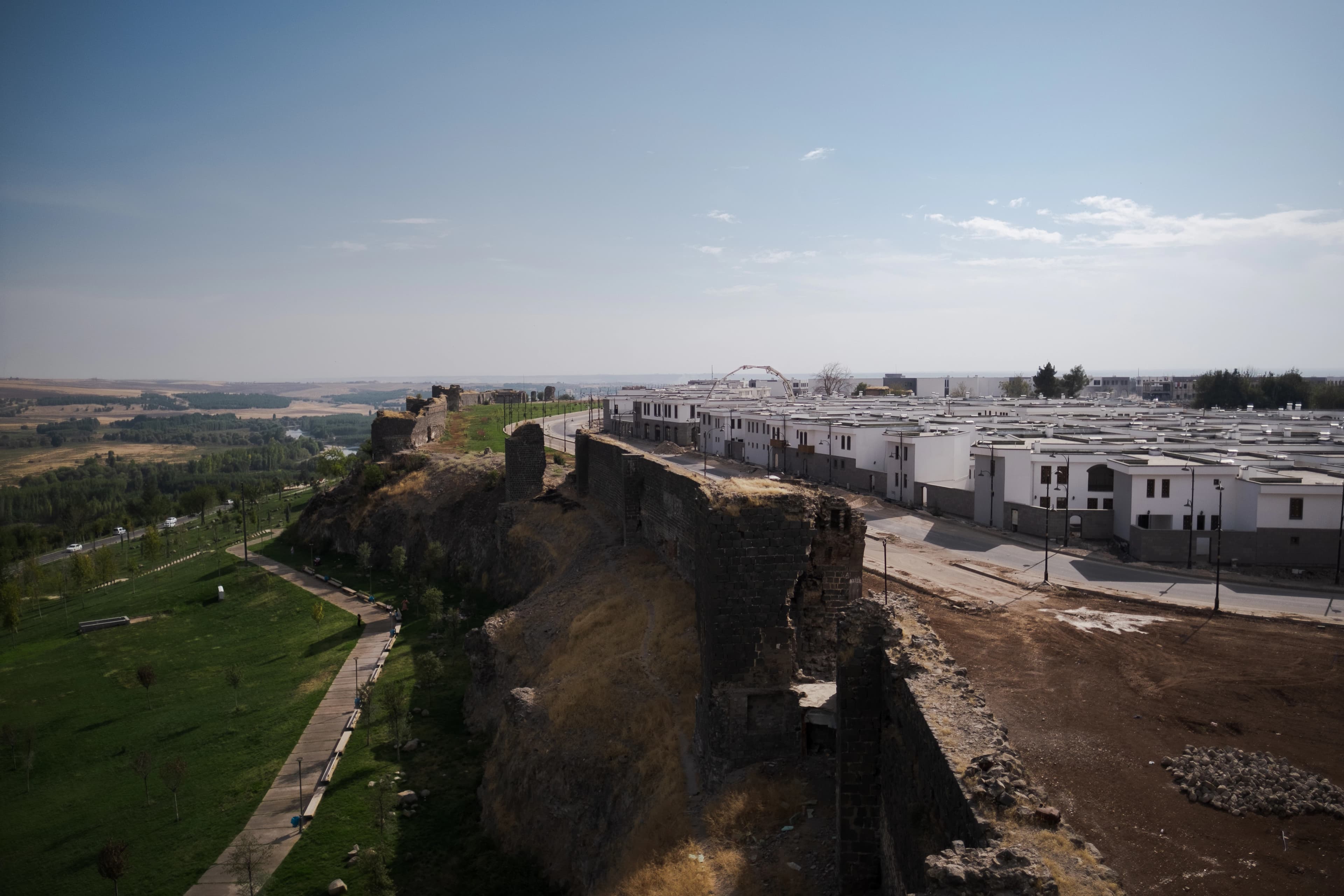
Diyarbakir is the unofficial capital of the Kurdish Southeast of Turkey and one of the oldest continuously inhabited cities in the world. The metropolis on the upper reaches of the Tigris boasts over 7,000 years of history — Assyrians, Romans, Byzantines, Arabs, Seljuks, and Ottomans have all left their mark here. The city walls of Diyarbakir are the second-longest continuous fortification system in the world after the Great Wall of China: 5.8 km long, up to 12 meters high, with 82 watchtowers and 4 main gates. Since 2015, they have been a UNESCO World Heritage Site along with the Hevsel Gardens (a 700-hectare river plain on the Tigris). From the walls, there is a spectacular view over the green gardens by the Tigris and the endless plains of Mesopotamia. The Ulu Cami (Great Mosque) from the 11th century is one of the oldest mosques in Anatolia and was built on the foundations of an early Christian church, which in turn stood on a Roman temple — layers of history stacked upon each other. The old town called Sur within the walls is a labyrinth of narrow streets with historic mosques, caravanserais, Armenian churches, and traditional basalt houses. The Hevsel Gardens on the Tigris are a unique ecosystem that has been continuously farmed for 8,000 years — they still supply the city with vegetables and fruits and are considered the oldest urban gardens in the world. Diyarbakir is the culinary heart of Southeastern Anatolia: the cuisine combines Kurdish, Arab, and Turkish traditions. The watermelons from Diyarbakir are legendary — weighing up to 50 kg — and are celebrated at the annual watermelon festival.

UNESCOCity WallsKurdish

Eskişehir

Eskişehir — the "Student City of Turkey" — is one of the liveliest, most modern, and surprising cities in Anatolia. The university city with over 100,000 students combines Ottoman history with European flair, and the Porsuk River, which winds through the center, is affectionately called "Little Amsterdam" or "Turkish Venice" by the locals. The Odunpazarı district — a historic Ottoman neighborhood with colorful wooden houses — is home to the Odunpazarı Modern Museum (OMM), a spectacular contemporary art museum designed by Japanese architect Kengo Kuma, whose stacked wooden box facade resembles a three-dimensional puzzle. The Porsuk River offers gondola rides through the illuminated downtown — a surreal experience reminiscent of Venice, but taking place in Central Anatolia. The Adalar (Islands) — artificially created islands in the Porsuk — are filled with cafes, restaurants, and parks. Eskişehir is famous for its meerschaum (Lüle taşı) — a lightweight white mineral that only occurs here and is carved into intricate pipes and jewelry. The Sazova Science Park features a fairy tale castle, pirate ship, and underwater museum — one of the most creative amusement parks in Turkey.

ArchitectureStudent CityGondola

Gaziantep

Gaziantep, often referred to simply as Antep, is the gastronomic capital of Turkey and has been a UNESCO Creative City of Gastronomy since 2015. The city in southeastern Turkey, near the Syrian border, boasts over 6,000 years of history and combines oriental cuisine with Mesopotamian heritage. Gaziantep's cuisine is legendary: over 500 documented local recipes make the city the culinary epicenter of Turkey. The baklava from Gaziantep is considered the best in the world — paper-thin Yufka dough with pistachios and syrup, made by master bakers who have perfected the craft for generations. The pistachios from the Antep region are highly sought after worldwide. The Zeugma mosaics in the museum of the same name are among the largest and best-preserved Roman mosaics in the world. The Gypsy Girl mosaic with its penetrating eyes is the museum's landmark and one of the most famous artworks of antiquity. The mosaics originate from the sunken Roman city of Zeugma on the Euphrates. The Gaziantep Castle (Gaziantep Kalesi) overlooks the city and houses a defense museum. The historic bazaar (Zincirli Bedesten and Almaci Pazari) offers copper handicrafts, spices, baklava, and mother-of-pearl inlays. The Hasan Suzer Ethnography Museum in a restored Ottoman stone house showcases the traditional life of the region. Gaziantep earned the nickname Gazi (Veteran) for its heroic resistance against the French occupation from 1920 to 1921.

GastronomyUNESCOBaklava
brown rock formation under blue sky during daytime

Göreme

Göreme in the heart of Cappadocia is one of the most surreal places on Earth — a landscape that looks as if a sculptor has shaped it from tuff stone. The famous fairy chimneys, mushroom-shaped rock formations made of volcanic tuff, rise like silent guardians over a valley where people have lived in the soft stone for thousands of years. The absolute highlight — and one of the most iconic travel experiences worldwide — is a hot air balloon ride at sunrise. Every morning, dozens of colorful balloons ascend into the golden sky, floating over the fairy chimneys, rock valleys, and tuff landscapes, offering a sight that regularly makes it onto the lists of “once in a lifetime” experiences. The Göreme Open-Air Museum, a UNESCO World Heritage site, is a complex of rock-hewn churches and monasteries from the 10th to 12th centuries. The Byzantine frescoes in the Dark Church (Karanlık Kilise) and the Buckle Church (Tokalı Kilise) are of exceptional color intensity and are among the best-preserved in the entire Byzantine world. Göreme itself is a charming village where many of the old cave dwellings have been converted into atmospheric boutique hotels. Staying in a cave hotel, where the bare tuff stone forms the walls while balloons ascend outside, is one of the unique experiences in Turkey. The surroundings offer top-notch hiking opportunities through spectacular valleys. The Red Valley (Kızılçukur) glows at sunset in all shades of red and orange, the Pigeon Valley (Güvercinlik Vadisi) impresses with countless pigeon houses in the rock walls, and the Love Valley with its phallic rock needles provides wonder and smiles. The underground cities of Derinkuyu and Kaymakli, just a few kilometers to the south, are another sensation of Cappadocia. Dug up to eight stories deep into the tuff, they provided shelter for thousands of people from invaders and feature ventilation systems, wells, and even churches — an underground wonder of ancient engineering.

Hot Air BalloonUNESCOCaves

Kayseri

Kayseri is one of the oldest cities in Anatolia and the economic gateway to Cappadocia. The city lies at the foot of the extinct volcano Erciyes (3,917 m), whose snow-capped summit shapes the cityscape year-round. Kayseri combines Seljuk history, a vibrant trading spirit, and unexpected culinary excellence — and is significantly cheaper than the more famous tourist spots in Cappadocia. The Kayseri Fortress (Kayseri Kalesi) in the city center was built under the Romans and expanded by the Seljuks in the 13th century. The imposing black basalt walls now house a market and form the historical heart of the old town. The Grand Bazaar (Kapali Carsi) of Kayseri is one of the most authentic in Turkey — without tourist traps, but with real Anatolian trading activity. Kayseri is the undisputed capital of Pastirma (air-dried, spiced beef) and Sucuk (spicy garlic sausage). The production of these specialties has a centuries-old tradition, and the best producers still have their workshops in the city center. Pastirma from Kayseri is exported throughout Turkey and abroad. The Erciyes volcano is an emerging ski resort in winter with modern lifts and 102 km of slopes, significantly cheaper than European Alpine resorts. In summer, the mountain is a popular hiking and mountain biking destination with alpine meadows and glacier remnants. From Kayseri, the fairy chimneys and cave churches of Cappadocia can be reached in just one hour: Göreme, Urgüp, and the underground cities of Derinkuyu and Kaymakli are easily accessible as day trips. Kayseri Airport (ASR) is the cheaper alternative to Nevsehir Airport for Cappadocia travelers.

CappadociaSkiingSeljuks

Kemer

Kemer is the jewel of the Turkish Riviera, where the mighty foothills of the Taurus Mountains meet the turquoise Mediterranean Sea. Located just 40 kilometers southwest of Antalya, the coastal town offers a unique blend of dramatic mountain scenery, lush pine forests, and crystal-clear waters. Unlike the flat hinterland of Antalya or Belek, Kemer impresses with its spectacular topography – the mountains rise directly behind the hotels, creating an almost fjord-like atmosphere. The absolute highlight is the cable car to Tahtalı Dağı, the highest peak at 2,365 meters directly on the coast. The 15-minute ride over pine forests and rock formations culminates in a breathtaking 360-degree panorama that, on clear days, extends all the way to Cyprus. At the foot of the mountain lie the ancient ruins of Phaselis – a Greek-Roman port city surrounded by three picturesque bays where one can swim among the remnants of columns in the sea. Further south, Olympos enchants with its treehouse district and the eternal flames of Chimera – natural gas flames that have been burning from the rocks since antiquity, once serving as a beacon for sailors. The beachfront promenade of Kemer itself pulses in the evenings with bars, restaurants, and clubs, especially in Moonlight Bay with its white sandy beach and adjacent marina. Getting there from Germany is straightforward: direct flights to Antalya take just under three hours, and the transfer to Kemer takes about 50 minutes. The best travel time extends from May to October, with high summer attracting sun worshippers with temperatures exceeding 35 degrees. Kemer is cheaper than Belek, with excellent all-inclusive offers already in the mid-price range. Those who love both nature and the beach will find the perfect area here.

BeachMountainsTaurus Mountains

Konya

Konya is one of the oldest continuously inhabited cities in the world and the spiritual center of Turkey. The city in the Central Anatolian plateau is inextricably linked to the Persian poet and mystic Jalal ad-Din Rumi (Mevlana), who lived, taught, and founded the order of the Whirling Dervishes (Mevlevi Order) here in the 13th century. The Mevlana Museum, housed in the former monastery of the Mevlevi Order, is the most visited attraction in Anatolia after the mosques of Istanbul. Beneath the iconic green dome rests Rumi's sarcophagus, surrounded by exquisitely decorated manuscripts, carpets, and dervish garments. The saying at the entrance — Come, whoever you are, come — reflects Rumi's philosophy of universal love. The Sema ceremony (Whirling Dervishes) is a mystical dance ritual in which the dervishes spin around their own axis and enter a meditative state — the right hand raised (to receive divine grace) and the left hand down (to pass it on to the earth). In December, the Seb-i Arus Festival takes place, celebrating Rumi's death as a wedding night with the Divine. The Aladdin Mosque on Aladdin Hill is the most significant Seljuk structure in the city, built in the 12th and 13th centuries. The Ince Minareli Medrese (Slim Minaret Quran School) with its artistically decorated portal is a masterpiece of Seljuk stone masonry. Catalhöyük, just 50 km southeast of Konya, is one of the oldest known human settlements in the world (7500-5700 BC): The UNESCO World Heritage Site shows remains of a Neolithic settlement with up to 10,000 inhabitants who lived without streets and entered their houses via the roofs.

RumiDervishesSeljuks

Kuşadası

Kuşadası – the "Bird Island" – is one of the liveliest coastal towns on the Turkish Aegean and the most important cruise port in the eastern Mediterranean. The city owes its name to the small pigeon island connected by a dam, which features a Venetian fortress that now houses a charming café and museum. However, the real reason why millions of visitors flock to Kuşadası each year lies 17 kilometers inland: Ephesus, one of the best-preserved ancient cities in the world. The ruins of Ephesus are simply overwhelming. The Celsus Library, the massive theater with 25,000 seats, the marble streets, the terrace houses with their mosaics and frescoes – everything breathes the grandeur of the Roman Empire. Every day, cruise passengers pour into the excavations, but those who arrive early in the morning or late in the afternoon experience an almost mystical silence among the columns. Kuşadası itself offers the perfect mix of beach holiday and city life. Ladies Beach is the most popular city beach with bars and water sports, while the Dilek National Park on the peninsula south of the city offers secluded coves, hiking trails, and even wild horses. The large bazaar in the old town is a labyrinth of leather, spices, carpets, and handcrafted jewelry, where haggling is part of the experience. From Germany, you fly to Izmir-Adnan Menderes Airport, from where it is 70 kilometers south to Kuşadası. The journey takes about an hour. Alternatively, renting a car is worthwhile to explore the entire Aegean coast – from Pamukkale to Bodrum. The Aegean is slightly cooler than the southern coast, making Kuşadası the perfect destination from May to October, without the extreme heat of the Riviera.

EphesusCruiseAegean

Manavgat

Manavgat is the green heart of the Turkish Riviera – a lively small town on the river of the same name, known primarily for its wide, roaring waterfall and as a gateway to the ancient ruins of Side. While most tourists come only for the famous Manavgat Waterfall, the region reveals a surprising depth of nature, history, and authentic Turkish daily life away from the hotel strips. The Manavgat Waterfall is not particularly high – only about two meters – but it is much wider and richer in water. The thundering, white foaming water cascades over a wide rock ledge, providing a refreshingly cool contrast to the summer heat of the coast. The surrounding tea gardens and restaurants right by the river invite visitors to linger. Even more spectacular is the Oymapınar Dam Lake inland, an emerald green mountain lake in the Taurus Mountains, where boat tours lead through narrow gorges – a natural experience reminiscent of Norwegian fjords. Downstream, one reaches the ancient city of Side, one of the most significant ancient centers of the Turkish Mediterranean coast, featuring an amphitheater, the Temple of Apollo right by the sea, and an atmospheric old town. The large Manavgat Bazaar, held every Monday and Thursday, is one of the most authentic markets in the region – here, mainly locals shop, and prices are significantly cheaper than in the tourist coastal towns. From Manavgat, rafting tours on the Köprülü Canyon, jeep safaris into the Taurus Mountains, and boat trips on the Manavgat River can be undertaken. Antalya Airport is about 75 kilometers away.

waterfallSidenature

Ölüdeniz

Ölüdeniz on the Turkish Lycian Coast boasts one of the most photographed beaches in the world with its legendary Blue Lagoon. The unreal turquoise water of the protected lagoon, framed by densely forested mountains and the white sandy beach, adorns countless travel catalogs and postcards. For German holidaymakers, Ölüdeniz remains a hidden gem that combines beach paradise and adventure: Hundreds of paragliders take off daily from the 1,969-meter-high Babadağ for one of the most spectacular tandem flights in the world, overlooking the lagoon far below and the endless Mediterranean Sea. The nearby Lycian Way, one of the most beautiful long-distance hiking trails in the world, leads through ancient ruins and secluded bays. In the evenings, the neighboring Hisarönü attracts with vibrant nightlife and affordable restaurants.

blue-lagoonparaglidingbeach

Istanbul

Istanbul, the only metropolis in the world that spans two continents, is an overwhelming Gesamtkunstwerk of Byzantine splendor, Ottoman grandeur, and vibrant modernity. Located on the Bosporus, which separates Europe and Asia, the city was the capital of two empires for centuries as Constantinople and is now the cultural and economic heart of Turkey with over 16 million inhabitants. The Hagia Sophia, built in 537 as the largest cathedral in the world and later converted into a mosque, is an architectural wonder, whose 56-meter high dome still leaves visitors in awe. Opposite rises the Blue Mosque with its six minarets, and the Topkapi Palace offers insights into the lives of Ottoman sultans over four centuries. The Grand Bazaar, with its over 4,000 shops in 61 covered streets, is one of the oldest and largest covered markets in the world. But Istanbul is much more than its historical monuments. The Karaköy district and Istiklal Street in Beyoğlu pulse with contemporary art, rooftop bars, and creative gastronomy. A Bosporus ferry at sunset, a glass of tea in the fishing district of Ortaköy with a view of the bridge, a visit to the 500-year-old Cemberlitas Hammam, or the nightlife in Kadiköy on the Asian side — Istanbul offers endless layers to discover. Culinary offerings range from the legendary Balik Ekmek (fish sandwich) in Eminönü to Michelin-starred restaurants in Nişantaşı. Istanbul is not a city to check off — it is a city that never lets you go.

CultureHistoryBazaar

Antalya

Antalya, the jewel of the Turkish Riviera, combines two thousand years of history with modern beach holidays against the dramatic backdrop of the Taurus Mountains. The old town Kaleici, a labyrinth of Ottoman wooden houses, Roman ruins, and Byzantine walls, hugs a picturesque old harbor where fishing boats sway alongside excursion yachts. The Hadrian's Gate from 130 AD marks the entrance to the old town and commemorates the visit of the Roman Emperor. The Yivli Minaret Mosque with its fluted minaret is the city's landmark. The Antalya Archaeological Museum, with its finds from Perge, Aspendos, and Termessos, is one of the most significant in Turkey. The ancient theater of Aspendos, just 45 kilometers away, is considered the best-preserved Roman theater in the world and still hosts opera and concert performances for 15,000 spectators. The Düden Waterfalls spectacularly plunge over cliffs directly into the sea — a natural spectacle best experienced from a boat. Konyaalti Beach stretches for kilometers against the mountain backdrop, while Lara Beach boasts fine sand. The ancient city of Termessos high in the Taurus Mountains offers a breathtaking theater at 1,665 meters with a panoramic view of the clouds. At the grand bazaar and Eski Bazaar, one can find spices, handwoven carpets, and Turkish lamps. Culinary delights include Pide, freshly grilled fish, Kunefe (cheese dessert), and Turkish tea with a sea view.

BeachAll-InclusiveOld Town

Bodrum

Bodrum, the ancient Halicarnassus on the Turkish Aegean coast, combines millennia-old history with Mediterranean lifestyle and a legendary nightlife. The Castle of St. Peter, an imposing 15th-century Crusader fortress, overlooks the harbor and houses one of the most significant underwater archaeology museums in the world — featuring finds from Bronze Age shipwrecks. The Mausoleum of Halicarnassus, one of the Seven Wonders of the Ancient World, once stood at the site where today only foundations and a few column remnants can be seen. However, the history of this tomb for King Mausolus (from which the word "mausoleum" is derived) comes alive in the adjacent museum. The ancient theater overlooking the bay once accommodated 13,000 spectators and still serves as a venue today. The whitewashed, cube-shaped houses with bougainvillea-covered facades shape the cityscape and remind one of the Greek Cyclades. Bodrum Marina is the starting point for the famous "Blue Voyages" (Gulet tours) along the Turkish coast — multi-day sailing trips on traditional wooden boats to secluded bays and ancient ruins. Gümüsluk, a sleepy fishing village west of Bodrum, has developed into a culinary insider tip: freshly caught fish in simple beach restaurants, along with a view of the sunken ancient city of Myndos beneath the water's surface. The Bodrum Peninsula offers quieter alternatives to the lively city center with Bitez, Ortakent, and Türkbükü. The nightlife focuses on Bar Street and the legendary Halikarnas Club, which is located outdoors directly by the sea. Bodrum is the most elegant and historically rich corner of the Turkish Riviera.

NightlifeAegeanLuxury
Seaside promenade with city buildings and distant hills.

Izmir

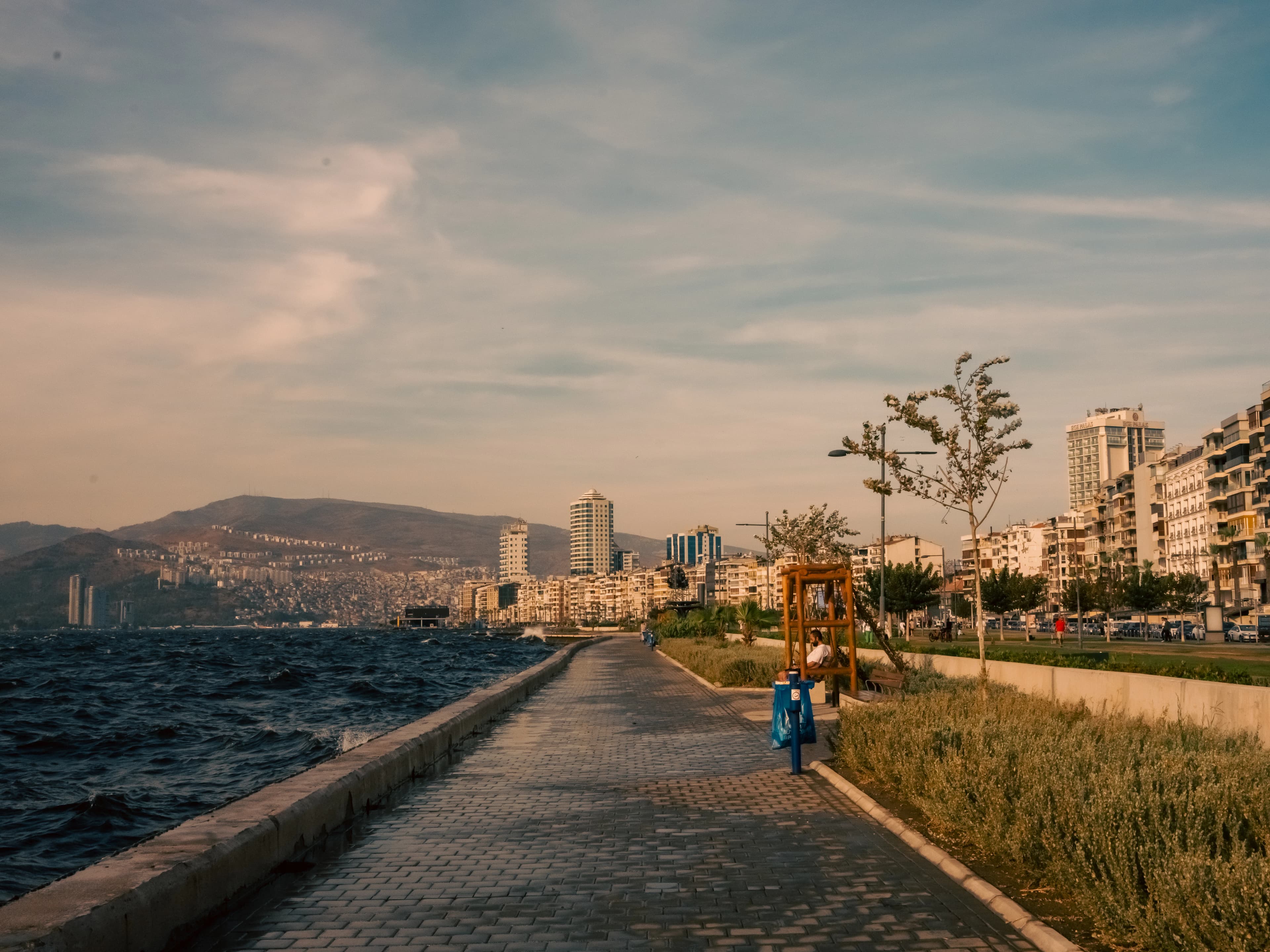
Izmir, the third largest city in Turkey, is a cosmopolitan metropolis on the Aegean Sea, captivating visitors with its Mediterranean flair, vibrant cultural scene, and relaxed lifestyle. Unlike Istanbul or Ankara, Izmir feels almost European: wide waterfront promenades, street cafes, modern art galleries, and a bustling nightlife define the cityscape. The Kordon, Izmir's legendary waterfront promenade, stretches for kilometers along the bay and is the social hub of the city — families stroll, athletes jog, and couples enjoy the sunset with a glass of Turkish tea. The Kemeralti Bazaar is one of the largest and oldest markets in Turkey: a labyrinth of covered alleys filled with spice vendors, goldsmiths, antique shops, and historic caravanserais. The clock tower at Konak Square is the city's landmark, and the Kadifekale (Velvet Castle) on the hill of the same name offers a panoramic view over the entire bay. Culinary-wise, Izmir is a hidden gem: the city is considered the birthplace of Boyoz (a flaky pastry), and the fish restaurants along the Kordon promenade serve freshly caught Aegean fish. Izmir is also an ideal starting point for day trips to Ephesus (one of the best-preserved ancient cities in the world, just 80 kilometers away), to Pamukkale, or to the charming Cesme Peninsula with its thermal springs and windsurfing spots.

CityAegeanAntiquity
A stop sign that is on the side of a building

Ankara

Ankara, the capital of Turkey, is overlooked by most travelers in favor of Istanbul — unjustly so. The city, with over five million inhabitants, is the political and cultural heart of the country and offers a fascinating mix of millennia-old history and modern urbanity. Here, one can feel the everyday life of Turkey beyond tourist staging. Anıtkabir, the monumental mausoleum of Mustafa Kemal Atatürk, is much more than a tomb — it is the national shrine of modern Turkey and an architectural masterpiece from the 1940s. The Museum of Anatolian Civilizations, housed in a restored bazaar from the 15th century, contains artifacts from the Hittites to the Phrygians and is considered one of the most significant museums in the world. The Ankara Citadel (Kale) towers over the city and offers narrow streets with traditional houses, tea houses, and a panoramic view over the sea of houses stretching to the horizon. Modern Ankara is showcased in the Kızılay district with its cafes, bookstores, and universities, as well as in Çankaya with diplomatic residences and elegant parks. Culinary-wise, Ankara is famous for its döner variant — the alleged original — and freshly squeezed pomegranate juice at every street corner. As a starting point for excursions to Cappadocia (only three hours away) or to Lake Tuz Gölü, Ankara is strategically ideally located.

CapitalHistoryCulture
green trees beside body of water during daytime

Fethiye

Fethiye on the Turkish Lycian Coast is a dream destination that uniquely combines spectacular nature, ancient history, and Turkish hospitality. The absolute highlight is the Blue Lagoon of Ölüdeniz — a nearly unreal turquoise sea basin surrounded by pine forests, regularly chosen as one of the most beautiful beaches in the world. From here, paragliders launch from the 1,969-meter-high Babadag and glide down over the lagoon for 30 to 45 minutes — an experience that leaves even seasoned adventurers speechless. The Butterfly Valley is only accessible by boat and is home to over 100 species of butterflies in a deep gorge framed by rock walls. The Lycian rock tombs of Amintas, which cling to the cliff face above the old town like monumental temple facades, date back to the 4th century BC and are particularly impressive when illuminated at dusk. The 12-Island boat tour is one of the most popular excursions: a whole day on the turquoise Mediterranean with swimming stops in hidden coves, snorkeling over sunken ruins, and lunch on board. The fishing harbor of Fethiye with its gulet sailing boats and the lively old town with spice markets and fish restaurants invite you to linger. Fethiye is also an ideal starting point for the Lycian Way, one of the most beautiful long-distance hiking trails in the world (540 km along the coast), as well as for excursions to the ancient city of Tlos and the ghost town of Kayaköy. The best travel time is from May to October, with spring and autumn offering the most pleasant temperatures.

NatureBoat toursAntiquity
A dry riverbed runs through a town with hills behind.

Kaş

Kaş is a picturesque artists' village on the Lycian coast that has retained its original charm, while other Turkish seaside resorts have long been overwhelmed by mass tourism. The narrow streets of the old town are lined with bougainvilleas, small boutiques, art galleries, and cozy rooftop restaurants, from which one can gaze at the nearby Greek island of Kastellorizo (Meis) — just a 20-minute boat ride away. Kaş is especially a paradise for divers: The waters off the coast offer over 50 dive sites with sunken aircraft wrecks, ancient amphorae, underwater caves, and a vibrant Mediterranean fauna. Sea kayaking along the rugged coast with its hidden coves and Lycian rock tombs that jut out from the cliffs is also an unforgettable experience. The ancient theater of Antiphellos overlooks the town and accommodates 4,000 spectators — the view of the sea at sunset is breathtaking. Day trips lead to the sunken city of Kekova, where one can glide by boat or sea kayak over the ruins lying beneath the water's surface. Kaputaş Beach, just ten minutes southwest, is considered one of the most beautiful beaches in all of Turkey with its turquoise water and dramatic gorge setting. Kaş is the perfect place for independent travelers who want to combine culture, nature, and sea in a relaxed atmosphere.

DivingBohemianAncient
a view of a beach with a building in the background

Alanya

Alanya spectacularly crowns a rocky peninsula on the Turkish Riviera, combining a 2,000-year history with the amenities of a modern seaside resort. The Seljuk fortress from the 13th century crowns the 250-meter-high castle hill and offers a breathtaking panorama over the city, Cleopatra Beach, and the endless blue of the Mediterranean. The Red Tower (Kızıl Kule), a landmark of the city and a masterpiece of Seljuk military architecture from 1226, guards the old harbor. From here, boat tours along the rugged coast lead to the Damlatas Cave with its impressive stalactites, the Pirate Cave, and the Phosphor Cave, whose waters shimmer bluishly in the dark. The ancient shipyard Tersane directly at the fortress wall is one of the best-preserved Seljuk shipyards in the Mediterranean region. Cleopatra Beach, one of the most beautiful city beaches in Turkey, stretches over two kilometers and delights with golden sand and crystal-clear water — according to legend, a gift from Marcus Antonius to Cleopatra. The modern side of Alanya is reflected in its vibrant nightlife, numerous restaurants, and a wide range of water sports. In the hinterland, the Dim River with natural swimming spots, the Dim Cave, and the Sapadere Gorge with its waterfalls beckon. Thanks to its mild climate with over 300 sunny days a year, Alanya is a year-round travel destination.

BeachAll-InclusiveFortress

Side

Side on the Turkish Riviera is a fascinating interplay of ancient history and modern beach enjoyment. The old town is located on a narrow peninsula that was once one of the most important port cities in the region of Pamphylia, and it surprises with a wealth of ancient monuments that one would hardly expect at a seaside resort. The Temple of Apollo at the tip of the peninsula is the landmark of Side: five restored Corinthian columns stand directly by the sea and offer one of the most romantic photo motifs in all of Turkey, especially at sunset when the light turns the marble ruins golden. The ancient theater, the second largest in Anatolia, once accommodated 15,000 spectators and is remarkably well preserved. The cobblestone old town within the ancient city walls connects archaeological treasures with cozy restaurants and small boutiques. The Side Museum in the former Roman bathhouse showcases impressive sarcophagi and sculptures. East and west of the peninsula stretch kilometers of sandy beaches with gentle entry, ideal for families. A day trip to the Manavgat Waterfalls is worthwhile: the wide waterfall and the rushing rapids of the Manavgat River provide a welcome cooling off. Nearby are the ruins of Aspendos with the best-preserved Roman theater in the world, as well as the ancient cities of Perge and Selge. The season runs from April to November, with spring being particularly pleasant.

AncientBeachFamily

Dalyan

Dalyan is a sleepy riverside village in southwestern Turkey that has preserved its authentic charm and delights nature lovers with a unique combination of ancient heritage, unspoiled nature, and gentle tourism. The Dalyan River lazily winds through a vast reed area, which is protected as the most important wetland in the region. The imposing Lycian rock tombs of Kaunos, dating back to the 4th century BC and carved high into the opposite cliff face, form one of the most impressive backdrops along the Turkish coast. Riverboat tours pass directly by the tombs, further through the reed maze of the delta, and out to Iztuzu Beach—a four-kilometer-long, pristine sandy beach that is protected as one of the most important nesting sites for the endangered Loggerhead turtle (Caretta caretta). The ruins of the ancient city of Kaunos, with its theater, temple remains, and acropolis, can be wonderfully explored on foot. The natural thermal springs and mud baths of Dalyan are legendary: a bath in the sulfuric mud is said to rejuvenate the skin and has been practiced by locals for generations. In the evening, one can sit in the riverside restaurants right by the water, watch boats glide by, and enjoy freshly caught sea bass. Dalyan is the perfect choice for those seeking a quiet, nature-oriented holiday in Turkey away from the large resort towns.

NatureTurtlesRiver

Marmaris

Marmaris is located at one of the most beautiful natural harbors of the Turkish Aegean, surrounded by densely forested hills and crystal-clear waters. The city is a popular starting point for Blue Cruises — multi-day sailing trips on traditional gulets along the Turkish coast with its hidden bays, ancient ruins, and turquoise anchorages. The old town around the 16th-century Ottoman fortress (built at the behest of Suleiman the Magnificent) still preserves its oriental charm with narrow streets, carpet merchants, and traditional restaurants. The covered bazaar offers everything from handmade jewelry to spices and Turkish honey. The beach promenade stretches over ten kilometers and becomes a lively promenade in the evenings. A boat trip to Dalyan and Iztuzu Beach, where the rare loggerhead turtles lay their eggs, is particularly worthwhile. The Marmaris National Park offers excellent hiking and mountain biking trails through fragrant pine forests. Cleopatra Island (Sedir) with its legendary shell beach — supposedly created for the Egyptian queen with sand from North Africa — is a popular day trip destination. The nightlife on the famous Bar Street is among the liveliest on the Turkish coast. Marmaris combines Mediterranean flair, Turkish hospitality, and a wide range of activities for active vacationers.

NightlifeBeachSailing
a landscape with trees and buildings

Trabzon

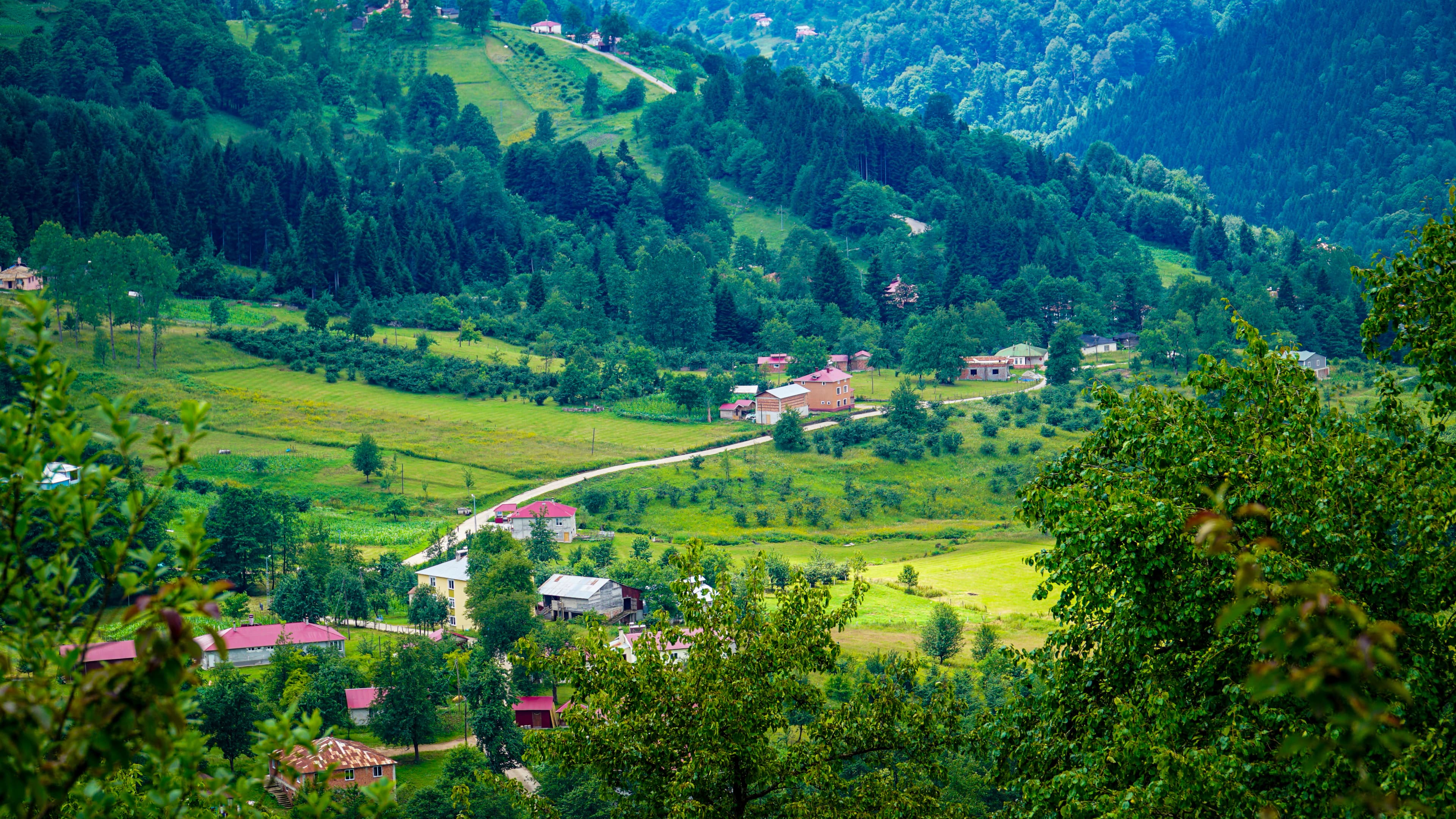
Trabzon, the secret capital of the Turkish Black Sea coast, boasts a history of over 2,700 years and was once a significant trading hub on the Silk Road known as Trapezunt. The city combines Ottoman heritage, Byzantine church art, and a vibrant Black Sea culture into a fascinating destination off the usual tourist paths. The Sumela Monastery (Meryemana Manastiri) is the undisputed highlight: Built 300 meters high against a vertical rock face in the Altindere Valley, this Byzantine monastery from the 4th century looks like something out of a fantasy novel. The colorful frescoes inside, the dramatic ascent through fir forests, and the sheer audacity of the construction make Sumela one of the most extraordinary sacred buildings in the world. The Hagia Sophia of Trabzon, not to be confused with its more famous counterpart in Istanbul, houses excellently preserved Byzantine frescoes from the 13th century. The covered bazaar in the city center pulses with life, and the tea houses at Ataturk Square provide the perfect spot to observe the hustle and bustle over a glass of Turkish tea. The Black Sea cuisine surprises with specialties such as Kuymak (a hot cheese-cornmeal fondue), Hamsi (anchovies in every conceivable variation), and Trabzon-style Pide. From Trabzon, one can reach the picturesque Uzungöl highland and the alpine pastures of the Kackar Mountains — a hiking paradise with an alpine character in the midst of Turkey.

Black SeaMonasteryHistory

Beaches

Altinkum

Altinkum, the Golden Sand, is located on the Turkish Aegean coast near the ancient city of Didim and delights with three adjacent golden sandy beaches, which are among the most beautiful in the entire region. While the Turkish south coast is dominated by all-inclusive giants, Altinkum has retained its more down-to-earth, family-friendly character and offers pure Turkish beach life - with local vacationers, lively markets, and a relaxed rhythm that has nothing to do with the scheduled resort life. The three main beaches, called first, second, and third beach, are lined up like golden crescents. The first beach is the liveliest with cafes, water sports, and a vibrant promenade. The second beach offers more tranquility and one of the most beautiful sunsets in the Aegean. The third beach, also known as Altinkum Beach, is the longest and most natural of the three, with fine golden sand and turquoise water that gently slopes into the sea. All three beaches carry the Blue Flag for water quality. The cultural highlight of the region is the Temple of Apollo at Didyma, one of the largest and best-preserved ancient temples in the world. The massive columns of the oracle temple, once a rival of the famous Oracle of Delphi, still rise majestically into the sky, conveying a sense of the grandeur of the ancient world. The sacred road from Miletus to Didyma, lined with stone lions and sphinxes, is a fascinating walk through history. In the surrounding area, further ancient sites beckon: Miletus, once one of the most powerful Greek cities, and Priene with its perfectly preserved Temple of Athena on a terrace high above the Meander Plain. Lake Bafa, a bird paradise in a mystical landscape with monastery ruins, is a hidden gem for nature lovers. Altinkum can be reached from Bodrum in about an hour, and Bodrum-Milas Airport is 90 minutes away. Alternatively, you can fly to Izmir (2.5 hours transfer).

AegeanGolden BeachApollo

Incekum

Incekum, translated to English as Fine Sand, truly lives up to its name. This stretch of beach on the Turkish Riviera between Alanya and Avsallar boasts one of the most beautiful natural beaches along the entire southern coast. What makes Incekum special is the unique combination of golden sandy beach and dense pine forest that reaches right up to the shore, providing natural shade - a blessing on hot summer days and an experience that can only be found here on the Turkish Riviera. The beach of Incekum stretches for about two kilometers in a gentle bay, sheltered from strong winds and currents. The water is crystal clear and gently sloping, with a turquoise hue reminiscent of Caribbean beaches. The water temperature reaches a pleasant 26 to 28 degrees in summer. Natural shaded spots under the pines make an umbrella almost unnecessary and give the beach a wooded atmosphere that stands in refreshing contrast to the concrete-laden promenades of other tourist spots. Along the beach, several all-inclusive resorts have settled, celebrating Turkish hospitality in perfect harmony with the natural backdrop. Those who prefer more independence will find affordable guesthouses and apartments in Avsallar, the nearest town. The region offers numerous excursion opportunities: the fortress of Alanya with the Red Tower is only 20 kilometers away, the Dim Cave impresses with underground lakes, and the Dim River invites for picnics in nature. From Antalya, Incekum can be reached in about one and a half hours, and Gazipasa-Alanya Airport is only 45 minutes away. Direct flights from Germany to Antalya take just under four hours. The season extends from May to November, with October still offering bathing temperatures of over 24 degrees.

TurkeyPine ForestSandy Beach

Lara Beach

Lara Beach is Antalya's glamorous hotel strip and one of the most popular beach areas of the entire Turkish Riviera for German tourists. The wide, fine sandy beach stretches for about twelve kilometers east of Antalya's city center and is lined with impressive five-star resorts that resemble Las Vegas with their elaborate facades. Hotels like Titanic Deluxe, Delphin Imperial, or Kremlin Palace focus on spectacular architecture and top-notch all-inclusive concepts that leave no wishes unfulfilled. What sets Lara Beach apart from other Turkish seaside resorts is its proximity to the big city of Antalya. While you relax on the expansive sandy beach during the day, you can stroll through the historic old town Kaleiçi, wander through the old harbor, or enjoy the nightlife in the restaurants and bars of the million-inhabitant city in just 15 minutes in the evening. This combination of beach resort and city proximity makes Lara Beach unique on the Turkish Riviera. A true natural highlight is the Düden Waterfalls: The Lower Düden spectacularly plunges as a 40-meter-high waterfall directly from the cliffs into the Mediterranean – a sight best admired from excursion boats. The Upper Düden in the hinterland invites you to picnic in a shady park. For German tourists, Lara Beach is extremely convenient: Antalya Airport is only ten kilometers away, and the transfer time often takes less than 20 minutes. The season runs from April to November, with water temperatures above 24 degrees from June to October. The price-performance ratio of the all-inclusive resorts is excellent, and many hotels offer German-speaking service.

BeachAll-InclusiveAntalya

Okurcalar

Okurcalar is the insider tip on the Turkish Riviera for those who want to experience all-inclusive vacations at their best - far from the mass tourism of the large coastal cities, surrounded by banana plantations and pine forests, with a long, quiet beach and resorts that anticipate every wish. The small village between Alanya and Side has established itself as an oasis of tranquility where one can simply let oneself drift. The beach of Okurcalar stretches for several kilometers with a mix of sand and fine pebbles, lined with lush green vegetation that gives the coast an almost tropical character. The water is clear and clean, the entry is mostly shallow, and the sheltered location ensures calm seas. Most resorts have their own beach sections with sunbeds, umbrellas, and beach service, allowing you to spend the whole day by the sea without having to worry about anything. The all-inclusive resorts in Okurcalar are among the best in the region. Large pool landscapes, water slides, spa areas, sports facilities, and a culinary offering ranging from Turkish home cooking to Italian cuisine to fresh grill specialties leave nothing to be desired. Many facilities also offer extensive children's programs and entertainment options, making Okurcalar a top family destination. For excursions, the surroundings offer quite a bit: The Sapadere Canyon with its crystal-clear mountain stream is a natural experience, the ancient city of Syedra sits on a hill overlooking the sea, and the Dim Cave impresses with underground lakes. Alanya with its Seljuk fortress and colorful bazaar is only 30 minutes away. Gazipasa-Alanya Airport is about an hour to the east, while the larger Antalya Airport is around two hours to the west.

TurkeyAll-InclusiveQuiet

Ölüdeniz

Ölüdeniz, the Blue Lagoon on the Lycian coast, is one of the most photographed beaches in Turkey — and rightly so. The protected lagoon shimmers in surreal turquoise and aquamarine tones, framed by dense pine forests and the imposing Babadag Mountain, which rises steeply over 1,900 meters from the sea. It is precisely this mountain that makes Ölüdeniz the world capital of paragliding: Hundreds of tandem paragliders take off daily from the summit of Babadag and glide down to the beach over the lagoon in 30 to 45 minutes. The flight offers a breathtaking panorama over the entire Lycian coast, offshore islands, and the endless blue of the Mediterranean — an experience that leaves even seasoned frequent flyers speechless. The lagoon itself is a nature reserve with an entrance fee, which ensures water quality and tranquility. Outside the lagoon stretches the public Belcekiz Beach with its fine pebble beach and a wide range of water sports. The famous Lycian Way begins (or ends) here, and the Butterfly Valley — a gorge accessible only by boat with a waterfall and over 100 species of butterflies — is just a short boat ride away. The nearby Ghost Village Kayaköy, an abandoned Greek settlement with over 500 vacant stone houses, offers a moving insight into the history of the Greek-Turkish population exchange of 1923.

BeachParaglidingLagoon

Patara

Patara on the Lycian coast combines one of the longest and most beautiful natural beaches in all of Turkey with an ancient city of outstanding historical significance. The 18-kilometer-long golden sandy beach stretches gently to the horizon and is also a protected nesting site for the Loggerhead turtle — which is why it is closed in the evenings and remains wonderfully undeveloped and quiet during the day. The ancient city of Patara was the capital of the Lycian League and the birthplace of Saint Nicholas, who later became the model for Santa Claus as the Bishop of Myra. The uncovered parliament building (Bouleuterion) is considered one of the oldest democratic assembly houses in the world. The monumental lighthouse, the main gate, the theater, and the street of columns convey an impressive picture of this once significant port city. The dunes behind the beach form an almost desert-like landscape that is bathed in warm golden light at sunset — photo opportunities reminiscent of the Sahara. Unlike many Turkish seaside resorts, Patara is still a quiet, unspoiled place: small guesthouses instead of large hotels, family-run restaurants instead of hotel buffets. The nearby Lycian Way leads directly through the ruins and connects Patara with the neighboring towns of Kalkan and Kas. Patara is the perfect destination for those seeking antiquity, nature, and endless beach without mass tourism.

BeachNatureTurtles

Regions

Dalaman

The Dalaman region is the gateway to the most spectacular natural wonders of Turkey's southwestern coast. While Dalaman itself is a rather inconspicuous small town with an international airport, it opens up a paradise that captivates adventurers, nature lovers, and beach vacationers alike. The airport is the starting point for three of the most sought-after destinations in all of Turkey: Fethiye, Ölüdeniz, and Dalyan. Ölüdeniz – the Blue Lagoon – is considered one of the most photogenic beaches in the world. The unreal turquoise water in the protected lagoon against the backdrop of Mount Babadağ is an image one never forgets. Every day, hundreds of paragliders launch from the 1,969-meter-high Babadağ for one of the most famous tandem flights in the world – the 30-minute glide over the lagoon is one of the absolute bucket-list experiences. Dalyan enchants with a completely different charm: riverboats glide along the reed banks to the impressive Lycian rock tombs, continuing to İztuzu Beach, where the endangered loggerhead turtles lay their eggs. A bath in the warm sulfur springs with the legendary Dalyan mud bath rounds off the trip. Fethiye, on the other hand, lures with its atmospheric old town, lively fish market, and the nearby ghost town of Kayaköy. The Saklıkent Gorge, 18 kilometers long and up to 300 meters deep, offers spectacular canyoning and hiking through icy glacial waters. The Lycian Way, one of the most beautiful long-distance hiking trails in the world, runs through the entire region. From Germany, you can fly directly to Dalaman in three and a half hours. The best travel time is from May to October, with price levels significantly cheaper than on the Antalya coast.

ParaglidingÖlüdenizBlue Lagoon

Turquoise Aegean

The Turkish Aegean is the richest in culture and the most diverse coastal region of Turkey – a coastal strip over 600 kilometers long, stretching from Çanakkale in the north to Bodrum in the south, offering a density of ancient sites, olive groves, vineyards, and stunning bays that is unmatched throughout the Mediterranean. For German travelers seeking more than just beach and all-inclusive resorts, the Aegean coast is the number one discovery region in Turkey. Ephesus, the best-preserved ancient city in the world, is located here – with its marble Library of Celsus, the Great Theatre, and the Street of the Curetes, it attracts millions of visitors each year. But Ephesus is just the tip of the iceberg: Pergamon, Aphrodisias, Sardis, Priene, Miletus, and Didyma line the coast like pearls on a string. Each of these sites alone would be the main attraction in another country – here they are part of a breathtaking historical landscape. The landscape of the Aegean fundamentally differs from the Turkish southern coast: instead of barren rocky shores, gently rolling hills with olive groves, pine forests, and vineyards dominate the picture. The villages and small towns have preserved their Greek-Ottoman charm – stone houses, narrow streets, and tea gardens shape the streetscape. Culinary-wise, the Aegean is a paradise: the cuisine is based on olive oil, wild herbs, fresh fish, and meze culture and is considered the healthiest in Turkey. Izmir, the metropolis of the region with over four million inhabitants, is significantly more relaxed than Istanbul and offers a vibrant cultural scene, the historic Kemeraltı Bazaar, and a cosmopolitan atmosphere. Izmir Airport is the main gateway to the region, from where most destinations can be reached in one to two hours. The Aegean can be excellently explored as a road trip – the coastal roads offer breathtaking views and the distances between the highlights are manageable.

AegeanEphesusAntiquity

Aegean Coast

The Turkish Aegean Coast stretches over approximately 2,800 kilometers from the Dardanelles in the north to the Datca Peninsula in the south and is one of the richest regions in history and culture in all of Turkey. Here, where Greeks, Romans, Byzantines, and Ottomans once settled, ancient sites, picturesque coastal towns, and magnificent beaches line up like pearls on a string. Ephesus, one of the best-preserved ancient cities in the world, is the crown jewel of the region: The Library of Celsus, the grand theater for 25,000 spectators, and the marble streets provide a vivid picture of Roman urban culture. Pergamon with its dramatically situated acropolis on a mountain ridge, Priene, Miletus, and Didyma complement the ancient heritage. The village of Sirince in the hills above Selcuk enchants with stone houses, fruit wines, and an atmosphere reminiscent of Tuscany. The Cesme Peninsula is famous for its thermal springs, windsurfing conditions, and the turquoise sea at Ilica Beach. Bodrum combines cosmopolitan nightlife with the imposing Crusader Castle of St. Peter and charming neighboring towns like Gümüsluk, where one can snorkel in shallow waters among submerged ancient ruins. The Aegean Coast is also a culinary delight: Olive oil-based mezes, fresh fish, herb cheese, and Aegean herbs characterize a cuisine considered the healthiest in Turkey. This region is ideal for travelers who want to combine culture, enjoyment, and the sea.

AntiquityIndividualAegean

Black Sea Coast

The Turkish Black Sea Coast stretches over 1,700 kilometers along the southern Black Sea and surprises with a landscape that is quite different from the typical image of Turkey. Instead of barren steppes or beach resorts, lush green tea plantations, dense forests, misty mountains, and original villages cling to steep slopes. The region is considered one of Turkey's last insider tips — still largely untouched by mass tourism. The province of Rize is the center of Turkish tea cultivation: Terraced tea fields cover the hills up to over 1,000 meters in height, giving the landscape an almost tropical character. In the Yaylalar, the traditional high pastures of the Hemsin culture, cheese is still made by hand today. The Firtina Valley offers spectacular gorges, Ottoman stone bridges, and opportunities for white-water rafting. The historic port city of Sinop is regarded as one of the safest and most charming places in the country — with an intact old town, turquoise sea, and the dramatic Boztepe Cape. The Sumela Monastery near Trabzon, built 300 meters high against a rock face, is one of the most impressive monuments in Anatolia. The Black Sea Coast is ideal for travelers seeking authentic, undiscovered Anatolia away from the beaten paths.

Insider tipNatureTea

Areas

a rocky canyon with trees

Ihlara Valley

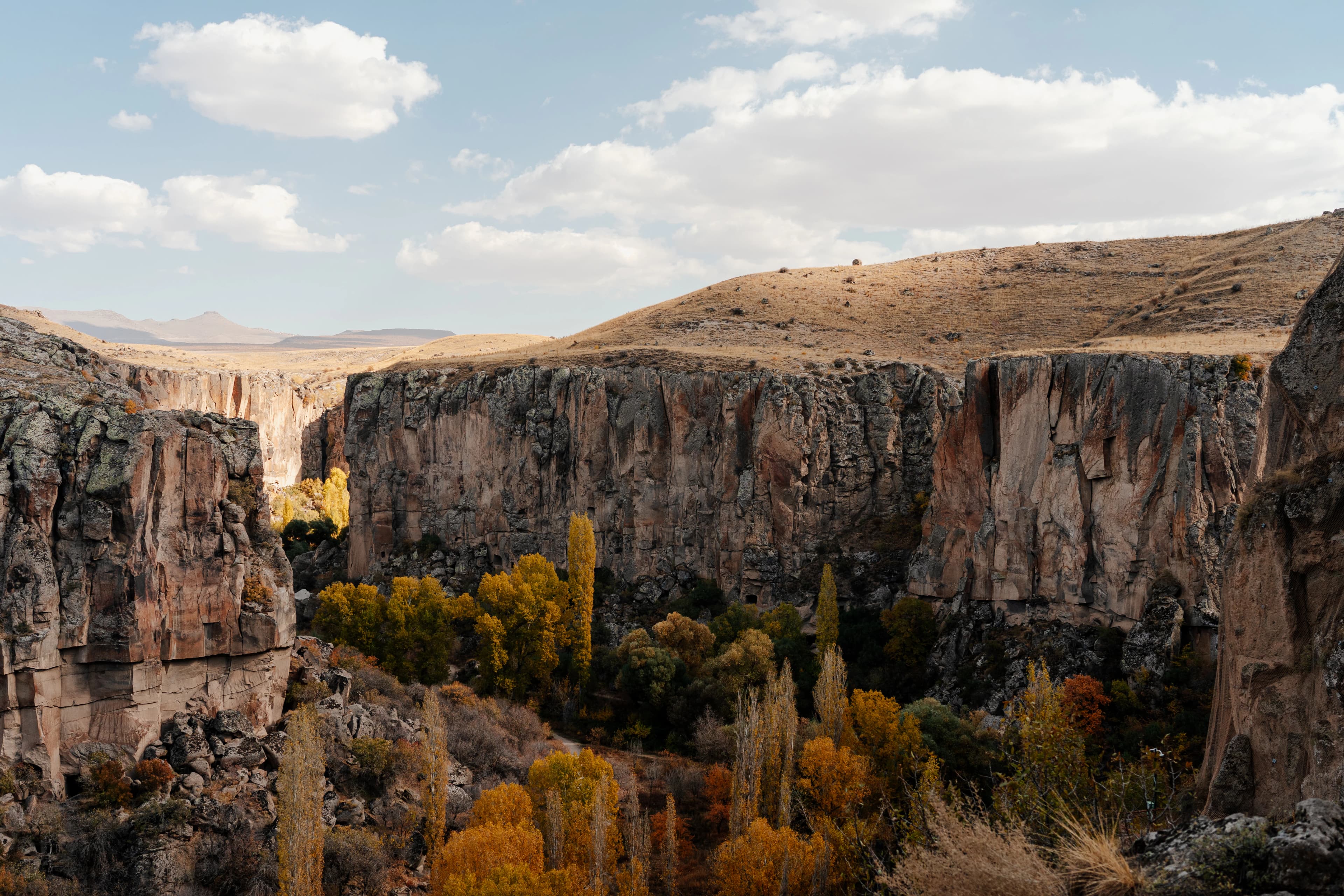
The Ihlara Valley is Cappadocia's best-kept secret — while most visitors focus on the fairy chimneys and hot air balloons around Göreme, a 16-kilometer long, up to 150-meter deep gorge stretches 75 kilometers to the south, one of Turkey's most impressive natural wonders. The Melendiz River has carved its way through volcanic tuff over millions of years, creating a lush green oasis amidst the barren Anatolian plateau. Poplars, willows, and pistachio trees line the riverbank, birds chirp in the treetops, and the sound of water accompanies every step on the hiking trail that winds along the bottom of the gorge. What makes the Ihlara Valley unique are the over 100 rock-hewn churches and chapels, created between the 4th and 13th centuries by Byzantine monks and hermits. The most famous — Ağaçaltı Kilise (Church under the Tree), Yılanlı Kilise (Snake Church), and Kokar Kilise (Fragrant Church) — preserve remarkably well-preserved frescoes, whose colors still shine after more than a thousand years. The depictions range from biblical scenes to unusual, oriental-influenced motifs that reflect the cultural exchange at this crossroads of civilizations. A hike through the valley is an experience between nature enjoyment and time travel: one descends 382 steps into the gorge, follows the river through dappled light and cool shade, discovers hidden cave churches behind rock outcrops, and pauses at tea stands where local farmers offer fresh Çay and Gözleme (stuffed flatbread). At the end of the hike, the village of Belisırma awaits, where restaurants have set their tables right by the riverside — the perfect place for lunch with feet almost in the water.

GorgeRock ChurchesHiking
A scenic view of a valley and mountains

Cappadocia

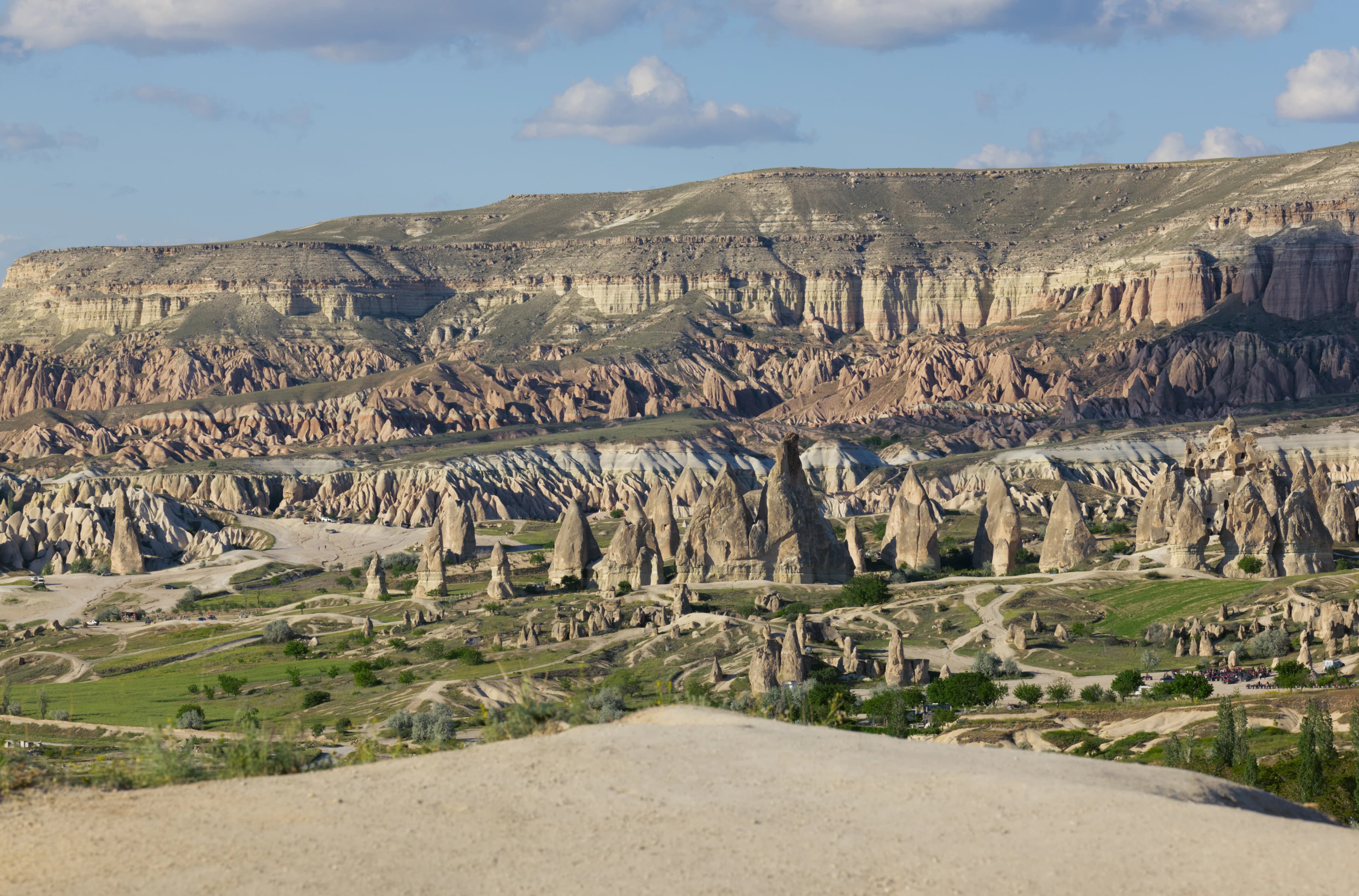
Cappadocia in Central Anatolia is a surreal moon landscape that looks as if a sculptor carved it from tuff stone. The famous fairy chimneys - cone-shaped rock formations topped with stone caps - stretch across a vast area, forming one of the most extraordinary landscapes on Earth. Every morning at sunrise, hundreds of hot air balloons rise over this unreal panorama, creating one of the most magical travel experiences in the world. German tourists are fascinated by the underground cities, where thousands once found refuge, the rock-hewn Byzantine churches with ancient frescoes, and the cave hotels where one can spend the night in tuff stone. Cappadocia uniquely combines natural wonders, millennia-old history, and Turkish hospitality.

fairy-chimneysballoon-ridecave-hotel

Cappadocia

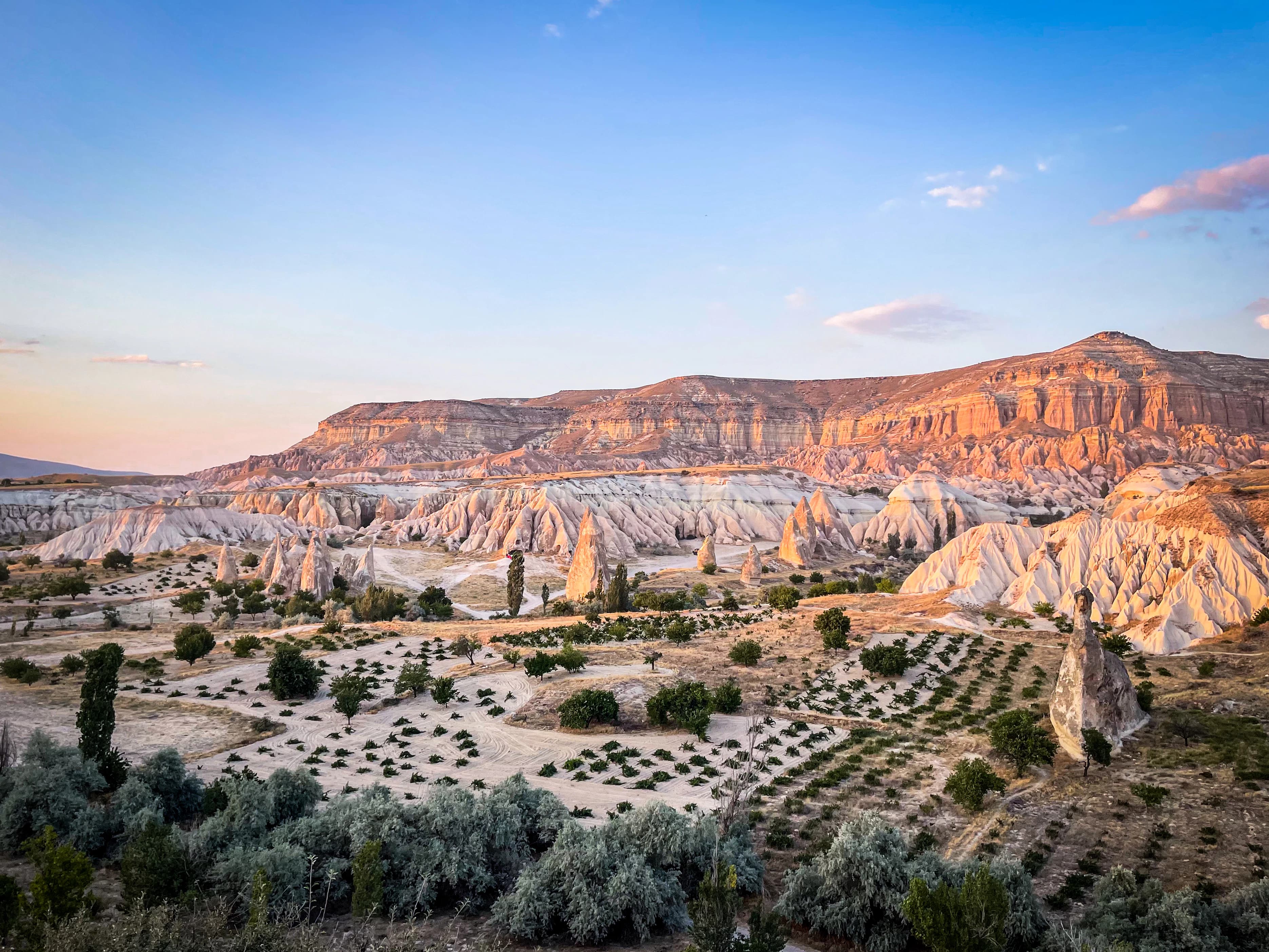
Cappadocia in Central Anatolia is a landscape like from another planet: bizarrely shaped fairy chimneys, conical tuff stone rocks, and gently rolling valleys in earth tones from pink to ochre to white stretch as far as the eye can see. Volcanic eruptions millions of years ago created this surreal topography, which wind and water have since shaped into a geological work of art. The absolute highlight is a hot air balloon ride at sunrise, when hundreds of colorful balloons float simultaneously over the fairy chimneys and the first light bathes the rock formations in warm gold — a sight unmatched anywhere in the world. The Göreme Open-Air Museum, a UNESCO World Heritage site, houses rock-hewn Byzantine churches with astonishingly well-preserved frescoes from the 10th to the 13th century. The underground cities of Derinkuyu and Kaymakli reach up to eight stories deep and once provided refuge for thousands of Christians from persecution — complete with ventilation shafts, storage rooms, and churches. Today, travelers stay in stylishly converted cave hotels that combine modern comfort with millennia-old architecture. The Ihlara Valley offers a green hike through a 100-meter deep gorge with hidden rock churches. The best travel time is from April to June or September to October, when temperatures are pleasant and tourist crowds are manageable.

Balloon rideUNESCOSurreal

Lycia Coast

The Lycia Coast stretches over approximately 200 kilometers between Antalya and Fethiye, combining ancient ruins, turquoise blue Mediterranean waters, and dramatic mountain landscapes into one of the most beautiful coastal regions of the entire Mediterranean. Named after the ancient people of the Lycians, who established an independent civilization here from the 15th century BC, this coast features fascinating testimonies of past epochs every few kilometers. The Lycian Way, one of the most beautiful long-distance hiking trails in the world, runs 540 kilometers along the coast through pine forests, over mountain ridges, and past ancient sites. Individual daily stages are also manageable without long-distance hiking experience and offer spectacular panoramas. Particularly, the section between Ölüdeniz and Kaş is considered a highlight. The ancient city of Olympos is picturesque in a gorge directly by the sea, and above on Mount Chimera, natural gas flames have been blazing from the rock for millennia — a mystical natural spectacle that served as a beacon for sailors in ancient times. Myra with its spectacular rock tombs, Xanthos as a UNESCO World Heritage site, and the sunken Kekova offer further cultural highlights. In between, secluded bays, family-run guesthouses, and the relaxed vibe of a coast that has retained its original character despite growing popularity beckon.

HikingAncientCoast

Turquoise Coast

The Turquoise Coast stretches over approximately 600 kilometers along the southern Mediterranean coast from Antalya to Alanya and beyond. With over 300 sunny days a year, turquoise blue sea, long sandy beaches, and an impressive hinterland of the Taurus Mountains, it is one of Europe's most popular holiday regions. Antalya, the vibrant center of the region, impresses with its beautifully restored old town Kaleici, the Roman Hadrian's Gate, and the Duden Waterfalls that plunge directly into the sea. The coast offers the right beach for every taste: from the lively Lara Beach with its luxury resorts to the unspoiled Cirali Beach (nesting site for sea turtles) to hidden rocky coves near Kas and Kekova. The Taurus Mountains in the hinterland rise to over 3,000 meters and offer spectacular gorges like the Koprulu Canyon (ideal for white-water rafting), ancient cities like Termessos (the impregnable eagle's nest that even Alexander the Great could not conquer) and Aspendos with its perfectly preserved Roman theater, where concerts are still held today. The region also scores culinary points with fresh fish, citrus fruits from the plantations in the hinterland, and the legendary Turkish breakfast. Thanks to Antalya International Airport, the Turquoise Coast can be reached from Germany in just three to four flight hours — and offers a price-performance ratio that is unmatched in the Mediterranean region.

All-InclusiveBeachSun
the sun is setting over the white cliffs

Pamukkale

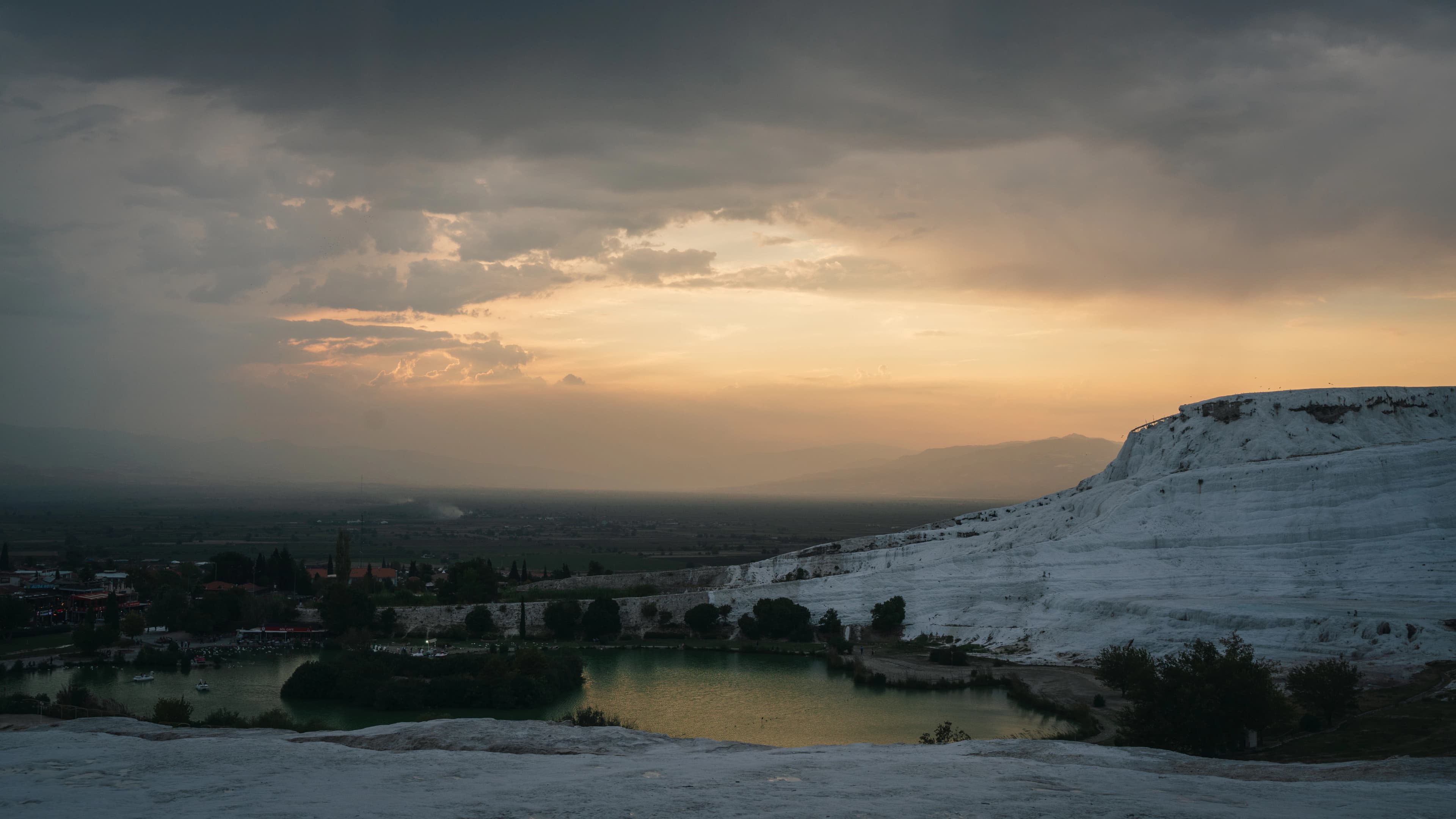
Pamukkale, literally translated as Cotton Castle, is one of the most impressive natural wonders of Turkey: snow-white travertine terraces stretch over 160 meters down the slope, filled with turquoise-blue, mineral-rich thermal water that has been bubbling to the surface from the Earth's interior for millennia. The surreal landscape resembles a frozen cascade of cotton and is a UNESCO World Heritage Site of overwhelming beauty. Directly above the terraces lies the ancient city of Hierapolis, founded as a spa in the 2nd century BC. The ruins include an impressive theater for 12,000 spectators, an extensive necropolis with over 1,200 graves, and the colonnades of the ancient main street. The absolute highlight is the Cleopatra Pool (Antique Pool), where you can swim among sunken ancient columns in 36-degree warm thermal water — a unique bathing experience in the world. The best time to visit is early in the morning or late in the afternoon when the tourist groups have disappeared and the light bathes the terraces in golden and pink hues. To protect the delicate travertine terraces, they can only be entered barefoot. It is possible to visit as a day trip from Antalya (3 hours) or Izmir (3.5 hours), but an overnight stay in the nearby village is worthwhile to enjoy the sunset over the terraces in peace. Pamukkale is a place that must be seen — photos simply do not do reality justice.

UNESCONatureThermal Springs

Package holiday to Turkey

Compare flight & hotel at the best price.

Package holidays

Holiday apartment in Turkey

Holiday homes with more space and privacy.

Holiday flats

All accommodations

Map, package holidays & holiday homes at a glance.

All options

Complete guide for Turkey

Regions, attractions, food, routes, costs & practical tips — all in one digital guide.

Open guide
Suitable for:BeachAll-InclusiveCultureBudgetHistory

Ready for Turkey?

Plan your Turkey holiday now with our free tools.

Plan a holiday in Turkey

Turkey is one of the most popular travel destinations in Europe, offering Beach, All-Inclusive, Culture and much more. The best time to visit Turkey is May–October (coast), April–June, September–November (Istanbul), when the weather is ideal for exploration and relaxation. With a daily budget starting from 30–50€ (Budget) to 100–200€ (Luxury), Turkey is suitable for various travel budgets.

From the capital Ankara, Turkey can be excellently explored. The official language is Turkish, and the currency is Turkish Lira (₺). From Germany, you can reach Turkey in approx. 3–3.5 hours. Whether you want to try culinary highlights like Kebab, Lahmacun, Börek, visit top attractions, or simply enjoy the atmosphere: Turkey has something for every type of traveller.

Use our free travel tools to prepare your Turkey holiday perfectly. With the holiday finder, you can discover if Turkey is the right destination for you. The budget calculator helps you plan costs realistically, and with the packing list, you won't forget anything.

Suitable holiday types for Turkey:

More travel destinations in Europe:

All countries in Europe

All destinations in Europe